
Pharmaceutical and therapeutic applications relating to a type 9 adenylyl cyclase Polymorphism in asthma and reversible bronchial obstruction
a technology of adenylyl cyclase and adenylyl cyclase, which is applied in the direction of lyases, metabolism disorders, instruments, etc., can solve the problems of significant fraction of patients obtaining no objective or subjective improvement with -agonists, and a large international health care burden, and achieves rapid clinical determination
Patent Information
- Authority / Receiving Office
- US · United States
- Patent Type
- Patents(United States)
- Current Assignee / Owner
- Publication Date
- 2011-12-06
Smart Images
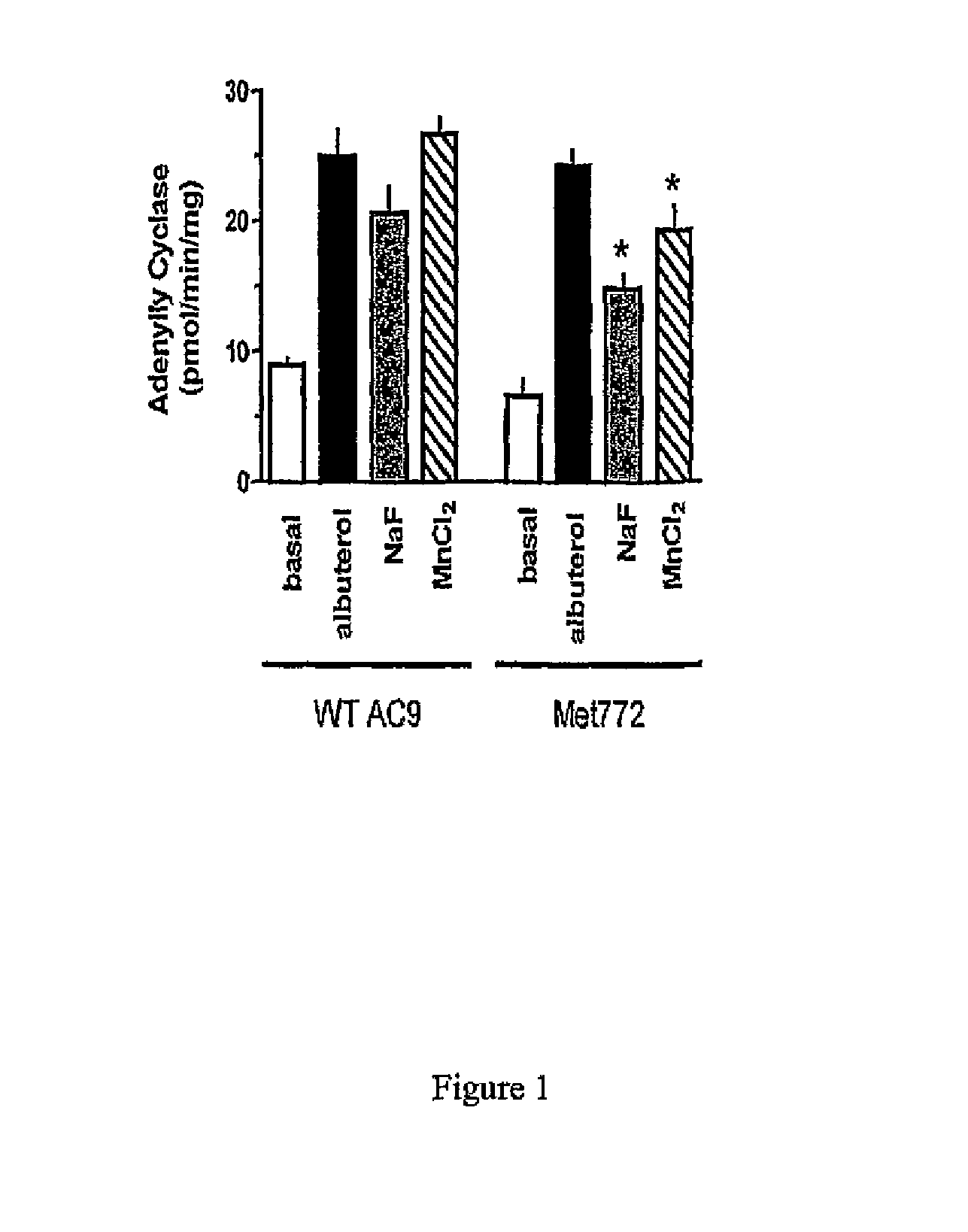
Figure 1 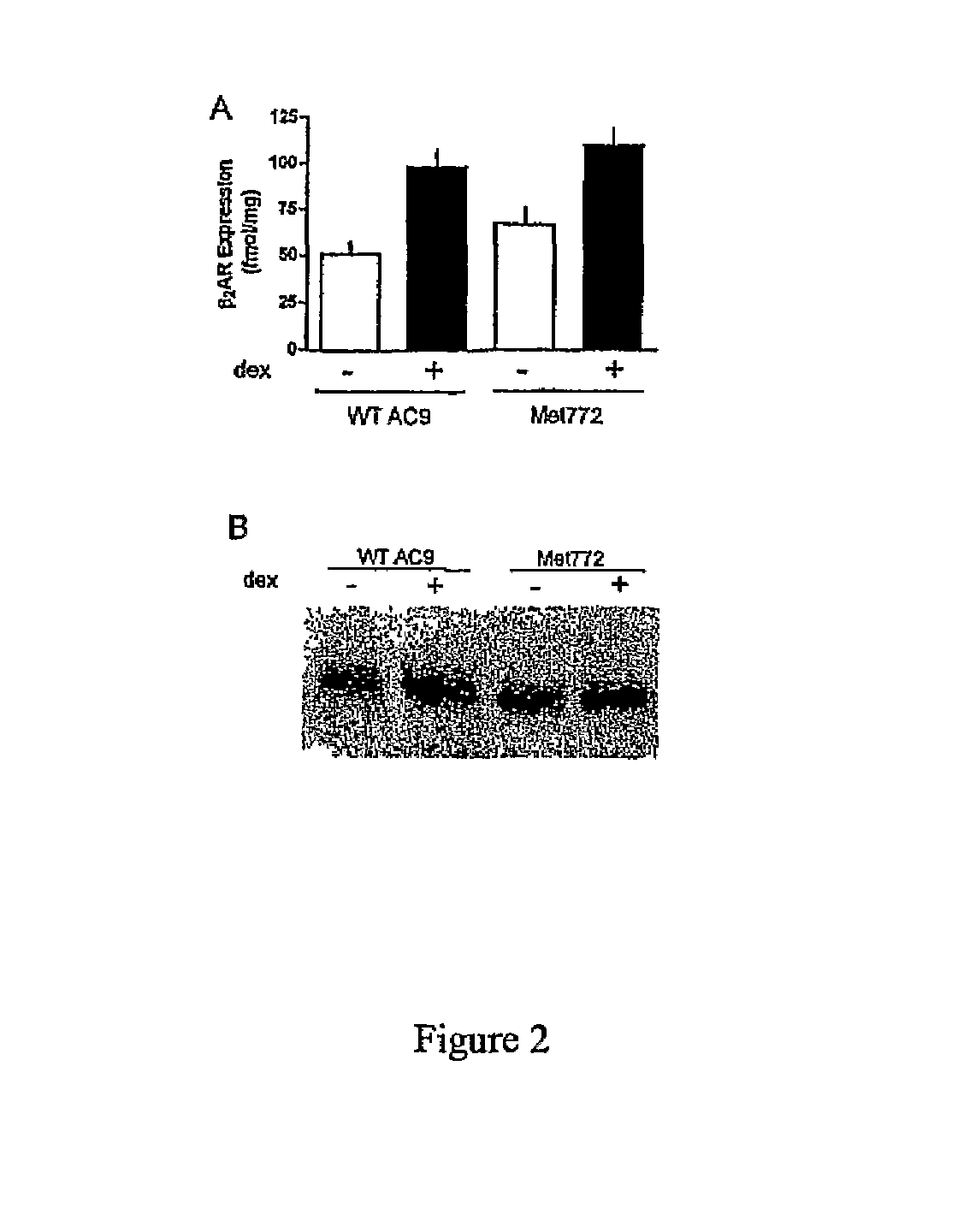
Figure 2 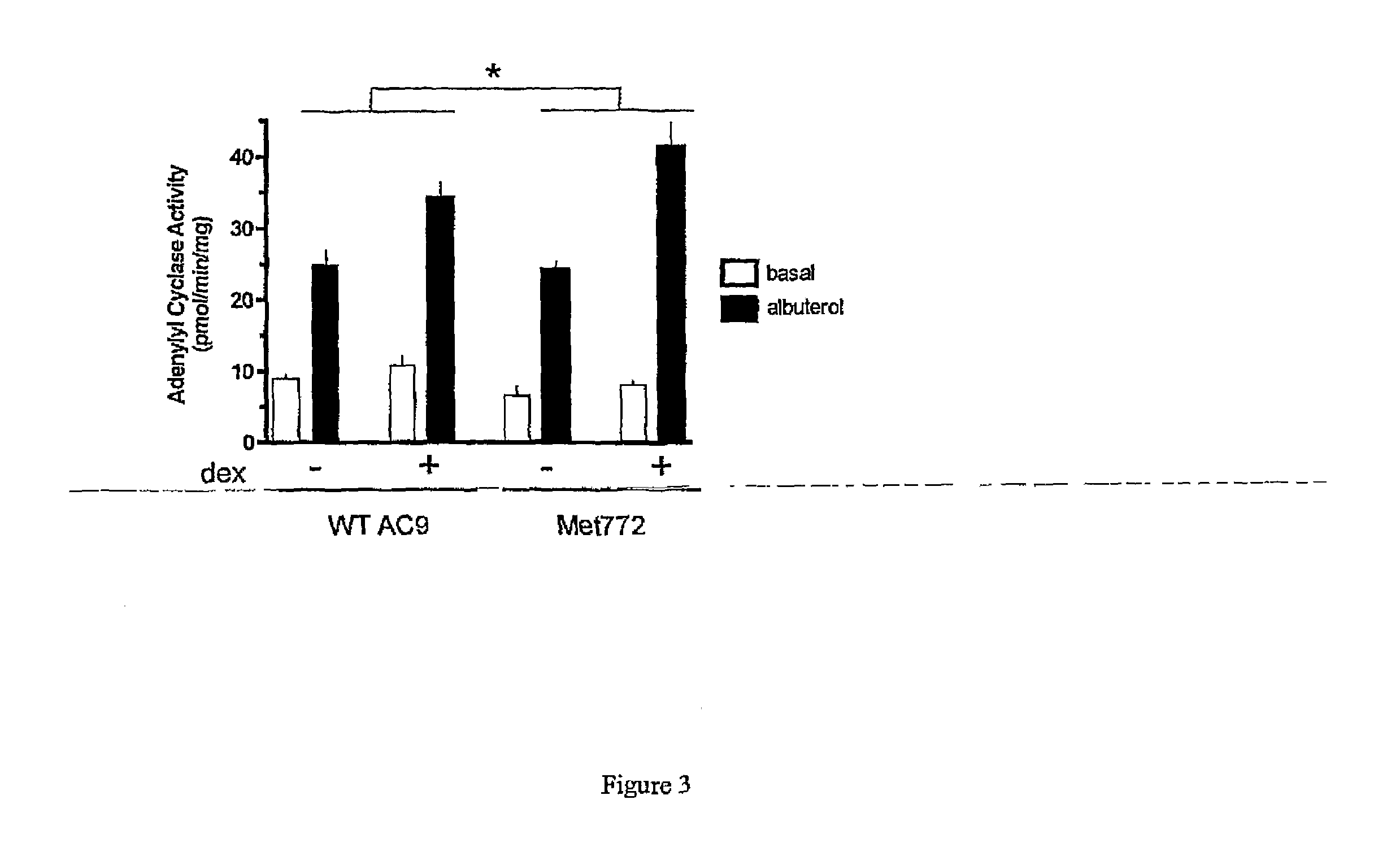
Figure 3
Abstract
Description
RELATED APPLICATION
[0001] The present application claims priority to U.S. provisional patent application Ser. No. 60 / 673,924, filed on Apr. 22, 2005.TECHNICAL FIELD
[0002] The present invention relates to pharmaceutical compositions and methods for treating asthma and other reversible bronchial obstructions. Specifically, the invention provides novel pharmaceutical compositions, pharmaceutical agent screening assays, and predicative and therapeutic methods based on the surprising discovery of an interaction between the presence of a type 9 adenylyl cyclase polymorphism and the efficacy of certain bronchodilators in conjunction with corticosteroid co-administration in affected patients.BACKGROUND
[0003] Asthma is a chronic inflammatory disease of the airways characterized by contraction of airway smooth muscle due to actions of multiple local bronchoconstrictive substances. The syndrome affects ˜300 million individuals worldwide and is a substantial international health care burden. The i...
Examples
examples
[0037]In the following examples, the in vitro and in vivo phenotypes of a nonsynonymous polymorphism of adenylyl cyclase type 9 are examined. Specifically, signal transduction of the two AC9s in a transfected lung cell line in the absence and presence of corticosteroid treatment are illustrated by determination of adenylyl cyclase activities in response to β2AR stimulation. In the second Example, a large placebo-controlled clinical trial of the corticosteroid budesonide in pediatric asthmatics is conducted, and associations between the AC9 polymorphism and β-agonist responsiveness are demonstrated. Based on the previously reported association of SNPs and haplotypes of the β2AR gene with the degree of bronchodilator response the influence of these SNPs and haplotypes on bronchodilator response in relation to Met772 status is also assessed. See, e.g., Silverman et al. Family-based association analysis of beta2-adrenergic receptor polymorphisms in the childhood asthma management progra...