
Immunogenic and vaccine compositions for use against bordetella bronchiseptica infection
a technology of immunogenic compositions and vaccines, applied in the field of immunology, can solve the problems of less popularization of veterinarians, less protection, and difficulty in administering intranasal vaccines, and achieve the effects of less protection, less protection, and less protection
Patent Information
- Authority / Receiving Office
- US · United States
- Current Assignee / Owner
- Publication Date
- 2018-05-17
- Estimated Expiration
- Not applicable · inactive patent
Smart Images
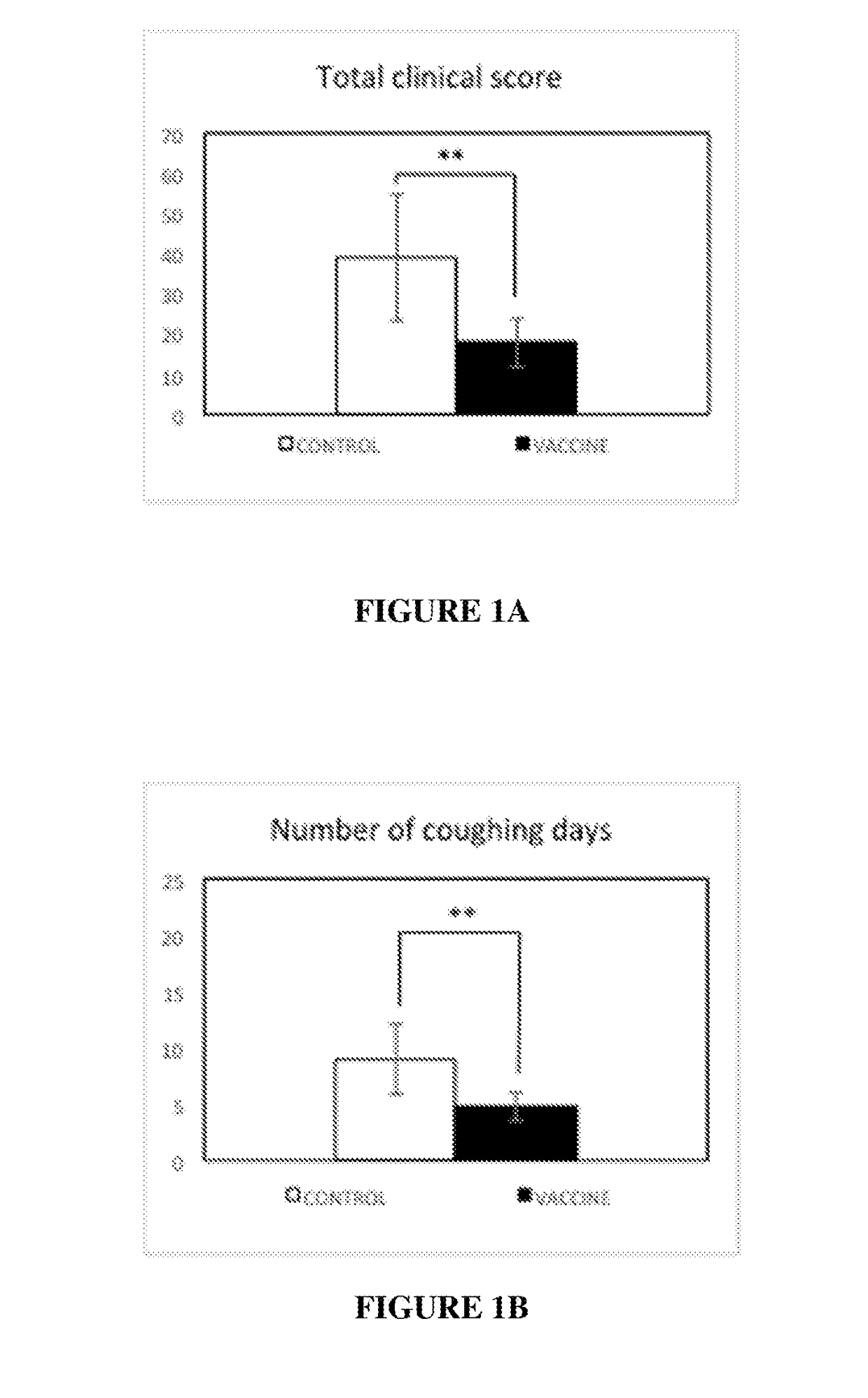
Figure 1 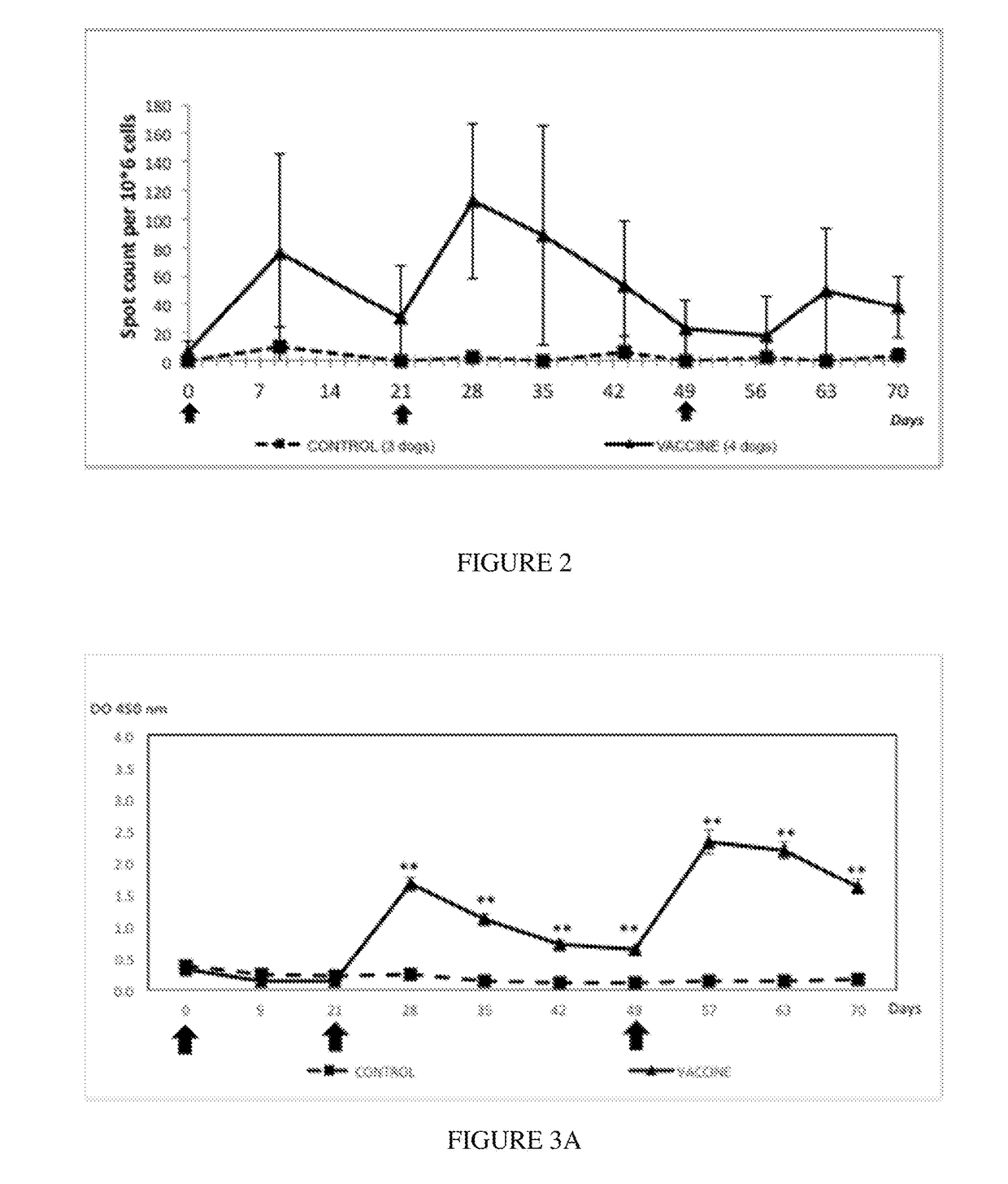
Figure 2 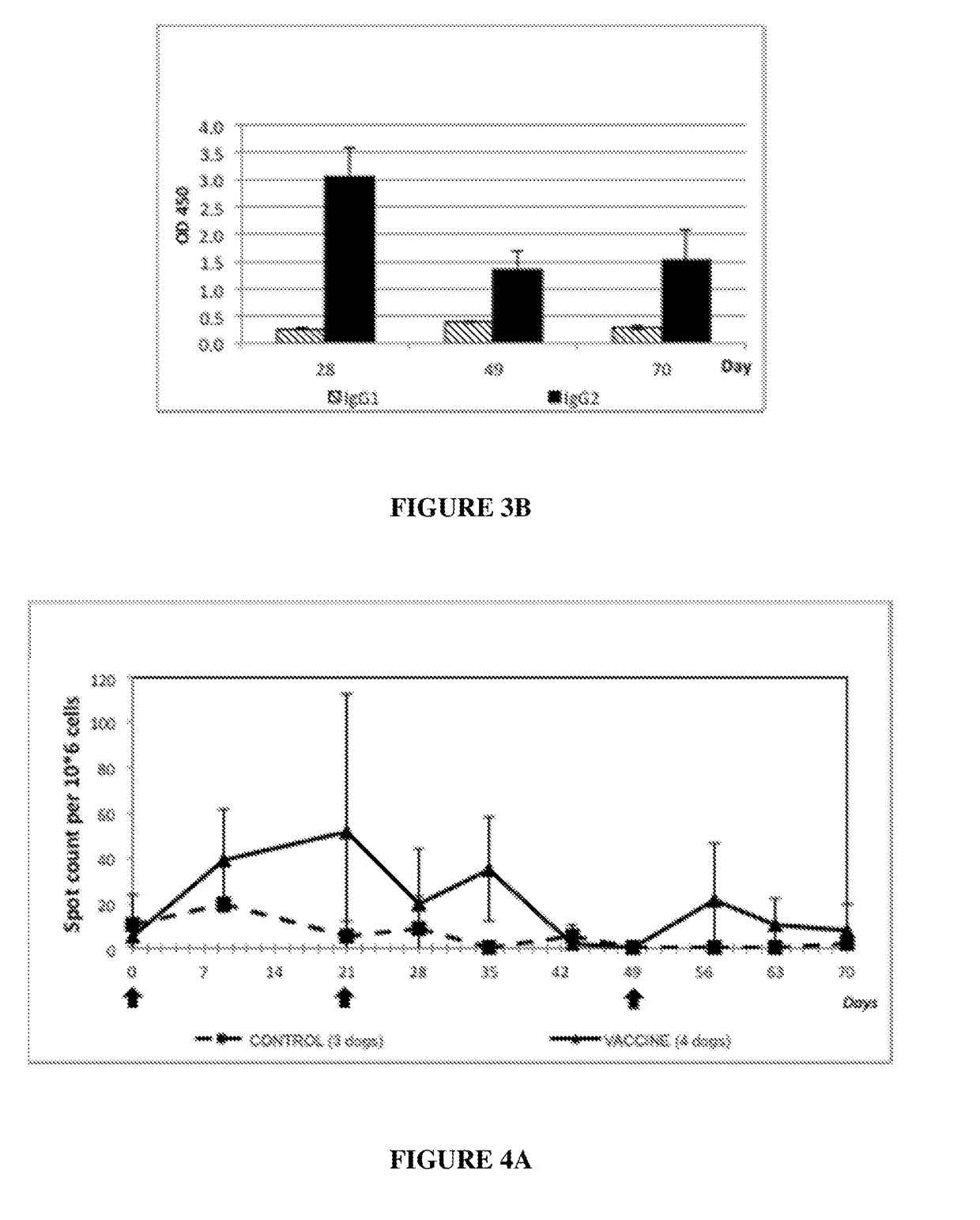
Figure 3
Abstract
Description
STATEMENT REGARDING SEQUENCE LISTING
[0001] The Sequence Listing associated with this application is provided in text format in lieu of a paper copy, and is hereby incorporated by reference into the specification. The name of the text file containing the Sequence Listing is 290142_401_SEQUENCE_LISTING_txt. The text file is about 62 KB, was created on Nov. 17, 2016, and is being submitted electronically via EFS-Web.FIELD OF THE INVENTION
[0002] The present invention relates to the field of immunology, and in particular to the field of immunogenic and vaccine compositions. It relates to such compositions for use against Bordetella bronchiseptica infection and in particular against canine tracheobronchitis, commonly named kennel cough.BACKGROUND OF THE INVENTION
[0003] Bordetella bronchiseptica (B. bronchiseptica) is a small, Gram-negative, rod-shaped bacterium of the genus Bordetella and closely related to B. pertussis, the obligate human pathogen that causes pertussis (whooping cough).[000...
Examples
example 1
ion, Production and Purification of CyaA Toxoid
[0122]Antigens: The synthetic peptide corresponding to antigens such as Bsp22 of Bordetella Bronchiseptica (SEQ ID No: 4) was purchased from Polypeptide (Strasbourg, France).
[0123]Construction of recombinant CyaA toxoid: Recombinant CyaA toxoid comprising the antigens such as Bsp22 (CyaA-Bsp22) genetically linked to the N-terminal part of Bordetella Bronchiseptica CyaA protein (SEQ ID NO:6) were produced in E. coli XL1-Blue (Stratagen, an Agilent Technologies Company, USA) transformed with appropriate pT7CACT1-derived constructs (Osicka R. et al., 2000, Infect. Immun., 68: 247-256). Exponential 500-ml cultures were grown at 37° C. and induced by isopropyl 1-thio-β-D-galactopyranoside (IPTG, 1 mM) for 4 h before the cells were washed with 50 mM Tris-HCl (pH 8.0), 150 mM NaCl, resuspended in 50 mM Tris-HCl (pH 8.0), 0.2 mM CaCl2, and disrupted by sonication. Upon centrifugation at 25,000×g for 20 min, the insoluble cell pellets were resus...
example 2
and Methods for the Evaluation of the Immunogenic Composition
[0124]This study was approved by the Ethical Committee of MENSER (number 201509155295755).
Animals
[0125]Beagle dogs were purchased from a licensed kennel for animal breeding and husbandry (CEDS, Centre d'Elevage du Domaine de Souches, France). Specific pathogen-free puppies were eight weeks old at their arrival. They were bred in a specific facility free of Bordetella bronchispetica. Before the beginning of the study, all the puppies were shown to be seronegative for Bordetella bronchiseptica. All dogs were dewormed and vaccinated against canine distemper virus, parvovirus, leptospirosis, infectious canine hepatitis and parainfluenza virus. They were housed in an accredited class II facility and were provided commercial dog food (VetCare Nutrition, Junior 10 kg, Royal Canin) and tap water ad libitum.
[0126]In total, 15 dogs were used, 8 females and 7 males. Dogs were randomly allocated to two groups, following an equivalent ...
example 3
the Immunogenic Composition Comprising CyaA Vector Carrying Bsp22 Antigen
[0150]In order to evaluate the tolerance of the vaccine, complete general and local clinical examinations were performed the day before and after each injection once a day for 7 days. Examinations were performed according to Table 1.
[0151]Immunized dogs did not present alterations of their general condition. No sign of lethargy or appetite loss was identified. No sign of hyperthermia was detected, rectal temperature ranges were between 37.6 and 39.3 for all puppies.
[0152]At the injection site, no local reaction was observed, neither after the first injection nor after the second injection.
[0153]These results demonstrated that the candidate vaccine was very well tolerated in young puppies.
[0154]The immunogenic composition comprising CyaA vector carrying Bsp22 antigen was confirmed to be safe.