
Heat-conductive silicone composition and cured product thereof
a silicone composition and heat-conductive technology, applied in the direction of adhesives, layered products, transportation and packaging, etc., can solve the problems of dramatic deterioration in the handling properties and moldability of the composition, increased heat generation, and significant problem of dealing with heat, so as to reduce the amount of heat that is absorbed into the heat-radiating component, reduce the effect of heat generation
Patent Information
- Authority / Receiving Office
- US · United States
- Patent Type
- Patents(United States)
- Current Assignee / Owner
- Publication Date
- 2012-02-21
Smart Images
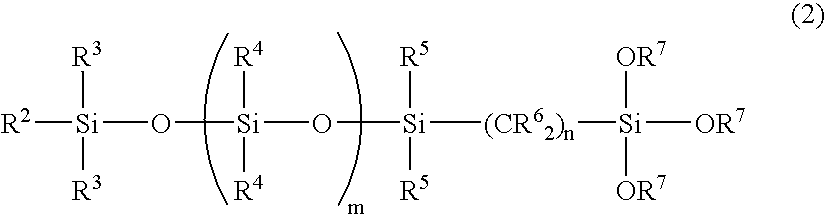
Figure 1 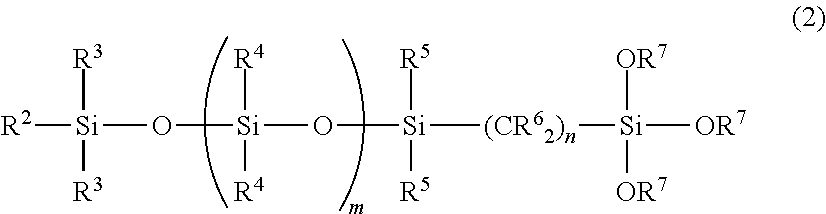
Figure 2 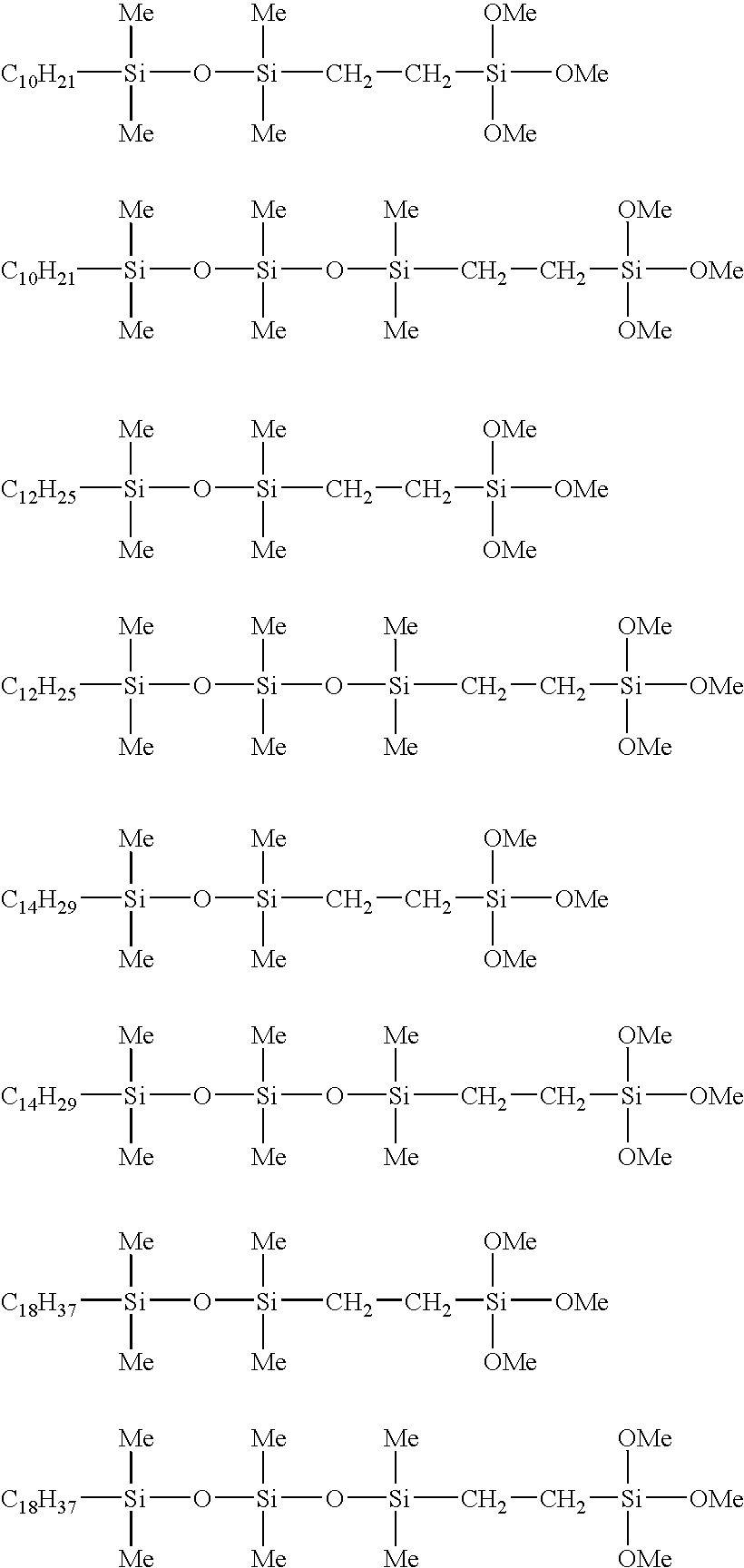
Figure 3
Abstract
Description
BACKGROUND OF THE INVENTION
[0001] 1. Field of the Invention
[0002] The present invention relates to a heat-conductive silicone composition which, even when filled with a large quantity of a heat-conductive filler in order to provide superior thermal conductivity, shows a minimal increase in viscosity or plasticity, and still exhibits favorable handling properties and moldability. The invention also relates to a heat-conductive silicone cured product which, even when filled with a large quantity of a heat-conductive filler, exhibits excellent flexibility.
[0003] 2. Description of the Prior Art
[0004] Many electronic components generate heat during use, and in order to ensure that those electronic components function satisfactorily, heat must be conducted away from the electronic components. Particularly in the case of integrated circuit elements such as the CPUs used in personal computers, increases in the operating frequency have lead to increased heat generation, and dealing with this hea...
Examples
synthesis example 1
[0118]A 1 liter round-bottom separable flask with a 4-necked separable cover was fitted with a stirrer, a thermometer, a Graham condenser and a dropping funnel. The separable flask was then charged with 250.0 g (1.2 mols) of 1,1,3,3,5,5-hexamethyltrisiloxane, and the temperature was raised to 70° C. Once this temperature had been reached, 0.6 g of a 2% by mass 2-ethylhexanol solution of chloroplatinic acid was added, and the resulting mixture was stirred at 70° C. for 30 minutes. Subsequently, 88.9 g (0.6 mols) of trimethoxyvinylsilane was added dropwise over a one hour period with the temperature held at 70 to 80° C., thereby initiating a reaction. Following completion of this dropwise addition, the reaction was continued with the temperature held at 70 to 80° C. During the reaction, the unreacted trimethoxyvinylsilane was refluxed. The progress of the reaction was tracked by gas chromatography, and the point where the chromatographic peak for trimethoxyvinylsilane disappeared was ...
synthesis example 2
[0123]A 1 liter round-bottom separable flask with a 4-necked separable cover was fitted with a stirrer, a thermometer, a Graham condenser and a dropping funnel. The separable flask was then charged with 235.6 g (1.2 mols) of 1-tetradecene, and the temperature was raised to 70° C. Once this temperature had been reached, 0.6 g of a 2% by mass 2-ethylhexanol solution of chloroplatinic acid was added, and the resulting mixture was stirred at 70° C. for 30 minutes. Subsequently, 356.71 g (1.0 mols) of the 1-trimethoxysilylethyl-1,1,3,3,5,5-hexamethyltrisiloxane obtained in the synthesis example 1 was added dropwise over a two hour period, thereby initiating a reaction. Following completion of this dropwise addition, the reaction was continued with the temperature held at 70 to 80° C. During the reaction, the unreacted 1-trimethoxysilylethyl-1,1,3,3,5,5-hexamethyltrisiloxane was refluxed. The progress of the reaction was tracked by gas chromatography, and the point where the chromatograph...
synthesis example 3
[0128]A 1 liter round-bottom separable flask with a 4-necked separable cover was fitted with a stirrer, a thermometer, a Graham condenser and a dropping funnel. The separable flask was then charged with 537.3 g (4.0 mols) of 1,1,3,3-tetramethyldisiloxane, and the temperature was raised to 70° C. Once this temperature had been reached, 1.0 g of a 2% by mass 2-ethylhexanol solution of chloroplatinic acid was added, and the resulting mixture was stirred at 70° C. for 30 minutes. Subsequently, 296.5 g (2.0 mols) of trimethoxyvinylsilane was added dropwise over a two hour period with the temperature held at 70 to 80° C., thereby initiating a reaction. Following completion of this dropwise addition, the reaction was continued with the temperature held at 70 to 80° C. During the reaction, the unreacted trimethoxyvinylsilane was refluxed. The progress of the reaction was tracked by gas chromatography, and the point where the chromatographic peak for trimethoxyvinylsilane disappeared was dee...