
Machine element
a technology of machine elements and elements, applied in the direction of bearing components, shafts, gearing details, etc., can solve the problems of relatively high material cost and high force during forming, low degree of freedom in the design of shaped elements, and relatively complex production of planetary pins of the prior art. achieve the effect of producing simply and inexpensively
Patent Information
- Authority / Receiving Office
- US · United States
- Patent Type
- Patents(United States)
- Current Assignee / Owner
- Publication Date
- 2012-11-06
- Estimated Expiration
- Not applicable · inactive patent
Smart Images
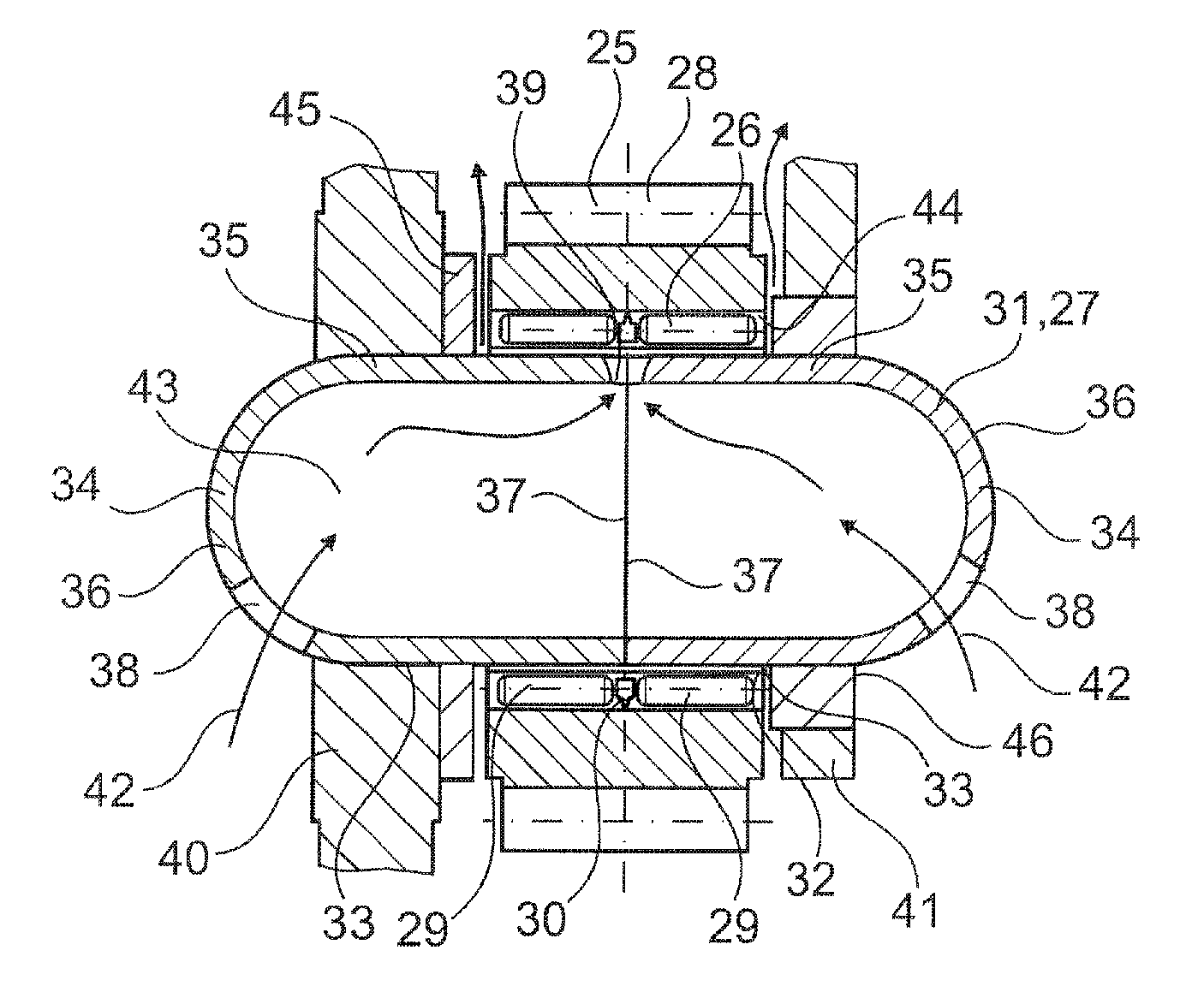
Figure 1 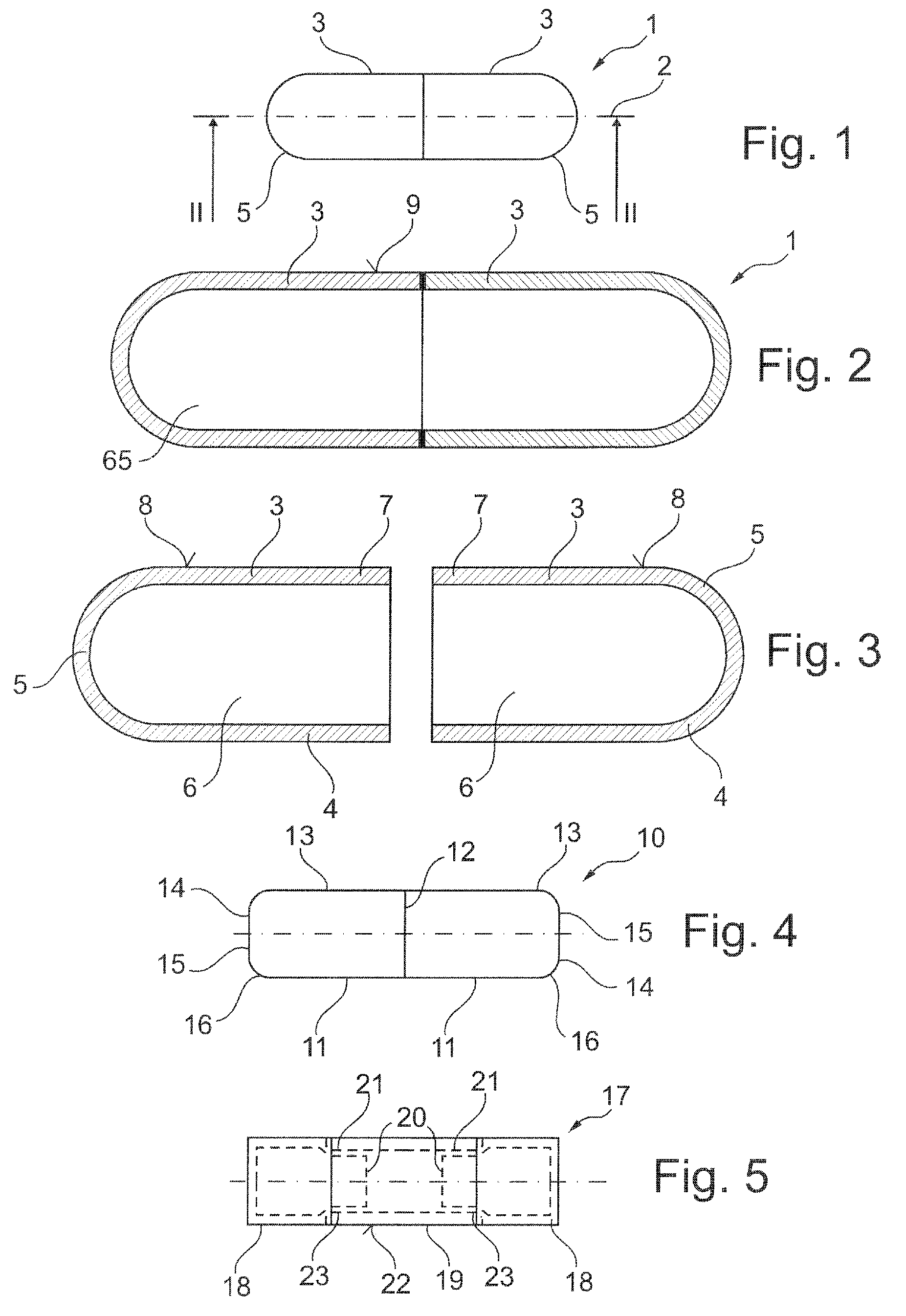
Figure 2 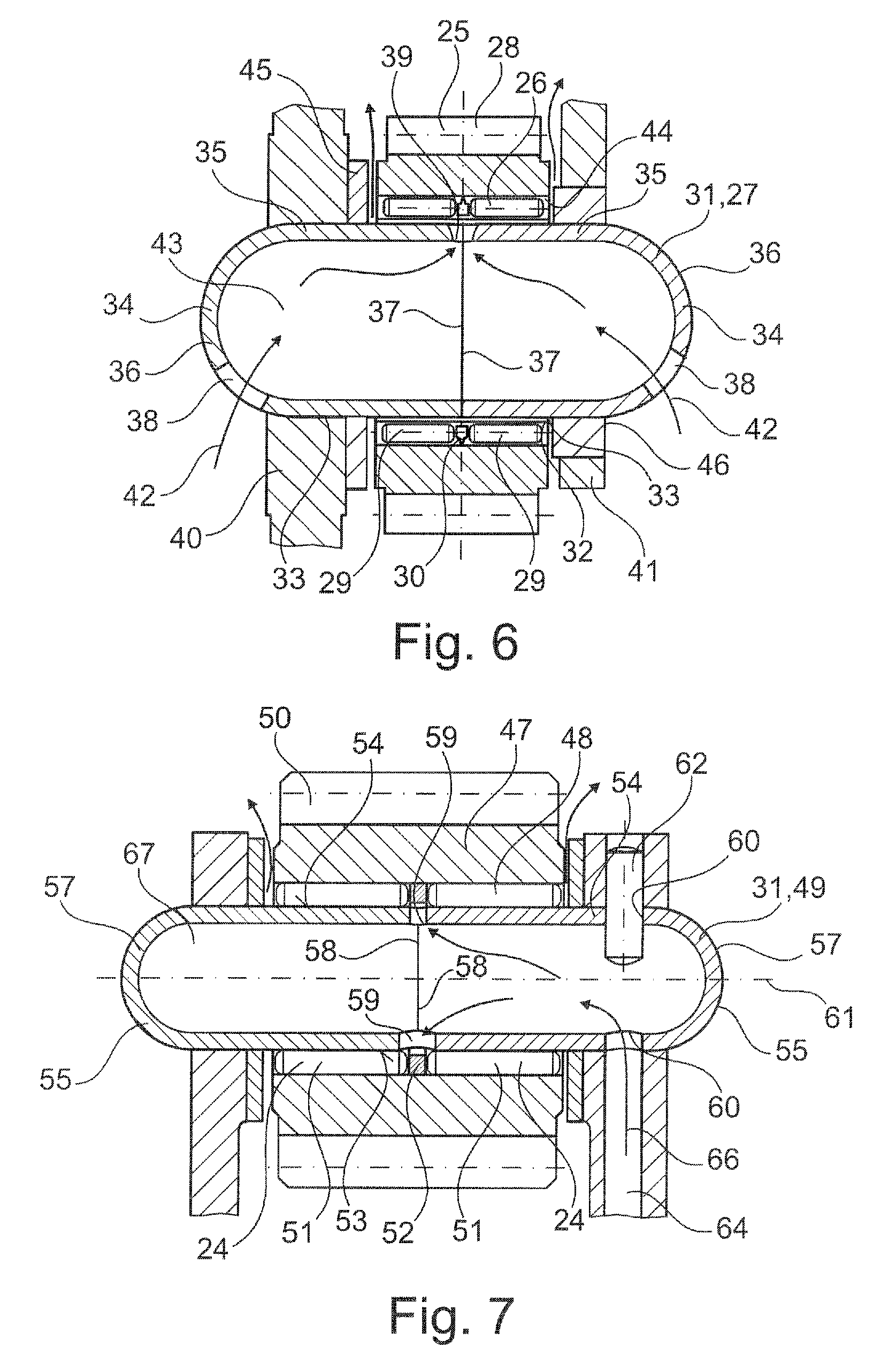
Figure 3
Abstract
Description
[0001] This application claims the priority of 61 / 183,253 filed Jun. 2, 2009, which is incorporated by reference herein.FIELD OF THE INVENTION
[0002] The invention relates to a machine element having at least one rotationally symmetrical section which is configured like a hollow body.BACKGROUND OF THE INVENTION
[0003] A machine element of this type in the form of a rotationally symmetrical planetary pin, on which a machine part in the form of a planetary gear is mounted, is described in DE 10 2007 031 726 A1. The planetary pins have to have a low weight and are therefore provided on the inside with chambers which are divided from one another by stabilizing ribs. Lubricating oil is to be guided to the bearing points of the planetary drive via the interior of the planetary pins, in this case, that is to say, via the chambers. The planetary pins of the prior art are therefore relatively complex to produce.
[0004] A further machine part of the type which forms the generic type in the form of a...
Examples
Embodiment Construction
[0033]FIGS. 1, 2 and 3—FIG. 1 shows a machine element 1 which may be configured as a planetary pin, in a side view. FIG. 2 shows a longitudinal section along the axis of symmetry 2 of the machine element 1 of rotationally symmetrical configuration. The machine element 1 is assembled from two elements 3 and is closed axially on the end sides by the bases 5. The elements 3 together enclose a cavity 65.
[0034]The elements 3 are shown as individual parts in FIG. 3 and are formed in a bowl-shaped manner with a rotationally symmetrical hollow-cylindrical casing 4, or sidewalls and a convexly hemispherically formed base 5 and identical parts which are drawn from thin-walled sheet metal. The edge zone 7 on the elements 3, which adjoins the respective opening 6, is trimmed and therefore rough, since at first a radially projecting collar-shaped edge induced by drawing technology had been formed on it, from which the elements 3 had to be freed after drawing.
[0035]In each case on the casing 4 on...