
Methods for improving kidney function
a kidney and kidney function technology, applied in the field of kidney function improvement methods, can solve the problems of kidney failure, serious health problems, weakened or impaired kidney function,
Patent Information
- Authority / Receiving Office
- US · United States
- Patent Type
- Patents(United States)
- Current Assignee / Owner
- Publication Date
- 2012-11-27
Smart Images
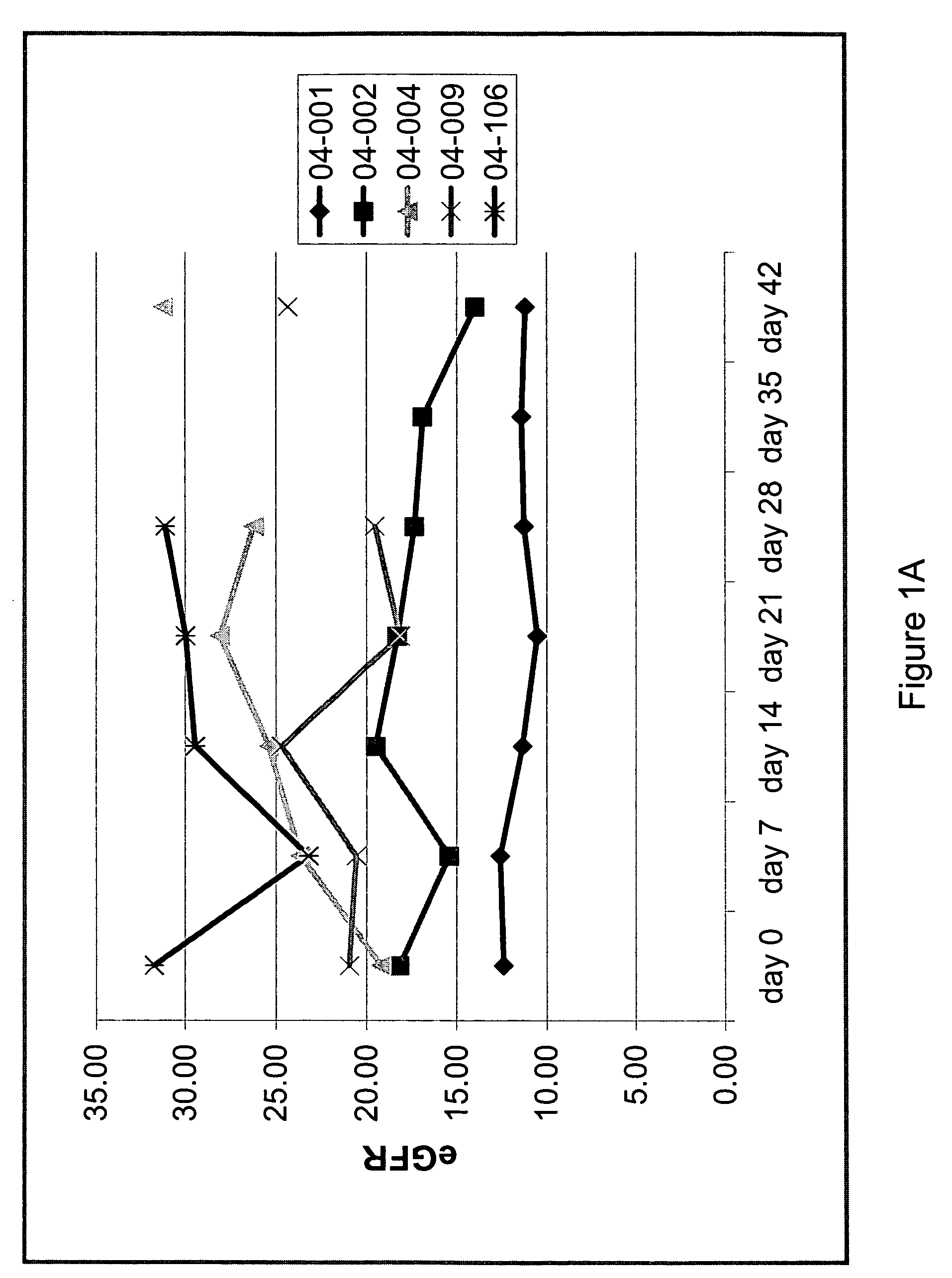
Figure 1 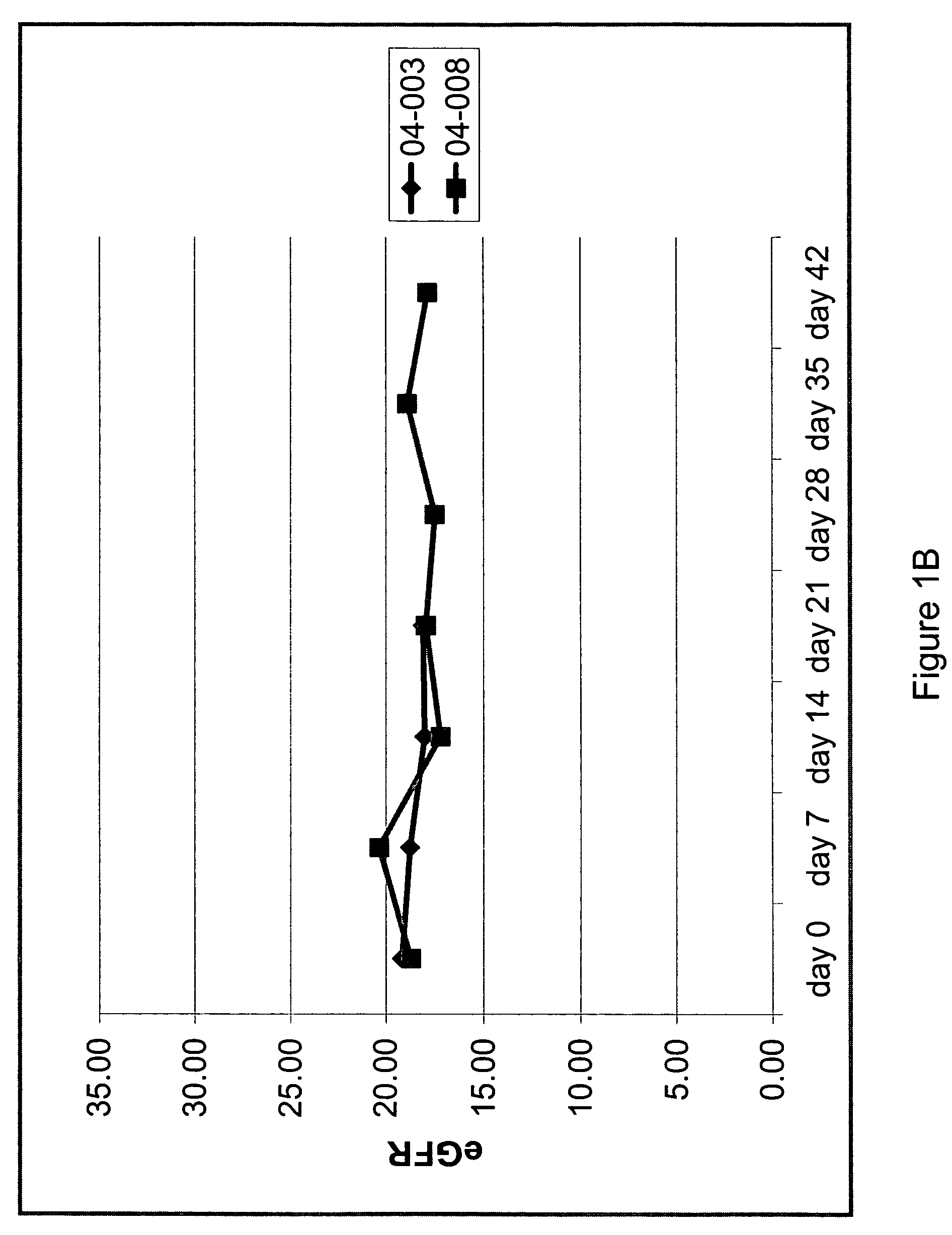
Figure 2 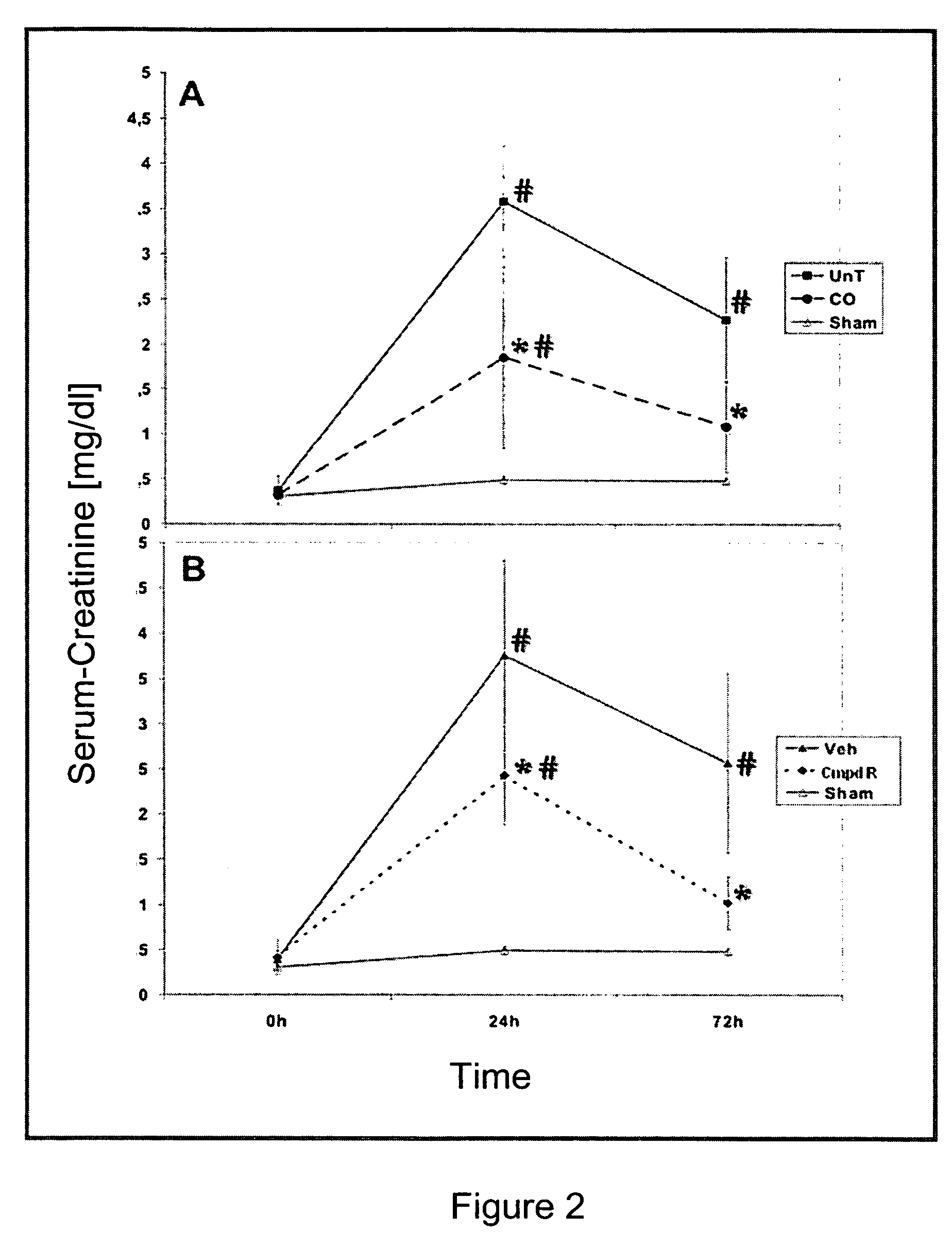
Figure 3
Abstract
Description
[0001] This application is a continuation-in-part application of U.S. patent application Ser. No. 10 / 313,551, filed 6 Dec. 2002, now abandoned, which claimed the benefit of U.S. Provisional Application Ser. No. 60 / 337,082, filed on 6 Dec. 2001; U.S. Provisional Application Ser. No. 60 / 359,683, filed on 25 Feb. 2002; U.S. Provisional Application Ser. No. 60 / 349,659, filed on 16 Jan. 2002; and U.S. Provisional Application Ser. No. 60 / 386,488, filed on 5 Jun. 2002, each of which is incorporated by reference herein in its entirety.FIELD OF THE INVENTION
[0002] The invention relates to methods for improving renal (kidney) function. Methods for decreasing blood urea nitrogen (BUN), for increasing glomerular filtration rate (GFR), and for decreasing serum creatinine are also provided.BACKGROUND
[0003] The kidneys remove waste product from the body, and regulate and balance body levels of various fluids and metabolites. Impairment in kidney function can lead to serious health problems, and can b...
Examples
example 1
Increased GFR and Decreased Serum Creatinine Levels in Human Subjects
[0233]Patients with chronic kidney disease (CKD), and with anemia associated with CKD, not yet receiving dialysis and not receiving recombinant EPO therapy, were randomized to either a treatment group or a placebo group. The treatment group was administered compound B (6 mg / kg) orally three times a week (Monday, Wednesday, and Friday) for four weeks (i.e., day 0 to day 28). Compound B has been previously shown to both stabilize HIFα and to inhibit HIF hydroxylase activity. Both groups were observed for an additional two weeks (i.e., to day 42). Glomerular filtration rate was estimated as standard in the art from serum creatinine measurements using the Cockcroft-Gault formula. (See Cockcroft and Gault (1976) Nephron 16:31-41.)
[0234]Mean estimated GFR for all patients on day 0 was 20.0 ml / min / 1.73 m2 (range=12.4 to 31.7 ml / min / 1.73 m2), indicating severe renal impairment and reduced renal function associated with chr...
example 2
Improved Renal Function in a Rat Model of Impaired Kidney Function
[0237]To examine the effects of compounds and methods of the present invention on kidney function, the following studies were performed. For these studies, male Sprague-Dawley rats (Winkelmann, Borchen, Germany) were used at weights of 180-230 grams. Animals were fed a standard diet and had free access to water. In these studies, animals were administered (by intraperitoneal injection) a dose of 25 mg / kg compound R, dissolved in 100 μl DMSO and 900 μl NaCl (0.9%), 6 hours prior to initiation of the ischemic insult, as described below. In some experiments, animals were exposed to 0.1% carbon monoxide (CO) as previously described. (See Rosenberger et al (2002) J Am Soc Nephrol 13:1721-1732.)
[0238]Kidney dysfunction (impaired kidney function) was induced by renal ischemia-reperfusion injury (IRI) as follows. Animals were anaesthetized with ketamine (100 mg / kg) and pentobarbital sodium (50 mg / kg, Nembutal®, Abbott, Wiesba...
example 3
Improved Renal Function in a Rat Model of Impaired Kidney Function
[0243]To examine the effects of compounds and methods of the present invention on kidney function, the following studies were performed. For these studies, Sprague Dawley rats (Charles River Labs) were used. Animals were housed in an animal facility according to IACUC protocols with free access to water and food, and all experiments conducted according to the National Institutes of Health guidelines for animal experimentation.
[0244]Renal ischemia-reperfusion injury (IRI) and renal dysfunction were induced in male Sprague-Dawley rats (280-300 g) as previously described. (See Nemoto et al (2001) Kidney Int 59:246-251.) Briefly, rats were anesthetized under isoflurane and a midline abdominal incision was made under sterile conditions followed by bluntly dissecting the renal pedicles. A vascular clip was placed on the right renal pedicle while the left kidney underwent simultaneous nephrectomy. After 45 minutes of occlusi...