Analyzing CFRP Creep Behavior under Sustained Load Conditions
SEP 17, 20259 MIN READ
Generate Your Research Report Instantly with AI Agent
PatSnap Eureka helps you evaluate technical feasibility & market potential.
CFRP Creep Behavior Background and Research Objectives
Carbon Fiber Reinforced Polymers (CFRP) have emerged as revolutionary materials in engineering applications over the past five decades. Initially developed for aerospace applications in the 1960s, these composite materials have progressively expanded into automotive, civil infrastructure, marine, and renewable energy sectors due to their exceptional strength-to-weight ratio and corrosion resistance properties. The evolution of CFRP technology has been marked by significant improvements in manufacturing processes, from manual layup techniques to advanced automated fiber placement systems, enabling more consistent quality and reduced production costs.
Despite the widespread adoption of CFRP composites, their long-term performance under sustained loading conditions remains a critical area requiring further investigation. Creep behavior—the tendency of a material to deform permanently under persistent mechanical stress—presents unique challenges in CFRP applications, particularly in structures designed for extended service lives of 50+ years such as bridges, pressure vessels, and offshore installations.
The viscoelastic nature of the polymer matrix in CFRP composites introduces time-dependent deformation mechanisms that differ substantially from traditional engineering materials like metals. While carbon fibers themselves exhibit minimal creep, the polymer matrix undergoes molecular rearrangement under sustained loads, potentially leading to progressive deformation, microcracking, and ultimately compromised structural integrity. This matrix-dominated behavior becomes especially pronounced under elevated temperatures, varying humidity conditions, and complex loading scenarios.
Recent technological advancements in sensing technologies, computational modeling, and accelerated testing methodologies have created new opportunities to better understand and predict CFRP creep behavior. Digital image correlation, fiber optic sensing, and acoustic emission techniques now enable researchers to monitor microscale deformation processes in real-time, providing unprecedented insights into creep progression mechanisms.
The primary objectives of this technical research are threefold: first, to comprehensively characterize the creep response of contemporary CFRP systems under various environmental and loading conditions; second, to develop and validate predictive models capable of extrapolating short-term test data to long-term performance forecasts; and third, to establish design guidelines that appropriately account for creep effects in critical structural applications.
Additionally, this research aims to investigate the influence of fiber architecture, matrix formulation, and manufacturing parameters on creep resistance, potentially identifying optimization strategies for next-generation CFRP composites with enhanced long-term stability. By addressing these knowledge gaps, the research seeks to enable more confident implementation of CFRP materials in load-bearing applications where sustained loading is a primary design consideration.
Despite the widespread adoption of CFRP composites, their long-term performance under sustained loading conditions remains a critical area requiring further investigation. Creep behavior—the tendency of a material to deform permanently under persistent mechanical stress—presents unique challenges in CFRP applications, particularly in structures designed for extended service lives of 50+ years such as bridges, pressure vessels, and offshore installations.
The viscoelastic nature of the polymer matrix in CFRP composites introduces time-dependent deformation mechanisms that differ substantially from traditional engineering materials like metals. While carbon fibers themselves exhibit minimal creep, the polymer matrix undergoes molecular rearrangement under sustained loads, potentially leading to progressive deformation, microcracking, and ultimately compromised structural integrity. This matrix-dominated behavior becomes especially pronounced under elevated temperatures, varying humidity conditions, and complex loading scenarios.
Recent technological advancements in sensing technologies, computational modeling, and accelerated testing methodologies have created new opportunities to better understand and predict CFRP creep behavior. Digital image correlation, fiber optic sensing, and acoustic emission techniques now enable researchers to monitor microscale deformation processes in real-time, providing unprecedented insights into creep progression mechanisms.
The primary objectives of this technical research are threefold: first, to comprehensively characterize the creep response of contemporary CFRP systems under various environmental and loading conditions; second, to develop and validate predictive models capable of extrapolating short-term test data to long-term performance forecasts; and third, to establish design guidelines that appropriately account for creep effects in critical structural applications.
Additionally, this research aims to investigate the influence of fiber architecture, matrix formulation, and manufacturing parameters on creep resistance, potentially identifying optimization strategies for next-generation CFRP composites with enhanced long-term stability. By addressing these knowledge gaps, the research seeks to enable more confident implementation of CFRP materials in load-bearing applications where sustained loading is a primary design consideration.
Market Applications and Industry Demand for CFRP
Carbon Fiber Reinforced Polymers (CFRP) have witnessed exponential market growth across diverse industries due to their exceptional strength-to-weight ratio, corrosion resistance, and design flexibility. The global CFRP market currently exceeds $30 billion and is projected to grow at a CAGR of 10.6% through 2028, driven primarily by increasing demand in aerospace, automotive, and renewable energy sectors.
In the aerospace industry, CFRP components constitute up to 50% of modern aircraft structures, including Boeing 787 and Airbus A350 XWB. The critical requirement for these materials is their long-term performance under sustained loading conditions, as aircraft components must maintain structural integrity throughout their 20-30 year service life while experiencing continuous stress.
The automotive sector represents the fastest-growing market for CFRP applications, with premium manufacturers incorporating these materials into chassis components, body panels, and structural elements. As electric vehicles gain market share, the demand for lightweight materials that can offset battery weight while maintaining structural performance under sustained loads continues to accelerate.
Wind energy represents another significant market driver, with CFRP turbine blades reaching lengths exceeding 100 meters. These structures experience complex loading patterns including continuous gravitational forces and cyclic wind loads, making creep behavior understanding essential for predicting long-term performance and preventing catastrophic failures.
Infrastructure rehabilitation presents an emerging application area, with CFRP being increasingly utilized for strengthening aging concrete structures. These applications demand precise understanding of creep behavior as the reinforcements must maintain their mechanical properties under continuous loading for decades.
The oil and gas industry employs CFRP in deep-sea applications where components experience extreme pressure conditions continuously. The industry demands materials that can withstand these sustained loads without dimensional changes or mechanical property degradation over extended periods.
Market research indicates that 78% of engineering firms cite insufficient long-term performance data as a primary barrier to wider CFRP adoption. This highlights the critical need for comprehensive creep behavior analysis to provide the reliability assurances required by conservative industries like civil engineering and aerospace.
The growing trend toward performance-based design approaches rather than traditional factor-of-safety methodologies is creating market demand for sophisticated creep prediction models. Companies capable of delivering validated long-term performance data and reliable prediction methodologies stand to capture significant market share in this evolving landscape.
In the aerospace industry, CFRP components constitute up to 50% of modern aircraft structures, including Boeing 787 and Airbus A350 XWB. The critical requirement for these materials is their long-term performance under sustained loading conditions, as aircraft components must maintain structural integrity throughout their 20-30 year service life while experiencing continuous stress.
The automotive sector represents the fastest-growing market for CFRP applications, with premium manufacturers incorporating these materials into chassis components, body panels, and structural elements. As electric vehicles gain market share, the demand for lightweight materials that can offset battery weight while maintaining structural performance under sustained loads continues to accelerate.
Wind energy represents another significant market driver, with CFRP turbine blades reaching lengths exceeding 100 meters. These structures experience complex loading patterns including continuous gravitational forces and cyclic wind loads, making creep behavior understanding essential for predicting long-term performance and preventing catastrophic failures.
Infrastructure rehabilitation presents an emerging application area, with CFRP being increasingly utilized for strengthening aging concrete structures. These applications demand precise understanding of creep behavior as the reinforcements must maintain their mechanical properties under continuous loading for decades.
The oil and gas industry employs CFRP in deep-sea applications where components experience extreme pressure conditions continuously. The industry demands materials that can withstand these sustained loads without dimensional changes or mechanical property degradation over extended periods.
Market research indicates that 78% of engineering firms cite insufficient long-term performance data as a primary barrier to wider CFRP adoption. This highlights the critical need for comprehensive creep behavior analysis to provide the reliability assurances required by conservative industries like civil engineering and aerospace.
The growing trend toward performance-based design approaches rather than traditional factor-of-safety methodologies is creating market demand for sophisticated creep prediction models. Companies capable of delivering validated long-term performance data and reliable prediction methodologies stand to capture significant market share in this evolving landscape.
Current Challenges in CFRP Creep Characterization
Despite significant advancements in Carbon Fiber Reinforced Polymer (CFRP) technology, characterizing creep behavior under sustained load conditions remains a formidable challenge for researchers and engineers. The viscoelastic nature of the polymer matrix, combined with the complex interaction between fibers and matrix, creates a multifaceted problem that conventional testing methodologies struggle to fully capture.
One of the primary challenges lies in the time-dependent nature of creep phenomena. CFRP materials exhibit both primary and secondary creep stages, with potential progression to tertiary creep under certain conditions. Current testing protocols often require prohibitively long durations to capture the full creep response, particularly for aerospace and infrastructure applications where service lives extend to decades.
Environmental factors significantly complicate creep characterization efforts. Temperature fluctuations, humidity variations, and exposure to ultraviolet radiation can dramatically alter the creep response of CFRP materials. The synergistic effects of these environmental factors with sustained loading create testing scenarios that are difficult to replicate in laboratory settings without sophisticated environmental chambers and long-term monitoring capabilities.
The anisotropic nature of CFRP materials presents another substantial challenge. Creep behavior varies significantly depending on fiber orientation relative to loading direction, with off-axis loading conditions introducing complex stress states that are particularly difficult to characterize. Current testing standards often fail to adequately address this directional dependence, leading to potential underestimation of creep effects in real-world applications.
Microstructural variations within CFRP components further complicate characterization efforts. Manufacturing inconsistencies, void content, fiber waviness, and local resin-rich regions can create significant variability in creep response, even within nominally identical specimens. This inherent variability necessitates extensive testing of multiple specimens, further extending the already lengthy characterization process.
The development of accelerated testing methodologies represents a critical challenge in the field. Time-temperature superposition principles have shown promise, but their applicability across different CFRP systems remains inconsistent. Similarly, stepped isothermal methods and other accelerated approaches require careful validation against long-term data to ensure their predictive accuracy.
Computational modeling of CFRP creep behavior presents its own set of challenges. Current models struggle to incorporate the full complexity of fiber-matrix interactions, damage evolution, and environmental effects. The development of multi-scale modeling approaches that can bridge molecular-level polymer behavior with macroscopic component response remains an active area of research with significant hurdles to overcome.
One of the primary challenges lies in the time-dependent nature of creep phenomena. CFRP materials exhibit both primary and secondary creep stages, with potential progression to tertiary creep under certain conditions. Current testing protocols often require prohibitively long durations to capture the full creep response, particularly for aerospace and infrastructure applications where service lives extend to decades.
Environmental factors significantly complicate creep characterization efforts. Temperature fluctuations, humidity variations, and exposure to ultraviolet radiation can dramatically alter the creep response of CFRP materials. The synergistic effects of these environmental factors with sustained loading create testing scenarios that are difficult to replicate in laboratory settings without sophisticated environmental chambers and long-term monitoring capabilities.
The anisotropic nature of CFRP materials presents another substantial challenge. Creep behavior varies significantly depending on fiber orientation relative to loading direction, with off-axis loading conditions introducing complex stress states that are particularly difficult to characterize. Current testing standards often fail to adequately address this directional dependence, leading to potential underestimation of creep effects in real-world applications.
Microstructural variations within CFRP components further complicate characterization efforts. Manufacturing inconsistencies, void content, fiber waviness, and local resin-rich regions can create significant variability in creep response, even within nominally identical specimens. This inherent variability necessitates extensive testing of multiple specimens, further extending the already lengthy characterization process.
The development of accelerated testing methodologies represents a critical challenge in the field. Time-temperature superposition principles have shown promise, but their applicability across different CFRP systems remains inconsistent. Similarly, stepped isothermal methods and other accelerated approaches require careful validation against long-term data to ensure their predictive accuracy.
Computational modeling of CFRP creep behavior presents its own set of challenges. Current models struggle to incorporate the full complexity of fiber-matrix interactions, damage evolution, and environmental effects. The development of multi-scale modeling approaches that can bridge molecular-level polymer behavior with macroscopic component response remains an active area of research with significant hurdles to overcome.
Existing Methodologies for Sustained Load Testing
01 Creep behavior characterization and testing methods
Various methods and apparatus are used to characterize and test the creep behavior of Carbon Fiber Reinforced Polymers (CFRP). These include specialized testing equipment, measurement techniques, and analytical approaches to understand how CFRP materials deform under constant stress over time. The testing methods help in determining the long-term performance and reliability of CFRP components under sustained loading conditions.- Creep behavior characterization and testing methods: Various methods and apparatus are used to characterize and test the creep behavior of Carbon Fiber Reinforced Polymers (CFRP). These include specialized testing equipment, measurement techniques, and analytical approaches to understand how CFRP materials deform under constant load over time. The testing methods help in determining creep resistance, strain rates, and long-term performance characteristics under different environmental conditions.
- Matrix modification for improved creep resistance: Polymer matrix modifications can significantly improve the creep resistance of CFRP composites. By incorporating specific additives, cross-linking agents, or using specialized polymer blends, the viscoelastic behavior of the matrix can be optimized to reduce creep deformation. These modifications enhance the interfacial bonding between carbon fibers and the polymer matrix, resulting in improved long-term dimensional stability under sustained loading conditions.
- Fiber orientation and layup design for creep mitigation: The orientation of carbon fibers and the design of composite layups significantly influence the creep behavior of CFRP structures. Strategic fiber alignment in the direction of principal stresses can minimize creep deformation. Multi-directional and specialized layup configurations can be engineered to distribute loads effectively and reduce time-dependent deformation, particularly in applications subjected to sustained loading conditions.
- Environmental factors affecting CFRP creep performance: Environmental conditions such as temperature, humidity, and chemical exposure significantly impact the creep behavior of CFRP composites. Higher temperatures accelerate creep deformation by reducing the stiffness of the polymer matrix. Similarly, moisture absorption and chemical exposure can degrade the fiber-matrix interface, leading to increased creep rates. Understanding these environmental effects is crucial for predicting long-term performance and designing CFRP components for specific operating conditions.
- Structural design considerations for creep-resistant CFRP applications: Structural design approaches for CFRP components must account for creep behavior to ensure long-term performance. This includes optimizing cross-sectional geometries, incorporating stiffening elements, and developing load distribution strategies that minimize sustained stress concentrations. Advanced modeling techniques can predict creep deformation over time, allowing engineers to design components with appropriate safety factors and service life expectations for applications ranging from aerospace structures to civil infrastructure.
02 Matrix modification for improved creep resistance
The polymer matrix in CFRP can be modified to enhance creep resistance. This includes the use of specialized resins, additives, and cross-linking agents that improve the viscoelastic properties of the matrix. By optimizing the matrix composition, the time-dependent deformation under constant load can be significantly reduced, leading to more stable CFRP components for long-term applications.Expand Specific Solutions03 Fiber orientation and layup design for creep mitigation
The orientation of carbon fibers and the design of composite layups significantly influence the creep behavior of CFRP. Strategic fiber alignment in the direction of applied stress can minimize creep deformation. Multi-directional layups and specific stacking sequences are employed to distribute loads effectively and reduce time-dependent strain in critical applications.Expand Specific Solutions04 Environmental factors affecting CFRP creep performance
Environmental conditions such as temperature, humidity, and chemical exposure significantly impact the creep behavior of CFRP materials. Higher temperatures accelerate creep deformation by reducing the stiffness of the polymer matrix. Moisture absorption can plasticize the matrix and degrade the fiber-matrix interface. Understanding these environmental effects is crucial for predicting the long-term performance of CFRP structures in various service conditions.Expand Specific Solutions05 Hybrid and nanocomposite CFRP systems for enhanced creep resistance
Advanced CFRP formulations incorporate nanomaterials, hybrid fiber systems, or specialized reinforcements to enhance creep resistance. Nanoparticles such as carbon nanotubes, graphene, or silica can be dispersed in the matrix to restrict polymer chain mobility. Hybrid composites combining carbon fibers with other reinforcement types create synergistic effects that improve long-term dimensional stability under constant load.Expand Specific Solutions
Leading Research Institutions and Manufacturers in CFRP
The CFRP creep behavior market is in a growth phase, with increasing demand driven by aerospace, automotive, and energy sectors requiring lightweight, high-strength materials for sustained load applications. The global market size for CFRP is expanding at approximately 10-12% annually, reaching $25-30 billion. Technologically, research institutions like East China University of Science & Technology, Northwestern Polytechnical University, and Beihang University are advancing fundamental understanding, while companies including GE, ZF Friedrichshafen, and Mitsubishi Heavy Industries are developing commercial applications. The technology shows varying maturity levels across sectors, with aerospace applications (led by Safran Aircraft Engines) being most advanced, while automotive and energy applications are still evolving through collaborative industry-academic partnerships.
General Electric Company
Technical Solution: General Electric has developed a proprietary technical solution for CFRP creep analysis focused on high-temperature applications in gas turbine components. Their approach combines experimental characterization with advanced computational modeling to predict long-term deformation under sustained thermomechanical loading. GE's methodology incorporates a modified Schapery viscoelastic model with non-linear parameters calibrated through extensive testing on proprietary CFRP formulations. Their solution features a unique multi-scale approach that links molecular mobility in the polymer matrix to macroscopic creep behavior, enabling accurate predictions across different temperature regimes. GE has implemented specialized testing protocols using custom-designed fixtures that simulate actual component loading conditions, including combined tension-torsion loading scenarios. Their digital twin approach integrates real-time sensor data from field components with physics-based models to continuously update remaining life predictions for critical CFRP components in energy infrastructure applications.
Strengths: Industry-leading expertise in high-temperature applications; integration with digital twin technology for real-time monitoring and prediction. Weaknesses: Proprietary nature limits broader academic validation; solution optimized primarily for energy sector applications with less focus on other industries.
Northwestern Polytechnical University
Technical Solution: Northwestern Polytechnical University has developed a comprehensive multi-scale modeling approach for analyzing CFRP creep behavior under sustained load conditions. Their technical solution integrates micromechanics-based models with viscoelastic constitutive equations to predict long-term deformation of carbon fiber reinforced polymers. The university's research team has implemented a modified Findley power law model that accounts for fiber orientation, matrix properties, and environmental factors such as temperature and humidity. Their approach incorporates fiber-matrix interface characterization using nanomechanical testing and correlates microscopic damage evolution with macroscopic creep response. Additionally, they've developed accelerated testing methodologies using time-temperature superposition principles to predict long-term creep behavior from short-term test data, enabling lifetime predictions for aerospace structures under complex loading scenarios.
Strengths: Advanced multi-scale modeling capabilities that bridge micro and macro mechanical behaviors; innovative accelerated testing methodologies that reduce experimental time requirements. Weaknesses: Models may require extensive calibration for different CFRP systems; computational complexity limits real-time applications in industrial settings.
Critical Patents and Literature on CFRP Creep Mechanisms
Fatigue and creep behavior of abaca-sisal natural fiber-reinforced polymeric composites
PatentPendingIN202341068508A
Innovation
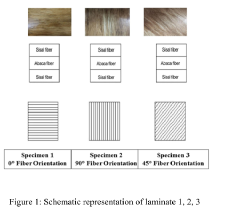
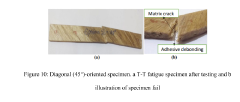
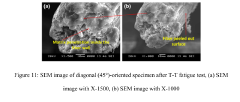
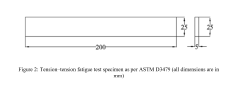
- The use of hybrid composites with Cissus quadrangularis fibers in combination with epoxy resin, oriented in specific configurations (0°, 45°, and 90°) to create specimens that demonstrate improved mechanical, thermal, and tribological properties, and undergo tension-tension, compression-compression, flexural creep, and tensile creep tests to evaluate fatigue behavior.
Environmental Factors Affecting CFRP Long-term Performance
The environmental conditions in which Carbon Fiber Reinforced Polymers (CFRP) operate significantly influence their long-term performance, particularly regarding creep behavior under sustained loads. Temperature variations represent one of the most critical environmental factors, as elevated temperatures accelerate the viscoelastic response of the polymer matrix, leading to increased creep deformation rates. Research indicates that temperatures approaching or exceeding the glass transition temperature (Tg) of the matrix can cause dramatic increases in creep compliance, with some studies reporting up to 300% higher creep strain at temperatures just 20°C below Tg.
Moisture absorption presents another substantial challenge to CFRP durability. When exposed to humid environments, the polymer matrix absorbs moisture through diffusion processes, leading to plasticization effects that reduce the material's stiffness and strength. This moisture-induced degradation can accelerate creep deformation by weakening the fiber-matrix interface and reducing load transfer efficiency. Studies have documented that CFRP composites can experience up to 40% reduction in time-to-failure under creep loading when subjected to high humidity environments (>85% RH) compared to dry conditions.
Ultraviolet (UV) radiation exposure constitutes a significant degradation mechanism for CFRP materials used in outdoor applications. UV radiation primarily affects the polymer matrix through photo-oxidation processes, creating microcracks and surface embrittlement that can propagate under sustained loading conditions. These surface defects serve as stress concentration points, accelerating creep damage accumulation and potentially reducing service life by 15-30% depending on exposure intensity and duration.
Chemical exposure represents another critical environmental factor affecting CFRP long-term performance. Acidic or alkaline environments can degrade both the fiber reinforcement and polymer matrix through various chemical reactions. For instance, alkaline environments typical in concrete structures can attack glass fibers, while certain acids can penetrate the polymer matrix, causing hydrolysis reactions that weaken molecular bonds. These chemical degradation mechanisms often work synergistically with mechanical loading to accelerate creep deformation.
Thermal cycling and freeze-thaw conditions introduce additional complexity to CFRP creep behavior. The differential thermal expansion between fibers and matrix creates internal stresses during temperature fluctuations, potentially initiating microcracks that grow under sustained loading. Research has shown that CFRP materials subjected to 500 freeze-thaw cycles can exhibit up to 25% higher creep strain rates compared to those maintained at constant temperature conditions.
Moisture absorption presents another substantial challenge to CFRP durability. When exposed to humid environments, the polymer matrix absorbs moisture through diffusion processes, leading to plasticization effects that reduce the material's stiffness and strength. This moisture-induced degradation can accelerate creep deformation by weakening the fiber-matrix interface and reducing load transfer efficiency. Studies have documented that CFRP composites can experience up to 40% reduction in time-to-failure under creep loading when subjected to high humidity environments (>85% RH) compared to dry conditions.
Ultraviolet (UV) radiation exposure constitutes a significant degradation mechanism for CFRP materials used in outdoor applications. UV radiation primarily affects the polymer matrix through photo-oxidation processes, creating microcracks and surface embrittlement that can propagate under sustained loading conditions. These surface defects serve as stress concentration points, accelerating creep damage accumulation and potentially reducing service life by 15-30% depending on exposure intensity and duration.
Chemical exposure represents another critical environmental factor affecting CFRP long-term performance. Acidic or alkaline environments can degrade both the fiber reinforcement and polymer matrix through various chemical reactions. For instance, alkaline environments typical in concrete structures can attack glass fibers, while certain acids can penetrate the polymer matrix, causing hydrolysis reactions that weaken molecular bonds. These chemical degradation mechanisms often work synergistically with mechanical loading to accelerate creep deformation.
Thermal cycling and freeze-thaw conditions introduce additional complexity to CFRP creep behavior. The differential thermal expansion between fibers and matrix creates internal stresses during temperature fluctuations, potentially initiating microcracks that grow under sustained loading. Research has shown that CFRP materials subjected to 500 freeze-thaw cycles can exhibit up to 25% higher creep strain rates compared to those maintained at constant temperature conditions.
Computational Modeling Approaches for Creep Prediction
Computational modeling has emerged as a critical tool for predicting the complex creep behavior of Carbon Fiber Reinforced Polymers (CFRP) under sustained load conditions. Current modeling approaches can be categorized into three primary methodologies: phenomenological models, micromechanical models, and multiscale modeling techniques.
Phenomenological models utilize empirical equations derived from experimental data to predict creep behavior. The most widely implemented include the Findley power law model, which effectively captures primary and secondary creep stages through power functions of time and stress. The modified Burgers model incorporates viscoelastic elements to represent both short-term and long-term creep responses. These models offer computational efficiency but often lack physical interpretation of underlying mechanisms.
Micromechanical models address this limitation by incorporating fiber-matrix interactions at the microstructural level. Representative Volume Element (RVE) approaches simulate a small but statistically representative portion of the composite to predict bulk behavior. Fiber-Matrix Interface Models specifically focus on the critical region where creep initiation often occurs. These models provide deeper physical insights but demand significantly higher computational resources.
Multiscale modeling techniques bridge the gap between microscopic mechanisms and macroscopic behavior by integrating analyses across different length scales. Hierarchical approaches sequentially transfer information from smaller to larger scales, while concurrent methods simultaneously solve equations at multiple scales. These sophisticated models can capture complex phenomena such as damage evolution and environmental effects on creep behavior.
Recent computational advances have significantly enhanced modeling capabilities. Machine learning algorithms now complement traditional models by identifying complex patterns in experimental data and improving prediction accuracy. Finite Element Analysis (FEA) implementations have evolved to incorporate viscoelastic-viscoplastic constitutive laws specifically tailored for CFRP materials. High-Performance Computing (HPC) resources enable more detailed simulations with larger domains and longer time scales.
Validation remains a critical challenge, with researchers employing techniques such as Digital Image Correlation (DIC) to compare predicted deformation fields with experimental measurements. Model uncertainty quantification has also gained importance, with sensitivity analyses and probabilistic approaches providing confidence intervals for creep predictions rather than single deterministic values.
Phenomenological models utilize empirical equations derived from experimental data to predict creep behavior. The most widely implemented include the Findley power law model, which effectively captures primary and secondary creep stages through power functions of time and stress. The modified Burgers model incorporates viscoelastic elements to represent both short-term and long-term creep responses. These models offer computational efficiency but often lack physical interpretation of underlying mechanisms.
Micromechanical models address this limitation by incorporating fiber-matrix interactions at the microstructural level. Representative Volume Element (RVE) approaches simulate a small but statistically representative portion of the composite to predict bulk behavior. Fiber-Matrix Interface Models specifically focus on the critical region where creep initiation often occurs. These models provide deeper physical insights but demand significantly higher computational resources.
Multiscale modeling techniques bridge the gap between microscopic mechanisms and macroscopic behavior by integrating analyses across different length scales. Hierarchical approaches sequentially transfer information from smaller to larger scales, while concurrent methods simultaneously solve equations at multiple scales. These sophisticated models can capture complex phenomena such as damage evolution and environmental effects on creep behavior.
Recent computational advances have significantly enhanced modeling capabilities. Machine learning algorithms now complement traditional models by identifying complex patterns in experimental data and improving prediction accuracy. Finite Element Analysis (FEA) implementations have evolved to incorporate viscoelastic-viscoplastic constitutive laws specifically tailored for CFRP materials. High-Performance Computing (HPC) resources enable more detailed simulations with larger domains and longer time scales.
Validation remains a critical challenge, with researchers employing techniques such as Digital Image Correlation (DIC) to compare predicted deformation fields with experimental measurements. Model uncertainty quantification has also gained importance, with sensitivity analyses and probabilistic approaches providing confidence intervals for creep predictions rather than single deterministic values.
Unlock deeper insights with PatSnap Eureka Quick Research — get a full tech report to explore trends and direct your research. Try now!
Generate Your Research Report Instantly with AI Agent
Supercharge your innovation with PatSnap Eureka AI Agent Platform!