CFRP Surface Treatment for Enhanced Adhesion: A Comparative Study
SEP 17, 202510 MIN READ
Generate Your Research Report Instantly with AI Agent
Patsnap Eureka helps you evaluate technical feasibility & market potential.
CFRP Adhesion Technology Background and Objectives
Carbon Fiber Reinforced Polymers (CFRP) have emerged as revolutionary materials in various high-performance industries over the past four decades. Initially developed for aerospace applications in the 1970s, these lightweight yet incredibly strong composites have progressively expanded into automotive, marine, sporting goods, and civil infrastructure sectors. The evolution of CFRP technology has been characterized by continuous improvements in manufacturing processes, fiber architectures, and matrix systems, leading to enhanced mechanical properties and reduced production costs.
The fundamental challenge with CFRP components lies in their surface characteristics. The inherent chemical inertness of carbon fibers and the presence of release agents from manufacturing processes create significant adhesion difficulties when bonding CFRP components together or with dissimilar materials. This adhesion challenge has become increasingly critical as industries move toward modular designs and multi-material structures to optimize performance and weight.
Recent technological trends indicate a shift toward more environmentally sustainable and cost-effective surface treatment methods. Traditional approaches involving mechanical abrasion and solvent-based chemical treatments are gradually being supplemented or replaced by plasma treatments, laser surface modification, and nano-engineered adhesives. These emerging technologies aim to address the limitations of conventional methods while improving bond reliability and durability.
The primary objective of this technical research is to conduct a comprehensive comparative analysis of various CFRP surface treatment methodologies to enhance adhesion properties. Specifically, the research aims to evaluate the effectiveness, efficiency, and environmental impact of mechanical, chemical, plasma, and laser-based surface treatments across different CFRP systems and application environments.
Additionally, this research seeks to establish quantifiable metrics for adhesion performance under various environmental conditions, including temperature cycling, humidity exposure, and chemical contact scenarios. Understanding the long-term durability of adhesive bonds following different surface treatments represents a critical knowledge gap in current industrial applications.
The technological trajectory suggests that future developments will focus on tailored surface treatments that can be customized to specific resin systems and fiber architectures. Innovations in real-time quality control and non-destructive testing methods for adhesion quality assessment are also anticipated to play crucial roles in advancing CFRP joining technologies.
This research is positioned to provide valuable insights for industries seeking to optimize their CFRP joining processes, particularly in applications where mechanical fastening is undesirable due to stress concentration concerns or where weight reduction is paramount.
The fundamental challenge with CFRP components lies in their surface characteristics. The inherent chemical inertness of carbon fibers and the presence of release agents from manufacturing processes create significant adhesion difficulties when bonding CFRP components together or with dissimilar materials. This adhesion challenge has become increasingly critical as industries move toward modular designs and multi-material structures to optimize performance and weight.
Recent technological trends indicate a shift toward more environmentally sustainable and cost-effective surface treatment methods. Traditional approaches involving mechanical abrasion and solvent-based chemical treatments are gradually being supplemented or replaced by plasma treatments, laser surface modification, and nano-engineered adhesives. These emerging technologies aim to address the limitations of conventional methods while improving bond reliability and durability.
The primary objective of this technical research is to conduct a comprehensive comparative analysis of various CFRP surface treatment methodologies to enhance adhesion properties. Specifically, the research aims to evaluate the effectiveness, efficiency, and environmental impact of mechanical, chemical, plasma, and laser-based surface treatments across different CFRP systems and application environments.
Additionally, this research seeks to establish quantifiable metrics for adhesion performance under various environmental conditions, including temperature cycling, humidity exposure, and chemical contact scenarios. Understanding the long-term durability of adhesive bonds following different surface treatments represents a critical knowledge gap in current industrial applications.
The technological trajectory suggests that future developments will focus on tailored surface treatments that can be customized to specific resin systems and fiber architectures. Innovations in real-time quality control and non-destructive testing methods for adhesion quality assessment are also anticipated to play crucial roles in advancing CFRP joining technologies.
This research is positioned to provide valuable insights for industries seeking to optimize their CFRP joining processes, particularly in applications where mechanical fastening is undesirable due to stress concentration concerns or where weight reduction is paramount.
Market Analysis for CFRP Surface Treatment Solutions
The global market for Carbon Fiber Reinforced Polymer (CFRP) surface treatment solutions is experiencing robust growth, driven by increasing adoption of composite materials across multiple industries. Current market valuation stands at approximately 1.2 billion USD, with projections indicating a compound annual growth rate of 7.8% through 2028, significantly outpacing general manufacturing sector growth.
Aerospace and automotive industries remain the primary demand drivers, collectively accounting for over 65% of market share. The aerospace sector particularly values surface treatment solutions that enhance bonding reliability under extreme environmental conditions, while maintaining strict weight requirements. The automotive industry's shift toward lightweight materials for fuel efficiency and electric vehicle range extension has created substantial new demand channels.
Regional analysis reveals North America and Europe as dominant markets, holding approximately 38% and 32% market share respectively. However, the Asia-Pacific region demonstrates the fastest growth trajectory, with China and Japan leading regional expansion through aggressive manufacturing capacity development and government initiatives supporting advanced materials adoption.
Market segmentation by treatment type shows mechanical treatments (including abrasion and peel-ply) holding the largest share at 41%, followed by chemical treatments at 36%, and plasma/corona treatments at 23%. The latter category exhibits the highest growth rate due to increasing recognition of its environmental benefits and precision capabilities.
Customer demand patterns indicate a clear shift toward environmentally sustainable treatment solutions with reduced VOC emissions and hazardous chemical usage. This trend aligns with tightening regulatory frameworks in Europe and North America, creating market opportunities for innovative green treatment technologies.
Pricing analysis reveals significant variation based on treatment sophistication and performance guarantees. Premium solutions commanding 30-40% price premiums typically offer quantifiable improvements in bond strength, durability metrics, and process integration capabilities. Cost-sensitive market segments continue to rely on traditional mechanical treatments despite their limitations.
Supply chain dynamics present notable challenges, with specialized chemical suppliers wielding significant pricing power. Recent global disruptions have highlighted vulnerability in treatment chemical availability, prompting larger manufacturers to pursue vertical integration strategies or develop alternative treatment methodologies with more stable supply chains.
Market forecast models suggest accelerating growth in plasma and laser-based treatment solutions, with projected market share increases of 5-7 percentage points by 2026. These technologies address growing demands for precise, automated, and environmentally responsible surface preparation methods across high-value manufacturing applications.
Aerospace and automotive industries remain the primary demand drivers, collectively accounting for over 65% of market share. The aerospace sector particularly values surface treatment solutions that enhance bonding reliability under extreme environmental conditions, while maintaining strict weight requirements. The automotive industry's shift toward lightweight materials for fuel efficiency and electric vehicle range extension has created substantial new demand channels.
Regional analysis reveals North America and Europe as dominant markets, holding approximately 38% and 32% market share respectively. However, the Asia-Pacific region demonstrates the fastest growth trajectory, with China and Japan leading regional expansion through aggressive manufacturing capacity development and government initiatives supporting advanced materials adoption.
Market segmentation by treatment type shows mechanical treatments (including abrasion and peel-ply) holding the largest share at 41%, followed by chemical treatments at 36%, and plasma/corona treatments at 23%. The latter category exhibits the highest growth rate due to increasing recognition of its environmental benefits and precision capabilities.
Customer demand patterns indicate a clear shift toward environmentally sustainable treatment solutions with reduced VOC emissions and hazardous chemical usage. This trend aligns with tightening regulatory frameworks in Europe and North America, creating market opportunities for innovative green treatment technologies.
Pricing analysis reveals significant variation based on treatment sophistication and performance guarantees. Premium solutions commanding 30-40% price premiums typically offer quantifiable improvements in bond strength, durability metrics, and process integration capabilities. Cost-sensitive market segments continue to rely on traditional mechanical treatments despite their limitations.
Supply chain dynamics present notable challenges, with specialized chemical suppliers wielding significant pricing power. Recent global disruptions have highlighted vulnerability in treatment chemical availability, prompting larger manufacturers to pursue vertical integration strategies or develop alternative treatment methodologies with more stable supply chains.
Market forecast models suggest accelerating growth in plasma and laser-based treatment solutions, with projected market share increases of 5-7 percentage points by 2026. These technologies address growing demands for precise, automated, and environmentally responsible surface preparation methods across high-value manufacturing applications.
Current Surface Treatment Techniques and Challenges
Carbon Fiber Reinforced Polymers (CFRP) surface treatment technologies have evolved significantly over the past decades, with various methods being developed to enhance adhesion properties. Currently, the industry employs several established techniques, each with distinct advantages and limitations that impact their effectiveness and applicability.
Mechanical treatments remain among the most widely used approaches, including abrasion, grit blasting, and peel-ply techniques. These methods increase surface roughness and create mechanical interlocking opportunities, but often result in inconsistent surface profiles and potential fiber damage. Studies indicate that mechanical treatments alone typically achieve bond strengths of 20-30 MPa, which may be insufficient for high-performance applications.
Chemical treatments have gained prominence due to their ability to modify surface chemistry without significant physical alteration. Techniques such as solvent cleaning, acid etching, and plasma treatments effectively remove contaminants and introduce functional groups that enhance chemical bonding. However, these methods face challenges related to environmental regulations, worker safety concerns, and waste disposal requirements. Additionally, some chemical treatments may degrade the mechanical properties of the composite substrate if process parameters are not precisely controlled.
Plasma-based surface treatments represent a more advanced approach, offering excellent control over surface modification without damaging the underlying material. Atmospheric plasma treatment has shown particular promise, achieving up to 40% improvement in adhesion strength compared to untreated surfaces. Nevertheless, the technology requires significant capital investment and specialized expertise, limiting its widespread adoption in smaller manufacturing operations.
Laser surface treatments have emerged as a precision alternative, enabling targeted surface modification without thermal damage to the substrate. This technique offers excellent reproducibility and can be automated for high-volume production. However, the technology faces challenges related to equipment cost, processing speed limitations, and the need for sophisticated control systems to ensure consistent results across complex geometries.
A significant challenge across all treatment methods is the development of standardized protocols for quality assurance and process validation. Current industry practices often rely on destructive testing methods, which increase production costs and waste. Furthermore, the long-term durability of treated surfaces remains a concern, particularly in harsh environmental conditions where moisture ingress and thermal cycling can compromise adhesion integrity over time.
The effectiveness of surface treatments is also highly dependent on the specific CFRP formulation, with variations in resin systems and fiber architectures requiring tailored approaches. This customization requirement presents obstacles to developing universal treatment solutions that can be broadly applied across different composite materials and manufacturing environments.
Mechanical treatments remain among the most widely used approaches, including abrasion, grit blasting, and peel-ply techniques. These methods increase surface roughness and create mechanical interlocking opportunities, but often result in inconsistent surface profiles and potential fiber damage. Studies indicate that mechanical treatments alone typically achieve bond strengths of 20-30 MPa, which may be insufficient for high-performance applications.
Chemical treatments have gained prominence due to their ability to modify surface chemistry without significant physical alteration. Techniques such as solvent cleaning, acid etching, and plasma treatments effectively remove contaminants and introduce functional groups that enhance chemical bonding. However, these methods face challenges related to environmental regulations, worker safety concerns, and waste disposal requirements. Additionally, some chemical treatments may degrade the mechanical properties of the composite substrate if process parameters are not precisely controlled.
Plasma-based surface treatments represent a more advanced approach, offering excellent control over surface modification without damaging the underlying material. Atmospheric plasma treatment has shown particular promise, achieving up to 40% improvement in adhesion strength compared to untreated surfaces. Nevertheless, the technology requires significant capital investment and specialized expertise, limiting its widespread adoption in smaller manufacturing operations.
Laser surface treatments have emerged as a precision alternative, enabling targeted surface modification without thermal damage to the substrate. This technique offers excellent reproducibility and can be automated for high-volume production. However, the technology faces challenges related to equipment cost, processing speed limitations, and the need for sophisticated control systems to ensure consistent results across complex geometries.
A significant challenge across all treatment methods is the development of standardized protocols for quality assurance and process validation. Current industry practices often rely on destructive testing methods, which increase production costs and waste. Furthermore, the long-term durability of treated surfaces remains a concern, particularly in harsh environmental conditions where moisture ingress and thermal cycling can compromise adhesion integrity over time.
The effectiveness of surface treatments is also highly dependent on the specific CFRP formulation, with variations in resin systems and fiber architectures requiring tailored approaches. This customization requirement presents obstacles to developing universal treatment solutions that can be broadly applied across different composite materials and manufacturing environments.
Comparative Analysis of Current Adhesion Enhancement Methods
01 Surface treatment methods for CFRP adhesion
Various surface treatment methods can be applied to CFRP materials to enhance adhesion properties. These treatments modify the surface characteristics of the carbon fiber reinforced polymer, creating better bonding sites for adhesives. Common techniques include plasma treatment, chemical etching, and mechanical abrasion which remove contaminants and increase surface roughness. These methods effectively increase the surface energy and create mechanical interlocking opportunities, resulting in stronger adhesive bonds.- Surface treatment methods for CFRP adhesion: Various surface treatment techniques can be applied to CFRP materials to enhance adhesion properties. These methods include plasma treatment, laser ablation, chemical etching, and mechanical abrasion. Surface treatments modify the surface chemistry and topography of CFRP, creating more active sites for bonding and increasing surface roughness, which leads to improved mechanical interlocking with adhesives. These processes remove contaminants and weak boundary layers while increasing the surface energy of the CFRP substrate.
- Specialized adhesive formulations for CFRP bonding: Specialized adhesive systems have been developed specifically for CFRP applications. These include modified epoxy resins, polyurethane-based adhesives, and hybrid adhesive systems with enhanced flexibility and impact resistance. Some formulations incorporate nanomaterials such as carbon nanotubes or graphene to improve bond strength and durability. These adhesives are designed to accommodate the unique properties of CFRP materials, including their thermal expansion characteristics and surface chemistry, while providing high strength bonds under various environmental conditions.
- CFRP joining techniques for automotive and aerospace applications: Advanced joining methods have been developed for integrating CFRP components in automotive and aerospace structures. These techniques include co-curing processes, where uncured CFRP is bonded during the curing cycle, and hybrid joining methods that combine adhesive bonding with mechanical fasteners. Some approaches utilize thermoplastic welding or induction heating to create strong bonds between CFRP parts. These joining techniques are designed to maintain structural integrity while minimizing weight penalties and addressing challenges related to dissimilar material connections.
- Testing and quality control methods for CFRP adhesion: Various testing methodologies have been developed to evaluate the quality and durability of adhesive bonds in CFRP structures. These include destructive testing methods such as lap shear tests, peel tests, and fracture toughness evaluations, as well as non-destructive techniques like ultrasonic inspection, thermography, and acoustic emission monitoring. Advanced monitoring systems can detect bond failures or degradation in real-time, allowing for predictive maintenance. These testing protocols ensure the reliability of bonded CFRP structures under various loading conditions and environmental exposures.
- Environmental durability enhancements for CFRP bonds: Innovations focused on improving the long-term durability of CFRP adhesive bonds under harsh environmental conditions have been developed. These include moisture-resistant adhesive formulations, protective coatings for bond lines, and interface modifiers that prevent water ingress and subsequent degradation. Some approaches incorporate self-healing mechanisms or corrosion inhibitors to extend bond life. These technologies address the challenges of galvanic corrosion when CFRP is joined with metals, and they enhance resistance to temperature fluctuations, UV exposure, and chemical attack.
02 Specialized adhesive formulations for CFRP
Specialized adhesive formulations have been developed specifically for bonding CFRP materials. These formulations typically include epoxy-based adhesives with modified properties to match the thermal expansion characteristics of carbon fiber composites. Some formulations incorporate nanomaterials or elastomeric modifiers to improve toughness and reduce stress concentration at the bond interface. These specialized adhesives provide enhanced durability, temperature resistance, and long-term stability for CFRP bonded structures.Expand Specific Solutions03 CFRP joining techniques for automotive and aerospace applications
Various joining techniques have been developed for CFRP components in automotive and aerospace applications. These include hybrid joining methods that combine adhesive bonding with mechanical fastening to achieve optimal strength and durability. Advanced techniques such as co-curing, where adhesive curing occurs simultaneously with CFRP manufacturing, provide seamless integration. These joining methods address industry-specific requirements including weight reduction, vibration damping, and resistance to harsh environmental conditions.Expand Specific Solutions04 Interface optimization for metal-to-CFRP bonding
Interface optimization techniques have been developed for bonding CFRP to metal substrates. These techniques address the challenges of joining dissimilar materials with different thermal expansion coefficients and surface energies. Methods include the use of coupling agents, gradient adhesive layers, and specialized primers that create chemical bridges between the carbon fiber composite and metal surfaces. Some approaches incorporate nanoparticles at the interface to enhance mechanical interlocking and stress distribution across the bond line.Expand Specific Solutions05 Quality control and testing methods for CFRP adhesive bonds
Various quality control and testing methods have been developed to evaluate the integrity of adhesive bonds in CFRP structures. These include non-destructive testing techniques such as ultrasonic inspection, thermography, and acoustic emission monitoring that can detect defects without damaging the components. Accelerated aging tests simulate environmental exposure to predict long-term bond durability. Advanced monitoring systems incorporate sensors within the adhesive layer to provide real-time data on bond health throughout the service life of the structure.Expand Specific Solutions
Leading Companies in CFRP Surface Treatment Industry
The CFRP surface treatment market for enhanced adhesion is in a growth phase, with increasing adoption across aerospace, automotive, and industrial sectors. The market is projected to expand significantly due to rising demand for lightweight, high-strength materials. Technologically, the field shows varying maturity levels, with companies like Airbus Operations GmbH and Fraunhofer-Gesellschaft leading innovation in aerospace applications, while Honda Motor and Mitsubishi Electric focus on automotive implementations. Nitto Denko and MacDermid are advancing specialized chemical treatment solutions, while research institutions like University of Bremen and Korea Institute of Materials Science are developing next-generation techniques. The competitive landscape features a mix of large industrial players, specialized material companies, and academic institutions collaborating to overcome technical challenges in surface adhesion optimization.
Airbus Operations GmbH
Technical Solution: Airbus Operations has developed an advanced plasma treatment system specifically designed for CFRP surface preparation prior to adhesive bonding. Their technology utilizes low-pressure plasma treatment that creates uniform surface activation across complex CFRP geometries. The process involves a controlled environment chamber where precise gas mixtures (typically oxygen, nitrogen, and argon) are ionized to create reactive species that modify the CFRP surface chemistry. This treatment increases surface energy and creates functional groups that enhance chemical bonding with adhesives. Airbus has demonstrated that their plasma treatment can increase bond strength by up to 40% compared to conventional mechanical abrasion techniques[1]. The company has integrated this technology into their manufacturing processes for critical aerospace components, including primary structures where bond integrity is essential for safety and performance. Their approach also includes real-time monitoring systems that verify treatment effectiveness through surface energy measurements.
Strengths: Provides exceptional bond durability in aerospace environments; creates consistent surface activation even on complex geometries; environmentally friendly compared to chemical treatments; leaves no residue. Weaknesses: Requires specialized equipment with significant capital investment; process parameters must be precisely controlled; treatment effectiveness can diminish over time if bonding is delayed.
Fraunhofer-Gesellschaft eV
Technical Solution: Fraunhofer has pioneered a multi-stage CFRP surface treatment approach combining laser ablation with atmospheric pressure plasma. Their system utilizes a precisely controlled laser process that selectively removes the outermost resin layer of CFRP without damaging underlying carbon fibers, followed by plasma activation to create optimal surface chemistry. The laser treatment employs specific wavelengths (typically 355nm UV) and pulse durations optimized for epoxy matrix removal while preserving fiber integrity[2]. This creates a micro-textured surface with exposed carbon fibers that provide mechanical interlocking opportunities. The subsequent plasma treatment introduces oxygen-containing functional groups that enhance chemical bonding with adhesives. Fraunhofer's research has demonstrated that this combined approach increases lap shear strength by up to 60% compared to conventional preparation methods[3]. Their technology has been successfully implemented in automotive and aerospace applications, with automated systems capable of treating complex 3D geometries at production speeds.
Strengths: Provides both mechanical interlocking and chemical bonding mechanisms; highly controllable and reproducible process; can be automated for industrial applications; minimal environmental impact. Weaknesses: Higher complexity and cost compared to single-treatment approaches; requires precise calibration between laser and plasma parameters; potential for thermal damage to CFRP if laser parameters are not optimized.
Key Patents and Research in CFRP Surface Modification
Composite substrate, metal-coated composite substrate, and methods of production thereof
PatentInactiveUS20210360746A1
Innovation
- A composite substrate comprising a mesh layer and a composite material layer, where the mesh layer is adhered to the composite material using an adhesive, providing protection and anchoring for a metal coating, which is applied using thermal spray techniques to create a uniform and high-adhesion electro-thermal heating element.


Bond Inspection System and Method
PatentActiveUS20160320350A1
Innovation
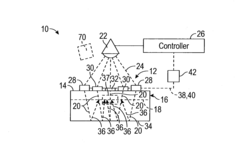
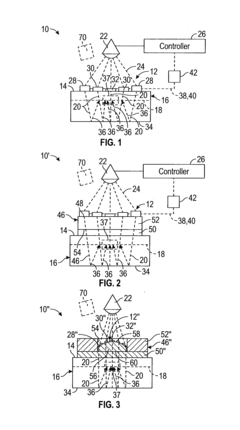
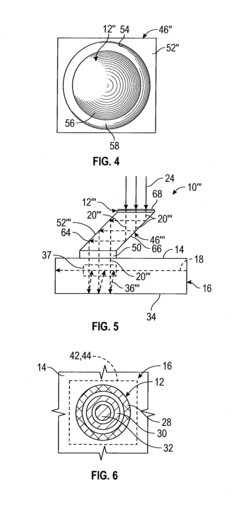
- A compact bond inspection system using a reactive material that creates compression waves when activated by a lower-energy source, such as a 10 joule laser, positioned in a predetermined pattern to generate tension waves that reflect and combine simultaneously at the bondline, reducing the need for high-power equipment and enabling on-site inspections.
Environmental Impact of Surface Treatment Processes
The environmental impact of surface treatment processes for carbon fiber reinforced polymers (CFRP) represents a critical consideration in the broader context of sustainable manufacturing. Traditional surface treatment methods such as mechanical abrasion, chemical etching, and plasma treatment each carry distinct environmental footprints that must be carefully evaluated when determining optimal adhesion enhancement strategies.
Chemical treatments, particularly those utilizing strong acids or solvents, pose significant environmental concerns through the generation of hazardous waste streams. These processes typically produce contaminated rinse waters containing dissolved heavy metals, organic compounds, and acidic or alkaline residues that require specialized treatment before disposal. Additionally, many chemical treatments emit volatile organic compounds (VOCs) that contribute to air pollution and potential worker health hazards.
Plasma treatment processes, while generally considered more environmentally friendly than chemical alternatives, still present notable energy consumption challenges. The high energy requirements for plasma generation contribute to indirect environmental impacts through carbon emissions, particularly in regions where electricity generation relies heavily on fossil fuels. However, recent advancements in low-temperature plasma technologies have demonstrated reduced energy requirements while maintaining effective surface modification capabilities.
Mechanical abrasion techniques generate particulate matter that may contain carbon fiber fragments, presenting both environmental and health concerns if not properly contained and filtered. These microscopic particles can potentially enter water systems or become airborne, creating exposure risks that necessitate robust dust collection systems and personal protective equipment protocols.
Emerging environmentally conscious surface treatment alternatives show promising results in comparative lifecycle assessments. Supercritical carbon dioxide treatments, for instance, utilize recyclable CO2 as the primary medium, significantly reducing waste generation and eliminating the need for hazardous chemicals. Similarly, bio-based surface treatments derived from renewable resources offer reduced environmental toxicity while achieving comparable adhesion enhancement results.
Regulatory frameworks governing surface treatment processes continue to evolve globally, with increasing emphasis on reducing environmental impact. The European Union's REACH regulations and similar initiatives worldwide have accelerated the development of greener surface treatment technologies by restricting certain chemical compounds traditionally used in CFRP processing.
Water consumption represents another significant environmental consideration, particularly for wet chemical processes that may require substantial volumes for treatment and subsequent rinsing steps. Closed-loop water recycling systems have demonstrated potential for reducing this impact, though implementation costs remain a barrier for smaller manufacturing operations.
Chemical treatments, particularly those utilizing strong acids or solvents, pose significant environmental concerns through the generation of hazardous waste streams. These processes typically produce contaminated rinse waters containing dissolved heavy metals, organic compounds, and acidic or alkaline residues that require specialized treatment before disposal. Additionally, many chemical treatments emit volatile organic compounds (VOCs) that contribute to air pollution and potential worker health hazards.
Plasma treatment processes, while generally considered more environmentally friendly than chemical alternatives, still present notable energy consumption challenges. The high energy requirements for plasma generation contribute to indirect environmental impacts through carbon emissions, particularly in regions where electricity generation relies heavily on fossil fuels. However, recent advancements in low-temperature plasma technologies have demonstrated reduced energy requirements while maintaining effective surface modification capabilities.
Mechanical abrasion techniques generate particulate matter that may contain carbon fiber fragments, presenting both environmental and health concerns if not properly contained and filtered. These microscopic particles can potentially enter water systems or become airborne, creating exposure risks that necessitate robust dust collection systems and personal protective equipment protocols.
Emerging environmentally conscious surface treatment alternatives show promising results in comparative lifecycle assessments. Supercritical carbon dioxide treatments, for instance, utilize recyclable CO2 as the primary medium, significantly reducing waste generation and eliminating the need for hazardous chemicals. Similarly, bio-based surface treatments derived from renewable resources offer reduced environmental toxicity while achieving comparable adhesion enhancement results.
Regulatory frameworks governing surface treatment processes continue to evolve globally, with increasing emphasis on reducing environmental impact. The European Union's REACH regulations and similar initiatives worldwide have accelerated the development of greener surface treatment technologies by restricting certain chemical compounds traditionally used in CFRP processing.
Water consumption represents another significant environmental consideration, particularly for wet chemical processes that may require substantial volumes for treatment and subsequent rinsing steps. Closed-loop water recycling systems have demonstrated potential for reducing this impact, though implementation costs remain a barrier for smaller manufacturing operations.
Quality Control Standards for CFRP Bonded Structures
Quality control standards for CFRP bonded structures represent a critical framework that ensures the reliability and performance of adhesively bonded carbon fiber reinforced polymer components. These standards encompass comprehensive testing protocols, inspection methodologies, and acceptance criteria specifically designed for surface-treated CFRP interfaces.
The aerospace industry has pioneered many of these standards, with organizations like ASTM, ISO, and SAE developing specific test methods for evaluating bond quality. ASTM D5868 and D1002 provide standardized lap shear testing procedures, while ASTM D3762 addresses peel strength evaluation for treated CFRP surfaces. These standards establish minimum performance thresholds that vary based on application requirements.
Non-destructive testing (NDT) protocols form an essential component of quality control standards, with ultrasonic inspection, thermography, and acoustic emission testing being the predominant methods. These techniques can detect subsurface defects, disbonds, and inconsistencies in surface treatment that might compromise adhesion strength. The aerospace standard AITM 6-0011 specifically addresses NDT requirements for CFRP bonded structures.
Process control parameters must be rigorously monitored and documented according to industry standards. Surface energy measurements (typically requiring >45 mJ/m²), contact angle assessments (<30° for optimal wetting), and surface roughness profiles (Ra values between 1-3 μm) serve as quantifiable metrics for surface treatment effectiveness. Environmental conditions during bonding processes must also adhere to strict humidity (<65% RH) and temperature controls (typically 18-25°C).
Statistical process control methodologies are increasingly incorporated into quality standards, requiring documentation of key process variables and implementation of control charts. This approach enables early detection of process drift before it results in bond failures. The automotive industry standard DVS 3310 incorporates such statistical approaches for CFRP bonded assemblies.
Certification and traceability requirements mandate detailed documentation of surface treatment parameters, adhesive batch information, and environmental conditions during bonding. This documentation must be maintained throughout the product lifecycle, enabling root cause analysis should failures occur. The aerospace standard EN 4170 provides comprehensive guidelines for such documentation requirements.
Emerging standards are beginning to incorporate digital monitoring systems that provide real-time feedback on surface treatment effectiveness and bond quality. These systems utilize machine learning algorithms to detect subtle variations in surface characteristics that might impact adhesion performance, representing the next evolution in quality control standards for CFRP bonded structures.
The aerospace industry has pioneered many of these standards, with organizations like ASTM, ISO, and SAE developing specific test methods for evaluating bond quality. ASTM D5868 and D1002 provide standardized lap shear testing procedures, while ASTM D3762 addresses peel strength evaluation for treated CFRP surfaces. These standards establish minimum performance thresholds that vary based on application requirements.
Non-destructive testing (NDT) protocols form an essential component of quality control standards, with ultrasonic inspection, thermography, and acoustic emission testing being the predominant methods. These techniques can detect subsurface defects, disbonds, and inconsistencies in surface treatment that might compromise adhesion strength. The aerospace standard AITM 6-0011 specifically addresses NDT requirements for CFRP bonded structures.
Process control parameters must be rigorously monitored and documented according to industry standards. Surface energy measurements (typically requiring >45 mJ/m²), contact angle assessments (<30° for optimal wetting), and surface roughness profiles (Ra values between 1-3 μm) serve as quantifiable metrics for surface treatment effectiveness. Environmental conditions during bonding processes must also adhere to strict humidity (<65% RH) and temperature controls (typically 18-25°C).
Statistical process control methodologies are increasingly incorporated into quality standards, requiring documentation of key process variables and implementation of control charts. This approach enables early detection of process drift before it results in bond failures. The automotive industry standard DVS 3310 incorporates such statistical approaches for CFRP bonded assemblies.
Certification and traceability requirements mandate detailed documentation of surface treatment parameters, adhesive batch information, and environmental conditions during bonding. This documentation must be maintained throughout the product lifecycle, enabling root cause analysis should failures occur. The aerospace standard EN 4170 provides comprehensive guidelines for such documentation requirements.
Emerging standards are beginning to incorporate digital monitoring systems that provide real-time feedback on surface treatment effectiveness and bond quality. These systems utilize machine learning algorithms to detect subtle variations in surface characteristics that might impact adhesion performance, representing the next evolution in quality control standards for CFRP bonded structures.
Unlock deeper insights with Patsnap Eureka Quick Research — get a full tech report to explore trends and direct your research. Try now!
Generate Your Research Report Instantly with AI Agent
Supercharge your innovation with Patsnap Eureka AI Agent Platform!