
CFRP vs Steel: Lifecycle Cost Effectiveness
SEP 17, 20259 MIN READ
Generate Your Research Report Instantly with AI Agent
Patsnap Eureka helps you evaluate technical feasibility & market potential.
CFRP and Steel Material Background and Objectives
Carbon Fiber Reinforced Polymer (CFRP) and steel represent two fundamentally different material approaches in engineering applications, each with distinct historical trajectories and technological implications. Steel has been a cornerstone of industrial development since the 18th century, evolving through various metallurgical innovations to achieve today's diverse range of high-performance alloys. In contrast, CFRP emerged in the mid-20th century as part of the advanced composites revolution, gaining significant traction in aerospace applications before expanding to other sectors.
The technological evolution of steel has focused on enhancing strength-to-weight ratios, corrosion resistance, and manufacturing efficiency. Modern high-strength steels can achieve tensile strengths exceeding 1,500 MPa while maintaining good formability. Meanwhile, CFRP technology has advanced through innovations in fiber manufacturing, matrix materials, and fabrication processes, resulting in composites that can offer specific strengths up to five times that of steel.
Current market dynamics show increasing competition between these materials across multiple sectors including automotive, construction, and infrastructure. The automotive industry particularly exemplifies this trend, with manufacturers seeking optimal material solutions to meet stringent emissions regulations while maintaining structural integrity and cost-effectiveness. Boeing's 787 Dreamliner, with approximately 50% composite construction by weight, represents a landmark case study in large-scale CFRP implementation.
The primary objective of this technical research is to conduct a comprehensive lifecycle cost-effectiveness analysis comparing CFRP and steel across various applications. This analysis aims to move beyond initial material and manufacturing costs to encompass the entire product lifecycle, including operational efficiency, maintenance requirements, service life, and end-of-life considerations.
Key technical goals include quantifying the long-term economic implications of material selection, developing predictive models for lifecycle performance, and identifying application-specific thresholds where CFRP becomes economically advantageous over steel despite higher initial costs. The research will also examine how emerging manufacturing technologies might alter the cost equation for both materials in the coming decade.
This investigation is particularly timely as industries worldwide face increasing pressure to reduce carbon footprints while maintaining economic viability. Understanding the complete lifecycle cost profile of these materials will provide crucial decision-making frameworks for engineers, product developers, and policy makers navigating the complex trade-offs between traditional and advanced materials.
The technological evolution of steel has focused on enhancing strength-to-weight ratios, corrosion resistance, and manufacturing efficiency. Modern high-strength steels can achieve tensile strengths exceeding 1,500 MPa while maintaining good formability. Meanwhile, CFRP technology has advanced through innovations in fiber manufacturing, matrix materials, and fabrication processes, resulting in composites that can offer specific strengths up to five times that of steel.
Current market dynamics show increasing competition between these materials across multiple sectors including automotive, construction, and infrastructure. The automotive industry particularly exemplifies this trend, with manufacturers seeking optimal material solutions to meet stringent emissions regulations while maintaining structural integrity and cost-effectiveness. Boeing's 787 Dreamliner, with approximately 50% composite construction by weight, represents a landmark case study in large-scale CFRP implementation.
The primary objective of this technical research is to conduct a comprehensive lifecycle cost-effectiveness analysis comparing CFRP and steel across various applications. This analysis aims to move beyond initial material and manufacturing costs to encompass the entire product lifecycle, including operational efficiency, maintenance requirements, service life, and end-of-life considerations.
Key technical goals include quantifying the long-term economic implications of material selection, developing predictive models for lifecycle performance, and identifying application-specific thresholds where CFRP becomes economically advantageous over steel despite higher initial costs. The research will also examine how emerging manufacturing technologies might alter the cost equation for both materials in the coming decade.
This investigation is particularly timely as industries worldwide face increasing pressure to reduce carbon footprints while maintaining economic viability. Understanding the complete lifecycle cost profile of these materials will provide crucial decision-making frameworks for engineers, product developers, and policy makers navigating the complex trade-offs between traditional and advanced materials.
Market Demand Analysis for Lightweight Materials
The global market for lightweight materials has experienced significant growth over the past decade, driven primarily by stringent environmental regulations and the increasing demand for fuel-efficient vehicles. The automotive industry represents the largest market segment for lightweight materials, with aerospace, wind energy, and construction sectors following closely behind. Carbon Fiber Reinforced Polymer (CFRP) has emerged as a premium lightweight alternative to traditional steel, offering weight reductions of up to 70% while maintaining comparable or superior strength properties.
Market research indicates that the global CFRP market was valued at approximately $24.8 billion in 2022 and is projected to grow at a CAGR of 10.6% through 2030. This growth trajectory significantly outpaces the traditional steel market, which is expanding at a more modest 3.2% annually. The price premium of CFRP over steel remains substantial, with raw material costs typically 8-10 times higher, creating a significant barrier to widespread adoption despite the performance advantages.
Consumer demand patterns show increasing willingness to pay premium prices for lightweight materials in high-end applications where performance benefits justify the additional cost. The automotive sector has witnessed a 15% annual increase in CFRP adoption for luxury and sports vehicles, while mass-market implementation remains limited primarily to specific components rather than full structural applications.
Regional market analysis reveals that North America and Europe lead in CFRP adoption, accounting for over 65% of global consumption, while Asia-Pacific represents the fastest-growing market with annual growth rates exceeding 12%. This regional disparity correlates strongly with regulatory environments, with stricter emissions standards driving accelerated adoption in developed markets.
Industry surveys indicate that 78% of automotive manufacturers plan to increase their use of lightweight materials over the next five years, with 42% specifically targeting CFRP applications. However, cost remains the primary concern, with 83% of respondents citing price as the main barrier to wider implementation. This highlights the critical importance of lifecycle cost effectiveness in material selection decisions.
The construction sector represents an emerging market for CFRP, particularly in infrastructure applications where lifecycle costs can justify the initial investment premium. Bridge rehabilitation projects using CFRP have demonstrated 30-40% lower total lifecycle costs compared to traditional steel reinforcement when accounting for reduced maintenance requirements and extended service life.
Market forecasts suggest that technological advancements in manufacturing processes could reduce CFRP production costs by 25-30% within the next decade, potentially expanding market penetration into more price-sensitive applications and accelerating the shift away from traditional steel in weight-critical applications.
Market research indicates that the global CFRP market was valued at approximately $24.8 billion in 2022 and is projected to grow at a CAGR of 10.6% through 2030. This growth trajectory significantly outpaces the traditional steel market, which is expanding at a more modest 3.2% annually. The price premium of CFRP over steel remains substantial, with raw material costs typically 8-10 times higher, creating a significant barrier to widespread adoption despite the performance advantages.
Consumer demand patterns show increasing willingness to pay premium prices for lightweight materials in high-end applications where performance benefits justify the additional cost. The automotive sector has witnessed a 15% annual increase in CFRP adoption for luxury and sports vehicles, while mass-market implementation remains limited primarily to specific components rather than full structural applications.
Regional market analysis reveals that North America and Europe lead in CFRP adoption, accounting for over 65% of global consumption, while Asia-Pacific represents the fastest-growing market with annual growth rates exceeding 12%. This regional disparity correlates strongly with regulatory environments, with stricter emissions standards driving accelerated adoption in developed markets.
Industry surveys indicate that 78% of automotive manufacturers plan to increase their use of lightweight materials over the next five years, with 42% specifically targeting CFRP applications. However, cost remains the primary concern, with 83% of respondents citing price as the main barrier to wider implementation. This highlights the critical importance of lifecycle cost effectiveness in material selection decisions.
The construction sector represents an emerging market for CFRP, particularly in infrastructure applications where lifecycle costs can justify the initial investment premium. Bridge rehabilitation projects using CFRP have demonstrated 30-40% lower total lifecycle costs compared to traditional steel reinforcement when accounting for reduced maintenance requirements and extended service life.
Market forecasts suggest that technological advancements in manufacturing processes could reduce CFRP production costs by 25-30% within the next decade, potentially expanding market penetration into more price-sensitive applications and accelerating the shift away from traditional steel in weight-critical applications.
Current Technical Challenges in CFRP vs Steel Applications
Despite the numerous advantages of Carbon Fiber Reinforced Polymers (CFRP) over traditional steel in various applications, several significant technical challenges persist in their widespread adoption. The primary obstacle remains the substantially higher initial production costs of CFRP components, typically 5-10 times that of equivalent steel parts. This cost differential stems from expensive raw materials, energy-intensive manufacturing processes, and specialized equipment requirements.
Manufacturing scalability presents another critical challenge. While steel production benefits from centuries of process optimization and automation, CFRP manufacturing still involves considerable manual labor, particularly in layup processes. Automated fiber placement technologies exist but remain costly and limited in handling complex geometries, creating a significant barrier to mass production efficiency.
Quality control and consistency in CFRP production pose substantial technical difficulties. The performance of composite structures depends heavily on fiber orientation, resin distribution, and cure parameters. Minor variations in these factors can lead to significant deviations in mechanical properties, making consistent production challenging compared to the well-established quality control protocols in steel manufacturing.
Joining and repair technologies for CFRP structures remain less developed than those for steel. Traditional joining methods like welding are not applicable to composites, necessitating adhesive bonding or mechanical fastening, each with their own limitations. Repair procedures for damaged CFRP components are complex, time-consuming, and require specialized expertise, unlike the relatively straightforward repair processes for steel structures.
End-of-life management represents a growing technical challenge. While steel boasts well-established recycling infrastructure with recovery rates exceeding 85% in many industries, CFRP recycling technologies remain in nascent stages. Current methods often degrade fiber properties, limiting the applications of recycled carbon fiber and creating concerns about the long-term environmental footprint of CFRP solutions.
Predictive modeling and simulation tools for CFRP behavior under complex loading conditions and environmental factors still lag behind those available for metallic materials. This knowledge gap increases design uncertainty and often leads to over-engineering of CFRP components, partially negating potential weight savings and cost benefits over the product lifecycle.
Durability in harsh environments presents ongoing challenges, particularly regarding moisture absorption, UV degradation, and impact damage tolerance. While steel degradation mechanisms are well-understood and predictable, the long-term performance of CFRP under combined environmental stressors remains difficult to forecast accurately, creating uncertainty in lifecycle cost projections.
Manufacturing scalability presents another critical challenge. While steel production benefits from centuries of process optimization and automation, CFRP manufacturing still involves considerable manual labor, particularly in layup processes. Automated fiber placement technologies exist but remain costly and limited in handling complex geometries, creating a significant barrier to mass production efficiency.
Quality control and consistency in CFRP production pose substantial technical difficulties. The performance of composite structures depends heavily on fiber orientation, resin distribution, and cure parameters. Minor variations in these factors can lead to significant deviations in mechanical properties, making consistent production challenging compared to the well-established quality control protocols in steel manufacturing.
Joining and repair technologies for CFRP structures remain less developed than those for steel. Traditional joining methods like welding are not applicable to composites, necessitating adhesive bonding or mechanical fastening, each with their own limitations. Repair procedures for damaged CFRP components are complex, time-consuming, and require specialized expertise, unlike the relatively straightforward repair processes for steel structures.
End-of-life management represents a growing technical challenge. While steel boasts well-established recycling infrastructure with recovery rates exceeding 85% in many industries, CFRP recycling technologies remain in nascent stages. Current methods often degrade fiber properties, limiting the applications of recycled carbon fiber and creating concerns about the long-term environmental footprint of CFRP solutions.
Predictive modeling and simulation tools for CFRP behavior under complex loading conditions and environmental factors still lag behind those available for metallic materials. This knowledge gap increases design uncertainty and often leads to over-engineering of CFRP components, partially negating potential weight savings and cost benefits over the product lifecycle.
Durability in harsh environments presents ongoing challenges, particularly regarding moisture absorption, UV degradation, and impact damage tolerance. While steel degradation mechanisms are well-understood and predictable, the long-term performance of CFRP under combined environmental stressors remains difficult to forecast accurately, creating uncertainty in lifecycle cost projections.
Current Lifecycle Cost Assessment Methodologies
01 Comparative lifecycle cost analysis of CFRP versus steel structures
Carbon Fiber Reinforced Polymer (CFRP) structures often have higher initial manufacturing costs compared to traditional steel structures, but may offer long-term economic benefits through reduced maintenance requirements, longer service life, and lower replacement costs. Comprehensive lifecycle cost analysis considers factors such as material production, fabrication, installation, maintenance, repair, and end-of-life disposal or recycling to determine the overall cost-effectiveness of CFRP versus steel in various applications.- Comparative lifecycle cost analysis of CFRP vs steel structures: Carbon Fiber Reinforced Polymer (CFRP) structures often demonstrate superior lifecycle cost effectiveness compared to traditional steel structures due to their longer service life, reduced maintenance requirements, and lower replacement frequency. While initial manufacturing costs for CFRP are typically higher, the total lifecycle costs can be lower when considering factors such as corrosion resistance, weight reduction, and extended durability. These advantages translate to significant long-term economic benefits in infrastructure and construction applications.
- Weight reduction and fuel efficiency benefits of CFRP: CFRP components offer substantial weight reduction compared to steel counterparts, typically achieving 50-70% weight savings while maintaining equivalent or superior structural performance. This weight reduction directly impacts lifecycle costs through improved fuel efficiency in transportation applications, reduced energy consumption during operation, and lower transportation costs during installation. The lightweight nature of CFRP also enables easier handling and installation, reducing labor costs and equipment requirements throughout the structure's lifecycle.
- Durability and maintenance cost comparison: CFRP materials demonstrate superior resistance to environmental degradation factors such as corrosion, fatigue, and UV exposure compared to steel structures. This enhanced durability significantly reduces maintenance frequency and associated costs throughout the structure's service life. While steel structures typically require regular inspection, surface treatment, and protective coating renewal, CFRP structures maintain their structural integrity with minimal intervention, resulting in lower lifecycle maintenance expenditures and reduced downtime for repair operations.
- Hybrid CFRP-steel structural solutions: Hybrid structural systems combining CFRP and steel leverage the advantages of both materials to optimize lifecycle cost effectiveness. These hybrid approaches strategically place CFRP in high-stress or corrosion-prone areas while utilizing steel in less critical zones, balancing initial costs with long-term performance benefits. The selective application of CFRP for reinforcement or repair of existing steel structures extends service life while minimizing material usage, offering a cost-effective compromise between all-steel and all-CFRP solutions for various infrastructure applications.
- Manufacturing and installation cost considerations: The manufacturing and installation processes for CFRP and steel structures significantly impact their lifecycle cost effectiveness. CFRP components typically involve higher material costs and specialized fabrication techniques, but can offer advantages through prefabrication, reduced on-site assembly time, and lower transportation costs due to lighter weight. Steel structures benefit from established manufacturing processes and widespread industry familiarity, but may incur higher installation costs due to heavier components requiring substantial lifting equipment and longer assembly timeframes.
02 CFRP applications in construction and infrastructure
CFRP materials are increasingly being used in construction and infrastructure projects as alternatives to steel due to their superior strength-to-weight ratio, corrosion resistance, and potential for longer service life. Applications include reinforcement for concrete structures, bridge components, building facades, and seismic retrofitting. While the initial material cost is higher than steel, the reduced weight can lead to savings in foundation requirements, transportation, and installation costs, potentially improving overall lifecycle cost-effectiveness.Expand Specific Solutions03 Durability and maintenance advantages of CFRP over steel
CFRP offers significant advantages over steel in terms of durability and maintenance requirements, particularly in corrosive environments. Unlike steel, CFRP does not rust or corrode, eliminating the need for regular protective coatings and reducing maintenance frequency and costs. This corrosion resistance can substantially extend the service life of structures and components, potentially offsetting the higher initial investment through reduced lifecycle maintenance costs and fewer replacements over time.Expand Specific Solutions04 Manufacturing and production cost considerations
The manufacturing and production processes for CFRP components typically involve higher energy consumption and more complex fabrication methods compared to steel, contributing to their higher initial costs. However, advancements in automated manufacturing techniques, such as pultrusion and resin transfer molding, are gradually reducing production costs for CFRP. Additionally, the lightweight nature of CFRP can lead to savings in transportation and installation costs, which should be factored into comprehensive lifecycle cost analyses.Expand Specific Solutions05 Environmental impact and sustainability comparison
When comparing the environmental impact of CFRP and steel over their complete lifecycle, several factors must be considered. While steel production is energy-intensive, it benefits from well-established recycling infrastructure. CFRP manufacturing typically has a higher carbon footprint initially, but the material's lightweight properties can lead to significant energy savings during the use phase, particularly in transportation applications. End-of-life considerations are also important, as CFRP recycling technologies are still developing compared to the mature steel recycling industry.Expand Specific Solutions
Key Industry Players in CFRP and Steel Manufacturing
The CFRP vs Steel lifecycle cost effectiveness market is in a growth phase, with increasing adoption across automotive and industrial sectors. The market is expanding as companies seek lightweight, high-strength materials to improve fuel efficiency and reduce emissions. Technology maturity varies significantly among key players, with automotive manufacturers like BMW leading CFRP integration in mass production vehicles, while traditional steel producers such as Nippon Steel and JFE Steel are enhancing steel performance to remain competitive. Material suppliers like Benteler SGL and Resonac are advancing CFRP manufacturing processes to reduce costs, while research institutions including UT-Battelle and Louisiana State University are developing hybrid solutions combining both materials' advantages. The competition centers on balancing initial production costs against long-term performance benefits, with lifecycle assessment becoming increasingly important in material selection decisions.
NIPPON STEEL CORP.
Technical Solution: Nippon Steel has developed advanced high-strength steel (AHSS) solutions specifically positioned to compete with CFRP on a lifecycle cost basis. Their NANOHITEN® and other ultra-high-strength steel grades (reaching tensile strengths of 1.5-2.0 GPa) enable weight reductions of 15-25% compared to conventional steel while maintaining manufacturability through existing infrastructure. Their proprietary hot-stamping and tailored blanking technologies allow for variable thickness and strength properties within a single component, optimizing material usage. Nippon Steel's lifecycle assessment demonstrates that their advanced steels produce approximately 60% lower CO2 emissions during production compared to CFRP alternatives. Their economic analysis shows that while CFRP may offer greater absolute weight reduction, their AHSS solutions achieve weight reduction at 1/8th the cost per kilogram saved. Additionally, their steel solutions maintain 100% recyclability through established channels, with energy recovery of approximately 75% compared to primary production.
Strengths: Significantly lower initial production costs than CFRP; compatibility with existing manufacturing infrastructure and processes; well-established supply chain and material availability; near 100% recyclability through existing channels; superior repairability in conventional body shops. Weaknesses: Less absolute weight reduction potential than CFRP (maximum ~25% vs. 50%+ for CFRP); higher density limiting applications where extreme lightweighting is required; susceptibility to corrosion requiring protective treatments; higher thermal expansion compared to CFRP.
Bayerische Motoren Werke AG
Technical Solution: BMW has pioneered the integration of Carbon Fiber Reinforced Polymer (CFRP) in mass-produced vehicles through their BMW i series, particularly the i3 and i8 models. Their LifeDrive architecture separates the aluminum Drive module (containing powertrain and chassis) from the Life module (passenger cell) made entirely of CFRP. BMW's proprietary manufacturing process includes automated laying of carbon fiber fabrics, resin transfer molding, and high-pressure resin injection that reduces production time by up to 50% compared to traditional methods. Their lifecycle assessment shows that despite higher initial production emissions, CFRP vehicles achieve carbon footprint parity with steel vehicles after approximately 100,000 km of driving due to fuel savings from weight reduction. BMW has established a closed-loop recycling system for CFRP components, reclaiming up to 95% of carbon fibers for reuse in non-structural applications.
Strengths: 30% weight reduction compared to steel equivalents, resulting in 10-15% improved fuel efficiency; exceptional crash safety with controlled energy absorption; corrosion resistance eliminating long-term maintenance issues. Weaknesses: Initial manufacturing costs approximately 5-10 times higher than steel; energy-intensive production process; limited repair options requiring specialized techniques; challenges in end-of-life recycling despite closed-loop efforts.
Critical Technical Patents in CFRP Manufacturing
Recyclable enhanced performance carbon fiber reinforced polymers
PatentActiveUS12115701B2
Innovation
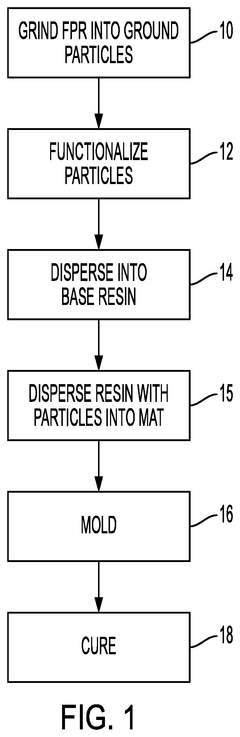
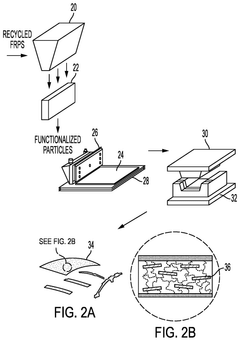
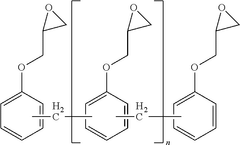
- A method involving grinding used CFRPs to produce ground particles, functionalizing them, and dispersing these particles into a base resin with high glass transition temperature epoxy, which are then molded and cured to create recyclable CFRP parts with enhanced mechanical properties and dimensional stability, enabling cost-effective and efficient recycling.
A method to strengthen reinforced concrete using carbon fiber
PatentInactiveIN202241007833A
Innovation
- The use of carbon fibers reinforced polymers (CFRP) for externally bonding fabrics to reinforced concrete structures, specifically through flexural and shear strengthening techniques, which improve structural strength and load-carrying capacity while maintaining flexibility and reducing stiffness issues.

Environmental Impact Assessment of Material Choices
The environmental impact assessment of material choices between Carbon Fiber Reinforced Polymers (CFRP) and steel reveals significant differences throughout their respective lifecycles. CFRP production is notably energy-intensive, requiring approximately 286 MJ/kg compared to steel's 32 MJ/kg, resulting in a carbon footprint nearly 10 times higher during the manufacturing phase. This substantial initial environmental cost stems primarily from the energy-intensive carbon fiber production process, which involves high-temperature treatment of polyacrylonitrile precursors.
However, the environmental equation shifts dramatically during the use phase, particularly in transportation applications. The lightweight nature of CFRP (typically 50-70% lighter than steel equivalents) translates to significant fuel savings and emissions reductions. Studies indicate that vehicles utilizing CFRP components can achieve 30-40% better fuel efficiency compared to steel-based counterparts, potentially offsetting the initial production impacts within 2-5 years of operation, depending on usage patterns.
Water consumption presents another critical environmental consideration. Steel production consumes approximately 70-80 liters of water per kilogram, while CFRP manufacturing requires 20-30% more water, primarily during the polymer resin production and carbon fiber treatment processes. Additionally, steel production generates substantial quantities of slag and other solid wastes, whereas CFRP manufacturing produces fewer solid waste materials but introduces concerns regarding microplastic pollution.
End-of-life management represents perhaps the most significant environmental challenge for CFRP. While steel boasts recycling rates exceeding 85% globally with well-established recycling infrastructure, CFRP recycling remains technically challenging and commercially limited. Current CFRP recycling methods, including pyrolysis and solvolysis, recover only 30-40% of the original material value and consume substantial energy. The non-biodegradable nature of CFRP also presents long-term disposal concerns.
Toxicity assessments indicate that CFRP manufacturing involves several hazardous substances, including epoxy resins containing bisphenol A and various solvents with potential environmental persistence. Steel production generates significant air pollutants, particularly SOx and NOx, but these emissions have been progressively reduced through regulatory compliance and technological improvements in modern facilities.
Land use impact analysis shows steel's advantage in resource concentration, with mining operations affecting smaller geographical areas compared to the distributed environmental footprint of CFRP's petroleum-based precursors and manufacturing facilities. However, steel's mining operations typically cause more intensive local ecosystem disruption.
However, the environmental equation shifts dramatically during the use phase, particularly in transportation applications. The lightweight nature of CFRP (typically 50-70% lighter than steel equivalents) translates to significant fuel savings and emissions reductions. Studies indicate that vehicles utilizing CFRP components can achieve 30-40% better fuel efficiency compared to steel-based counterparts, potentially offsetting the initial production impacts within 2-5 years of operation, depending on usage patterns.
Water consumption presents another critical environmental consideration. Steel production consumes approximately 70-80 liters of water per kilogram, while CFRP manufacturing requires 20-30% more water, primarily during the polymer resin production and carbon fiber treatment processes. Additionally, steel production generates substantial quantities of slag and other solid wastes, whereas CFRP manufacturing produces fewer solid waste materials but introduces concerns regarding microplastic pollution.
End-of-life management represents perhaps the most significant environmental challenge for CFRP. While steel boasts recycling rates exceeding 85% globally with well-established recycling infrastructure, CFRP recycling remains technically challenging and commercially limited. Current CFRP recycling methods, including pyrolysis and solvolysis, recover only 30-40% of the original material value and consume substantial energy. The non-biodegradable nature of CFRP also presents long-term disposal concerns.
Toxicity assessments indicate that CFRP manufacturing involves several hazardous substances, including epoxy resins containing bisphenol A and various solvents with potential environmental persistence. Steel production generates significant air pollutants, particularly SOx and NOx, but these emissions have been progressively reduced through regulatory compliance and technological improvements in modern facilities.
Land use impact analysis shows steel's advantage in resource concentration, with mining operations affecting smaller geographical areas compared to the distributed environmental footprint of CFRP's petroleum-based precursors and manufacturing facilities. However, steel's mining operations typically cause more intensive local ecosystem disruption.
Supply Chain Resilience and Material Availability
The global supply chain for CFRP (Carbon Fiber Reinforced Polymer) and steel exhibits significant differences that impact their lifecycle cost effectiveness. Steel benefits from a mature, globally distributed supply network with numerous suppliers across different regions, creating inherent redundancy that shields against localized disruptions. This established infrastructure allows for relatively stable pricing and consistent availability, even during economic fluctuations or regional crises.
In contrast, CFRP materials face more vulnerable supply chains with concentrated production capabilities. Carbon fiber manufacturing remains limited to fewer specialized facilities worldwide, with Japan, the United States, and Germany dominating production. This concentration creates potential bottlenecks and exposes CFRP supply to greater disruption risks from natural disasters, geopolitical tensions, or economic sanctions affecting key production regions.
Raw material availability presents another critical distinction. Steel production relies primarily on iron ore and coal, both abundant resources with diverse global sources. CFRP, however, depends on petroleum-based precursors and specialized manufacturing processes requiring significant energy inputs. This dependency on petroleum derivatives makes CFRP more susceptible to oil price volatility and potential future resource constraints.
Lead times and production flexibility further differentiate these materials. Steel manufacturing can rapidly adjust production volumes to meet demand fluctuations, with established recycling infrastructure supporting circular material flows. CFRP production involves more complex, time-intensive processes with limited capacity for rapid scaling, resulting in longer lead times during demand surges and creating potential project delays that impact overall lifecycle costs.
Recent global events have highlighted these supply chain vulnerabilities. The COVID-19 pandemic exposed the fragility of global supply networks, with CFRP experiencing more significant disruptions than steel due to its less redundant supply infrastructure. Similarly, geopolitical tensions affecting trade routes and international commerce have demonstrated how concentrated production capabilities can translate to availability challenges and price volatility.
Looking forward, both materials face evolving supply landscapes. Steel manufacturers are increasingly adopting greener production methods to address environmental concerns, while CFRP producers are working to develop more regionalized production capabilities and alternative precursor materials to enhance supply resilience. These developments will likely influence the comparative lifecycle cost effectiveness of both materials in coming decades as supply chain considerations become increasingly central to material selection decisions.
In contrast, CFRP materials face more vulnerable supply chains with concentrated production capabilities. Carbon fiber manufacturing remains limited to fewer specialized facilities worldwide, with Japan, the United States, and Germany dominating production. This concentration creates potential bottlenecks and exposes CFRP supply to greater disruption risks from natural disasters, geopolitical tensions, or economic sanctions affecting key production regions.
Raw material availability presents another critical distinction. Steel production relies primarily on iron ore and coal, both abundant resources with diverse global sources. CFRP, however, depends on petroleum-based precursors and specialized manufacturing processes requiring significant energy inputs. This dependency on petroleum derivatives makes CFRP more susceptible to oil price volatility and potential future resource constraints.
Lead times and production flexibility further differentiate these materials. Steel manufacturing can rapidly adjust production volumes to meet demand fluctuations, with established recycling infrastructure supporting circular material flows. CFRP production involves more complex, time-intensive processes with limited capacity for rapid scaling, resulting in longer lead times during demand surges and creating potential project delays that impact overall lifecycle costs.
Recent global events have highlighted these supply chain vulnerabilities. The COVID-19 pandemic exposed the fragility of global supply networks, with CFRP experiencing more significant disruptions than steel due to its less redundant supply infrastructure. Similarly, geopolitical tensions affecting trade routes and international commerce have demonstrated how concentrated production capabilities can translate to availability challenges and price volatility.
Looking forward, both materials face evolving supply landscapes. Steel manufacturers are increasingly adopting greener production methods to address environmental concerns, while CFRP producers are working to develop more regionalized production capabilities and alternative precursor materials to enhance supply resilience. These developments will likely influence the comparative lifecycle cost effectiveness of both materials in coming decades as supply chain considerations become increasingly central to material selection decisions.
Unlock deeper insights with Patsnap Eureka Quick Research — get a full tech report to explore trends and direct your research. Try now!
Generate Your Research Report Instantly with AI Agent
Supercharge your innovation with Patsnap Eureka AI Agent Platform!