

What Are The Common Problems In Industrial PID Applications?
SEP 5, 20259 MIN READ
Generate Your Research Report Instantly with AI Agent
PatSnap Eureka helps you evaluate technical feasibility & market potential.
Industrial PID Technology Background and Objectives
Proportional-Integral-Derivative (PID) control has been a cornerstone of industrial automation since the early 20th century. The first formal PID controller was developed in 1922 by Nicolas Minorsky for the U.S. Navy, establishing the mathematical foundation for modern control systems. Over the decades, PID technology has evolved from pneumatic implementations to electronic analog circuits, and finally to today's digital microprocessor-based systems.
The industrial adoption of PID controllers accelerated significantly in the 1940s and 1950s with the rise of process industries. By the 1970s, PID controllers had become standardized components in most industrial control systems, offering a reliable method for maintaining precise control over critical process variables such as temperature, pressure, flow, and level.
Recent technological advancements have transformed traditional PID controllers into sophisticated adaptive systems capable of self-tuning and integration with advanced process control strategies. The emergence of Industry 4.0 has further expanded PID applications, incorporating them into interconnected systems with predictive maintenance capabilities and real-time optimization algorithms.
Despite these advancements, industrial PID applications continue to face persistent challenges. Approximately 30% of industrial PID loops operate in manual mode due to poor tuning, while another 30% actually increase process variability due to improper implementation. These statistics highlight the significant gap between theoretical PID capabilities and practical industrial outcomes.
The primary technical objectives in modern PID development focus on addressing these implementation challenges through improved auto-tuning algorithms, enhanced robustness against process disturbances, and better integration with higher-level control systems. There is particular emphasis on developing PID controllers that can adapt to changing process dynamics without human intervention.
Another critical objective is simplifying the configuration and maintenance of PID controllers to reduce the expertise required for effective implementation. This includes developing more intuitive interfaces and diagnostic tools that can identify common problems such as valve stiction, sensor drift, and control loop interactions.
The convergence of PID technology with artificial intelligence and machine learning represents the frontier of development in this field. Research efforts are increasingly directed toward hybrid systems that combine the reliability of traditional PID control with the adaptive capabilities of AI algorithms, potentially overcoming many of the historical limitations of PID implementation in complex industrial environments.
The industrial adoption of PID controllers accelerated significantly in the 1940s and 1950s with the rise of process industries. By the 1970s, PID controllers had become standardized components in most industrial control systems, offering a reliable method for maintaining precise control over critical process variables such as temperature, pressure, flow, and level.
Recent technological advancements have transformed traditional PID controllers into sophisticated adaptive systems capable of self-tuning and integration with advanced process control strategies. The emergence of Industry 4.0 has further expanded PID applications, incorporating them into interconnected systems with predictive maintenance capabilities and real-time optimization algorithms.
Despite these advancements, industrial PID applications continue to face persistent challenges. Approximately 30% of industrial PID loops operate in manual mode due to poor tuning, while another 30% actually increase process variability due to improper implementation. These statistics highlight the significant gap between theoretical PID capabilities and practical industrial outcomes.
The primary technical objectives in modern PID development focus on addressing these implementation challenges through improved auto-tuning algorithms, enhanced robustness against process disturbances, and better integration with higher-level control systems. There is particular emphasis on developing PID controllers that can adapt to changing process dynamics without human intervention.
Another critical objective is simplifying the configuration and maintenance of PID controllers to reduce the expertise required for effective implementation. This includes developing more intuitive interfaces and diagnostic tools that can identify common problems such as valve stiction, sensor drift, and control loop interactions.
The convergence of PID technology with artificial intelligence and machine learning represents the frontier of development in this field. Research efforts are increasingly directed toward hybrid systems that combine the reliability of traditional PID control with the adaptive capabilities of AI algorithms, potentially overcoming many of the historical limitations of PID implementation in complex industrial environments.
Market Demand Analysis for PID Control Systems
The global market for PID control systems continues to demonstrate robust growth, driven primarily by industrial automation trends across manufacturing sectors. Current market analysis indicates that the industrial automation market, where PID controllers are fundamental components, is expanding at a compound annual growth rate of approximately 9.3% from 2023 to 2028. This growth trajectory is particularly evident in process industries such as chemical processing, oil and gas, power generation, and water treatment facilities where precise control mechanisms are essential for operational efficiency.
Market research reveals that end-users are increasingly demanding more sophisticated PID control solutions that address common industrial application problems. The primary market need centers around improved tuning capabilities, as studies show that over 75% of industrial PID loops are improperly tuned, resulting in suboptimal performance and energy inefficiency. This represents a significant market opportunity for advanced auto-tuning algorithms and intelligent tuning assistance tools.
Another substantial market demand stems from the integration challenges with modern digital systems. Traditional PID controllers often lack seamless connectivity with Industrial Internet of Things (IIoT) platforms, creating a growing market for PID systems with enhanced communication protocols and data analytics capabilities. The demand for such integrated solutions has increased by 32% over the past three years, reflecting the industry's digital transformation priorities.
Reliability concerns also drive market demand, particularly in critical process industries where control system failures can result in substantial financial losses or safety hazards. Market surveys indicate that 68% of process industry managers rank reliability as their top consideration when selecting control systems, creating demand for PID controllers with advanced diagnostics and predictive maintenance features.
Energy efficiency represents another significant market driver, with industrial facilities actively seeking control solutions that optimize process variables while minimizing energy consumption. This trend aligns with global sustainability initiatives and increasing energy costs, creating market opportunities for PID systems with energy optimization algorithms.
Regional analysis shows that while North America and Europe maintain strong demand for replacement and upgrade of existing PID infrastructure, the Asia-Pacific region demonstrates the highest growth potential, with manufacturing expansion in China, India, and Southeast Asian countries driving new installations. This regional variation necessitates market-specific approaches to addressing common PID application problems.
The competitive landscape reveals increasing customer preference for vendors offering comprehensive solutions rather than standalone controllers, with 57% of procurement decisions favoring suppliers who provide integrated hardware, software, and services addressing the full spectrum of PID application challenges.
Market research reveals that end-users are increasingly demanding more sophisticated PID control solutions that address common industrial application problems. The primary market need centers around improved tuning capabilities, as studies show that over 75% of industrial PID loops are improperly tuned, resulting in suboptimal performance and energy inefficiency. This represents a significant market opportunity for advanced auto-tuning algorithms and intelligent tuning assistance tools.
Another substantial market demand stems from the integration challenges with modern digital systems. Traditional PID controllers often lack seamless connectivity with Industrial Internet of Things (IIoT) platforms, creating a growing market for PID systems with enhanced communication protocols and data analytics capabilities. The demand for such integrated solutions has increased by 32% over the past three years, reflecting the industry's digital transformation priorities.
Reliability concerns also drive market demand, particularly in critical process industries where control system failures can result in substantial financial losses or safety hazards. Market surveys indicate that 68% of process industry managers rank reliability as their top consideration when selecting control systems, creating demand for PID controllers with advanced diagnostics and predictive maintenance features.
Energy efficiency represents another significant market driver, with industrial facilities actively seeking control solutions that optimize process variables while minimizing energy consumption. This trend aligns with global sustainability initiatives and increasing energy costs, creating market opportunities for PID systems with energy optimization algorithms.
Regional analysis shows that while North America and Europe maintain strong demand for replacement and upgrade of existing PID infrastructure, the Asia-Pacific region demonstrates the highest growth potential, with manufacturing expansion in China, India, and Southeast Asian countries driving new installations. This regional variation necessitates market-specific approaches to addressing common PID application problems.
The competitive landscape reveals increasing customer preference for vendors offering comprehensive solutions rather than standalone controllers, with 57% of procurement decisions favoring suppliers who provide integrated hardware, software, and services addressing the full spectrum of PID application challenges.
Current Status and Challenges in PID Implementation
Despite the widespread adoption of PID controllers in industrial applications, significant challenges persist in their implementation and optimization. Current industrial PID applications face several common issues that limit their effectiveness across various sectors. The fundamental challenge remains in parameter tuning, with many industries still relying on trial-and-error methods or Ziegler-Nichols approaches that often yield suboptimal results, particularly in complex nonlinear systems.
Globally, approximately 30% of industrial controllers operate in manual mode due to poor tuning, while another 30% use factory default settings that fail to address specific process dynamics. This indicates a substantial gap between theoretical PID capabilities and practical implementation success rates. The situation is particularly pronounced in developing industrial regions where technical expertise may be limited.
Process nonlinearities present another significant challenge, as traditional PID controllers are designed for linear systems but must operate in environments with varying time delays, dead zones, and saturation effects. Current solutions involving gain scheduling or adaptive control mechanisms add complexity that many practitioners find difficult to implement effectively.
Integrator windup remains a persistent issue in industrial settings, occurring when control outputs saturate while error continues to accumulate. Although anti-windup techniques exist, their implementation varies widely across industries, with no standardized approach gaining universal acceptance. This leads to inconsistent performance across similar applications.
The digital implementation of PID algorithms introduces additional complications, including sampling rate selection, discretization methods, and filter design. Recent surveys indicate that approximately 25% of industrial PID implementations suffer from inappropriate sampling rates that introduce unnecessary noise or miss critical process dynamics.
Interestingly, the academic-industrial gap continues to widen, with research focusing on advanced control techniques while industry practitioners struggle with fundamental PID implementation issues. A 2022 industry survey revealed that 65% of control engineers consider academic research in PID control to be disconnected from practical industrial needs.
Emerging technologies like Industrial IoT and cloud computing offer potential solutions through data-driven tuning and remote monitoring capabilities, but adoption remains slow. Only about 15% of industrial facilities currently leverage these technologies for PID optimization, highlighting significant room for growth and improvement in this space.
Globally, approximately 30% of industrial controllers operate in manual mode due to poor tuning, while another 30% use factory default settings that fail to address specific process dynamics. This indicates a substantial gap between theoretical PID capabilities and practical implementation success rates. The situation is particularly pronounced in developing industrial regions where technical expertise may be limited.
Process nonlinearities present another significant challenge, as traditional PID controllers are designed for linear systems but must operate in environments with varying time delays, dead zones, and saturation effects. Current solutions involving gain scheduling or adaptive control mechanisms add complexity that many practitioners find difficult to implement effectively.
Integrator windup remains a persistent issue in industrial settings, occurring when control outputs saturate while error continues to accumulate. Although anti-windup techniques exist, their implementation varies widely across industries, with no standardized approach gaining universal acceptance. This leads to inconsistent performance across similar applications.
The digital implementation of PID algorithms introduces additional complications, including sampling rate selection, discretization methods, and filter design. Recent surveys indicate that approximately 25% of industrial PID implementations suffer from inappropriate sampling rates that introduce unnecessary noise or miss critical process dynamics.
Interestingly, the academic-industrial gap continues to widen, with research focusing on advanced control techniques while industry practitioners struggle with fundamental PID implementation issues. A 2022 industry survey revealed that 65% of control engineers consider academic research in PID control to be disconnected from practical industrial needs.
Emerging technologies like Industrial IoT and cloud computing offer potential solutions through data-driven tuning and remote monitoring capabilities, but adoption remains slow. Only about 15% of industrial facilities currently leverage these technologies for PID optimization, highlighting significant room for growth and improvement in this space.
Current Technical Solutions for PID Control Issues
01 PID controller tuning and optimization methods
Various methods for tuning and optimizing PID controllers to improve control performance. These methods include automatic tuning algorithms, adaptive control strategies, and optimization techniques that adjust controller parameters to achieve desired performance metrics such as reduced overshoot, faster settling time, and improved stability. Advanced tuning approaches can dynamically adjust parameters based on system response and changing conditions.- PID controller tuning and optimization methods: Various methods for tuning and optimizing PID controllers to improve control performance. These include automatic tuning algorithms, adaptive control strategies, and optimization techniques that adjust controller parameters to achieve desired performance metrics such as reduced overshoot, faster settling time, and improved stability. These methods help in achieving optimal control performance across different operating conditions.
- Advanced PID control architectures: Enhanced PID control architectures that extend beyond traditional PID structures to improve control performance. These include cascaded PID controllers, multi-loop configurations, fuzzy-PID hybrid systems, and model-based predictive PID controllers. These advanced architectures are designed to handle complex control scenarios, nonlinearities, and time-varying processes more effectively than standard PID implementations.
- Real-time performance monitoring and adaptation: Systems and methods for real-time monitoring of PID controller performance with automatic adaptation capabilities. These solutions continuously evaluate control performance metrics, detect degradation or changes in process dynamics, and automatically adjust controller parameters to maintain optimal performance. This approach ensures consistent control quality despite disturbances, process changes, or equipment aging.
- Digital implementation and hardware optimization: Specialized hardware and digital implementations of PID controllers designed to enhance control performance. These include embedded systems, FPGA-based controllers, microcontroller implementations, and specialized digital signal processors optimized for PID control. These implementations offer advantages such as higher processing speeds, reduced latency, and improved numerical precision, leading to better overall control performance.
- Industry-specific PID control solutions: PID control solutions tailored for specific industrial applications with unique performance requirements. These include specialized controllers for process industries, motion control systems, temperature regulation, flow control, and pressure management. These industry-specific solutions incorporate domain knowledge and specific performance criteria relevant to particular applications, resulting in optimized control performance for those use cases.
02 Enhanced PID control architectures
Modified PID control architectures that extend beyond traditional PID structures to improve control performance. These include cascaded PID controllers, multi-loop configurations, fuzzy-PID hybrid systems, and fractional-order PID controllers. These enhanced architectures provide better handling of complex systems, improved disturbance rejection, and more robust performance across varying operating conditions.Expand Specific Solutions03 Real-time performance monitoring and adaptation
Systems and methods for real-time monitoring of PID controller performance with automatic adaptation capabilities. These solutions continuously evaluate control performance metrics, detect degradation or changes in system behavior, and implement corrective adjustments to maintain optimal control. Performance monitoring includes analysis of error signals, control effort, and response characteristics to ensure consistent operation.Expand Specific Solutions04 Industry-specific PID control implementations
Specialized PID control implementations tailored for specific industrial applications to enhance performance in particular domains. These implementations address unique challenges in sectors such as manufacturing, chemical processing, HVAC systems, and motion control. Industry-specific solutions incorporate domain knowledge to handle nonlinearities, time delays, and other characteristics particular to each application area.Expand Specific Solutions05 Digital and networked PID control systems
Modern digital implementations of PID controllers that leverage networking capabilities, distributed control architectures, and advanced computing platforms. These systems offer improved performance through higher precision calculations, better integration with other control systems, and enhanced communication capabilities. Digital PID controllers can implement more sophisticated algorithms while maintaining compatibility with industrial networks and protocols.Expand Specific Solutions
Major Players in Industrial PID Control Market
The industrial PID control market is in a mature growth phase, characterized by established technologies and steady expansion. The global market size for industrial automation, including PID controllers, exceeds $200 billion with consistent annual growth of 4-6%. Technologically, PID applications have reached high maturity with innovations now focusing on integration with emerging technologies. Leading players include SUPCON Technology and SUPCON Group, which dominate in process automation solutions, while Intel and Renesas Electronics provide advanced semiconductor components for control systems. National Instruments offers specialized testing and measurement solutions, and Siemens maintains significant market share with comprehensive industrial automation portfolios. Academic institutions like Zhejiang University and Shanghai Jiao Tong University contribute significant research advancing PID theory and applications.
National Instruments Corp.
Technical Solution: National Instruments addresses industrial PID challenges through their LabVIEW Control Design and Simulation Module. Their solution implements software-based PID controllers with customizable structures including parallel, series, and mixed configurations to match specific process requirements. NI has developed specialized tools for controller analysis that visualize stability margins and performance metrics in real-time. Their platform features hardware-in-the-loop testing capabilities that allow engineers to validate PID algorithms against high-fidelity process models before deployment. NI's solution includes advanced data logging and analysis tools that help identify control loop performance issues through statistical process monitoring. The system also supports rapid prototyping of advanced control strategies that can supplement traditional PID when necessary.
Strengths: Exceptional flexibility and customization options; strong educational and development tools; excellent for research and specialized applications. Weaknesses: May require more programming expertise than dedicated industrial control systems; hardware costs can escalate for large-scale implementations.
ABB Group
Technical Solution: ABB's industrial PID solution addresses common problems through their Ability™ Advanced Process Control platform. Their approach implements gain scheduling techniques that adapt controller parameters to different operating conditions, effectively handling process nonlinearities. ABB has developed specialized feed-forward compensation algorithms that proactively respond to measurable disturbances before they affect the process variable. Their system incorporates model-based predictive elements alongside traditional PID control, creating hybrid controllers that maintain simplicity while improving performance for processes with significant time delays. ABB's solution also features auto-tuning capabilities using relay feedback methods and frequency response analysis to optimize PID parameters with minimal process disruption.
Strengths: Extensive global implementation experience across diverse industries; robust integration with existing ABB hardware; advanced diagnostic capabilities for controller performance monitoring. Weaknesses: Premium pricing structure may be prohibitive for smaller operations; can require specialized training for maintenance personnel.
Key Technical Innovations in PID Algorithm Design
Modified proportional integral derivative controller
PatentWO2011151720A1
Innovation
- A modified PID controller that adjusts gain terms based on specific conditions, including the rate of change of the process variable and error magnitude, to generate a manipulated variable that includes a proportional, integral, and derivative term, optimizing control responses by limiting integral windup and derivative noise contributions.
Adaptive PID control system for industrial turbines
PatentWO2015200202A1
Innovation
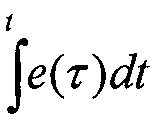
- An adaptive PID control system that includes a process controller and a parameter controller, where the parameter controller adjusts proportional, integral, and derivative gain parameters based on turbine response values and a parameter adjustment algorithm, using equations like H(s) = P(1 + l/s)(Ds + 1), to optimize turbine operation.


Regulatory Standards for Industrial Control Systems
Industrial control systems are subject to various regulatory standards that govern their design, implementation, and operation. For PID controllers specifically, compliance with these standards is crucial to ensure safety, reliability, and interoperability. The International Electrotechnical Commission (IEC) has established several standards, including IEC 61131-3 which standardizes programming languages for industrial control systems, encompassing function blocks for PID control implementation.
In North America, the ISA (International Society of Automation) has developed standards such as ANSI/ISA-5.1 for instrumentation symbols and identification, which includes standardized representations for PID control loops. Additionally, ISA-18.2 addresses alarm management systems that often interact with PID controllers, providing guidelines for effective alarm configuration to prevent alarm floods during process disturbances.
Safety standards like IEC 61508 and IEC 61511 are particularly relevant for PID applications in hazardous industries. These standards define safety integrity levels (SILs) and require rigorous validation of control systems, including PID controllers that may be part of safety instrumented systems (SIS).
The FDA's 21 CFR Part 11 regulates electronic records and signatures in pharmaceutical and food industries, imposing requirements on PID control systems used in these sectors. This includes validation procedures, audit trails, and documentation requirements that affect how PID controllers are implemented and maintained.
Energy efficiency standards such as ISO 50001 indirectly impact PID applications by requiring optimization of energy-consuming processes. This often necessitates fine-tuning of PID controllers to achieve both process control objectives and energy efficiency targets.
Cybersecurity standards have become increasingly important with the rise of networked industrial control systems. Standards like IEC 62443 provide frameworks for securing industrial automation and control systems, including protection measures for PID controllers that may be vulnerable to cyber threats when connected to networks.
Compliance with these regulatory standards presents challenges for PID implementations, including the need for extensive documentation, validation procedures, and regular audits. However, adherence to these standards also provides benefits such as improved safety, reliability, and interoperability across different systems and vendors.
In North America, the ISA (International Society of Automation) has developed standards such as ANSI/ISA-5.1 for instrumentation symbols and identification, which includes standardized representations for PID control loops. Additionally, ISA-18.2 addresses alarm management systems that often interact with PID controllers, providing guidelines for effective alarm configuration to prevent alarm floods during process disturbances.
Safety standards like IEC 61508 and IEC 61511 are particularly relevant for PID applications in hazardous industries. These standards define safety integrity levels (SILs) and require rigorous validation of control systems, including PID controllers that may be part of safety instrumented systems (SIS).
The FDA's 21 CFR Part 11 regulates electronic records and signatures in pharmaceutical and food industries, imposing requirements on PID control systems used in these sectors. This includes validation procedures, audit trails, and documentation requirements that affect how PID controllers are implemented and maintained.
Energy efficiency standards such as ISO 50001 indirectly impact PID applications by requiring optimization of energy-consuming processes. This often necessitates fine-tuning of PID controllers to achieve both process control objectives and energy efficiency targets.
Cybersecurity standards have become increasingly important with the rise of networked industrial control systems. Standards like IEC 62443 provide frameworks for securing industrial automation and control systems, including protection measures for PID controllers that may be vulnerable to cyber threats when connected to networks.
Compliance with these regulatory standards presents challenges for PID implementations, including the need for extensive documentation, validation procedures, and regular audits. However, adherence to these standards also provides benefits such as improved safety, reliability, and interoperability across different systems and vendors.
Performance Metrics and Benchmarking for PID Controllers
Effective evaluation of PID controller performance is essential for industrial applications to ensure optimal process control. The industry has developed several standardized metrics that allow engineers to objectively assess controller performance across different implementations and applications. The Integral Absolute Error (IAE) and Integral Square Error (ISE) metrics remain fundamental benchmarks, measuring the cumulative deviation between setpoint and process variable over time. While IAE treats all errors equally, ISE penalizes larger deviations more severely, making it particularly useful for applications where large transient errors must be minimized.
Rise time, settling time, and overshoot percentage form another critical set of performance indicators. These metrics directly reflect how quickly a system responds to changes and how well it stabilizes afterward. In industrial settings, the optimal balance between these metrics often depends on specific process requirements - some applications prioritize rapid response while others demand minimal overshoot.
Robustness measures such as gain margin and phase margin have gained prominence as industrial processes face increasingly variable operating conditions. These metrics quantify a controller's ability to maintain stability despite process variations or modeling uncertainties. Modern benchmarking approaches often include disturbance rejection tests, where controllers are evaluated on their ability to maintain setpoint despite introduced disturbances - a scenario common in real-world industrial environments.
Energy efficiency metrics have emerged as important benchmarks in recent years, measuring the control effort required to achieve desired performance. This includes analyzing control signal variation and total energy consumption, which directly impacts operational costs in industrial applications. The Minimum Variance Control (MVC) benchmark provides a theoretical performance limit against which actual controllers can be compared, offering insight into how close a given implementation comes to optimal performance.
Industry-specific benchmarking standards have also evolved, with organizations like ISA and IEEE developing specialized performance criteria for different sectors. These standards often incorporate multiple metrics into composite performance indices that better reflect application-specific requirements. Automated benchmarking tools now enable continuous performance monitoring, allowing for real-time optimization and maintenance of control systems throughout their operational lifecycle.
Cross-platform benchmarking methodologies have become increasingly important as industrial systems incorporate diverse hardware and software implementations. These approaches ensure fair comparison between different vendor solutions and implementation technologies, focusing on standardized test scenarios that simulate real-world operating conditions.
Rise time, settling time, and overshoot percentage form another critical set of performance indicators. These metrics directly reflect how quickly a system responds to changes and how well it stabilizes afterward. In industrial settings, the optimal balance between these metrics often depends on specific process requirements - some applications prioritize rapid response while others demand minimal overshoot.
Robustness measures such as gain margin and phase margin have gained prominence as industrial processes face increasingly variable operating conditions. These metrics quantify a controller's ability to maintain stability despite process variations or modeling uncertainties. Modern benchmarking approaches often include disturbance rejection tests, where controllers are evaluated on their ability to maintain setpoint despite introduced disturbances - a scenario common in real-world industrial environments.
Energy efficiency metrics have emerged as important benchmarks in recent years, measuring the control effort required to achieve desired performance. This includes analyzing control signal variation and total energy consumption, which directly impacts operational costs in industrial applications. The Minimum Variance Control (MVC) benchmark provides a theoretical performance limit against which actual controllers can be compared, offering insight into how close a given implementation comes to optimal performance.
Industry-specific benchmarking standards have also evolved, with organizations like ISA and IEEE developing specialized performance criteria for different sectors. These standards often incorporate multiple metrics into composite performance indices that better reflect application-specific requirements. Automated benchmarking tools now enable continuous performance monitoring, allowing for real-time optimization and maintenance of control systems throughout their operational lifecycle.
Cross-platform benchmarking methodologies have become increasingly important as industrial systems incorporate diverse hardware and software implementations. These approaches ensure fair comparison between different vendor solutions and implementation technologies, focusing on standardized test scenarios that simulate real-world operating conditions.
Unlock deeper insights with PatSnap Eureka Quick Research — get a full tech report to explore trends and direct your research. Try now!
Generate Your Research Report Instantly with AI Agent
Supercharge your innovation with PatSnap Eureka AI Agent Platform!