

How High-Entropy Alloys Enable Advanced Nanocomposite Developments
SEP 4, 202510 MIN READ
Generate Your Research Report Instantly with AI Agent
PatSnap Eureka helps you evaluate technical feasibility & market potential.
High-Entropy Alloys Evolution and Research Objectives
High-entropy alloys (HEAs) represent a paradigm shift in metallurgical engineering, emerging as a revolutionary concept in the early 2000s. Unlike conventional alloys that primarily consist of one principal element with minor additions, HEAs incorporate five or more elements in near-equiatomic proportions. This fundamental departure from traditional alloy design has opened unprecedented opportunities for materials with exceptional properties, particularly in extreme environments.
The evolution of HEAs can be traced through several distinct phases. Initially conceptualized by Yeh and Cantor independently in 2004, these materials were primarily investigated for their unique phase formation characteristics and stability. The second phase (2008-2014) focused on mechanical property exploration, revealing exceptional strength-to-weight ratios, thermal stability, and wear resistance. The current phase has expanded into functional properties and application-specific tailoring.
Recent technological advancements have enabled precise control over HEA microstructures at the nanoscale, catalyzing their integration with nanocomposite development. This convergence represents a frontier in materials science, where the inherent advantages of HEAs—including high entropy of mixing, severe lattice distortion, and sluggish diffusion—can be leveraged to create nanocomposites with synergistic properties.
The global research trajectory shows accelerating interest, with publications increasing exponentially from fewer than 50 in 2010 to over 1,500 in 2022. This surge reflects growing recognition of HEAs' potential to address critical materials challenges in aerospace, energy, and advanced manufacturing sectors.
Current research objectives center on several key areas: understanding phase stability mechanisms in multi-principal element systems; developing predictive computational models to accelerate alloy design; optimizing processing techniques for nanostructure control; and exploring functional properties beyond mechanical performance, including magnetic, catalytic, and radiation-resistant behaviors.
For nanocomposite applications specifically, research aims to elucidate the interfacial phenomena between HEA matrices and nanoscale reinforcements, develop scalable manufacturing processes, and establish structure-property relationships that enable application-specific material design. The ultimate goal is to create a new generation of nanocomposites that combine the compositional complexity of HEAs with the dimensional advantages of nanomaterials.
This technological convergence promises materials with unprecedented combinations of properties—such as simultaneous strength and ductility, thermal stability and electrical conductivity, or corrosion resistance and magnetic functionality—that could enable transformative advances across multiple industries and technological domains.
The evolution of HEAs can be traced through several distinct phases. Initially conceptualized by Yeh and Cantor independently in 2004, these materials were primarily investigated for their unique phase formation characteristics and stability. The second phase (2008-2014) focused on mechanical property exploration, revealing exceptional strength-to-weight ratios, thermal stability, and wear resistance. The current phase has expanded into functional properties and application-specific tailoring.
Recent technological advancements have enabled precise control over HEA microstructures at the nanoscale, catalyzing their integration with nanocomposite development. This convergence represents a frontier in materials science, where the inherent advantages of HEAs—including high entropy of mixing, severe lattice distortion, and sluggish diffusion—can be leveraged to create nanocomposites with synergistic properties.
The global research trajectory shows accelerating interest, with publications increasing exponentially from fewer than 50 in 2010 to over 1,500 in 2022. This surge reflects growing recognition of HEAs' potential to address critical materials challenges in aerospace, energy, and advanced manufacturing sectors.
Current research objectives center on several key areas: understanding phase stability mechanisms in multi-principal element systems; developing predictive computational models to accelerate alloy design; optimizing processing techniques for nanostructure control; and exploring functional properties beyond mechanical performance, including magnetic, catalytic, and radiation-resistant behaviors.
For nanocomposite applications specifically, research aims to elucidate the interfacial phenomena between HEA matrices and nanoscale reinforcements, develop scalable manufacturing processes, and establish structure-property relationships that enable application-specific material design. The ultimate goal is to create a new generation of nanocomposites that combine the compositional complexity of HEAs with the dimensional advantages of nanomaterials.
This technological convergence promises materials with unprecedented combinations of properties—such as simultaneous strength and ductility, thermal stability and electrical conductivity, or corrosion resistance and magnetic functionality—that could enable transformative advances across multiple industries and technological domains.
Market Applications and Demand Analysis for HEA Nanocomposites
The market for High-Entropy Alloy (HEA) nanocomposites is experiencing significant growth driven by increasing demands across multiple industrial sectors. Aerospace and defense industries represent the largest market segment, valuing these materials for their exceptional mechanical properties at extreme temperatures. The ability of HEA nanocomposites to maintain structural integrity under high-stress conditions while offering weight reduction makes them ideal for next-generation aircraft components and defense applications.
The automotive sector presents another substantial market opportunity, particularly as manufacturers pursue lightweight, high-strength materials to improve fuel efficiency and meet stringent emissions regulations. Market research indicates that the automotive lightweight materials market is projected to grow at a compound annual growth rate of 7.2% through 2028, with advanced alloys including HEA nanocomposites positioned to capture an increasing share.
Energy sector applications represent a rapidly expanding market segment, particularly in renewable energy infrastructure. Wind turbine manufacturers are evaluating HEA nanocomposites for blade components and structural elements that require exceptional fatigue resistance and corrosion protection in marine environments. Similarly, the nuclear industry values these materials for radiation resistance properties that conventional alloys cannot match.
Medical device manufacturing represents an emerging high-value application area. The biocompatibility potential of certain HEA compositions, combined with their mechanical properties, makes them candidates for orthopedic implants and surgical instruments. This segment, though smaller in volume than industrial applications, commands premium pricing and is expected to grow as clinical validation progresses.
Electronics and semiconductor manufacturing equipment increasingly require materials that can withstand extreme processing conditions while maintaining dimensional stability. HEA nanocomposites that combine thermal management capabilities with electrical properties are finding applications in advanced computing hardware and telecommunications infrastructure.
Market barriers include high production costs and scaling challenges. Current manufacturing processes for HEA nanocomposites remain complex and expensive, limiting widespread commercial adoption. However, as production technologies mature and economies of scale develop, price points are expected to become more competitive with traditional advanced materials.
Regional market analysis reveals that North America and Europe currently lead in research and development investment, while Asia-Pacific countries, particularly China, Japan, and South Korea, are rapidly expanding their manufacturing capabilities for these materials. This geographic distribution suggests a globally competitive landscape developing around HEA nanocomposite production and application.
The automotive sector presents another substantial market opportunity, particularly as manufacturers pursue lightweight, high-strength materials to improve fuel efficiency and meet stringent emissions regulations. Market research indicates that the automotive lightweight materials market is projected to grow at a compound annual growth rate of 7.2% through 2028, with advanced alloys including HEA nanocomposites positioned to capture an increasing share.
Energy sector applications represent a rapidly expanding market segment, particularly in renewable energy infrastructure. Wind turbine manufacturers are evaluating HEA nanocomposites for blade components and structural elements that require exceptional fatigue resistance and corrosion protection in marine environments. Similarly, the nuclear industry values these materials for radiation resistance properties that conventional alloys cannot match.
Medical device manufacturing represents an emerging high-value application area. The biocompatibility potential of certain HEA compositions, combined with their mechanical properties, makes them candidates for orthopedic implants and surgical instruments. This segment, though smaller in volume than industrial applications, commands premium pricing and is expected to grow as clinical validation progresses.
Electronics and semiconductor manufacturing equipment increasingly require materials that can withstand extreme processing conditions while maintaining dimensional stability. HEA nanocomposites that combine thermal management capabilities with electrical properties are finding applications in advanced computing hardware and telecommunications infrastructure.
Market barriers include high production costs and scaling challenges. Current manufacturing processes for HEA nanocomposites remain complex and expensive, limiting widespread commercial adoption. However, as production technologies mature and economies of scale develop, price points are expected to become more competitive with traditional advanced materials.
Regional market analysis reveals that North America and Europe currently lead in research and development investment, while Asia-Pacific countries, particularly China, Japan, and South Korea, are rapidly expanding their manufacturing capabilities for these materials. This geographic distribution suggests a globally competitive landscape developing around HEA nanocomposite production and application.
Current State and Technical Barriers in HEA Development
High-entropy alloys (HEAs) represent a paradigm shift in materials science, characterized by their multi-principal element composition with near-equiatomic ratios. Currently, the global research landscape shows significant advancements in HEA development, with major research hubs established across North America, Europe, and East Asia. The United States, China, and Germany lead in publication output and patent filings, with specialized research centers dedicated to HEA innovation.
The current state of HEA technology demonstrates promising mechanical properties, including exceptional strength-to-weight ratios, superior fracture toughness, and remarkable resistance to wear and corrosion. Recent breakthroughs have enabled the synthesis of HEAs with tailored microstructures, achieving unprecedented combinations of ductility and strength that surpass traditional alloys. Computational modeling and high-throughput experimentation have accelerated discovery rates, with machine learning algorithms now capable of predicting stable HEA compositions.
Despite these advances, several technical barriers impede widespread industrial adoption. Processing challenges remain significant, as conventional manufacturing methods struggle with the complex solidification behavior of multi-element systems. Controlling phase stability across different temperature ranges presents another major hurdle, with many promising HEAs exhibiting undesirable phase transformations during service conditions.
Scalability represents a critical constraint, as laboratory-scale successes have proven difficult to translate to industrial production volumes. The high cost of constituent elements, particularly when incorporating refractory metals, limits commercial viability. Additionally, the vast compositional space of HEAs creates a "curse of dimensionality" that complicates systematic exploration and optimization.
For nanocomposite applications specifically, interfacial stability between HEA matrices and reinforcement phases presents unique challenges. Researchers face difficulties in achieving uniform dispersion of nanoscale reinforcements within the complex HEA microstructure. The thermodynamic interactions between multiple principal elements and reinforcement materials create unpredictable phase formations that can compromise mechanical integrity.
Characterization limitations further hinder progress, as conventional analytical techniques struggle to fully capture the atomic-scale complexity of HEA nanocomposites. The lack of standardized testing protocols makes cross-comparison between research groups problematic. Computational models also face validation challenges due to the limited availability of experimental data across the vast compositional space.
Regulatory and certification barriers present additional obstacles, particularly for high-consequence applications in aerospace and medical sectors. The novel nature of these materials means that established qualification frameworks may be inadequate, requiring extensive validation testing before commercial deployment can proceed.
The current state of HEA technology demonstrates promising mechanical properties, including exceptional strength-to-weight ratios, superior fracture toughness, and remarkable resistance to wear and corrosion. Recent breakthroughs have enabled the synthesis of HEAs with tailored microstructures, achieving unprecedented combinations of ductility and strength that surpass traditional alloys. Computational modeling and high-throughput experimentation have accelerated discovery rates, with machine learning algorithms now capable of predicting stable HEA compositions.
Despite these advances, several technical barriers impede widespread industrial adoption. Processing challenges remain significant, as conventional manufacturing methods struggle with the complex solidification behavior of multi-element systems. Controlling phase stability across different temperature ranges presents another major hurdle, with many promising HEAs exhibiting undesirable phase transformations during service conditions.
Scalability represents a critical constraint, as laboratory-scale successes have proven difficult to translate to industrial production volumes. The high cost of constituent elements, particularly when incorporating refractory metals, limits commercial viability. Additionally, the vast compositional space of HEAs creates a "curse of dimensionality" that complicates systematic exploration and optimization.
For nanocomposite applications specifically, interfacial stability between HEA matrices and reinforcement phases presents unique challenges. Researchers face difficulties in achieving uniform dispersion of nanoscale reinforcements within the complex HEA microstructure. The thermodynamic interactions between multiple principal elements and reinforcement materials create unpredictable phase formations that can compromise mechanical integrity.
Characterization limitations further hinder progress, as conventional analytical techniques struggle to fully capture the atomic-scale complexity of HEA nanocomposites. The lack of standardized testing protocols makes cross-comparison between research groups problematic. Computational models also face validation challenges due to the limited availability of experimental data across the vast compositional space.
Regulatory and certification barriers present additional obstacles, particularly for high-consequence applications in aerospace and medical sectors. The novel nature of these materials means that established qualification frameworks may be inadequate, requiring extensive validation testing before commercial deployment can proceed.
Contemporary HEA Nanocomposite Fabrication Approaches
01 Composition and structure of high-entropy alloys
High-entropy alloys (HEAs) are composed of multiple principal elements in near-equiatomic proportions, creating unique crystalline structures with enhanced stability. These alloys exhibit superior mechanical properties due to their complex atomic arrangements and lattice distortion effects. The multi-element composition contributes to solid solution strengthening and reduced grain boundary movement, resulting in improved strength, hardness, and thermal stability compared to conventional alloys.- Composition and structure of high-entropy alloys: High-entropy alloys (HEAs) are composed of multiple principal elements in near-equiatomic proportions, creating unique crystalline structures with enhanced stability. These alloys exhibit superior mechanical properties due to their complex atomic arrangements and lattice distortion effects. The composition typically includes five or more elements, each with atomic percentages between 5-35%, resulting in high configurational entropy that stabilizes solid solution phases rather than forming intermetallic compounds.
- Nanocomposite reinforcement techniques: Advanced nanocomposite developments in HEAs involve incorporating nanoscale reinforcements such as ceramic particles, carbon nanotubes, or graphene into the alloy matrix. These reinforcements create interfaces that impede dislocation movement, enhancing strength while maintaining ductility. Various processing techniques including powder metallurgy, mechanical alloying, and in-situ synthesis methods are employed to achieve uniform dispersion of nanoreinforcements throughout the HEA matrix, resulting in superior load transfer and crack bridging capabilities.
- Processing methods for HEA nanocomposites: Manufacturing techniques for high-entropy alloy nanocomposites include advanced additive manufacturing, selective laser melting, spark plasma sintering, and high-pressure torsion. These processes enable precise control over microstructure development and phase formation. Rapid solidification techniques help maintain nanoscale features while preventing elemental segregation. Post-processing treatments such as heat treatment and severe plastic deformation are employed to optimize the microstructure and enhance mechanical properties by controlling grain size and precipitate distribution.
- Functional properties and applications: HEA nanocomposites exhibit multifunctional properties including exceptional corrosion resistance, high-temperature stability, radiation tolerance, and magnetic characteristics. These materials are being developed for extreme environment applications such as aerospace components, nuclear reactors, and high-temperature turbines. The combination of strength, ductility, and thermal stability makes them suitable for structural applications, while their unique electronic and magnetic properties enable their use in sensors, catalysts, and energy storage devices.
- Novel design strategies and computational approaches: Advanced computational methods including machine learning, CALPHAD modeling, and first-principles calculations are being employed to design new HEA nanocomposites with tailored properties. These approaches help predict phase stability, mechanical behavior, and processing parameters, reducing experimental trial-and-error. Combinatorial synthesis techniques allow rapid screening of multiple compositions, while integrated computational materials engineering frameworks enable accelerated development of HEA nanocomposites with optimized performance characteristics for specific applications.
02 Nanocomposite reinforcement techniques
Advanced nanocomposite developments in high-entropy alloys involve incorporating nanoscale reinforcements such as ceramic particles, carbon nanotubes, or graphene into the HEA matrix. These reinforcements create interfaces that impede dislocation movement and enhance mechanical properties. Various processing techniques including powder metallurgy, mechanical alloying, and in-situ synthesis methods are employed to achieve uniform dispersion of nanoreinforcements, resulting in superior strength-to-weight ratios and wear resistance.Expand Specific Solutions03 Manufacturing processes for HEA nanocomposites
Manufacturing processes for high-entropy alloy nanocomposites include advanced techniques such as selective laser melting, spark plasma sintering, and high-pressure torsion. These methods enable precise control over microstructure development and phase formation. Rapid solidification processes are particularly effective in creating non-equilibrium structures with enhanced properties. Post-processing treatments like heat treatment and severe plastic deformation can further optimize the microstructure and properties of these advanced materials.Expand Specific Solutions04 Functional properties and applications
High-entropy alloy nanocomposites exhibit exceptional functional properties including corrosion resistance, radiation tolerance, and magnetic characteristics. These materials show promise in extreme environment applications such as aerospace components, nuclear reactors, and high-temperature turbines. The combination of structural stability and functional properties makes them suitable for multifunctional applications in energy storage, catalysis, and biomedical implants. Their superior performance under harsh conditions offers advantages over traditional materials in advanced engineering systems.Expand Specific Solutions05 Computational design and characterization techniques
Advanced computational methods including machine learning algorithms and density functional theory are employed to predict and design high-entropy alloy nanocomposites with tailored properties. These approaches enable efficient screening of potential element combinations and processing parameters. Sophisticated characterization techniques such as high-resolution transmission electron microscopy, atom probe tomography, and synchrotron-based X-ray diffraction provide insights into the complex microstructures and phase distributions. These tools accelerate the development cycle and enable property optimization for specific applications.Expand Specific Solutions
Leading Research Institutions and Industrial Manufacturers
High-entropy alloys (HEAs) represent an emerging frontier in advanced nanocomposite development, currently transitioning from early research to commercial application phases. The global market for HEA-based materials is expanding rapidly, projected to reach significant scale as industries recognize their exceptional mechanical properties and thermal stability. Leading universities including Xi'an Jiaotong University, City University of Hong Kong, and National Tsing-Hua University are advancing fundamental research, while commercial entities like LG Electronics, RTX Corp., and Robert Bosch GmbH are exploring industrial applications. The competitive landscape features collaboration between academic institutions and industrial manufacturers, with companies like Proterial Ltd. and Jinchuan Group developing specialized HEA manufacturing capabilities for aerospace, automotive, and electronics applications.
Korea Institute of Materials Science
Technical Solution: The Korea Institute of Materials Science (KIMS) has developed a groundbreaking approach to high-entropy alloy (HEA) nanocomposites through their proprietary "compositional complexity engineering" methodology. Their technology focuses on creating multi-principal element alloys with carefully controlled nanoscale heterogeneities that significantly enhance mechanical properties. KIMS researchers have pioneered a novel processing route combining mechanical alloying, controlled precipitation, and severe plastic deformation to create HEA nanocomposites with exceptional strength-to-weight ratios. Their CoCrFeMnNi-based systems incorporate ceramic nanoparticles (TiC, SiC) at volume fractions of 2-5%, achieving yield strengths exceeding 1.2 GPa while maintaining ductility above 15%. The institute has also developed specialized heat treatment protocols that enable precise control of nanoprecipitate size (5-20nm) and distribution, creating materials with superior fatigue resistance and thermal stability. KIMS's technology has demonstrated particular success in creating HEA-matrix composites reinforced with graphene and carbon nanotubes, resulting in materials with enhanced electrical conductivity while maintaining the exceptional mechanical properties characteristic of HEAs.
Strengths: Exceptional combination of strength and ductility through nanoscale heterogeneity engineering; advanced processing techniques enabling precise control of reinforcement distribution; demonstrated success in incorporating carbon nanomaterials for multifunctional properties. Weaknesses: Complex processing routes requiring specialized equipment; challenges in achieving uniform dispersion of nanoreinforcements at industrial scales; higher production costs compared to conventional alloy systems.
RTX Corp.
Technical Solution: RTX Corporation (formerly Raytheon Technologies) has developed advanced high-entropy alloy (HEA) nanocomposites specifically engineered for extreme aerospace and defense applications. Their proprietary "ENTROPY+" technology platform combines computational alloy design with advanced manufacturing processes to create materials with exceptional performance in high-temperature, high-stress environments. RTX's approach focuses on refractory HEAs (RHEAs) incorporating elements like Nb, Mo, Ta, and W, which are then reinforced with carefully selected ceramic nanoparticles to enhance creep resistance and oxidation protection. Their manufacturing process utilizes specialized powder metallurgy techniques and additive manufacturing to create components with complex geometries while maintaining nanoscale microstructural control. RTX has demonstrated HEA nanocomposites capable of operating at temperatures exceeding 1200°C with minimal degradation, representing a significant advancement over conventional superalloys. Their materials show exceptional resistance to thermal cycling, with thermal expansion coefficients approximately 30% lower than traditional nickel-based superalloys. The company has successfully implemented these materials in prototype turbine components, demonstrating a 15-20% improvement in operating temperature capability compared to state-of-the-art single-crystal superalloys.
Strengths: Exceptional high-temperature performance exceeding conventional superalloys; integrated computational-experimental approach enabling rapid material development; established manufacturing infrastructure capable of producing complex components. Weaknesses: Extremely high material and processing costs limiting widespread adoption; challenges in joining and repair of components; intellectual property restrictions potentially limiting collaborative development opportunities.
Critical Patents and Scientific Breakthroughs in HEA Field
High entropy alloy having nanoscale compositionally modulated layered structure and method for manufacturing the same
PatentActiveKR1020210065220A
Innovation
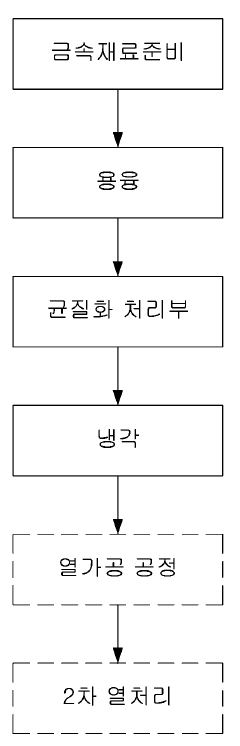
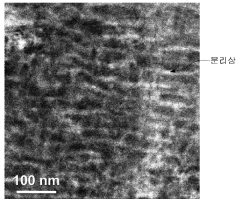
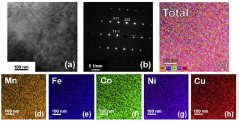
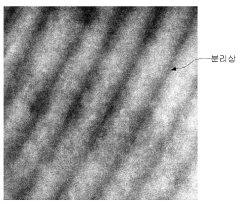
- A nanolayer structure high-entropy alloy is developed by uniformly distributing phases with the same crystal structure but different compositions at nanoscale intervals through homogenization and cooling, incorporating elements like Fe, Ni, Co, Mn, Cu, and V, with optional C, N, and B to enhance strength and ductility.
High-entropy based composite and its manufacturing method
PatentActiveKR1020200004566A
Innovation
- A high-entropy alloy composite is formed with a matrix phase comprising niobium, molybdenum, titanium, and zirconium, and a precipitated phase of intermetallic compounds including silicon, which are mixed and alloyed to create a structure with improved high-temperature strength and ductility.


Material Characterization Techniques for HEA Nanocomposites
The comprehensive characterization of High-Entropy Alloy (HEA) nanocomposites requires sophisticated analytical techniques to understand their complex microstructures, phase compositions, and unique properties. X-ray diffraction (XRD) serves as a fundamental tool for phase identification and crystallographic analysis, revealing the characteristic solid-solution phases in HEAs and any secondary phases in the nanocomposite structure. The diffraction patterns often exhibit broadened peaks due to lattice distortion effects inherent to HEAs, requiring careful interpretation.
Electron microscopy techniques provide critical insights into the morphological and compositional features of HEA nanocomposites. Scanning electron microscopy (SEM) coupled with energy-dispersive X-ray spectroscopy (EDS) enables visualization of microstructural features and elemental distribution maps, essential for verifying the homogeneity of element distribution in these multi-principal element systems. Transmission electron microscopy (TEM) offers higher resolution analysis, revealing nanoscale features such as precipitates, grain boundaries, and lattice defects that significantly influence mechanical properties.
Atom probe tomography (APT) has emerged as a powerful technique for three-dimensional atomic-scale characterization of HEA nanocomposites, providing unprecedented insights into local chemical fluctuations and clustering phenomena that may not be detectable by conventional techniques. This capability is particularly valuable for understanding the nanoscale segregation behaviors that can occur during processing or service.
Mechanical property assessment techniques include nanoindentation, which allows for localized hardness and elastic modulus measurements across different phases or regions within the nanocomposite. Dynamic mechanical analysis (DMA) provides information on viscoelastic properties, while high-temperature mechanical testing reveals thermal stability and creep resistance—critical parameters for advanced applications.
Thermal analysis methods such as differential scanning calorimetry (DSC) and thermogravimetric analysis (TGA) help characterize phase transformations, thermal stability, and oxidation behavior of HEA nanocomposites. These techniques are essential for understanding how these materials perform under varying temperature conditions and for optimizing processing parameters.
Advanced spectroscopic methods including X-ray photoelectron spectroscopy (XPS) and Raman spectroscopy provide valuable information about chemical bonding states and local structural arrangements. Synchrotron-based techniques offer enhanced capabilities for in-situ characterization during deformation or thermal processing, allowing researchers to observe dynamic structural changes in real-time.
Computational modeling approaches increasingly complement experimental characterization, with density functional theory (DFT) calculations and phase-field modeling helping to predict phase stability and microstructural evolution in these complex alloy systems. The integration of machine learning algorithms with characterization data is emerging as a powerful approach for accelerating materials discovery and optimization in the HEA nanocomposite field.
Electron microscopy techniques provide critical insights into the morphological and compositional features of HEA nanocomposites. Scanning electron microscopy (SEM) coupled with energy-dispersive X-ray spectroscopy (EDS) enables visualization of microstructural features and elemental distribution maps, essential for verifying the homogeneity of element distribution in these multi-principal element systems. Transmission electron microscopy (TEM) offers higher resolution analysis, revealing nanoscale features such as precipitates, grain boundaries, and lattice defects that significantly influence mechanical properties.
Atom probe tomography (APT) has emerged as a powerful technique for three-dimensional atomic-scale characterization of HEA nanocomposites, providing unprecedented insights into local chemical fluctuations and clustering phenomena that may not be detectable by conventional techniques. This capability is particularly valuable for understanding the nanoscale segregation behaviors that can occur during processing or service.
Mechanical property assessment techniques include nanoindentation, which allows for localized hardness and elastic modulus measurements across different phases or regions within the nanocomposite. Dynamic mechanical analysis (DMA) provides information on viscoelastic properties, while high-temperature mechanical testing reveals thermal stability and creep resistance—critical parameters for advanced applications.
Thermal analysis methods such as differential scanning calorimetry (DSC) and thermogravimetric analysis (TGA) help characterize phase transformations, thermal stability, and oxidation behavior of HEA nanocomposites. These techniques are essential for understanding how these materials perform under varying temperature conditions and for optimizing processing parameters.
Advanced spectroscopic methods including X-ray photoelectron spectroscopy (XPS) and Raman spectroscopy provide valuable information about chemical bonding states and local structural arrangements. Synchrotron-based techniques offer enhanced capabilities for in-situ characterization during deformation or thermal processing, allowing researchers to observe dynamic structural changes in real-time.
Computational modeling approaches increasingly complement experimental characterization, with density functional theory (DFT) calculations and phase-field modeling helping to predict phase stability and microstructural evolution in these complex alloy systems. The integration of machine learning algorithms with characterization data is emerging as a powerful approach for accelerating materials discovery and optimization in the HEA nanocomposite field.
Sustainability and Life Cycle Assessment of HEA Materials
The sustainability aspects of High-Entropy Alloys (HEAs) in nanocomposite development represent a critical dimension for their industrial adoption and environmental compatibility. Life cycle assessment (LCA) of HEA materials reveals several advantages over traditional alloys, particularly in terms of resource efficiency and environmental impact reduction. The multi-principal element composition of HEAs often allows for the substitution of rare or environmentally problematic elements with more abundant and less harmful alternatives, while maintaining or even enhancing performance characteristics.
Energy consumption during HEA production presents both challenges and opportunities. While the initial melting and processing of multi-element systems may require higher energy inputs compared to conventional alloys, the superior properties of HEAs—including enhanced durability, corrosion resistance, and mechanical stability—contribute to extended service lifespans. This longevity effectively reduces the material replacement frequency and associated environmental burdens throughout the product life cycle.
Recycling considerations for HEA-based nanocomposites demonstrate promising potential. The thermodynamic stability of these materials facilitates their recovery and reprocessing with minimal property degradation. However, the complex multi-element composition presents separation challenges in conventional recycling streams. Emerging technologies such as electrochemical selective dissolution and advanced sorting methods are being developed specifically to address these challenges, potentially enabling closed-loop material systems for HEA nanocomposites.
Carbon footprint analyses of HEA manufacturing processes indicate that while initial production emissions may exceed those of conventional materials, the total life cycle emissions often prove favorable when accounting for use-phase benefits and extended service life. Research indicates potential carbon emission reductions of 15-30% over full product lifecycles when implementing HEA nanocomposites in high-performance applications such as aerospace components and energy systems.
Water usage and toxicity profiles of HEA production require careful consideration. The processing of multiple elements simultaneously can reduce overall water consumption compared to separate alloying processes, but may introduce complex waste streams requiring specialized treatment. Recent innovations in near-net-shape manufacturing of HEA components show promise for minimizing both material waste and associated environmental impacts.
Economic sustainability assessments reveal that while HEA nanocomposites typically entail higher initial material costs, their superior performance characteristics and extended service life often yield favorable total cost of ownership metrics. This economic advantage becomes particularly pronounced in applications where maintenance, downtime, or replacement costs are significant factors.
Energy consumption during HEA production presents both challenges and opportunities. While the initial melting and processing of multi-element systems may require higher energy inputs compared to conventional alloys, the superior properties of HEAs—including enhanced durability, corrosion resistance, and mechanical stability—contribute to extended service lifespans. This longevity effectively reduces the material replacement frequency and associated environmental burdens throughout the product life cycle.
Recycling considerations for HEA-based nanocomposites demonstrate promising potential. The thermodynamic stability of these materials facilitates their recovery and reprocessing with minimal property degradation. However, the complex multi-element composition presents separation challenges in conventional recycling streams. Emerging technologies such as electrochemical selective dissolution and advanced sorting methods are being developed specifically to address these challenges, potentially enabling closed-loop material systems for HEA nanocomposites.
Carbon footprint analyses of HEA manufacturing processes indicate that while initial production emissions may exceed those of conventional materials, the total life cycle emissions often prove favorable when accounting for use-phase benefits and extended service life. Research indicates potential carbon emission reductions of 15-30% over full product lifecycles when implementing HEA nanocomposites in high-performance applications such as aerospace components and energy systems.
Water usage and toxicity profiles of HEA production require careful consideration. The processing of multiple elements simultaneously can reduce overall water consumption compared to separate alloying processes, but may introduce complex waste streams requiring specialized treatment. Recent innovations in near-net-shape manufacturing of HEA components show promise for minimizing both material waste and associated environmental impacts.
Economic sustainability assessments reveal that while HEA nanocomposites typically entail higher initial material costs, their superior performance characteristics and extended service life often yield favorable total cost of ownership metrics. This economic advantage becomes particularly pronounced in applications where maintenance, downtime, or replacement costs are significant factors.
Unlock deeper insights with PatSnap Eureka Quick Research — get a full tech report to explore trends and direct your research. Try now!
Generate Your Research Report Instantly with AI Agent
Supercharge your innovation with PatSnap Eureka AI Agent Platform!