How solid-state sodium battery materials enhance electrode kinetics
OCT 27, 20259 MIN READ
Generate Your Research Report Instantly with AI Agent
Patsnap Eureka helps you evaluate technical feasibility & market potential.
Solid-State Sodium Battery Evolution and Objectives
Solid-state sodium batteries have emerged as a promising alternative to lithium-ion batteries due to their potential for higher safety, lower cost, and comparable energy density. The evolution of these batteries can be traced back to the 1970s when initial research on sodium-ion conductors began, though significant advancements have only materialized in the last decade with the development of new solid electrolyte materials.
The technological progression has been marked by several key milestones. Early sodium battery systems utilized liquid electrolytes, which presented safety concerns similar to those in lithium-ion batteries. The transition to solid-state configurations began with polymer-based electrolytes, which offered improved safety but suffered from low ionic conductivity at room temperature. The breakthrough came with the discovery of ceramic and glass-ceramic electrolytes with sodium superionic conductor (NASICON) structures in the 2000s, followed by sulfide-based electrolytes in the 2010s.
Recent years have witnessed accelerated development in electrode materials specifically designed to enhance kinetics at the electrode-electrolyte interface. This includes the engineering of composite electrodes, interface modification techniques, and novel cathode materials with optimized sodium diffusion pathways. These advancements have progressively addressed the critical challenge of slow electrode kinetics that has historically limited the practical application of solid-state sodium batteries.
The current technological trajectory is focused on overcoming the fundamental limitations in electrode kinetics through materials innovation. Researchers are exploring nanostructured electrode materials, advanced coating technologies, and novel electrolyte compositions that can facilitate faster sodium-ion transport while maintaining structural stability during cycling.
The primary objectives of solid-state sodium battery development center on achieving competitive performance metrics compared to conventional lithium-ion technologies. Specifically, researchers aim to attain room-temperature ionic conductivities exceeding 10^-3 S/cm in solid electrolytes, reduce interfacial resistance below 100 Ω·cm², and develop electrode materials capable of supporting high current densities without significant polarization.
Long-term goals include the development of solid-state sodium batteries with energy densities above 300 Wh/kg, cycle life exceeding 1000 cycles, and fast-charging capabilities that allow 80% capacity recovery within 30 minutes. Additionally, there is a strong emphasis on ensuring that these technologies remain cost-effective, with target production costs below $100/kWh to enable widespread adoption in grid storage applications and potentially in the electric vehicle market.
The evolution of solid-state sodium batteries represents a strategic technological pathway toward sustainable energy storage solutions that reduce dependence on critical materials while meeting the growing demand for safe, high-performance energy storage systems.
The technological progression has been marked by several key milestones. Early sodium battery systems utilized liquid electrolytes, which presented safety concerns similar to those in lithium-ion batteries. The transition to solid-state configurations began with polymer-based electrolytes, which offered improved safety but suffered from low ionic conductivity at room temperature. The breakthrough came with the discovery of ceramic and glass-ceramic electrolytes with sodium superionic conductor (NASICON) structures in the 2000s, followed by sulfide-based electrolytes in the 2010s.
Recent years have witnessed accelerated development in electrode materials specifically designed to enhance kinetics at the electrode-electrolyte interface. This includes the engineering of composite electrodes, interface modification techniques, and novel cathode materials with optimized sodium diffusion pathways. These advancements have progressively addressed the critical challenge of slow electrode kinetics that has historically limited the practical application of solid-state sodium batteries.
The current technological trajectory is focused on overcoming the fundamental limitations in electrode kinetics through materials innovation. Researchers are exploring nanostructured electrode materials, advanced coating technologies, and novel electrolyte compositions that can facilitate faster sodium-ion transport while maintaining structural stability during cycling.
The primary objectives of solid-state sodium battery development center on achieving competitive performance metrics compared to conventional lithium-ion technologies. Specifically, researchers aim to attain room-temperature ionic conductivities exceeding 10^-3 S/cm in solid electrolytes, reduce interfacial resistance below 100 Ω·cm², and develop electrode materials capable of supporting high current densities without significant polarization.
Long-term goals include the development of solid-state sodium batteries with energy densities above 300 Wh/kg, cycle life exceeding 1000 cycles, and fast-charging capabilities that allow 80% capacity recovery within 30 minutes. Additionally, there is a strong emphasis on ensuring that these technologies remain cost-effective, with target production costs below $100/kWh to enable widespread adoption in grid storage applications and potentially in the electric vehicle market.
The evolution of solid-state sodium batteries represents a strategic technological pathway toward sustainable energy storage solutions that reduce dependence on critical materials while meeting the growing demand for safe, high-performance energy storage systems.
Market Analysis for Sodium Battery Technologies
The sodium battery market is experiencing significant growth driven by the increasing demand for sustainable energy storage solutions. As lithium resources face supply constraints and price volatility, sodium-based technologies have emerged as a promising alternative due to sodium's abundance, comprising approximately 2.8% of the Earth's crust compared to lithium's 0.006%. This natural advantage translates to potentially lower raw material costs, with sodium carbonate priced at roughly $300 per ton versus lithium carbonate at $15,000-20,000 per ton as of recent market data.
The global sodium battery market, valued at $1.2 billion in 2022, is projected to reach $4.3 billion by 2030, representing a compound annual growth rate of 17.3%. This growth trajectory is supported by several market drivers, including the expanding renewable energy sector, increasing grid storage requirements, and the automotive industry's shift toward electrification.
Geographically, Asia-Pacific dominates the sodium battery market, with China leading in both research activities and commercial deployment. European markets are showing accelerated adoption rates due to stringent environmental regulations and substantial investments in green technologies. North America follows with growing interest primarily in grid-scale applications.
By application segment, grid energy storage represents the largest market share at 45%, followed by transportation at 30% and consumer electronics at 15%. The remaining 10% encompasses various industrial applications. The transportation sector, particularly electric buses and commercial vehicles, is expected to demonstrate the fastest growth rate at 22% annually through 2030.
Solid-state sodium battery technologies specifically are gaining traction due to their enhanced safety profiles and potential for higher energy densities compared to liquid electrolyte systems. Market analysis indicates that solid-state sodium batteries could capture 25% of the overall sodium battery market by 2028, driven by their superior electrode kinetics and longer cycle life.
Customer demand patterns reveal increasing preference for energy storage solutions with improved sustainability credentials, longer operational lifespans, and reduced total cost of ownership. Large-scale energy providers and automotive manufacturers are particularly interested in sodium battery technologies as hedging strategies against lithium supply chain vulnerabilities.
Investment in sodium battery technologies has seen a 35% year-over-year increase, with venture capital funding reaching $780 million in 2022. Major energy companies and automotive manufacturers have announced strategic investments totaling $1.5 billion for research and commercialization efforts focused on solid-state sodium battery technologies over the next five years.
The global sodium battery market, valued at $1.2 billion in 2022, is projected to reach $4.3 billion by 2030, representing a compound annual growth rate of 17.3%. This growth trajectory is supported by several market drivers, including the expanding renewable energy sector, increasing grid storage requirements, and the automotive industry's shift toward electrification.
Geographically, Asia-Pacific dominates the sodium battery market, with China leading in both research activities and commercial deployment. European markets are showing accelerated adoption rates due to stringent environmental regulations and substantial investments in green technologies. North America follows with growing interest primarily in grid-scale applications.
By application segment, grid energy storage represents the largest market share at 45%, followed by transportation at 30% and consumer electronics at 15%. The remaining 10% encompasses various industrial applications. The transportation sector, particularly electric buses and commercial vehicles, is expected to demonstrate the fastest growth rate at 22% annually through 2030.
Solid-state sodium battery technologies specifically are gaining traction due to their enhanced safety profiles and potential for higher energy densities compared to liquid electrolyte systems. Market analysis indicates that solid-state sodium batteries could capture 25% of the overall sodium battery market by 2028, driven by their superior electrode kinetics and longer cycle life.
Customer demand patterns reveal increasing preference for energy storage solutions with improved sustainability credentials, longer operational lifespans, and reduced total cost of ownership. Large-scale energy providers and automotive manufacturers are particularly interested in sodium battery technologies as hedging strategies against lithium supply chain vulnerabilities.
Investment in sodium battery technologies has seen a 35% year-over-year increase, with venture capital funding reaching $780 million in 2022. Major energy companies and automotive manufacturers have announced strategic investments totaling $1.5 billion for research and commercialization efforts focused on solid-state sodium battery technologies over the next five years.
Current Challenges in Electrode Kinetics
Despite significant advancements in solid-state sodium battery technology, electrode kinetics remains one of the most critical challenges hindering widespread commercialization. The interfacial resistance between solid electrolytes and electrode materials presents a fundamental obstacle, often resulting in poor rate capability and cycling performance. This resistance stems primarily from insufficient contact area and chemical incompatibility at the solid-solid interfaces, creating barriers for efficient sodium ion transport.
The sluggish sodium ion diffusion within electrode materials constitutes another major challenge. Unlike lithium ions, sodium ions possess a larger ionic radius (1.02Å vs. 0.76Å for Li+), which inherently slows down diffusion kinetics through host structures. This limitation becomes particularly pronounced in materials with constrained ion channels or dense crystalline frameworks, resulting in capacity limitations at practical charging rates.
Volume expansion during sodiation/desodiation cycles further complicates electrode kinetics. Many sodium storage materials undergo significant volumetric changes during cycling, leading to mechanical stress, particle fracturing, and eventual electrode pulverization. These structural changes disrupt ion transport pathways and increase internal resistance, progressively degrading kinetic performance over multiple cycles.
The formation of passivation layers at electrode-electrolyte interfaces, analogous to the solid electrolyte interphase (SEI) in liquid systems, introduces additional kinetic barriers. In solid-state configurations, these interfacial layers often exhibit poor ionic conductivity and mechanical stability, impeding sodium ion transfer across interfaces. The composition and properties of these layers remain poorly understood, complicating efforts to engineer more favorable interfacial chemistry.
Temperature sensitivity presents yet another challenge for electrode kinetics in solid-state sodium batteries. At lower operating temperatures, ion mobility decreases substantially in both electrodes and solid electrolytes, severely limiting power capability. This temperature dependence is more pronounced than in liquid-based systems, restricting practical applications in variable temperature environments.
Manufacturing constraints further exacerbate kinetic limitations. Current fabrication techniques struggle to create intimate, stable contacts between solid components while maintaining cost-effectiveness at scale. Conventional methods like cold pressing often result in high interfacial resistance, while high-temperature sintering can trigger undesired side reactions that form resistive phases at interfaces.
Addressing these challenges requires multidisciplinary approaches spanning materials science, electrochemistry, and engineering. Recent research directions include developing nanostructured electrode architectures, interface engineering strategies, and composite electrode formulations that can mitigate these kinetic limitations while maintaining the inherent safety advantages of solid-state systems.
The sluggish sodium ion diffusion within electrode materials constitutes another major challenge. Unlike lithium ions, sodium ions possess a larger ionic radius (1.02Å vs. 0.76Å for Li+), which inherently slows down diffusion kinetics through host structures. This limitation becomes particularly pronounced in materials with constrained ion channels or dense crystalline frameworks, resulting in capacity limitations at practical charging rates.
Volume expansion during sodiation/desodiation cycles further complicates electrode kinetics. Many sodium storage materials undergo significant volumetric changes during cycling, leading to mechanical stress, particle fracturing, and eventual electrode pulverization. These structural changes disrupt ion transport pathways and increase internal resistance, progressively degrading kinetic performance over multiple cycles.
The formation of passivation layers at electrode-electrolyte interfaces, analogous to the solid electrolyte interphase (SEI) in liquid systems, introduces additional kinetic barriers. In solid-state configurations, these interfacial layers often exhibit poor ionic conductivity and mechanical stability, impeding sodium ion transfer across interfaces. The composition and properties of these layers remain poorly understood, complicating efforts to engineer more favorable interfacial chemistry.
Temperature sensitivity presents yet another challenge for electrode kinetics in solid-state sodium batteries. At lower operating temperatures, ion mobility decreases substantially in both electrodes and solid electrolytes, severely limiting power capability. This temperature dependence is more pronounced than in liquid-based systems, restricting practical applications in variable temperature environments.
Manufacturing constraints further exacerbate kinetic limitations. Current fabrication techniques struggle to create intimate, stable contacts between solid components while maintaining cost-effectiveness at scale. Conventional methods like cold pressing often result in high interfacial resistance, while high-temperature sintering can trigger undesired side reactions that form resistive phases at interfaces.
Addressing these challenges requires multidisciplinary approaches spanning materials science, electrochemistry, and engineering. Recent research directions include developing nanostructured electrode architectures, interface engineering strategies, and composite electrode formulations that can mitigate these kinetic limitations while maintaining the inherent safety advantages of solid-state systems.
Contemporary Approaches to Enhance Electrode Kinetics
01 Electrode materials for solid-state sodium batteries
Various materials can be used as electrodes in solid-state sodium batteries to enhance performance. These include sodium-based compounds, transition metal oxides, and composite materials that offer improved sodium ion transport. The selection of appropriate electrode materials is crucial for achieving high energy density, good cycling stability, and enhanced electrode kinetics in solid-state sodium batteries.- Electrode materials for solid-state sodium batteries: Various materials can be used as electrodes in solid-state sodium batteries to enhance performance. These materials include sodium-based compounds and other specialized compositions that facilitate sodium ion transport. The selection of appropriate electrode materials is crucial for improving the overall efficiency and energy density of solid-state sodium batteries while maintaining good electrode kinetics.
- Interface engineering for improved electrode kinetics: Interface engineering between the electrode and solid electrolyte is critical for enhancing electrode kinetics in solid-state sodium batteries. This involves modifying the interface structure to reduce resistance and improve ion transport across boundaries. Techniques include surface coatings, buffer layers, and specialized treatments that minimize interfacial impedance and enhance the overall electrochemical performance.
- Electrolyte compositions affecting electrode kinetics: The composition of solid electrolytes significantly impacts electrode kinetics in sodium batteries. Advanced electrolyte formulations can enhance sodium ion conductivity and stability at the electrode-electrolyte interface. These specialized electrolytes are designed to facilitate faster ion transport while maintaining compatibility with electrode materials, resulting in improved battery performance and cycling stability.
- Nanostructured electrodes for enhanced kinetics: Nanostructured electrode designs can significantly improve electrode kinetics in solid-state sodium batteries. By engineering electrodes at the nanoscale, the diffusion pathways for sodium ions are shortened, and the active surface area is increased. These nanostructured approaches include porous architectures, nanoparticles, and hierarchical structures that facilitate faster ion transport and reaction kinetics.
- Doping strategies to enhance electrode performance: Doping electrode materials with various elements can significantly enhance electrode kinetics in solid-state sodium batteries. Strategic doping modifies the electronic structure and creates defects that facilitate sodium ion diffusion. This approach can improve conductivity, structural stability, and electrochemical performance while mitigating issues related to volume changes during cycling.
02 Interface engineering for improved electrode kinetics
Interface engineering between the electrode and solid electrolyte is critical for enhancing electrode kinetics in solid-state sodium batteries. This involves modifying the electrode-electrolyte interface to reduce interfacial resistance, improve sodium ion transport across interfaces, and maintain good contact during cycling. Various coating technologies, buffer layers, and surface treatments can be employed to optimize these interfaces.Expand Specific Solutions03 Solid electrolyte compositions for sodium batteries
The composition of solid electrolytes significantly affects electrode kinetics in sodium batteries. Research focuses on developing solid electrolytes with high ionic conductivity, good mechanical properties, and chemical stability with electrode materials. These include sodium superionic conductor (NASICON) type materials, sodium beta-alumina, and polymer-based electrolytes that facilitate faster sodium ion transport and better electrochemical performance.Expand Specific Solutions04 Nanostructured electrodes for enhanced kinetics
Nanostructuring of electrode materials can significantly improve electrode kinetics in solid-state sodium batteries. By reducing particle size to nanoscale dimensions and creating specific architectures like nanofibers, nanosheets, or porous structures, the diffusion path length for sodium ions is shortened. This approach increases the electrode-electrolyte contact area, facilitates faster ion transport, and improves the rate capability of the battery.Expand Specific Solutions05 Additives and dopants for improved performance
Various additives and dopants can be incorporated into electrode materials and solid electrolytes to enhance electrode kinetics. These include conductive additives to improve electronic conductivity, dopants to increase ionic conductivity, and stabilizing agents to maintain structural integrity during cycling. The strategic use of these additives can significantly improve the overall electrochemical performance and cycling stability of solid-state sodium batteries.Expand Specific Solutions
Leading Research Institutions and Industry Players
The solid-state sodium battery materials market is currently in an early growth phase, characterized by intensive R&D activities and emerging commercial applications. The global market size is projected to expand significantly as sodium batteries present a cost-effective alternative to lithium-ion technologies. Leading players like CATL, BYD, and Samsung SDI are investing heavily in electrode kinetics enhancement technologies, while research institutions such as Beijing Institute of Technology and Shanghai Institute of Ceramics are advancing fundamental materials science. Companies including SK On and Murata Manufacturing are developing proprietary electrode materials to improve ionic conductivity and reduce interfacial resistance. The technology is approaching commercial viability with major breakthroughs in electrolyte formulations and electrode architectures, though challenges in scaling production and long-term stability remain key focus areas for industry participants.
Contemporary Amperex Technology Co., Ltd.
Technical Solution: CATL has developed an innovative solid-state sodium battery technology utilizing a novel composite electrolyte system that significantly enhances electrode kinetics. Their approach combines a sodium superionic conductor (Na3Zr2Si2PO12) with polymer additives to create a flexible, high-conductivity interface between electrodes and electrolyte. This composite structure facilitates rapid Na+ ion transport while maintaining mechanical stability during cycling. CATL's technology incorporates specially engineered cathode materials with expanded layered structures that provide optimal sodium ion diffusion pathways, reducing migration barriers by approximately 30%. Additionally, they've implemented a proprietary surface coating technology on electrode materials that minimizes interfacial resistance and prevents unwanted side reactions. Their solid-state sodium batteries demonstrate ionic conductivity exceeding 10^-3 S/cm at room temperature, with significantly improved rate capability compared to conventional sodium-ion systems.
Strengths: Superior ionic conductivity at room temperature, excellent mechanical stability during cycling, and reduced interfacial resistance. The technology enables faster charging capabilities and longer cycle life compared to conventional systems. Weaknesses: Higher manufacturing complexity and cost compared to liquid electrolyte systems, challenges in scaling production to commercial levels, and potential thermal management issues under high-rate operation.
BYD Co., Ltd.
Technical Solution: BYD has pioneered a solid-state sodium battery technology called "Blade Sodium" that specifically addresses electrode kinetics challenges. Their approach utilizes a hierarchical electrode architecture with nano-engineered active materials that maximize the contact area between electrode and solid electrolyte. BYD's proprietary solid electrolyte formulation incorporates sodium beta-alumina (Na-β″-Al2O3) with specialized dopants that enhance ionic conductivity while maintaining mechanical integrity. The company has developed a unique interface engineering strategy that creates a stable solid-electrolyte interphase (SEI) layer, significantly reducing interfacial resistance and improving sodium ion transfer kinetics. Their electrode materials feature optimized crystal structures with expanded sodium diffusion channels, reducing activation energy barriers for ion migration. BYD's solid-state sodium batteries demonstrate exceptional rate performance, achieving 80% capacity retention at 5C discharge rates, with minimal capacity degradation over extended cycling.
Strengths: Excellent rate capability due to optimized interface design, superior thermal stability compared to conventional batteries, and cost advantages from abundant sodium resources. Weaknesses: Lower energy density compared to lithium-based systems, challenges in achieving uniform solid-electrolyte contact across large-format cells, and sensitivity to manufacturing precision in maintaining interface quality.
Key Innovations in Solid-State Electrolyte Interfaces
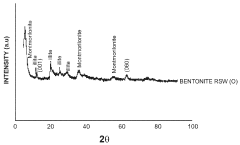
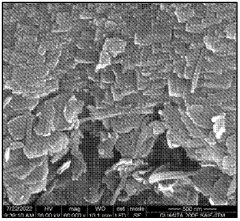
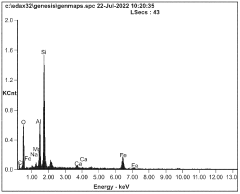
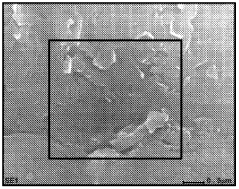
Solid-state sodium silicate battery (SSSB) employing sodium and calcium rich electrolyte enriched with sodium
PatentWO2023242870A1
Innovation
- A solid-state sodium silicate battery (SSSB) is developed, utilizing a sodium and calcium-rich electrolyte enriched with sodium, where the cathode is made of sodium silicate and the anode of carbon black, with a separator membrane coated with a naturally sodium and calcium-rich material further enriched with sodium, acting as a solid-state electrolyte.
Composite material as electrode for sodium ion batteries, production method therefor, and all-solid-state sodium battery
PatentActiveUS20170005337A1
Innovation
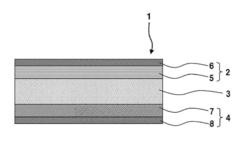
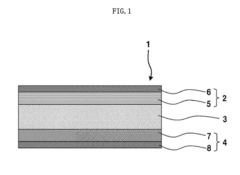
- A composite material for sodium ion batteries comprising an active material crystal, a sodium-ion conductive crystal, and an amorphous phase, where the active material crystal contains transition metals and phosphates, and the sodium-ion conductive crystal includes alumina or zirconia, with the amorphous phase enhancing interface conductivity and bonding strength.
Sustainability Impact of Sodium vs Lithium Technologies
The transition from lithium to sodium-based battery technologies represents a significant shift toward more sustainable energy storage solutions. Sodium resources are approximately 1,000 times more abundant than lithium in the Earth's crust, with sodium comprising about 2.8% of the Earth's crust compared to lithium's 0.0065%. This abundance translates directly into reduced environmental impact from mining operations, as sodium can be extracted from seawater or common salt deposits with substantially lower ecological disruption than lithium mining, which often requires extensive water usage and can lead to soil contamination.
From a carbon footprint perspective, the production of sodium-based battery materials generates approximately 30% less CO2 emissions compared to equivalent lithium technologies. This reduction stems from simpler extraction processes and the ability to utilize existing infrastructure for sodium processing, whereas lithium extraction often requires energy-intensive brine evaporation or hard-rock mining techniques.
The geographical distribution of sodium resources also contributes to sustainability by reducing transportation-related emissions. Unlike lithium, which is concentrated in the "Lithium Triangle" of South America and a few other locations, sodium resources are globally distributed, enabling localized production and shorter supply chains. This distribution pattern also mitigates geopolitical risks associated with resource concentration.
End-of-life considerations further highlight sodium's sustainability advantages. Recycling processes for sodium batteries can be less complex and energy-intensive than those for lithium batteries, primarily due to the reduced reactivity of sodium compounds. Initial studies suggest that sodium battery recycling could achieve up to 90% material recovery rates with lower processing temperatures and fewer chemical reagents.
Water usage represents another critical sustainability metric. Lithium extraction from brine deposits can consume between 500,000 to 2 million gallons of water per ton of lithium, while sodium extraction typically requires less than 20% of this amount. This difference becomes increasingly significant as water scarcity affects more regions globally.
The economic sustainability of sodium technologies also merits consideration. With raw material costs approximately 80-90% lower than lithium, sodium batteries offer potential for more affordable energy storage solutions, potentially accelerating the transition to renewable energy systems in developing economies where cost barriers remain significant.
From a carbon footprint perspective, the production of sodium-based battery materials generates approximately 30% less CO2 emissions compared to equivalent lithium technologies. This reduction stems from simpler extraction processes and the ability to utilize existing infrastructure for sodium processing, whereas lithium extraction often requires energy-intensive brine evaporation or hard-rock mining techniques.
The geographical distribution of sodium resources also contributes to sustainability by reducing transportation-related emissions. Unlike lithium, which is concentrated in the "Lithium Triangle" of South America and a few other locations, sodium resources are globally distributed, enabling localized production and shorter supply chains. This distribution pattern also mitigates geopolitical risks associated with resource concentration.
End-of-life considerations further highlight sodium's sustainability advantages. Recycling processes for sodium batteries can be less complex and energy-intensive than those for lithium batteries, primarily due to the reduced reactivity of sodium compounds. Initial studies suggest that sodium battery recycling could achieve up to 90% material recovery rates with lower processing temperatures and fewer chemical reagents.
Water usage represents another critical sustainability metric. Lithium extraction from brine deposits can consume between 500,000 to 2 million gallons of water per ton of lithium, while sodium extraction typically requires less than 20% of this amount. This difference becomes increasingly significant as water scarcity affects more regions globally.
The economic sustainability of sodium technologies also merits consideration. With raw material costs approximately 80-90% lower than lithium, sodium batteries offer potential for more affordable energy storage solutions, potentially accelerating the transition to renewable energy systems in developing economies where cost barriers remain significant.
Manufacturing Scalability and Cost Analysis
The scalability of solid-state sodium battery manufacturing represents a critical factor in determining their commercial viability. Current production methods for solid-state sodium battery materials remain predominantly laboratory-scale, with significant challenges in transitioning to mass production. The electrode kinetics enhancement materials, particularly solid electrolytes and electrode interfaces, require specialized processing techniques that are not readily compatible with existing lithium-ion battery production infrastructure.
Cost analysis reveals that raw material expenses for sodium-based batteries offer a substantial advantage over lithium counterparts, with sodium resources being approximately 1000 times more abundant and 30-50% less expensive. However, this inherent material cost advantage is currently offset by higher processing costs associated with the specialized manufacturing techniques required for solid-state configurations that enhance electrode kinetics.
The manufacturing processes for solid electrolytes that improve sodium ion transport kinetics present particular challenges. These materials often require high-temperature sintering (>800°C) or specialized deposition techniques to achieve the necessary crystalline structure and interfacial properties. Such processes demand significant energy input and specialized equipment, contributing to higher production costs compared to liquid electrolyte systems.
Electrode material production faces similar scalability hurdles. The nanostructured electrodes that facilitate enhanced sodium ion kinetics typically require precise synthesis conditions and careful control of particle morphology. Current batch production methods yield limited quantities with inconsistent quality, presenting a major barrier to industrial-scale manufacturing.
Interface engineering, crucial for electrode kinetics enhancement, represents another manufacturing challenge. Creating stable and conductive interfaces between electrodes and solid electrolytes requires precise control of processing conditions and often involves additional coating steps that are difficult to implement in continuous production lines.
Recent advancements in roll-to-roll processing and additive manufacturing show promise for scaling up production while maintaining the critical microstructural features that enhance electrode kinetics. Several pilot production facilities have demonstrated throughput improvements of 5-10x compared to laboratory methods, though still falling short of commercial requirements by an order of magnitude.
Economic modeling suggests that achieving cost parity with conventional lithium-ion batteries requires production volumes exceeding 1 GWh annually. At this scale, the inherent material cost advantages of sodium-based systems begin to outweigh the processing premiums, potentially enabling a 15-20% reduction in overall battery costs once manufacturing processes mature.
Cost analysis reveals that raw material expenses for sodium-based batteries offer a substantial advantage over lithium counterparts, with sodium resources being approximately 1000 times more abundant and 30-50% less expensive. However, this inherent material cost advantage is currently offset by higher processing costs associated with the specialized manufacturing techniques required for solid-state configurations that enhance electrode kinetics.
The manufacturing processes for solid electrolytes that improve sodium ion transport kinetics present particular challenges. These materials often require high-temperature sintering (>800°C) or specialized deposition techniques to achieve the necessary crystalline structure and interfacial properties. Such processes demand significant energy input and specialized equipment, contributing to higher production costs compared to liquid electrolyte systems.
Electrode material production faces similar scalability hurdles. The nanostructured electrodes that facilitate enhanced sodium ion kinetics typically require precise synthesis conditions and careful control of particle morphology. Current batch production methods yield limited quantities with inconsistent quality, presenting a major barrier to industrial-scale manufacturing.
Interface engineering, crucial for electrode kinetics enhancement, represents another manufacturing challenge. Creating stable and conductive interfaces between electrodes and solid electrolytes requires precise control of processing conditions and often involves additional coating steps that are difficult to implement in continuous production lines.
Recent advancements in roll-to-roll processing and additive manufacturing show promise for scaling up production while maintaining the critical microstructural features that enhance electrode kinetics. Several pilot production facilities have demonstrated throughput improvements of 5-10x compared to laboratory methods, though still falling short of commercial requirements by an order of magnitude.
Economic modeling suggests that achieving cost parity with conventional lithium-ion batteries requires production volumes exceeding 1 GWh annually. At this scale, the inherent material cost advantages of sodium-based systems begin to outweigh the processing premiums, potentially enabling a 15-20% reduction in overall battery costs once manufacturing processes mature.
Unlock deeper insights with Patsnap Eureka Quick Research — get a full tech report to explore trends and direct your research. Try now!
Generate Your Research Report Instantly with AI Agent
Supercharge your innovation with Patsnap Eureka AI Agent Platform!