
How Tautomerization Impacts Nanostructured Material Properties?
JUL 29, 20259 MIN READ
Generate Your Research Report Instantly with AI Agent
Patsnap Eureka helps you evaluate technical feasibility & market potential.
Tautomerization in Nanomaterials: Background and Objectives
Tautomerization, a phenomenon of structural isomerism, has emerged as a critical factor in the realm of nanostructured materials. This dynamic process involves the rapid interconversion between two or more isomeric forms of a molecule, typically through the migration of a proton or electron. The study of tautomerization in nanomaterials has gained significant traction over the past decade, driven by the realization that these molecular rearrangements can profoundly influence the properties and behaviors of materials at the nanoscale.
The historical context of tautomerization research dates back to the late 19th century, with early investigations focusing on organic compounds. However, its relevance to nanomaterials only became apparent in the early 2000s, as researchers began to explore the unique properties of materials at the nanoscale. This convergence of tautomerization studies and nanomaterial science has opened up new avenues for material design and engineering.
The evolution of this field has been marked by several key milestones. Initial observations of tautomeric effects in nanoparticles led to more systematic studies of how these molecular rearrangements impact various nanomaterial properties, including optical, electronic, and catalytic characteristics. As analytical techniques advanced, researchers gained the ability to observe and manipulate tautomeric states with unprecedented precision, further fueling interest in this area.
The primary objective of current research in this field is to elucidate the mechanisms by which tautomerization influences the properties of nanostructured materials. This includes understanding how factors such as size, shape, and surface chemistry of nanomaterials affect tautomeric equilibria, and conversely, how tautomerization can be harnessed to tune material properties.
Another crucial goal is to develop predictive models that can accurately describe tautomeric behavior in complex nanostructured systems. Such models would enable researchers to design materials with specific tautomeric properties, potentially leading to breakthroughs in areas like sensing, catalysis, and energy storage.
Furthermore, researchers aim to explore the potential applications of tautomerization-induced property changes in nanomaterials. This includes investigating how controlled tautomerization could be used to create responsive or adaptive nanomaterials, capable of changing their properties in response to external stimuli.
As the field progresses, there is also a growing emphasis on understanding the interplay between tautomerization and other nanoscale phenomena, such as quantum confinement effects and surface plasmon resonance. This holistic approach is expected to yield more comprehensive insights into the behavior of nanostructured materials and pave the way for novel applications across various technological domains.
The historical context of tautomerization research dates back to the late 19th century, with early investigations focusing on organic compounds. However, its relevance to nanomaterials only became apparent in the early 2000s, as researchers began to explore the unique properties of materials at the nanoscale. This convergence of tautomerization studies and nanomaterial science has opened up new avenues for material design and engineering.
The evolution of this field has been marked by several key milestones. Initial observations of tautomeric effects in nanoparticles led to more systematic studies of how these molecular rearrangements impact various nanomaterial properties, including optical, electronic, and catalytic characteristics. As analytical techniques advanced, researchers gained the ability to observe and manipulate tautomeric states with unprecedented precision, further fueling interest in this area.
The primary objective of current research in this field is to elucidate the mechanisms by which tautomerization influences the properties of nanostructured materials. This includes understanding how factors such as size, shape, and surface chemistry of nanomaterials affect tautomeric equilibria, and conversely, how tautomerization can be harnessed to tune material properties.
Another crucial goal is to develop predictive models that can accurately describe tautomeric behavior in complex nanostructured systems. Such models would enable researchers to design materials with specific tautomeric properties, potentially leading to breakthroughs in areas like sensing, catalysis, and energy storage.
Furthermore, researchers aim to explore the potential applications of tautomerization-induced property changes in nanomaterials. This includes investigating how controlled tautomerization could be used to create responsive or adaptive nanomaterials, capable of changing their properties in response to external stimuli.
As the field progresses, there is also a growing emphasis on understanding the interplay between tautomerization and other nanoscale phenomena, such as quantum confinement effects and surface plasmon resonance. This holistic approach is expected to yield more comprehensive insights into the behavior of nanostructured materials and pave the way for novel applications across various technological domains.
Market Demand for Tautomer-Controlled Nanomaterials
The market demand for tautomer-controlled nanomaterials is experiencing significant growth, driven by the increasing recognition of tautomerization's impact on material properties. This phenomenon, which involves the structural rearrangement of atoms within molecules, has profound implications for various industries, particularly in electronics, pharmaceuticals, and advanced materials.
In the electronics sector, tautomer-controlled nanomaterials are gaining traction due to their potential to enhance the performance of organic semiconductors and optoelectronic devices. The ability to manipulate tautomeric states offers new avenues for fine-tuning electronic properties, leading to improved efficiency in organic light-emitting diodes (OLEDs) and organic photovoltaics. This has sparked interest from major electronics manufacturers seeking to develop next-generation display technologies and solar cells.
The pharmaceutical industry is another key driver of market demand for tautomer-controlled nanomaterials. Tautomerization plays a crucial role in drug design and development, as it can significantly affect a compound's bioavailability, stability, and efficacy. Pharmaceutical companies are investing in research to harness tautomerization for creating more effective drug delivery systems and improving the solubility of poorly water-soluble drugs. This has led to a growing demand for nanomaterials that can control or exploit tautomeric equilibria in drug formulations.
In the field of advanced materials, tautomer-controlled nanomaterials are attracting attention for their potential in developing smart materials with switchable properties. Industries such as aerospace and automotive are exploring these materials for applications in adaptive coatings, self-healing materials, and sensors. The ability to design materials that can change their properties in response to external stimuli offers exciting possibilities for creating more resilient and versatile products.
The energy sector is also showing interest in tautomer-controlled nanomaterials, particularly for applications in energy storage and conversion. Researchers are investigating how tautomerization can be leveraged to enhance the performance of battery electrodes and catalysts for fuel cells. This has led to collaborations between energy companies and materials science research institutions, further driving market demand.
As awareness of the importance of tautomerization in nanomaterials grows, there is an increasing demand for specialized analytical tools and techniques to study and control tautomeric processes at the nanoscale. This has created a niche market for advanced scientific instruments and software solutions tailored to tautomer research and development.
In the electronics sector, tautomer-controlled nanomaterials are gaining traction due to their potential to enhance the performance of organic semiconductors and optoelectronic devices. The ability to manipulate tautomeric states offers new avenues for fine-tuning electronic properties, leading to improved efficiency in organic light-emitting diodes (OLEDs) and organic photovoltaics. This has sparked interest from major electronics manufacturers seeking to develop next-generation display technologies and solar cells.
The pharmaceutical industry is another key driver of market demand for tautomer-controlled nanomaterials. Tautomerization plays a crucial role in drug design and development, as it can significantly affect a compound's bioavailability, stability, and efficacy. Pharmaceutical companies are investing in research to harness tautomerization for creating more effective drug delivery systems and improving the solubility of poorly water-soluble drugs. This has led to a growing demand for nanomaterials that can control or exploit tautomeric equilibria in drug formulations.
In the field of advanced materials, tautomer-controlled nanomaterials are attracting attention for their potential in developing smart materials with switchable properties. Industries such as aerospace and automotive are exploring these materials for applications in adaptive coatings, self-healing materials, and sensors. The ability to design materials that can change their properties in response to external stimuli offers exciting possibilities for creating more resilient and versatile products.
The energy sector is also showing interest in tautomer-controlled nanomaterials, particularly for applications in energy storage and conversion. Researchers are investigating how tautomerization can be leveraged to enhance the performance of battery electrodes and catalysts for fuel cells. This has led to collaborations between energy companies and materials science research institutions, further driving market demand.
As awareness of the importance of tautomerization in nanomaterials grows, there is an increasing demand for specialized analytical tools and techniques to study and control tautomeric processes at the nanoscale. This has created a niche market for advanced scientific instruments and software solutions tailored to tautomer research and development.
Current Challenges in Tautomerization Control
Despite significant advancements in tautomerization research, several challenges persist in controlling this phenomenon in nanostructured materials. One of the primary obstacles is the dynamic nature of tautomerization, which makes it difficult to predict and manipulate the equilibrium between different tautomeric forms. This unpredictability can lead to inconsistent material properties and performance, particularly in applications requiring precise control over electronic or optical characteristics.
Another major challenge lies in the sensitivity of tautomerization to environmental factors. Nanostructured materials often exhibit different behavior at the nanoscale compared to bulk materials, and this difference is further complicated by tautomerization. Factors such as temperature, pH, solvent polarity, and surface interactions can significantly influence tautomeric equilibria, making it challenging to maintain consistent properties across different environments or during material processing.
The lack of in-situ characterization techniques capable of monitoring tautomerization in real-time within nanostructured materials poses a significant hurdle. Current analytical methods often require sample preparation or environmental conditions that may alter the tautomeric state, leading to potential misinterpretation of results. This limitation hampers our ability to fully understand and control tautomerization processes in complex nanostructured systems.
Furthermore, the interplay between tautomerization and other phenomena specific to nanostructured materials, such as quantum confinement effects and surface-to-volume ratio dependencies, adds another layer of complexity. These interactions can lead to unexpected changes in material properties that are difficult to predict or control using conventional approaches.
The design and synthesis of nanostructured materials with controlled tautomerization behavior also present significant challenges. While strategies exist for influencing tautomeric equilibria in bulk materials, translating these approaches to the nanoscale is not straightforward. The confined spaces and unique surface chemistry of nanostructures can dramatically alter tautomerization kinetics and thermodynamics, requiring novel synthetic strategies and material designs.
Lastly, the integration of tautomeric nanostructured materials into functional devices remains a significant challenge. The dynamic nature of tautomerization can lead to instability or unpredictable behavior in device performance over time. Developing strategies to harness or mitigate tautomerization effects in practical applications is crucial for realizing the full potential of these materials in fields such as sensing, catalysis, and optoelectronics.
Another major challenge lies in the sensitivity of tautomerization to environmental factors. Nanostructured materials often exhibit different behavior at the nanoscale compared to bulk materials, and this difference is further complicated by tautomerization. Factors such as temperature, pH, solvent polarity, and surface interactions can significantly influence tautomeric equilibria, making it challenging to maintain consistent properties across different environments or during material processing.
The lack of in-situ characterization techniques capable of monitoring tautomerization in real-time within nanostructured materials poses a significant hurdle. Current analytical methods often require sample preparation or environmental conditions that may alter the tautomeric state, leading to potential misinterpretation of results. This limitation hampers our ability to fully understand and control tautomerization processes in complex nanostructured systems.
Furthermore, the interplay between tautomerization and other phenomena specific to nanostructured materials, such as quantum confinement effects and surface-to-volume ratio dependencies, adds another layer of complexity. These interactions can lead to unexpected changes in material properties that are difficult to predict or control using conventional approaches.
The design and synthesis of nanostructured materials with controlled tautomerization behavior also present significant challenges. While strategies exist for influencing tautomeric equilibria in bulk materials, translating these approaches to the nanoscale is not straightforward. The confined spaces and unique surface chemistry of nanostructures can dramatically alter tautomerization kinetics and thermodynamics, requiring novel synthetic strategies and material designs.
Lastly, the integration of tautomeric nanostructured materials into functional devices remains a significant challenge. The dynamic nature of tautomerization can lead to instability or unpredictable behavior in device performance over time. Developing strategies to harness or mitigate tautomerization effects in practical applications is crucial for realizing the full potential of these materials in fields such as sensing, catalysis, and optoelectronics.
Existing Methods for Tautomerization Manipulation
01 Enhanced mechanical properties
Nanostructured materials exhibit improved mechanical properties such as increased strength, hardness, and wear resistance due to their unique grain structure and high surface area to volume ratio. These materials can be engineered to have superior toughness and ductility compared to their conventional counterparts.- Enhanced electrical properties of nanostructured materials: Nanostructured materials exhibit improved electrical conductivity and charge transport characteristics due to their unique structural features. These properties make them suitable for various electronic and energy storage applications, including batteries, supercapacitors, and solar cells.
- Mechanical strength and durability of nanostructured materials: Nanostructured materials often demonstrate superior mechanical properties, including increased strength, hardness, and wear resistance. These characteristics are attributed to their small grain sizes and high surface area to volume ratios, making them ideal for use in structural and protective applications.
- Optical properties of nanostructured materials: Nanostructured materials can exhibit unique optical properties, such as enhanced light absorption, emission, and scattering. These properties are often tunable based on the material's size, shape, and composition, making them valuable for applications in photonics, displays, and sensors.
- Thermal properties of nanostructured materials: Nanostructured materials can demonstrate altered thermal properties compared to their bulk counterparts. These may include improved thermal conductivity or insulation, as well as enhanced thermoelectric properties, which can be exploited for energy harvesting and thermal management applications.
- Surface properties and reactivity of nanostructured materials: Nanostructured materials often exhibit enhanced surface properties due to their high surface area to volume ratio. This can lead to increased reactivity, catalytic activity, and adsorption capabilities, making them valuable for applications in catalysis, environmental remediation, and drug delivery.
02 Tailored electrical and thermal conductivity
Nanostructured materials can be designed to have specific electrical and thermal conductivity properties. By controlling the size, shape, and composition of nanostructures, researchers can create materials with enhanced or reduced conductivity for various applications in electronics and energy storage.Expand Specific Solutions03 Improved optical properties
Nanostructured materials often display unique optical properties due to quantum confinement effects. These materials can exhibit tunable light absorption and emission characteristics, making them suitable for applications in photonics, solar cells, and display technologies.Expand Specific Solutions04 Enhanced catalytic activity
Nanostructured materials possess a high surface area to volume ratio, which can significantly increase their catalytic activity. This property makes them valuable in various chemical processes, environmental remediation, and energy conversion applications.Expand Specific Solutions05 Tunable magnetic properties
Nanostructured magnetic materials exhibit unique properties that differ from their bulk counterparts. These materials can be engineered to have specific magnetic behaviors, such as superparamagnetism or enhanced coercivity, making them suitable for applications in data storage, sensors, and medical imaging.Expand Specific Solutions
Key Players in Nanostructured Materials Research
The field of tautomerization impact on nanostructured material properties is in an early developmental stage, with growing market potential as nanotechnology applications expand. The global market for nanomaterials is projected to reach $55 billion by 2025, driven by advancements in materials science. While the technology is still emerging, several key players are making significant strides. Academic institutions like MIT, Peking University, and the University of California are leading fundamental research, while companies such as Corning, Samsung Electronics, and 3M are exploring practical applications. The technology's maturity varies across different nanostructured materials, with some areas more advanced than others, indicating a dynamic and evolving competitive landscape.
The Regents of the University of California
Technical Solution: The University of California has developed advanced computational methods to study tautomerization effects on nanostructured materials. Their approach combines density functional theory (DFT) calculations with molecular dynamics simulations to predict how tautomeric shifts impact electronic, optical, and mechanical properties at the nanoscale[1]. They have demonstrated that controlling tautomerization through environmental factors like pH, temperature, and surface interactions can be used to tune material properties in applications such as molecular switches and sensors[2]. Recent work has focused on tautomeric effects in 2D materials, showing how interlayer interactions in van der Waals heterostructures can stabilize specific tautomers and alter band structures[3].
Strengths: Cutting-edge computational techniques, interdisciplinary approach combining theory and experiment. Weaknesses: May require significant computational resources, challenges in experimental validation of predicted effects.
Corning, Inc.
Technical Solution: Corning has leveraged its expertise in glass and ceramic materials to explore tautomerization effects in nanostructured coatings and composites. Their research has focused on developing tautomeric additives that can enhance the durability and functionality of glass surfaces[13]. They have demonstrated how controlled tautomerization can be used to create self-cleaning coatings with switchable hydrophobicity and improved scratch resistance. Recent work has explored the incorporation of tautomeric molecules into glass-ceramic nanocomposites to create materials with tunable optical properties and enhanced thermal stability[14]. Corning's approach combines computational modeling with high-throughput experimentation to optimize tautomeric systems for specific applications in display technologies and optical communications[15].
Strengths: Strong materials science expertise, focus on practical industrial applications. Weaknesses: May be limited to specific types of inorganic materials, potential challenges in integrating organic tautomeric systems with traditional glass technologies.
Breakthrough Studies on Tautomeric Effects in Nanostructures
Polymerization enhanced by nanostructures under x-ray irradiation
PatentWO2014066814A1
Innovation
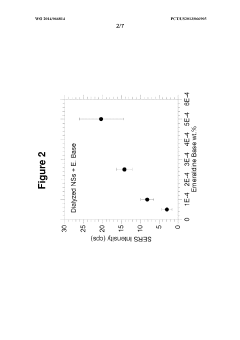
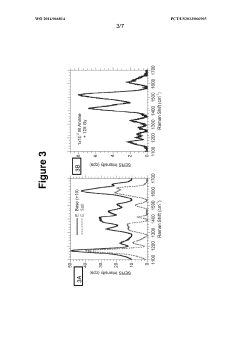
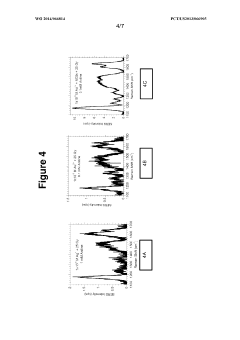
- The method involves irradiating a monomer solution with X-rays in the presence of metal-based nanoparticles, such as silver core-gold shell nanoparticles, to enhance polymer formation, where the nanoparticles have dimensions between 5 and 100 nanometers, and a solvent capable of generating hydroxyl radicals, allowing for surface-bound polymer growth and increased polymerization efficiency.

Environmental Impact of Tautomeric Nanomaterials
The environmental impact of tautomeric nanomaterials is a critical consideration in the development and application of these advanced materials. Tautomerization, the structural isomerism involving the migration of a hydrogen atom or proton, can significantly influence the properties and behavior of nanostructured materials in environmental contexts.
One of the primary environmental concerns related to tautomeric nanomaterials is their potential for enhanced reactivity. The dynamic nature of tautomerization can lead to increased surface activity, potentially resulting in greater interactions with environmental components such as water, soil, and air. This heightened reactivity may contribute to the formation of reactive oxygen species (ROS) or other reactive intermediates, which could have implications for ecosystem health and biodiversity.
The fate and transport of tautomeric nanomaterials in the environment are also of particular interest. The ability of these materials to switch between tautomeric forms can affect their solubility, aggregation behavior, and interactions with natural organic matter. These factors play a crucial role in determining the mobility and bioavailability of nanomaterials in aquatic and terrestrial ecosystems, potentially influencing their accumulation in food chains and overall environmental persistence.
Furthermore, the environmental impact of tautomeric nanomaterials extends to their potential for transformation and degradation. The tautomeric nature of these materials may lead to unique degradation pathways, resulting in the formation of novel transformation products. Understanding these transformation processes is essential for assessing the long-term environmental consequences and potential toxicity of tautomeric nanomaterials.
The impact on water treatment processes is another important consideration. Tautomeric nanomaterials may exhibit varying affinities for water treatment chemicals and filtration media, depending on their tautomeric state. This could affect the efficiency of water purification systems and potentially lead to the release of these materials into aquatic environments if not properly managed.
Additionally, the potential for tautomeric nanomaterials to act as catalysts in environmental processes must be evaluated. While this property could be harnessed for beneficial applications such as pollutant degradation, it may also lead to unintended consequences if these materials catalyze harmful reactions in natural systems.
As research in this field progresses, it is crucial to develop comprehensive environmental risk assessment frameworks that account for the unique properties of tautomeric nanomaterials. This includes evaluating their potential for bioaccumulation, ecotoxicity, and long-term ecosystem effects. Such assessments will be vital in informing regulatory decisions and guiding the sustainable development of tautomeric nanomaterials for various applications.
One of the primary environmental concerns related to tautomeric nanomaterials is their potential for enhanced reactivity. The dynamic nature of tautomerization can lead to increased surface activity, potentially resulting in greater interactions with environmental components such as water, soil, and air. This heightened reactivity may contribute to the formation of reactive oxygen species (ROS) or other reactive intermediates, which could have implications for ecosystem health and biodiversity.
The fate and transport of tautomeric nanomaterials in the environment are also of particular interest. The ability of these materials to switch between tautomeric forms can affect their solubility, aggregation behavior, and interactions with natural organic matter. These factors play a crucial role in determining the mobility and bioavailability of nanomaterials in aquatic and terrestrial ecosystems, potentially influencing their accumulation in food chains and overall environmental persistence.
Furthermore, the environmental impact of tautomeric nanomaterials extends to their potential for transformation and degradation. The tautomeric nature of these materials may lead to unique degradation pathways, resulting in the formation of novel transformation products. Understanding these transformation processes is essential for assessing the long-term environmental consequences and potential toxicity of tautomeric nanomaterials.
The impact on water treatment processes is another important consideration. Tautomeric nanomaterials may exhibit varying affinities for water treatment chemicals and filtration media, depending on their tautomeric state. This could affect the efficiency of water purification systems and potentially lead to the release of these materials into aquatic environments if not properly managed.
Additionally, the potential for tautomeric nanomaterials to act as catalysts in environmental processes must be evaluated. While this property could be harnessed for beneficial applications such as pollutant degradation, it may also lead to unintended consequences if these materials catalyze harmful reactions in natural systems.
As research in this field progresses, it is crucial to develop comprehensive environmental risk assessment frameworks that account for the unique properties of tautomeric nanomaterials. This includes evaluating their potential for bioaccumulation, ecotoxicity, and long-term ecosystem effects. Such assessments will be vital in informing regulatory decisions and guiding the sustainable development of tautomeric nanomaterials for various applications.
Computational Modeling of Tautomerization in Nanostructures
Computational modeling of tautomerization in nanostructures has become an essential tool for understanding and predicting the behavior of materials at the nanoscale. This approach combines advanced computational techniques with quantum mechanical principles to simulate the complex processes of tautomerization and its effects on nanostructured materials.
One of the primary methods employed in this field is density functional theory (DFT), which provides a robust framework for calculating electronic structures and energetics of tautomeric systems. DFT simulations can accurately predict the relative stabilities of different tautomeric forms and the energy barriers associated with their interconversion. These calculations are crucial for understanding how tautomerization influences the properties of nanostructures.
Molecular dynamics (MD) simulations complement DFT by allowing researchers to study the time-dependent behavior of tautomeric systems. MD simulations can reveal how tautomerization affects the dynamic properties of nanostructures, such as their flexibility, thermal stability, and response to external stimuli. By incorporating quantum effects into classical MD simulations, researchers can capture the quantum nature of proton transfer processes involved in tautomerization.
Advanced sampling techniques, such as metadynamics and umbrella sampling, are often employed to overcome the limitations of traditional MD simulations in exploring rare events like tautomerization. These methods enable the calculation of free energy landscapes and transition rates between different tautomeric states, providing valuable insights into the thermodynamics and kinetics of tautomerization in nanostructures.
Machine learning approaches have recently emerged as powerful tools for accelerating computational modeling of tautomerization. Neural networks trained on large datasets of quantum mechanical calculations can rapidly predict tautomeric equilibria and transition states, enabling high-throughput screening of nanostructured materials. These methods are particularly useful for exploring vast chemical spaces and identifying promising candidates for specific applications.
Multiscale modeling techniques are increasingly being used to bridge the gap between atomistic simulations and macroscopic properties of nanostructured materials. By combining quantum mechanical calculations with coarse-grained models, researchers can study how tautomerization at the molecular level influences the bulk properties of nanomaterials, such as their optical, electronic, and mechanical characteristics.
The integration of these computational approaches with experimental techniques, such as spectroscopy and microscopy, has led to a more comprehensive understanding of tautomerization in nanostructures. This synergy between theory and experiment allows for the validation of computational models and the interpretation of complex experimental data, ultimately driving innovation in the design and development of novel nanostructured materials with tailored properties.
One of the primary methods employed in this field is density functional theory (DFT), which provides a robust framework for calculating electronic structures and energetics of tautomeric systems. DFT simulations can accurately predict the relative stabilities of different tautomeric forms and the energy barriers associated with their interconversion. These calculations are crucial for understanding how tautomerization influences the properties of nanostructures.
Molecular dynamics (MD) simulations complement DFT by allowing researchers to study the time-dependent behavior of tautomeric systems. MD simulations can reveal how tautomerization affects the dynamic properties of nanostructures, such as their flexibility, thermal stability, and response to external stimuli. By incorporating quantum effects into classical MD simulations, researchers can capture the quantum nature of proton transfer processes involved in tautomerization.
Advanced sampling techniques, such as metadynamics and umbrella sampling, are often employed to overcome the limitations of traditional MD simulations in exploring rare events like tautomerization. These methods enable the calculation of free energy landscapes and transition rates between different tautomeric states, providing valuable insights into the thermodynamics and kinetics of tautomerization in nanostructures.
Machine learning approaches have recently emerged as powerful tools for accelerating computational modeling of tautomerization. Neural networks trained on large datasets of quantum mechanical calculations can rapidly predict tautomeric equilibria and transition states, enabling high-throughput screening of nanostructured materials. These methods are particularly useful for exploring vast chemical spaces and identifying promising candidates for specific applications.
Multiscale modeling techniques are increasingly being used to bridge the gap between atomistic simulations and macroscopic properties of nanostructured materials. By combining quantum mechanical calculations with coarse-grained models, researchers can study how tautomerization at the molecular level influences the bulk properties of nanomaterials, such as their optical, electronic, and mechanical characteristics.
The integration of these computational approaches with experimental techniques, such as spectroscopy and microscopy, has led to a more comprehensive understanding of tautomerization in nanostructures. This synergy between theory and experiment allows for the validation of computational models and the interpretation of complex experimental data, ultimately driving innovation in the design and development of novel nanostructured materials with tailored properties.
Unlock deeper insights with Patsnap Eureka Quick Research — get a full tech report to explore trends and direct your research. Try now!
Generate Your Research Report Instantly with AI Agent
Supercharge your innovation with Patsnap Eureka AI Agent Platform!