Tautomerization and Its Implications for Photochemical Reactions
JUL 29, 20259 MIN READ
Generate Your Research Report Instantly with AI Agent
Patsnap Eureka helps you evaluate technical feasibility & market potential.
Tautomerization Fundamentals and Research Objectives
Tautomerization is a fundamental chemical phenomenon that plays a crucial role in various photochemical reactions. This dynamic equilibrium between structural isomers, where atoms or groups rapidly shift within a molecule, has significant implications for the behavior and reactivity of compounds under light-induced conditions. The study of tautomerization in the context of photochemistry has gained increasing attention due to its potential to influence reaction pathways, product distributions, and overall efficiency of light-driven processes.
The historical development of tautomerization research dates back to the late 19th century, with early observations of keto-enol equilibria. However, its relevance to photochemistry has only been fully appreciated in recent decades. As our understanding of molecular dynamics and excited-state chemistry has advanced, the intricate interplay between tautomerization and photochemical reactions has emerged as a critical area of investigation.
Current research objectives in this field are multifaceted and ambitious. One primary goal is to elucidate the mechanisms by which tautomerization influences photochemical reactions at the molecular level. This involves studying the kinetics and thermodynamics of tautomeric transitions in both ground and excited states, as well as their impact on absorption spectra, fluorescence properties, and photoreactivity.
Another key objective is to develop predictive models that can accurately describe tautomerization processes in complex photochemical systems. This requires integrating experimental data with advanced computational methods, including quantum chemical calculations and molecular dynamics simulations. Such models would enable researchers to design more efficient photochemical reactions and tailor molecular structures for specific light-induced applications.
Furthermore, there is a growing interest in harnessing tautomerization to control and manipulate photochemical reactions. This includes exploring ways to stabilize specific tautomeric forms, engineer molecules with switchable properties, and create novel photochromic materials. The potential applications of such research span diverse fields, including solar energy conversion, photocatalysis, and the development of smart materials with light-responsive characteristics.
As technology advances, new experimental techniques are being developed to probe tautomerization dynamics with unprecedented temporal and spatial resolution. Time-resolved spectroscopy, ultrafast laser techniques, and single-molecule imaging methods are pushing the boundaries of our ability to observe and understand these rapid molecular transformations in real-time.
In conclusion, the study of tautomerization and its implications for photochemical reactions represents a dynamic and evolving field of research. By unraveling the complex interplay between molecular structure, light-induced processes, and tautomeric equilibria, scientists aim to unlock new possibilities for controlling and optimizing photochemical reactions across a wide range of applications.
The historical development of tautomerization research dates back to the late 19th century, with early observations of keto-enol equilibria. However, its relevance to photochemistry has only been fully appreciated in recent decades. As our understanding of molecular dynamics and excited-state chemistry has advanced, the intricate interplay between tautomerization and photochemical reactions has emerged as a critical area of investigation.
Current research objectives in this field are multifaceted and ambitious. One primary goal is to elucidate the mechanisms by which tautomerization influences photochemical reactions at the molecular level. This involves studying the kinetics and thermodynamics of tautomeric transitions in both ground and excited states, as well as their impact on absorption spectra, fluorescence properties, and photoreactivity.
Another key objective is to develop predictive models that can accurately describe tautomerization processes in complex photochemical systems. This requires integrating experimental data with advanced computational methods, including quantum chemical calculations and molecular dynamics simulations. Such models would enable researchers to design more efficient photochemical reactions and tailor molecular structures for specific light-induced applications.
Furthermore, there is a growing interest in harnessing tautomerization to control and manipulate photochemical reactions. This includes exploring ways to stabilize specific tautomeric forms, engineer molecules with switchable properties, and create novel photochromic materials. The potential applications of such research span diverse fields, including solar energy conversion, photocatalysis, and the development of smart materials with light-responsive characteristics.
As technology advances, new experimental techniques are being developed to probe tautomerization dynamics with unprecedented temporal and spatial resolution. Time-resolved spectroscopy, ultrafast laser techniques, and single-molecule imaging methods are pushing the boundaries of our ability to observe and understand these rapid molecular transformations in real-time.
In conclusion, the study of tautomerization and its implications for photochemical reactions represents a dynamic and evolving field of research. By unraveling the complex interplay between molecular structure, light-induced processes, and tautomeric equilibria, scientists aim to unlock new possibilities for controlling and optimizing photochemical reactions across a wide range of applications.
Photochemical Applications of Tautomeric Systems
Tautomeric systems have emerged as versatile platforms for a wide range of photochemical applications, offering unique opportunities for molecular design and functional materials. The interconversion between tautomeric forms, triggered by light, has been harnessed in various fields, including photoswitching, photochromic materials, and photodynamic therapy.
One of the most prominent applications of tautomeric systems in photochemistry is the development of molecular switches and memories. These systems exploit the reversible nature of tautomerization to create bistable molecules that can be toggled between two distinct states using light. For instance, photochromic diarylethenes incorporating tautomeric units have shown exceptional fatigue resistance and thermal stability, making them ideal candidates for optical data storage and molecular logic gates.
In the realm of materials science, tautomeric compounds have been utilized to create smart materials with tunable properties. Photochromic films and coatings based on tautomeric systems exhibit reversible color changes in response to light, finding applications in smart windows, optical filters, and security features. The ability to control material properties through light-induced tautomerization has also been explored in the development of photoresponsive polymers and liquid crystals.
Tautomeric systems have shown great promise in the field of photodynamic therapy, a minimally invasive treatment modality for cancer and other diseases. Photosensitizers based on tautomeric compounds can undergo light-induced structural changes, leading to the generation of reactive oxygen species that selectively damage target cells. The tautomeric nature of these molecules allows for fine-tuning of their photophysical properties, enhancing their efficacy and reducing side effects.
In the area of solar energy conversion, tautomeric systems have been investigated for their potential to improve the efficiency of dye-sensitized solar cells. The light-induced tautomerization can facilitate charge separation and electron transfer processes, potentially leading to enhanced photocurrent generation. Additionally, the structural flexibility of tautomeric dyes allows for better spectral matching with the solar spectrum.
The application of tautomeric systems in photocatalysis has gained significant attention in recent years. Light-induced tautomerization can activate catalytic sites or modify the electronic properties of catalysts, enabling selective and efficient chemical transformations. This approach has been particularly successful in the development of photoredox catalysts for organic synthesis and environmental remediation.
One of the most prominent applications of tautomeric systems in photochemistry is the development of molecular switches and memories. These systems exploit the reversible nature of tautomerization to create bistable molecules that can be toggled between two distinct states using light. For instance, photochromic diarylethenes incorporating tautomeric units have shown exceptional fatigue resistance and thermal stability, making them ideal candidates for optical data storage and molecular logic gates.
In the realm of materials science, tautomeric compounds have been utilized to create smart materials with tunable properties. Photochromic films and coatings based on tautomeric systems exhibit reversible color changes in response to light, finding applications in smart windows, optical filters, and security features. The ability to control material properties through light-induced tautomerization has also been explored in the development of photoresponsive polymers and liquid crystals.
Tautomeric systems have shown great promise in the field of photodynamic therapy, a minimally invasive treatment modality for cancer and other diseases. Photosensitizers based on tautomeric compounds can undergo light-induced structural changes, leading to the generation of reactive oxygen species that selectively damage target cells. The tautomeric nature of these molecules allows for fine-tuning of their photophysical properties, enhancing their efficacy and reducing side effects.
In the area of solar energy conversion, tautomeric systems have been investigated for their potential to improve the efficiency of dye-sensitized solar cells. The light-induced tautomerization can facilitate charge separation and electron transfer processes, potentially leading to enhanced photocurrent generation. Additionally, the structural flexibility of tautomeric dyes allows for better spectral matching with the solar spectrum.
The application of tautomeric systems in photocatalysis has gained significant attention in recent years. Light-induced tautomerization can activate catalytic sites or modify the electronic properties of catalysts, enabling selective and efficient chemical transformations. This approach has been particularly successful in the development of photoredox catalysts for organic synthesis and environmental remediation.
Current Challenges in Tautomerization Control
Tautomerization control remains a significant challenge in photochemical reactions, presenting several obstacles that researchers and industry professionals must overcome. One of the primary difficulties lies in the rapid interconversion between tautomeric forms, which can occur on timescales faster than many photochemical processes. This dynamic equilibrium complicates efforts to isolate and study specific tautomers, making it challenging to predict and control reaction outcomes.
The environmental sensitivity of tautomeric equilibria poses another substantial hurdle. Factors such as solvent polarity, pH, temperature, and the presence of catalysts can dramatically influence the distribution of tautomers. This sensitivity makes it difficult to maintain consistent reaction conditions across different scales or in varied applications, potentially leading to inconsistent results in photochemical reactions.
Furthermore, the energetic landscape of tautomerization is often complex, with multiple local minima and transition states. This complexity can result in unexpected reaction pathways or products, particularly when excited states are involved in photochemical processes. The interplay between ground-state tautomerization and excited-state dynamics adds another layer of intricacy to the control problem.
The lack of selective and efficient methods for stabilizing specific tautomeric forms remains a significant challenge. While some progress has been made in using supramolecular chemistry and tailored reaction environments to favor certain tautomers, broadly applicable strategies are still limited. This deficiency hampers efforts to harness the full potential of tautomerization in photochemical applications.
Additionally, the detection and quantification of different tautomers in real-time during photochemical reactions present technical challenges. Many analytical techniques struggle to capture the rapid interconversion between tautomers, especially under reaction conditions. This limitation impedes the development of feedback-controlled systems that could potentially adjust reaction parameters on-the-fly to optimize tautomer distributions.
The computational prediction of tautomeric behavior in complex photochemical systems remains an ongoing challenge. While significant advances have been made in quantum chemical methods, accurately modeling the interplay between tautomerization, solvent effects, and excited-state dynamics requires substantial computational resources and sophisticated algorithms. This complexity often limits the ability to perform high-throughput virtual screening of potential photochemical systems involving tautomerization.
The environmental sensitivity of tautomeric equilibria poses another substantial hurdle. Factors such as solvent polarity, pH, temperature, and the presence of catalysts can dramatically influence the distribution of tautomers. This sensitivity makes it difficult to maintain consistent reaction conditions across different scales or in varied applications, potentially leading to inconsistent results in photochemical reactions.
Furthermore, the energetic landscape of tautomerization is often complex, with multiple local minima and transition states. This complexity can result in unexpected reaction pathways or products, particularly when excited states are involved in photochemical processes. The interplay between ground-state tautomerization and excited-state dynamics adds another layer of intricacy to the control problem.
The lack of selective and efficient methods for stabilizing specific tautomeric forms remains a significant challenge. While some progress has been made in using supramolecular chemistry and tailored reaction environments to favor certain tautomers, broadly applicable strategies are still limited. This deficiency hampers efforts to harness the full potential of tautomerization in photochemical applications.
Additionally, the detection and quantification of different tautomers in real-time during photochemical reactions present technical challenges. Many analytical techniques struggle to capture the rapid interconversion between tautomers, especially under reaction conditions. This limitation impedes the development of feedback-controlled systems that could potentially adjust reaction parameters on-the-fly to optimize tautomer distributions.
The computational prediction of tautomeric behavior in complex photochemical systems remains an ongoing challenge. While significant advances have been made in quantum chemical methods, accurately modeling the interplay between tautomerization, solvent effects, and excited-state dynamics requires substantial computational resources and sophisticated algorithms. This complexity often limits the ability to perform high-throughput virtual screening of potential photochemical systems involving tautomerization.
Existing Methodologies for Tautomer Manipulation
01 Photochemical tautomerization in organic compounds
Photochemical reactions can induce tautomerization in organic compounds, leading to structural changes and potentially new properties. This process involves the absorption of light energy to facilitate the rearrangement of atoms within the molecule, resulting in a different tautomeric form.- Photochemical tautomerization reactions: Tautomerization reactions induced by light, where the molecular structure changes through the movement of a proton or electron. These reactions are important in various fields including organic synthesis, materials science, and biological processes. The photochemical nature allows for controlled and reversible structural changes.
- Applications in photosensitive materials: Tautomerization photochemical reactions are utilized in the development of photosensitive materials. These materials can change their properties when exposed to light, making them useful in applications such as photochromic lenses, optical data storage, and smart windows. The reversible nature of tautomerization allows for switchable and tunable material properties.
- Mechanisms of photochemical tautomerization: Studies on the mechanisms of photochemical tautomerization reactions, including excited state dynamics, proton transfer processes, and the role of solvent effects. Understanding these mechanisms is crucial for designing and optimizing tautomerization-based photochemical systems and predicting their behavior under various conditions.
- Tautomerization in biological systems: Investigation of tautomerization photochemical reactions in biological contexts, such as DNA base pairs and photoreceptor proteins. These reactions play important roles in processes like DNA mutation, vision, and photosynthesis. Understanding these natural systems can inspire the development of bio-inspired materials and technologies.
- Analytical techniques for studying tautomerization: Development and application of analytical techniques to study photochemical tautomerization reactions. These may include spectroscopic methods, ultrafast laser spectroscopy, and computational modeling. Advanced analytical tools are essential for elucidating reaction mechanisms, kinetics, and structural changes associated with tautomerization.
02 Tautomerization in photosensitive materials
Photosensitive materials can undergo tautomerization upon exposure to light, which can be utilized in various applications such as optical data storage, photochromic devices, and photographic processes. The light-induced tautomerization can result in changes in color, solubility, or other physical properties of the material.Expand Specific Solutions03 Tautomerization in photocatalytic reactions
Photocatalytic reactions can involve tautomerization as an intermediate step or as a result of the catalytic process. The presence of a photocatalyst can facilitate the tautomerization of reactants or products, potentially leading to enhanced reaction rates or selectivity in chemical transformations.Expand Specific Solutions04 Tautomerization in photoprotective compounds
Some photoprotective compounds undergo tautomerization upon exposure to UV light, which can contribute to their protective properties. This process can involve the dissipation of absorbed energy through structural rearrangement, potentially reducing the harmful effects of UV radiation on biological systems or materials.Expand Specific Solutions05 Applications of photochemical tautomerization
Photochemical tautomerization has various applications in fields such as materials science, organic synthesis, and analytical chemistry. It can be used for the development of molecular switches, sensors, and other functional materials that respond to light stimuli through reversible structural changes.Expand Specific Solutions
Key Research Groups and Industrial Players
The field of tautomerization and its implications for photochemical reactions is in a developing stage, with growing interest from both academia and industry. The market size is expanding as researchers explore applications in drug discovery, materials science, and chemical synthesis. Technologically, the field is progressing rapidly, with advancements in computational methods and experimental techniques driving innovation. Key players like Harvard University, Dana-Farber Cancer Institute, and The Broad Institute are leading academic research, while pharmaceutical companies such as Bayer Pharma AG and Janssen Sciences Ireland are exploring potential applications in drug development. The involvement of diverse institutions indicates a competitive landscape with opportunities for breakthrough discoveries and commercial applications.
President & Fellows of Harvard College
Technical Solution: Harvard College has made significant contributions to the study of tautomerization and its implications for photochemical reactions. Their research focuses on understanding the dynamics of tautomerization in excited states and its impact on photochemical processes. They have developed advanced spectroscopic techniques to observe tautomerization in real-time, including ultrafast laser spectroscopy and time-resolved fluorescence measurements[1]. Their studies have revealed that tautomerization can significantly alter the electronic structure and reactivity of molecules in excited states, leading to unexpected photochemical outcomes[2]. Harvard researchers have also investigated the role of tautomerization in photostability and photodegradation of organic compounds, providing insights into the design of more stable photochemical systems[3].
Strengths: Access to cutting-edge research facilities and interdisciplinary collaboration. Weaknesses: Potential focus on fundamental research rather than immediate industrial applications.
Massachusetts Institute of Technology
Technical Solution: MIT has been at the forefront of research on tautomerization and its implications for photochemical reactions. Their approach combines experimental techniques with advanced computational methods to elucidate the mechanisms of tautomerization in excited states. MIT researchers have developed novel time-resolved spectroscopic methods to capture the ultrafast dynamics of tautomerization during photochemical processes[4]. They have also made significant progress in understanding how tautomerization affects energy transfer and charge separation in photochemical systems, with implications for the design of more efficient solar cells and light-emitting devices[5]. Additionally, MIT has pioneered the use of machine learning algorithms to predict tautomerization pathways and their impact on photochemical reactivity, enabling more efficient screening of potential photochemical catalysts and materials[6].
Strengths: Strong integration of experimental and computational approaches. Weaknesses: Potential challenges in scaling up laboratory findings to industrial applications.
Breakthrough Tautomerization Control Techniques
Compositions and methods for treating multiple myeloma
PatentActiveUS20190010120A1
Innovation
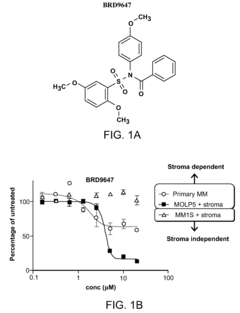
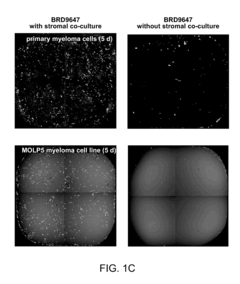
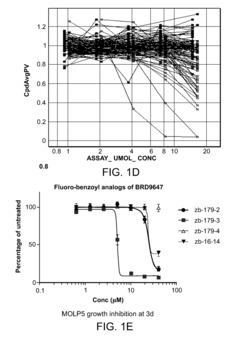
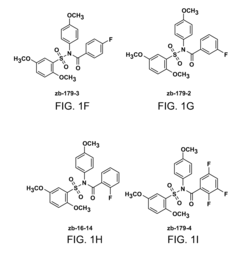
- The development of derivatives or analogs of BRD9647, which inhibit the proliferation of multiple myeloma cells by covalently modifying residues of polypeptides with a benzoyl group, specifically targeting stroma-dependent multiple myeloma cells through benzoylation of cellular amines.
Diazepane derivatives and uses thereof
PatentWO2015117083A1
Innovation
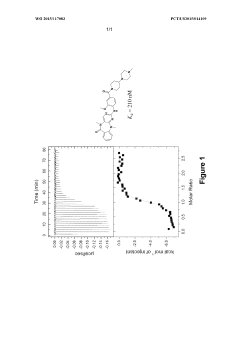
- Development of diazepane derivatives that bind to bromodomain-containing proteins, inhibiting their activity and function, thereby modulating transcriptional processes and reducing the expression of genes regulated by these proteins.
Computational Modeling of Tautomeric Equilibria
Computational modeling of tautomeric equilibria has become an indispensable tool in understanding the complex dynamics of tautomerization and its effects on photochemical reactions. These models provide valuable insights into the energetics, kinetics, and structural changes associated with tautomeric interconversions, which are crucial for predicting and interpreting photochemical behavior.
One of the primary approaches in computational modeling of tautomeric equilibria is the use of quantum mechanical methods. Density Functional Theory (DFT) calculations have proven particularly effective in accurately predicting the relative stabilities of different tautomers. These calculations can provide detailed information about the electronic structure, bond lengths, and angles of each tautomeric form, allowing researchers to identify the most stable configurations under various conditions.
Molecular dynamics simulations offer another powerful tool for studying tautomeric equilibria. These simulations can capture the time-dependent behavior of tautomeric systems, including the rates of interconversion between different forms. By incorporating solvent effects and temperature dependencies, molecular dynamics can provide a more realistic representation of tautomeric behavior in solution, which is particularly relevant for photochemical reactions.
Machine learning approaches are increasingly being applied to model tautomeric equilibria. These methods can rapidly predict tautomer distributions and equilibrium constants by learning from large datasets of experimental and computational results. Neural networks and other machine learning algorithms have shown promise in accurately predicting tautomeric preferences across a wide range of chemical structures.
Hybrid quantum mechanics/molecular mechanics (QM/MM) methods have emerged as a powerful technique for modeling tautomerization in complex systems, such as within protein environments. These methods allow for the accurate quantum mechanical treatment of the tautomerizing region while efficiently handling the surrounding environment with classical molecular mechanics.
The integration of these computational models with experimental data is crucial for validating and refining predictions. Spectroscopic techniques, such as NMR and UV-Vis spectroscopy, provide valuable experimental benchmarks against which computational models can be tested and calibrated. This synergy between computation and experiment has led to significant improvements in the accuracy and reliability of tautomeric equilibria predictions.
As computational power continues to increase, more sophisticated models are being developed to handle larger systems and longer timescales. These advancements are enabling researchers to study tautomerization in increasingly complex environments, such as in biological systems or on surfaces, providing new insights into the role of tautomerization in photochemical processes across a wide range of applications.
One of the primary approaches in computational modeling of tautomeric equilibria is the use of quantum mechanical methods. Density Functional Theory (DFT) calculations have proven particularly effective in accurately predicting the relative stabilities of different tautomers. These calculations can provide detailed information about the electronic structure, bond lengths, and angles of each tautomeric form, allowing researchers to identify the most stable configurations under various conditions.
Molecular dynamics simulations offer another powerful tool for studying tautomeric equilibria. These simulations can capture the time-dependent behavior of tautomeric systems, including the rates of interconversion between different forms. By incorporating solvent effects and temperature dependencies, molecular dynamics can provide a more realistic representation of tautomeric behavior in solution, which is particularly relevant for photochemical reactions.
Machine learning approaches are increasingly being applied to model tautomeric equilibria. These methods can rapidly predict tautomer distributions and equilibrium constants by learning from large datasets of experimental and computational results. Neural networks and other machine learning algorithms have shown promise in accurately predicting tautomeric preferences across a wide range of chemical structures.
Hybrid quantum mechanics/molecular mechanics (QM/MM) methods have emerged as a powerful technique for modeling tautomerization in complex systems, such as within protein environments. These methods allow for the accurate quantum mechanical treatment of the tautomerizing region while efficiently handling the surrounding environment with classical molecular mechanics.
The integration of these computational models with experimental data is crucial for validating and refining predictions. Spectroscopic techniques, such as NMR and UV-Vis spectroscopy, provide valuable experimental benchmarks against which computational models can be tested and calibrated. This synergy between computation and experiment has led to significant improvements in the accuracy and reliability of tautomeric equilibria predictions.
As computational power continues to increase, more sophisticated models are being developed to handle larger systems and longer timescales. These advancements are enabling researchers to study tautomerization in increasingly complex environments, such as in biological systems or on surfaces, providing new insights into the role of tautomerization in photochemical processes across a wide range of applications.
Environmental Impact of Tautomer-Based Reactions
Tautomerization, a fundamental process in organic chemistry, has significant implications for photochemical reactions and their environmental impact. The interconversion between tautomers can influence the reactivity, stability, and photophysical properties of molecules, leading to diverse environmental consequences.
In aquatic environments, tautomerization can affect the behavior of organic pollutants. Some tautomeric forms may exhibit increased water solubility, potentially enhancing their mobility and distribution in water bodies. This can lead to wider contamination and pose challenges for water treatment processes. Conversely, certain tautomers might demonstrate reduced solubility, resulting in accumulation in sediments and potential long-term environmental persistence.
Photochemical reactions involving tautomers can contribute to the degradation of organic compounds in the environment. The different tautomeric forms may have varying susceptibilities to photolysis, influencing the rate and extent of their breakdown. This can impact the persistence of pollutants and their transformation products in natural systems. In some cases, tautomerization-induced photochemical reactions may lead to the formation of more toxic or recalcitrant compounds, potentially exacerbating environmental risks.
The interaction between tautomers and atmospheric components can affect air quality. Certain tautomeric forms may be more reactive with atmospheric oxidants, such as ozone or hydroxyl radicals, potentially contributing to the formation of secondary pollutants or particulate matter. These processes can influence local and regional air quality, as well as climate-related phenomena.
Tautomerization can also impact the bioavailability and toxicity of chemicals in ecosystems. Different tautomeric forms may exhibit varying abilities to cross biological membranes or interact with cellular components, affecting their uptake, accumulation, and potential toxic effects on organisms. This has implications for bioaccumulation and biomagnification processes in food webs, potentially influencing ecosystem health and biodiversity.
In soil environments, tautomerization can influence the sorption and mobility of organic compounds. The different tautomeric forms may have varying affinities for soil particles, affecting their retention and transport through soil profiles. This can impact groundwater contamination risks and the effectiveness of soil remediation strategies.
Understanding the environmental impact of tautomer-based reactions is crucial for accurate risk assessment and the development of effective environmental management strategies. It highlights the need for comprehensive analytical approaches that consider tautomeric equilibria in environmental monitoring and fate prediction models. Furthermore, this knowledge can inform the design of more environmentally benign chemicals and processes, contributing to sustainable chemistry practices and reduced environmental footprints of industrial and agricultural activities.
In aquatic environments, tautomerization can affect the behavior of organic pollutants. Some tautomeric forms may exhibit increased water solubility, potentially enhancing their mobility and distribution in water bodies. This can lead to wider contamination and pose challenges for water treatment processes. Conversely, certain tautomers might demonstrate reduced solubility, resulting in accumulation in sediments and potential long-term environmental persistence.
Photochemical reactions involving tautomers can contribute to the degradation of organic compounds in the environment. The different tautomeric forms may have varying susceptibilities to photolysis, influencing the rate and extent of their breakdown. This can impact the persistence of pollutants and their transformation products in natural systems. In some cases, tautomerization-induced photochemical reactions may lead to the formation of more toxic or recalcitrant compounds, potentially exacerbating environmental risks.
The interaction between tautomers and atmospheric components can affect air quality. Certain tautomeric forms may be more reactive with atmospheric oxidants, such as ozone or hydroxyl radicals, potentially contributing to the formation of secondary pollutants or particulate matter. These processes can influence local and regional air quality, as well as climate-related phenomena.
Tautomerization can also impact the bioavailability and toxicity of chemicals in ecosystems. Different tautomeric forms may exhibit varying abilities to cross biological membranes or interact with cellular components, affecting their uptake, accumulation, and potential toxic effects on organisms. This has implications for bioaccumulation and biomagnification processes in food webs, potentially influencing ecosystem health and biodiversity.
In soil environments, tautomerization can influence the sorption and mobility of organic compounds. The different tautomeric forms may have varying affinities for soil particles, affecting their retention and transport through soil profiles. This can impact groundwater contamination risks and the effectiveness of soil remediation strategies.
Understanding the environmental impact of tautomer-based reactions is crucial for accurate risk assessment and the development of effective environmental management strategies. It highlights the need for comprehensive analytical approaches that consider tautomeric equilibria in environmental monitoring and fate prediction models. Furthermore, this knowledge can inform the design of more environmentally benign chemicals and processes, contributing to sustainable chemistry practices and reduced environmental footprints of industrial and agricultural activities.
Unlock deeper insights with Patsnap Eureka Quick Research — get a full tech report to explore trends and direct your research. Try now!
Generate Your Research Report Instantly with AI Agent
Supercharge your innovation with Patsnap Eureka AI Agent Platform!