

How to Detect Solid-State Relay Faults in Complex Systems
SEP 19, 20259 MIN READ
Generate Your Research Report Instantly with AI Agent
PatSnap Eureka helps you evaluate technical feasibility & market potential.
SSR Fault Detection Background and Objectives
Solid-State Relays (SSRs) have emerged as critical components in modern industrial control systems, power distribution networks, and advanced electronic applications. Unlike traditional electromechanical relays, SSRs utilize semiconductor devices to achieve switching functionality without moving parts, offering advantages in reliability, switching speed, and operational lifespan. The evolution of SSR technology has progressed from simple thyristor-based designs to sophisticated integrated circuits incorporating advanced fault detection capabilities.
The detection of SSR faults represents a significant technical challenge that has evolved alongside the increasing complexity of systems in which these components operate. Early fault detection methods relied primarily on basic current and voltage measurements, but these approaches proved insufficient as systems grew more intricate and operational requirements more demanding. The technical trajectory has shifted toward intelligent monitoring systems capable of detecting subtle performance deviations before catastrophic failures occur.
Current industry trends indicate a growing emphasis on predictive maintenance strategies that incorporate real-time SSR health monitoring. This shift is driven by the escalating costs associated with system downtime in critical applications such as manufacturing production lines, data centers, and medical equipment. The financial implications of undetected SSR failures have catalyzed research into more sophisticated detection methodologies.
The primary objective of SSR fault detection technology development is to create robust, reliable systems capable of identifying potential failures before they impact system performance. This includes the detection of partial failures, degradation patterns, and intermittent faults that traditional monitoring approaches might miss. Secondary objectives include minimizing false positives, reducing implementation complexity, and ensuring compatibility with existing industrial control architectures.
Technical goals in this domain extend to developing standardized protocols for fault classification, establishing industry benchmarks for detection sensitivity, and creating adaptive algorithms that can accommodate diverse operating environments. The ideal detection system would provide actionable insights regarding not only the presence of a fault but also its nature, severity, and projected time-to-failure.
Recent technological advancements in machine learning, embedded systems, and sensor miniaturization have created new opportunities for innovative approaches to SSR fault detection. These developments suggest potential pathways toward systems that combine traditional electrical measurements with advanced pattern recognition to achieve unprecedented levels of fault prediction accuracy in increasingly complex operational environments.
The detection of SSR faults represents a significant technical challenge that has evolved alongside the increasing complexity of systems in which these components operate. Early fault detection methods relied primarily on basic current and voltage measurements, but these approaches proved insufficient as systems grew more intricate and operational requirements more demanding. The technical trajectory has shifted toward intelligent monitoring systems capable of detecting subtle performance deviations before catastrophic failures occur.
Current industry trends indicate a growing emphasis on predictive maintenance strategies that incorporate real-time SSR health monitoring. This shift is driven by the escalating costs associated with system downtime in critical applications such as manufacturing production lines, data centers, and medical equipment. The financial implications of undetected SSR failures have catalyzed research into more sophisticated detection methodologies.
The primary objective of SSR fault detection technology development is to create robust, reliable systems capable of identifying potential failures before they impact system performance. This includes the detection of partial failures, degradation patterns, and intermittent faults that traditional monitoring approaches might miss. Secondary objectives include minimizing false positives, reducing implementation complexity, and ensuring compatibility with existing industrial control architectures.
Technical goals in this domain extend to developing standardized protocols for fault classification, establishing industry benchmarks for detection sensitivity, and creating adaptive algorithms that can accommodate diverse operating environments. The ideal detection system would provide actionable insights regarding not only the presence of a fault but also its nature, severity, and projected time-to-failure.
Recent technological advancements in machine learning, embedded systems, and sensor miniaturization have created new opportunities for innovative approaches to SSR fault detection. These developments suggest potential pathways toward systems that combine traditional electrical measurements with advanced pattern recognition to achieve unprecedented levels of fault prediction accuracy in increasingly complex operational environments.
Market Demand Analysis for SSR Fault Detection
The global market for Solid-State Relay (SSR) fault detection solutions is experiencing robust growth, driven primarily by increasing automation across industrial sectors and the critical need for system reliability. Current market valuations indicate that the industrial automation segment, where SSRs are extensively deployed, reached approximately 250 billion USD in 2022, with fault detection systems comprising a significant portion of this market.
Manufacturing industries represent the largest demand sector, particularly in automotive production lines, semiconductor fabrication, and precision electronics assembly. These environments cannot tolerate unplanned downtime, with studies showing that manufacturing facilities lose between 5-20% of their productive capacity to equipment failures, including relay malfunctions. The financial impact is substantial, with average downtime costs in automotive manufacturing exceeding 22,000 USD per minute.
Energy and utility sectors form the second-largest market segment, where SSRs control critical infrastructure components. Power distribution networks, renewable energy systems, and smart grid technologies all rely heavily on SSR performance. Market research indicates that utility companies are increasing maintenance technology investments by 15% annually to prevent outages and improve grid reliability.
Healthcare applications represent a rapidly growing market segment with particularly stringent reliability requirements. Medical equipment manufacturers report that SSR fault detection capabilities are now standard requirements in procurement specifications, reflecting the life-critical nature of these applications.
Geographically, North America and Europe currently lead market demand due to their established industrial bases and regulatory frameworks emphasizing equipment safety and reliability. However, the Asia-Pacific region shows the highest growth rate, with China and India rapidly expanding their industrial automation capabilities and consequently their need for advanced fault detection technologies.
Market analysis reveals several key demand drivers: increasing complexity of industrial systems requiring more sophisticated monitoring; regulatory pressures mandating improved safety systems; rising labor costs making preventive maintenance more economical than reactive repairs; and the growth of IoT and Industry 4.0 frameworks that incorporate comprehensive condition monitoring.
Customer requirements are evolving toward integrated solutions that offer real-time monitoring, predictive capabilities, remote diagnostics, and seamless integration with existing industrial control systems. There is particularly strong demand for non-invasive detection methods that can identify impending failures without system disruption.
The market forecast indicates continued growth at a compound annual rate exceeding 8% through 2028, with particularly strong expansion in predictive maintenance applications that incorporate machine learning algorithms to detect subtle changes in SSR performance before catastrophic failure occurs.
Manufacturing industries represent the largest demand sector, particularly in automotive production lines, semiconductor fabrication, and precision electronics assembly. These environments cannot tolerate unplanned downtime, with studies showing that manufacturing facilities lose between 5-20% of their productive capacity to equipment failures, including relay malfunctions. The financial impact is substantial, with average downtime costs in automotive manufacturing exceeding 22,000 USD per minute.
Energy and utility sectors form the second-largest market segment, where SSRs control critical infrastructure components. Power distribution networks, renewable energy systems, and smart grid technologies all rely heavily on SSR performance. Market research indicates that utility companies are increasing maintenance technology investments by 15% annually to prevent outages and improve grid reliability.
Healthcare applications represent a rapidly growing market segment with particularly stringent reliability requirements. Medical equipment manufacturers report that SSR fault detection capabilities are now standard requirements in procurement specifications, reflecting the life-critical nature of these applications.
Geographically, North America and Europe currently lead market demand due to their established industrial bases and regulatory frameworks emphasizing equipment safety and reliability. However, the Asia-Pacific region shows the highest growth rate, with China and India rapidly expanding their industrial automation capabilities and consequently their need for advanced fault detection technologies.
Market analysis reveals several key demand drivers: increasing complexity of industrial systems requiring more sophisticated monitoring; regulatory pressures mandating improved safety systems; rising labor costs making preventive maintenance more economical than reactive repairs; and the growth of IoT and Industry 4.0 frameworks that incorporate comprehensive condition monitoring.
Customer requirements are evolving toward integrated solutions that offer real-time monitoring, predictive capabilities, remote diagnostics, and seamless integration with existing industrial control systems. There is particularly strong demand for non-invasive detection methods that can identify impending failures without system disruption.
The market forecast indicates continued growth at a compound annual rate exceeding 8% through 2028, with particularly strong expansion in predictive maintenance applications that incorporate machine learning algorithms to detect subtle changes in SSR performance before catastrophic failure occurs.
Current Challenges in SSR Fault Detection
Solid-State Relay (SSR) fault detection in complex systems presents numerous challenges that impede effective implementation of reliable monitoring solutions. The primary difficulty stems from the absence of mechanical components in SSRs, which eliminates traditional fault indicators such as audible clicks or visible contact movement found in electromechanical relays. This fundamental difference necessitates entirely different detection approaches.
Signal noise poses a significant challenge in industrial environments where SSRs typically operate. Electromagnetic interference, power line fluctuations, and nearby equipment can generate substantial electrical noise that masks subtle fault signatures. This noise-to-signal ratio problem is particularly acute in high-power applications where SSRs control substantial loads.
The diverse failure modes of SSRs further complicate detection efforts. Unlike mechanical relays with relatively predictable failure patterns, SSRs can fail in multiple ways: they may remain permanently on (failed-closed), permanently off (failed-open), or exhibit intermittent operation. Some SSRs develop increased leakage current or voltage drop characteristics before complete failure, while others fail catastrophically without warning.
Temperature sensitivity represents another major challenge, as SSR performance parameters shift significantly with operating temperature. This creates moving detection thresholds that must be continuously calibrated against environmental conditions. In systems where SSRs experience wide temperature variations, distinguishing between normal temperature-induced parameter shifts and actual fault conditions becomes exceedingly difficult.
Integration complexity within modern industrial control systems presents additional obstacles. SSRs are often embedded within sophisticated control architectures with multiple feedback loops and interdependencies. Isolating SSR-specific performance metrics from overall system behavior requires advanced signal processing and system modeling capabilities that many existing monitoring systems lack.
Real-time detection requirements further strain detection systems, particularly in safety-critical applications where fault identification must occur within milliseconds to prevent cascading failures or hazardous conditions. This temporal constraint limits the complexity of detection algorithms that can be practically implemented.
Cost considerations also impact detection solution viability. While comprehensive monitoring might be technically feasible, the economic reality of implementing sophisticated detection systems across numerous SSRs in large industrial installations often leads to compromised approaches that sacrifice detection accuracy for affordability.
Lastly, the lack of standardized testing methodologies and performance metrics for SSR health monitoring creates inconsistency across the industry. Without established benchmarks, determining appropriate fault thresholds and validation procedures remains largely subjective and varies significantly between system integrators and industries.
Signal noise poses a significant challenge in industrial environments where SSRs typically operate. Electromagnetic interference, power line fluctuations, and nearby equipment can generate substantial electrical noise that masks subtle fault signatures. This noise-to-signal ratio problem is particularly acute in high-power applications where SSRs control substantial loads.
The diverse failure modes of SSRs further complicate detection efforts. Unlike mechanical relays with relatively predictable failure patterns, SSRs can fail in multiple ways: they may remain permanently on (failed-closed), permanently off (failed-open), or exhibit intermittent operation. Some SSRs develop increased leakage current or voltage drop characteristics before complete failure, while others fail catastrophically without warning.
Temperature sensitivity represents another major challenge, as SSR performance parameters shift significantly with operating temperature. This creates moving detection thresholds that must be continuously calibrated against environmental conditions. In systems where SSRs experience wide temperature variations, distinguishing between normal temperature-induced parameter shifts and actual fault conditions becomes exceedingly difficult.
Integration complexity within modern industrial control systems presents additional obstacles. SSRs are often embedded within sophisticated control architectures with multiple feedback loops and interdependencies. Isolating SSR-specific performance metrics from overall system behavior requires advanced signal processing and system modeling capabilities that many existing monitoring systems lack.
Real-time detection requirements further strain detection systems, particularly in safety-critical applications where fault identification must occur within milliseconds to prevent cascading failures or hazardous conditions. This temporal constraint limits the complexity of detection algorithms that can be practically implemented.
Cost considerations also impact detection solution viability. While comprehensive monitoring might be technically feasible, the economic reality of implementing sophisticated detection systems across numerous SSRs in large industrial installations often leads to compromised approaches that sacrifice detection accuracy for affordability.
Lastly, the lack of standardized testing methodologies and performance metrics for SSR health monitoring creates inconsistency across the industry. Without established benchmarks, determining appropriate fault thresholds and validation procedures remains largely subjective and varies significantly between system integrators and industries.
Current SSR Fault Detection Methodologies
01 Current monitoring techniques for SSR fault detection
Current monitoring is a key technique for detecting faults in solid-state relays. By continuously measuring the current flowing through the relay, abnormal conditions such as overcurrent, undercurrent, or current leakage can be identified. These monitoring systems typically compare the measured current values against predetermined thresholds to determine if a fault has occurred. Advanced implementations may include differential current analysis to detect partial failures or degradation in relay performance.- Current monitoring for fault detection: Solid-state relay fault detection can be implemented by monitoring current flow through the relay. This approach involves measuring the current during operation and comparing it with expected values to identify abnormal conditions. When current levels deviate from normal operating parameters, it indicates potential faults such as short circuits, open circuits, or partial failures. Advanced implementations may include differential current sensing and threshold-based detection algorithms to improve accuracy and reduce false alarms.
- Temperature-based fault detection methods: Temperature monitoring is an effective method for detecting faults in solid-state relays. Since relay failures often manifest as abnormal heat generation, thermal sensors can be strategically placed to monitor operating temperatures. When temperatures exceed predetermined thresholds, the system can identify potential failures before catastrophic damage occurs. This approach may utilize thermistors, infrared sensors, or integrated temperature sensing circuits to provide continuous monitoring and early warning of developing faults.
- Voltage-based detection techniques: Voltage monitoring across solid-state relay terminals provides valuable information for fault detection. By measuring voltage drops during both on and off states, abnormal conditions can be identified. In properly functioning relays, voltage characteristics follow predictable patterns during switching operations. Deviations from these patterns indicate potential issues such as partial conduction, improper switching, or component degradation. Advanced implementations may include differential voltage sensing and comparison with reference values to improve detection accuracy.
- Integrated diagnostic circuits: Modern solid-state relays often incorporate dedicated diagnostic circuits that continuously monitor relay performance. These integrated systems can simultaneously evaluate multiple parameters including current, voltage, temperature, and switching times. The diagnostic circuits may include microcontrollers or specialized ICs that process sensor data and apply algorithms to detect anomalies. When faults are detected, the system can generate alerts, log diagnostic information, or initiate protective measures such as automatic shutdown to prevent further damage.
- Optical and signal-based fault detection: Optical and signal-based methods provide non-contact approaches to solid-state relay fault detection. These techniques may use light-based sensors to monitor relay operation, analyze control signal integrity, or employ feedback mechanisms to verify proper switching. Some implementations use optical isolation to monitor relay states while maintaining electrical separation. Signal analysis can detect timing anomalies, improper switching sequences, or communication errors that indicate potential relay failures before they affect system operation.
02 Voltage-based fault detection methods
Voltage monitoring across solid-state relay terminals provides another approach to fault detection. These methods analyze voltage patterns during switching operations to identify abnormalities. When a solid-state relay fails to properly switch, characteristic voltage signatures appear that can be measured and analyzed. Some implementations monitor the voltage drop across the relay in both on and off states, while others focus on transient voltage behaviors during switching events to detect partial failures or degradation.Expand Specific Solutions03 Thermal monitoring for SSR fault prevention
Thermal monitoring systems detect overheating conditions in solid-state relays that often precede catastrophic failures. These systems utilize temperature sensors placed near critical components to continuously monitor operating temperatures. When temperatures exceed safe thresholds, protective measures can be activated, such as reducing load or shutting down the relay entirely. Some advanced implementations include predictive thermal modeling to anticipate potential failures before they occur based on temperature trends and operating conditions.Expand Specific Solutions04 Integrated diagnostic circuits for real-time fault detection
Modern solid-state relays often incorporate dedicated diagnostic circuits that continuously monitor multiple parameters simultaneously. These integrated systems can detect various fault conditions including open circuits, short circuits, and improper switching behavior. The diagnostic circuits typically provide status signals or fault codes that can be communicated to control systems. Some implementations include self-test capabilities that periodically verify proper relay operation without disrupting the primary function.Expand Specific Solutions05 Network-based monitoring and fault prediction systems
Advanced solid-state relay fault detection systems leverage network connectivity to enable remote monitoring and predictive maintenance. These systems collect operational data from multiple relays and apply machine learning algorithms to identify patterns that precede failures. By analyzing historical performance data, these systems can predict potential failures before they occur, allowing for scheduled maintenance rather than emergency repairs. Some implementations include cloud-based analytics platforms that continuously improve fault prediction accuracy through accumulated operational data.Expand Specific Solutions
Key Industry Players in SSR Diagnostics
The solid-state relay fault detection market is currently in a growth phase, with increasing adoption across complex industrial systems. The market size is expanding due to rising automation demands in manufacturing, energy, and transportation sectors. Technologically, the field is moderately mature but evolving rapidly with advanced diagnostic capabilities. Leading players include Siemens AG and Hitachi Energy, who offer comprehensive industrial automation solutions with integrated fault detection. Companies like Wieland Electric, ComatReleco, and Anywire (Mitsubishi) specialize in relay technologies with innovative monitoring features. Meanwhile, semiconductor giants such as Intel, IBM, and TSMC are developing intelligent monitoring systems that incorporate AI-based fault prediction, pushing the technology frontier toward predictive maintenance rather than reactive detection.
Hitachi Energy Ltd.
Technical Solution: Hitachi Energy has pioneered a multi-parameter fault detection approach for solid-state relays in high-voltage power transmission and distribution systems. Their technology employs a combination of electrical signature analysis (ESA) and thermal imaging to identify incipient failures in SSRs. The system continuously monitors key parameters including forward voltage drop, leakage current during off-state, switching time variations, and thermal patterns using infrared sensors. Hitachi's solution incorporates distributed temperature sensing (DTS) technology that can detect localized heating within relay components with high spatial resolution. Their RelCare monitoring system integrates these measurements with grid management systems, providing comprehensive health assessment of relay networks. The technology employs advanced signal processing algorithms to filter out environmental noise and identify subtle changes in relay performance that indicate developing faults. Hitachi's approach includes automated stress testing procedures that periodically verify relay functionality without disrupting normal operations, enabling detection of degradation before complete failure occurs.
Strengths: Highly sensitive detection capabilities can identify subtle changes in relay performance before catastrophic failure. Seamless integration with existing power grid management systems. Weaknesses: Higher implementation cost compared to simpler monitoring solutions. May require specialized expertise for system configuration and maintenance in complex grid environments.
Siemens AG
Technical Solution: Siemens has developed an integrated fault detection system for solid-state relays in industrial automation and power distribution systems. Their approach combines real-time monitoring with predictive analytics to detect SSR failures before they cause system downtime. The technology utilizes embedded temperature sensors, current monitoring circuits, and voltage drop measurements across the relay to identify potential failure modes including overheating, partial shorting, and switching failures. Siemens' SIRIUS 3RF series incorporates diagnostic capabilities that monitor switching cycles, thermal conditions, and load variations to predict potential failures. The system employs machine learning algorithms that analyze patterns in operational data to distinguish between normal variations and developing faults. Data is processed through their MindSphere IoT platform, enabling remote monitoring and integration with broader industrial control systems. Their solution includes redundancy mechanisms that automatically switch to backup relays when anomalies are detected, preventing critical system failures.
Strengths: Comprehensive integration with industrial automation systems provides seamless monitoring within existing infrastructure. Advanced predictive analytics capabilities reduce false positives and enable preventive maintenance. Weaknesses: Implementation requires significant investment in compatible hardware and software ecosystem. System complexity may require specialized training for maintenance personnel.
Critical Technologies in SSR Failure Analysis
Solid-state relay
PatentActiveHK1248032A
Innovation
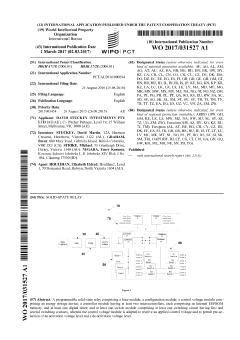
- A programmable solid-state relay using a base module, configuration module, control voltage module with energy storage, and microcontrollers with EEPROM memory and digital timers, which allows pre-selection of activation and deactivation voltage levels and time delays, ensuring accurate timing and reliability through solid-state switching circuits and energy buffering.
Solid state relay module with overcurrent protection
PatentPendingUS20240348241A1
Innovation
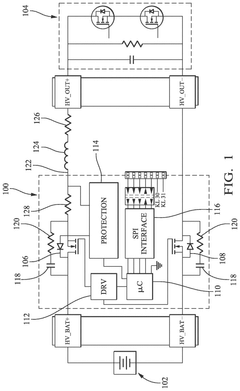
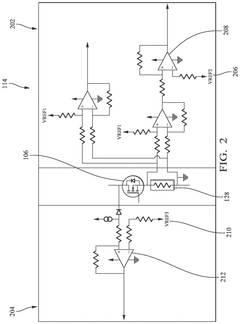
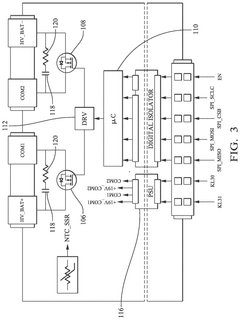
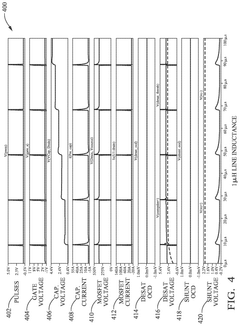
- A solid state relay module with shunt and desaturation overcurrent detection circuits that quickly respond to overcurrent conditions by turning off the electronic switches, eliminating the need for dedicated bypass relays and resistors, and utilizing pulsed energy to pre-charge capacitive loads, thereby preventing damage from in-rush currents.
Reliability Standards and Compliance
Solid-state relay (SSR) fault detection in complex systems must adhere to stringent reliability standards and compliance requirements established by various international and industry-specific regulatory bodies. The International Electrotechnical Commission (IEC) has developed several standards specifically addressing electronic component reliability, including IEC 60947-4-3 for semiconductor controllers and contactors for non-motor loads, which provides essential guidelines for SSR performance and fault detection methodologies.
In mission-critical applications such as aerospace, medical equipment, and industrial automation, compliance with standards like ISO 26262 for functional safety in electrical and electronic systems becomes mandatory. This standard establishes Automotive Safety Integrity Levels (ASIL) that dictate the rigor of fault detection mechanisms required based on risk assessment. Similarly, IEC 61508 provides a framework for functional safety of electrical/electronic/programmable electronic safety-related systems, with specific provisions for fault detection coverage.
For industrial applications, the UL 508A standard for industrial control panels sets forth requirements for control circuit components including SSRs, while NFPA 79 addresses electrical standards for industrial machinery with implications for relay monitoring systems. These standards typically mandate specific Mean Time Between Failures (MTBF) metrics and failure mode analysis documentation for SSR implementations.
Compliance with electromagnetic compatibility (EMC) standards such as IEC 61000 series is equally important, as electromagnetic interference can trigger false fault detections or mask actual failures in SSR monitoring systems. This necessitates robust design practices that incorporate appropriate filtering and isolation techniques in fault detection circuits.
Military and aerospace applications follow additional standards like MIL-STD-883 for test methods and procedures for microelectronics, and DO-254 for airborne electronic hardware, which impose rigorous verification and validation requirements for fault detection mechanisms. These standards often require comprehensive Failure Modes, Effects, and Criticality Analysis (FMECA) documentation.
The reliability standards landscape is continuously evolving, with increasing emphasis on predictive maintenance capabilities and real-time monitoring. Recent updates to IEC 62061 for safety of machinery and control systems have introduced more stringent requirements for diagnostic coverage in electronic control systems, directly impacting SSR fault detection implementations.
Organizations implementing SSR fault detection systems must establish comprehensive compliance documentation, including test reports, certification records, and ongoing monitoring data. This documentation serves both regulatory purposes and provides valuable insights for continuous improvement of fault detection methodologies, ultimately enhancing system reliability and safety across diverse industrial applications.
In mission-critical applications such as aerospace, medical equipment, and industrial automation, compliance with standards like ISO 26262 for functional safety in electrical and electronic systems becomes mandatory. This standard establishes Automotive Safety Integrity Levels (ASIL) that dictate the rigor of fault detection mechanisms required based on risk assessment. Similarly, IEC 61508 provides a framework for functional safety of electrical/electronic/programmable electronic safety-related systems, with specific provisions for fault detection coverage.
For industrial applications, the UL 508A standard for industrial control panels sets forth requirements for control circuit components including SSRs, while NFPA 79 addresses electrical standards for industrial machinery with implications for relay monitoring systems. These standards typically mandate specific Mean Time Between Failures (MTBF) metrics and failure mode analysis documentation for SSR implementations.
Compliance with electromagnetic compatibility (EMC) standards such as IEC 61000 series is equally important, as electromagnetic interference can trigger false fault detections or mask actual failures in SSR monitoring systems. This necessitates robust design practices that incorporate appropriate filtering and isolation techniques in fault detection circuits.
Military and aerospace applications follow additional standards like MIL-STD-883 for test methods and procedures for microelectronics, and DO-254 for airborne electronic hardware, which impose rigorous verification and validation requirements for fault detection mechanisms. These standards often require comprehensive Failure Modes, Effects, and Criticality Analysis (FMECA) documentation.
The reliability standards landscape is continuously evolving, with increasing emphasis on predictive maintenance capabilities and real-time monitoring. Recent updates to IEC 62061 for safety of machinery and control systems have introduced more stringent requirements for diagnostic coverage in electronic control systems, directly impacting SSR fault detection implementations.
Organizations implementing SSR fault detection systems must establish comprehensive compliance documentation, including test reports, certification records, and ongoing monitoring data. This documentation serves both regulatory purposes and provides valuable insights for continuous improvement of fault detection methodologies, ultimately enhancing system reliability and safety across diverse industrial applications.
Economic Impact of SSR Failures
Solid-State Relay (SSR) failures in complex systems can lead to substantial economic consequences across multiple sectors. The financial impact of SSR failures extends far beyond the cost of replacing the component itself, often cascading into production downtime, equipment damage, and even safety incidents. In manufacturing environments, a single SSR failure can halt entire production lines, with downtime costs ranging from $10,000 to $50,000 per hour in high-volume industries such as automotive or semiconductor manufacturing.
The maintenance economics present a significant challenge for organizations. Reactive maintenance approaches to SSR failures typically cost 3-5 times more than preventive strategies, while predictive maintenance solutions can reduce these costs by up to 70%. Companies implementing advanced SSR fault detection systems report average reductions of 45% in unplanned downtime and 30% in maintenance costs, representing potential savings of millions of dollars annually for large industrial operations.
In critical infrastructure sectors such as power distribution and telecommunications, the economic ripple effects become even more pronounced. A 2022 industry analysis revealed that SSR failures in power substations contributed to approximately $2.1 billion in economic losses across North America alone, primarily due to service interruptions and cascading system failures. The healthcare sector faces similar challenges, with SSR failures in medical equipment potentially leading to treatment delays and additional patient care costs estimated at $15,000-$30,000 per incident.
Insurance implications further compound these economic considerations. Facilities with documented histories of SSR-related incidents face premium increases averaging 15-25%, while those implementing comprehensive detection systems qualify for reductions of 5-12%. This risk-based economic factor increasingly influences capital investment decisions regarding fault detection technologies.
The return on investment (ROI) for implementing advanced SSR fault detection systems typically ranges from 150% to 400% over a three-year period, with payback periods averaging 12-18 months in high-reliability environments. This favorable economic profile has accelerated adoption rates, with the global market for SSR monitoring solutions growing at 14.3% annually and projected to reach $3.7 billion by 2027.
Regulatory economics also play a significant role, as compliance failures related to inadequate SSR monitoring can result in penalties ranging from $10,000 to over $1 million in regulated industries. These potential liabilities have increasingly factored into cost-benefit analyses when evaluating detection system investments, particularly in aerospace, nuclear, and medical device manufacturing sectors.
The maintenance economics present a significant challenge for organizations. Reactive maintenance approaches to SSR failures typically cost 3-5 times more than preventive strategies, while predictive maintenance solutions can reduce these costs by up to 70%. Companies implementing advanced SSR fault detection systems report average reductions of 45% in unplanned downtime and 30% in maintenance costs, representing potential savings of millions of dollars annually for large industrial operations.
In critical infrastructure sectors such as power distribution and telecommunications, the economic ripple effects become even more pronounced. A 2022 industry analysis revealed that SSR failures in power substations contributed to approximately $2.1 billion in economic losses across North America alone, primarily due to service interruptions and cascading system failures. The healthcare sector faces similar challenges, with SSR failures in medical equipment potentially leading to treatment delays and additional patient care costs estimated at $15,000-$30,000 per incident.
Insurance implications further compound these economic considerations. Facilities with documented histories of SSR-related incidents face premium increases averaging 15-25%, while those implementing comprehensive detection systems qualify for reductions of 5-12%. This risk-based economic factor increasingly influences capital investment decisions regarding fault detection technologies.
The return on investment (ROI) for implementing advanced SSR fault detection systems typically ranges from 150% to 400% over a three-year period, with payback periods averaging 12-18 months in high-reliability environments. This favorable economic profile has accelerated adoption rates, with the global market for SSR monitoring solutions growing at 14.3% annually and projected to reach $3.7 billion by 2027.
Regulatory economics also play a significant role, as compliance failures related to inadequate SSR monitoring can result in penalties ranging from $10,000 to over $1 million in regulated industries. These potential liabilities have increasingly factored into cost-benefit analyses when evaluating detection system investments, particularly in aerospace, nuclear, and medical device manufacturing sectors.
Unlock deeper insights with PatSnap Eureka Quick Research — get a full tech report to explore trends and direct your research. Try now!
Generate Your Research Report Instantly with AI Agent
Supercharge your innovation with PatSnap Eureka AI Agent Platform!