

Solid-State Relay Performance in High-Moisture Environments
SEP 19, 20259 MIN READ
Generate Your Research Report Instantly with AI Agent
PatSnap Eureka helps you evaluate technical feasibility & market potential.
SSR Technology Background and Objectives
Solid-State Relays (SSRs) emerged in the late 1960s as an evolution from traditional electromechanical relays, offering a revolutionary approach to electrical switching without moving parts. The technology utilizes semiconductor devices, primarily thyristors, triacs, or MOSFETs, to control electrical circuits through electrical isolation between the control and switched circuits. This fundamental design has positioned SSRs as critical components in industrial automation, HVAC systems, and various electronic applications where reliability and longevity are paramount.
The evolution of SSR technology has been marked by significant improvements in switching capabilities, thermal management, and miniaturization. Early generations faced limitations in handling high current loads and exhibited vulnerability to voltage transients. Modern SSRs have overcome many of these challenges through advanced semiconductor materials and improved thermal design, enabling them to handle increasingly demanding applications across diverse industries.
Despite these advancements, the performance of SSRs in high-moisture environments remains a persistent challenge. Moisture ingress can compromise the electrical isolation properties, accelerate corrosion of internal components, and potentially lead to catastrophic failures in critical systems. This vulnerability becomes particularly concerning in applications such as marine environments, water treatment facilities, outdoor installations, and food processing plants where high humidity or direct water exposure is unavoidable.
The primary objective of this technical research is to comprehensively evaluate the current state of SSR technology specifically in high-moisture environments, identifying the key failure mechanisms and performance limitations. By understanding these challenges, we aim to establish a foundation for developing enhanced SSR designs that maintain reliable operation under adverse moisture conditions.
Additionally, this research seeks to explore emerging materials and encapsulation technologies that could significantly improve moisture resistance without compromising the core benefits of SSRs, such as their fast switching capabilities, silent operation, and long operational lifespan. Particular attention will be given to recent innovations in conformal coatings, hermetic sealing techniques, and hydrophobic materials that show promise for next-generation moisture-resistant SSRs.
The technological trajectory suggests that future SSRs will need to balance enhanced environmental protection with the growing demand for higher efficiency, smaller form factors, and integration with smart monitoring capabilities. This research aims to identify the most promising pathways for achieving these seemingly contradictory requirements, providing a roadmap for both incremental improvements and potentially disruptive innovations in SSR technology for challenging environments.
The evolution of SSR technology has been marked by significant improvements in switching capabilities, thermal management, and miniaturization. Early generations faced limitations in handling high current loads and exhibited vulnerability to voltage transients. Modern SSRs have overcome many of these challenges through advanced semiconductor materials and improved thermal design, enabling them to handle increasingly demanding applications across diverse industries.
Despite these advancements, the performance of SSRs in high-moisture environments remains a persistent challenge. Moisture ingress can compromise the electrical isolation properties, accelerate corrosion of internal components, and potentially lead to catastrophic failures in critical systems. This vulnerability becomes particularly concerning in applications such as marine environments, water treatment facilities, outdoor installations, and food processing plants where high humidity or direct water exposure is unavoidable.
The primary objective of this technical research is to comprehensively evaluate the current state of SSR technology specifically in high-moisture environments, identifying the key failure mechanisms and performance limitations. By understanding these challenges, we aim to establish a foundation for developing enhanced SSR designs that maintain reliable operation under adverse moisture conditions.
Additionally, this research seeks to explore emerging materials and encapsulation technologies that could significantly improve moisture resistance without compromising the core benefits of SSRs, such as their fast switching capabilities, silent operation, and long operational lifespan. Particular attention will be given to recent innovations in conformal coatings, hermetic sealing techniques, and hydrophobic materials that show promise for next-generation moisture-resistant SSRs.
The technological trajectory suggests that future SSRs will need to balance enhanced environmental protection with the growing demand for higher efficiency, smaller form factors, and integration with smart monitoring capabilities. This research aims to identify the most promising pathways for achieving these seemingly contradictory requirements, providing a roadmap for both incremental improvements and potentially disruptive innovations in SSR technology for challenging environments.
Market Demand Analysis for Moisture-Resistant Relays
The global market for moisture-resistant solid-state relays (SSRs) has been experiencing significant growth, driven by increasing demand across multiple industries where high-moisture environments pose operational challenges. Industrial automation sectors, particularly in food processing, marine applications, and wastewater treatment facilities, represent the largest market segments requiring reliable switching solutions that can withstand moisture exposure without performance degradation.
Recent market research indicates that the moisture-resistant relay market is expanding at a compound annual growth rate of approximately 6.8%, with particular acceleration in regions with humid climates such as Southeast Asia and parts of Latin America. This growth trajectory is expected to continue as industrial processes become more automated even in challenging environmental conditions.
The oil and gas industry has emerged as a significant consumer of moisture-resistant SSRs, especially for offshore platforms and underwater applications where traditional electromechanical relays face rapid deterioration. Similarly, the renewable energy sector, particularly offshore wind farms and marine solar installations, demonstrates increasing demand for switching components that can maintain performance integrity despite constant exposure to moisture and salt spray.
Consumer demand patterns reveal a growing preference for SSRs with IP67 or higher protection ratings, indicating a market shift toward products offering complete protection against dust and temporary immersion in water. This trend reflects end-users' increasing awareness of total cost of ownership, where initial investment in moisture-resistant technology yields significant savings in maintenance and replacement costs over time.
Market segmentation analysis shows that while price remains an important factor, reliability in high-moisture environments has become the primary purchasing criterion for industrial buyers. This represents a notable shift from previous years when cost considerations often outweighed performance specifications in procurement decisions.
Supply chain analysis reveals potential market opportunities in developing specialized moisture-resistant SSRs for emerging applications such as underwater data centers, floating solar farms, and maritime autonomous systems. These niche markets present premium pricing opportunities for manufacturers who can deliver proven performance in extreme moisture conditions.
Customer feedback from various industries indicates growing dissatisfaction with conventional relay solutions in high-moisture environments, creating market pull for innovative approaches to moisture resistance. This dissatisfaction primarily stems from unexpected downtime, maintenance costs, and safety concerns associated with relay failures in critical applications where moisture exposure is unavoidable.
Recent market research indicates that the moisture-resistant relay market is expanding at a compound annual growth rate of approximately 6.8%, with particular acceleration in regions with humid climates such as Southeast Asia and parts of Latin America. This growth trajectory is expected to continue as industrial processes become more automated even in challenging environmental conditions.
The oil and gas industry has emerged as a significant consumer of moisture-resistant SSRs, especially for offshore platforms and underwater applications where traditional electromechanical relays face rapid deterioration. Similarly, the renewable energy sector, particularly offshore wind farms and marine solar installations, demonstrates increasing demand for switching components that can maintain performance integrity despite constant exposure to moisture and salt spray.
Consumer demand patterns reveal a growing preference for SSRs with IP67 or higher protection ratings, indicating a market shift toward products offering complete protection against dust and temporary immersion in water. This trend reflects end-users' increasing awareness of total cost of ownership, where initial investment in moisture-resistant technology yields significant savings in maintenance and replacement costs over time.
Market segmentation analysis shows that while price remains an important factor, reliability in high-moisture environments has become the primary purchasing criterion for industrial buyers. This represents a notable shift from previous years when cost considerations often outweighed performance specifications in procurement decisions.
Supply chain analysis reveals potential market opportunities in developing specialized moisture-resistant SSRs for emerging applications such as underwater data centers, floating solar farms, and maritime autonomous systems. These niche markets present premium pricing opportunities for manufacturers who can deliver proven performance in extreme moisture conditions.
Customer feedback from various industries indicates growing dissatisfaction with conventional relay solutions in high-moisture environments, creating market pull for innovative approaches to moisture resistance. This dissatisfaction primarily stems from unexpected downtime, maintenance costs, and safety concerns associated with relay failures in critical applications where moisture exposure is unavoidable.
Current Challenges in High-Moisture SSR Applications
Solid-state relays (SSRs) deployed in high-moisture environments face significant operational challenges that compromise their reliability and longevity. Moisture ingress into SSR components can lead to electrical leakage paths, resulting in partial or complete device failure. This issue is particularly pronounced in industrial settings such as food processing plants, marine applications, and outdoor control systems where relative humidity regularly exceeds 80%.
The semiconductor materials within SSRs exhibit vulnerability to moisture-induced degradation mechanisms. Silicon-based components can experience accelerated corrosion when exposed to moisture, especially in the presence of ionic contaminants. This corrosion affects the metal-semiconductor interfaces, leading to increased contact resistance and thermal issues. Industry data indicates that SSRs operating in environments with relative humidity above 85% show a 30-40% reduction in expected operational lifespan.
Thermal cycling in high-moisture environments creates additional stress on SSR components. As temperatures fluctuate, moisture condenses and evaporates repeatedly within the device housing, accelerating degradation processes. This cyclical moisture exposure particularly affects the interface between different materials within the SSR, creating micro-cracks and delamination that further compromise device integrity.
Current conformal coating technologies provide insufficient protection in extreme moisture conditions. Standard acrylic and silicone coatings offer only temporary barriers, with moisture eventually penetrating these protective layers through microscopic pores or at coating boundaries. Parylene coatings offer superior moisture resistance but add significant cost and manufacturing complexity, limiting their widespread adoption in commercial SSR products.
The heat dissipation characteristics of SSRs are severely compromised in high-moisture environments. Moisture can alter the thermal conductivity properties of materials and interfaces, leading to hotspots and thermal runaway conditions. Testing data shows that SSRs rated for 10A continuous current may need to be derated by up to 25% when operating in environments with relative humidity exceeding 90%.
Existing testing standards inadequately address long-term SSR performance in high-moisture conditions. Current IEC and UL standards primarily focus on short-term moisture resistance rather than extended operation in persistently humid environments. This testing gap results in field failure rates significantly higher than laboratory predictions, creating reliability concerns for critical applications.
The interface between control circuitry and power switching elements presents a particular vulnerability. Moisture ingress at this junction can create parasitic current paths that interfere with switching signals, resulting in erratic operation or failure to switch properly. This challenge is exacerbated in low-voltage control applications where small leakage currents can significantly impact switching behavior.
The semiconductor materials within SSRs exhibit vulnerability to moisture-induced degradation mechanisms. Silicon-based components can experience accelerated corrosion when exposed to moisture, especially in the presence of ionic contaminants. This corrosion affects the metal-semiconductor interfaces, leading to increased contact resistance and thermal issues. Industry data indicates that SSRs operating in environments with relative humidity above 85% show a 30-40% reduction in expected operational lifespan.
Thermal cycling in high-moisture environments creates additional stress on SSR components. As temperatures fluctuate, moisture condenses and evaporates repeatedly within the device housing, accelerating degradation processes. This cyclical moisture exposure particularly affects the interface between different materials within the SSR, creating micro-cracks and delamination that further compromise device integrity.
Current conformal coating technologies provide insufficient protection in extreme moisture conditions. Standard acrylic and silicone coatings offer only temporary barriers, with moisture eventually penetrating these protective layers through microscopic pores or at coating boundaries. Parylene coatings offer superior moisture resistance but add significant cost and manufacturing complexity, limiting their widespread adoption in commercial SSR products.
The heat dissipation characteristics of SSRs are severely compromised in high-moisture environments. Moisture can alter the thermal conductivity properties of materials and interfaces, leading to hotspots and thermal runaway conditions. Testing data shows that SSRs rated for 10A continuous current may need to be derated by up to 25% when operating in environments with relative humidity exceeding 90%.
Existing testing standards inadequately address long-term SSR performance in high-moisture conditions. Current IEC and UL standards primarily focus on short-term moisture resistance rather than extended operation in persistently humid environments. This testing gap results in field failure rates significantly higher than laboratory predictions, creating reliability concerns for critical applications.
The interface between control circuitry and power switching elements presents a particular vulnerability. Moisture ingress at this junction can create parasitic current paths that interfere with switching signals, resulting in erratic operation or failure to switch properly. This challenge is exacerbated in low-voltage control applications where small leakage currents can significantly impact switching behavior.
Existing Moisture Protection Solutions for SSRs
01 Thermal management in solid-state relays
Effective thermal management is crucial for solid-state relay performance. Various cooling mechanisms and heat dissipation techniques are employed to prevent overheating, which can degrade performance and reduce lifespan. These include heat sinks, thermal interface materials, and optimized package designs that facilitate better heat flow. Improved thermal management allows solid-state relays to handle higher current loads while maintaining reliability and extending operational life.- Thermal management in solid-state relays: Effective thermal management is crucial for solid-state relay performance. This includes heat dissipation techniques, thermal protection circuits, and cooling mechanisms to prevent overheating during operation. Proper thermal design ensures reliable operation under high load conditions and extends the relay's operational lifespan by maintaining semiconductor junction temperatures within safe operating limits.
- Semiconductor materials and structures: The choice of semiconductor materials and structures significantly impacts solid-state relay performance. Advanced semiconductor technologies, including specialized doping profiles and novel material compositions, can improve switching characteristics, reduce on-state resistance, and enhance voltage handling capabilities. Optimized semiconductor structures also contribute to faster switching speeds and improved reliability under various operating conditions.
- Protection circuits and noise immunity: Protection circuits are essential for enhancing solid-state relay performance in harsh electrical environments. These include overvoltage protection, overcurrent limiting, and transient suppression circuits that safeguard the relay from damage. Additionally, noise immunity features help prevent false triggering and ensure reliable operation in electrically noisy industrial settings, improving overall system reliability and safety.
- Control circuit design and isolation techniques: Advanced control circuit designs and isolation techniques are fundamental to solid-state relay performance. Optical isolation methods provide electrical separation between input and output circuits, enhancing safety and reducing interference. Sophisticated gate drive circuits optimize switching behavior, while feedback mechanisms improve control precision. These design elements collectively contribute to improved reliability, reduced power consumption, and enhanced operational safety.
- Integration and packaging innovations: Integration and packaging innovations significantly impact solid-state relay performance metrics. Compact designs with improved thermal interfaces enhance heat dissipation capabilities. Advanced packaging materials and techniques reduce parasitic effects, improving switching characteristics and reliability. Integrated functionality, such as built-in diagnostics and protection features, enhances operational reliability while reducing overall system complexity and installation requirements.
02 Protection circuits for solid-state relays
Protection circuits are integrated into solid-state relays to enhance performance and reliability. These circuits provide safeguards against overcurrent, overvoltage, and short circuit conditions that could damage the relay or connected equipment. Advanced protection features include snubber circuits, transient voltage suppressors, and current limiting mechanisms. These protective elements ensure stable operation under varying load conditions and extend the operational lifespan of solid-state relays in demanding applications.Expand Specific Solutions03 Semiconductor materials and structures for improved switching
The choice of semiconductor materials and structures significantly impacts solid-state relay performance. Advanced materials such as silicon carbide (SiC) and gallium nitride (GaN) offer superior switching characteristics compared to traditional silicon-based devices. Optimized semiconductor structures, including MOSFETs, IGBTs, and thyristors with specialized doping profiles and junction designs, enable faster switching speeds, lower on-state resistance, and higher blocking voltages. These improvements result in more efficient operation and expanded application capabilities.Expand Specific Solutions04 Control and drive circuit innovations
Innovations in control and drive circuits enhance solid-state relay performance by optimizing switching behavior and isolation characteristics. Advanced gate drive techniques provide precise control over switching transitions, reducing electromagnetic interference and switching losses. Optically isolated control circuits maintain high isolation voltage while ensuring reliable signal transmission. Microcontroller integration enables programmable functionality, diagnostics, and communication capabilities, making solid-state relays more versatile and adaptable to various operating conditions.Expand Specific Solutions05 Package design and integration techniques
Package design and integration techniques play a vital role in solid-state relay performance. Compact, thermally efficient packages reduce thermal resistance and improve power density. Surface mount technology and integrated power modules facilitate easier integration into electronic systems. Advanced packaging materials and techniques enhance reliability under thermal cycling and mechanical stress. Hybrid integration approaches combine multiple functions within a single package, reducing parasitic effects and improving overall system performance while minimizing footprint.Expand Specific Solutions
Key Industry Players and Competitive Landscape
The solid-state relay (SSR) market in high-moisture environments is currently in a growth phase, with increasing adoption across automotive, industrial, and energy sectors. The market is projected to expand significantly due to rising demand for reliable switching solutions in harsh conditions. Leading players include Panasonic Holdings and Panasonic Electric Works, who have established strong technological foundations, alongside Xiamen Hongfa, which dominates in production scale. TE Connectivity and OMRON have developed specialized moisture-resistant SSR solutions, while automotive giants Toyota and Honda are integrating these technologies into vehicle systems. Siemens and Fujitsu Component are advancing SSR technology through innovations in hermetic sealing and encapsulation methods, creating a competitive landscape driven by reliability improvements and application-specific developments.
TE Connectivity Corp.
Technical Solution: TE Connectivity has pioneered advanced solid-state relay solutions specifically engineered for high-moisture environments through their SSR-MH series. These relays utilize a multi-layer protection approach featuring hermetically sealed semiconductor elements encapsulated in specialized moisture-resistant polymers that maintain dielectric strength even when exposed to condensation. TE's proprietary "HydroBlock" technology incorporates hydrophobic nano-coatings applied to internal components that actively repel moisture while maintaining thermal conductivity. Their SSRs employ specialized terminal designs with extended creepage distances and gold-plated contacts with anti-corrosion treatments to prevent degradation in humid conditions. TE Connectivity has developed comprehensive environmental testing protocols that simulate accelerated aging in tropical environments (40°C/95% RH) for 5,000+ hours to validate long-term performance. Their latest generation products incorporate integrated environmental monitoring capabilities that can detect moisture ingress and adjust operating parameters to maintain safe operation even in challenging conditions.
Strengths: Exceptional moisture resistance with documented performance in environments up to 100% relative humidity; comprehensive product portfolio covering various current ratings and control voltages; industry-leading thermal management even in humid conditions. Weaknesses: Premium pricing compared to standard SSRs; larger form factor for some high-moisture resistant models; limited high-temperature performance when combined with extreme humidity.
Panasonic Holdings Corp.
Technical Solution: Panasonic has developed the AQV series of PhotoMOS relays specifically designed for high-moisture environments, featuring advanced encapsulation technology that provides complete isolation of the semiconductor switching elements from environmental factors. Their proprietary "HydroShield" technology incorporates multi-layer protection including specialized epoxy compounds with hydrophobic properties and conformal coatings that prevent moisture penetration while maintaining optimal thermal characteristics. Panasonic's solid-state relays employ specialized terminal designs with extended creepage distances and gold-plated contacts that resist corrosion even in high-humidity applications. Their manufacturing process includes 100% helium leak testing to ensure hermetic sealing integrity, while products undergo rigorous environmental testing including 85°C/85% RH bias testing for 1,000+ hours to validate long-term reliability. Panasonic has also developed specialized versions for extreme environments featuring additional protective measures such as parylene conformal coating and specialized silicone gel encapsulation that maintains dielectric properties even when exposed to condensation.
Strengths: Exceptional reliability with documented MTTF exceeding 100 years even in high-moisture conditions; compact form factor despite moisture protection features; comprehensive product range covering various current/voltage requirements. Weaknesses: Higher cost compared to conventional mechanical relays; limited high-current options for moisture-resistant models; some performance degradation at temperature extremes when combined with high humidity.
Critical Patents in Moisture-Resistant SSR Technology
Radiation tolerant solid-state relay
PatentInactiveUS7495498B2
Innovation
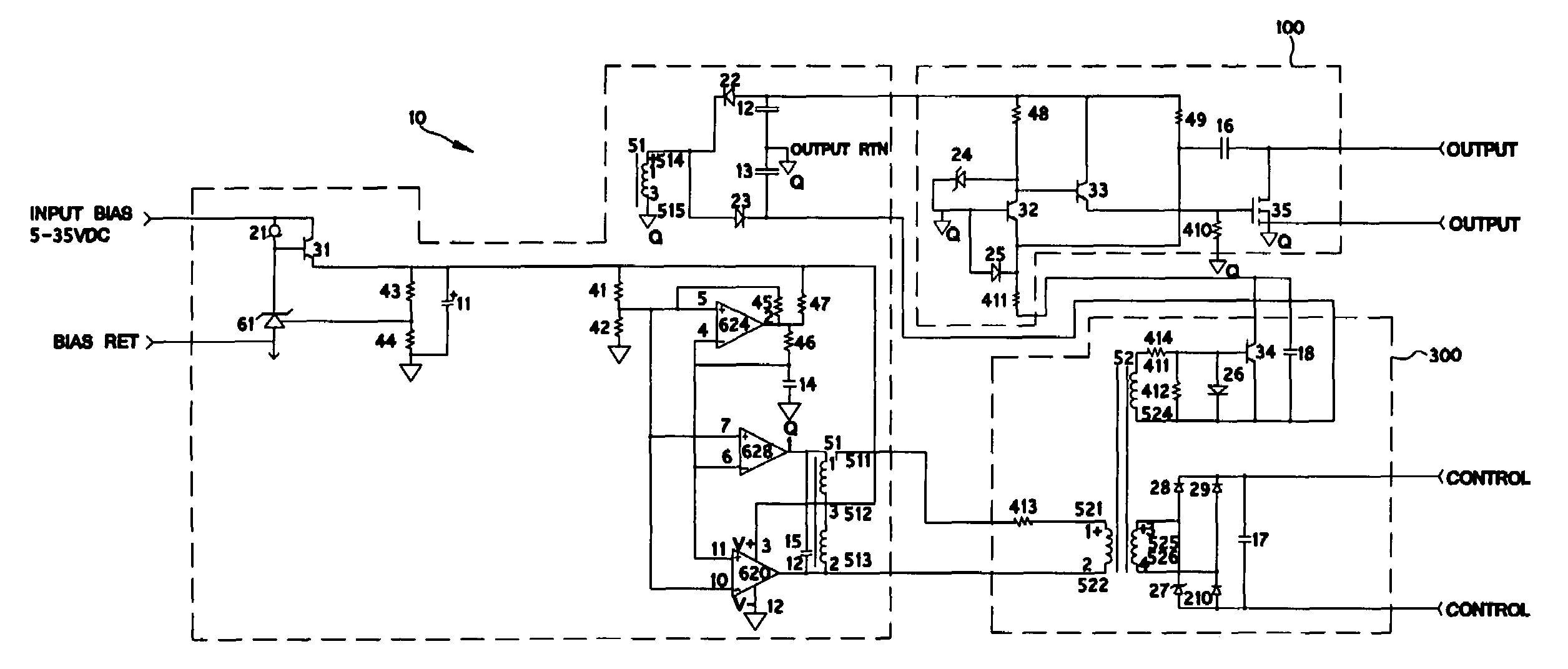
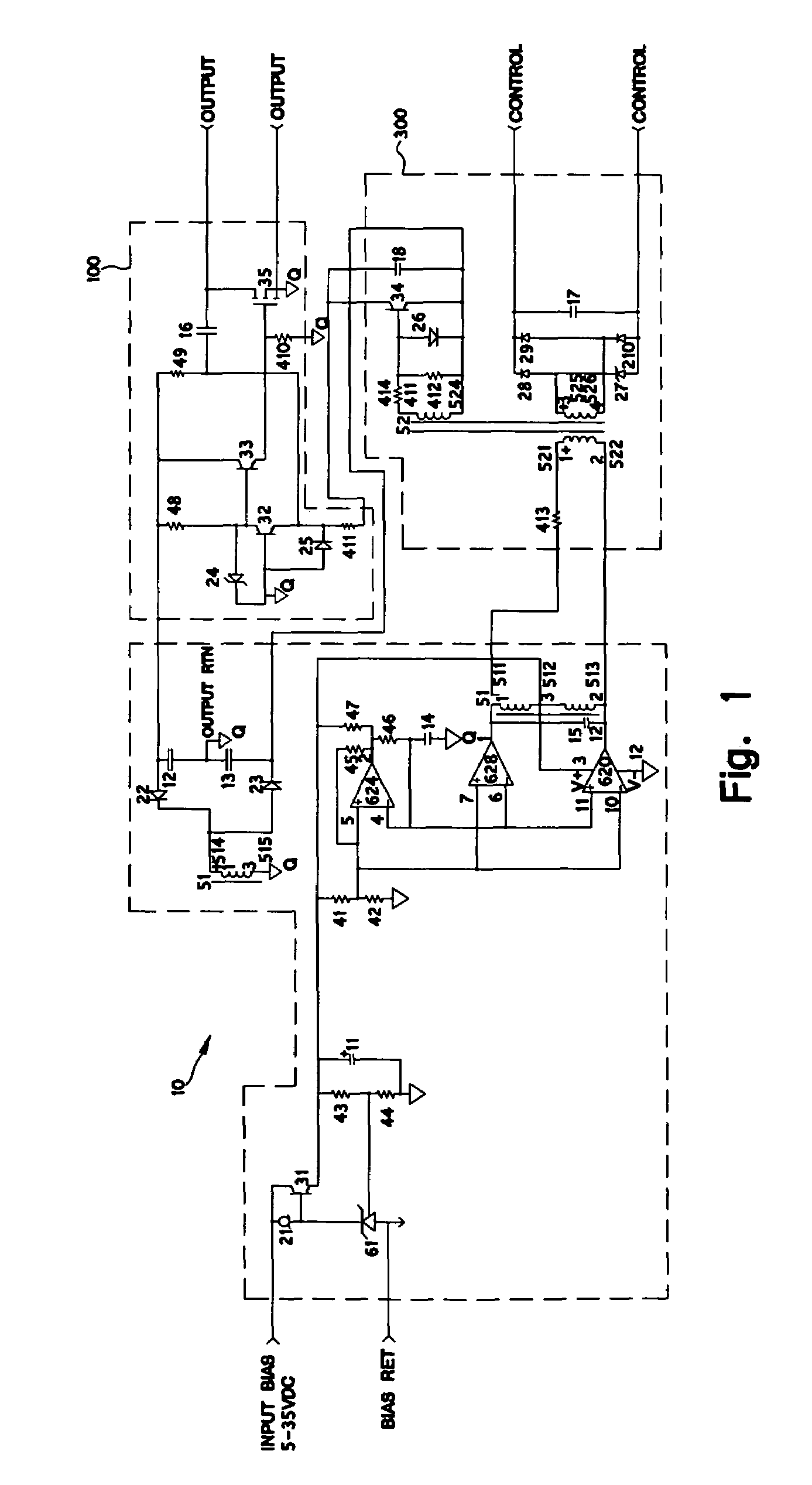
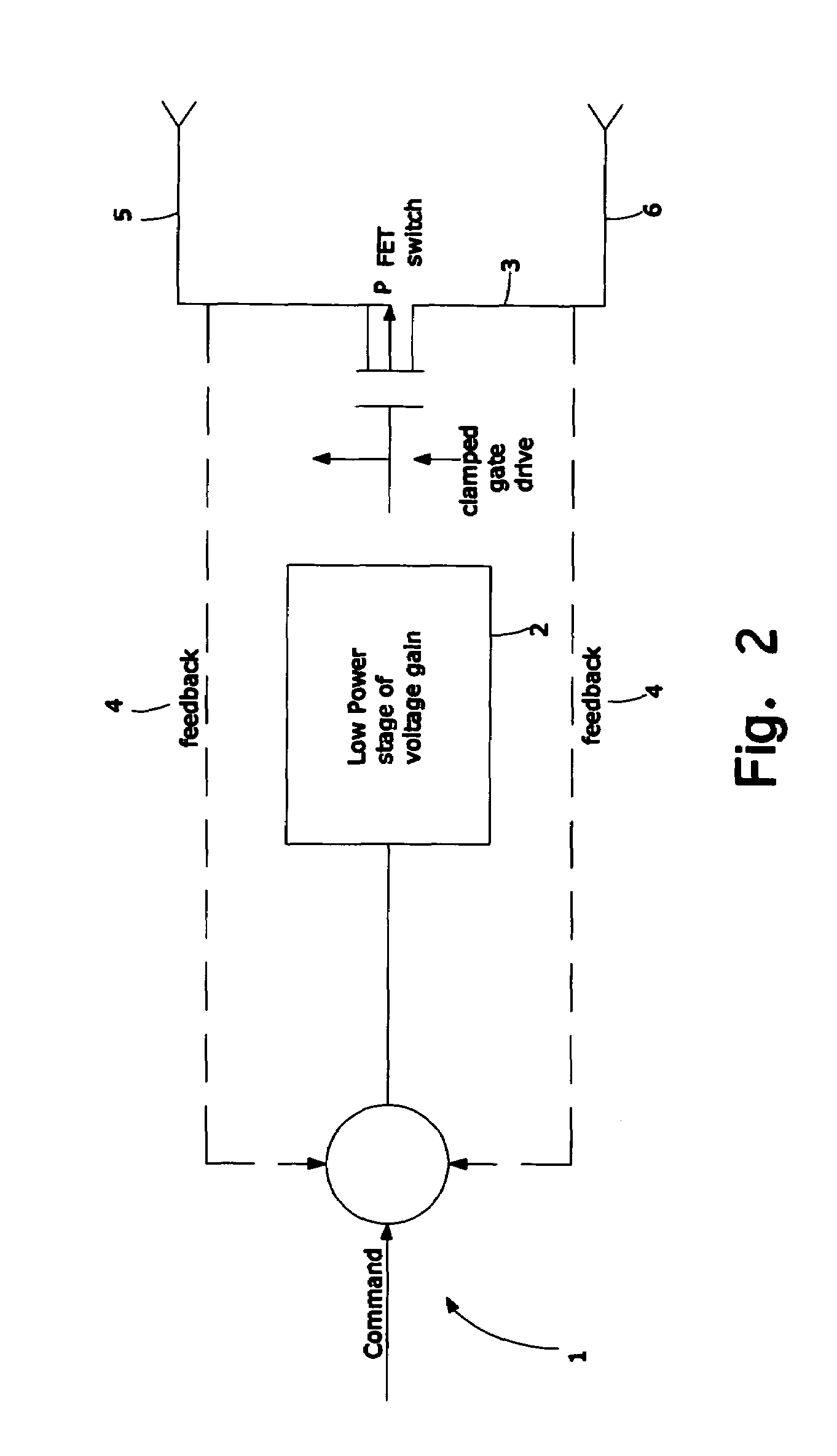
- A radiation-tolerant solid-state relay circuit using non-radiation hardened P-channel MOSFETs with a bias, control, and power-switching section, where the gate drive signal is optimized to maintain channel saturation without exceeding breakdown voltage, allowing the circuit to function across a wide range of radiation exposure.
Solid state relay/circuit breaker system
PatentInactiveUS20030218847A1
Innovation
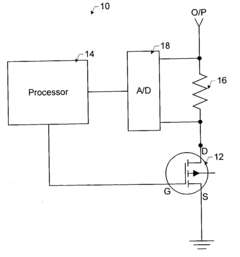
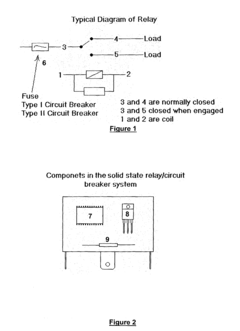
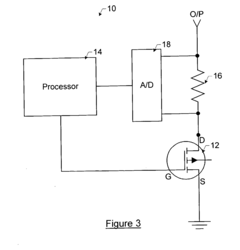
- A solid-state relay system utilizing a MOSFET and microprocessor to control current, eliminating mechanical parts and incorporating an internal solid-state circuit breaker for improved reliability and temperature stability, with the microprocessor managing switching and current monitoring.

Environmental Testing Standards for SSR Reliability
Environmental testing standards play a crucial role in evaluating and ensuring the reliability of Solid-State Relays (SSRs) in high-moisture environments. The primary international standard governing these tests is IEC 60068, which provides comprehensive methodologies for environmental testing of electronic components. Specifically, IEC 60068-2-78 addresses steady-state humidity tests, while IEC 60068-2-30 covers cyclic humidity tests that simulate real-world conditions where temperature and humidity fluctuate throughout the day.
For moisture resistance evaluation, JEDEC standards JESD22-A101 and JESD22-A110 are widely implemented in the semiconductor industry. These standards define specific test conditions for steady-state temperature humidity bias life tests and highly accelerated temperature and humidity stress tests (HAST), respectively. The tests typically subject SSRs to relative humidity levels between 85% and 95% at elevated temperatures (85°C to 130°C) for periods ranging from 96 hours to 1000 hours.
MIL-STD-202, Method 106 represents another significant standard, particularly relevant for military and aerospace applications. This method outlines a rigorous moisture resistance test consisting of multiple 24-hour cycles with varying temperature and humidity conditions, followed by electrical performance verification. The standard requires functional testing before, during, and after exposure to ensure operational integrity throughout the environmental stress.
The automotive industry employs AEC-Q101 standards for discrete semiconductors, including SSRs used in vehicle systems. These standards mandate humidity testing under bias conditions (H3TRB) for 1000 hours at 85°C/85% RH, reflecting the harsh operating environments vehicles may encounter. Similarly, the telecommunications industry follows Telcordia GR-1221-CORE standards, which specify humidity testing requirements for network equipment components.
IP (Ingress Protection) ratings, defined by IEC 60529, provide standardized levels of protection against environmental factors. For SSRs in high-moisture environments, ratings such as IP65, IP66, or IP67 are commonly specified, indicating protection against water jets or temporary immersion. These ratings help system designers select appropriate components based on anticipated environmental exposure.
Recent developments in testing standards have introduced more sophisticated approaches, including highly accelerated life testing (HALT) and highly accelerated stress screening (HASS). These methods apply extreme environmental stresses beyond typical operating conditions to identify potential failure modes more rapidly. For SSRs, these tests often combine high humidity with temperature cycling, vibration, and electrical stress to comprehensively evaluate reliability under worst-case scenarios.
For moisture resistance evaluation, JEDEC standards JESD22-A101 and JESD22-A110 are widely implemented in the semiconductor industry. These standards define specific test conditions for steady-state temperature humidity bias life tests and highly accelerated temperature and humidity stress tests (HAST), respectively. The tests typically subject SSRs to relative humidity levels between 85% and 95% at elevated temperatures (85°C to 130°C) for periods ranging from 96 hours to 1000 hours.
MIL-STD-202, Method 106 represents another significant standard, particularly relevant for military and aerospace applications. This method outlines a rigorous moisture resistance test consisting of multiple 24-hour cycles with varying temperature and humidity conditions, followed by electrical performance verification. The standard requires functional testing before, during, and after exposure to ensure operational integrity throughout the environmental stress.
The automotive industry employs AEC-Q101 standards for discrete semiconductors, including SSRs used in vehicle systems. These standards mandate humidity testing under bias conditions (H3TRB) for 1000 hours at 85°C/85% RH, reflecting the harsh operating environments vehicles may encounter. Similarly, the telecommunications industry follows Telcordia GR-1221-CORE standards, which specify humidity testing requirements for network equipment components.
IP (Ingress Protection) ratings, defined by IEC 60529, provide standardized levels of protection against environmental factors. For SSRs in high-moisture environments, ratings such as IP65, IP66, or IP67 are commonly specified, indicating protection against water jets or temporary immersion. These ratings help system designers select appropriate components based on anticipated environmental exposure.
Recent developments in testing standards have introduced more sophisticated approaches, including highly accelerated life testing (HALT) and highly accelerated stress screening (HASS). These methods apply extreme environmental stresses beyond typical operating conditions to identify potential failure modes more rapidly. For SSRs, these tests often combine high humidity with temperature cycling, vibration, and electrical stress to comprehensively evaluate reliability under worst-case scenarios.
Material Science Advancements for SSR Encapsulation
Recent advancements in material science have significantly contributed to improving solid-state relay (SSR) performance in high-moisture environments. Traditional encapsulation materials such as epoxy resins have shown limitations in providing long-term protection against moisture ingress, leading to premature device failure in humid conditions. The development of novel hydrophobic polymers with enhanced barrier properties represents a major breakthrough in this field.
Silicone-based compounds with modified molecular structures have demonstrated superior moisture resistance compared to conventional materials. These advanced silicones incorporate cross-linked networks with hydrophobic side chains that effectively repel water molecules while maintaining excellent thermal stability. Research indicates that these materials can reduce moisture permeation rates by up to 85% compared to standard epoxy encapsulants.
Nano-composite materials have emerged as another promising direction for SSR encapsulation. By incorporating nanoparticles such as silica, alumina, or boron nitride into polymer matrices, researchers have created materials with significantly improved moisture barrier properties. These nanoparticles create tortuous paths for water molecules, extending diffusion pathways and reducing overall permeability. Studies show that properly dispersed nanoparticles at concentrations of 3-5% can improve moisture resistance by 60-70% while simultaneously enhancing thermal conductivity.
Fluoropolymer-based encapsulants represent another significant advancement. Materials such as modified polytetrafluoroethylene (PTFE) and fluorinated ethylene propylene (FEP) exhibit exceptional chemical resistance and extremely low water absorption rates. Recent innovations have addressed previous limitations in adhesion and processing by developing hybrid materials that combine the moisture resistance of fluoropolymers with the adhesive properties of other polymers.
Multi-layer encapsulation systems have also gained traction in protecting SSRs from moisture. These systems typically combine different materials with complementary properties – for example, an inner layer optimized for electrical insulation and thermal conductivity, a middle barrier layer specifically designed to block moisture, and an outer layer providing mechanical protection and additional moisture resistance. This approach has shown to extend SSR lifespan by 2-3 times in environments with relative humidity exceeding 85%.
Surface modification techniques have further enhanced encapsulation performance. Treatments such as plasma modification, chemical vapor deposition, and self-assembled monolayers can alter the surface properties of encapsulation materials, significantly improving their hydrophobicity and moisture resistance without changing bulk material properties. These techniques have become increasingly important for specialized applications where traditional encapsulation approaches prove insufficient.
Silicone-based compounds with modified molecular structures have demonstrated superior moisture resistance compared to conventional materials. These advanced silicones incorporate cross-linked networks with hydrophobic side chains that effectively repel water molecules while maintaining excellent thermal stability. Research indicates that these materials can reduce moisture permeation rates by up to 85% compared to standard epoxy encapsulants.
Nano-composite materials have emerged as another promising direction for SSR encapsulation. By incorporating nanoparticles such as silica, alumina, or boron nitride into polymer matrices, researchers have created materials with significantly improved moisture barrier properties. These nanoparticles create tortuous paths for water molecules, extending diffusion pathways and reducing overall permeability. Studies show that properly dispersed nanoparticles at concentrations of 3-5% can improve moisture resistance by 60-70% while simultaneously enhancing thermal conductivity.
Fluoropolymer-based encapsulants represent another significant advancement. Materials such as modified polytetrafluoroethylene (PTFE) and fluorinated ethylene propylene (FEP) exhibit exceptional chemical resistance and extremely low water absorption rates. Recent innovations have addressed previous limitations in adhesion and processing by developing hybrid materials that combine the moisture resistance of fluoropolymers with the adhesive properties of other polymers.
Multi-layer encapsulation systems have also gained traction in protecting SSRs from moisture. These systems typically combine different materials with complementary properties – for example, an inner layer optimized for electrical insulation and thermal conductivity, a middle barrier layer specifically designed to block moisture, and an outer layer providing mechanical protection and additional moisture resistance. This approach has shown to extend SSR lifespan by 2-3 times in environments with relative humidity exceeding 85%.
Surface modification techniques have further enhanced encapsulation performance. Treatments such as plasma modification, chemical vapor deposition, and self-assembled monolayers can alter the surface properties of encapsulation materials, significantly improving their hydrophobicity and moisture resistance without changing bulk material properties. These techniques have become increasingly important for specialized applications where traditional encapsulation approaches prove insufficient.
Unlock deeper insights with PatSnap Eureka Quick Research — get a full tech report to explore trends and direct your research. Try now!
Generate Your Research Report Instantly with AI Agent
Supercharge your innovation with PatSnap Eureka AI Agent Platform!