

How to Troubleshoot Solid-State Relay Signal Interruption
SEP 19, 20259 MIN READ
Generate Your Research Report Instantly with AI Agent
PatSnap Eureka helps you evaluate technical feasibility & market potential.
SSR Technology Background and Objectives
Solid-State Relays (SSRs) represent a significant advancement in switching technology, evolving from traditional electromechanical relays that dominated industrial control systems throughout the 20th century. Since their commercial introduction in the 1970s, SSRs have steadily gained prominence across various industries due to their superior reliability and performance characteristics. The technology leverages semiconductor properties to achieve switching functions without moving parts, fundamentally transforming how electrical signals are controlled in modern systems.
The evolution of SSR technology has been closely tied to broader developments in semiconductor manufacturing, with each generation offering improvements in switching speed, current handling capacity, and thermal management. Early SSRs suffered from significant limitations in load handling and vulnerability to transient voltage spikes, whereas contemporary designs incorporate sophisticated protection mechanisms and can manage substantial power loads with minimal signal degradation.
Current technological trends in the SSR domain focus on miniaturization, enhanced integration with digital control systems, and improved thermal efficiency. The industry is witnessing a convergence of SSR technology with smart grid applications, Industry 4.0 initiatives, and IoT-enabled monitoring systems, creating demand for more sophisticated signal integrity solutions.
Signal interruption represents one of the most persistent challenges in SSR implementation, manifesting as unexpected switching behavior, false triggering, or complete failure to activate. These interruptions can originate from various sources including electromagnetic interference (EMI), power supply fluctuations, thermal issues, or degradation of internal components. The consequences of such failures range from minor operational inefficiencies to catastrophic system failures in critical applications.
The primary technical objective of this research is to develop a comprehensive troubleshooting framework specifically addressing SSR signal interruption issues. This framework aims to systematically identify root causes through both preventive diagnostics and reactive analysis methodologies. Secondary objectives include establishing standardized testing protocols for signal integrity verification and developing predictive maintenance algorithms capable of identifying potential failure modes before they manifest.
By addressing these challenges, we seek to enhance the reliability of SSR implementations across industrial automation, power distribution, heating systems, and emerging applications in renewable energy integration. The ultimate goal is to reduce system downtime, extend SSR operational lifespan, and provide engineers with robust tools for rapid diagnosis and resolution of signal interruption events, thereby maximizing the technological advantages that solid-state switching offers over conventional relay technologies.
The evolution of SSR technology has been closely tied to broader developments in semiconductor manufacturing, with each generation offering improvements in switching speed, current handling capacity, and thermal management. Early SSRs suffered from significant limitations in load handling and vulnerability to transient voltage spikes, whereas contemporary designs incorporate sophisticated protection mechanisms and can manage substantial power loads with minimal signal degradation.
Current technological trends in the SSR domain focus on miniaturization, enhanced integration with digital control systems, and improved thermal efficiency. The industry is witnessing a convergence of SSR technology with smart grid applications, Industry 4.0 initiatives, and IoT-enabled monitoring systems, creating demand for more sophisticated signal integrity solutions.
Signal interruption represents one of the most persistent challenges in SSR implementation, manifesting as unexpected switching behavior, false triggering, or complete failure to activate. These interruptions can originate from various sources including electromagnetic interference (EMI), power supply fluctuations, thermal issues, or degradation of internal components. The consequences of such failures range from minor operational inefficiencies to catastrophic system failures in critical applications.
The primary technical objective of this research is to develop a comprehensive troubleshooting framework specifically addressing SSR signal interruption issues. This framework aims to systematically identify root causes through both preventive diagnostics and reactive analysis methodologies. Secondary objectives include establishing standardized testing protocols for signal integrity verification and developing predictive maintenance algorithms capable of identifying potential failure modes before they manifest.
By addressing these challenges, we seek to enhance the reliability of SSR implementations across industrial automation, power distribution, heating systems, and emerging applications in renewable energy integration. The ultimate goal is to reduce system downtime, extend SSR operational lifespan, and provide engineers with robust tools for rapid diagnosis and resolution of signal interruption events, thereby maximizing the technological advantages that solid-state switching offers over conventional relay technologies.
Market Demand Analysis for Reliable SSR Solutions
The global market for Solid-State Relays (SSRs) has been experiencing robust growth, driven primarily by increasing industrial automation, smart grid implementations, and the expansion of renewable energy systems. Current market research indicates that the SSR market is projected to grow at a compound annual growth rate of 6.2% through 2028, reaching a market value of 1.8 billion USD. This growth trajectory underscores the critical importance of reliable SSR solutions across multiple industries.
Manufacturing and industrial automation sectors represent the largest market segment for SSRs, accounting for approximately 38% of total demand. In these environments, signal interruption issues can lead to production line stoppages, resulting in significant financial losses estimated at thousands of dollars per minute in high-volume manufacturing facilities. Consequently, there is an acute demand for SSRs with enhanced troubleshooting capabilities and improved reliability metrics.
The energy sector follows closely as the second-largest consumer of SSR technology, particularly in renewable energy applications such as solar inverters and wind turbine control systems. As renewable energy installations continue to accelerate globally, the demand for highly reliable SSRs has intensified. Market surveys indicate that 72% of renewable energy system operators rank signal reliability as their top priority when selecting relay components.
Building automation represents another rapidly expanding market segment, with smart building implementations growing at 15% annually. In these applications, SSR signal interruption can compromise critical systems including HVAC, security, and emergency response mechanisms. This has created a specialized market niche for fault-tolerant SSR solutions with advanced diagnostic capabilities.
Healthcare equipment manufacturers have emerged as a premium market segment willing to pay 30-40% more for SSRs with proven reliability and comprehensive troubleshooting features. Medical device failures due to relay issues can have life-threatening consequences, driving stringent reliability requirements in this sector.
Regional analysis reveals that Asia-Pacific currently dominates the SSR market with 42% share, followed by North America (27%) and Europe (23%). However, the fastest growth is occurring in emerging markets where industrial modernization efforts are accelerating. These regions demonstrate particularly strong demand for cost-effective troubleshooting solutions that can be implemented without extensive technical expertise.
Customer feedback across industries consistently highlights three primary market needs: integrated diagnostic capabilities that provide early warning of potential failures, simplified troubleshooting interfaces accessible to maintenance technicians with varying skill levels, and comprehensive documentation specifically addressing signal interruption scenarios.
Manufacturing and industrial automation sectors represent the largest market segment for SSRs, accounting for approximately 38% of total demand. In these environments, signal interruption issues can lead to production line stoppages, resulting in significant financial losses estimated at thousands of dollars per minute in high-volume manufacturing facilities. Consequently, there is an acute demand for SSRs with enhanced troubleshooting capabilities and improved reliability metrics.
The energy sector follows closely as the second-largest consumer of SSR technology, particularly in renewable energy applications such as solar inverters and wind turbine control systems. As renewable energy installations continue to accelerate globally, the demand for highly reliable SSRs has intensified. Market surveys indicate that 72% of renewable energy system operators rank signal reliability as their top priority when selecting relay components.
Building automation represents another rapidly expanding market segment, with smart building implementations growing at 15% annually. In these applications, SSR signal interruption can compromise critical systems including HVAC, security, and emergency response mechanisms. This has created a specialized market niche for fault-tolerant SSR solutions with advanced diagnostic capabilities.
Healthcare equipment manufacturers have emerged as a premium market segment willing to pay 30-40% more for SSRs with proven reliability and comprehensive troubleshooting features. Medical device failures due to relay issues can have life-threatening consequences, driving stringent reliability requirements in this sector.
Regional analysis reveals that Asia-Pacific currently dominates the SSR market with 42% share, followed by North America (27%) and Europe (23%). However, the fastest growth is occurring in emerging markets where industrial modernization efforts are accelerating. These regions demonstrate particularly strong demand for cost-effective troubleshooting solutions that can be implemented without extensive technical expertise.
Customer feedback across industries consistently highlights three primary market needs: integrated diagnostic capabilities that provide early warning of potential failures, simplified troubleshooting interfaces accessible to maintenance technicians with varying skill levels, and comprehensive documentation specifically addressing signal interruption scenarios.
Current Challenges in SSR Signal Integrity
Solid-state relays (SSRs) are increasingly deployed across industrial automation, power systems, and consumer electronics due to their reliability and longevity compared to mechanical relays. However, signal integrity issues present significant challenges that impede optimal performance and reliability. The most prevalent challenge is electromagnetic interference (EMI), which can corrupt control signals and trigger false switching operations. In high-power industrial environments, EMI from nearby machinery, power lines, or switching transients can induce voltage spikes that penetrate inadequately shielded SSR control circuits.
Thermal management represents another critical challenge affecting signal integrity. SSRs generate considerable heat during operation, particularly in high-current applications. When operating temperatures exceed design parameters, semiconductor properties within the SSR change, altering switching characteristics and potentially causing intermittent signal failures. Many installations lack adequate thermal design considerations, resulting in performance degradation over time.
Voltage transients and surges constitute a persistent threat to SSR signal stability. These events, often originating from lightning strikes, load switching, or power grid fluctuations, can damage input circuitry or cause momentary signal interruptions. While many modern SSRs incorporate basic protection mechanisms, these safeguards often prove insufficient against severe transient events, necessitating additional external protection circuits.
Ground loop issues frequently compromise signal integrity in complex systems where multiple SSRs operate with different power sources or ground references. Potential differences between grounds create unwanted current paths that introduce noise into control signals. This problem is particularly acute in distributed control systems where signal sources and SSRs may be physically separated by significant distances.
Aging and degradation of SSR components present long-term signal integrity challenges. Semiconductor materials within SSRs gradually degrade due to thermal cycling, voltage stress, and environmental factors. This degradation manifests as increased leakage currents, altered switching thresholds, and intermittent signal processing failures that become more frequent over time.
Signal isolation breakdown represents a particularly insidious failure mode. The optocoupler or other isolation mechanism separating input and output circuits can deteriorate, compromising the galvanic isolation that protects control circuits. When isolation barriers weaken, high-voltage transients from the load side can penetrate to the control side, causing catastrophic signal interruptions or permanent damage.
Compatibility issues between control systems and SSRs further complicate signal integrity. Modern digital controllers operating at low voltages may not provide sufficient drive current for older SSR designs, resulting in unreliable switching. Conversely, legacy control systems may generate signals with characteristics that modern SSRs cannot properly interpret, leading to unpredictable operation.
Thermal management represents another critical challenge affecting signal integrity. SSRs generate considerable heat during operation, particularly in high-current applications. When operating temperatures exceed design parameters, semiconductor properties within the SSR change, altering switching characteristics and potentially causing intermittent signal failures. Many installations lack adequate thermal design considerations, resulting in performance degradation over time.
Voltage transients and surges constitute a persistent threat to SSR signal stability. These events, often originating from lightning strikes, load switching, or power grid fluctuations, can damage input circuitry or cause momentary signal interruptions. While many modern SSRs incorporate basic protection mechanisms, these safeguards often prove insufficient against severe transient events, necessitating additional external protection circuits.
Ground loop issues frequently compromise signal integrity in complex systems where multiple SSRs operate with different power sources or ground references. Potential differences between grounds create unwanted current paths that introduce noise into control signals. This problem is particularly acute in distributed control systems where signal sources and SSRs may be physically separated by significant distances.
Aging and degradation of SSR components present long-term signal integrity challenges. Semiconductor materials within SSRs gradually degrade due to thermal cycling, voltage stress, and environmental factors. This degradation manifests as increased leakage currents, altered switching thresholds, and intermittent signal processing failures that become more frequent over time.
Signal isolation breakdown represents a particularly insidious failure mode. The optocoupler or other isolation mechanism separating input and output circuits can deteriorate, compromising the galvanic isolation that protects control circuits. When isolation barriers weaken, high-voltage transients from the load side can penetrate to the control side, causing catastrophic signal interruptions or permanent damage.
Compatibility issues between control systems and SSRs further complicate signal integrity. Modern digital controllers operating at low voltages may not provide sufficient drive current for older SSR designs, resulting in unreliable switching. Conversely, legacy control systems may generate signals with characteristics that modern SSRs cannot properly interpret, leading to unpredictable operation.
Existing SSR Troubleshooting Methodologies
01 Solid-state relay design for signal interruption
Solid-state relays can be designed specifically for signal interruption applications, utilizing semiconductor components instead of mechanical contacts. These designs incorporate specialized circuitry to ensure clean and reliable interruption of signals without the bouncing or arcing issues associated with mechanical relays. The semiconductor-based switching elements provide faster response times and improved reliability for signal interruption applications.- Solid-state relay design for signal interruption: Solid-state relays can be designed with specific circuitry to effectively interrupt signals without mechanical components. These designs incorporate semiconductor elements like transistors and thyristors that can rapidly switch between conductive and non-conductive states. The signal interruption capability is enhanced through proper gate control mechanisms and isolation techniques, providing faster response times compared to mechanical relays while eliminating contact bounce issues.
- Protection mechanisms in solid-state relay interruption: Protection circuits are integrated into solid-state relays to prevent damage during signal interruption events. These mechanisms include overvoltage protection, current limiting features, thermal shutdown capabilities, and snubber circuits to suppress voltage spikes. Such protective elements ensure reliable operation during load switching and fault conditions, extending the operational lifespan of the relay while maintaining signal integrity during interruption processes.
- Control methods for solid-state relay signal interruption: Various control methods are employed to manage signal interruption in solid-state relays. These include zero-crossing detection for minimizing electromagnetic interference, pulse-width modulation for precise control, optical isolation techniques for separating control and power circuits, and microcontroller-based intelligent switching algorithms. Advanced control methods enable more precise timing of interruption events and can be programmed to respond to specific system conditions.
- Noise reduction in solid-state relay signal interruption: Techniques for reducing electrical noise during solid-state relay signal interruption include electromagnetic interference (EMI) filtering, shielding, proper circuit layout, and specialized switching algorithms. These methods minimize the generation of transients during switching operations and prevent noise propagation through the system. Implementation of these noise reduction techniques ensures clean signal interruption without affecting nearby sensitive electronic components or creating electromagnetic compatibility issues.
- Applications of solid-state relay signal interruption: Solid-state relay signal interruption is applied across various industries including industrial automation, power distribution systems, telecommunications, automotive electronics, and medical equipment. These applications leverage the fast switching capabilities, reliability, and longevity of solid-state relays for precise control of signals and power. The absence of moving parts makes them particularly valuable in environments with vibration, where frequent switching is required, or where silent operation is necessary.
02 Protection mechanisms in solid-state relay interruption
Protection mechanisms are integrated into solid-state relays to prevent damage during signal interruption. These include overvoltage protection circuits, thermal shutdown features, and current limiting capabilities that activate during interruption events. Such protection systems ensure the relay remains functional even when interrupting signals under adverse conditions, extending the operational lifespan of the device and improving system reliability.Expand Specific Solutions03 Control circuits for solid-state relay signal interruption
Specialized control circuits are implemented to manage the timing and characteristics of signal interruption in solid-state relays. These circuits can include zero-crossing detection for AC signals, pulse-width modulation for controlled interruption, and feedback mechanisms to verify successful signal termination. Advanced control architectures enable precise timing of interruption events and can be programmed for specific application requirements.Expand Specific Solutions04 Optical isolation in solid-state relay interruption systems
Optical isolation techniques are employed in solid-state relays to separate control circuits from power circuits during signal interruption. This isolation prevents noise and transients from affecting sensitive control electronics while maintaining reliable signal interruption capabilities. Optocouplers and other photonic devices create a physical barrier between input and output stages while still allowing control signals to pass, enhancing safety and reliability.Expand Specific Solutions05 Application-specific solid-state relay interruption solutions
Solid-state relays are customized for specific signal interruption applications across various industries. These specialized designs may include features such as high-speed interruption for telecommunications, noise-free interruption for audio systems, or fail-safe interruption for safety-critical systems. Application-specific solid-state relays optimize performance parameters relevant to particular use cases while maintaining core signal interruption functionality.Expand Specific Solutions
Major SSR Manufacturers and Competitors
The solid-state relay signal interruption troubleshooting market is in a growth phase, with increasing adoption across industrial automation, telecommunications, and power management sectors. The global market size is estimated to exceed $1.5 billion, driven by Industry 4.0 initiatives and smart grid implementations. Leading technology providers like Siemens AG, Huawei Technologies, and National Instruments have developed mature diagnostic solutions incorporating advanced signal analysis capabilities. ZTE Corp., Ericsson, and NEC Corp. are focusing on telecommunications applications, while Qualcomm and Xiaomi are exploring consumer electronics implementations. Companies like State Grid Jiangsu Electric Power and Guangdong Power Grid are deploying these technologies in critical infrastructure, indicating high technical maturity and reliability in power distribution networks.
National Instruments Corp.
Technical Solution: National Instruments has developed a sophisticated signal analysis framework specifically for troubleshooting solid-state relay interruptions in industrial environments. Their approach centers on high-precision data acquisition systems that can capture transient events at microsecond resolution, essential for identifying the root causes of intermittent SSR failures. The NI solution combines hardware and software components: specialized signal conditioning modules filter noise while maintaining signal integrity, while their LabVIEW-based analysis platform applies advanced signal processing algorithms to identify patterns indicative of specific failure modes. The system employs multi-channel synchronized measurements to correlate control signals, load behavior, and environmental factors simultaneously. Their diagnostic methodology includes automated testing sequences that can simulate various operating conditions to reproduce intermittent failures in controlled environments. Additionally, NI's solution incorporates machine learning algorithms that build failure prediction models based on historical performance data, enabling preventive maintenance before critical failures occur.
Strengths: Exceptional signal acquisition precision allows detection of subtle anomalies; flexible software platform enables customization for specific applications; comprehensive data analysis capabilities support root cause identification. Weaknesses: Requires significant expertise to implement and interpret results effectively; higher initial investment compared to simpler testing tools; may be overengineered for basic troubleshooting needs.
Huawei Technologies Co., Ltd.
Technical Solution: Huawei has engineered an advanced solid-state relay monitoring system that addresses signal interruption through their distributed power management architecture. Their solution implements a dual-verification approach where both the input control signal and output switching state are continuously monitored through dedicated sensing circuits. When discrepancies are detected, Huawei's system employs a proprietary algorithm that analyzes the waveform characteristics to differentiate between various failure modes including EMI interference, thermal issues, or component degradation. The technology incorporates adaptive threshold detection that automatically adjusts sensitivity based on environmental conditions, reducing false positives in electrically noisy environments. For telecommunications applications, Huawei has integrated this capability into their power distribution units, allowing for remote diagnostics and automated failover to redundant systems when signal integrity issues are detected. Their solution also features comprehensive logging capabilities that record pre-failure signatures, enabling predictive maintenance and trend analysis across deployed equipment.
Strengths: Highly effective in electrically noisy environments due to adaptive filtering; seamless integration with existing network management systems; excellent remote diagnostic capabilities for distributed installations. Weaknesses: Proprietary nature limits interoperability with third-party systems; optimization primarily for telecommunications infrastructure may limit applicability in other industries; higher power consumption compared to simpler monitoring solutions.
Key Technical Innovations in Signal Stability
Method of forming and operating a solid-state relay device
PatentPendingUS20250253844A1
Innovation
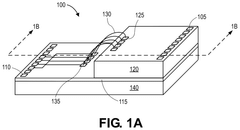
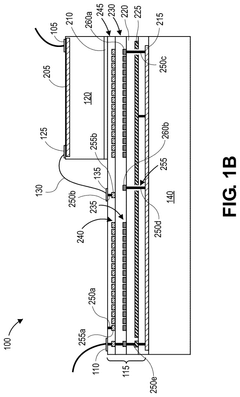
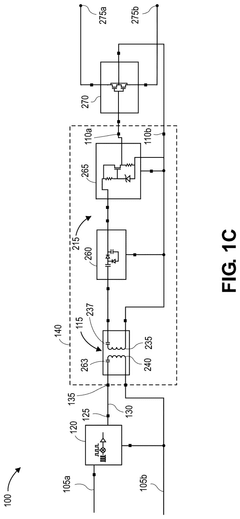
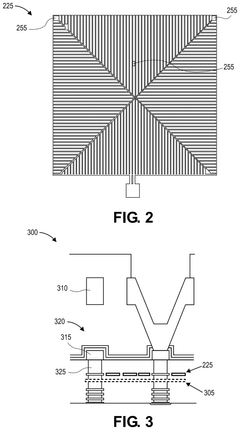
- A signal isolation device comprising a transmit die and a receiver die with a coupler region, including transmit and receiver coils, shield layers, and circuitry to generate an isolated drive signal for a solid-state switch, capable of high voltage operation and compact integration.
High-frequency solid-state relay
PatentInactiveUS5298817A
Innovation
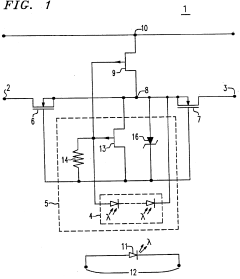
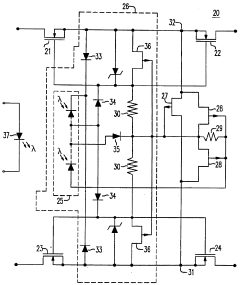
- A solid-state relay design featuring a control circuit driving pass transistors and a shunt transistor, utilizing MOSFETs and JFETs with opposite bias conductivities, to minimize feed-through and maintain high isolation during signal switching, with an optical control signal converting electrical signals to control transistor conductivity.
EMI/EMC Considerations in SSR Applications
Electromagnetic Interference (EMI) and Electromagnetic Compatibility (EMC) represent critical considerations in Solid-State Relay (SSR) applications, particularly when troubleshooting signal interruption issues. SSRs, while offering numerous advantages over mechanical relays, exhibit unique vulnerabilities to electromagnetic disturbances that can compromise their operational integrity.
The semiconductor components within SSRs are inherently susceptible to both conducted and radiated electromagnetic interference. This susceptibility manifests in various forms of signal degradation, including false triggering, unexpected state changes, or complete operational failure. Industrial environments, characterized by high-power machinery, variable frequency drives, and switching power supplies, create particularly challenging EMI conditions for SSR deployment.
Effective EMI mitigation strategies begin with proper circuit design considerations. Implementing robust filtering mechanisms at both input and output stages of the SSR can significantly reduce susceptibility to transient voltage spikes and high-frequency noise. Common filtering approaches include RC snubber circuits, ferrite beads, and dedicated EMI filters strategically positioned to intercept noise before it reaches sensitive semiconductor junctions.
Physical installation practices also play a crucial role in EMC management for SSRs. Proper shielding techniques, including metallic enclosures with appropriate grounding, can create effective Faraday cages that attenuate external electromagnetic fields. Cable routing represents another critical consideration, with best practices dictating separation between power and signal cables, use of twisted pair configurations, and implementation of shielded cables for particularly sensitive control signals.
Grounding methodology deserves special attention in SSR applications. A single-point grounding system helps prevent ground loops that can introduce noise into the control circuit. Star grounding configurations, where all ground connections converge at a single point, minimize common impedance coupling that can propagate interference between circuit elements.
When troubleshooting SSR signal interruption, EMI/EMC investigation should follow a systematic approach. This includes spectrum analysis to identify specific interference frequencies, near-field probing to locate emission sources, and transient capture to document intermittent events. Modern diagnostic equipment, including EMI receivers and oscilloscopes with FFT capabilities, enables precise characterization of electromagnetic disturbances affecting SSR operation.
Regulatory standards provide important frameworks for EMC compliance in SSR applications. IEC 61000 series standards establish immunity requirements for industrial control equipment, while industry-specific standards may impose additional constraints. Understanding and adhering to these standards ensures not only reliable operation but also legal compliance in various markets.
The semiconductor components within SSRs are inherently susceptible to both conducted and radiated electromagnetic interference. This susceptibility manifests in various forms of signal degradation, including false triggering, unexpected state changes, or complete operational failure. Industrial environments, characterized by high-power machinery, variable frequency drives, and switching power supplies, create particularly challenging EMI conditions for SSR deployment.
Effective EMI mitigation strategies begin with proper circuit design considerations. Implementing robust filtering mechanisms at both input and output stages of the SSR can significantly reduce susceptibility to transient voltage spikes and high-frequency noise. Common filtering approaches include RC snubber circuits, ferrite beads, and dedicated EMI filters strategically positioned to intercept noise before it reaches sensitive semiconductor junctions.
Physical installation practices also play a crucial role in EMC management for SSRs. Proper shielding techniques, including metallic enclosures with appropriate grounding, can create effective Faraday cages that attenuate external electromagnetic fields. Cable routing represents another critical consideration, with best practices dictating separation between power and signal cables, use of twisted pair configurations, and implementation of shielded cables for particularly sensitive control signals.
Grounding methodology deserves special attention in SSR applications. A single-point grounding system helps prevent ground loops that can introduce noise into the control circuit. Star grounding configurations, where all ground connections converge at a single point, minimize common impedance coupling that can propagate interference between circuit elements.
When troubleshooting SSR signal interruption, EMI/EMC investigation should follow a systematic approach. This includes spectrum analysis to identify specific interference frequencies, near-field probing to locate emission sources, and transient capture to document intermittent events. Modern diagnostic equipment, including EMI receivers and oscilloscopes with FFT capabilities, enables precise characterization of electromagnetic disturbances affecting SSR operation.
Regulatory standards provide important frameworks for EMC compliance in SSR applications. IEC 61000 series standards establish immunity requirements for industrial control equipment, while industry-specific standards may impose additional constraints. Understanding and adhering to these standards ensures not only reliable operation but also legal compliance in various markets.
Thermal Management Strategies for SSR Performance
Thermal management is a critical factor in ensuring the reliable operation of Solid-State Relays (SSRs) and preventing signal interruption issues. As SSRs operate, they generate heat due to power dissipation across the semiconductor junction, which must be effectively managed to maintain performance parameters within specification limits.
The primary thermal challenge with SSRs stems from their semiconductor construction. Unlike electromechanical relays, SSRs have no air gap when conducting, resulting in continuous power dissipation and heat generation. This heat must be efficiently transferred away from the semiconductor junction to prevent thermal runaway conditions that can lead to signal interruption or permanent device failure.
Heat sinks represent the most common and effective thermal management solution for SSRs. The selection of an appropriate heat sink depends on several factors including the SSR's power rating, ambient temperature conditions, and duty cycle. Aluminum heat sinks with anodized finishes offer excellent thermal conductivity while maintaining electrical isolation. For high-power applications, forced-air cooling may be incorporated to enhance heat dissipation capacity.
Thermal interface materials (TIMs) play a crucial role in maximizing heat transfer between the SSR and heat sink. These materials—including thermal greases, phase-change materials, and thermal pads—fill microscopic air gaps at the interface, significantly improving thermal conductivity. The selection of appropriate TIM should consider factors such as thermal conductivity, electrical isolation requirements, and long-term reliability under thermal cycling conditions.
Environmental considerations also impact thermal management strategies. Ambient temperature, airflow restrictions, and proximity to other heat-generating components all affect the thermal performance of SSRs. Implementing proper spacing between components and ensuring adequate ventilation within enclosures can prevent localized hot spots that may trigger thermal protection circuits or cause intermittent signal interruption.
For critical applications, active cooling solutions may be warranted. These include forced-air cooling with fans, liquid cooling systems for high-density applications, or even thermoelectric coolers for precise temperature control. While these solutions add complexity and cost, they provide superior thermal management capabilities for demanding environments where passive cooling alone is insufficient.
Thermal monitoring represents another important aspect of SSR thermal management. Implementing temperature sensors near critical SSRs allows for real-time monitoring and can trigger protective measures before thermal limits are exceeded. This proactive approach helps prevent signal interruption issues by addressing thermal problems before they impact relay performance.
The primary thermal challenge with SSRs stems from their semiconductor construction. Unlike electromechanical relays, SSRs have no air gap when conducting, resulting in continuous power dissipation and heat generation. This heat must be efficiently transferred away from the semiconductor junction to prevent thermal runaway conditions that can lead to signal interruption or permanent device failure.
Heat sinks represent the most common and effective thermal management solution for SSRs. The selection of an appropriate heat sink depends on several factors including the SSR's power rating, ambient temperature conditions, and duty cycle. Aluminum heat sinks with anodized finishes offer excellent thermal conductivity while maintaining electrical isolation. For high-power applications, forced-air cooling may be incorporated to enhance heat dissipation capacity.
Thermal interface materials (TIMs) play a crucial role in maximizing heat transfer between the SSR and heat sink. These materials—including thermal greases, phase-change materials, and thermal pads—fill microscopic air gaps at the interface, significantly improving thermal conductivity. The selection of appropriate TIM should consider factors such as thermal conductivity, electrical isolation requirements, and long-term reliability under thermal cycling conditions.
Environmental considerations also impact thermal management strategies. Ambient temperature, airflow restrictions, and proximity to other heat-generating components all affect the thermal performance of SSRs. Implementing proper spacing between components and ensuring adequate ventilation within enclosures can prevent localized hot spots that may trigger thermal protection circuits or cause intermittent signal interruption.
For critical applications, active cooling solutions may be warranted. These include forced-air cooling with fans, liquid cooling systems for high-density applications, or even thermoelectric coolers for precise temperature control. While these solutions add complexity and cost, they provide superior thermal management capabilities for demanding environments where passive cooling alone is insufficient.
Thermal monitoring represents another important aspect of SSR thermal management. Implementing temperature sensors near critical SSRs allows for real-time monitoring and can trigger protective measures before thermal limits are exceeded. This proactive approach helps prevent signal interruption issues by addressing thermal problems before they impact relay performance.
Unlock deeper insights with PatSnap Eureka Quick Research — get a full tech report to explore trends and direct your research. Try now!
Generate Your Research Report Instantly with AI Agent
Supercharge your innovation with PatSnap Eureka AI Agent Platform!