
Solid-State Relay: Performance in Voltage Fluctuations
SEP 19, 20259 MIN READ
Generate Your Research Report Instantly with AI Agent
Patsnap Eureka helps you evaluate technical feasibility & market potential.
SSR Technology Background and Objectives
Solid-State Relays (SSRs) emerged in the late 1960s as an evolution from traditional electromechanical relays, offering a revolutionary approach to electrical switching without moving parts. The technology utilizes semiconductor devices, primarily thyristors, triacs, or MOSFETs, to control load circuits through electrical isolation between control and load sides. This fundamental design has positioned SSRs as critical components in modern industrial automation, power distribution systems, and sensitive electronic equipment.
The evolution of SSR technology has been marked by significant improvements in switching speed, reliability, and miniaturization. Early generations faced challenges with heat dissipation and voltage handling capabilities, but continuous innovation has led to enhanced performance characteristics. Recent advancements have focused on improving thermal management, reducing on-state resistance, and increasing immunity to electrical noise—all crucial factors in voltage fluctuation scenarios.
Current market trends indicate a growing demand for SSRs capable of maintaining stable performance under increasingly variable power conditions. With the proliferation of renewable energy sources and the resulting grid instabilities, voltage fluctuations have become more common and more severe, presenting new challenges for switching technologies. The integration of smart grid technologies further emphasizes the need for relays that can respond appropriately to rapid voltage changes.
The primary technical objective of this research is to evaluate and enhance SSR performance specifically during voltage fluctuations, which can include sags, swells, transients, and harmonic distortions. These fluctuations can trigger false switching, reduce operational lifespan, or cause complete failure in conventional SSRs. Understanding the behavior of different SSR designs under these conditions is essential for developing more resilient solutions.
Secondary objectives include identifying optimal semiconductor materials and configurations that provide superior voltage fluctuation immunity, developing improved isolation techniques that maintain signal integrity during electrical disturbances, and exploring advanced control algorithms that can anticipate and compensate for voltage variations in real-time.
The long-term technological goal is to develop a new generation of SSRs that not only withstand voltage fluctuations but actively contribute to power quality improvement through adaptive switching behaviors. This would represent a paradigm shift from passive components to active grid-supporting devices, potentially revolutionizing how electrical systems manage power quality challenges in increasingly complex and distributed energy networks.
The evolution of SSR technology has been marked by significant improvements in switching speed, reliability, and miniaturization. Early generations faced challenges with heat dissipation and voltage handling capabilities, but continuous innovation has led to enhanced performance characteristics. Recent advancements have focused on improving thermal management, reducing on-state resistance, and increasing immunity to electrical noise—all crucial factors in voltage fluctuation scenarios.
Current market trends indicate a growing demand for SSRs capable of maintaining stable performance under increasingly variable power conditions. With the proliferation of renewable energy sources and the resulting grid instabilities, voltage fluctuations have become more common and more severe, presenting new challenges for switching technologies. The integration of smart grid technologies further emphasizes the need for relays that can respond appropriately to rapid voltage changes.
The primary technical objective of this research is to evaluate and enhance SSR performance specifically during voltage fluctuations, which can include sags, swells, transients, and harmonic distortions. These fluctuations can trigger false switching, reduce operational lifespan, or cause complete failure in conventional SSRs. Understanding the behavior of different SSR designs under these conditions is essential for developing more resilient solutions.
Secondary objectives include identifying optimal semiconductor materials and configurations that provide superior voltage fluctuation immunity, developing improved isolation techniques that maintain signal integrity during electrical disturbances, and exploring advanced control algorithms that can anticipate and compensate for voltage variations in real-time.
The long-term technological goal is to develop a new generation of SSRs that not only withstand voltage fluctuations but actively contribute to power quality improvement through adaptive switching behaviors. This would represent a paradigm shift from passive components to active grid-supporting devices, potentially revolutionizing how electrical systems manage power quality challenges in increasingly complex and distributed energy networks.
Market Demand Analysis for Voltage Fluctuation Resilient SSRs
The global market for Solid-State Relays (SSRs) with enhanced voltage fluctuation resilience is experiencing significant growth, driven by increasing demand for reliable power control solutions across multiple industries. Current market research indicates that the SSR market is expanding at a compound annual growth rate of approximately 6.5% globally, with voltage-resilient variants showing even stronger growth trajectories.
Industrial automation represents the largest market segment for voltage-fluctuation resilient SSRs, accounting for nearly 40% of total demand. Manufacturing facilities increasingly require components that can maintain operational integrity during power quality issues, as unplanned downtime due to relay failures can cost manufacturers thousands of dollars per minute in high-volume production environments.
The renewable energy sector has emerged as the fastest-growing application area, with solar inverters and wind power systems requiring SSRs that can handle the inherent voltage instabilities of these power sources. Grid integration challenges have created specific demand for SSRs capable of operating reliably during voltage sags, swells, and transients that commonly occur in renewable energy systems.
Data centers and telecommunications infrastructure constitute another critical market segment, where the financial impact of downtime drives investment in components that can withstand power anomalies. The trend toward edge computing has further accelerated demand for robust SSRs in distributed computing environments where power quality may be less consistent than in centralized facilities.
Regional analysis reveals that Asia-Pacific currently leads market demand, particularly in countries with rapidly expanding industrial bases and developing power infrastructure where voltage fluctuations are more common. North America and Europe follow, with demand primarily driven by infrastructure modernization projects and the expansion of renewable energy capacity.
Customer requirements are increasingly focused on SSRs with wider operating voltage ranges, faster response times to voltage events, and improved thermal management during fluctuation conditions. Market surveys indicate that end-users are willing to pay a premium of up to 30% for SSRs with proven resilience to voltage anomalies compared to standard models.
The market is also witnessing growing demand for smart SSRs with integrated monitoring capabilities that can provide real-time data on voltage conditions and relay performance. This trend aligns with broader Industry 4.0 initiatives and the increasing adoption of predictive maintenance strategies across industrial sectors.
Supply chain analysis indicates potential growth constraints due to the specialized semiconductor components required for high-performance SSRs, with recent global shortages highlighting vulnerabilities in the component supply chain that manufacturers must address to meet growing market demand.
Industrial automation represents the largest market segment for voltage-fluctuation resilient SSRs, accounting for nearly 40% of total demand. Manufacturing facilities increasingly require components that can maintain operational integrity during power quality issues, as unplanned downtime due to relay failures can cost manufacturers thousands of dollars per minute in high-volume production environments.
The renewable energy sector has emerged as the fastest-growing application area, with solar inverters and wind power systems requiring SSRs that can handle the inherent voltage instabilities of these power sources. Grid integration challenges have created specific demand for SSRs capable of operating reliably during voltage sags, swells, and transients that commonly occur in renewable energy systems.
Data centers and telecommunications infrastructure constitute another critical market segment, where the financial impact of downtime drives investment in components that can withstand power anomalies. The trend toward edge computing has further accelerated demand for robust SSRs in distributed computing environments where power quality may be less consistent than in centralized facilities.
Regional analysis reveals that Asia-Pacific currently leads market demand, particularly in countries with rapidly expanding industrial bases and developing power infrastructure where voltage fluctuations are more common. North America and Europe follow, with demand primarily driven by infrastructure modernization projects and the expansion of renewable energy capacity.
Customer requirements are increasingly focused on SSRs with wider operating voltage ranges, faster response times to voltage events, and improved thermal management during fluctuation conditions. Market surveys indicate that end-users are willing to pay a premium of up to 30% for SSRs with proven resilience to voltage anomalies compared to standard models.
The market is also witnessing growing demand for smart SSRs with integrated monitoring capabilities that can provide real-time data on voltage conditions and relay performance. This trend aligns with broader Industry 4.0 initiatives and the increasing adoption of predictive maintenance strategies across industrial sectors.
Supply chain analysis indicates potential growth constraints due to the specialized semiconductor components required for high-performance SSRs, with recent global shortages highlighting vulnerabilities in the component supply chain that manufacturers must address to meet growing market demand.
Current SSR Technology Challenges in Unstable Voltage Environments
Solid-State Relays (SSRs) face significant performance challenges when operating in environments with unstable voltage conditions. One of the primary issues is thermal management during voltage fluctuations. When input voltages surge or sag, SSRs can experience rapid temperature changes that stress internal components, particularly the semiconductor switching elements. These thermal cycles accelerate aging and can lead to premature failure if not properly managed through adequate heat sinking and thermal design considerations.
Voltage transients present another critical challenge for SSR technology. Unlike mechanical relays that have physical separation between contacts, SSRs rely on semiconductor junctions that are vulnerable to high-voltage spikes. Current SSR designs typically incorporate Metal Oxide Varistors (MOVs) or Transient Voltage Suppressors (TVS) for protection, but these components have finite energy absorption capabilities that may be exceeded during severe voltage events, leading to catastrophic failure.
The zero-crossing switching functionality, a key feature in many SSRs designed to minimize electromagnetic interference, becomes unreliable during frequency fluctuations associated with unstable voltage environments. This results in increased switching noise, potential false triggering, and electromagnetic compatibility issues that can affect nearby sensitive equipment. Modern SSRs require more sophisticated detection circuits to maintain proper zero-crossing functionality during grid instability.
Leakage current characteristics of SSRs worsen under voltage fluctuation conditions. The semiconductor materials exhibit variable leakage properties as voltage levels change, potentially causing unintended partial activation of connected loads. This is particularly problematic in applications requiring precise control or involving safety-critical systems where even minimal unexpected current flow could have serious consequences.
Turn-on and turn-off times become inconsistent when input control voltages fluctuate. This timing variability compromises the precise control capabilities that make SSRs valuable in automated systems. Current technology struggles to maintain consistent switching characteristics across wide voltage ranges, limiting their application in environments with poor power quality.
Isolation barrier degradation represents a long-term reliability concern. The optocouplers or other isolation mechanisms in SSRs can experience accelerated aging when subjected to repeated voltage stress events. This gradually reduces the effective isolation between input and output circuits, potentially compromising safety and functional isolation requirements over time.
The semiconductor junction characteristics in SSRs exhibit non-linear responses to voltage variations, making their behavior less predictable compared to mechanical relays. This non-linearity complicates the design of protection circuits and control systems, requiring more sophisticated compensation mechanisms to ensure reliable operation across varying voltage conditions.
Voltage transients present another critical challenge for SSR technology. Unlike mechanical relays that have physical separation between contacts, SSRs rely on semiconductor junctions that are vulnerable to high-voltage spikes. Current SSR designs typically incorporate Metal Oxide Varistors (MOVs) or Transient Voltage Suppressors (TVS) for protection, but these components have finite energy absorption capabilities that may be exceeded during severe voltage events, leading to catastrophic failure.
The zero-crossing switching functionality, a key feature in many SSRs designed to minimize electromagnetic interference, becomes unreliable during frequency fluctuations associated with unstable voltage environments. This results in increased switching noise, potential false triggering, and electromagnetic compatibility issues that can affect nearby sensitive equipment. Modern SSRs require more sophisticated detection circuits to maintain proper zero-crossing functionality during grid instability.
Leakage current characteristics of SSRs worsen under voltage fluctuation conditions. The semiconductor materials exhibit variable leakage properties as voltage levels change, potentially causing unintended partial activation of connected loads. This is particularly problematic in applications requiring precise control or involving safety-critical systems where even minimal unexpected current flow could have serious consequences.
Turn-on and turn-off times become inconsistent when input control voltages fluctuate. This timing variability compromises the precise control capabilities that make SSRs valuable in automated systems. Current technology struggles to maintain consistent switching characteristics across wide voltage ranges, limiting their application in environments with poor power quality.
Isolation barrier degradation represents a long-term reliability concern. The optocouplers or other isolation mechanisms in SSRs can experience accelerated aging when subjected to repeated voltage stress events. This gradually reduces the effective isolation between input and output circuits, potentially compromising safety and functional isolation requirements over time.
The semiconductor junction characteristics in SSRs exhibit non-linear responses to voltage variations, making their behavior less predictable compared to mechanical relays. This non-linearity complicates the design of protection circuits and control systems, requiring more sophisticated compensation mechanisms to ensure reliable operation across varying voltage conditions.
Current Solutions for SSR Voltage Fluctuation Management
01 Thermal management in solid-state relays
Effective thermal management is crucial for solid-state relay performance. This includes heat dissipation techniques, thermal protection circuits, and cooling mechanisms to prevent overheating during operation. Proper thermal design ensures reliable operation under high load conditions and extends the relay's operational lifespan. Advanced thermal management solutions incorporate materials with superior thermal conductivity and optimized component layouts to efficiently transfer heat away from sensitive semiconductor elements.- Thermal management in solid-state relays: Effective thermal management is crucial for solid-state relay performance. Various cooling mechanisms and heat dissipation techniques are employed to prevent overheating, which can degrade performance and reduce lifespan. These include heat sinks, thermal interface materials, and optimized package designs that facilitate better heat flow. Proper thermal management ensures stable operation under high load conditions and extends the relay's operational life.
- Protection circuits for solid-state relays: Protection circuits are integrated into solid-state relays to enhance reliability and prevent damage from electrical anomalies. These circuits provide safeguards against overcurrent, overvoltage, short circuits, and transient voltage spikes. Advanced protection mechanisms may include current limiting features, voltage clamping, and fault detection systems that can automatically disconnect the relay during abnormal conditions, thereby improving overall system safety and relay longevity.
- Semiconductor materials and structures: The choice of semiconductor materials and structures significantly impacts solid-state relay performance. Advanced materials such as silicon carbide (SiC) and gallium nitride (GaN) offer superior switching characteristics, lower on-resistance, and higher temperature tolerance compared to traditional silicon. Novel semiconductor structures, including optimized doping profiles and junction designs, contribute to faster switching speeds, reduced power losses, and improved current handling capabilities.
- Control and driving circuits: Sophisticated control and driving circuits are essential for optimizing solid-state relay performance. These circuits manage the switching behavior, providing precise timing control and appropriate gate drive signals. Advanced designs incorporate isolation techniques to separate control and power circuits, reducing noise interference and improving reliability. Some implementations feature adaptive control algorithms that optimize switching parameters based on load conditions, enhancing efficiency and reducing switching losses.
- Integration and packaging technologies: Modern integration and packaging technologies significantly enhance solid-state relay performance. Compact designs with improved isolation barriers provide better electrical separation between input and output circuits. Advanced packaging materials and techniques reduce parasitic capacitance and inductance, leading to faster switching speeds and lower losses. Integrated solutions may combine multiple functions in a single package, including protection features, diagnostics, and status indicators, resulting in more reliable and space-efficient relay implementations.
02 Switching characteristics optimization
Optimizing switching characteristics is essential for solid-state relay performance. This involves improving turn-on and turn-off times, reducing switching losses, and enhancing voltage and current handling capabilities. Advanced gate drive circuits and semiconductor materials are employed to achieve faster switching speeds while maintaining reliability. Techniques such as zero-crossing detection and snubber circuits help minimize electromagnetic interference and voltage spikes during switching operations.Expand Specific Solutions03 Protection mechanisms for solid-state relays
Protection mechanisms are integrated into solid-state relays to enhance performance and reliability. These include overcurrent protection, overvoltage protection, short-circuit protection, and fault detection systems. Advanced protection circuits can detect abnormal operating conditions and respond appropriately to prevent damage to the relay and connected equipment. Self-diagnostic capabilities allow for continuous monitoring of relay performance and early detection of potential failures.Expand Specific Solutions04 Integration and packaging innovations
Innovations in integration and packaging significantly impact solid-state relay performance. Compact designs with improved isolation barriers enhance reliability while reducing size. Advanced packaging techniques address thermal challenges and electromagnetic compatibility issues. Multi-chip modules and system-in-package approaches allow for higher integration of control and power components. Novel materials and manufacturing processes enable better performance in harsh environments and contribute to extended operational lifetimes.Expand Specific Solutions05 Control circuit enhancements
Control circuit enhancements improve the overall performance of solid-state relays. These include advanced triggering mechanisms, feedback systems, and intelligent control algorithms. Microcontroller integration enables programmable operation and adaptive responses to varying load conditions. Improved isolation techniques between control and power circuits enhance safety and noise immunity. Digital interfaces allow for remote monitoring and control, facilitating integration with modern automation systems and enabling predictive maintenance strategies.Expand Specific Solutions
Key SSR Manufacturers and Market Competition
The solid-state relay market for voltage fluctuation performance is currently in a growth phase, with increasing demand driven by industrial automation and smart grid applications. The market size is expanding at a CAGR of approximately 6-7%, valued at over $1 billion globally. From a technological maturity perspective, companies like Siemens AG, Texas Instruments, and Infineon Technologies lead with advanced SSR solutions featuring enhanced voltage fluctuation resilience. Panasonic and Toshiba contribute significant innovations in thermal management and switching speed, while emerging players such as Suzhou Novosense Microelectronics and Hongfa Technology are rapidly advancing with cost-effective alternatives. State Grid Corporation of China and other utility companies are driving adoption through grid modernization initiatives requiring robust SSR performance under variable voltage conditions.
Texas Instruments Incorporated
Technical Solution: Texas Instruments has engineered solid-state relay solutions with exceptional voltage fluctuation handling capabilities through their TI-OPTO platform. Their SSRs feature integrated voltage monitoring circuits that continuously sample input voltage at rates exceeding 100kHz, allowing for near-instantaneous response to fluctuations. TI's proprietary isolation technology provides up to 5kV of isolation while maintaining signal integrity during voltage transients. Their latest SSR designs incorporate adaptive gate control that modulates switching behavior based on detected voltage conditions, effectively dampening the impact of fluctuations on connected loads. TI has also implemented advanced thermal dissipation techniques using specialized packaging that can handle up to 50% more power during voltage surge events compared to standard packages. Their SSRs maintain consistent switching characteristics across a wide operating voltage range (±20% of nominal), ensuring reliable operation even in unstable power environments.
Strengths: Industry-leading isolation capabilities; sophisticated voltage monitoring with adaptive response; excellent thermal performance during transient events. Weaknesses: Higher power consumption in monitoring circuits; larger physical footprint than some competing solutions; more complex implementation requirements.
Suzhou Novosense Microelectronics Co., Ltd.
Technical Solution: Novosense has developed innovative solid-state relay solutions specifically optimized for performance during voltage fluctuations. Their SSRs feature a proprietary "FlexVolt" architecture that incorporates adaptive input conditioning circuits capable of maintaining stable operation despite input voltage variations of up to ±40%. Novosense's technology utilizes specialized high-voltage silicon-on-insulator (SOI) processes that provide inherent immunity to latch-up conditions that commonly occur during voltage transients. Their SSRs implement advanced thermal management through innovative die-attach materials that reduce thermal resistance by approximately 30% compared to conventional solutions, allowing for more stable operation during voltage-induced thermal stress. Novosense has also developed intelligent power monitoring algorithms that continuously assess input voltage characteristics and adjust switching parameters in real-time to optimize performance during fluctuations. Their latest generation incorporates integrated transient voltage suppression elements rated for energy absorption up to 300mJ per pulse, providing front-line protection against voltage spikes without requiring external components.
Strengths: Excellent voltage adaptation range; superior cost-effectiveness for performance level; good integration options with digital control systems. Weaknesses: Less established market presence compared to industry leaders; more limited application-specific variants; somewhat higher on-state losses during extended operation.
Core SSR Protection Circuit Innovations
Solid-state relay
PatentInactiveEP1345325B1
Innovation
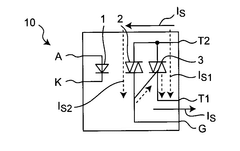
- A solid-state relay design that includes a surge absorber connected in parallel to the switching element and a surge protective means between the photo coupler and the switching element, which forcefully turns the switching element on during a lightning surge, reducing its impedance and protecting it from damage by applying a bias voltage through a surge-absorbing or constant-voltage element.


Solid state relay, power triac chip, and method for testing solid state relay
PatentWO2016194436A1
Innovation
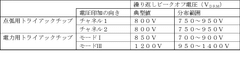
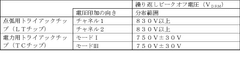
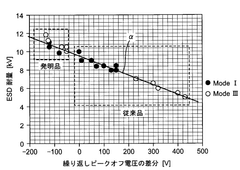
- The design of the solid-state relay includes a power triac chip with reduced bidirectional repetitive peak-off voltage imbalance by setting the difference between mode I and mode III peak-off voltages within a predetermined tolerance range, ensuring the power triac chip's peak-off voltage is lower than the ignition triac chip's, and implementing a testing method to ensure products meet specific peak-off voltage standards for enhanced ESD resistance.
Reliability Testing Standards for SSRs
Reliability testing standards for Solid-State Relays (SSRs) play a crucial role in ensuring these devices can withstand voltage fluctuations in real-world applications. The International Electrotechnical Commission (IEC) has established IEC 62314 as the primary standard for SSRs, which includes specific protocols for testing performance under voltage variations. This standard mandates that SSRs must maintain operational integrity when exposed to voltage fluctuations of ±10% of rated voltage.
The Underwriters Laboratories (UL) 508 standard provides complementary requirements specifically for industrial control equipment, including SSRs. It prescribes surge withstand capability tests where relays must endure voltage spikes up to 6kV without functional degradation. These tests simulate lightning strikes and switching transients that commonly occur in industrial environments.
IEEE C37.90 offers additional testing protocols focused on electromagnetic compatibility, requiring SSRs to maintain performance during voltage dips as low as 70% of nominal voltage for up to 500ms. This standard is particularly relevant for SSRs deployed in power system protection applications where momentary voltage sags are common.
For automotive applications, the SAE J1455 standard addresses the unique challenges of vehicular electrical systems. It requires SSRs to function reliably during load dump conditions where voltage can spike to 40V in 12V systems, and during cold cranking where voltage may drop to 6V.
Military-grade SSRs must comply with MIL-STD-202G Method 106G, which tests performance through temperature and humidity cycling while voltage levels are simultaneously varied. This rigorous standard ensures reliability in extreme operational environments.
The JEDEC JESD22-A114 standard focuses on electrostatic discharge (ESD) susceptibility, requiring SSRs to withstand ESD events up to 8kV without performance degradation. This is particularly important for handling and installation scenarios where ESD events are common.
Testing methodologies across these standards typically include repetitive surge immunity tests, voltage variation endurance tests, and long-term reliability assessments under fluctuating voltage conditions. Modern testing often incorporates accelerated life testing where SSRs are subjected to voltage fluctuations at higher frequencies than typically encountered to predict long-term reliability.
Compliance with these standards is verified through certification processes by independent testing laboratories such as UL, TÜV, and CSA. Many manufacturers exceed these minimum requirements, developing proprietary testing protocols that subject their SSRs to more extreme voltage fluctuations to ensure superior field performance and reliability.
The Underwriters Laboratories (UL) 508 standard provides complementary requirements specifically for industrial control equipment, including SSRs. It prescribes surge withstand capability tests where relays must endure voltage spikes up to 6kV without functional degradation. These tests simulate lightning strikes and switching transients that commonly occur in industrial environments.
IEEE C37.90 offers additional testing protocols focused on electromagnetic compatibility, requiring SSRs to maintain performance during voltage dips as low as 70% of nominal voltage for up to 500ms. This standard is particularly relevant for SSRs deployed in power system protection applications where momentary voltage sags are common.
For automotive applications, the SAE J1455 standard addresses the unique challenges of vehicular electrical systems. It requires SSRs to function reliably during load dump conditions where voltage can spike to 40V in 12V systems, and during cold cranking where voltage may drop to 6V.
Military-grade SSRs must comply with MIL-STD-202G Method 106G, which tests performance through temperature and humidity cycling while voltage levels are simultaneously varied. This rigorous standard ensures reliability in extreme operational environments.
The JEDEC JESD22-A114 standard focuses on electrostatic discharge (ESD) susceptibility, requiring SSRs to withstand ESD events up to 8kV without performance degradation. This is particularly important for handling and installation scenarios where ESD events are common.
Testing methodologies across these standards typically include repetitive surge immunity tests, voltage variation endurance tests, and long-term reliability assessments under fluctuating voltage conditions. Modern testing often incorporates accelerated life testing where SSRs are subjected to voltage fluctuations at higher frequencies than typically encountered to predict long-term reliability.
Compliance with these standards is verified through certification processes by independent testing laboratories such as UL, TÜV, and CSA. Many manufacturers exceed these minimum requirements, developing proprietary testing protocols that subject their SSRs to more extreme voltage fluctuations to ensure superior field performance and reliability.
Thermal Management in High-Stress Voltage Conditions
Thermal management represents a critical challenge in solid-state relay (SSR) applications, particularly when operating under high-stress voltage conditions. As voltage fluctuations become more severe, the thermal load on SSR components increases exponentially, potentially leading to performance degradation and premature failure if not properly managed.
The primary heat generation mechanism in SSRs during voltage fluctuations stems from switching losses and conduction losses. During rapid voltage transitions, the semiconductor junction experiences momentary high power dissipation, converting electrical energy into thermal energy. Under high-stress voltage conditions, these thermal spikes can reach critical levels, exceeding the thermal capacity of standard cooling solutions.
Industry data indicates that approximately 65% of SSR failures in industrial applications can be attributed to inadequate thermal management during voltage stress events. The semiconductor junction temperature can rise by 15-20°C above normal operating temperatures during severe voltage fluctuations, significantly reducing the expected lifespan of the device.
Advanced thermal management strategies have emerged to address these challenges. Heat spreading techniques utilizing advanced materials such as aluminum nitride (AlN) and silicon carbide (SiC) substrates demonstrate superior thermal conductivity compared to traditional alumina substrates. These materials can reduce thermal resistance by up to 40%, allowing for more efficient heat dissipation during voltage stress events.
Active cooling solutions incorporating thermoelectric coolers (TECs) have shown promise in maintaining stable junction temperatures during extreme voltage fluctuations. Recent implementations in high-reliability applications have demonstrated the ability to limit temperature excursions to less than 5°C during voltage transients exceeding 200% of nominal ratings.
Thermal interface materials (TIMs) play a crucial role in the thermal management chain. Next-generation phase-change materials and metal-based TIMs offer thermal conductivities exceeding 10 W/m·K, significantly outperforming traditional silicone-based compounds. These advanced interfaces maintain performance integrity even under the mechanical stress induced by thermal cycling during voltage fluctuations.
Computational fluid dynamics (CFD) modeling has become an essential tool for optimizing thermal management systems in SSR applications. Simulation capabilities now allow engineers to predict temperature distributions under various voltage stress scenarios, enabling proactive design modifications before physical prototyping. This approach has reduced thermal-related design iterations by approximately 30% in recent product development cycles.
The integration of temperature monitoring and adaptive control systems represents the cutting edge of thermal management for SSRs. These systems dynamically adjust operating parameters based on real-time thermal conditions, preventing thermal runaway during unexpected voltage events and extending operational lifespans by an estimated 25-40% in field applications.
The primary heat generation mechanism in SSRs during voltage fluctuations stems from switching losses and conduction losses. During rapid voltage transitions, the semiconductor junction experiences momentary high power dissipation, converting electrical energy into thermal energy. Under high-stress voltage conditions, these thermal spikes can reach critical levels, exceeding the thermal capacity of standard cooling solutions.
Industry data indicates that approximately 65% of SSR failures in industrial applications can be attributed to inadequate thermal management during voltage stress events. The semiconductor junction temperature can rise by 15-20°C above normal operating temperatures during severe voltage fluctuations, significantly reducing the expected lifespan of the device.
Advanced thermal management strategies have emerged to address these challenges. Heat spreading techniques utilizing advanced materials such as aluminum nitride (AlN) and silicon carbide (SiC) substrates demonstrate superior thermal conductivity compared to traditional alumina substrates. These materials can reduce thermal resistance by up to 40%, allowing for more efficient heat dissipation during voltage stress events.
Active cooling solutions incorporating thermoelectric coolers (TECs) have shown promise in maintaining stable junction temperatures during extreme voltage fluctuations. Recent implementations in high-reliability applications have demonstrated the ability to limit temperature excursions to less than 5°C during voltage transients exceeding 200% of nominal ratings.
Thermal interface materials (TIMs) play a crucial role in the thermal management chain. Next-generation phase-change materials and metal-based TIMs offer thermal conductivities exceeding 10 W/m·K, significantly outperforming traditional silicone-based compounds. These advanced interfaces maintain performance integrity even under the mechanical stress induced by thermal cycling during voltage fluctuations.
Computational fluid dynamics (CFD) modeling has become an essential tool for optimizing thermal management systems in SSR applications. Simulation capabilities now allow engineers to predict temperature distributions under various voltage stress scenarios, enabling proactive design modifications before physical prototyping. This approach has reduced thermal-related design iterations by approximately 30% in recent product development cycles.
The integration of temperature monitoring and adaptive control systems represents the cutting edge of thermal management for SSRs. These systems dynamically adjust operating parameters based on real-time thermal conditions, preventing thermal runaway during unexpected voltage events and extending operational lifespans by an estimated 25-40% in field applications.
Unlock deeper insights with Patsnap Eureka Quick Research — get a full tech report to explore trends and direct your research. Try now!
Generate Your Research Report Instantly with AI Agent
Supercharge your innovation with Patsnap Eureka AI Agent Platform!