

Solid-State Relay in Industrial IoT Solutions
SEP 19, 20259 MIN READ
Generate Your Research Report Instantly with AI Agent
PatSnap Eureka helps you evaluate technical feasibility & market potential.
SSR Technology Evolution and Objectives
Solid-State Relays (SSRs) have evolved significantly since their inception in the 1970s, transforming from simple switching devices to sophisticated components integral to modern industrial automation systems. The evolution of SSR technology has been characterized by continuous improvements in switching speed, reliability, and integration capabilities, making them increasingly suitable for Industrial Internet of Things (IIoT) applications.
Initially developed as alternatives to electromechanical relays, early SSRs offered basic advantages such as no moving parts, silent operation, and longer operational lifespans. However, they suffered from limitations including high on-state resistance, significant heat generation, and vulnerability to voltage transients. The technological trajectory has since focused on addressing these limitations while enhancing performance characteristics.
The 1990s marked a significant advancement with the introduction of MOSFET-based SSRs, which substantially reduced on-state resistance and improved switching efficiency. This period also saw the development of integrated protection circuits, enhancing the robustness of SSRs in industrial environments characterized by electrical noise and power fluctuations.
By the early 2000s, SSR technology had progressed to incorporate digital control interfaces, enabling more precise control and monitoring capabilities. This development coincided with the emergence of industrial networking protocols, setting the stage for SSRs to become key components in networked industrial control systems.
The current generation of SSRs represents a convergence of power electronics, digital control systems, and communication technologies. Modern SSRs feature advanced diagnostics, programmable switching parameters, and network connectivity options that align perfectly with IIoT requirements for intelligent, connected components.
The primary objective of contemporary SSR development is to create devices that serve not only as reliable switching elements but also as intelligent nodes in IIoT ecosystems. This includes enhancing their ability to provide real-time operational data, self-diagnostic capabilities, and seamless integration with industrial control networks and cloud platforms.
Future development goals include further miniaturization without compromising power handling capabilities, reduced power consumption for energy-efficient operation, enhanced thermal management for increased reliability in harsh environments, and expanded communication capabilities to support emerging IIoT protocols and standards.
The ultimate technological objective is to position SSRs as fundamental building blocks of the smart factory concept, where every component contributes to system-wide intelligence, adaptability, and efficiency. This vision requires SSRs that can dynamically respond to changing operational conditions while providing valuable data for predictive maintenance and process optimization algorithms.
Initially developed as alternatives to electromechanical relays, early SSRs offered basic advantages such as no moving parts, silent operation, and longer operational lifespans. However, they suffered from limitations including high on-state resistance, significant heat generation, and vulnerability to voltage transients. The technological trajectory has since focused on addressing these limitations while enhancing performance characteristics.
The 1990s marked a significant advancement with the introduction of MOSFET-based SSRs, which substantially reduced on-state resistance and improved switching efficiency. This period also saw the development of integrated protection circuits, enhancing the robustness of SSRs in industrial environments characterized by electrical noise and power fluctuations.
By the early 2000s, SSR technology had progressed to incorporate digital control interfaces, enabling more precise control and monitoring capabilities. This development coincided with the emergence of industrial networking protocols, setting the stage for SSRs to become key components in networked industrial control systems.
The current generation of SSRs represents a convergence of power electronics, digital control systems, and communication technologies. Modern SSRs feature advanced diagnostics, programmable switching parameters, and network connectivity options that align perfectly with IIoT requirements for intelligent, connected components.
The primary objective of contemporary SSR development is to create devices that serve not only as reliable switching elements but also as intelligent nodes in IIoT ecosystems. This includes enhancing their ability to provide real-time operational data, self-diagnostic capabilities, and seamless integration with industrial control networks and cloud platforms.
Future development goals include further miniaturization without compromising power handling capabilities, reduced power consumption for energy-efficient operation, enhanced thermal management for increased reliability in harsh environments, and expanded communication capabilities to support emerging IIoT protocols and standards.
The ultimate technological objective is to position SSRs as fundamental building blocks of the smart factory concept, where every component contributes to system-wide intelligence, adaptability, and efficiency. This vision requires SSRs that can dynamically respond to changing operational conditions while providing valuable data for predictive maintenance and process optimization algorithms.
Industrial IoT Market Demand Analysis
The Industrial IoT (IIoT) market has witnessed substantial growth in recent years, with solid-state relay (SSR) technology emerging as a critical component in modern industrial automation systems. Market research indicates that the global IIoT market is projected to reach $263.4 billion by 2027, growing at a CAGR of 16.7% from 2022. Within this ecosystem, the demand for reliable switching components like SSRs has intensified as industries transition toward smarter, more connected operations.
Manufacturing sectors, particularly discrete manufacturing and process industries, represent the largest market segment for SSR-based IIoT solutions. These industries require precise control of high-power loads while maintaining system reliability in harsh operating environments. The automotive manufacturing sector has shown particularly strong adoption rates, with approximately 68% of new production lines incorporating SSR technology for improved equipment longevity and reduced maintenance costs.
Energy management and building automation systems constitute another significant market segment, where SSRs are increasingly replacing traditional electromechanical relays. This transition is driven by the need for more frequent switching operations, silent operation, and integration with digital control systems. Market surveys reveal that building managers report up to 30% energy savings when implementing SSR-based smart control systems compared to conventional solutions.
The healthcare and pharmaceutical industries have also emerged as high-growth markets for SSR technology in IIoT applications. These sectors demand ultra-reliable power switching for critical equipment and clean-room environments where the absence of arcing and particulate generation provided by SSRs delivers significant advantages. Market adoption in these sectors has grown by 22% annually since 2020.
Regional analysis shows North America and Europe leading SSR adoption in IIoT solutions, with Asia-Pacific representing the fastest-growing market. China and India are experiencing particularly rapid industrialization and automation initiatives, creating substantial demand for advanced switching technologies. The Asia-Pacific region is expected to surpass North America in market size by 2025.
Customer requirements analysis reveals five primary demand drivers for SSR technology in IIoT: increased reliability (cited by 87% of industrial customers), reduced maintenance costs (76%), compatibility with digital control systems (72%), space optimization (65%), and energy efficiency (61%). These factors are reshaping product development roadmaps across the industrial automation sector.
The market is also witnessing increased demand for SSRs with integrated diagnostic capabilities and predictive maintenance features. This trend aligns with the broader IIoT focus on condition monitoring and preventive maintenance, with 58% of industrial customers now prioritizing these features in new installations.
Manufacturing sectors, particularly discrete manufacturing and process industries, represent the largest market segment for SSR-based IIoT solutions. These industries require precise control of high-power loads while maintaining system reliability in harsh operating environments. The automotive manufacturing sector has shown particularly strong adoption rates, with approximately 68% of new production lines incorporating SSR technology for improved equipment longevity and reduced maintenance costs.
Energy management and building automation systems constitute another significant market segment, where SSRs are increasingly replacing traditional electromechanical relays. This transition is driven by the need for more frequent switching operations, silent operation, and integration with digital control systems. Market surveys reveal that building managers report up to 30% energy savings when implementing SSR-based smart control systems compared to conventional solutions.
The healthcare and pharmaceutical industries have also emerged as high-growth markets for SSR technology in IIoT applications. These sectors demand ultra-reliable power switching for critical equipment and clean-room environments where the absence of arcing and particulate generation provided by SSRs delivers significant advantages. Market adoption in these sectors has grown by 22% annually since 2020.
Regional analysis shows North America and Europe leading SSR adoption in IIoT solutions, with Asia-Pacific representing the fastest-growing market. China and India are experiencing particularly rapid industrialization and automation initiatives, creating substantial demand for advanced switching technologies. The Asia-Pacific region is expected to surpass North America in market size by 2025.
Customer requirements analysis reveals five primary demand drivers for SSR technology in IIoT: increased reliability (cited by 87% of industrial customers), reduced maintenance costs (76%), compatibility with digital control systems (72%), space optimization (65%), and energy efficiency (61%). These factors are reshaping product development roadmaps across the industrial automation sector.
The market is also witnessing increased demand for SSRs with integrated diagnostic capabilities and predictive maintenance features. This trend aligns with the broader IIoT focus on condition monitoring and preventive maintenance, with 58% of industrial customers now prioritizing these features in new installations.
SSR Technical Challenges in IIoT Applications
The integration of Solid-State Relays (SSRs) in Industrial IoT (IIoT) environments presents several significant technical challenges that must be addressed for successful implementation. These challenges stem from the unique requirements of industrial settings and the evolving nature of IoT applications.
Heat dissipation remains one of the most critical challenges for SSRs in IIoT applications. Unlike mechanical relays, SSRs generate considerable heat during operation due to the voltage drop across their semiconductor switching elements. In compact IIoT devices where space is limited, this heat can accumulate rapidly, potentially leading to thermal runaway and premature device failure. Traditional cooling methods such as heatsinks may be insufficient or impractical in many IIoT form factors.
Surge protection presents another substantial hurdle. Industrial environments frequently experience power surges and transients that can damage sensitive semiconductor components in SSRs. While mechanical relays can inherently withstand many surge events due to their air gap when open, SSRs require sophisticated protection circuits that must be carefully designed to balance protection with performance and cost considerations.
The leakage current characteristic of SSRs poses particular challenges in IIoT applications. Even when in the "off" state, SSRs typically allow a small leakage current to flow, which can be problematic for ultra-low-power IIoT sensors and devices. This leakage may trigger false readings in sensitive measurement circuits or prevent devices from entering deep sleep modes, significantly impacting battery life in wireless IIoT nodes.
EMI/RFI interference represents a growing concern as IIoT networks become more dense. SSRs can generate electromagnetic interference during switching operations, potentially disrupting nearby wireless communications that are essential to IIoT functionality. Conversely, SSRs must also be designed to withstand electromagnetic interference from other industrial equipment without false triggering.
Reliability verification under varied environmental conditions presents unique challenges for IIoT implementations. Industrial environments often feature extreme temperatures, vibration, dust, and corrosive atmospheres. While SSRs have no moving parts, their semiconductor components and packaging materials may degrade differently under these conditions compared to mechanical alternatives, requiring new testing methodologies specific to IIoT use cases.
Integration with digital control systems presents interface challenges. Modern IIoT architectures require seamless communication between SSRs and microcontrollers or edge computing devices. Developing efficient, secure, and standardized interfaces for SSR control and monitoring within IIoT ecosystems remains technically challenging, particularly when retrofitting existing industrial equipment with smart capabilities.
Heat dissipation remains one of the most critical challenges for SSRs in IIoT applications. Unlike mechanical relays, SSRs generate considerable heat during operation due to the voltage drop across their semiconductor switching elements. In compact IIoT devices where space is limited, this heat can accumulate rapidly, potentially leading to thermal runaway and premature device failure. Traditional cooling methods such as heatsinks may be insufficient or impractical in many IIoT form factors.
Surge protection presents another substantial hurdle. Industrial environments frequently experience power surges and transients that can damage sensitive semiconductor components in SSRs. While mechanical relays can inherently withstand many surge events due to their air gap when open, SSRs require sophisticated protection circuits that must be carefully designed to balance protection with performance and cost considerations.
The leakage current characteristic of SSRs poses particular challenges in IIoT applications. Even when in the "off" state, SSRs typically allow a small leakage current to flow, which can be problematic for ultra-low-power IIoT sensors and devices. This leakage may trigger false readings in sensitive measurement circuits or prevent devices from entering deep sleep modes, significantly impacting battery life in wireless IIoT nodes.
EMI/RFI interference represents a growing concern as IIoT networks become more dense. SSRs can generate electromagnetic interference during switching operations, potentially disrupting nearby wireless communications that are essential to IIoT functionality. Conversely, SSRs must also be designed to withstand electromagnetic interference from other industrial equipment without false triggering.
Reliability verification under varied environmental conditions presents unique challenges for IIoT implementations. Industrial environments often feature extreme temperatures, vibration, dust, and corrosive atmospheres. While SSRs have no moving parts, their semiconductor components and packaging materials may degrade differently under these conditions compared to mechanical alternatives, requiring new testing methodologies specific to IIoT use cases.
Integration with digital control systems presents interface challenges. Modern IIoT architectures require seamless communication between SSRs and microcontrollers or edge computing devices. Developing efficient, secure, and standardized interfaces for SSR control and monitoring within IIoT ecosystems remains technically challenging, particularly when retrofitting existing industrial equipment with smart capabilities.
Current SSR Integration Methods for IIoT
01 Basic structure and operation of solid-state relays
Solid-state relays (SSRs) are electronic switching devices that use semiconductor components instead of mechanical contacts to switch electrical loads. They typically consist of an input circuit with optical isolation, a semiconductor switching element (such as a TRIAC, MOSFET, or thyristor), and output circuitry. SSRs offer advantages including no moving parts, silent operation, fast switching speeds, and long operational life compared to mechanical relays.- Basic structure and operation of solid-state relays: Solid-state relays (SSRs) are electronic switching devices that use semiconductor components instead of mechanical contacts to switch electrical loads. They typically consist of an input circuit with optical isolation, a semiconductor switching element (such as a TRIAC, MOSFET, or thyristor), and output circuitry. SSRs offer advantages including no moving parts, silent operation, fast switching speeds, and long operational life compared to mechanical relays.
- Protection circuits for solid-state relays: Protection circuits are integrated into solid-state relays to prevent damage from overcurrent, overvoltage, and thermal events. These circuits may include snubber networks to suppress voltage spikes, current limiting components, thermal shutdown mechanisms, and fault detection systems. Advanced protection designs incorporate multiple layers of protection to ensure reliable operation in harsh industrial environments and to protect both the relay and connected equipment.
- Thermal management in solid-state relays: Thermal management is critical in solid-state relay design due to heat generation during operation. Techniques include the use of heat sinks, thermal interface materials, optimized PCB layouts, and strategic component placement. Advanced designs incorporate temperature sensors and automatic thermal shutdown features. Effective thermal management extends the relay's lifespan, maintains switching performance, and prevents thermal runaway conditions that could lead to device failure.
- Integration of solid-state relays in power systems: Solid-state relays are increasingly integrated into complex power systems and smart grid applications. These implementations include advanced control interfaces, network connectivity for remote operation, and compatibility with various industrial protocols. Modern designs feature programmable switching parameters, status monitoring capabilities, and integration with IoT platforms. These relays can be configured in arrays or modules to handle high-power applications or to provide redundancy in critical systems.
- Semiconductor technologies for solid-state relays: Advanced semiconductor technologies are being employed in modern solid-state relays to improve performance characteristics. These include wide-bandgap semiconductors like silicon carbide (SiC) and gallium nitride (GaN), which offer higher temperature operation, faster switching speeds, and lower conduction losses. Integrated circuit designs combine multiple functions on a single chip, reducing size and improving reliability. Novel semiconductor structures are being developed to handle higher voltages and currents while maintaining isolation integrity.
02 Thermal management and protection in solid-state relays
Thermal management is critical in solid-state relay design to prevent overheating and ensure reliable operation. Various techniques are employed including heat sinks, thermal interface materials, and specialized packaging designs. Protection circuits may include temperature sensors, current limiting features, and thermal shutdown mechanisms to prevent damage from overcurrent conditions or excessive heat generation during operation.Expand Specific Solutions03 Advanced semiconductor technologies for solid-state relays
Modern solid-state relays incorporate advanced semiconductor technologies to improve performance characteristics. These include wide bandgap semiconductors like silicon carbide (SiC) and gallium nitride (GaN), which offer higher temperature operation, faster switching speeds, and lower on-state resistance. Integration of multiple functions on a single chip and specialized semiconductor structures help reduce size while improving reliability and efficiency.Expand Specific Solutions04 Control and driving circuits for solid-state relays
Control and driving circuits in solid-state relays are designed to ensure proper switching behavior and isolation between input and output. These circuits typically include optical isolators, gate drivers, and signal conditioning components. Advanced designs incorporate microcontroller interfaces, digital control capabilities, and diagnostic features that monitor relay status and detect fault conditions during operation.Expand Specific Solutions05 Application-specific solid-state relay configurations
Solid-state relays are designed with specific configurations to meet the requirements of different applications. These include AC and DC switching variants, multi-channel arrays for controlling multiple loads, bidirectional switching capabilities, and specialized designs for high-voltage or high-current applications. Some configurations incorporate additional features such as zero-crossing detection for reduced electromagnetic interference, integrated surge protection, and programmable timing functions.Expand Specific Solutions
Key SSR Manufacturers and IIoT Solution Providers
The Solid-State Relay (SSR) market in Industrial IoT solutions is experiencing robust growth, currently in a mature expansion phase with increasing adoption across smart manufacturing applications. The global market is projected to reach approximately $1.8 billion by 2027, growing at a CAGR of 6-7%. Leading players include established electronics giants like Panasonic, Sony, Samsung, and Fujitsu, alongside specialized industrial automation companies such as Phoenix Contact and TE Connectivity. Chinese manufacturers like Novosense Microelectronics and Gree Electric are rapidly gaining market share through cost-effective solutions. Technology maturity varies across applications, with telecommunications companies like NTT, Qualcomm, and Cisco driving innovation in network-integrated SSR solutions for next-generation IIoT deployments.
Suzhou Novosense Microelectronics Co., Ltd.
Technical Solution: Novosense has developed a specialized line of SSR solutions for Industrial IoT applications based on their proprietary silicon-on-insulator (SOI) technology. Their SSRs feature integrated temperature compensation circuits that maintain consistent switching characteristics across the industrial temperature range (-40°C to +125°C). Novosense's approach incorporates multi-chip module (MCM) packaging that integrates the control logic, driver circuits, and power switching elements in a single compact package, reducing board space requirements by up to 60% compared to discrete implementations. Their Industrial IoT SSRs include built-in analog-to-digital converters that monitor load current and supply voltage, with the ability to transmit this data via I²C or SPI interfaces to host microcontrollers. The company has also implemented advanced overvoltage and overcurrent protection mechanisms with programmable thresholds, allowing the SSRs to adapt to varying load conditions. Novosense's latest generation includes wireless connectivity options (BLE, Zigbee) for retrofit applications where adding wired communications would be impractical.
Strengths: Excellent thermal performance due to SOI technology; highly integrated packaging reduces system complexity; programmable protection features; low power consumption suitable for battery-powered IoT nodes. Weaknesses: Limited current handling capability compared to larger competitors; relatively new to the industrial market with less established reliability history; wireless options may raise cybersecurity concerns in critical applications.
Cisco Technology, Inc.
Technical Solution: Cisco has developed an innovative approach to Solid-State Relay integration within Industrial IoT ecosystems through their Industrial Network Director platform. Their solution combines traditional SSR hardware with network-level intelligence and security. Cisco's SSR implementation features embedded cryptographic modules that authenticate control commands, preventing unauthorized switching operations that could damage equipment or disrupt production. Their architecture incorporates edge computing capabilities directly within SSR control nodes, enabling local decision-making based on real-time conditions without requiring constant cloud connectivity. Cisco's Industrial IoT SSRs integrate with their DNA Center for centralized management, allowing system administrators to define policies for relay operation based on network conditions, time schedules, or security events. The system includes comprehensive logging and audit capabilities that track all switching operations for compliance and forensic purposes. Cisco has also implemented machine learning algorithms that analyze switching patterns to detect anomalies that might indicate equipment failure or security breaches.
Strengths: Industry-leading security features; seamless integration with existing network infrastructure; sophisticated management and monitoring capabilities; strong support for regulatory compliance. Weaknesses: Higher implementation complexity requiring specialized networking expertise; greater dependency on software components introduces additional potential failure modes; typically higher total cost of ownership compared to standalone SSR solutions.
Critical Patents in SSR-IIoT Integration
Monitoring and managing industrial settings
PatentPendingEP4440165A2
Innovation
- A self-configuring sensor kit system that includes edge devices and various sensors, capable of transmitting data via different communication protocols, including satellite and cellular networks, with built-in machine-learned models for data processing and encoding to optimize bandwidth and security, and a backend system for monitoring and management.


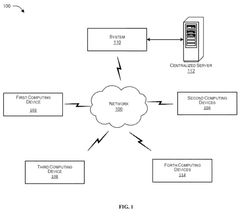
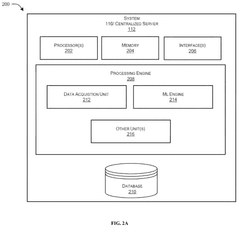
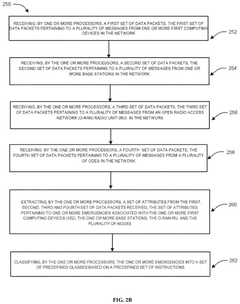
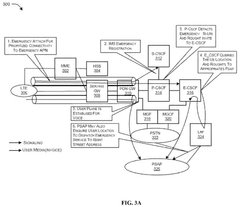
System and method for detecting and handling machine emergencies in a network
PatentPendingUS20240356812A1
Innovation
- A system and method utilizing a machine learning engine to identify and classify machine emergencies within a 3GPP network, enrich emergency messages with data like location and machine ID, and redirect them to appropriate servers, enabling SIM-less emergency attach and handling of various emergency types through predefined classes and quality of service profiles.
Energy Efficiency and Thermal Management
Energy efficiency and thermal management represent critical considerations in the implementation of Solid-State Relays (SSRs) within Industrial IoT solutions. SSRs inherently generate heat during operation due to the voltage drop across their semiconductor switching elements, typically ranging from 0.8V to 1.5V depending on the technology employed. This heat generation directly impacts both the energy efficiency of the overall system and the reliability of the relay itself.
Modern SSRs designed for Industrial IoT applications have achieved significant improvements in energy efficiency through several technological advancements. The implementation of advanced semiconductor materials such as silicon carbide (SiC) and gallium nitride (GaN) has reduced the on-state resistance of switching elements by up to 40% compared to traditional silicon-based components. This reduction translates to lower power dissipation during operation and consequently improved energy efficiency metrics across industrial control systems.
Thermal management strategies for SSRs in IoT environments have evolved beyond simple heat sinking approaches. Contemporary designs incorporate active thermal monitoring through integrated temperature sensors that provide real-time data to IoT management systems. This enables predictive maintenance algorithms to detect potential overheating conditions before failure occurs, significantly enhancing system reliability while optimizing energy consumption patterns.
The miniaturization trend in Industrial IoT has introduced additional thermal challenges for SSR implementations. Compact form factors limit the available surface area for heat dissipation, necessitating innovative cooling solutions. Phase-change materials embedded within SSR packaging have emerged as an effective approach, absorbing excess heat during peak operation periods and releasing it gradually during lower demand cycles.
Power consumption optimization in SSR-based IoT systems extends to control circuit design as well. Low-power triggering mechanisms utilizing optically isolated digital inputs have reduced the energy requirements for relay activation by approximately 65% compared to previous generations. Furthermore, intelligent power management algorithms can dynamically adjust SSR switching patterns based on load requirements, minimizing unnecessary energy expenditure during partial load conditions.
Environmental considerations have also influenced thermal management approaches for industrial SSRs. Passive cooling designs that eliminate the need for fans or other moving components have gained prominence, particularly in harsh industrial environments where maintenance access is limited. These designs leverage advanced thermal simulation modeling to optimize heat flow pathways without compromising the compact form factors required for modern IoT implementations.
Modern SSRs designed for Industrial IoT applications have achieved significant improvements in energy efficiency through several technological advancements. The implementation of advanced semiconductor materials such as silicon carbide (SiC) and gallium nitride (GaN) has reduced the on-state resistance of switching elements by up to 40% compared to traditional silicon-based components. This reduction translates to lower power dissipation during operation and consequently improved energy efficiency metrics across industrial control systems.
Thermal management strategies for SSRs in IoT environments have evolved beyond simple heat sinking approaches. Contemporary designs incorporate active thermal monitoring through integrated temperature sensors that provide real-time data to IoT management systems. This enables predictive maintenance algorithms to detect potential overheating conditions before failure occurs, significantly enhancing system reliability while optimizing energy consumption patterns.
The miniaturization trend in Industrial IoT has introduced additional thermal challenges for SSR implementations. Compact form factors limit the available surface area for heat dissipation, necessitating innovative cooling solutions. Phase-change materials embedded within SSR packaging have emerged as an effective approach, absorbing excess heat during peak operation periods and releasing it gradually during lower demand cycles.
Power consumption optimization in SSR-based IoT systems extends to control circuit design as well. Low-power triggering mechanisms utilizing optically isolated digital inputs have reduced the energy requirements for relay activation by approximately 65% compared to previous generations. Furthermore, intelligent power management algorithms can dynamically adjust SSR switching patterns based on load requirements, minimizing unnecessary energy expenditure during partial load conditions.
Environmental considerations have also influenced thermal management approaches for industrial SSRs. Passive cooling designs that eliminate the need for fans or other moving components have gained prominence, particularly in harsh industrial environments where maintenance access is limited. These designs leverage advanced thermal simulation modeling to optimize heat flow pathways without compromising the compact form factors required for modern IoT implementations.
Cybersecurity Considerations for SSR-IIoT Systems
The integration of Solid-State Relays (SSRs) in Industrial IoT (IIoT) environments introduces significant cybersecurity challenges that must be addressed comprehensively. As these systems become increasingly interconnected, they present expanded attack surfaces vulnerable to various cyber threats. Traditional industrial control systems were often isolated, but IIoT architectures expose SSR networks to potential remote exploitation.
Threat vectors specific to SSR-IIoT implementations include firmware manipulation, man-in-the-middle attacks, and denial-of-service attempts that could compromise relay functionality. Attackers targeting these systems may aim to disrupt industrial processes, cause equipment damage, or even create safety hazards. The consequences of successful attacks on SSR-IIoT systems can extend beyond operational disruption to include physical damage and potential harm to personnel.
Authentication and access control mechanisms represent critical security components for SSR-IIoT deployments. Implementation of multi-factor authentication, role-based access controls, and secure credential management helps prevent unauthorized manipulation of relay states. These measures should be complemented by robust encryption protocols for data in transit and at rest, ensuring that control signals and system configurations remain protected from interception or tampering.
Network segmentation emerges as a fundamental security strategy, isolating SSR control systems from general IT networks through properly configured firewalls and demilitarized zones (DMZs). This approach limits potential attack pathways and contains security breaches if they occur. Additionally, implementing secure boot processes and code signing for SSR firmware helps maintain device integrity and prevents the execution of unauthorized code.
Continuous monitoring and anomaly detection systems provide essential visibility into SSR-IIoT environments, enabling rapid identification of suspicious activities or performance deviations. These systems should incorporate both network traffic analysis and behavioral monitoring of relay operations to detect potential security incidents. Regular security assessments, including vulnerability scanning and penetration testing, help identify and remediate weaknesses before they can be exploited.
Incident response planning specifically tailored to SSR-IIoT environments is necessary to ensure rapid and effective reactions to security breaches. These plans should include procedures for isolating affected systems, forensic analysis protocols, and recovery strategies that minimize operational impact. Organizations must also establish comprehensive update and patch management processes to address security vulnerabilities promptly while ensuring system stability.
Regulatory compliance represents another crucial dimension of SSR-IIoT security, with frameworks such as IEC 62443, NIST SP 800-82, and industry-specific standards providing valuable guidance. These standards establish baseline security requirements and best practices that organizations should incorporate into their security programs to ensure comprehensive protection of SSR-IIoT implementations.
Threat vectors specific to SSR-IIoT implementations include firmware manipulation, man-in-the-middle attacks, and denial-of-service attempts that could compromise relay functionality. Attackers targeting these systems may aim to disrupt industrial processes, cause equipment damage, or even create safety hazards. The consequences of successful attacks on SSR-IIoT systems can extend beyond operational disruption to include physical damage and potential harm to personnel.
Authentication and access control mechanisms represent critical security components for SSR-IIoT deployments. Implementation of multi-factor authentication, role-based access controls, and secure credential management helps prevent unauthorized manipulation of relay states. These measures should be complemented by robust encryption protocols for data in transit and at rest, ensuring that control signals and system configurations remain protected from interception or tampering.
Network segmentation emerges as a fundamental security strategy, isolating SSR control systems from general IT networks through properly configured firewalls and demilitarized zones (DMZs). This approach limits potential attack pathways and contains security breaches if they occur. Additionally, implementing secure boot processes and code signing for SSR firmware helps maintain device integrity and prevents the execution of unauthorized code.
Continuous monitoring and anomaly detection systems provide essential visibility into SSR-IIoT environments, enabling rapid identification of suspicious activities or performance deviations. These systems should incorporate both network traffic analysis and behavioral monitoring of relay operations to detect potential security incidents. Regular security assessments, including vulnerability scanning and penetration testing, help identify and remediate weaknesses before they can be exploited.
Incident response planning specifically tailored to SSR-IIoT environments is necessary to ensure rapid and effective reactions to security breaches. These plans should include procedures for isolating affected systems, forensic analysis protocols, and recovery strategies that minimize operational impact. Organizations must also establish comprehensive update and patch management processes to address security vulnerabilities promptly while ensuring system stability.
Regulatory compliance represents another crucial dimension of SSR-IIoT security, with frameworks such as IEC 62443, NIST SP 800-82, and industry-specific standards providing valuable guidance. These standards establish baseline security requirements and best practices that organizations should incorporate into their security programs to ensure comprehensive protection of SSR-IIoT implementations.
Unlock deeper insights with PatSnap Eureka Quick Research — get a full tech report to explore trends and direct your research. Try now!
Generate Your Research Report Instantly with AI Agent
Supercharge your innovation with PatSnap Eureka AI Agent Platform!