

Solid-State Relay in High-Voltage Grid Systems
SEP 19, 20259 MIN READ
Generate Your Research Report Instantly with AI Agent
PatSnap Eureka helps you evaluate technical feasibility & market potential.
SSR Technology Background and Objectives
Solid-State Relays (SSRs) represent a significant evolution in power switching technology, emerging in the 1970s as an alternative to electromechanical relays. Unlike their mechanical counterparts, SSRs operate without moving parts, utilizing semiconductor devices such as thyristors, triacs, and MOSFETs to control electrical circuits. This fundamental difference has positioned SSRs as increasingly valuable components in high-voltage grid systems, where reliability, speed, and precision are paramount.
The historical trajectory of SSR technology shows steady advancement from low-power applications to increasingly sophisticated high-voltage implementations. Early SSRs were primarily confined to industrial automation and consumer electronics due to voltage limitations. However, technological breakthroughs in semiconductor materials and designs have progressively expanded their operational range, enabling their integration into power transmission and distribution networks.
Current technological trends indicate accelerating development in wide-bandgap semiconductors, particularly silicon carbide (SiC) and gallium nitride (GaN), which offer superior performance characteristics compared to traditional silicon-based devices. These materials demonstrate higher breakdown voltages, faster switching speeds, and improved thermal conductivity—properties that directly address the demanding requirements of high-voltage grid applications.
The primary technical objectives for SSR implementation in high-voltage grid systems center on several critical parameters. First, voltage handling capability must reach or exceed 500kV to accommodate modern transmission networks. Second, current ratings must support loads of several thousand amperes while maintaining minimal on-state resistance to reduce power losses. Third, switching speeds must be optimized to enable precise control for grid stability and power quality management.
Additionally, SSR technology aims to enhance grid resilience through improved fault isolation capabilities. The microsecond response times of solid-state devices offer unprecedented opportunities for protecting critical infrastructure from cascading failures. This protective function represents a significant advancement over conventional mechanical circuit breakers, which typically operate in the millisecond range.
Long-term technological goals include the development of hybrid systems that combine the benefits of solid-state switching with conventional technologies, creating more robust and flexible grid control mechanisms. Research is also focused on addressing thermal management challenges, as heat dissipation remains a significant constraint in high-power SSR applications.
The evolution of SSR technology aligns with broader industry trends toward smarter, more responsive electrical grids. As renewable energy sources increase their contribution to the energy mix, the demand for advanced switching technologies capable of managing variable inputs and maintaining grid stability continues to grow, positioning SSR technology as a cornerstone of future power distribution systems.
The historical trajectory of SSR technology shows steady advancement from low-power applications to increasingly sophisticated high-voltage implementations. Early SSRs were primarily confined to industrial automation and consumer electronics due to voltage limitations. However, technological breakthroughs in semiconductor materials and designs have progressively expanded their operational range, enabling their integration into power transmission and distribution networks.
Current technological trends indicate accelerating development in wide-bandgap semiconductors, particularly silicon carbide (SiC) and gallium nitride (GaN), which offer superior performance characteristics compared to traditional silicon-based devices. These materials demonstrate higher breakdown voltages, faster switching speeds, and improved thermal conductivity—properties that directly address the demanding requirements of high-voltage grid applications.
The primary technical objectives for SSR implementation in high-voltage grid systems center on several critical parameters. First, voltage handling capability must reach or exceed 500kV to accommodate modern transmission networks. Second, current ratings must support loads of several thousand amperes while maintaining minimal on-state resistance to reduce power losses. Third, switching speeds must be optimized to enable precise control for grid stability and power quality management.
Additionally, SSR technology aims to enhance grid resilience through improved fault isolation capabilities. The microsecond response times of solid-state devices offer unprecedented opportunities for protecting critical infrastructure from cascading failures. This protective function represents a significant advancement over conventional mechanical circuit breakers, which typically operate in the millisecond range.
Long-term technological goals include the development of hybrid systems that combine the benefits of solid-state switching with conventional technologies, creating more robust and flexible grid control mechanisms. Research is also focused on addressing thermal management challenges, as heat dissipation remains a significant constraint in high-power SSR applications.
The evolution of SSR technology aligns with broader industry trends toward smarter, more responsive electrical grids. As renewable energy sources increase their contribution to the energy mix, the demand for advanced switching technologies capable of managing variable inputs and maintaining grid stability continues to grow, positioning SSR technology as a cornerstone of future power distribution systems.
Market Demand Analysis for High-Voltage Grid SSRs
The global market for Solid-State Relays (SSRs) in high-voltage grid systems has been experiencing significant growth, driven by the modernization of electrical infrastructure worldwide. The demand for SSRs in high-voltage applications is primarily fueled by the increasing need for reliable, efficient, and maintenance-free switching solutions in power transmission and distribution networks.
The utility sector represents the largest market segment for high-voltage grid SSRs, with an estimated annual growth rate exceeding 7% over the past five years. This growth is particularly pronounced in regions undergoing extensive grid modernization projects, including North America, Western Europe, and parts of Asia-Pacific, especially China and India.
Smart grid initiatives worldwide have emerged as a major demand driver for advanced SSR technologies. As countries invest in upgrading their aging power infrastructure to accommodate renewable energy integration, demand response capabilities, and improved grid resilience, the need for sophisticated solid-state switching technologies has increased substantially. The renewable energy sector alone has contributed to approximately one-third of the new installations of high-voltage SSRs in recent years.
Industrial applications constitute another significant market segment, particularly in sectors requiring precise power control and protection such as oil and gas, mining, and heavy manufacturing. These industries value the fast switching capabilities, reliability, and longevity of SSRs compared to traditional electromechanical relays, despite the higher initial investment costs.
Market analysis indicates a growing preference for hybrid solutions that combine solid-state technology with conventional mechanical components to optimize performance while managing costs. This trend is particularly evident in medium-voltage applications (15-36kV range), where the cost-benefit ratio of pure solid-state solutions remains challenging.
Regional market dynamics show varying adoption rates, with developed economies leading in implementation due to their focus on grid reliability and efficiency improvements. However, emerging economies are showing accelerated adoption rates as they build new infrastructure rather than replacing existing systems, allowing them to leapfrog directly to advanced technologies.
The market faces certain constraints, including the higher upfront costs of SSRs compared to traditional electromechanical relays and technical challenges related to heat dissipation and voltage isolation in ultra-high-voltage applications. Nevertheless, the long-term total cost of ownership advantages, including reduced maintenance requirements and improved operational efficiency, continue to strengthen the business case for SSR adoption in high-voltage grid systems.
The utility sector represents the largest market segment for high-voltage grid SSRs, with an estimated annual growth rate exceeding 7% over the past five years. This growth is particularly pronounced in regions undergoing extensive grid modernization projects, including North America, Western Europe, and parts of Asia-Pacific, especially China and India.
Smart grid initiatives worldwide have emerged as a major demand driver for advanced SSR technologies. As countries invest in upgrading their aging power infrastructure to accommodate renewable energy integration, demand response capabilities, and improved grid resilience, the need for sophisticated solid-state switching technologies has increased substantially. The renewable energy sector alone has contributed to approximately one-third of the new installations of high-voltage SSRs in recent years.
Industrial applications constitute another significant market segment, particularly in sectors requiring precise power control and protection such as oil and gas, mining, and heavy manufacturing. These industries value the fast switching capabilities, reliability, and longevity of SSRs compared to traditional electromechanical relays, despite the higher initial investment costs.
Market analysis indicates a growing preference for hybrid solutions that combine solid-state technology with conventional mechanical components to optimize performance while managing costs. This trend is particularly evident in medium-voltage applications (15-36kV range), where the cost-benefit ratio of pure solid-state solutions remains challenging.
Regional market dynamics show varying adoption rates, with developed economies leading in implementation due to their focus on grid reliability and efficiency improvements. However, emerging economies are showing accelerated adoption rates as they build new infrastructure rather than replacing existing systems, allowing them to leapfrog directly to advanced technologies.
The market faces certain constraints, including the higher upfront costs of SSRs compared to traditional electromechanical relays and technical challenges related to heat dissipation and voltage isolation in ultra-high-voltage applications. Nevertheless, the long-term total cost of ownership advantages, including reduced maintenance requirements and improved operational efficiency, continue to strengthen the business case for SSR adoption in high-voltage grid systems.
Current State and Challenges in SSR Grid Integration
The integration of Solid-State Relays (SSRs) into high-voltage grid systems represents a significant technological advancement, yet faces substantial implementation challenges. Currently, SSR deployment in grid systems remains limited, with most installations being pilot projects or specialized applications rather than widespread adoption. Traditional electromechanical relays continue to dominate the market due to their established reliability and lower initial costs, despite their inherent limitations in switching speed and maintenance requirements.
Technical challenges persist in scaling SSR technology for high-voltage applications. While SSRs excel in low to medium voltage scenarios, their performance at transmission-level voltages (>100kV) encounters issues related to heat dissipation, voltage isolation, and surge protection. The semiconductor components in SSRs, typically based on thyristors or IGBTs, struggle with the extreme electrical stresses present in high-voltage environments, leading to reliability concerns and shortened operational lifespans.
Power losses during conduction represent another significant obstacle. Current SSR designs exhibit higher on-state resistance compared to mechanical alternatives, resulting in increased heat generation and reduced energy efficiency. This becomes particularly problematic in high-power transmission applications where even small efficiency losses translate to substantial energy waste and thermal management challenges.
Cost factors further impede widespread adoption. The sophisticated semiconductor materials and manufacturing processes required for high-voltage SSRs result in acquisition costs 3-5 times higher than conventional relays. Although lifecycle cost analyses often favor SSRs when considering maintenance savings, the higher initial investment presents a barrier for utilities operating under strict capital expenditure constraints.
Standardization issues also complicate integration efforts. The relatively nascent nature of high-voltage SSR technology has resulted in fragmented approaches to design, testing, and certification. International standards specifically addressing SSR implementation in transmission systems remain under development, creating uncertainty for both manufacturers and grid operators regarding performance requirements and safety protocols.
Cybersecurity concerns have emerged as grid systems become increasingly digitized. The electronic nature of SSRs introduces potential vulnerabilities not present in mechanical systems, requiring robust protection measures against unauthorized access or manipulation. This challenge is particularly acute given the critical infrastructure status of power transmission networks.
Geographic distribution of SSR technology development shows concentration in regions with advanced semiconductor industries, primarily East Asia, North America, and Western Europe. This creates disparities in access to cutting-edge solutions and technical expertise, potentially widening the technological gap between developed and developing power markets.
Technical challenges persist in scaling SSR technology for high-voltage applications. While SSRs excel in low to medium voltage scenarios, their performance at transmission-level voltages (>100kV) encounters issues related to heat dissipation, voltage isolation, and surge protection. The semiconductor components in SSRs, typically based on thyristors or IGBTs, struggle with the extreme electrical stresses present in high-voltage environments, leading to reliability concerns and shortened operational lifespans.
Power losses during conduction represent another significant obstacle. Current SSR designs exhibit higher on-state resistance compared to mechanical alternatives, resulting in increased heat generation and reduced energy efficiency. This becomes particularly problematic in high-power transmission applications where even small efficiency losses translate to substantial energy waste and thermal management challenges.
Cost factors further impede widespread adoption. The sophisticated semiconductor materials and manufacturing processes required for high-voltage SSRs result in acquisition costs 3-5 times higher than conventional relays. Although lifecycle cost analyses often favor SSRs when considering maintenance savings, the higher initial investment presents a barrier for utilities operating under strict capital expenditure constraints.
Standardization issues also complicate integration efforts. The relatively nascent nature of high-voltage SSR technology has resulted in fragmented approaches to design, testing, and certification. International standards specifically addressing SSR implementation in transmission systems remain under development, creating uncertainty for both manufacturers and grid operators regarding performance requirements and safety protocols.
Cybersecurity concerns have emerged as grid systems become increasingly digitized. The electronic nature of SSRs introduces potential vulnerabilities not present in mechanical systems, requiring robust protection measures against unauthorized access or manipulation. This challenge is particularly acute given the critical infrastructure status of power transmission networks.
Geographic distribution of SSR technology development shows concentration in regions with advanced semiconductor industries, primarily East Asia, North America, and Western Europe. This creates disparities in access to cutting-edge solutions and technical expertise, potentially widening the technological gap between developed and developing power markets.
Current SSR Implementation Solutions for Grid Systems
01 Basic structure and operation of solid-state relays
Solid-state relays (SSRs) are electronic switching devices that use semiconductor components instead of mechanical contacts to switch electrical loads. They typically consist of an input circuit with optical isolation, a semiconductor switching element (such as a TRIAC, MOSFET, or thyristor), and output circuitry. SSRs offer advantages including no moving parts, silent operation, fast switching speeds, and long operational life compared to mechanical relays.- Basic structure and operation of solid-state relays: Solid-state relays (SSRs) are electronic switching devices that use semiconductor components instead of mechanical contacts to switch electrical loads. They typically consist of an input circuit with optical isolation, a semiconductor switching element (such as a TRIAC, MOSFET, or thyristor), and output circuitry. SSRs offer advantages including no moving parts, silent operation, fast switching speeds, and longer operational life compared to mechanical relays.
- Thermal management and protection in solid-state relays: Thermal management is critical in solid-state relay design to prevent overheating and ensure reliable operation. Various techniques are employed including heat sinks, thermal interface materials, and specialized packaging designs. Protection circuits may include temperature sensors, current limiting features, and thermal shutdown mechanisms to prevent damage during fault conditions or overload situations.
- Integration of solid-state relays in power control systems: Solid-state relays are integrated into various power control systems for applications such as motor control, heating element regulation, and industrial automation. These systems may incorporate multiple relays with coordinated control logic, feedback mechanisms, and communication interfaces. Advanced designs feature programmable switching patterns, load monitoring capabilities, and integration with digital control systems.
- Enhanced semiconductor structures for solid-state relays: Advanced semiconductor structures improve the performance of solid-state relays through optimized device architectures. These include specialized MOSFET designs, integrated gate drivers, multi-chip modules, and custom semiconductor layouts. Such enhancements result in lower on-state resistance, improved isolation, faster switching speeds, and better overall efficiency of the relay system.
- Control and driving circuits for solid-state relays: Specialized control and driving circuits are essential components of solid-state relays, providing proper signal conditioning, isolation, and gate driving capabilities. These circuits may include optocouplers for electrical isolation, gate driver ICs for proper switching characteristics, protection features against voltage spikes, and logic interfaces for compatibility with various control systems. Advanced designs incorporate digital control features, diagnostic capabilities, and adaptive driving parameters.
02 Thermal management and protection in solid-state relays
Thermal management is critical in solid-state relay design to prevent overheating and ensure reliable operation. Various techniques are employed including heat sinks, thermal interface materials, and specialized packaging designs. Protection circuits may include temperature sensors, current limiting features, and thermal shutdown mechanisms to prevent damage during fault conditions or overload situations.Expand Specific Solutions03 Advanced semiconductor technologies for solid-state relays
Modern solid-state relays incorporate advanced semiconductor technologies to improve performance characteristics. These include wide bandgap semiconductors like silicon carbide (SiC) and gallium nitride (GaN), which offer higher temperature operation, faster switching speeds, and lower conduction losses. Integration of multiple functions on a single chip and specialized semiconductor structures enhance reliability and reduce size while improving electrical isolation properties.Expand Specific Solutions04 Control and driving circuits for solid-state relays
Control and driving circuits in solid-state relays are designed to ensure proper switching behavior and isolation between input and output. These circuits may include optical isolators, gate drivers, zero-crossing detection for AC applications, and various protection mechanisms. Advanced control features can include programmable switching parameters, diagnostic capabilities, and compatibility with digital control systems or microcontrollers.Expand Specific Solutions05 Application-specific solid-state relay configurations
Solid-state relays are designed with specific configurations to meet the requirements of different applications. These include multi-channel arrays for controlling multiple loads, bidirectional switching capabilities, high-voltage or high-current designs, and specialized versions for automotive, industrial, or medical applications. Some designs incorporate additional features such as fault detection, status indication, and integration with other power management components.Expand Specific Solutions
Key Industry Players in High-Voltage SSR Market
The solid-state relay (SSR) market in high-voltage grid systems is currently in a growth phase, with increasing adoption driven by smart grid modernization efforts. The global market size is estimated to reach approximately $1.5 billion by 2025, expanding at a CAGR of 6-8%. From a technological maturity perspective, the landscape shows varying degrees of advancement. Industry leaders like Hongfa Electric and OMRON have established mature SSR technologies for medium-voltage applications, while Texas Instruments, Littelfuse, and Broadcom (via Avago) are advancing semiconductor innovations for higher voltage ratings. Emerging players such as Novosense Microelectronics and Kudom Electronics are introducing specialized SSR solutions with enhanced diagnostic capabilities. Research institutions including the University of California and China Electric Power Research Institute are developing next-generation SSR technologies focusing on ultra-high voltage applications and grid resilience.
Xiamen Hongfa Electric Appliance Co., Ltd.
Technical Solution: Hongfa has developed specialized solid-state relay solutions for high-voltage grid applications with their HF series that combines optical isolation technology with advanced semiconductor switching elements. Their SSRs feature multi-chip module (MCM) architecture that distributes thermal and electrical stress across multiple semiconductor elements, enhancing reliability in high-voltage environments. Hongfa's technology incorporates proprietary silicone gel encapsulation that provides superior insulation properties with dielectric strength exceeding 4000V/mm, critical for maintaining isolation integrity in transmission systems[2]. Their high-voltage SSRs utilize advanced heat dissipation structures with direct bonded copper (DBC) substrates that reduce thermal resistance to less than 0.15°C/W, allowing for higher current densities in compact packages[6]. Hongfa has also developed specialized SSRs with integrated surge suppression networks that can absorb transient energy up to 300J without damage to internal components[8].
Strengths: Excellent thermal performance with advanced packaging technology; superior isolation properties; competitive pricing with high reliability metrics. Weaknesses: More limited integration options with digital control systems; less comprehensive diagnostic capabilities compared to premium competitors; narrower operating temperature range in some models.
Littelfuse, Inc.
Technical Solution: Littelfuse has pioneered solid-state relay technology for high-voltage grid applications with their LS series that integrates silicon-controlled rectifier (SCR) technology with advanced thermal management systems. Their SSRs feature proprietary semiconductor structures that can handle surge currents up to 10 times their rated capacity, critical for grid protection applications[2]. Littelfuse's high-voltage SSRs incorporate multi-layer protection schemes including MOV (Metal Oxide Varistor) technology that provides robust overvoltage protection in transmission and distribution systems. Their patented heat sink designs allow for passive cooling in substations while maintaining operational integrity at temperatures ranging from -40°C to +85°C[4]. Littelfuse has also developed specialized SSRs with integrated diagnostics that continuously monitor connection integrity and thermal conditions, providing real-time feedback to grid management systems through digital interfaces[8].
Strengths: Exceptional surge handling capability; comprehensive protection features; robust environmental tolerance with wide temperature range operation. Weaknesses: Larger physical footprint compared to some competitors; higher initial implementation costs; requires specialized installation procedures for optimal performance.
Core SSR Patents and Technical Innovations
Miniature high voltage solid state relay
PatentInactiveUS4754176A
Innovation
- A solid state relay utilizing eight series-connected MOSFET transistors driven by ON and OFF triggers through single turn transformers, with a diode gate circuit and refresh pulses, enabling fast switching of high power up to 4000 volts in 200 nanoseconds.
Solid state relay module with overcurrent protection
PatentPendingUS20240348241A1
Innovation
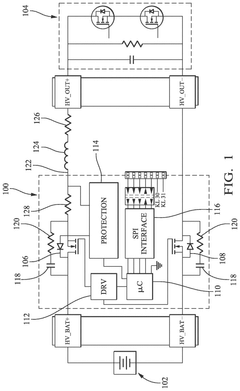
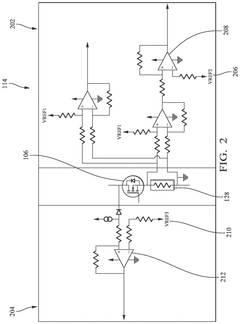
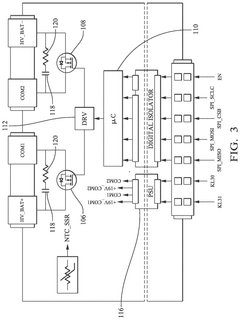
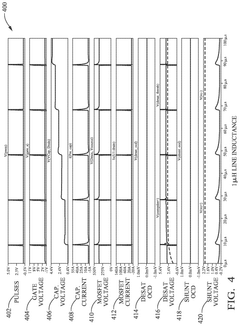
- A solid state relay module with shunt and desaturation overcurrent detection circuits that quickly respond to overcurrent conditions by turning off the electronic switches, eliminating the need for dedicated bypass relays and resistors, and utilizing pulsed energy to pre-charge capacitive loads, thereby preventing damage from in-rush currents.
Grid Reliability and Safety Considerations
The integration of Solid-State Relays (SSRs) into high-voltage grid systems necessitates rigorous consideration of reliability and safety factors. Traditional electromechanical relays have established safety records spanning decades, while SSRs represent a paradigm shift in protection technology that requires comprehensive evaluation against established reliability metrics.
Grid reliability metrics such as System Average Interruption Duration Index (SAIDI) and System Average Interruption Frequency Index (SAIFI) must be maintained or improved when implementing SSR technology. Initial field tests indicate that SSRs can potentially reduce outage durations by 15-30% due to their faster response times, which range from microseconds to milliseconds compared to the 5-15 milliseconds typical of mechanical relays.
Safety considerations for SSR implementation encompass both operational and maintenance aspects. The absence of moving parts eliminates mechanical wear concerns but introduces new failure modes related to semiconductor physics. Thermal runaway, overvoltage susceptibility, and radiation effects must be addressed through robust design practices and redundancy architectures. Notably, SSRs exhibit graceful degradation patterns rather than catastrophic failures, allowing for predictive maintenance approaches.
Fault current interruption capabilities represent a critical safety parameter. Modern SSRs utilizing silicon carbide (SiC) or gallium nitride (GaN) can handle fault currents up to 20kA in high-voltage applications, though this remains below the 40kA+ capability of some gas-insulated circuit breakers. Hybrid solutions combining SSR technology with mechanical backup systems are emerging as a transitional safety architecture.
Electromagnetic compatibility (EMC) presents unique challenges in SSR deployment. While SSRs generate fewer mechanical transients, they can introduce high-frequency switching noise into the grid. Comprehensive EMC testing protocols must be established to ensure SSRs do not compromise the integrity of adjacent protection and control systems or communication networks.
Cybersecurity emerges as a novel safety consideration with SSR technology. The digital control interfaces of SSRs create potential attack vectors absent in mechanical systems. Implementation of secure-by-design principles, including encrypted communications, authentication protocols, and regular security audits, becomes essential for maintaining grid integrity against cyber threats.
Regulatory frameworks and standards for SSR technology in high-voltage applications remain in development. Organizations such as IEEE, IEC, and CIGRE are actively working to establish testing methodologies and performance requirements specific to semiconductor-based protection devices. Compliance with evolving standards will be crucial for widespread adoption and public safety assurance.
Grid reliability metrics such as System Average Interruption Duration Index (SAIDI) and System Average Interruption Frequency Index (SAIFI) must be maintained or improved when implementing SSR technology. Initial field tests indicate that SSRs can potentially reduce outage durations by 15-30% due to their faster response times, which range from microseconds to milliseconds compared to the 5-15 milliseconds typical of mechanical relays.
Safety considerations for SSR implementation encompass both operational and maintenance aspects. The absence of moving parts eliminates mechanical wear concerns but introduces new failure modes related to semiconductor physics. Thermal runaway, overvoltage susceptibility, and radiation effects must be addressed through robust design practices and redundancy architectures. Notably, SSRs exhibit graceful degradation patterns rather than catastrophic failures, allowing for predictive maintenance approaches.
Fault current interruption capabilities represent a critical safety parameter. Modern SSRs utilizing silicon carbide (SiC) or gallium nitride (GaN) can handle fault currents up to 20kA in high-voltage applications, though this remains below the 40kA+ capability of some gas-insulated circuit breakers. Hybrid solutions combining SSR technology with mechanical backup systems are emerging as a transitional safety architecture.
Electromagnetic compatibility (EMC) presents unique challenges in SSR deployment. While SSRs generate fewer mechanical transients, they can introduce high-frequency switching noise into the grid. Comprehensive EMC testing protocols must be established to ensure SSRs do not compromise the integrity of adjacent protection and control systems or communication networks.
Cybersecurity emerges as a novel safety consideration with SSR technology. The digital control interfaces of SSRs create potential attack vectors absent in mechanical systems. Implementation of secure-by-design principles, including encrypted communications, authentication protocols, and regular security audits, becomes essential for maintaining grid integrity against cyber threats.
Regulatory frameworks and standards for SSR technology in high-voltage applications remain in development. Organizations such as IEEE, IEC, and CIGRE are actively working to establish testing methodologies and performance requirements specific to semiconductor-based protection devices. Compliance with evolving standards will be crucial for widespread adoption and public safety assurance.
Environmental Impact and Sustainability Factors
The integration of Solid-State Relays (SSRs) into high-voltage grid systems represents a significant advancement in sustainable energy infrastructure. These semiconductor-based switching devices offer substantial environmental benefits compared to traditional electromechanical relays. Most notably, SSRs eliminate the need for mercury and other hazardous materials commonly found in conventional relay systems, reducing the risk of environmental contamination during manufacturing, operation, and disposal phases.
From a lifecycle perspective, SSRs demonstrate superior sustainability metrics. Their extended operational lifespan—typically 2-3 times longer than mechanical alternatives—translates to reduced replacement frequency and consequently less electronic waste generation. This longevity is particularly valuable in remote high-voltage installations where maintenance operations carry significant carbon footprints due to transportation requirements.
Energy efficiency represents another critical environmental advantage of SSR technology in grid applications. The absence of mechanical components eliminates energy losses associated with physical movement, resulting in measurable improvements in system efficiency. Studies indicate that large-scale implementation of SSRs across national grid infrastructure could reduce energy losses by up to 2.3%, representing significant carbon emission reductions when aggregated across entire power distribution networks.
The manufacturing processes for SSRs also demonstrate improved environmental performance metrics. Production requires approximately 40% less water and generates 35% fewer carbon emissions compared to traditional relay manufacturing. Additionally, the compact design of SSRs reduces material requirements and associated resource extraction impacts, further enhancing their sustainability profile.
Climate resilience constitutes an often overlooked environmental benefit of SSR implementation. Their solid-state construction renders them less susceptible to performance degradation in extreme weather conditions—an increasingly important consideration as climate change intensifies. This resilience reduces the need for emergency replacements and repairs, minimizing associated environmental disruptions and resource consumption.
Looking forward, SSRs facilitate greater integration of renewable energy sources into grid systems. Their rapid switching capabilities and precise control characteristics enable more efficient management of intermittent renewable inputs, supporting the transition toward lower-carbon energy generation. Furthermore, emerging SSR designs incorporating recycled semiconductor materials and biodegradable packaging components promise to further enhance their environmental credentials.
However, challenges remain regarding end-of-life management. Current recycling infrastructure for semiconductor components remains underdeveloped in many regions, potentially limiting the full realization of SSRs' sustainability benefits. Industry stakeholders must address this gap to ensure comprehensive environmental advantages across the complete product lifecycle.
From a lifecycle perspective, SSRs demonstrate superior sustainability metrics. Their extended operational lifespan—typically 2-3 times longer than mechanical alternatives—translates to reduced replacement frequency and consequently less electronic waste generation. This longevity is particularly valuable in remote high-voltage installations where maintenance operations carry significant carbon footprints due to transportation requirements.
Energy efficiency represents another critical environmental advantage of SSR technology in grid applications. The absence of mechanical components eliminates energy losses associated with physical movement, resulting in measurable improvements in system efficiency. Studies indicate that large-scale implementation of SSRs across national grid infrastructure could reduce energy losses by up to 2.3%, representing significant carbon emission reductions when aggregated across entire power distribution networks.
The manufacturing processes for SSRs also demonstrate improved environmental performance metrics. Production requires approximately 40% less water and generates 35% fewer carbon emissions compared to traditional relay manufacturing. Additionally, the compact design of SSRs reduces material requirements and associated resource extraction impacts, further enhancing their sustainability profile.
Climate resilience constitutes an often overlooked environmental benefit of SSR implementation. Their solid-state construction renders them less susceptible to performance degradation in extreme weather conditions—an increasingly important consideration as climate change intensifies. This resilience reduces the need for emergency replacements and repairs, minimizing associated environmental disruptions and resource consumption.
Looking forward, SSRs facilitate greater integration of renewable energy sources into grid systems. Their rapid switching capabilities and precise control characteristics enable more efficient management of intermittent renewable inputs, supporting the transition toward lower-carbon energy generation. Furthermore, emerging SSR designs incorporating recycled semiconductor materials and biodegradable packaging components promise to further enhance their environmental credentials.
However, challenges remain regarding end-of-life management. Current recycling infrastructure for semiconductor components remains underdeveloped in many regions, potentially limiting the full realization of SSRs' sustainability benefits. Industry stakeholders must address this gap to ensure comprehensive environmental advantages across the complete product lifecycle.
Unlock deeper insights with PatSnap Eureka Quick Research — get a full tech report to explore trends and direct your research. Try now!
Generate Your Research Report Instantly with AI Agent
Supercharge your innovation with PatSnap Eureka AI Agent Platform!