Solid-State Relay Role in Energy Harvesting Solutions
SEP 19, 20259 MIN READ
Generate Your Research Report Instantly with AI Agent
PatSnap Eureka helps you evaluate technical feasibility & market potential.
SSR Technology Background and Objectives
Solid-state relays (SSRs) have evolved significantly since their inception in the 1970s, transitioning from simple switching devices to sophisticated power management components. The technology has progressed through several generations, moving from discrete component designs to highly integrated solutions incorporating advanced semiconductor materials and manufacturing techniques. This evolution has been driven by increasing demands for energy efficiency, miniaturization, and reliability across multiple industries.
The fundamental principle of SSRs—utilizing semiconductor switching elements instead of mechanical contacts—has remained consistent, but implementation methodologies have advanced dramatically. Early SSRs suffered from high on-state resistance and limited current handling capabilities, whereas modern variants leverage innovations in power semiconductor technology to achieve superior performance characteristics with minimal power losses.
In the context of energy harvesting solutions, SSRs represent a critical enabling technology. Energy harvesting systems typically generate small amounts of power from ambient sources such as vibration, thermal gradients, or light. These systems require extremely efficient power management to maximize the utility of harvested energy. Traditional electromechanical relays are unsuitable for such applications due to their high activation energy requirements and mechanical wear limitations.
The primary technical objectives for SSRs in energy harvesting applications center around four key parameters: minimizing power consumption during switching operations, reducing leakage current in the off state, decreasing on-state resistance to limit power dissipation, and enhancing isolation capabilities to protect sensitive harvesting circuits. These objectives align with the broader industry trends toward ultra-low-power electronics and sustainable energy solutions.
Recent technological advancements have focused on developing SSRs with activation thresholds in the microwatt range, making them compatible with the output levels of typical energy harvesting transducers. Innovations in semiconductor materials, particularly wide-bandgap semiconductors like silicon carbide (SiC) and gallium nitride (GaN), have enabled significant improvements in switching efficiency and thermal performance.
The integration of SSRs with energy harvesting systems represents a convergence of two technological domains with complementary objectives. Energy harvesting seeks to capture and utilize ambient energy that would otherwise be wasted, while SSRs aim to control power flow with minimal energy expenditure. This synergy has catalyzed research into specialized SSR designs optimized specifically for energy harvesting applications.
Looking forward, the technical trajectory for SSRs in energy harvesting solutions is oriented toward further miniaturization, increased integration with sensing and control functions, and adaptation to diverse energy sources. The ultimate goal is to develop self-powered switching systems that can operate autonomously in remote or inaccessible locations, enabling new applications in areas such as environmental monitoring, structural health assessment, and distributed sensor networks.
The fundamental principle of SSRs—utilizing semiconductor switching elements instead of mechanical contacts—has remained consistent, but implementation methodologies have advanced dramatically. Early SSRs suffered from high on-state resistance and limited current handling capabilities, whereas modern variants leverage innovations in power semiconductor technology to achieve superior performance characteristics with minimal power losses.
In the context of energy harvesting solutions, SSRs represent a critical enabling technology. Energy harvesting systems typically generate small amounts of power from ambient sources such as vibration, thermal gradients, or light. These systems require extremely efficient power management to maximize the utility of harvested energy. Traditional electromechanical relays are unsuitable for such applications due to their high activation energy requirements and mechanical wear limitations.
The primary technical objectives for SSRs in energy harvesting applications center around four key parameters: minimizing power consumption during switching operations, reducing leakage current in the off state, decreasing on-state resistance to limit power dissipation, and enhancing isolation capabilities to protect sensitive harvesting circuits. These objectives align with the broader industry trends toward ultra-low-power electronics and sustainable energy solutions.
Recent technological advancements have focused on developing SSRs with activation thresholds in the microwatt range, making them compatible with the output levels of typical energy harvesting transducers. Innovations in semiconductor materials, particularly wide-bandgap semiconductors like silicon carbide (SiC) and gallium nitride (GaN), have enabled significant improvements in switching efficiency and thermal performance.
The integration of SSRs with energy harvesting systems represents a convergence of two technological domains with complementary objectives. Energy harvesting seeks to capture and utilize ambient energy that would otherwise be wasted, while SSRs aim to control power flow with minimal energy expenditure. This synergy has catalyzed research into specialized SSR designs optimized specifically for energy harvesting applications.
Looking forward, the technical trajectory for SSRs in energy harvesting solutions is oriented toward further miniaturization, increased integration with sensing and control functions, and adaptation to diverse energy sources. The ultimate goal is to develop self-powered switching systems that can operate autonomously in remote or inaccessible locations, enabling new applications in areas such as environmental monitoring, structural health assessment, and distributed sensor networks.
Market Analysis for Energy Harvesting Applications
The energy harvesting market has experienced significant growth in recent years, driven by the increasing demand for sustainable power solutions across various industries. Currently valued at approximately $600 million globally, this market is projected to reach $1.5 billion by 2027, representing a compound annual growth rate (CAGR) of 10.2%. This growth trajectory is primarily fueled by the expanding Internet of Things (IoT) ecosystem, which requires distributed power sources for millions of connected devices deployed in remote or inaccessible locations.
Within this landscape, solid-state relays (SSRs) are emerging as critical components that enable efficient energy management in harvesting systems. The market for SSRs specifically designed for energy harvesting applications is estimated at $78 million, with expectations to grow at 12.5% annually through 2026, outpacing the broader energy harvesting market.
Industrial automation represents the largest application segment, accounting for 34% of energy harvesting implementations utilizing SSRs. This sector values the maintenance-free operation and reliability of solid-state switching solutions in harsh environments. Building automation follows closely at 28%, where energy harvesting combined with SSRs enables self-powered sensors and controls that reduce installation costs and enhance energy efficiency in smart buildings.
Consumer electronics constitutes 18% of the market, with wearable technology and smart home devices driving adoption. Transportation and automotive applications represent 12%, focusing on vehicle monitoring systems and infrastructure. Healthcare applications, though smaller at 8%, show the highest growth potential at 15.3% annually, particularly in medical implants and remote patient monitoring.
Geographically, North America leads with 38% market share, followed by Europe (31%), Asia-Pacific (26%), and rest of world (5%). However, Asia-Pacific demonstrates the fastest growth rate at 13.7%, driven by rapid industrialization and smart city initiatives in China, South Korea, and India.
The competitive landscape features both specialized energy harvesting solution providers and traditional semiconductor manufacturers expanding into this space. Key market players include Texas Instruments, Analog Devices, and STMicroelectronics, who collectively hold approximately 45% market share in SSR components for energy harvesting applications. These companies are increasingly focusing on developing ultra-low power SSRs capable of operating with minimal voltage, making them ideal for integration with thermoelectric, piezoelectric, and photovoltaic harvesting technologies.
Within this landscape, solid-state relays (SSRs) are emerging as critical components that enable efficient energy management in harvesting systems. The market for SSRs specifically designed for energy harvesting applications is estimated at $78 million, with expectations to grow at 12.5% annually through 2026, outpacing the broader energy harvesting market.
Industrial automation represents the largest application segment, accounting for 34% of energy harvesting implementations utilizing SSRs. This sector values the maintenance-free operation and reliability of solid-state switching solutions in harsh environments. Building automation follows closely at 28%, where energy harvesting combined with SSRs enables self-powered sensors and controls that reduce installation costs and enhance energy efficiency in smart buildings.
Consumer electronics constitutes 18% of the market, with wearable technology and smart home devices driving adoption. Transportation and automotive applications represent 12%, focusing on vehicle monitoring systems and infrastructure. Healthcare applications, though smaller at 8%, show the highest growth potential at 15.3% annually, particularly in medical implants and remote patient monitoring.
Geographically, North America leads with 38% market share, followed by Europe (31%), Asia-Pacific (26%), and rest of world (5%). However, Asia-Pacific demonstrates the fastest growth rate at 13.7%, driven by rapid industrialization and smart city initiatives in China, South Korea, and India.
The competitive landscape features both specialized energy harvesting solution providers and traditional semiconductor manufacturers expanding into this space. Key market players include Texas Instruments, Analog Devices, and STMicroelectronics, who collectively hold approximately 45% market share in SSR components for energy harvesting applications. These companies are increasingly focusing on developing ultra-low power SSRs capable of operating with minimal voltage, making them ideal for integration with thermoelectric, piezoelectric, and photovoltaic harvesting technologies.
Current SSR Technology Challenges in Energy Harvesting
Despite significant advancements in solid-state relay (SSR) technology, several critical challenges persist when implementing SSRs in energy harvesting solutions. The primary limitation remains the relatively high on-state resistance compared to mechanical relays, resulting in greater power dissipation during operation. This power loss is particularly problematic in energy harvesting applications where every milliwatt of harvested energy is precious. Even state-of-the-art SSRs typically exhibit on-state resistances of 20-50 mΩ, which can consume 2-5% of the harvested energy in low-power systems.
Leakage current presents another significant challenge, as even in the off-state, SSRs allow a small current to flow through the device. In conventional applications, this leakage (typically 100nA to 1μA) is negligible, but in ultra-low-power energy harvesting systems operating in the microwatt range, such leakage can constitute a substantial energy drain, potentially depleting storage capacitors during inactive periods.
Thermal management issues also plague SSR implementation in energy harvesting solutions. The junction temperature of semiconductor components in SSRs must be carefully controlled to maintain reliability and performance. This becomes particularly challenging in energy-constrained systems where additional cooling mechanisms would introduce unacceptable power overhead. The thermal cycling that occurs in intermittent energy harvesting scenarios further accelerates component degradation.
Switching speed limitations represent another technical hurdle. While SSRs offer faster switching than mechanical relays, they still exhibit switching delays (typically 100μs to 1ms) that can impact the efficiency of energy transfer in rapidly changing harvesting conditions, such as vibration-based or RF energy harvesting systems that require precise timing for maximum power extraction.
Cost and integration complexity remain significant barriers to widespread adoption. High-performance SSRs with low on-resistance and minimal leakage current utilize specialized semiconductor processes that substantially increase manufacturing costs. This economic factor limits their deployment in cost-sensitive energy harvesting applications, particularly in distributed IoT sensor networks where hundreds or thousands of nodes may be required.
Voltage and current handling capabilities present additional constraints. Many energy harvesting sources generate either very low voltages (sub-volt) or occasionally high voltage spikes. SSRs must accommodate this wide dynamic range while maintaining efficiency. Current commercial SSRs struggle to efficiently handle the extreme ends of this spectrum without compromising other performance parameters.
Radiation and electromagnetic interference sensitivity also poses challenges in certain deployment environments. Energy harvesting systems in industrial settings or outdoor applications may be exposed to significant electromagnetic noise or radiation, potentially affecting SSR reliability and contributing to premature failure modes not seen in controlled environments.
Leakage current presents another significant challenge, as even in the off-state, SSRs allow a small current to flow through the device. In conventional applications, this leakage (typically 100nA to 1μA) is negligible, but in ultra-low-power energy harvesting systems operating in the microwatt range, such leakage can constitute a substantial energy drain, potentially depleting storage capacitors during inactive periods.
Thermal management issues also plague SSR implementation in energy harvesting solutions. The junction temperature of semiconductor components in SSRs must be carefully controlled to maintain reliability and performance. This becomes particularly challenging in energy-constrained systems where additional cooling mechanisms would introduce unacceptable power overhead. The thermal cycling that occurs in intermittent energy harvesting scenarios further accelerates component degradation.
Switching speed limitations represent another technical hurdle. While SSRs offer faster switching than mechanical relays, they still exhibit switching delays (typically 100μs to 1ms) that can impact the efficiency of energy transfer in rapidly changing harvesting conditions, such as vibration-based or RF energy harvesting systems that require precise timing for maximum power extraction.
Cost and integration complexity remain significant barriers to widespread adoption. High-performance SSRs with low on-resistance and minimal leakage current utilize specialized semiconductor processes that substantially increase manufacturing costs. This economic factor limits their deployment in cost-sensitive energy harvesting applications, particularly in distributed IoT sensor networks where hundreds or thousands of nodes may be required.
Voltage and current handling capabilities present additional constraints. Many energy harvesting sources generate either very low voltages (sub-volt) or occasionally high voltage spikes. SSRs must accommodate this wide dynamic range while maintaining efficiency. Current commercial SSRs struggle to efficiently handle the extreme ends of this spectrum without compromising other performance parameters.
Radiation and electromagnetic interference sensitivity also poses challenges in certain deployment environments. Energy harvesting systems in industrial settings or outdoor applications may be exposed to significant electromagnetic noise or radiation, potentially affecting SSR reliability and contributing to premature failure modes not seen in controlled environments.
Current SSR Integration Solutions for Energy Harvesting
01 Basic structure and operation of solid-state relays
Solid-state relays (SSRs) are electronic switching devices that use semiconductor components instead of mechanical contacts to switch electrical loads. They typically consist of an input circuit with optical isolation, a semiconductor switching element (such as a TRIAC, MOSFET, or thyristor), and output circuitry. SSRs offer advantages including no moving parts, silent operation, fast switching speeds, and long operational life compared to mechanical relays.- Basic structure and operation of solid-state relays: Solid-state relays (SSRs) are electronic switching devices that use semiconductor components instead of mechanical contacts to switch electrical loads. They typically consist of an input circuit with optical isolation, a semiconductor switching element (such as a TRIAC, MOSFET, or thyristor), and output circuitry. SSRs offer advantages including no moving parts, silent operation, fast switching speeds, and long operational life compared to mechanical relays.
- Protection and thermal management in solid-state relays: Solid-state relays incorporate various protection mechanisms and thermal management solutions to ensure reliable operation. These include overvoltage protection circuits, current limiting features, thermal shutdown capabilities, and heat dissipation designs. Advanced SSRs may include integrated temperature sensors, fault detection circuits, and specialized cooling structures to prevent overheating and extend device lifespan under high-load conditions.
- Integration and packaging technologies for solid-state relays: Modern solid-state relays utilize various integration and packaging technologies to improve performance and reduce size. These include multi-chip modules, system-in-package designs, and advanced substrate materials. Some SSRs incorporate multiple switching elements in a single package for multi-channel operation or redundancy. Packaging innovations focus on improving thermal conductivity, electrical isolation, and environmental protection while minimizing footprint and maximizing power density.
- Control and driving circuits for solid-state relays: Specialized control and driving circuits are essential components of solid-state relays, enabling precise switching control and isolation between input and output. These circuits may include optocouplers for galvanic isolation, gate drivers for power semiconductors, zero-crossing detection for AC applications, and various signal conditioning elements. Advanced control circuits can provide additional functionality such as adjustable switching thresholds, delay timers, and compatibility with various control signal types.
- Application-specific solid-state relay designs: Solid-state relays are designed with specific features tailored to particular applications and industries. These include high-voltage SSRs for power distribution systems, high-frequency SSRs for telecommunications, miniaturized SSRs for space-constrained electronics, and ruggedized SSRs for harsh environments. Application-specific designs may incorporate specialized semiconductor materials, custom protection features, or unique form factors to meet the requirements of automotive, industrial, medical, or consumer electronics applications.
02 Thermal management and protection in solid-state relays
Thermal management is critical in solid-state relay design to prevent overheating and ensure reliable operation. Various approaches include heat sink integration, thermal interface materials, improved package designs, and active cooling systems. Protection circuits may include temperature sensors, current limiting features, and thermal shutdown mechanisms to prevent damage from overcurrent conditions or excessive heat generation during operation.Expand Specific Solutions03 Advanced semiconductor technologies for solid-state relays
Modern solid-state relays incorporate advanced semiconductor technologies to improve performance characteristics. These include wide bandgap semiconductors like silicon carbide (SiC) and gallium nitride (GaN), which offer higher temperature operation, faster switching speeds, and lower on-state resistance. Integration of multiple functions on a single chip, improved isolation techniques, and specialized semiconductor structures enhance reliability and efficiency while reducing size and power consumption.Expand Specific Solutions04 Control and driving circuits for solid-state relays
Control and driving circuits are essential components of solid-state relays that determine switching behavior and performance. These circuits may include gate drivers, signal conditioning, isolation mechanisms (optical, magnetic, or capacitive), timing control, and protection features. Advanced designs incorporate microcontroller interfaces, digital control capabilities, feedback mechanisms, and diagnostic functions to enhance reliability and provide additional functionality.Expand Specific Solutions05 Application-specific solid-state relay configurations
Solid-state relays are designed with specific configurations to meet the requirements of different applications. These include AC and DC switching variants, multi-channel arrays for controlling multiple loads, bidirectional switching capabilities, high-voltage designs, miniaturized packages for space-constrained applications, and specialized versions for automotive, industrial, medical, and consumer electronics. Custom configurations may incorporate additional features like surge protection, EMI filtering, or specific interface requirements.Expand Specific Solutions
Key Industry Players in SSR and Energy Harvesting
The solid-state relay (SSR) market in energy harvesting solutions is currently in a growth phase, with increasing adoption across industrial automation, renewable energy, and IoT applications. The market is projected to expand significantly as energy efficiency demands rise globally. Technologically, SSRs are evolving from basic switching devices to intelligent power management components. Companies like TE Connectivity and Texas Instruments lead with comprehensive product portfolios, while Triune Systems and Mornsun Guangzhou focus on specialized energy harvesting applications. Emerging players such as Novosense Microelectronics are introducing innovative low-power SSR solutions. Academic institutions including University of Electronic Science & Technology of China and Huazhong University collaborate with industry leaders to advance SSR technology for next-generation energy harvesting systems, particularly in wireless sensor networks and autonomous IoT devices.
TE Connectivity Corp.
Technical Solution: TE Connectivity has developed advanced solid-state relay solutions optimized for energy harvesting applications across industrial, automotive, and consumer sectors. Their SSR technology utilizes specialized MOSFET structures with ultra-low gate charge requirements, enabling operation from minimal harvested energy sources. TE's solid-state relays incorporate proprietary isolation barriers that provide up to 4kV of isolation while maintaining extremely low power consumption. Their latest designs feature adaptive control circuits that can operate with input voltages as low as 2.7V, compatible with typical energy harvesting output levels. TE Connectivity has also implemented sophisticated thermal management techniques in their SSR packages, minimizing self-heating and maximizing efficiency when operating from limited energy sources. Their integrated solutions often include energy buffering capabilities that can accumulate harvested energy until sufficient levels are available for reliable switching operations, addressing the intermittent nature of many energy harvesting sources.
Strengths: Extensive product portfolio covering diverse application requirements; robust performance in harsh environmental conditions; excellent manufacturing consistency and reliability. Weaknesses: Higher cost structure compared to some Asian competitors; larger physical footprint in some product lines; more complex implementation requirements for basic applications.
Panasonic Intellectual Property Management Co. Ltd.
Technical Solution: Panasonic has pioneered PhotoMOS solid-state relay technology specifically optimized for energy harvesting applications. Their approach uses a unique combination of MOSFET output stages with highly efficient LED-photovoltaic input stages, creating galvanic isolation while maintaining extremely low power operation. Panasonic's SSRs feature industry-leading low trigger current requirements (as low as 0.3mA), making them compatible with even minimal energy harvesting sources. Their latest generation incorporates specialized power management ICs that can buffer harvested energy and deliver it efficiently to the relay control circuit. Panasonic has also developed multi-channel SSR arrays that can selectively route harvested energy to different loads based on availability and priority. Their technology includes adaptive triggering thresholds that automatically adjust to the available harvested energy levels, ensuring reliable operation even with fluctuating power sources common in energy harvesting environments.
Strengths: Exceptional isolation properties (up to 5kV); extremely long operational lifetime compared to mechanical alternatives; minimal trigger energy requirements ideal for harvested power sources. Weaknesses: Limited surge current handling capability; higher on-resistance compared to some competing technologies; temperature sensitivity in extreme environments.
Core SSR Patents and Technical Literature Review
High current high power solid state relay
PatentWO2016132372A1
Innovation
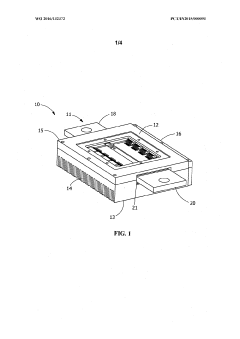
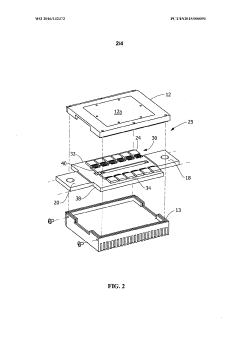
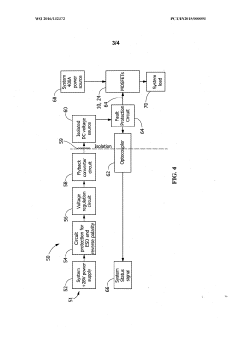
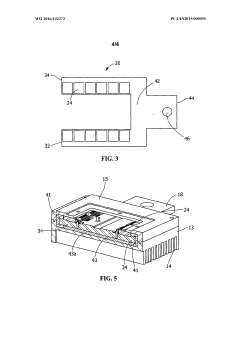
- A high current, high power solid state relay design featuring a planar metal bus bar and heat dissipating enclosure with a plurality of solid state switches and a control circuit using a Flyback converter for electrical isolation, allowing for efficient heat dissipation and reduced turn-on/turn-off times.
Three-Electrode Solid-State Energy Harvester of Transition Metal Suboxides
PatentActiveUS20210143465A1
Innovation
- The development of solid-state energy harvesters comprising a current collector, a transition metal suboxide anode, a lanthanide oxide or dioxide solid-state electrolyte, and a transition metal suboxide cathode, which can optionally be configured for energy storage or coupled with an energy storage device, and are designed to produce current in the presence of oxygen and water vapor.


Sustainability Impact of SSR in Green Energy Systems
Solid-State Relays (SSRs) are making a significant contribution to the sustainability agenda within green energy systems. By replacing traditional electromechanical relays with semiconductor-based alternatives, energy systems benefit from improved efficiency and reduced environmental impact throughout their lifecycle. The absence of moving parts in SSRs eliminates the need for regular maintenance and replacement, substantially reducing waste generation and resource consumption associated with conventional relay systems.
When integrated into renewable energy infrastructure such as solar panels and wind turbines, SSRs enhance energy conversion efficiency by minimizing switching losses and providing more precise control capabilities. This optimization directly translates to increased energy yield from renewable sources, effectively reducing the carbon footprint per kilowatt-hour generated. Studies indicate that SSR implementation in solar inverter systems can improve overall efficiency by 2-5%, representing significant cumulative energy savings at scale.
The manufacturing process of SSRs also demonstrates environmental advantages compared to mechanical alternatives. The production of SSRs typically requires fewer raw materials and generates less industrial waste. Life cycle assessments reveal that despite the semiconductor components, the extended operational lifespan and higher reliability of SSRs result in a lower environmental impact when evaluated across their complete service life.
In smart grid applications, SSRs enable more sophisticated load balancing and demand response systems, critical for accommodating the intermittent nature of renewable energy sources. This capability facilitates greater integration of green energy into existing power infrastructures without compromising grid stability or requiring extensive additional resources, thereby accelerating the transition toward sustainable energy systems.
The thermal management advantages of modern SSRs further contribute to sustainability by reducing cooling requirements in power control systems. This reduction in auxiliary energy consumption improves the net energy efficiency of green power installations, particularly in large-scale applications where cumulative effects become significant.
From a circular economy perspective, SSRs align with sustainability principles through their extended operational lifetime and potential for recovery of valuable materials during end-of-life processing. The semiconductor components contain recoverable precious metals that can be extracted through specialized recycling processes, supporting resource conservation efforts and reducing dependency on primary mining activities.
As climate targets become increasingly stringent, the role of SSRs in optimizing energy harvesting and distribution systems represents an important technological contribution to sustainable development goals, offering tangible environmental benefits while simultaneously improving system performance and reliability.
When integrated into renewable energy infrastructure such as solar panels and wind turbines, SSRs enhance energy conversion efficiency by minimizing switching losses and providing more precise control capabilities. This optimization directly translates to increased energy yield from renewable sources, effectively reducing the carbon footprint per kilowatt-hour generated. Studies indicate that SSR implementation in solar inverter systems can improve overall efficiency by 2-5%, representing significant cumulative energy savings at scale.
The manufacturing process of SSRs also demonstrates environmental advantages compared to mechanical alternatives. The production of SSRs typically requires fewer raw materials and generates less industrial waste. Life cycle assessments reveal that despite the semiconductor components, the extended operational lifespan and higher reliability of SSRs result in a lower environmental impact when evaluated across their complete service life.
In smart grid applications, SSRs enable more sophisticated load balancing and demand response systems, critical for accommodating the intermittent nature of renewable energy sources. This capability facilitates greater integration of green energy into existing power infrastructures without compromising grid stability or requiring extensive additional resources, thereby accelerating the transition toward sustainable energy systems.
The thermal management advantages of modern SSRs further contribute to sustainability by reducing cooling requirements in power control systems. This reduction in auxiliary energy consumption improves the net energy efficiency of green power installations, particularly in large-scale applications where cumulative effects become significant.
From a circular economy perspective, SSRs align with sustainability principles through their extended operational lifetime and potential for recovery of valuable materials during end-of-life processing. The semiconductor components contain recoverable precious metals that can be extracted through specialized recycling processes, supporting resource conservation efforts and reducing dependency on primary mining activities.
As climate targets become increasingly stringent, the role of SSRs in optimizing energy harvesting and distribution systems represents an important technological contribution to sustainable development goals, offering tangible environmental benefits while simultaneously improving system performance and reliability.
Reliability and Longevity Considerations for SSR Applications
Reliability and longevity are critical factors when implementing Solid-State Relays (SSRs) in energy harvesting solutions. Unlike traditional mechanical relays, SSRs offer superior durability due to their lack of moving parts, which significantly reduces mechanical wear and tear. This characteristic makes them particularly valuable in energy harvesting applications where system longevity directly impacts return on investment and operational efficiency.
The mean time between failures (MTBF) for quality SSRs typically ranges from 100,000 to over 1 million hours, substantially outperforming mechanical alternatives. However, several environmental factors can affect this reliability metric. Temperature cycling represents one of the most significant challenges, as thermal expansion and contraction can stress internal components and solder joints. Energy harvesting environments often experience wide temperature variations, necessitating careful selection of SSRs with appropriate temperature ratings and thermal management solutions.
Humidity and contamination pose additional reliability concerns, particularly in outdoor energy harvesting installations such as solar farms or wind turbines. Moisture ingress can lead to internal corrosion or electrical leakage paths, while dust and other contaminants may interfere with heat dissipation. Manufacturers have addressed these challenges through improved encapsulation techniques and conformal coatings that provide environmental protection without compromising thermal performance.
Electrical stress factors also significantly impact SSR longevity. Voltage transients and surges, common in renewable energy systems due to variable input conditions, can damage SSR semiconductor junctions if not properly managed. Modern SSRs incorporate various protection mechanisms including integrated snubber circuits, metal oxide varistors (MOVs), and improved dV/dt ratings to withstand these electrical stresses.
Degradation mechanisms in SSRs primarily involve semiconductor aging processes. The most common failure mode is degradation of the output transistor or triac, which manifests as increased on-state resistance over time. This gradual degradation can be monitored through predictive maintenance programs that track changes in forward voltage drop or thermal characteristics, allowing for scheduled replacement before catastrophic failure occurs.
Manufacturers have implemented several design improvements to enhance SSR reliability in energy harvesting applications. These include advanced thermal interface materials to improve heat transfer, optimized semiconductor doping profiles to reduce aging effects, and integrated diagnostic capabilities that enable real-time monitoring of device health. Some newer SSR designs also incorporate redundancy features, where multiple semiconductor paths operate in parallel to provide fault tolerance.
The mean time between failures (MTBF) for quality SSRs typically ranges from 100,000 to over 1 million hours, substantially outperforming mechanical alternatives. However, several environmental factors can affect this reliability metric. Temperature cycling represents one of the most significant challenges, as thermal expansion and contraction can stress internal components and solder joints. Energy harvesting environments often experience wide temperature variations, necessitating careful selection of SSRs with appropriate temperature ratings and thermal management solutions.
Humidity and contamination pose additional reliability concerns, particularly in outdoor energy harvesting installations such as solar farms or wind turbines. Moisture ingress can lead to internal corrosion or electrical leakage paths, while dust and other contaminants may interfere with heat dissipation. Manufacturers have addressed these challenges through improved encapsulation techniques and conformal coatings that provide environmental protection without compromising thermal performance.
Electrical stress factors also significantly impact SSR longevity. Voltage transients and surges, common in renewable energy systems due to variable input conditions, can damage SSR semiconductor junctions if not properly managed. Modern SSRs incorporate various protection mechanisms including integrated snubber circuits, metal oxide varistors (MOVs), and improved dV/dt ratings to withstand these electrical stresses.
Degradation mechanisms in SSRs primarily involve semiconductor aging processes. The most common failure mode is degradation of the output transistor or triac, which manifests as increased on-state resistance over time. This gradual degradation can be monitored through predictive maintenance programs that track changes in forward voltage drop or thermal characteristics, allowing for scheduled replacement before catastrophic failure occurs.
Manufacturers have implemented several design improvements to enhance SSR reliability in energy harvesting applications. These include advanced thermal interface materials to improve heat transfer, optimized semiconductor doping profiles to reduce aging effects, and integrated diagnostic capabilities that enable real-time monitoring of device health. Some newer SSR designs also incorporate redundancy features, where multiple semiconductor paths operate in parallel to provide fault tolerance.
Unlock deeper insights with PatSnap Eureka Quick Research — get a full tech report to explore trends and direct your research. Try now!
Generate Your Research Report Instantly with AI Agent
Supercharge your innovation with PatSnap Eureka AI Agent Platform!