How to Enhance CFRP Conductivity through Composite Modification
SEP 17, 20259 MIN READ
Generate Your Research Report Instantly with AI Agent
Patsnap Eureka helps you evaluate technical feasibility & market potential.
CFRP Conductivity Enhancement Background and Objectives
Carbon Fiber Reinforced Polymers (CFRP) have emerged as revolutionary materials in various high-performance industries due to their exceptional strength-to-weight ratio, corrosion resistance, and design flexibility. The evolution of CFRP technology began in the 1960s with aerospace applications and has since expanded to automotive, construction, renewable energy, and consumer electronics sectors. Despite their mechanical advantages, the inherently low electrical conductivity of these composites presents significant limitations in applications requiring electromagnetic shielding, lightning strike protection, and electrostatic discharge prevention.
The technological trajectory of CFRP conductivity enhancement has progressed from basic metal mesh integration to sophisticated nanomaterial incorporation. Early solutions focused on metallic additives, while recent advancements have explored carbon nanotubes, graphene, and conductive polymers as more weight-efficient alternatives. This evolution reflects the industry's growing demand for multifunctional materials that maintain mechanical integrity while offering enhanced electrical properties.
Current market trends indicate a compound annual growth rate of approximately 10-12% for conductive CFRP applications, driven primarily by aerospace and automotive sectors seeking lightweight solutions for electrification and advanced electronics integration. The push toward electric vehicles and more electric aircraft has accelerated research in this domain, creating new technical challenges and opportunities.
The primary technical objective in CFRP conductivity enhancement is to achieve uniform and reliable electrical conductivity without compromising the composite's mechanical properties or adding significant weight. Specifically, the industry aims to develop modification techniques that can increase electrical conductivity by at least two orders of magnitude while maintaining or improving mechanical performance and processability.
Secondary objectives include developing scalable manufacturing processes for conductive CFRP production, ensuring long-term stability of conductive properties under environmental stressors, and creating predictive models for electrical behavior in complex composite structures. These objectives align with broader industry goals of material lightweighting, multifunctionality, and sustainability.
The technological landscape is further complicated by the diverse requirements across application domains. Aerospace applications typically demand higher conductivity levels for lightning strike protection (10^3-10^4 S/m), while automotive applications may focus more on electromagnetic interference shielding with moderate conductivity requirements (10^2-10^3 S/m). This diversity necessitates a range of modification approaches tailored to specific end-use scenarios.
As we examine the evolution of CFRP conductivity enhancement technologies, it becomes evident that interdisciplinary approaches combining materials science, electrical engineering, and manufacturing innovation will be essential to overcome current limitations and unlock new application possibilities for these advanced composites.
The technological trajectory of CFRP conductivity enhancement has progressed from basic metal mesh integration to sophisticated nanomaterial incorporation. Early solutions focused on metallic additives, while recent advancements have explored carbon nanotubes, graphene, and conductive polymers as more weight-efficient alternatives. This evolution reflects the industry's growing demand for multifunctional materials that maintain mechanical integrity while offering enhanced electrical properties.
Current market trends indicate a compound annual growth rate of approximately 10-12% for conductive CFRP applications, driven primarily by aerospace and automotive sectors seeking lightweight solutions for electrification and advanced electronics integration. The push toward electric vehicles and more electric aircraft has accelerated research in this domain, creating new technical challenges and opportunities.
The primary technical objective in CFRP conductivity enhancement is to achieve uniform and reliable electrical conductivity without compromising the composite's mechanical properties or adding significant weight. Specifically, the industry aims to develop modification techniques that can increase electrical conductivity by at least two orders of magnitude while maintaining or improving mechanical performance and processability.
Secondary objectives include developing scalable manufacturing processes for conductive CFRP production, ensuring long-term stability of conductive properties under environmental stressors, and creating predictive models for electrical behavior in complex composite structures. These objectives align with broader industry goals of material lightweighting, multifunctionality, and sustainability.
The technological landscape is further complicated by the diverse requirements across application domains. Aerospace applications typically demand higher conductivity levels for lightning strike protection (10^3-10^4 S/m), while automotive applications may focus more on electromagnetic interference shielding with moderate conductivity requirements (10^2-10^3 S/m). This diversity necessitates a range of modification approaches tailored to specific end-use scenarios.
As we examine the evolution of CFRP conductivity enhancement technologies, it becomes evident that interdisciplinary approaches combining materials science, electrical engineering, and manufacturing innovation will be essential to overcome current limitations and unlock new application possibilities for these advanced composites.
Market Analysis for Conductive CFRP Applications
The global market for conductive Carbon Fiber Reinforced Polymers (CFRPs) is experiencing significant growth, driven by increasing demand across multiple high-tech industries. The aerospace sector represents the largest market segment, with an estimated annual growth rate of 8.7% through 2028, as manufacturers seek lightweight yet electrically functional materials for aircraft components, particularly for lightning strike protection and electromagnetic interference (EMI) shielding applications.
Automotive applications form the second-largest market segment, particularly in electric vehicles where conductive CFRPs offer dual benefits of structural integrity and electrical functionality. The market in this sector is projected to grow substantially as automakers increasingly adopt carbon composite materials in battery enclosures, where electrical conductivity provides enhanced EMI shielding and thermal management capabilities.
Electronics manufacturing represents an emerging application area with substantial growth potential. Conductive CFRPs are being evaluated for use in electronic device housings where their combination of lightweight properties, strength, and electrical conductivity offers advantages over traditional materials. This market segment is expected to show the highest compound annual growth rate among all applications over the next five years.
Regionally, North America currently leads the market for conductive CFRPs, accounting for approximately 40% of global consumption, followed by Europe and Asia-Pacific. However, the Asia-Pacific region, particularly China and Japan, is demonstrating the fastest growth trajectory due to expanding aerospace and automotive manufacturing capabilities coupled with significant government investments in advanced materials research.
Market analysis indicates that price sensitivity remains a significant barrier to wider adoption. Current production costs for conductive CFRPs are substantially higher than traditional materials, limiting market penetration in cost-sensitive applications. Industry experts suggest that achieving a 30-40% reduction in manufacturing costs would significantly accelerate market adoption across multiple sectors.
Customer requirements analysis reveals that different industries prioritize different aspects of conductivity enhancement. Aerospace customers primarily value consistent, reliable conductivity for safety-critical applications, while automotive manufacturers prioritize cost-effective solutions that can be implemented in mass production environments. Electronics manufacturers, meanwhile, seek precise control over conductivity levels to meet specific design requirements.
The competitive landscape features both established materials companies and specialized startups focusing on innovative approaches to CFRP conductivity enhancement. Strategic partnerships between material suppliers and end-users are becoming increasingly common as the industry works to develop application-specific solutions.
Automotive applications form the second-largest market segment, particularly in electric vehicles where conductive CFRPs offer dual benefits of structural integrity and electrical functionality. The market in this sector is projected to grow substantially as automakers increasingly adopt carbon composite materials in battery enclosures, where electrical conductivity provides enhanced EMI shielding and thermal management capabilities.
Electronics manufacturing represents an emerging application area with substantial growth potential. Conductive CFRPs are being evaluated for use in electronic device housings where their combination of lightweight properties, strength, and electrical conductivity offers advantages over traditional materials. This market segment is expected to show the highest compound annual growth rate among all applications over the next five years.
Regionally, North America currently leads the market for conductive CFRPs, accounting for approximately 40% of global consumption, followed by Europe and Asia-Pacific. However, the Asia-Pacific region, particularly China and Japan, is demonstrating the fastest growth trajectory due to expanding aerospace and automotive manufacturing capabilities coupled with significant government investments in advanced materials research.
Market analysis indicates that price sensitivity remains a significant barrier to wider adoption. Current production costs for conductive CFRPs are substantially higher than traditional materials, limiting market penetration in cost-sensitive applications. Industry experts suggest that achieving a 30-40% reduction in manufacturing costs would significantly accelerate market adoption across multiple sectors.
Customer requirements analysis reveals that different industries prioritize different aspects of conductivity enhancement. Aerospace customers primarily value consistent, reliable conductivity for safety-critical applications, while automotive manufacturers prioritize cost-effective solutions that can be implemented in mass production environments. Electronics manufacturers, meanwhile, seek precise control over conductivity levels to meet specific design requirements.
The competitive landscape features both established materials companies and specialized startups focusing on innovative approaches to CFRP conductivity enhancement. Strategic partnerships between material suppliers and end-users are becoming increasingly common as the industry works to develop application-specific solutions.
Current Limitations and Challenges in CFRP Conductivity
Despite the numerous advantages of Carbon Fiber Reinforced Polymers (CFRP), their electrical conductivity remains a significant limitation for many advanced applications. The inherent anisotropic nature of CFRP results in conductivity that varies dramatically depending on direction - while conductivity along fiber direction can reach 10^3-10^4 S/m, perpendicular to fiber orientation it drops to 10^0-10^1 S/m, creating substantial challenges for applications requiring uniform electrical properties.
The polymer matrix, typically epoxy or other thermoset resins, acts as an electrical insulator with conductivity values as low as 10^-13 to 10^-15 S/m. This creates significant barriers to electron movement between carbon fibers, limiting the overall composite conductivity. The fiber-matrix interface further complicates conductivity enhancement, as poor interfacial bonding can create resistance points that impede electron transfer.
Manufacturing processes introduce additional conductivity challenges. Fiber misalignment, voids, and resin-rich regions create inconsistent electrical pathways throughout the material. The layup sequence and fiber orientation design, while optimized for mechanical properties, often neglect electrical performance considerations, resulting in suboptimal conductivity profiles for electrical applications.
Environmental factors pose ongoing challenges to CFRP conductivity stability. Moisture absorption can significantly alter electrical properties, while thermal cycling causes micro-cracking that disrupts conductive pathways. UV exposure degrades the polymer matrix over time, potentially changing the composite's electrical characteristics during service life.
Current modification approaches face their own limitations. Conductive fillers like carbon nanotubes and graphene often aggregate unevenly, creating inconsistent conductivity improvements. The high loadings required for significant conductivity enhancement frequently compromise mechanical properties, creating an undesirable performance trade-off. Processing difficulties increase with higher filler content, making manufacturing more complex and costly.
Surface treatments and coatings provide only superficial conductivity enhancement without addressing bulk properties. Metal mesh or foil integration adds weight and creates potential galvanic corrosion issues, undermining CFRP's lightweight advantage. Additionally, many conductivity enhancement methods lack scalability for industrial production or add prohibitive costs to the already expensive CFRP materials.
The aerospace and automotive industries particularly struggle with these limitations as they seek to implement CFRP in electromagnetic shielding, lightning strike protection, and electrostatic discharge applications. The inability to achieve reliable, uniform conductivity without compromising mechanical performance represents a critical technological gap that requires innovative solutions beyond current approaches.
The polymer matrix, typically epoxy or other thermoset resins, acts as an electrical insulator with conductivity values as low as 10^-13 to 10^-15 S/m. This creates significant barriers to electron movement between carbon fibers, limiting the overall composite conductivity. The fiber-matrix interface further complicates conductivity enhancement, as poor interfacial bonding can create resistance points that impede electron transfer.
Manufacturing processes introduce additional conductivity challenges. Fiber misalignment, voids, and resin-rich regions create inconsistent electrical pathways throughout the material. The layup sequence and fiber orientation design, while optimized for mechanical properties, often neglect electrical performance considerations, resulting in suboptimal conductivity profiles for electrical applications.
Environmental factors pose ongoing challenges to CFRP conductivity stability. Moisture absorption can significantly alter electrical properties, while thermal cycling causes micro-cracking that disrupts conductive pathways. UV exposure degrades the polymer matrix over time, potentially changing the composite's electrical characteristics during service life.
Current modification approaches face their own limitations. Conductive fillers like carbon nanotubes and graphene often aggregate unevenly, creating inconsistent conductivity improvements. The high loadings required for significant conductivity enhancement frequently compromise mechanical properties, creating an undesirable performance trade-off. Processing difficulties increase with higher filler content, making manufacturing more complex and costly.
Surface treatments and coatings provide only superficial conductivity enhancement without addressing bulk properties. Metal mesh or foil integration adds weight and creates potential galvanic corrosion issues, undermining CFRP's lightweight advantage. Additionally, many conductivity enhancement methods lack scalability for industrial production or add prohibitive costs to the already expensive CFRP materials.
The aerospace and automotive industries particularly struggle with these limitations as they seek to implement CFRP in electromagnetic shielding, lightning strike protection, and electrostatic discharge applications. The inability to achieve reliable, uniform conductivity without compromising mechanical performance represents a critical technological gap that requires innovative solutions beyond current approaches.
Existing Methods for CFRP Conductivity Enhancement
01 Enhancement of electrical conductivity in CFRP
Various methods can be employed to enhance the electrical conductivity of Carbon Fiber Reinforced Polymers (CFRP). These include incorporating conductive fillers such as carbon nanotubes, graphene, or metallic particles into the polymer matrix. The improved conductivity helps in applications requiring electromagnetic shielding, static discharge prevention, and electrical functionality while maintaining the mechanical advantages of CFRP composites.- Methods to enhance electrical conductivity in CFRP: Various techniques can be employed to enhance the electrical conductivity of Carbon Fiber Reinforced Polymers (CFRP). These include incorporating conductive fillers such as carbon nanotubes, graphene, or metallic particles into the polymer matrix. The orientation and distribution of carbon fibers can also be optimized to create conductive pathways throughout the material. These methods help overcome the inherent insulating properties of the polymer matrix while maintaining the mechanical advantages of CFRP.
- CFRP with integrated lightning protection systems: CFRP components used in aerospace and wind energy applications often require protection against lightning strikes. Specialized formulations incorporate conductive mesh layers, metallic foils, or conductive coatings that provide pathways for lightning current to dissipate safely without damaging the underlying structure. These systems balance the need for electrical conductivity with maintaining the lightweight properties and structural integrity of the composite material.
- Surface treatments to improve CFRP conductivity: Surface modification techniques can significantly enhance the electrical conductivity of CFRP components. These include plasma treatment, chemical etching, metallic coating deposition, and conductive paint application. Such treatments expose more carbon fibers at the surface or add conductive layers that improve electrical contact and reduce surface resistivity while minimizing impact on the bulk mechanical properties of the composite.
- Hybrid CFRP systems with metal components: Hybrid systems combining CFRP with metallic elements offer enhanced electrical conductivity while maintaining lightweight properties. These systems incorporate metal meshes, foils, or fibers strategically positioned within or on the surface of the composite structure. The metal components create dedicated conductive pathways that can be designed for specific electrical requirements such as grounding, EMI shielding, or current carrying capacity.
- Testing and measurement methods for CFRP conductivity: Specialized techniques have been developed to accurately measure and characterize the electrical conductivity of CFRP materials. These include four-point probe testing, eddy current testing, impedance spectroscopy, and through-thickness conductivity measurements. Such methods account for the anisotropic nature of CFRP conductivity, which varies significantly depending on fiber orientation, volume fraction, and measurement direction.
02 CFRP with integrated conductive pathways
This approach involves designing CFRP composites with specifically engineered conductive pathways. By strategically orienting carbon fibers or embedding conductive elements within the polymer matrix, controlled electrical conductivity can be achieved. These pathways can be used for structural health monitoring, sensing applications, or to create circuits within the composite structure itself, enabling multifunctional capabilities.Expand Specific Solutions03 Surface treatment methods for improved conductivity
Surface modification techniques can significantly enhance the electrical conductivity of CFRP composites. These include plasma treatment, chemical functionalization, or metallic coating of carbon fibers before incorporation into the polymer matrix. Such treatments improve the fiber-matrix interface and create better conductive networks throughout the composite, resulting in enhanced electrical performance without compromising mechanical properties.Expand Specific Solutions04 Hybrid CFRP systems with metallic components
Hybrid systems combining CFRP with metallic elements offer enhanced electrical conductivity while maintaining lightweight characteristics. These systems may incorporate metal meshes, foils, or particles strategically placed within or on the surface of the composite. Such hybrid approaches are particularly valuable in aerospace, automotive, and electronic applications where both structural integrity and electrical functionality are required.Expand Specific Solutions05 CFRP conductivity for specific applications
CFRP composites with tailored conductivity properties are developed for specific applications such as lightning strike protection, electromagnetic interference shielding, or heating elements. By adjusting the type, orientation, and concentration of carbon fibers or additional conductive components, the electrical properties can be optimized for particular use cases while maintaining the lightweight and high-strength characteristics that make CFRP valuable in advanced engineering applications.Expand Specific Solutions
Leading Organizations in Conductive Composite Materials
The carbon fiber reinforced polymer (CFRP) conductivity enhancement market is currently in a growth phase, with increasing demand driven by aerospace, automotive, and electronics applications. The global market size for conductive composites is projected to reach approximately $8-10 billion by 2027, growing at a CAGR of 10-12%. Technologically, the field is advancing from experimental to commercial implementation, with varying maturity levels across applications. Leading players include aerospace giants Boeing and Saab, automotive manufacturers BMW and Mercedes-Benz, and materials specialists like Toray Industries, SGL Carbon, and Nippon Steel. Research institutions such as Shanghai Jiao Tong University and KAUST are advancing fundamental innovations, while companies like Hodogaya Chemical focus on specialized conductive additives, creating a competitive landscape balanced between established corporations and emerging technology providers.
Toray Industries, Inc.
Technical Solution: Toray Industries has developed a multi-functional approach to enhance CFRP conductivity through their proprietary NANOALLOY® technology. This method involves the incorporation of conductive nanofillers (carbon nanotubes and graphene) into the epoxy matrix at precisely controlled concentrations (typically 0.5-3 wt%) while maintaining uniform dispersion through specialized processing techniques. Their technology employs a hierarchical structure where conductive networks are formed at multiple scales: between carbon fibers at the microscale and between nanofillers at the nanoscale. Toray has achieved electrical conductivity improvements of up to 10^3 S/m in modified CFRPs while maintaining over 90% of the original mechanical properties. Additionally, they've developed surface modification techniques for carbon fibers using plasma treatment that enhances fiber-matrix interfacial adhesion while simultaneously improving electrical contact between conductive elements in the composite.
Strengths: Industry-leading expertise in carbon fiber production provides vertical integration advantages; proprietary dispersion technologies enable consistent nanofiller distribution without compromising mechanical properties; established manufacturing infrastructure allows for scale-up. Weaknesses: Higher production costs compared to conventional CFRPs; potential challenges in quality control at mass production scale; specialized processing equipment requirements may limit adoption in some industries.
The Boeing Co.
Technical Solution: Boeing has developed an advanced multi-scale approach to CFRP conductivity enhancement focused on aerospace applications requiring lightning strike protection and EMI shielding. Their technology combines three key strategies: (1) Carbon nanotube (CNT) doping of the epoxy matrix at precisely controlled concentrations (0.1-0.5 wt%) using proprietary dispersion techniques that maintain viscosity properties suitable for aerospace manufacturing processes; (2) Metallic interleaving where ultra-thin (5-20 μm) copper or aluminum mesh layers are strategically integrated between specific CFRP plies, creating conductive pathways while minimizing weight penalties; and (3) Hybrid fiber architecture incorporating specialized carbon fibers with enhanced conductivity properties in critical locations. Boeing's approach has achieved electrical conductivity improvements of 10^2-10^3 S/m while maintaining structural performance requirements for primary aerospace structures. Their technology also includes specialized surface treatments that enhance bonding between conductive elements while providing corrosion protection for metallic components.
Strengths: Extensive aerospace qualification experience enables practical implementation in certified structures; integrated design approach optimizes both electrical and mechanical performance; established manufacturing capabilities for large-scale production. Weaknesses: Solutions often optimized for specific aerospace requirements may not transfer easily to other industries; higher implementation costs compared to standard composites; complex certification requirements for modified aerospace materials.
Key Patents and Research in Conductive Composite Modification
Polymer composite reinforced with carbon fibers and method of preparing the same
PatentActiveKR1020190025461A
Innovation
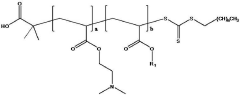
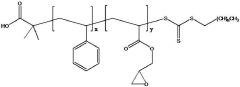
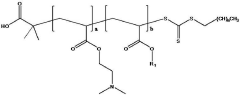
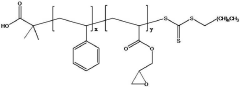
- The surface of carbon fibers is modified with an amphiphilic block copolymer, which enhances compatibility with both hydrophilic and hydrophobic polymers, eliminating the need for pretreatment processes and improving mechanical properties.
Bio-inspired composite laminate design with high out-of-plane strength and ductility
PatentActiveUS11207867B1
Innovation
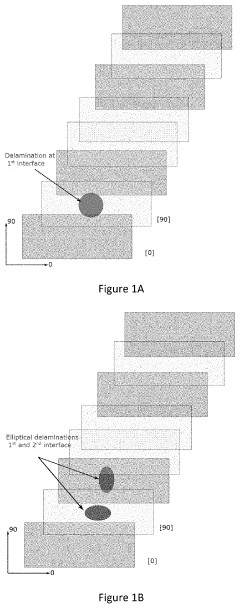
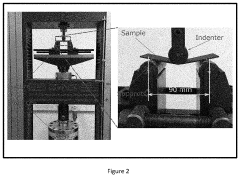
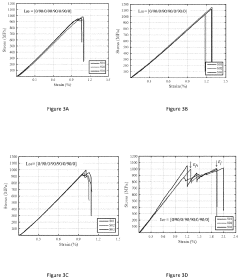
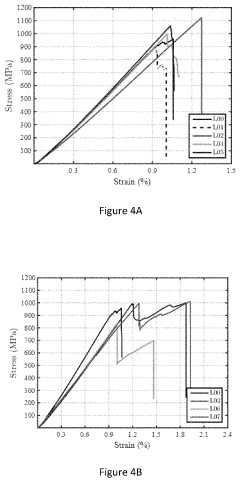
- Bio-inspired CFRP composite laminates are designed with intentionally introduced delaminations at specific positions and sizes during the lamination process to control crack propagation and enhance ductility, featuring a pseudo-ductile response with increased failure strain and energy absorption.
Environmental Impact and Sustainability Considerations
The enhancement of Carbon Fiber Reinforced Polymer (CFRP) conductivity through composite modification presents significant environmental and sustainability implications that must be carefully considered. Traditional methods of improving electrical conductivity often involve the addition of metallic particles or carbon-based fillers, which can impact the overall environmental footprint of CFRP materials throughout their lifecycle.
When evaluating the environmental impact of conductivity enhancement techniques, the production phase deserves particular attention. Many conductive fillers require energy-intensive manufacturing processes, potentially increasing the carbon footprint of the resulting composite. For instance, carbon nanotubes and graphene, while highly effective for conductivity improvement, typically demand substantial energy inputs during synthesis, alongside potentially hazardous chemical processes.
Material efficiency represents another critical environmental consideration. Optimal conductivity enhancement strategies should minimize the quantity of additives required while maximizing performance improvements. This approach not only reduces resource consumption but also maintains the lightweight characteristics of CFRPs that make them environmentally advantageous in transportation applications through fuel efficiency gains.
End-of-life management presents unique challenges for modified CFRPs. The introduction of conductive additives may complicate recycling processes, potentially reducing the recyclability of these advanced composites. Research into recyclable conductive modifiers or development of specialized recycling techniques for modified CFRPs could significantly improve their lifecycle sustainability profile.
The potential for reducing hazardous materials usage through innovative conductivity enhancement approaches offers promising environmental benefits. Developing non-toxic, biodegradable, or bio-based conductive modifiers could substantially improve the environmental profile of conductive CFRPs while meeting technical performance requirements.
From a broader sustainability perspective, enhanced CFRP conductivity enables applications that may deliver significant environmental benefits. These include lighter electric vehicles with extended range, more efficient renewable energy systems, and advanced sensing capabilities for structural health monitoring that extend infrastructure lifespan. These downstream benefits must be weighed against the immediate environmental impacts of the modification processes.
Regulatory compliance and emerging sustainability standards will increasingly influence conductivity enhancement approaches. As global environmental regulations become more stringent, conductivity enhancement methods that minimize environmental impact while meeting performance requirements will gain competitive advantage in the marketplace.
When evaluating the environmental impact of conductivity enhancement techniques, the production phase deserves particular attention. Many conductive fillers require energy-intensive manufacturing processes, potentially increasing the carbon footprint of the resulting composite. For instance, carbon nanotubes and graphene, while highly effective for conductivity improvement, typically demand substantial energy inputs during synthesis, alongside potentially hazardous chemical processes.
Material efficiency represents another critical environmental consideration. Optimal conductivity enhancement strategies should minimize the quantity of additives required while maximizing performance improvements. This approach not only reduces resource consumption but also maintains the lightweight characteristics of CFRPs that make them environmentally advantageous in transportation applications through fuel efficiency gains.
End-of-life management presents unique challenges for modified CFRPs. The introduction of conductive additives may complicate recycling processes, potentially reducing the recyclability of these advanced composites. Research into recyclable conductive modifiers or development of specialized recycling techniques for modified CFRPs could significantly improve their lifecycle sustainability profile.
The potential for reducing hazardous materials usage through innovative conductivity enhancement approaches offers promising environmental benefits. Developing non-toxic, biodegradable, or bio-based conductive modifiers could substantially improve the environmental profile of conductive CFRPs while meeting technical performance requirements.
From a broader sustainability perspective, enhanced CFRP conductivity enables applications that may deliver significant environmental benefits. These include lighter electric vehicles with extended range, more efficient renewable energy systems, and advanced sensing capabilities for structural health monitoring that extend infrastructure lifespan. These downstream benefits must be weighed against the immediate environmental impacts of the modification processes.
Regulatory compliance and emerging sustainability standards will increasingly influence conductivity enhancement approaches. As global environmental regulations become more stringent, conductivity enhancement methods that minimize environmental impact while meeting performance requirements will gain competitive advantage in the marketplace.
Manufacturing Scalability and Cost Analysis
The scalability of manufacturing processes for enhancing CFRP conductivity represents a critical consideration for industrial implementation. Current laboratory-scale methods for incorporating conductive additives into carbon fiber reinforced polymers often involve complex procedures that are difficult to translate to mass production environments. Techniques such as carbon nanotube (CNT) dispersion, graphene functionalization, and metal nanoparticle integration all face significant challenges when scaled beyond research quantities.
Production-scale implementation of conductive CFRP modification requires substantial capital investment in specialized equipment. For instance, industrial-grade dispersion systems for nanomaterials can cost between $500,000 to $2 million, while quality control systems for ensuring uniform conductivity add another $300,000 to $800,000 to initial setup costs. These high capital expenditures create significant barriers to entry, particularly for smaller manufacturers.
Material costs present another major economic consideration. Premium conductive additives such as multi-walled carbon nanotubes currently range from $50-200 per kilogram at industrial quantities, while graphene variants command $100-500 per kilogram. These materials typically constitute 0.5-5% of the final composite by weight, adding approximately $5-25 per kilogram to the base CFRP cost. This represents a 15-40% increase in material costs compared to standard non-conductive CFRP formulations.
Process efficiency metrics reveal additional challenges. Current industrial methods for conductive CFRP production demonstrate 10-30% slower throughput compared to conventional CFRP manufacturing. Quality control rejection rates also increase by 5-15% when incorporating conductive modifications, further impacting production economics. These inefficiencies directly translate to higher unit costs and reduced manufacturing flexibility.
Economies of scale follow different patterns for various modification approaches. Metal nanoparticle integration shows the most favorable cost reduction curve, with costs decreasing by approximately 40% when scaling from pilot to full production volumes. CNT-based methods demonstrate more modest scaling benefits at around 25% cost reduction, while graphene-based approaches currently show the least favorable scaling economics at only 15-20% cost reduction with increased volume.
Regulatory compliance adds another layer of manufacturing complexity and cost. Nanomaterial handling requires specialized containment systems and worker safety protocols that can increase operational expenses by 5-15%. Environmental compliance for waste streams containing conductive nanoparticles may necessitate additional treatment systems costing $100,000-$500,000 depending on production volume and local regulations.
Production-scale implementation of conductive CFRP modification requires substantial capital investment in specialized equipment. For instance, industrial-grade dispersion systems for nanomaterials can cost between $500,000 to $2 million, while quality control systems for ensuring uniform conductivity add another $300,000 to $800,000 to initial setup costs. These high capital expenditures create significant barriers to entry, particularly for smaller manufacturers.
Material costs present another major economic consideration. Premium conductive additives such as multi-walled carbon nanotubes currently range from $50-200 per kilogram at industrial quantities, while graphene variants command $100-500 per kilogram. These materials typically constitute 0.5-5% of the final composite by weight, adding approximately $5-25 per kilogram to the base CFRP cost. This represents a 15-40% increase in material costs compared to standard non-conductive CFRP formulations.
Process efficiency metrics reveal additional challenges. Current industrial methods for conductive CFRP production demonstrate 10-30% slower throughput compared to conventional CFRP manufacturing. Quality control rejection rates also increase by 5-15% when incorporating conductive modifications, further impacting production economics. These inefficiencies directly translate to higher unit costs and reduced manufacturing flexibility.
Economies of scale follow different patterns for various modification approaches. Metal nanoparticle integration shows the most favorable cost reduction curve, with costs decreasing by approximately 40% when scaling from pilot to full production volumes. CNT-based methods demonstrate more modest scaling benefits at around 25% cost reduction, while graphene-based approaches currently show the least favorable scaling economics at only 15-20% cost reduction with increased volume.
Regulatory compliance adds another layer of manufacturing complexity and cost. Nanomaterial handling requires specialized containment systems and worker safety protocols that can increase operational expenses by 5-15%. Environmental compliance for waste streams containing conductive nanoparticles may necessitate additional treatment systems costing $100,000-$500,000 depending on production volume and local regulations.
Unlock deeper insights with Patsnap Eureka Quick Research — get a full tech report to explore trends and direct your research. Try now!
Generate Your Research Report Instantly with AI Agent
Supercharge your innovation with Patsnap Eureka AI Agent Platform!