How to Ensure FTIR Reliability Across Sample Types
SEP 22, 202510 MIN READ
Generate Your Research Report Instantly with AI Agent
Patsnap Eureka helps you evaluate technical feasibility & market potential.
FTIR Technology Background and Objectives
Fourier Transform Infrared Spectroscopy (FTIR) has evolved significantly since its inception in the 1950s, transforming from a specialized laboratory technique to an essential analytical tool across multiple industries. The technology leverages the interaction between infrared radiation and molecular structures to identify chemical compositions, making it invaluable for material characterization, quality control, and research applications.
The historical development of FTIR technology shows a clear trajectory from early dispersive infrared spectrometers to modern computerized systems with enhanced sensitivity and resolution. This evolution has been driven by advances in computing power, detector technology, and optical engineering. The introduction of attenuated total reflection (ATR) accessories in the 1980s marked a significant milestone, enabling analysis of previously challenging sample types without extensive preparation.
Despite widespread adoption, ensuring consistent reliability across diverse sample types remains a persistent challenge in FTIR spectroscopy. Environmental factors, sample preparation variations, and instrument calibration discrepancies can significantly impact measurement accuracy and reproducibility. These challenges are particularly pronounced when analyzing heterogeneous materials, biological samples, or trace components in complex matrices.
The primary objective of current FTIR technology development is to establish robust methodologies and instrumental improvements that maintain analytical reliability regardless of sample characteristics. This includes developing adaptive sampling techniques, advanced algorithms for spectral correction, and standardized protocols that account for sample-specific interferences.
Recent technological trends indicate a shift toward more intelligent FTIR systems incorporating machine learning algorithms to recognize and compensate for sample-specific variations. These systems aim to automatically optimize measurement parameters based on sample characteristics, reducing operator dependency and enhancing reproducibility across different sample types.
The convergence of FTIR with complementary techniques such as Raman spectroscopy and near-infrared (NIR) spectroscopy represents another significant trend, creating multimodal analytical platforms capable of more comprehensive material characterization. This integration helps overcome the limitations of individual techniques when analyzing challenging samples.
Miniaturization and portability represent additional development vectors, with handheld and field-deployable FTIR devices gaining prominence. These innovations extend reliable FTIR analysis beyond laboratory environments, creating new challenges for maintaining measurement consistency across diverse operating conditions.
The ultimate goal of current FTIR technology development is to achieve "sample-agnostic" reliability—where analytical results maintain consistent accuracy and precision regardless of sample physical state, chemical complexity, or environmental conditions during measurement. Achieving this objective would significantly expand FTIR applications across pharmaceutical, environmental, forensic, and industrial sectors.
The historical development of FTIR technology shows a clear trajectory from early dispersive infrared spectrometers to modern computerized systems with enhanced sensitivity and resolution. This evolution has been driven by advances in computing power, detector technology, and optical engineering. The introduction of attenuated total reflection (ATR) accessories in the 1980s marked a significant milestone, enabling analysis of previously challenging sample types without extensive preparation.
Despite widespread adoption, ensuring consistent reliability across diverse sample types remains a persistent challenge in FTIR spectroscopy. Environmental factors, sample preparation variations, and instrument calibration discrepancies can significantly impact measurement accuracy and reproducibility. These challenges are particularly pronounced when analyzing heterogeneous materials, biological samples, or trace components in complex matrices.
The primary objective of current FTIR technology development is to establish robust methodologies and instrumental improvements that maintain analytical reliability regardless of sample characteristics. This includes developing adaptive sampling techniques, advanced algorithms for spectral correction, and standardized protocols that account for sample-specific interferences.
Recent technological trends indicate a shift toward more intelligent FTIR systems incorporating machine learning algorithms to recognize and compensate for sample-specific variations. These systems aim to automatically optimize measurement parameters based on sample characteristics, reducing operator dependency and enhancing reproducibility across different sample types.
The convergence of FTIR with complementary techniques such as Raman spectroscopy and near-infrared (NIR) spectroscopy represents another significant trend, creating multimodal analytical platforms capable of more comprehensive material characterization. This integration helps overcome the limitations of individual techniques when analyzing challenging samples.
Miniaturization and portability represent additional development vectors, with handheld and field-deployable FTIR devices gaining prominence. These innovations extend reliable FTIR analysis beyond laboratory environments, creating new challenges for maintaining measurement consistency across diverse operating conditions.
The ultimate goal of current FTIR technology development is to achieve "sample-agnostic" reliability—where analytical results maintain consistent accuracy and precision regardless of sample physical state, chemical complexity, or environmental conditions during measurement. Achieving this objective would significantly expand FTIR applications across pharmaceutical, environmental, forensic, and industrial sectors.
Market Applications and Demand Analysis
The FTIR spectroscopy market has experienced significant growth in recent years, driven by increasing demand across multiple industries. The global FTIR market was valued at approximately 1.2 billion USD in 2022 and is projected to grow at a compound annual growth rate of 6.8% through 2030. This growth is primarily fueled by expanding applications in pharmaceutical quality control, environmental monitoring, and materials science.
In the pharmaceutical sector, FTIR spectroscopy has become an indispensable tool for drug development and quality assurance. The industry faces stringent regulatory requirements for product consistency and purity, creating a substantial demand for reliable analytical methods. Pharmaceutical companies require FTIR systems that can deliver consistent results across diverse sample types, from raw materials to finished products, without compromising accuracy or precision.
The food and beverage industry represents another significant market segment, where FTIR is increasingly utilized for compositional analysis, adulteration detection, and quality control. Manufacturers need systems capable of analyzing both solid and liquid samples with equal reliability to ensure product consistency and regulatory compliance. Market research indicates that food safety concerns have driven a 12% increase in FTIR adoption within this sector over the past three years.
Environmental monitoring applications have also expanded considerably, with governmental agencies and private organizations employing FTIR for air quality assessment, water analysis, and soil contamination studies. These diverse sample matrices present unique challenges for measurement reliability, creating market demand for versatile systems with robust calibration capabilities and minimal matrix interference.
Academic and research institutions constitute a stable market segment, utilizing FTIR across various scientific disciplines. Their requirements often emphasize flexibility across sample types, as researchers may work with everything from biological specimens to advanced materials. This segment values systems that maintain reliability while accommodating methodological innovation.
The industrial sector, particularly polymer manufacturing, chemical production, and materials development, represents a growing market for FTIR technology. These applications frequently involve analyzing complex mixtures and novel compounds, necessitating systems that can maintain measurement integrity across heterogeneous sample types.
Regional market analysis reveals that North America and Europe currently dominate FTIR instrument sales, though Asia-Pacific regions are experiencing the fastest growth rates, particularly in China and India. This geographic expansion is creating demand for systems that perform reliably under varying environmental conditions and technical infrastructure limitations.
Customer surveys indicate that reliability across sample types ranks among the top three purchasing considerations for FTIR equipment, alongside initial cost and ease of use. This underscores the commercial importance of addressing the technical challenges associated with ensuring consistent performance across diverse analytical scenarios.
In the pharmaceutical sector, FTIR spectroscopy has become an indispensable tool for drug development and quality assurance. The industry faces stringent regulatory requirements for product consistency and purity, creating a substantial demand for reliable analytical methods. Pharmaceutical companies require FTIR systems that can deliver consistent results across diverse sample types, from raw materials to finished products, without compromising accuracy or precision.
The food and beverage industry represents another significant market segment, where FTIR is increasingly utilized for compositional analysis, adulteration detection, and quality control. Manufacturers need systems capable of analyzing both solid and liquid samples with equal reliability to ensure product consistency and regulatory compliance. Market research indicates that food safety concerns have driven a 12% increase in FTIR adoption within this sector over the past three years.
Environmental monitoring applications have also expanded considerably, with governmental agencies and private organizations employing FTIR for air quality assessment, water analysis, and soil contamination studies. These diverse sample matrices present unique challenges for measurement reliability, creating market demand for versatile systems with robust calibration capabilities and minimal matrix interference.
Academic and research institutions constitute a stable market segment, utilizing FTIR across various scientific disciplines. Their requirements often emphasize flexibility across sample types, as researchers may work with everything from biological specimens to advanced materials. This segment values systems that maintain reliability while accommodating methodological innovation.
The industrial sector, particularly polymer manufacturing, chemical production, and materials development, represents a growing market for FTIR technology. These applications frequently involve analyzing complex mixtures and novel compounds, necessitating systems that can maintain measurement integrity across heterogeneous sample types.
Regional market analysis reveals that North America and Europe currently dominate FTIR instrument sales, though Asia-Pacific regions are experiencing the fastest growth rates, particularly in China and India. This geographic expansion is creating demand for systems that perform reliably under varying environmental conditions and technical infrastructure limitations.
Customer surveys indicate that reliability across sample types ranks among the top three purchasing considerations for FTIR equipment, alongside initial cost and ease of use. This underscores the commercial importance of addressing the technical challenges associated with ensuring consistent performance across diverse analytical scenarios.
Current Challenges in FTIR Reliability
Despite significant advancements in FTIR spectroscopy, ensuring consistent reliability across diverse sample types remains a persistent challenge. The fundamental issue stems from the inherent variability in sample composition, physical state, and preparation methods, which can significantly impact spectral quality and reproducibility. Solid samples, liquids, gases, and biological materials each present unique challenges that require specialized approaches to maintain analytical integrity.
Sample preparation inconsistencies represent a major obstacle to reliability. Variations in grinding, pressing, or dilution techniques for solid samples can lead to differences in particle size distribution and homogeneity, resulting in spectral distortions. For liquid samples, variations in path length, bubble formation, and solvent interactions can compromise measurement accuracy. These preparation-related variables often introduce artifacts that may be misinterpreted as genuine spectral features.
Instrumental factors further compound reliability issues. Beam intensity fluctuations, detector sensitivity drift, and optical alignment changes over time can introduce systematic errors that are difficult to isolate from actual sample variations. Environmental conditions such as humidity, temperature fluctuations, and atmospheric CO2 levels can significantly alter spectral baselines and introduce unwanted absorption bands, particularly problematic for hygroscopic samples or measurements requiring high precision.
Matrix effects present another significant challenge, especially in complex biological or environmental samples. Component interactions within heterogeneous matrices can cause band shifts, intensity changes, or spectral interference that complicate interpretation and quantification. These effects are often unpredictable and sample-specific, making standardization difficult across diverse sample types.
The lack of universally applicable reference materials represents a critical gap in FTIR reliability assurance. While certified standards exist for specific applications, they rarely account for the full range of matrix effects encountered in real-world samples. This limitation hampers the development of robust calibration models that can be transferred between different instruments or laboratories.
Data processing inconsistencies further undermine reliability. Variations in baseline correction algorithms, spectral normalization methods, and peak integration approaches can lead to significantly different analytical outcomes even when using identical raw spectral data. The subjective nature of many processing decisions introduces operator-dependent variability that is difficult to standardize.
Emerging challenges include the increasing demand for non-destructive and in-situ measurements, which often involve compromises in sampling conditions that can affect spectral quality. Additionally, the growing application of FTIR to nanomaterials, biological tissues, and other complex systems pushes the technique beyond its traditional reliability frameworks, necessitating new approaches to validation and quality assurance.
Sample preparation inconsistencies represent a major obstacle to reliability. Variations in grinding, pressing, or dilution techniques for solid samples can lead to differences in particle size distribution and homogeneity, resulting in spectral distortions. For liquid samples, variations in path length, bubble formation, and solvent interactions can compromise measurement accuracy. These preparation-related variables often introduce artifacts that may be misinterpreted as genuine spectral features.
Instrumental factors further compound reliability issues. Beam intensity fluctuations, detector sensitivity drift, and optical alignment changes over time can introduce systematic errors that are difficult to isolate from actual sample variations. Environmental conditions such as humidity, temperature fluctuations, and atmospheric CO2 levels can significantly alter spectral baselines and introduce unwanted absorption bands, particularly problematic for hygroscopic samples or measurements requiring high precision.
Matrix effects present another significant challenge, especially in complex biological or environmental samples. Component interactions within heterogeneous matrices can cause band shifts, intensity changes, or spectral interference that complicate interpretation and quantification. These effects are often unpredictable and sample-specific, making standardization difficult across diverse sample types.
The lack of universally applicable reference materials represents a critical gap in FTIR reliability assurance. While certified standards exist for specific applications, they rarely account for the full range of matrix effects encountered in real-world samples. This limitation hampers the development of robust calibration models that can be transferred between different instruments or laboratories.
Data processing inconsistencies further undermine reliability. Variations in baseline correction algorithms, spectral normalization methods, and peak integration approaches can lead to significantly different analytical outcomes even when using identical raw spectral data. The subjective nature of many processing decisions introduces operator-dependent variability that is difficult to standardize.
Emerging challenges include the increasing demand for non-destructive and in-situ measurements, which often involve compromises in sampling conditions that can affect spectral quality. Additionally, the growing application of FTIR to nanomaterials, biological tissues, and other complex systems pushes the technique beyond its traditional reliability frameworks, necessitating new approaches to validation and quality assurance.
Current Sample Preparation Methodologies
01 Reliability enhancement through calibration and validation methods
Various calibration and validation methods are employed to enhance the reliability of FTIR spectroscopy. These include reference standard comparisons, automated calibration procedures, and validation protocols that ensure measurement accuracy and precision. Advanced algorithms can be implemented to detect and correct systematic errors, while regular performance verification helps maintain consistent results over time.- FTIR calibration and validation methods: Various calibration and validation methods are employed to ensure the reliability of FTIR spectroscopy. These include reference standards, calibration curves, and validation protocols that verify the accuracy and precision of measurements. Advanced algorithms and statistical methods are used to process spectral data and minimize errors, ensuring consistent and reliable results across different samples and operating conditions.
- Hardware improvements for enhanced reliability: Hardware innovations in FTIR systems significantly improve measurement reliability. These include advanced detectors with higher sensitivity, improved optical components that reduce signal-to-noise ratios, and robust mechanical designs that minimize vibration effects. Temperature-controlled sample chambers and automated sample handling systems further enhance measurement consistency and reduce operator-dependent variations.
- Software solutions for data processing and analysis: Specialized software solutions enhance FTIR reliability through advanced data processing algorithms. These include baseline correction, spectral deconvolution, and multivariate analysis techniques that improve the accuracy of compound identification and quantification. Machine learning and artificial intelligence approaches are increasingly being integrated to handle complex spectral data and automatically identify potential measurement errors or anomalies.
- Quality control and error reduction techniques: Various quality control protocols and error reduction techniques are implemented to enhance FTIR reliability. These include regular performance verification tests, drift compensation methods, and environmental control systems that minimize external interference. Standardized operating procedures and automated fault detection systems help identify and mitigate potential sources of error before they affect measurement results.
- Application-specific reliability enhancements: Specialized adaptations of FTIR technology address reliability challenges in specific applications. These include customized sampling accessories for difficult materials, portable and field-hardened systems for on-site analysis, and industry-specific calibration models. Modifications such as attenuated total reflectance (ATR) accessories, gas cells with extended path lengths, and micro-sampling techniques improve reliability for particular sample types or analytical requirements.
02 Hardware innovations improving FTIR reliability
Hardware innovations significantly improve FTIR reliability through enhanced optical components, stabilized light sources, and improved detector technologies. Temperature-controlled sample chambers minimize environmental interference, while vibration isolation systems reduce mechanical noise. Advanced interferometer designs with precise mirror positioning mechanisms ensure consistent spectral resolution and wavelength accuracy, leading to more reliable analytical results.Expand Specific Solutions03 Software solutions for data processing and analysis
Specialized software solutions enhance FTIR reliability through advanced data processing algorithms, automated baseline correction, and spectral deconvolution techniques. Machine learning and artificial intelligence approaches improve pattern recognition and spectral interpretation. These software tools can identify and compensate for common artifacts, perform multivariate analysis, and provide statistical validation of results, significantly improving the reliability of FTIR measurements.Expand Specific Solutions04 Sample preparation techniques affecting measurement reliability
Sample preparation techniques significantly impact FTIR measurement reliability. Standardized protocols for sample handling, preparation, and presentation ensure consistent results. Methods such as proper grinding, mixing with KBr for pellet formation, or using appropriate solvents for liquid samples minimize artifacts. Techniques for reducing sample heterogeneity and controlling moisture content further enhance measurement reproducibility and accuracy.Expand Specific Solutions05 Quality control and reliability testing protocols
Comprehensive quality control and reliability testing protocols ensure consistent FTIR performance. These include regular system suitability tests, performance verification with certified reference materials, and statistical process control methods. Interlaboratory comparison studies help establish measurement uncertainty and validate analytical methods. Documented maintenance procedures and operator training programs further contribute to reliable FTIR analysis across different applications.Expand Specific Solutions
Leading FTIR Instrument Manufacturers
The FTIR reliability landscape across sample types is evolving rapidly, currently transitioning from early adoption to mainstream implementation. The market is experiencing significant growth, projected to reach substantial value as industries recognize the importance of consistent spectroscopic analysis. Technologically, maturity varies across applications, with academic institutions like University of California and Zhejiang University of Technology driving fundamental research, while commercial entities demonstrate different specialization levels. Companies like Bruker Nano and Spectra Analysis Instruments lead with dedicated FTIR solutions, while diversified corporations such as Panasonic and Schlumberger integrate FTIR capabilities into broader analytical portfolios. Healthcare-focused entities like Dxcover and Sime Diagnostics are pioneering novel FTIR applications for diagnostics, representing emerging market segments requiring enhanced reliability protocols across diverse biological samples.
Panasonic Holdings Corp.
Technical Solution: Panasonic has developed the IR-FreeRay™ technology platform, which utilizes quantum cascade lasers (QCLs) instead of traditional infrared sources to ensure FTIR reliability across challenging sample types. Their system employs tunable mid-infrared laser sources that provide significantly higher energy throughput compared to conventional globar sources, enabling reliable measurements of highly absorbing or scattering samples that traditionally challenge FTIR analysis[2]. Panasonic's proprietary beam-shaping optics create a uniform illumination profile that minimizes spatial variations when analyzing heterogeneous samples. Their systems incorporate automated beam attenuation controls that dynamically adjust source intensity based on sample characteristics, preventing detector saturation with highly reflective materials while maintaining signal strength for absorptive samples. Panasonic has implemented advanced digital signal processing algorithms that perform real-time noise filtering and spectral averaging, significantly improving signal-to-noise ratios for challenging sample types. Their PanaSpec™ software includes material-specific measurement protocols that automatically optimize acquisition parameters based on the sample category selected by the user[4]. Additionally, Panasonic has developed specialized sampling accessories including temperature-controlled stages with precise thermal regulation (±0.05°C) to ensure measurement consistency for temperature-sensitive materials.
Strengths: Superior energy throughput enabling analysis of challenging optically dense samples; advanced signal processing capabilities; automated sample-specific optimization; excellent thermal stability for temperature-sensitive materials. Weaknesses: Higher cost compared to conventional FTIR systems; more complex maintenance requirements for QCL sources; relatively newer technology with less extensive application literature compared to traditional FTIR.
Smiths Detection Ltd.
Technical Solution: Smiths Detection has developed HazMatID™ Elite, a ruggedized FTIR system specifically designed to ensure reliability across unpredictable field samples in security and defense applications. Their technology employs a diamond ATR (Attenuated Total Reflection) sampling interface with self-cleaning capabilities that maintains measurement consistency across solid, liquid, and powder samples without cross-contamination[1]. The system incorporates automated pressure sensors that ensure optimal sample contact regardless of material properties, addressing a common source of variability in field measurements. Smiths Detection's proprietary algorithms include adaptive background correction that compensates for environmental interferences such as humidity variations and atmospheric contaminants. Their MIL-STD-810G certified design includes vibration-isolated optics and sealed interferometer components that maintain alignment and calibration in harsh field conditions. The ReachBackID™ feature allows transmission of spectral data to remote experts when challenging samples are encountered, providing an additional layer of analytical reliability[3]. Their systems also employ on-board spectral libraries with automated mixture analysis capabilities that can identify components in complex field samples with minimal user intervention.
Strengths: Exceptional durability and reliability in field conditions; simplified operation for non-technical users; advanced diamond ATR technology suitable for corrosive and abrasive samples; remote expert support capabilities. Weaknesses: Optimized for rapid identification rather than detailed quantitative analysis; more limited spectral resolution compared to laboratory systems; primarily focused on security/defense applications rather than broader analytical uses.
Key Innovations in FTIR Calibration
Fourier transform infrared spectrophotometer
PatentInactiveUS20070125950A1
Innovation
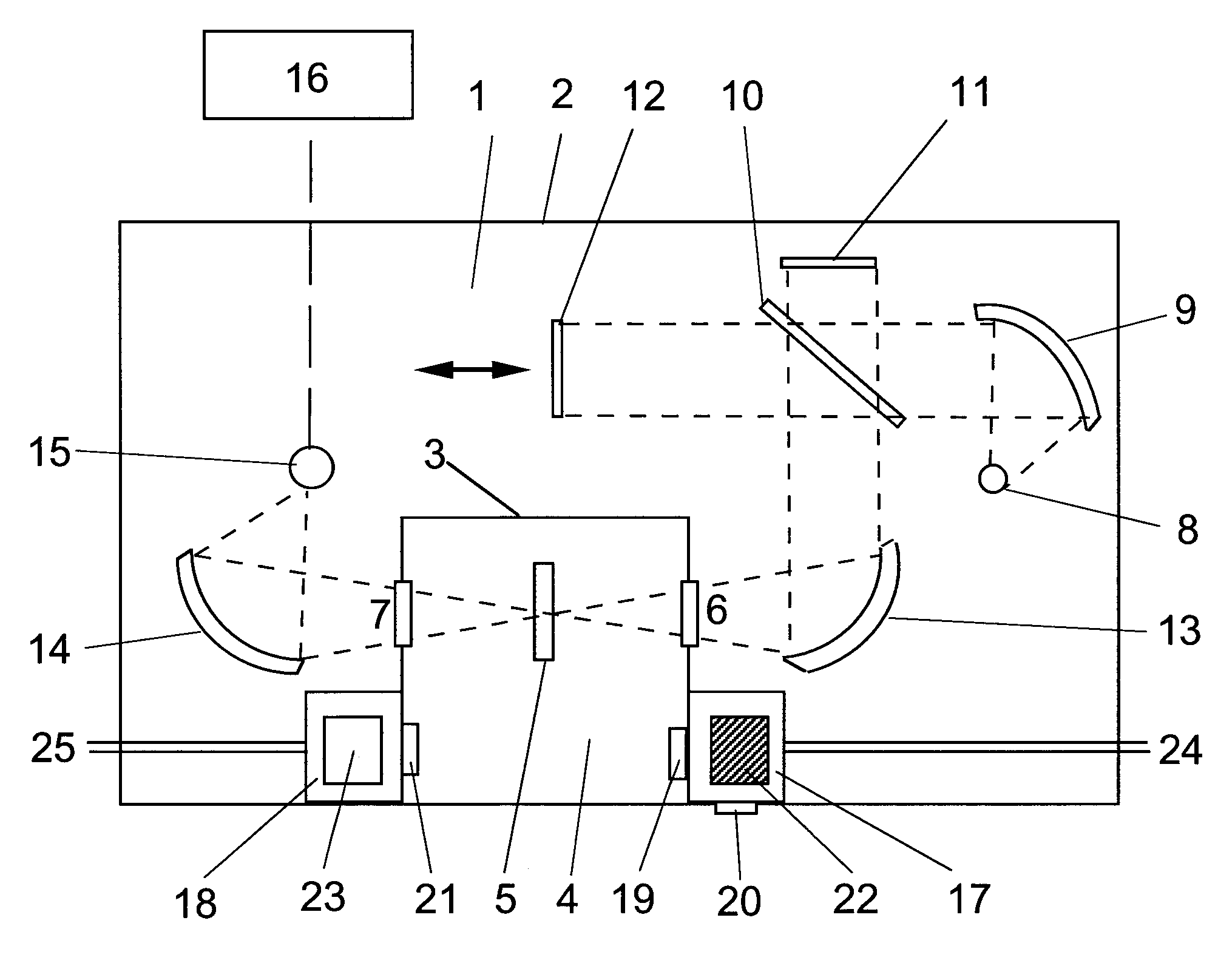
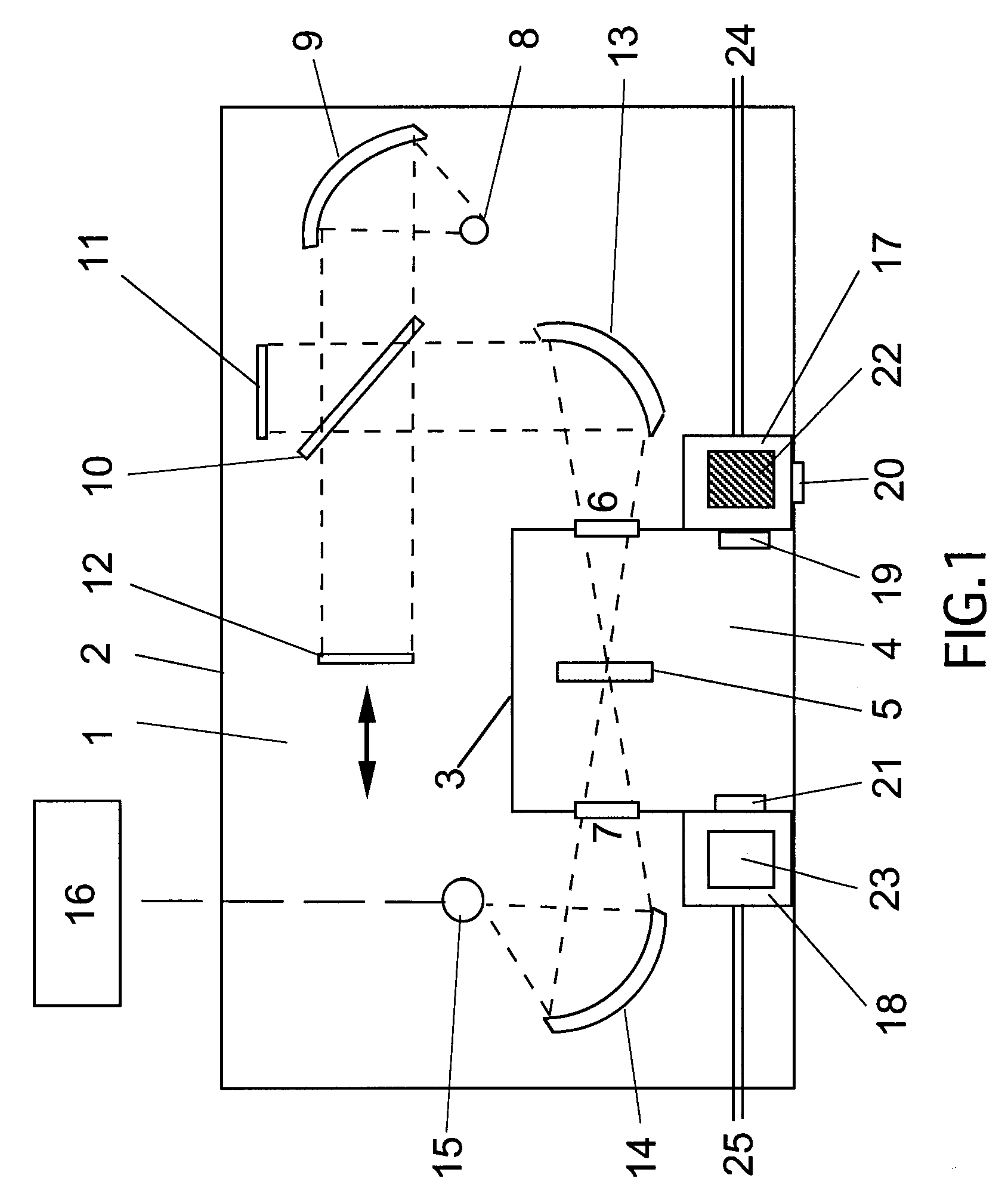
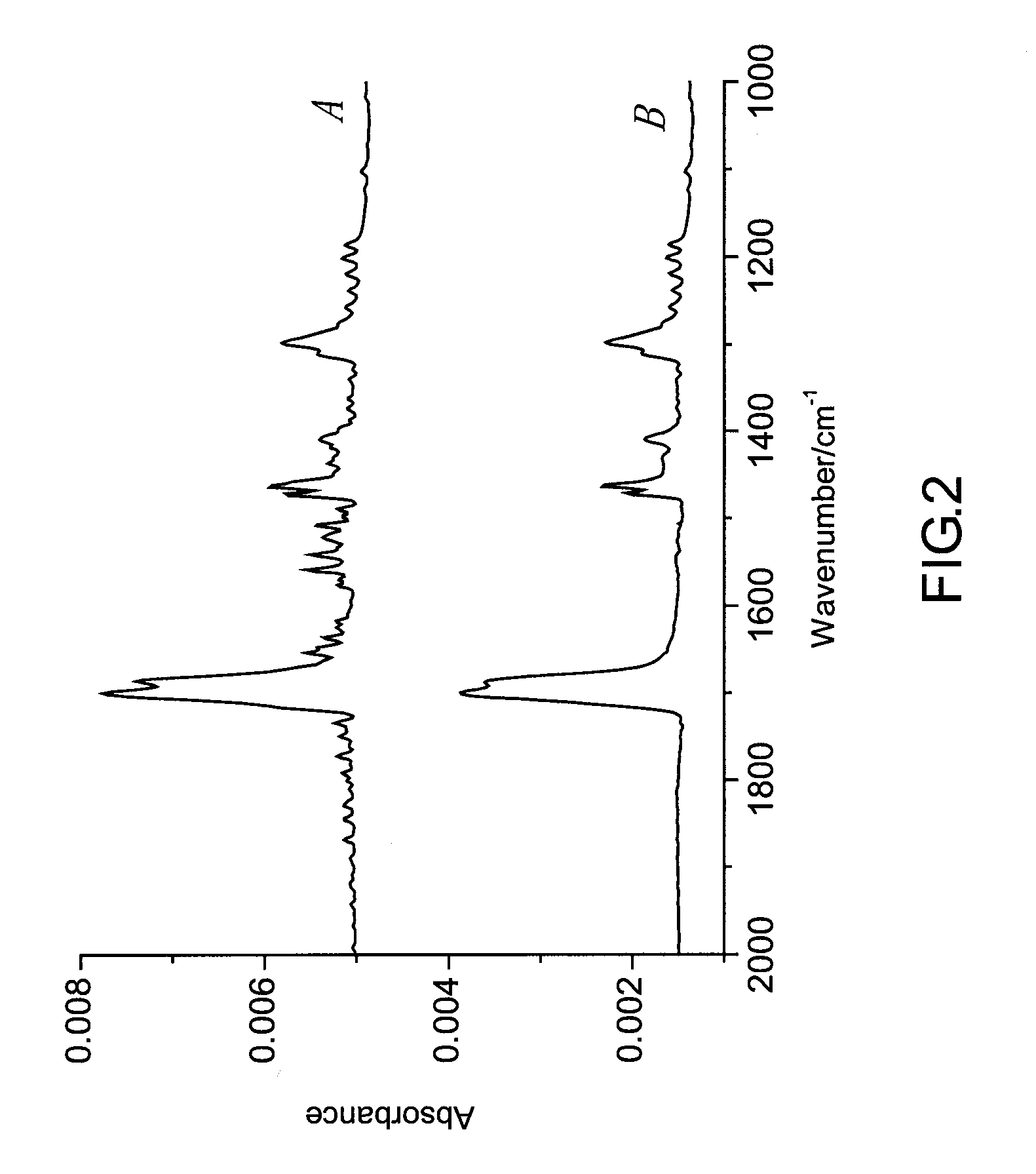
- Monitoring and actively controlling the concentration of water vapor and carbon dioxide during FTIR measurements using remotely controlled humidifying and dehumidifying agents, and carbon dioxide suppliers, respectively, to equilibrate gas levels between background and sample scans, thereby minimizing spectral noise.

Fourier transform infrared spectroscopy instrument
PatentWO2024175879A1
Innovation
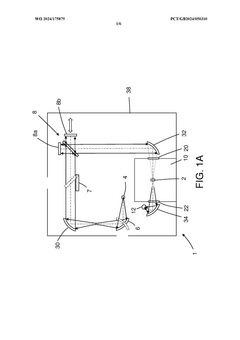
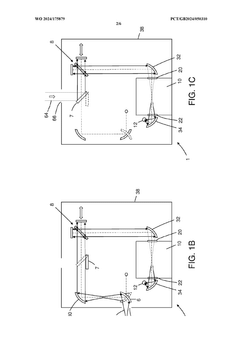
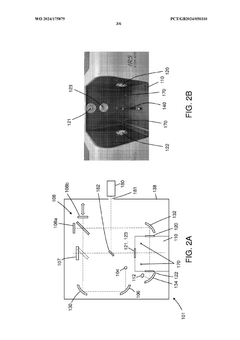
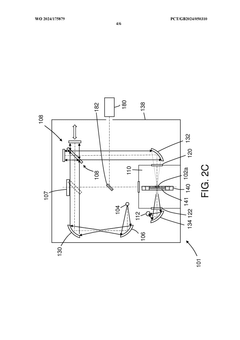
- A reconfigurable FTIR spectroscopy instrument with a sample chamber that can accommodate different sample holder accessories for conventional and luminescence spectroscopy configurations, utilizing a rotatable mirror as an optical switch to seamlessly switch between configurations, allowing for easy transition between transmission, reflection, ATR, PL, and Raman spectroscopy measurements.
Regulatory Standards for FTIR Analysis
Regulatory standards for FTIR analysis form a critical framework that ensures consistency, accuracy, and reliability across different laboratories and applications. The International Organization for Standardization (ISO) has established several standards specifically addressing FTIR spectroscopy, including ISO 14934 for sample preparation and ISO 15472 for quantitative analysis. These standards provide detailed protocols for calibration procedures, reference materials, and validation methodologies essential for maintaining analytical integrity.
In the pharmaceutical industry, regulatory bodies such as the FDA and EMA have implemented stringent requirements through Good Manufacturing Practice (GMP) guidelines. These regulations mandate regular performance verification, system suitability testing, and comprehensive documentation of FTIR analytical procedures. The United States Pharmacopeia (USP) Chapter <854> specifically addresses mid-infrared spectroscopy requirements, detailing specifications for resolution, wavelength accuracy, and photometric precision.
Environmental analysis utilizing FTIR must comply with EPA Method 320, which outlines procedures for measuring gaseous emissions through extractive FTIR spectroscopy. This method specifies quality control requirements including minimum detection limits, calibration transfer standards, and statistical validation approaches. Similarly, ASTM E1252 provides standard practices for general techniques of FTIR analysis, emphasizing reproducibility across different sample matrices.
For food safety applications, Codex Alimentarius guidelines incorporate FTIR methodologies for contaminant detection and compositional analysis. These standards establish acceptable limits of detection and quantification that FTIR systems must achieve to be considered compliant for regulatory purposes. The European Committee for Standardization (CEN) has developed harmonized methods for FTIR analysis in food testing that specify sample handling protocols to minimize matrix interference effects.
Regulatory standards also address data integrity aspects of FTIR analysis. 21 CFR Part 11 requirements for electronic records apply to FTIR data management systems, mandating audit trails, electronic signatures, and validated software. The ALCOA+ principles (Attributable, Legible, Contemporaneous, Original, Accurate, plus Complete, Consistent, Enduring, and Available) provide a framework for maintaining data quality throughout the analytical lifecycle.
Compliance with these regulatory standards requires implementation of robust quality management systems, including regular instrument qualification (IQ/OQ/PQ), proficiency testing, and participation in interlaboratory comparison studies. Many standards emphasize the importance of uncertainty measurement calculations to establish confidence intervals for analytical results across diverse sample types.
In the pharmaceutical industry, regulatory bodies such as the FDA and EMA have implemented stringent requirements through Good Manufacturing Practice (GMP) guidelines. These regulations mandate regular performance verification, system suitability testing, and comprehensive documentation of FTIR analytical procedures. The United States Pharmacopeia (USP) Chapter <854> specifically addresses mid-infrared spectroscopy requirements, detailing specifications for resolution, wavelength accuracy, and photometric precision.
Environmental analysis utilizing FTIR must comply with EPA Method 320, which outlines procedures for measuring gaseous emissions through extractive FTIR spectroscopy. This method specifies quality control requirements including minimum detection limits, calibration transfer standards, and statistical validation approaches. Similarly, ASTM E1252 provides standard practices for general techniques of FTIR analysis, emphasizing reproducibility across different sample matrices.
For food safety applications, Codex Alimentarius guidelines incorporate FTIR methodologies for contaminant detection and compositional analysis. These standards establish acceptable limits of detection and quantification that FTIR systems must achieve to be considered compliant for regulatory purposes. The European Committee for Standardization (CEN) has developed harmonized methods for FTIR analysis in food testing that specify sample handling protocols to minimize matrix interference effects.
Regulatory standards also address data integrity aspects of FTIR analysis. 21 CFR Part 11 requirements for electronic records apply to FTIR data management systems, mandating audit trails, electronic signatures, and validated software. The ALCOA+ principles (Attributable, Legible, Contemporaneous, Original, Accurate, plus Complete, Consistent, Enduring, and Available) provide a framework for maintaining data quality throughout the analytical lifecycle.
Compliance with these regulatory standards requires implementation of robust quality management systems, including regular instrument qualification (IQ/OQ/PQ), proficiency testing, and participation in interlaboratory comparison studies. Many standards emphasize the importance of uncertainty measurement calculations to establish confidence intervals for analytical results across diverse sample types.
Environmental Factors Affecting FTIR Performance
Environmental conditions significantly impact the reliability and accuracy of Fourier Transform Infrared (FTIR) spectroscopy measurements across different sample types. Temperature fluctuations represent one of the most critical environmental factors affecting FTIR performance. When ambient temperature varies, it can cause thermal expansion or contraction of optical components within the spectrometer, potentially altering the optical path length and introducing wavelength shifts in the resulting spectra. Research indicates that even minor temperature changes of ±2°C can lead to noticeable spectral variations, particularly in high-resolution applications.
Humidity presents another substantial challenge to FTIR reliability. Water vapor in the ambient air produces distinct absorption bands in the mid-infrared region, particularly around 1600 cm⁻¹ and 3600 cm⁻¹, which can interfere with sample analysis. For hygroscopic samples, ambient humidity may alter their physical and chemical properties during measurement, compromising data reproducibility. Studies have demonstrated that maintaining relative humidity below 40% significantly improves measurement consistency across multiple sample types.
Vibration interference constitutes a third critical environmental factor. FTIR instruments rely on precise mirror movements and optical alignments that can be disrupted by environmental vibrations from nearby equipment, building systems, or even foot traffic. These vibrations manifest as noise in the spectral baseline and reduced signal-to-noise ratios, particularly affecting measurements of low-concentration analytes or samples with subtle spectral features.
Atmospheric composition variations, especially CO₂ levels in laboratory environments, create additional challenges. Carbon dioxide exhibits strong absorption bands around 2350 cm⁻¹ that can mask important sample features. Modern FTIR systems attempt to compensate for atmospheric interferences through background subtraction, but fluctuating CO₂ levels between background and sample measurements can still introduce artifacts.
Electromagnetic interference (EMI) from nearby electronic equipment can also compromise FTIR performance by introducing noise into detector signals. This is particularly problematic for highly sensitive detectors like mercury cadmium telluride (MCT) used in many advanced FTIR systems. Proper shielding and strategic instrument placement away from EMI sources are essential mitigation strategies.
Light contamination represents another environmental concern, especially for systems utilizing external beam paths or attenuated total reflection (ATR) accessories. Ambient light leakage into the optical path can increase baseline noise and reduce measurement sensitivity. This factor becomes particularly significant when analyzing samples with weak absorption features or when quantifying trace components.
Humidity presents another substantial challenge to FTIR reliability. Water vapor in the ambient air produces distinct absorption bands in the mid-infrared region, particularly around 1600 cm⁻¹ and 3600 cm⁻¹, which can interfere with sample analysis. For hygroscopic samples, ambient humidity may alter their physical and chemical properties during measurement, compromising data reproducibility. Studies have demonstrated that maintaining relative humidity below 40% significantly improves measurement consistency across multiple sample types.
Vibration interference constitutes a third critical environmental factor. FTIR instruments rely on precise mirror movements and optical alignments that can be disrupted by environmental vibrations from nearby equipment, building systems, or even foot traffic. These vibrations manifest as noise in the spectral baseline and reduced signal-to-noise ratios, particularly affecting measurements of low-concentration analytes or samples with subtle spectral features.
Atmospheric composition variations, especially CO₂ levels in laboratory environments, create additional challenges. Carbon dioxide exhibits strong absorption bands around 2350 cm⁻¹ that can mask important sample features. Modern FTIR systems attempt to compensate for atmospheric interferences through background subtraction, but fluctuating CO₂ levels between background and sample measurements can still introduce artifacts.
Electromagnetic interference (EMI) from nearby electronic equipment can also compromise FTIR performance by introducing noise into detector signals. This is particularly problematic for highly sensitive detectors like mercury cadmium telluride (MCT) used in many advanced FTIR systems. Proper shielding and strategic instrument placement away from EMI sources are essential mitigation strategies.
Light contamination represents another environmental concern, especially for systems utilizing external beam paths or attenuated total reflection (ATR) accessories. Ambient light leakage into the optical path can increase baseline noise and reduce measurement sensitivity. This factor becomes particularly significant when analyzing samples with weak absorption features or when quantifying trace components.
Unlock deeper insights with Patsnap Eureka Quick Research — get a full tech report to explore trends and direct your research. Try now!
Generate Your Research Report Instantly with AI Agent
Supercharge your innovation with Patsnap Eureka AI Agent Platform!