How to Optimize Acrylic Resin Photoinitiator Concentration
OCT 11, 202510 MIN READ
Generate Your Research Report Instantly with AI Agent
Patsnap Eureka helps you evaluate technical feasibility & market potential.
Photoinitiator Technology Background and Objectives
Photoinitiators have been integral components in photopolymerization processes since the early 1960s, with significant advancements occurring in the 1980s when UV-curable systems gained commercial prominence. The evolution of photoinitiator technology has been driven by demands for faster curing rates, deeper penetration in thick materials, and reduced yellowing effects in final products. This technological progression has transformed manufacturing processes across industries, enabling rapid production cycles and enhanced material properties.
The fundamental mechanism of photoinitiators involves absorption of light energy at specific wavelengths, generating reactive species (free radicals or cations) that initiate polymerization of acrylic resins. Type I photoinitiators undergo unimolecular cleavage upon light exposure, while Type II systems operate through bimolecular hydrogen abstraction processes. Each type presents distinct advantages in terms of reactivity, wavelength sensitivity, and compatibility with various resin systems.
Current market trends indicate a growing preference for photoinitiators that function effectively at longer wavelengths (visible light range), offering improved depth curing and compatibility with LED light sources. Additionally, there is increasing demand for systems with reduced migration potential, addressing regulatory concerns regarding food packaging applications and consumer safety. The shift toward water-based and low-VOC formulations has further accelerated research into compatible photoinitiator technologies.
The optimization of photoinitiator concentration represents a critical balance between competing factors: insufficient concentrations lead to incomplete curing and poor mechanical properties, while excessive amounts can cause inhibition effects, color issues, and unnecessary cost increases. This optimization challenge is further complicated by the diverse range of acrylic resin chemistries available, each requiring specific photoinitiator combinations and concentrations.
Our technical objectives in this investigation include developing systematic methodologies for determining optimal photoinitiator concentrations across various acrylic resin systems, identifying synergistic combinations of photoinitiators that enhance efficiency while minimizing concentration requirements, and establishing predictive models that correlate photoinitiator concentration with cure speed, depth, and final material properties.
Additionally, we aim to explore novel approaches for real-time monitoring of photopolymerization processes, enabling dynamic adjustment of photoinitiator concentrations based on actual curing conditions. This research will also address environmental and regulatory considerations, focusing on reducing photoinitiator leaching and migration while maintaining high performance standards in end applications.
The ultimate goal is to establish comprehensive guidelines for photoinitiator optimization that balance technical performance, economic considerations, and sustainability requirements, thereby advancing the state-of-the-art in acrylic resin photopolymerization technology.
The fundamental mechanism of photoinitiators involves absorption of light energy at specific wavelengths, generating reactive species (free radicals or cations) that initiate polymerization of acrylic resins. Type I photoinitiators undergo unimolecular cleavage upon light exposure, while Type II systems operate through bimolecular hydrogen abstraction processes. Each type presents distinct advantages in terms of reactivity, wavelength sensitivity, and compatibility with various resin systems.
Current market trends indicate a growing preference for photoinitiators that function effectively at longer wavelengths (visible light range), offering improved depth curing and compatibility with LED light sources. Additionally, there is increasing demand for systems with reduced migration potential, addressing regulatory concerns regarding food packaging applications and consumer safety. The shift toward water-based and low-VOC formulations has further accelerated research into compatible photoinitiator technologies.
The optimization of photoinitiator concentration represents a critical balance between competing factors: insufficient concentrations lead to incomplete curing and poor mechanical properties, while excessive amounts can cause inhibition effects, color issues, and unnecessary cost increases. This optimization challenge is further complicated by the diverse range of acrylic resin chemistries available, each requiring specific photoinitiator combinations and concentrations.
Our technical objectives in this investigation include developing systematic methodologies for determining optimal photoinitiator concentrations across various acrylic resin systems, identifying synergistic combinations of photoinitiators that enhance efficiency while minimizing concentration requirements, and establishing predictive models that correlate photoinitiator concentration with cure speed, depth, and final material properties.
Additionally, we aim to explore novel approaches for real-time monitoring of photopolymerization processes, enabling dynamic adjustment of photoinitiator concentrations based on actual curing conditions. This research will also address environmental and regulatory considerations, focusing on reducing photoinitiator leaching and migration while maintaining high performance standards in end applications.
The ultimate goal is to establish comprehensive guidelines for photoinitiator optimization that balance technical performance, economic considerations, and sustainability requirements, thereby advancing the state-of-the-art in acrylic resin photopolymerization technology.
Market Analysis of Acrylic Resin Applications
The global acrylic resin market has demonstrated robust growth in recent years, with applications spanning numerous industries including construction, automotive, electronics, medical devices, and consumer goods. The market was valued at approximately 18.3 billion USD in 2022 and is projected to reach 26.7 billion USD by 2028, growing at a CAGR of 6.5% during the forecast period.
Construction and architectural applications represent the largest segment for acrylic resins, accounting for nearly 35% of the total market share. The demand is primarily driven by the superior weatherability, UV resistance, and aesthetic properties of acrylic-based coatings and adhesives. In this sector, photoinitiator concentration optimization is particularly critical as it directly impacts cure speed, coating durability, and overall performance in exterior applications.
The automotive industry constitutes the second-largest application segment, representing approximately 22% of the market. Here, acrylic resins are extensively used in automotive coatings, adhesives, and composite parts. The industry's shift toward lightweight materials and environmentally friendly formulations has accelerated the adoption of UV-curable acrylic systems, where photoinitiator concentration plays a decisive role in achieving desired mechanical properties and production efficiency.
Electronics and electrical applications have emerged as the fastest-growing segment, with a projected CAGR of 8.2% through 2028. The miniaturization trend in electronics demands precision curing of acrylic resins in confined spaces, making photoinitiator optimization increasingly important for manufacturers seeking to improve production yields and product reliability.
Regional analysis reveals that Asia-Pacific dominates the acrylic resin market with a 42% share, followed by North America (27%) and Europe (21%). China and India are experiencing the highest growth rates due to rapid industrialization and infrastructure development. These emerging markets present significant opportunities for optimized photoinitiator systems that can perform effectively under varying environmental conditions.
Consumer preference for eco-friendly products has driven demand for low-VOC and water-based acrylic formulations, creating a specialized market segment where photoinitiator efficiency becomes even more critical. This segment is growing at 9.3% annually, outpacing the overall market growth.
The medical and dental sectors represent premium application niches where precision curing through optimized photoinitiator concentration is essential for product performance and patient safety. These applications demand highly specialized formulations with precise curing parameters, creating high-value opportunities for companies with advanced photoinitiator optimization capabilities.
Construction and architectural applications represent the largest segment for acrylic resins, accounting for nearly 35% of the total market share. The demand is primarily driven by the superior weatherability, UV resistance, and aesthetic properties of acrylic-based coatings and adhesives. In this sector, photoinitiator concentration optimization is particularly critical as it directly impacts cure speed, coating durability, and overall performance in exterior applications.
The automotive industry constitutes the second-largest application segment, representing approximately 22% of the market. Here, acrylic resins are extensively used in automotive coatings, adhesives, and composite parts. The industry's shift toward lightweight materials and environmentally friendly formulations has accelerated the adoption of UV-curable acrylic systems, where photoinitiator concentration plays a decisive role in achieving desired mechanical properties and production efficiency.
Electronics and electrical applications have emerged as the fastest-growing segment, with a projected CAGR of 8.2% through 2028. The miniaturization trend in electronics demands precision curing of acrylic resins in confined spaces, making photoinitiator optimization increasingly important for manufacturers seeking to improve production yields and product reliability.
Regional analysis reveals that Asia-Pacific dominates the acrylic resin market with a 42% share, followed by North America (27%) and Europe (21%). China and India are experiencing the highest growth rates due to rapid industrialization and infrastructure development. These emerging markets present significant opportunities for optimized photoinitiator systems that can perform effectively under varying environmental conditions.
Consumer preference for eco-friendly products has driven demand for low-VOC and water-based acrylic formulations, creating a specialized market segment where photoinitiator efficiency becomes even more critical. This segment is growing at 9.3% annually, outpacing the overall market growth.
The medical and dental sectors represent premium application niches where precision curing through optimized photoinitiator concentration is essential for product performance and patient safety. These applications demand highly specialized formulations with precise curing parameters, creating high-value opportunities for companies with advanced photoinitiator optimization capabilities.
Current Challenges in Photoinitiator Concentration Optimization
Despite significant advancements in photopolymerization technology, optimizing photoinitiator concentration in acrylic resin systems remains a complex challenge with multiple interrelated factors. One of the primary difficulties lies in achieving the delicate balance between cure speed and depth. Higher photoinitiator concentrations typically accelerate polymerization rates but simultaneously reduce cure depth due to increased light absorption near the surface, creating a phenomenon known as "light screening effect" that prevents adequate penetration to deeper layers.
Material compatibility presents another substantial hurdle, as photoinitiators must integrate seamlessly with various acrylic resin formulations without compromising physical properties or introducing unwanted side effects. Many high-performance photoinitiators exhibit limited solubility in certain resin systems, leading to phase separation, precipitation, or migration issues that can significantly impact final product quality and performance consistency.
Stability concerns further complicate optimization efforts. Photoinitiators must maintain efficacy throughout the product's shelf life while resisting degradation from ambient light exposure, temperature fluctuations, and chemical interactions with other formulation components. Premature activation or gradual decomposition can lead to inconsistent curing performance and unpredictable product properties over time.
Environmental and health considerations have emerged as increasingly critical challenges. Traditional photoinitiators, particularly those containing heavy metals or generating potentially harmful byproducts, face growing regulatory scrutiny and market resistance. Developing systems with reduced environmental impact while maintaining performance specifications requires sophisticated balancing of competing priorities.
Process variability introduces additional complexity, as photoinitiator performance can vary significantly depending on light source characteristics, exposure conditions, and manufacturing environment. Factors such as light intensity distribution, spectral output, ambient temperature, humidity, and oxygen inhibition all influence optimal concentration requirements, making standardization difficult across different production settings.
Cost-effectiveness remains a persistent challenge, particularly for high-volume applications. More efficient photoinitiators typically command premium prices, necessitating careful cost-benefit analysis to determine optimal concentration levels that balance performance requirements with economic constraints.
The emergence of new application domains, such as 3D printing, biomedical devices, and advanced coatings, has introduced specialized requirements that further complicate optimization. These applications often demand precise control over cure kinetics, mechanical properties, biocompatibility, or optical characteristics that may conflict with traditional optimization approaches.
Analytical limitations also hinder progress, as accurately measuring photoinitiator concentration, distribution, and conversion efficiency in complex formulations requires sophisticated instrumentation and methodology. The lack of standardized testing protocols across the industry makes comparative analysis challenging and impedes knowledge transfer between research and production environments.
Material compatibility presents another substantial hurdle, as photoinitiators must integrate seamlessly with various acrylic resin formulations without compromising physical properties or introducing unwanted side effects. Many high-performance photoinitiators exhibit limited solubility in certain resin systems, leading to phase separation, precipitation, or migration issues that can significantly impact final product quality and performance consistency.
Stability concerns further complicate optimization efforts. Photoinitiators must maintain efficacy throughout the product's shelf life while resisting degradation from ambient light exposure, temperature fluctuations, and chemical interactions with other formulation components. Premature activation or gradual decomposition can lead to inconsistent curing performance and unpredictable product properties over time.
Environmental and health considerations have emerged as increasingly critical challenges. Traditional photoinitiators, particularly those containing heavy metals or generating potentially harmful byproducts, face growing regulatory scrutiny and market resistance. Developing systems with reduced environmental impact while maintaining performance specifications requires sophisticated balancing of competing priorities.
Process variability introduces additional complexity, as photoinitiator performance can vary significantly depending on light source characteristics, exposure conditions, and manufacturing environment. Factors such as light intensity distribution, spectral output, ambient temperature, humidity, and oxygen inhibition all influence optimal concentration requirements, making standardization difficult across different production settings.
Cost-effectiveness remains a persistent challenge, particularly for high-volume applications. More efficient photoinitiators typically command premium prices, necessitating careful cost-benefit analysis to determine optimal concentration levels that balance performance requirements with economic constraints.
The emergence of new application domains, such as 3D printing, biomedical devices, and advanced coatings, has introduced specialized requirements that further complicate optimization. These applications often demand precise control over cure kinetics, mechanical properties, biocompatibility, or optical characteristics that may conflict with traditional optimization approaches.
Analytical limitations also hinder progress, as accurately measuring photoinitiator concentration, distribution, and conversion efficiency in complex formulations requires sophisticated instrumentation and methodology. The lack of standardized testing protocols across the industry makes comparative analysis challenging and impedes knowledge transfer between research and production environments.
Current Methodologies for Concentration Optimization
01 Optimal photoinitiator concentration ranges for acrylic resin systems
The concentration of photoinitiators in acrylic resin formulations significantly impacts curing efficiency and final product properties. Research indicates that optimal photoinitiator concentrations typically range from 0.5% to 5% by weight of the total formulation, depending on the specific application and desired cure speed. Higher concentrations may lead to faster curing but can cause yellowing or brittleness in the cured film, while insufficient amounts result in incomplete polymerization and poor surface properties.- Optimal photoinitiator concentration ranges for acrylic resin systems: The concentration of photoinitiators in acrylic resin formulations significantly impacts curing efficiency and final product properties. Research indicates that optimal photoinitiator concentrations typically range from 0.5% to 5% by weight of the total formulation, depending on the specific application and desired cure speed. Higher concentrations may lead to faster curing but can cause yellowing or brittleness in the cured film, while insufficient amounts result in incomplete polymerization and poor surface properties.
- Synergistic photoinitiator combinations for enhanced curing efficiency: Combining different types of photoinitiators in acrylic resin systems can create synergistic effects that improve curing efficiency at lower overall concentrations. Type I (cleavage-type) photoinitiators like benzoin ethers can be combined with Type II (hydrogen abstraction) photoinitiators such as benzophenones to provide both surface and depth curing. These combinations allow formulators to reduce the total photoinitiator concentration while maintaining or improving cure response across different wavelengths of UV light.
- Effect of acrylic resin composition on photoinitiator requirements: The chemical structure and functionality of the acrylic resin directly influences the required photoinitiator concentration. Highly functional acrylates with multiple reactive sites typically require higher photoinitiator concentrations to achieve complete cure. Conversely, monofunctional acrylates or those with lower viscosity may achieve satisfactory cure with lower photoinitiator levels. The presence of oxygen-inhibiting components or other additives in the formulation may also necessitate adjustments to photoinitiator concentration.
- Photoinitiator concentration for specialized applications: Specialized applications of acrylic resins require tailored photoinitiator concentrations. For UV-curable coatings on heat-sensitive substrates, lower concentrations (0.1-1%) of highly efficient photoinitiators are preferred to minimize heat generation. In contrast, thick-film applications like 3D printing resins may require higher concentrations (3-8%) to ensure complete through-cure. Medical and food-contact applications typically utilize lower photoinitiator concentrations with specific approved compounds to minimize migration and potential toxicity concerns.
- Novel photoinitiator systems for reduced concentration requirements: Recent developments in photoinitiator technology have produced novel systems that require significantly lower concentrations while maintaining or improving cure efficiency. These include nanoparticle-bound photoinitiators, polymeric photoinitiators, and photoinitiators with enhanced absorption profiles. These advanced systems can achieve complete cure at concentrations as low as 0.1-0.5% by weight, reducing concerns about migration, odor, and yellowing while improving the sustainability profile of UV-curable acrylic resin systems.
02 Synergistic photoinitiator combinations for enhanced curing efficiency
Combining different types of photoinitiators in acrylic resin systems can create synergistic effects that improve curing efficiency at lower overall concentrations. Type I (cleavage) photoinitiators like benzoin ethers can be combined with Type II (hydrogen abstraction) photoinitiators such as benzophenones to provide both surface and depth curing. These combinations allow formulators to reduce the total photoinitiator concentration while maintaining or improving cure response across different wavelengths of light.Expand Specific Solutions03 Effect of acrylic resin composition on photoinitiator requirements
The chemical structure and functionality of the acrylic resin directly influences the required photoinitiator concentration. Highly functional acrylates with multiple reactive sites typically require higher photoinitiator concentrations to achieve complete cure. Conversely, monofunctional acrylates or those with lower viscosity may achieve satisfactory cure with lower photoinitiator levels. The presence of oxygen inhibition, pigments, and fillers in the formulation also necessitates adjustments to photoinitiator concentration to maintain cure efficiency.Expand Specific Solutions04 Novel photoinitiator systems for specialized acrylic applications
Advanced photoinitiator systems have been developed for specialized acrylic resin applications that require specific performance characteristics. These include low-migration photoinitiators for food packaging applications, water-dispersible photoinitiators for aqueous acrylic systems, and thermally stable photoinitiators for high-temperature applications. These specialized systems often utilize different concentration ranges compared to conventional photoinitiators, typically requiring precise formulation to balance reactivity, stability, and end-use requirements.Expand Specific Solutions05 Photoinitiator concentration optimization for UV-LED curing systems
With the increasing adoption of UV-LED curing technology for acrylic resins, photoinitiator concentrations must be specifically optimized for these narrower spectral output sources. LED-compatible photoinitiators typically require different concentration ranges compared to those used with traditional mercury lamps. Research shows that effective concentrations for LED systems often range from 1-3% for primary photoinitiators, with additional co-initiators or photosensitizers at 0.5-2% to enhance cure response at the specific wavelengths emitted by UV-LEDs.Expand Specific Solutions
Key Industry Players in Photopolymerization
The acrylic resin photoinitiator concentration optimization market is in a growth phase, with increasing demand driven by applications in adhesives, coatings, and 3D printing technologies. The global market size is estimated to exceed $1.5 billion, expanding at a CAGR of 6-8% due to rising adoption in electronics, automotive, and medical industries. Key players demonstrate varying levels of technical maturity, with companies like LG Chem, 3M Innovative Properties, and FUJIFILM leading with advanced formulation capabilities. Specialized chemical manufacturers such as Dongjin Semichem, Toyobo, and Sun Chemical have developed proprietary photoinitiator systems, while research institutions including University of Michigan and École Normale Supérieure de Lyon contribute fundamental innovations. Emerging players like Cubicure are advancing hot lithography processes for industrial applications.
3M Innovative Properties Co.
Technical Solution: 3M has developed a comprehensive approach to photoinitiator concentration optimization in acrylic resin systems that balances cure speed with final product properties. Their technology employs a dual-photoinitiator system combining Type I (α-cleavage) and Type II (hydrogen abstraction) photoinitiators at precisely controlled ratios. This approach allows for efficient curing across different wavelengths while minimizing oxygen inhibition effects. 3M's proprietary formulations typically maintain photoinitiator concentrations between 0.5-3% by weight, with specific ratios determined through high-throughput experimentation platforms that can rapidly test hundreds of formulation variations. Their process includes spectroscopic analysis to determine optimal absorption profiles matched to specific light sources, and rheological monitoring during cure to establish the relationship between photoinitiator concentration and network formation kinetics. This data-driven approach enables 3M to develop customized photoinitiator packages for specific applications ranging from optical adhesives to dental materials.
Strengths: Extensive material science expertise allows for highly optimized formulations; proprietary testing platforms enable rapid iteration and validation; global manufacturing capabilities ensure consistent quality. Weaknesses: Higher cost compared to generic formulations; some solutions may be overengineered for simpler applications; proprietary nature limits customization by end users.
FUJIFILM Corp.
Technical Solution: FUJIFILM has pioneered advanced photoinitiator optimization techniques for acrylic resin systems used in their photosensitive materials and industrial applications. Their approach centers on a proprietary "Controlled Radical Generation" technology that precisely manages the rate of free radical formation during photopolymerization. FUJIFILM's system employs carefully selected photoinitiator combinations (typically including acylphosphine oxides and α-hydroxyketones) at concentrations determined through quantum yield analysis. Their research has established that optimal photoinitiator concentrations typically range from 0.2-2.5% depending on application requirements, with higher concentrations used for deep curing and lower concentrations for surface-sensitive applications. FUJIFILM's methodology includes computational modeling of reaction kinetics to predict cure behavior, followed by experimental validation using real-time FTIR spectroscopy to monitor conversion rates. This allows them to establish precise relationships between photoinitiator concentration, light intensity, and cure depth. Additionally, they've developed synergistic co-initiator systems that enhance efficiency while reducing overall photoinitiator loading, addressing both cost and migration concerns in sensitive applications.
Strengths: Exceptional expertise in photochemistry and reaction kinetics; sophisticated analytical capabilities for formulation optimization; strong integration with their imaging and materials businesses. Weaknesses: Solutions often optimized for their own manufacturing processes; relatively high cost of implementation; some technologies heavily protected by patents limiting broader adoption.
Critical Patents in Photoinitiator Efficiency
Method for the production of anti-statically coated moulded body
PatentInactiveUS7608306B2
Innovation
- A process involving a lacquer system with a binder, solvent, additives, and electrically conductive metal oxide powders with controlled aggregation and nanopowders, allowing for reduced ITO content while maintaining conductivity and scratch resistance, using a combination of physically drying, heat-curable, or radiation-curable systems to achieve effective coating without the need for high-temperature aging.
Curing resin composition and sealants and end-sealing materials for displays
PatentInactiveUS7253131B2
Innovation
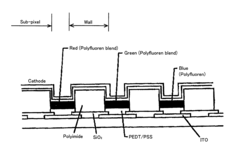
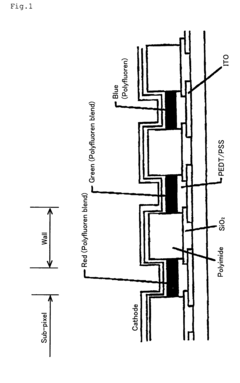
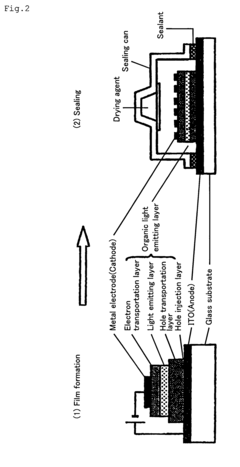
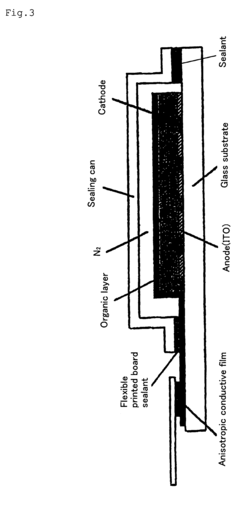
- A curing resin composition with a photopolymerization initiator and curing agent, containing carbonyl and epoxy groups, with nitrogen atoms at 3-10% by atom, and a glass transition temperature of 80-150°C, providing excellent adhesion and humidity resistance, and a silane coupling agent for improved substrate interaction.
Environmental Impact of Photoinitiators
The environmental impact of photoinitiators in acrylic resin systems represents a significant concern as the use of UV-curable materials continues to expand across industries. Conventional photoinitiators, particularly those containing heavy metals or aromatic compounds, can pose substantial ecological risks when released into the environment. These chemicals may persist in water systems, potentially causing bioaccumulation in aquatic organisms and disrupting ecosystem balance.
Studies have demonstrated that residual photoinitiators and their photodegradation products can leach from cured materials during their lifecycle. This leaching process accelerates under conditions of UV exposure, high temperatures, or contact with certain solvents. Environmental monitoring has detected trace amounts of common photoinitiators like benzophenones and thioxanthones in surface waters near industrial facilities, raising concerns about their long-term ecological effects.
The optimization of photoinitiator concentration directly influences environmental sustainability. Excessive concentrations not only waste resources but increase the potential for unreacted photoinitiators to migrate from the cured material. Research indicates that precisely calibrated minimal effective concentrations can reduce environmental burden while maintaining performance requirements. This approach aligns with green chemistry principles by minimizing chemical inputs while maximizing functional outputs.
Regulatory frameworks worldwide are increasingly addressing photoinitiator environmental impacts. The European Union's REACH regulations have placed restrictions on certain photoinitiators, while the FDA in the United States has established migration limits for food contact applications. These evolving regulations are driving the industry toward more environmentally compatible formulations with optimized concentrations.
Recent innovations have focused on developing "greener" photoinitiator systems with reduced environmental persistence. Water-soluble photoinitiators, for instance, demonstrate improved biodegradability compared to their hydrophobic counterparts. Similarly, polymeric photoinitiators with higher molecular weights show reduced mobility and leaching potential, thereby decreasing environmental exposure risk.
Life cycle assessment (LCA) studies comparing traditional and optimized photoinitiator systems reveal that concentration optimization can reduce environmental impact across multiple categories, including freshwater ecotoxicity, human toxicity, and resource depletion. These assessments suggest that a 15-30% reduction in photoinitiator concentration, when properly optimized for specific applications, can yield significant environmental benefits without compromising curing performance.
The waste management challenges associated with photoinitiator-containing materials further emphasize the importance of concentration optimization. Lower concentrations of potentially harmful components simplify end-of-life processing and reduce the hazardous waste classification potential of manufacturing residues and post-consumer materials.
Studies have demonstrated that residual photoinitiators and their photodegradation products can leach from cured materials during their lifecycle. This leaching process accelerates under conditions of UV exposure, high temperatures, or contact with certain solvents. Environmental monitoring has detected trace amounts of common photoinitiators like benzophenones and thioxanthones in surface waters near industrial facilities, raising concerns about their long-term ecological effects.
The optimization of photoinitiator concentration directly influences environmental sustainability. Excessive concentrations not only waste resources but increase the potential for unreacted photoinitiators to migrate from the cured material. Research indicates that precisely calibrated minimal effective concentrations can reduce environmental burden while maintaining performance requirements. This approach aligns with green chemistry principles by minimizing chemical inputs while maximizing functional outputs.
Regulatory frameworks worldwide are increasingly addressing photoinitiator environmental impacts. The European Union's REACH regulations have placed restrictions on certain photoinitiators, while the FDA in the United States has established migration limits for food contact applications. These evolving regulations are driving the industry toward more environmentally compatible formulations with optimized concentrations.
Recent innovations have focused on developing "greener" photoinitiator systems with reduced environmental persistence. Water-soluble photoinitiators, for instance, demonstrate improved biodegradability compared to their hydrophobic counterparts. Similarly, polymeric photoinitiators with higher molecular weights show reduced mobility and leaching potential, thereby decreasing environmental exposure risk.
Life cycle assessment (LCA) studies comparing traditional and optimized photoinitiator systems reveal that concentration optimization can reduce environmental impact across multiple categories, including freshwater ecotoxicity, human toxicity, and resource depletion. These assessments suggest that a 15-30% reduction in photoinitiator concentration, when properly optimized for specific applications, can yield significant environmental benefits without compromising curing performance.
The waste management challenges associated with photoinitiator-containing materials further emphasize the importance of concentration optimization. Lower concentrations of potentially harmful components simplify end-of-life processing and reduce the hazardous waste classification potential of manufacturing residues and post-consumer materials.
Regulatory Framework for UV-Curable Systems
The regulatory landscape for UV-curable systems containing acrylic resin photoinitiators is complex and varies significantly across different regions and industries. In the United States, the Food and Drug Administration (FDA) regulates photoinitiators in UV-curable systems that come into contact with food through 21 CFR 175.300, which establishes specific migration limits and acceptable concentrations. The Environmental Protection Agency (EPA) also oversees these chemicals under the Toxic Substances Control Act (TSCA), requiring manufacturers to report new chemical substances and potential risks.
European regulations are generally more stringent, with the European Chemicals Agency (ECHA) managing photoinitiators under the Registration, Evaluation, Authorization and Restriction of Chemicals (REACH) framework. This requires comprehensive safety data and risk assessments for chemicals produced or imported in quantities exceeding one ton annually. Additionally, the European Food Safety Authority (EFSA) has established specific migration limits for photoinitiators in food contact materials, which directly impacts formulation decisions for acrylic resin systems.
In Asia, Japan's Ministry of Health, Labour and Welfare has established positive lists for food contact materials that include specific photoinitiators, while China has implemented GB standards that regulate UV-curable materials in various applications. These regional differences create significant compliance challenges for global manufacturers seeking to optimize photoinitiator concentrations.
Industry-specific regulations further complicate the regulatory framework. Medical device manufacturers must adhere to ISO 10993 standards for biocompatibility when using UV-curable acrylic resins, which places strict limitations on photoinitiator selection and concentration. The printing and packaging industries face regulations from organizations like the European Printing Ink Association (EuPIA), which has established exclusion policies for certain photoinitiators due to migration concerns.
Occupational safety regulations also impact photoinitiator concentration optimization. The Occupational Safety and Health Administration (OSHA) in the US and similar bodies worldwide have established exposure limits for workers handling these chemicals, necessitating careful consideration of volatility and toxicity profiles when selecting photoinitiator concentrations.
Recent regulatory trends indicate increasing scrutiny of traditional photoinitiators, particularly those containing heavy metals or generating potentially harmful byproducts. This has accelerated the development of more environmentally friendly alternatives and pushed manufacturers toward lower photoinitiator concentrations achieved through more efficient formulations. Companies optimizing acrylic resin photoinitiator concentrations must therefore maintain robust regulatory intelligence systems to navigate this evolving landscape effectively.
European regulations are generally more stringent, with the European Chemicals Agency (ECHA) managing photoinitiators under the Registration, Evaluation, Authorization and Restriction of Chemicals (REACH) framework. This requires comprehensive safety data and risk assessments for chemicals produced or imported in quantities exceeding one ton annually. Additionally, the European Food Safety Authority (EFSA) has established specific migration limits for photoinitiators in food contact materials, which directly impacts formulation decisions for acrylic resin systems.
In Asia, Japan's Ministry of Health, Labour and Welfare has established positive lists for food contact materials that include specific photoinitiators, while China has implemented GB standards that regulate UV-curable materials in various applications. These regional differences create significant compliance challenges for global manufacturers seeking to optimize photoinitiator concentrations.
Industry-specific regulations further complicate the regulatory framework. Medical device manufacturers must adhere to ISO 10993 standards for biocompatibility when using UV-curable acrylic resins, which places strict limitations on photoinitiator selection and concentration. The printing and packaging industries face regulations from organizations like the European Printing Ink Association (EuPIA), which has established exclusion policies for certain photoinitiators due to migration concerns.
Occupational safety regulations also impact photoinitiator concentration optimization. The Occupational Safety and Health Administration (OSHA) in the US and similar bodies worldwide have established exposure limits for workers handling these chemicals, necessitating careful consideration of volatility and toxicity profiles when selecting photoinitiator concentrations.
Recent regulatory trends indicate increasing scrutiny of traditional photoinitiators, particularly those containing heavy metals or generating potentially harmful byproducts. This has accelerated the development of more environmentally friendly alternatives and pushed manufacturers toward lower photoinitiator concentrations achieved through more efficient formulations. Companies optimizing acrylic resin photoinitiator concentrations must therefore maintain robust regulatory intelligence systems to navigate this evolving landscape effectively.
Unlock deeper insights with Patsnap Eureka Quick Research — get a full tech report to explore trends and direct your research. Try now!
Generate Your Research Report Instantly with AI Agent
Supercharge your innovation with Patsnap Eureka AI Agent Platform!