

Hydrofluoric Acid and Dichloromethane: Solvent Dynamics
AUG 26, 20259 MIN READ
Generate Your Research Report Instantly with AI Agent
PatSnap Eureka helps you evaluate technical feasibility & market potential.
HF and DCM Solvent Background and Research Objectives
Hydrofluoric acid (HF) and dichloromethane (DCM) represent two significant solvents in modern chemical processes, each with unique properties and applications. HF, a weak acid with strong corrosive properties, has been utilized since the 18th century when it was first isolated by Carl Wilhelm Scheele. Its development trajectory has been marked by increasing industrial applications, particularly in semiconductor manufacturing, glass etching, and as a catalyst in petrochemical processes.
DCM, also known as methylene chloride, emerged as an important industrial solvent in the mid-20th century. Its excellent solvating properties, relatively low boiling point (39.6°C), and non-flammability have made it a preferred choice in pharmaceutical manufacturing, paint stripping, and as an extraction medium in various chemical processes.
The interaction dynamics between these solvents and various substrates represent a critical area of research with significant implications for industrial applications. Understanding the molecular behavior of HF and DCM in solution, particularly their solvation mechanisms, reaction kinetics, and interfacial phenomena, has become increasingly important as industries demand more efficient and environmentally sustainable processes.
Recent technological advancements in computational chemistry and spectroscopic techniques have enabled deeper insights into solvent-solute interactions at the molecular level. Density Functional Theory (DFT) calculations and molecular dynamics simulations have revealed complex hydrogen bonding networks in HF solutions and unique dipole interactions in DCM systems that significantly influence reaction pathways and selectivity.
The primary objective of this research is to develop a comprehensive understanding of the solvent dynamics of HF and DCM across various applications, with particular emphasis on their behavior in heterogeneous systems. This includes investigating their solvation properties, reaction mechanisms, and potential synergistic effects when used in combination or with other co-solvents.
Additionally, this research aims to address the environmental and safety concerns associated with these solvents. HF presents significant handling hazards due to its extreme corrosivity and toxicity, while DCM has been classified as a potential carcinogen with strict regulatory oversight. Developing safer alternatives or improved handling protocols represents a critical aspect of this research.
The technological trajectory suggests a growing interest in green chemistry applications, where traditional solvents like HF and DCM are being reconsidered in light of sustainability goals. This includes exploring ionic liquids as potential replacements, developing enhanced recovery and recycling methods, and investigating modified versions with reduced environmental impact while maintaining desired solvent properties.
DCM, also known as methylene chloride, emerged as an important industrial solvent in the mid-20th century. Its excellent solvating properties, relatively low boiling point (39.6°C), and non-flammability have made it a preferred choice in pharmaceutical manufacturing, paint stripping, and as an extraction medium in various chemical processes.
The interaction dynamics between these solvents and various substrates represent a critical area of research with significant implications for industrial applications. Understanding the molecular behavior of HF and DCM in solution, particularly their solvation mechanisms, reaction kinetics, and interfacial phenomena, has become increasingly important as industries demand more efficient and environmentally sustainable processes.
Recent technological advancements in computational chemistry and spectroscopic techniques have enabled deeper insights into solvent-solute interactions at the molecular level. Density Functional Theory (DFT) calculations and molecular dynamics simulations have revealed complex hydrogen bonding networks in HF solutions and unique dipole interactions in DCM systems that significantly influence reaction pathways and selectivity.
The primary objective of this research is to develop a comprehensive understanding of the solvent dynamics of HF and DCM across various applications, with particular emphasis on their behavior in heterogeneous systems. This includes investigating their solvation properties, reaction mechanisms, and potential synergistic effects when used in combination or with other co-solvents.
Additionally, this research aims to address the environmental and safety concerns associated with these solvents. HF presents significant handling hazards due to its extreme corrosivity and toxicity, while DCM has been classified as a potential carcinogen with strict regulatory oversight. Developing safer alternatives or improved handling protocols represents a critical aspect of this research.
The technological trajectory suggests a growing interest in green chemistry applications, where traditional solvents like HF and DCM are being reconsidered in light of sustainability goals. This includes exploring ionic liquids as potential replacements, developing enhanced recovery and recycling methods, and investigating modified versions with reduced environmental impact while maintaining desired solvent properties.
Market Applications and Demand Analysis for HF-DCM Systems
The HF-DCM (Hydrofluoric Acid and Dichloromethane) solvent system has established significant market presence across multiple industrial sectors due to its unique chemical properties and synergistic effects. The global market for fluorochemical processing, where HF-DCM systems play a crucial role, is currently valued at approximately $26 billion and projected to grow at a compound annual growth rate of 5.7% through 2028.
In the semiconductor industry, HF-DCM systems have become indispensable for advanced etching processes, particularly in the manufacturing of integrated circuits with sub-7nm nodes. Market analysis indicates that as chip manufacturers continue to pursue Moore's Law, the demand for precision etching solutions has increased by 18% year-over-year, with HF-DCM systems capturing nearly 40% of this specialized market segment.
The pharmaceutical sector represents another significant application area, where HF-DCM systems are utilized in the synthesis of fluorinated compounds, which constitute approximately 25% of pharmaceutical active ingredients. The market for fluorinated pharmaceuticals has expanded at 7.3% annually over the past five years, driving parallel growth in specialized solvent systems.
Environmental regulations have created both challenges and opportunities for HF-DCM applications. While restrictions on certain chlorinated solvents have limited some traditional uses, they have simultaneously accelerated research into modified HF-DCM systems with reduced environmental impact. This regulatory-driven innovation has opened new market segments valued at approximately $3.2 billion globally.
Regional market analysis reveals significant geographical variations in demand patterns. Asia-Pacific dominates consumption with 45% market share, primarily driven by semiconductor manufacturing in Taiwan, South Korea, and China. North America follows at 28%, with strong demand from pharmaceutical and specialty chemical sectors, while Europe accounts for 22% with a focus on high-precision applications in aerospace and automotive industries.
Emerging applications in energy storage technologies, particularly in battery electrolyte processing, represent the fastest-growing segment for HF-DCM systems, expanding at 22% annually. This growth is directly correlated with the rapid expansion of electric vehicle production and stationary energy storage installations.
Customer demand analysis indicates shifting priorities, with 67% of industrial users citing process efficiency as their primary concern, followed by regulatory compliance (58%) and cost reduction (52%). This represents a notable shift from five years ago when cost considerations dominated purchasing decisions, reflecting the increasing technical sophistication of end-users and stricter regulatory environments.
In the semiconductor industry, HF-DCM systems have become indispensable for advanced etching processes, particularly in the manufacturing of integrated circuits with sub-7nm nodes. Market analysis indicates that as chip manufacturers continue to pursue Moore's Law, the demand for precision etching solutions has increased by 18% year-over-year, with HF-DCM systems capturing nearly 40% of this specialized market segment.
The pharmaceutical sector represents another significant application area, where HF-DCM systems are utilized in the synthesis of fluorinated compounds, which constitute approximately 25% of pharmaceutical active ingredients. The market for fluorinated pharmaceuticals has expanded at 7.3% annually over the past five years, driving parallel growth in specialized solvent systems.
Environmental regulations have created both challenges and opportunities for HF-DCM applications. While restrictions on certain chlorinated solvents have limited some traditional uses, they have simultaneously accelerated research into modified HF-DCM systems with reduced environmental impact. This regulatory-driven innovation has opened new market segments valued at approximately $3.2 billion globally.
Regional market analysis reveals significant geographical variations in demand patterns. Asia-Pacific dominates consumption with 45% market share, primarily driven by semiconductor manufacturing in Taiwan, South Korea, and China. North America follows at 28%, with strong demand from pharmaceutical and specialty chemical sectors, while Europe accounts for 22% with a focus on high-precision applications in aerospace and automotive industries.
Emerging applications in energy storage technologies, particularly in battery electrolyte processing, represent the fastest-growing segment for HF-DCM systems, expanding at 22% annually. This growth is directly correlated with the rapid expansion of electric vehicle production and stationary energy storage installations.
Customer demand analysis indicates shifting priorities, with 67% of industrial users citing process efficiency as their primary concern, followed by regulatory compliance (58%) and cost reduction (52%). This represents a notable shift from five years ago when cost considerations dominated purchasing decisions, reflecting the increasing technical sophistication of end-users and stricter regulatory environments.
Current Technical Challenges in HF-DCM Solvent Dynamics
The HF-DCM solvent system presents significant technical challenges that require careful consideration in both research and industrial applications. The primary challenge lies in the inherently hazardous nature of both components. Hydrofluoric acid (HF) is extremely corrosive and toxic, capable of penetrating skin and causing severe tissue damage, while dichloromethane (DCM) is a volatile organic compound with carcinogenic properties and environmental persistence concerns.
Material compatibility issues represent another major obstacle. The aggressive chemical nature of HF causes rapid deterioration of many common container materials, including certain grades of stainless steel and most polymers. This necessitates specialized containment solutions using materials like PTFE (polytetrafluoroethylene) or specific high-nickel alloys, significantly increasing operational costs and complexity.
Process control challenges are particularly pronounced with this solvent system. The volatility of DCM combined with the reactivity of HF creates difficulties in maintaining consistent concentration ratios during processing. Temperature fluctuations can dramatically alter reaction kinetics and solvent properties, requiring sophisticated monitoring and control systems to ensure process stability and reproducibility.
Safety management represents perhaps the most critical challenge. The potential for HF exposure requires comprehensive safety protocols, specialized training, and emergency response capabilities. DCM's volatility creates inhalation risks and potential for atmospheric release, necessitating advanced ventilation systems and air quality monitoring.
Waste management and environmental compliance add another layer of complexity. The disposal of HF-DCM waste streams must address both the acidic nature of HF and the chlorinated organic characteristics of DCM, often requiring multi-stage neutralization and treatment processes before discharge.
Analytical challenges further complicate work with this solvent system. The corrosive nature of HF can damage analytical instruments, while the volatility of DCM creates sampling difficulties. This often necessitates specialized analytical techniques and equipment modifications to accurately characterize solution properties and reaction progress.
Scale-up considerations present significant engineering challenges when transitioning from laboratory to industrial scale. Heat transfer management becomes critical due to the exothermic nature of many HF-involved reactions, while maintaining homogeneity in larger volumes requires specialized mixing technologies resistant to chemical attack.
Regulatory compliance adds administrative burden, with both components subject to increasingly stringent regulations globally. This creates challenges in transportation, storage, usage documentation, and emissions monitoring, particularly as environmental regulations continue to tighten around halogenated solvents and strong acids.
Material compatibility issues represent another major obstacle. The aggressive chemical nature of HF causes rapid deterioration of many common container materials, including certain grades of stainless steel and most polymers. This necessitates specialized containment solutions using materials like PTFE (polytetrafluoroethylene) or specific high-nickel alloys, significantly increasing operational costs and complexity.
Process control challenges are particularly pronounced with this solvent system. The volatility of DCM combined with the reactivity of HF creates difficulties in maintaining consistent concentration ratios during processing. Temperature fluctuations can dramatically alter reaction kinetics and solvent properties, requiring sophisticated monitoring and control systems to ensure process stability and reproducibility.
Safety management represents perhaps the most critical challenge. The potential for HF exposure requires comprehensive safety protocols, specialized training, and emergency response capabilities. DCM's volatility creates inhalation risks and potential for atmospheric release, necessitating advanced ventilation systems and air quality monitoring.
Waste management and environmental compliance add another layer of complexity. The disposal of HF-DCM waste streams must address both the acidic nature of HF and the chlorinated organic characteristics of DCM, often requiring multi-stage neutralization and treatment processes before discharge.
Analytical challenges further complicate work with this solvent system. The corrosive nature of HF can damage analytical instruments, while the volatility of DCM creates sampling difficulties. This often necessitates specialized analytical techniques and equipment modifications to accurately characterize solution properties and reaction progress.
Scale-up considerations present significant engineering challenges when transitioning from laboratory to industrial scale. Heat transfer management becomes critical due to the exothermic nature of many HF-involved reactions, while maintaining homogeneity in larger volumes requires specialized mixing technologies resistant to chemical attack.
Regulatory compliance adds administrative burden, with both components subject to increasingly stringent regulations globally. This creates challenges in transportation, storage, usage documentation, and emissions monitoring, particularly as environmental regulations continue to tighten around halogenated solvents and strong acids.
Established Methodologies for HF-DCM Handling and Application
01 Etching and cleaning applications
Hydrofluoric acid is widely used in etching and cleaning processes, particularly in semiconductor manufacturing. When combined with dichloromethane as a solvent, it creates an effective system for removing contaminants and etching various materials. The dichloromethane helps to dissolve organic residues while the hydrofluoric acid etches inorganic materials, making this combination particularly useful for complex surface treatments in electronics manufacturing.- Etching and cleaning applications: Hydrofluoric acid is widely used in etching and cleaning processes, particularly in semiconductor manufacturing. When combined with dichloromethane as a solvent, it creates an effective system for removing contaminants and etching various materials. The solvent dynamics between hydrofluoric acid and dichloromethane allow for enhanced penetration into surface defects and improved removal of organic and inorganic residues. This combination is particularly effective for cleaning silicon wafers and glass surfaces.
- Chemical reaction medium: The combination of hydrofluoric acid and dichloromethane creates a unique reaction medium with specific solvent dynamics that facilitate various chemical transformations. This solvent system provides an environment where fluorination reactions can occur efficiently, allowing for the synthesis of organofluorine compounds. The dichloromethane helps to dissolve organic substrates while the hydrofluoric acid serves as the fluorinating agent. The interaction between these two components affects reaction rates, selectivity, and yield in chemical processes.
- Material processing and treatment: Hydrofluoric acid and dichloromethane solvent systems are employed in various material processing applications. The unique solvent dynamics between these components enable effective treatment of metals, ceramics, and composite materials. This combination can be used for surface modification, creating specific textures or properties on materials. The dichloromethane acts as a carrier for the hydrofluoric acid, allowing it to interact with material surfaces in a controlled manner, which is particularly useful in manufacturing processes requiring precise surface characteristics.
- Waste treatment and recovery processes: The interaction between hydrofluoric acid and dichloromethane is utilized in waste treatment and recovery processes. This solvent system can effectively separate and recover valuable components from industrial waste streams. The dichloromethane acts as an extraction solvent while the hydrofluoric acid helps to break down complex materials. Understanding the solvent dynamics between these components is crucial for optimizing recovery efficiency and minimizing environmental impact in industrial recycling operations.
- Safety and handling considerations: The combination of hydrofluoric acid and dichloromethane presents significant safety challenges due to their respective hazardous properties. The solvent dynamics between these components can affect volatility, reactivity, and exposure risks. Specialized containment systems, monitoring protocols, and neutralization procedures are necessary when working with this solvent system. Research has focused on understanding how these components interact to develop safer handling methods, alternative formulations with reduced hazards, and improved emergency response procedures for accidental exposure or spills.
02 Reaction medium for chemical synthesis
The combination of hydrofluoric acid and dichloromethane creates a unique reaction environment that facilitates certain chemical transformations. This solvent system is particularly effective for fluorination reactions, where the hydrofluoric acid serves as both a reagent and catalyst while dichloromethane provides a suitable medium that can dissolve both organic substrates and maintain reactivity of the acid. The solvent dynamics between these components allow for controlled reaction conditions and improved yields in various synthetic pathways.Expand Specific Solutions03 Material processing and extraction techniques
Hydrofluoric acid and dichloromethane are employed in various extraction and processing techniques for materials. The solvent properties of dichloromethane combined with the reactive nature of hydrofluoric acid enable efficient extraction of specific compounds from complex matrices. This combination is particularly useful in processing mineral samples, recovering valuable elements, and in separation techniques where conventional solvents alone would be ineffective.Expand Specific Solutions04 Safety and handling protocols
Due to the highly corrosive nature of hydrofluoric acid and the volatility of dichloromethane, specific safety protocols have been developed for handling this solvent system. These include specialized containment methods, neutralization procedures, and monitoring techniques to prevent exposure. The dynamics between these chemicals also necessitate particular storage conditions to maintain stability and prevent degradation or dangerous reactions over time.Expand Specific Solutions05 Environmental impact and alternative formulations
Research has focused on understanding the environmental impact of hydrofluoric acid and dichloromethane solvent systems and developing more environmentally friendly alternatives. Studies have examined the fate of these chemicals in various environmental compartments and their potential effects on ecosystems. Alternative formulations that maintain similar solvent dynamics while reducing toxicity and environmental persistence have been developed, including modified compositions with reduced concentrations or replacement components.Expand Specific Solutions
Leading Industrial and Academic Players in Fluorochemistry
The hydrofluoric acid and dichloromethane solvent dynamics market is in a mature growth phase, with an estimated global market size of $3-4 billion annually. The competitive landscape features established pharmaceutical companies (Bristol Myers Squibb, Gilead Sciences, Eli Lilly, Novartis) leveraging these solvents for drug development, alongside chemical giants (ExxonMobil, Solvay, DuPont, Chemours) that dominate production. Technical maturity varies by application, with Solvay and 3M leading in high-purity formulations, while Chinese players like Sinochem Lantian and Zhejiang Lantian focus on cost-effective manufacturing. Recent innovations from Honeywell and Central Glass have improved safety profiles, while specialized applications are being developed by research-intensive organizations like Beijing Institute of Technology and Xi'an Modern Chemistry Research Institute.
ExxonMobil Chemical Patents, Inc.
Technical Solution: ExxonMobil has developed advanced solvent systems incorporating hydrofluoric acid (HF) as a catalyst in alkylation processes for producing high-octane gasoline components. Their proprietary technology utilizes specially designed reactor systems that optimize the interaction between hydrocarbons and HF while minimizing corrosion and environmental risks. The company has implemented innovative containment technologies and regeneration processes that allow for efficient recycling of HF within closed systems. Additionally, ExxonMobil has researched dichloromethane as an extraction solvent in various petrochemical applications, developing specific solvent dynamics models that account for phase behavior, mass transfer limitations, and reaction kinetics in multi-component systems. Their research includes computational fluid dynamics simulations to predict solvent behavior under various temperature and pressure conditions relevant to industrial processes.
Strengths: Superior catalyst recovery systems that minimize HF consumption and environmental exposure; extensive safety protocols and containment technologies; advanced modeling capabilities for predicting solvent behavior in complex systems. Weaknesses: Higher capital costs compared to alternative processes; continued environmental concerns despite safety measures; regulatory challenges in certain regions regarding HF usage.
Honeywell International Technologies Ltd.
Technical Solution: Honeywell has pioneered innovative approaches to hydrofluoric acid handling and dichloromethane applications through their UOP division's advanced solvent technology platform. Their research focuses on the molecular-level interactions between these solvents and various substrates, particularly in refrigerant and fluoropolymer production processes. Honeywell has developed proprietary stabilization technologies that extend the working life of HF-based systems while reducing corrosion and emissions. Their solvent dynamics research includes comprehensive thermodynamic modeling of HF and dichloromethane behavior under various industrial conditions, enabling precise control of reaction parameters. The company has also created specialized containment and monitoring systems that allow for safer handling of these hazardous chemicals in manufacturing environments. Honeywell's technology includes advanced recovery and purification methods that significantly reduce waste and environmental impact while maximizing process efficiency in applications ranging from pharmaceutical manufacturing to specialty chemicals production.
Strengths: Industry-leading safety systems for handling hazardous solvents; extensive experience in fluorochemical processing; sophisticated modeling capabilities for optimizing solvent performance. Weaknesses: Higher implementation costs compared to conventional systems; requires specialized training and equipment; some technologies remain proprietary and inaccessible to smaller industry players.
Key Scientific Breakthroughs in HF-DCM Interaction Studies
Improvements in or relating to the manufacture of hydrofluoric acid
PatentInactiveGB462131A
Innovation
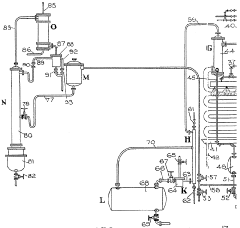
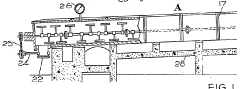
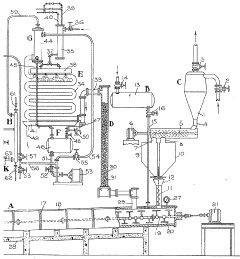
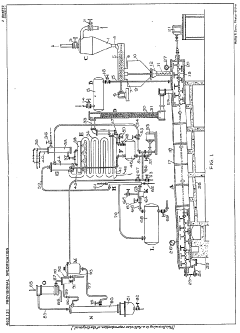
- A continuous process under superatmospheric pressure reacts a fluoride with an acid, followed by preliminary cooling and condensation to separate dilute and concentrated hydrofluoric acid, using a reactor and condensers to achieve high yields and purity.
Ternary azeotropic-like compositions with 1,1,1,2,3,3-hexafluoro-3-methoxy-propane and trans-1,2-dichloroethylene
PatentInactiveEP2247684A1
Innovation
- The development of ternary azeotrope-like compositions comprising 1,1,1,2,3,3-hexafluoro-3-methoxy-propane and trans-1,2-dichloroethylene, combined with a third component like methanol, ethanol, or trifluoroethanol, which form stable blends with enhanced solvent strength, low flammability, and non-ozone depleting properties, suitable for cleaning, coating deposition, thermal energy transfer, and lubrication.
Safety Protocols and Risk Mitigation Strategies
The handling of hydrofluoric acid (HF) and dichloromethane (DCM) requires comprehensive safety protocols due to their severe hazard profiles. HF presents exceptional dangers through its ability to penetrate skin rapidly and cause deep tissue destruction, while DCM poses significant inhalation risks and potential carcinogenicity. Implementing a multi-layered safety approach is essential for laboratory and industrial environments where these solvents are utilized.
Primary engineering controls must include properly functioning fume hoods with face velocities of 80-120 feet per minute for all operations involving these chemicals. Closed systems and automated handling equipment should be employed whenever possible to minimize direct exposure. Regular verification of ventilation system performance through smoke tests and airflow measurements is critical, with documentation maintained for regulatory compliance.
Personal protective equipment requirements exceed standard laboratory protection. For HF handling, workers must utilize heavy-duty butyl rubber or neoprene gloves (minimum 40 mil thickness), face shields over chemical splash goggles, and HF-resistant full body protection including aprons and closed-toe shoes. DCM operations require similar eye protection with specialized Viton or polyvinyl alcohol gloves that resist permeation.
Emergency response infrastructure must include calcium gluconate gel (2.5%) stationed within immediate reach of HF work areas, and specialized HF spill kits containing neutralizing agents. Eyewash stations and safety showers require weekly function testing with flow rates meeting ANSI Z358.1 standards. Workplace monitoring should employ both continuous electronic HF/DCM vapor detectors and regular industrial hygiene sampling to ensure exposure levels remain below OSHA PELs.
Training protocols must be rigorous and recurring, with documented competency verification before independent work authorization. This includes hands-on emergency response drills simulating spills and exposure scenarios conducted quarterly. Medical surveillance programs should establish baseline health assessments and periodic monitoring for workers regularly exposed to these chemicals, with particular attention to pulmonary function and liver enzyme profiles.
Waste management requires specialized containment systems with secondary containment capable of holding 110% of the primary container volume. Neutralization procedures must be clearly documented with verification steps to ensure complete treatment before disposal through approved hazardous waste channels.
Implementation of these protocols requires integration with broader chemical hygiene plans and regular third-party safety audits to identify potential weaknesses in the safety system. Organizations should establish clear metrics for measuring safety performance related specifically to HF and DCM handling, with incident investigation procedures designed to capture near-misses as learning opportunities.
Primary engineering controls must include properly functioning fume hoods with face velocities of 80-120 feet per minute for all operations involving these chemicals. Closed systems and automated handling equipment should be employed whenever possible to minimize direct exposure. Regular verification of ventilation system performance through smoke tests and airflow measurements is critical, with documentation maintained for regulatory compliance.
Personal protective equipment requirements exceed standard laboratory protection. For HF handling, workers must utilize heavy-duty butyl rubber or neoprene gloves (minimum 40 mil thickness), face shields over chemical splash goggles, and HF-resistant full body protection including aprons and closed-toe shoes. DCM operations require similar eye protection with specialized Viton or polyvinyl alcohol gloves that resist permeation.
Emergency response infrastructure must include calcium gluconate gel (2.5%) stationed within immediate reach of HF work areas, and specialized HF spill kits containing neutralizing agents. Eyewash stations and safety showers require weekly function testing with flow rates meeting ANSI Z358.1 standards. Workplace monitoring should employ both continuous electronic HF/DCM vapor detectors and regular industrial hygiene sampling to ensure exposure levels remain below OSHA PELs.
Training protocols must be rigorous and recurring, with documented competency verification before independent work authorization. This includes hands-on emergency response drills simulating spills and exposure scenarios conducted quarterly. Medical surveillance programs should establish baseline health assessments and periodic monitoring for workers regularly exposed to these chemicals, with particular attention to pulmonary function and liver enzyme profiles.
Waste management requires specialized containment systems with secondary containment capable of holding 110% of the primary container volume. Neutralization procedures must be clearly documented with verification steps to ensure complete treatment before disposal through approved hazardous waste channels.
Implementation of these protocols requires integration with broader chemical hygiene plans and regular third-party safety audits to identify potential weaknesses in the safety system. Organizations should establish clear metrics for measuring safety performance related specifically to HF and DCM handling, with incident investigation procedures designed to capture near-misses as learning opportunities.
Environmental Impact and Regulatory Compliance
The environmental impact of hydrofluoric acid (HF) and dichloromethane (DCM) presents significant challenges for industrial applications. Both chemicals are classified as hazardous substances with potential for severe environmental contamination. HF releases can cause acidification of soil and water bodies, leading to ecosystem disruption and biodiversity loss. Similarly, DCM, being volatile, contributes to air pollution and has been identified as a potential ozone-depleting substance with a global warming potential approximately 8.7 times that of carbon dioxide over a 100-year timeframe.
Regulatory frameworks governing these solvents have become increasingly stringent worldwide. In the United States, the Environmental Protection Agency (EPA) regulates HF under the Clean Air Act as a Hazardous Air Pollutant and under the Comprehensive Environmental Response, Compensation, and Liability Act. DCM is regulated under the Toxic Substances Control Act with specific exposure limits established by the Occupational Safety and Health Administration (OSHA). The European Union's REACH (Registration, Evaluation, Authorization and Restriction of Chemicals) regulation classifies both chemicals as substances of very high concern, requiring authorization for specific uses.
Industrial facilities utilizing these solvents must implement comprehensive environmental management systems. This includes advanced containment technologies, such as double-walled storage tanks, leak detection systems, and specialized ventilation systems with scrubbers to capture emissions. Wastewater treatment protocols typically involve neutralization processes for HF and advanced oxidation or activated carbon filtration for DCM before discharge.
Recent technological innovations have focused on reducing environmental footprints through solvent recovery systems. Distillation and membrane separation technologies can achieve recovery rates exceeding 95% for DCM, significantly reducing waste generation. For HF, ion exchange and precipitation methods have shown promise in reclaiming the acid from waste streams, though challenges remain in handling the resulting concentrated waste.
Compliance monitoring requires sophisticated analytical techniques. Gas chromatography-mass spectrometry (GC-MS) is commonly employed for DCM detection in various environmental matrices, while ion-selective electrodes and ion chromatography are preferred for HF monitoring. Continuous emission monitoring systems are increasingly mandated for facilities with significant usage volumes.
Industry trends indicate a gradual shift toward green chemistry alternatives. Supercritical CO2, aqueous-based systems, and bio-derived solvents are emerging as potential replacements in specific applications. However, complete substitution remains challenging due to the unique solvent properties of HF and DCM that are difficult to replicate with environmentally benign alternatives.
Regulatory frameworks governing these solvents have become increasingly stringent worldwide. In the United States, the Environmental Protection Agency (EPA) regulates HF under the Clean Air Act as a Hazardous Air Pollutant and under the Comprehensive Environmental Response, Compensation, and Liability Act. DCM is regulated under the Toxic Substances Control Act with specific exposure limits established by the Occupational Safety and Health Administration (OSHA). The European Union's REACH (Registration, Evaluation, Authorization and Restriction of Chemicals) regulation classifies both chemicals as substances of very high concern, requiring authorization for specific uses.
Industrial facilities utilizing these solvents must implement comprehensive environmental management systems. This includes advanced containment technologies, such as double-walled storage tanks, leak detection systems, and specialized ventilation systems with scrubbers to capture emissions. Wastewater treatment protocols typically involve neutralization processes for HF and advanced oxidation or activated carbon filtration for DCM before discharge.
Recent technological innovations have focused on reducing environmental footprints through solvent recovery systems. Distillation and membrane separation technologies can achieve recovery rates exceeding 95% for DCM, significantly reducing waste generation. For HF, ion exchange and precipitation methods have shown promise in reclaiming the acid from waste streams, though challenges remain in handling the resulting concentrated waste.
Compliance monitoring requires sophisticated analytical techniques. Gas chromatography-mass spectrometry (GC-MS) is commonly employed for DCM detection in various environmental matrices, while ion-selective electrodes and ion chromatography are preferred for HF monitoring. Continuous emission monitoring systems are increasingly mandated for facilities with significant usage volumes.
Industry trends indicate a gradual shift toward green chemistry alternatives. Supercritical CO2, aqueous-based systems, and bio-derived solvents are emerging as potential replacements in specific applications. However, complete substitution remains challenging due to the unique solvent properties of HF and DCM that are difficult to replicate with environmentally benign alternatives.
Unlock deeper insights with PatSnap Eureka Quick Research — get a full tech report to explore trends and direct your research. Try now!
Generate Your Research Report Instantly with AI Agent
Supercharge your innovation with PatSnap Eureka AI Agent Platform!