Hydrofluoric Acid Concentration Impact on Etching Rate
AUG 25, 20259 MIN READ
Generate Your Research Report Instantly with AI Agent
Patsnap Eureka helps you evaluate technical feasibility & market potential.
HF Etching Technology Background and Objectives
Hydrofluoric acid (HF) etching technology has evolved significantly since its first industrial application in the early 20th century. Initially used primarily in glass manufacturing, HF etching has become a cornerstone process in semiconductor fabrication, microelectromechanical systems (MEMS), and photovoltaic industries. The technology leverages the unique chemical properties of hydrofluoric acid to selectively remove silicon dioxide and other materials with high precision.
The evolution of HF etching technology has been driven by the increasing demands of miniaturization in the semiconductor industry. As device dimensions have shrunk from micrometers to nanometers, the precision requirements for etching processes have become exponentially more stringent. This has necessitated a deeper understanding of the fundamental mechanisms governing the etching process, particularly the relationship between acid concentration and etching rate.
Historical data indicates that the etching rate's dependence on HF concentration follows complex kinetics rather than a simple linear relationship. Early research in the 1970s established basic models, but these have required continuous refinement as applications have become more sophisticated. The introduction of buffered HF solutions in the 1980s represented a significant advancement, providing more stable etching rates and improved process control.
Recent technological trends show a shift toward dilute HF solutions and vapor-phase etching techniques to achieve nanometer-scale precision. Additionally, there is growing interest in environmentally sustainable approaches that minimize HF usage while maintaining performance standards. These developments reflect the industry's response to both technical challenges and increasing environmental regulations.
The primary objective of current HF etching technology research is to establish precise, reproducible control over the etching process across varying concentration levels. This includes developing comprehensive models that accurately predict etching behavior under different conditions, enabling more efficient process optimization. Researchers aim to quantify the non-linear relationships between concentration, temperature, agitation, and resulting etch rates.
Secondary objectives include reducing environmental impact through decreased chemical consumption, enhancing worker safety protocols, and extending the technology's applicability to new materials and device architectures. There is particular interest in developing selective etching techniques that can differentiate between similar materials with unprecedented precision.
Looking forward, the field is moving toward intelligent etching systems that incorporate real-time monitoring and feedback control. These systems will potentially utilize machine learning algorithms to adapt process parameters dynamically, ensuring consistent results despite variations in starting materials or environmental conditions. The ultimate goal is to achieve atomic-level precision in material removal while maintaining high throughput and yield rates essential for commercial viability.
The evolution of HF etching technology has been driven by the increasing demands of miniaturization in the semiconductor industry. As device dimensions have shrunk from micrometers to nanometers, the precision requirements for etching processes have become exponentially more stringent. This has necessitated a deeper understanding of the fundamental mechanisms governing the etching process, particularly the relationship between acid concentration and etching rate.
Historical data indicates that the etching rate's dependence on HF concentration follows complex kinetics rather than a simple linear relationship. Early research in the 1970s established basic models, but these have required continuous refinement as applications have become more sophisticated. The introduction of buffered HF solutions in the 1980s represented a significant advancement, providing more stable etching rates and improved process control.
Recent technological trends show a shift toward dilute HF solutions and vapor-phase etching techniques to achieve nanometer-scale precision. Additionally, there is growing interest in environmentally sustainable approaches that minimize HF usage while maintaining performance standards. These developments reflect the industry's response to both technical challenges and increasing environmental regulations.
The primary objective of current HF etching technology research is to establish precise, reproducible control over the etching process across varying concentration levels. This includes developing comprehensive models that accurately predict etching behavior under different conditions, enabling more efficient process optimization. Researchers aim to quantify the non-linear relationships between concentration, temperature, agitation, and resulting etch rates.
Secondary objectives include reducing environmental impact through decreased chemical consumption, enhancing worker safety protocols, and extending the technology's applicability to new materials and device architectures. There is particular interest in developing selective etching techniques that can differentiate between similar materials with unprecedented precision.
Looking forward, the field is moving toward intelligent etching systems that incorporate real-time monitoring and feedback control. These systems will potentially utilize machine learning algorithms to adapt process parameters dynamically, ensuring consistent results despite variations in starting materials or environmental conditions. The ultimate goal is to achieve atomic-level precision in material removal while maintaining high throughput and yield rates essential for commercial viability.
Market Applications and Demand Analysis
The global market for hydrofluoric acid (HF) etching processes continues to expand significantly, driven primarily by the semiconductor and microelectronics industries. The precise control of etching rates through HF concentration management represents a critical factor in manufacturing efficiency and product quality across multiple sectors. Current market analysis indicates that the semiconductor industry alone accounts for approximately 40% of industrial HF consumption, with annual growth rates consistently outpacing general chemical industry averages.
The demand for precisely controlled etching processes has intensified with the continued miniaturization of electronic components. As device architectures shrink below 5nm, manufacturers require unprecedented precision in etching rates, creating substantial market pull for advanced concentration control technologies. This trend is particularly evident in the production of high-performance logic chips and memory devices, where even minor variations in etching rates can significantly impact yield rates and device performance.
Beyond semiconductors, the photovoltaic industry represents another major demand driver. Solar cell manufacturers utilize HF etching in texturing silicon wafers to improve light absorption characteristics. Market research indicates that efficiency improvements of 0.5-1.2% can be achieved through optimized etching processes, translating to substantial economic value in large-scale solar deployments. This sector's demand for precise concentration control continues to grow as manufacturers pursue higher efficiency ratings to maintain competitive advantage.
The display technology market presents additional significant demand, particularly in the production of high-resolution displays for consumer electronics. The fabrication of thin-film transistors and pixel structures requires carefully controlled etching processes to achieve uniform performance across large surface areas. Industry reports highlight that display manufacturers are increasingly investing in advanced etching control systems to improve production yields and enable next-generation display technologies.
Medical device manufacturing represents an emerging application area with stringent requirements for surface finishing. Implantable devices and diagnostic equipment often require precisely controlled micro-texturing that can only be achieved through carefully managed etching processes. This sector's demand, while smaller in volume than electronics applications, commands premium pricing for specialized etching solutions with exceptional concentration control capabilities.
Market forecasts suggest that demand for advanced HF concentration monitoring and control systems will grow substantially over the next five years, with particular emphasis on real-time monitoring solutions that can integrate with automated manufacturing systems. This trend aligns with broader Industry 4.0 initiatives and represents a significant opportunity for technology providers who can deliver precise, reliable concentration management solutions across these diverse application areas.
The demand for precisely controlled etching processes has intensified with the continued miniaturization of electronic components. As device architectures shrink below 5nm, manufacturers require unprecedented precision in etching rates, creating substantial market pull for advanced concentration control technologies. This trend is particularly evident in the production of high-performance logic chips and memory devices, where even minor variations in etching rates can significantly impact yield rates and device performance.
Beyond semiconductors, the photovoltaic industry represents another major demand driver. Solar cell manufacturers utilize HF etching in texturing silicon wafers to improve light absorption characteristics. Market research indicates that efficiency improvements of 0.5-1.2% can be achieved through optimized etching processes, translating to substantial economic value in large-scale solar deployments. This sector's demand for precise concentration control continues to grow as manufacturers pursue higher efficiency ratings to maintain competitive advantage.
The display technology market presents additional significant demand, particularly in the production of high-resolution displays for consumer electronics. The fabrication of thin-film transistors and pixel structures requires carefully controlled etching processes to achieve uniform performance across large surface areas. Industry reports highlight that display manufacturers are increasingly investing in advanced etching control systems to improve production yields and enable next-generation display technologies.
Medical device manufacturing represents an emerging application area with stringent requirements for surface finishing. Implantable devices and diagnostic equipment often require precisely controlled micro-texturing that can only be achieved through carefully managed etching processes. This sector's demand, while smaller in volume than electronics applications, commands premium pricing for specialized etching solutions with exceptional concentration control capabilities.
Market forecasts suggest that demand for advanced HF concentration monitoring and control systems will grow substantially over the next five years, with particular emphasis on real-time monitoring solutions that can integrate with automated manufacturing systems. This trend aligns with broader Industry 4.0 initiatives and represents a significant opportunity for technology providers who can deliver precise, reliable concentration management solutions across these diverse application areas.
Current Challenges in HF Concentration Control
Despite significant advancements in semiconductor manufacturing processes, maintaining precise control over hydrofluoric acid (HF) concentration remains one of the most challenging aspects in etching operations. The relationship between HF concentration and etching rate exhibits a highly non-linear behavior, creating substantial difficulties in process control. Even minor fluctuations in concentration (as small as 0.1%) can lead to significant variations in etching rates, potentially compromising the integrity of semiconductor devices and reducing production yields.
Current monitoring systems for HF concentration often suffer from inadequate real-time measurement capabilities. Traditional methods such as titration provide accurate results but cannot be integrated into continuous production environments due to their time-consuming nature. While optical and electrochemical sensors offer real-time alternatives, they frequently encounter issues with drift, limited sensitivity ranges, and susceptibility to interference from other chemical species present in etching baths.
Temperature fluctuations compound the challenges of concentration control, as the etching rate's sensitivity to HF concentration varies significantly across different temperature ranges. This creates a complex interdependency that current control systems struggle to model accurately. The industry lacks robust mathematical models that can reliably predict etching behavior across the full spectrum of operating conditions encountered in production environments.
The degradation of HF solutions over time presents another critical challenge. As etching processes continue, reaction byproducts accumulate and the effective concentration of active HF molecules decreases, even when nominal concentration readings remain stable. Current systems lack effective methods to distinguish between nominal and effective concentration values, leading to inconsistent etching performance as baths age.
Equipment limitations further exacerbate concentration control issues. Many existing etching systems were designed with less stringent requirements than today's advanced semiconductor nodes demand. Retrofitting these systems with enhanced concentration control capabilities often proves technically challenging and economically prohibitive, creating a technological gap between current equipment capabilities and process requirements.
The increasing diversity of materials used in modern semiconductor devices adds another layer of complexity. Different materials exhibit varying sensitivity to HF concentration changes, making it difficult to establish universal control parameters. This is particularly problematic in heterogeneous structures where multiple materials must be etched simultaneously while maintaining precise selectivity ratios.
Current monitoring systems for HF concentration often suffer from inadequate real-time measurement capabilities. Traditional methods such as titration provide accurate results but cannot be integrated into continuous production environments due to their time-consuming nature. While optical and electrochemical sensors offer real-time alternatives, they frequently encounter issues with drift, limited sensitivity ranges, and susceptibility to interference from other chemical species present in etching baths.
Temperature fluctuations compound the challenges of concentration control, as the etching rate's sensitivity to HF concentration varies significantly across different temperature ranges. This creates a complex interdependency that current control systems struggle to model accurately. The industry lacks robust mathematical models that can reliably predict etching behavior across the full spectrum of operating conditions encountered in production environments.
The degradation of HF solutions over time presents another critical challenge. As etching processes continue, reaction byproducts accumulate and the effective concentration of active HF molecules decreases, even when nominal concentration readings remain stable. Current systems lack effective methods to distinguish between nominal and effective concentration values, leading to inconsistent etching performance as baths age.
Equipment limitations further exacerbate concentration control issues. Many existing etching systems were designed with less stringent requirements than today's advanced semiconductor nodes demand. Retrofitting these systems with enhanced concentration control capabilities often proves technically challenging and economically prohibitive, creating a technological gap between current equipment capabilities and process requirements.
The increasing diversity of materials used in modern semiconductor devices adds another layer of complexity. Different materials exhibit varying sensitivity to HF concentration changes, making it difficult to establish universal control parameters. This is particularly problematic in heterogeneous structures where multiple materials must be etched simultaneously while maintaining precise selectivity ratios.
Existing HF Concentration Monitoring Solutions
01 Factors affecting hydrofluoric acid etching rate
Various factors can influence the etching rate of hydrofluoric acid on different materials. These factors include the concentration of the acid, temperature of the solution, addition of buffering agents, and the composition of the material being etched. By controlling these parameters, the etching rate can be optimized for specific applications. Higher temperatures and concentrations typically result in faster etching rates, while certain additives can either accelerate or inhibit the process.- Factors affecting hydrofluoric acid etching rate: Various factors influence the etching rate of hydrofluoric acid on different materials. These factors include the concentration of the acid, temperature of the solution, addition of buffering agents, and the presence of other chemicals. By controlling these parameters, the etching process can be optimized for specific applications. The etching rate typically increases with higher acid concentration and temperature, while certain additives can either accelerate or inhibit the etching process.
- Etching rate control methods for semiconductor processing: In semiconductor manufacturing, precise control of hydrofluoric acid etching rates is crucial for creating microstructures with specific dimensions. Methods to control etching rates include diluting the acid, using buffered hydrofluoric acid solutions, adding surfactants, and implementing timed etching processes. These techniques allow for selective etching of silicon dioxide, silicon nitride, and other materials used in semiconductor fabrication with nanometer-level precision.
- Equipment and systems for hydrofluoric acid etching: Specialized equipment and systems have been developed for safe and efficient hydrofluoric acid etching processes. These include automated etching machines with precise temperature and flow control, specialized containers with acid-resistant materials, safety mechanisms to prevent exposure, and integrated monitoring systems that track etching progress. Some systems incorporate recirculation capabilities to maintain consistent etching rates throughout the process.
- Material-specific hydrofluoric acid etching rates: Different materials exhibit varying etching rates when exposed to hydrofluoric acid. Silicon dioxide typically etches faster than silicon nitride, while crystalline silicon etches at different rates depending on crystal orientation. Glass compositions show varying resistance to hydrofluoric acid etching based on their chemical makeup. Understanding these material-specific etching rates is essential for developing effective etching processes for applications ranging from semiconductor manufacturing to glass processing.
- Novel hydrofluoric acid etching formulations: Innovative formulations of hydrofluoric acid solutions have been developed to achieve specific etching characteristics. These include mixtures with other acids like nitric acid or phosphoric acid, addition of organic compounds to modify surface tension, incorporation of chelating agents to control metal ion concentrations, and development of vapor-phase etching techniques. These novel formulations allow for more selective etching, reduced undercut, improved surface finish, and enhanced safety compared to conventional hydrofluoric acid solutions.
02 Etching rate control methods for semiconductor processing
In semiconductor manufacturing, precise control of hydrofluoric acid etching rates is crucial for creating microstructures with specific dimensions. Methods to control etching rates include using diluted hydrofluoric acid solutions, adding surfactants or other chemicals to modify surface tension, implementing timed etching processes, and utilizing specialized equipment for uniform application. These techniques help achieve consistent etching results across silicon wafers and other semiconductor materials.Expand Specific Solutions03 Selective etching techniques using hydrofluoric acid
Selective etching techniques utilize hydrofluoric acid to preferentially etch certain materials while leaving others relatively intact. This selectivity can be achieved by modifying the acid composition, using masking materials resistant to hydrofluoric acid, or by controlling the etching conditions. These techniques are particularly important in multilayer semiconductor fabrication, MEMS device manufacturing, and optical component production where precise material removal is required.Expand Specific Solutions04 Equipment and systems for hydrofluoric acid etching
Specialized equipment and systems have been developed for safe and efficient hydrofluoric acid etching processes. These include automated etching machines with precise timing controls, specialized containers with acid-resistant materials, vapor etching systems that reduce liquid acid handling, and recirculation systems that maintain consistent acid concentration. Safety features such as ventilation systems, neutralization capabilities, and monitoring equipment are integral to these systems due to the hazardous nature of hydrofluoric acid.Expand Specific Solutions05 Novel hydrofluoric acid formulations for enhanced etching performance
Advanced formulations of hydrofluoric acid solutions have been developed to enhance etching performance for specific applications. These formulations may include additives such as ammonium fluoride to create buffered oxide etch solutions, organic compounds to improve wetting properties, oxidizing agents to accelerate etching of certain materials, or stabilizers to maintain consistent etching rates over time. These specialized formulations allow for more precise control of the etching process and can be tailored to specific material systems.Expand Specific Solutions
Leading Manufacturers and Research Institutions
The hydrofluoric acid etching rate market is currently in a growth phase, with increasing demand driven by semiconductor manufacturing expansion. The global market size is estimated to exceed $1.5 billion, growing at approximately 6-8% annually due to rising applications in microelectronics and display technologies. Leading players include Taiwan Semiconductor Manufacturing Co. and Samsung Electronics, who have developed advanced etching processes for sub-10nm nodes. Chemical suppliers like DAIKIN INDUSTRIES, Stella Chemifa, and Tosoh Corporation have established proprietary formulations with precise concentration control capabilities. Equipment manufacturers such as SCREEN Holdings and Singulus Technologies are integrating sophisticated monitoring systems to optimize etching performance. The technology continues to mature with recent innovations focusing on environmentally safer alternatives and ultra-precise concentration management for advanced semiconductor applications.
BASF Corp.
Technical Solution: BASF has developed an advanced HF concentration management system for semiconductor manufacturing that focuses on environmental sustainability while maintaining precise etching performance. Their approach utilizes a closed-loop recycling system that continuously monitors, purifies, and reconcentrates HF solutions to extend bath life while maintaining consistent etching rates. BASF's research has demonstrated that controlled HF concentrations between 0.5-49% can achieve etching rates from 10 Å/min to over 1 μm/min depending on target materials and process requirements. Their "EcoEtch" technology incorporates proprietary surfactants that improve wetting characteristics at lower HF concentrations, enabling reduced chemical consumption while maintaining etching performance. For silicon nitride selective etching, BASF has developed a phosphoric acid-HF mixture with concentration-dependent selectivity ratios exceeding 100:1 over silicon dioxide. Their system employs advanced Raman spectroscopy for real-time concentration monitoring with accuracy better than ±0.1%, enabling automated adjustment of etching parameters to compensate for bath aging and depletion effects.
Strengths: Environmentally sustainable approach with reduced chemical waste; excellent process integration with existing fab equipment; comprehensive safety features reducing exposure risks. Weaknesses: Higher initial implementation costs compared to conventional systems; requires more complex maintenance procedures; slightly lower precision in ultra-low concentration applications compared to specialized competitors.
Semiconductor Manufacturing International (Shanghai) Corp.
Technical Solution: SMIC has developed a proprietary HF concentration management system for silicon etching applications that incorporates real-time monitoring and adjustment capabilities. Their approach focuses on dilute HF solutions (typically 0.5-2%) with buffering agents to stabilize etching rates across varying temperature conditions. SMIC's research has demonstrated that by maintaining precise concentration control within ±0.05%, they can achieve etching rate variations below 8% across full wafer surfaces. Their system employs a combination of optical sensors and conductivity measurements to continuously monitor acid concentration, with automated dilution systems that make micro-adjustments based on feedback algorithms. For critical oxide removal steps, SMIC has developed a pulsed etching technique where HF concentration is cyclically varied to optimize surface smoothness while maintaining dimensional control. This method has proven particularly effective for high-aspect-ratio features where traditional constant-concentration approaches often result in uneven etching.
Strengths: Cost-effective implementation suitable for various node technologies; robust process control with good repeatability; adaptable to different substrate materials with minimal reconfiguration. Weaknesses: Lower precision compared to industry leaders; requires more frequent calibration of monitoring systems; somewhat higher chemical consumption due to the pulsed etching approach.
Critical Parameters Affecting Etching Rate
Method for processing semiconductor wafer and semiconductor wafer
PatentInactiveUS7332437B2
Innovation
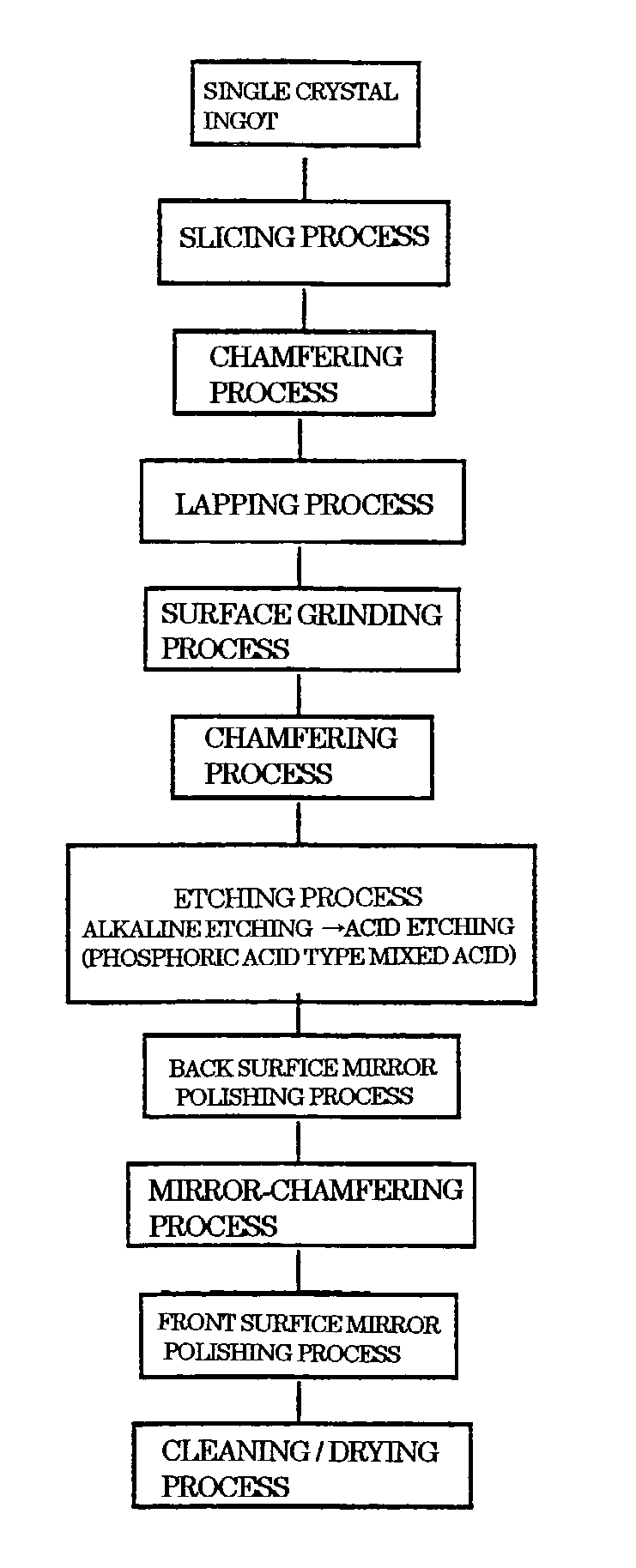
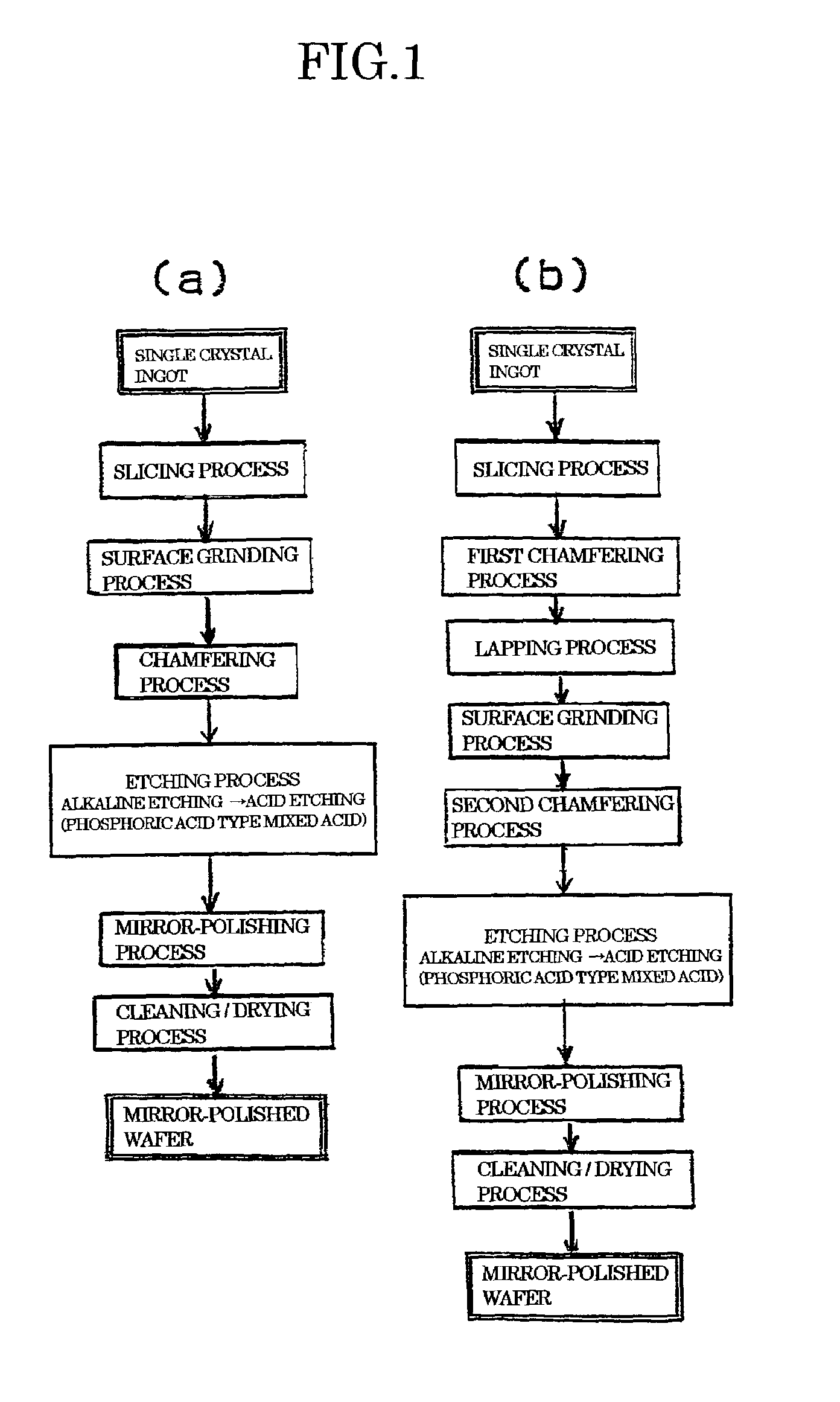
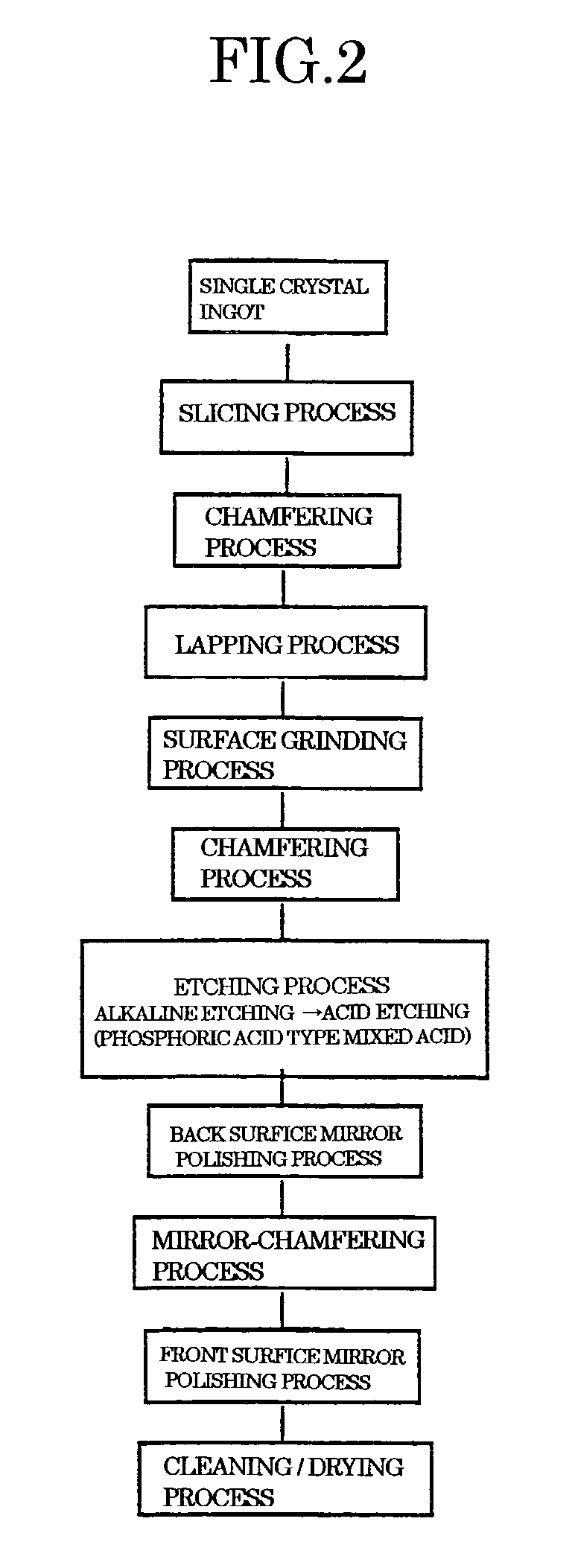
- A method involving alkaline etching followed by acid etching using a mixed acid etchant composed of hydrofluoric acid, nitric acid, and phosphoric acid, which reduces pit depth and waviness, and improves surface roughness, allowing for reduced stock removals and enhanced glossiness on the wafer surface.

Etchant
PatentInactiveUS6821452B2
Innovation
- An etching solution containing 8-19% hydrofluoric acid and 12-42% ammonium fluoride, with a hydrogen ion concentration of 10^-6 to 10^-1.8 mol/L, is used, optionally with surfactants, to achieve etching speeds of 200 nm/min or more on silicon oxide films while minimizing resist film reduction and ensuring surface uniformity, enhanced by temperature control and ultrasonic irradiation.
Safety Protocols and Environmental Regulations
Working with hydrofluoric acid (HF) requires stringent safety protocols due to its highly corrosive nature and ability to penetrate skin and cause severe tissue damage. Personal protective equipment (PPE) for HF handling must include chemical-resistant gloves (typically neoprene or nitrile), face shields, chemical splash goggles, and acid-resistant clothing. Emergency response protocols must be established, including immediate access to calcium gluconate gel for treating HF exposure, as traditional water flushing is insufficient for neutralizing HF burns.
Facility requirements for HF etching operations include dedicated ventilation systems with scrubbers to capture and neutralize acid vapors, particularly as concentration levels increase. Higher HF concentrations necessitate more robust containment systems and monitoring equipment to detect potential leaks. Specialized storage facilities with secondary containment systems are mandatory to prevent environmental contamination in case of spills.
Environmental regulations governing HF usage have become increasingly stringent worldwide. The U.S. Environmental Protection Agency classifies HF as a hazardous air pollutant under the Clean Air Act and regulates its disposal under the Resource Conservation and Recovery Act. The European Union's REACH regulation imposes strict documentation and risk management requirements for HF use. In semiconductor manufacturing regions like Taiwan and South Korea, local regulations often mandate treatment of HF-containing wastewater to reduce fluoride concentrations below 15 mg/L before discharge.
Waste management considerations are particularly critical as HF concentration impacts both etching efficiency and waste toxicity. Higher concentration solutions generate more hazardous waste streams requiring specialized neutralization processes, typically using calcium compounds to form insoluble calcium fluoride. Many jurisdictions require detailed waste tracking documentation and certified disposal methods for HF-containing materials.
Recent regulatory trends show movement toward requiring closed-loop systems that minimize HF waste generation. Several semiconductor manufacturers have implemented recovery and recycling systems that can reclaim and purify used HF solutions, reducing both environmental impact and operational costs. These systems become more economically viable when working with higher concentration HF solutions due to the greater recovery potential.
The relationship between HF concentration and regulatory compliance creates an important optimization challenge. While higher concentrations may increase etching rates, they also trigger more stringent safety requirements and waste management protocols. Companies must balance technical performance benefits against increased compliance costs and potential liability risks associated with more concentrated solutions.
Facility requirements for HF etching operations include dedicated ventilation systems with scrubbers to capture and neutralize acid vapors, particularly as concentration levels increase. Higher HF concentrations necessitate more robust containment systems and monitoring equipment to detect potential leaks. Specialized storage facilities with secondary containment systems are mandatory to prevent environmental contamination in case of spills.
Environmental regulations governing HF usage have become increasingly stringent worldwide. The U.S. Environmental Protection Agency classifies HF as a hazardous air pollutant under the Clean Air Act and regulates its disposal under the Resource Conservation and Recovery Act. The European Union's REACH regulation imposes strict documentation and risk management requirements for HF use. In semiconductor manufacturing regions like Taiwan and South Korea, local regulations often mandate treatment of HF-containing wastewater to reduce fluoride concentrations below 15 mg/L before discharge.
Waste management considerations are particularly critical as HF concentration impacts both etching efficiency and waste toxicity. Higher concentration solutions generate more hazardous waste streams requiring specialized neutralization processes, typically using calcium compounds to form insoluble calcium fluoride. Many jurisdictions require detailed waste tracking documentation and certified disposal methods for HF-containing materials.
Recent regulatory trends show movement toward requiring closed-loop systems that minimize HF waste generation. Several semiconductor manufacturers have implemented recovery and recycling systems that can reclaim and purify used HF solutions, reducing both environmental impact and operational costs. These systems become more economically viable when working with higher concentration HF solutions due to the greater recovery potential.
The relationship between HF concentration and regulatory compliance creates an important optimization challenge. While higher concentrations may increase etching rates, they also trigger more stringent safety requirements and waste management protocols. Companies must balance technical performance benefits against increased compliance costs and potential liability risks associated with more concentrated solutions.
Economic Impact of Etching Rate Optimization
Optimizing etching rates through precise control of hydrofluoric acid concentration delivers substantial economic benefits across semiconductor manufacturing operations. The most immediate impact is cost reduction in chemical consumption, as optimized processes require less hydrofluoric acid while maintaining or improving etching performance. Industry data indicates that precision-controlled etching can reduce chemical usage by 15-20%, translating to significant savings for high-volume manufacturing facilities that typically spend millions annually on etching chemicals.
Production efficiency gains represent another critical economic advantage. When etching rates are optimized, processing times decrease proportionally, allowing for higher throughput on existing equipment. This efficiency improvement can increase production capacity by 10-25% without additional capital investment in equipment, effectively lowering the cost-per-wafer metric that drives profitability in semiconductor manufacturing.
Equipment longevity also improves with optimized etching processes. Lower acid concentrations, when properly calibrated to maintain performance, reduce equipment corrosion and extend the operational lifespan of costly manufacturing assets. The reduction in maintenance frequency and replacement parts can save facilities an estimated 8-12% in annual maintenance costs while improving equipment availability.
Quality improvements from consistent etching rates directly impact yield rates—a primary economic driver in semiconductor manufacturing. When etching processes achieve greater uniformity through optimized acid concentration, defect rates typically decrease by 5-15%. This yield improvement has multiplicative economic effects throughout the production chain, particularly for high-value components where each percentage point of yield improvement can represent millions in recovered revenue.
Environmental compliance costs also decrease with optimized etching processes. Reduced chemical usage means lower waste treatment expenses and diminished environmental liability. Facilities implementing precision etching rate control report 10-30% reductions in waste treatment costs and associated regulatory compliance expenses.
The competitive advantage gained through etching rate optimization extends beyond direct cost savings. Manufacturers achieving superior precision can target higher-value market segments requiring tighter tolerances, commanding premium pricing for their enhanced capabilities. This market positioning effect, while difficult to quantify precisely, often exceeds the direct cost savings in long-term economic impact.
Production efficiency gains represent another critical economic advantage. When etching rates are optimized, processing times decrease proportionally, allowing for higher throughput on existing equipment. This efficiency improvement can increase production capacity by 10-25% without additional capital investment in equipment, effectively lowering the cost-per-wafer metric that drives profitability in semiconductor manufacturing.
Equipment longevity also improves with optimized etching processes. Lower acid concentrations, when properly calibrated to maintain performance, reduce equipment corrosion and extend the operational lifespan of costly manufacturing assets. The reduction in maintenance frequency and replacement parts can save facilities an estimated 8-12% in annual maintenance costs while improving equipment availability.
Quality improvements from consistent etching rates directly impact yield rates—a primary economic driver in semiconductor manufacturing. When etching processes achieve greater uniformity through optimized acid concentration, defect rates typically decrease by 5-15%. This yield improvement has multiplicative economic effects throughout the production chain, particularly for high-value components where each percentage point of yield improvement can represent millions in recovered revenue.
Environmental compliance costs also decrease with optimized etching processes. Reduced chemical usage means lower waste treatment expenses and diminished environmental liability. Facilities implementing precision etching rate control report 10-30% reductions in waste treatment costs and associated regulatory compliance expenses.
The competitive advantage gained through etching rate optimization extends beyond direct cost savings. Manufacturers achieving superior precision can target higher-value market segments requiring tighter tolerances, commanding premium pricing for their enhanced capabilities. This market positioning effect, while difficult to quantify precisely, often exceeds the direct cost savings in long-term economic impact.
Unlock deeper insights with Patsnap Eureka Quick Research — get a full tech report to explore trends and direct your research. Try now!
Generate Your Research Report Instantly with AI Agent
Supercharge your innovation with Patsnap Eureka AI Agent Platform!