Hydrofluoric Acid Processing Methods for Petrochemical Use
AUG 26, 20259 MIN READ
Generate Your Research Report Instantly with AI Agent
Patsnap Eureka helps you evaluate technical feasibility & market potential.
HF Acid Technology Evolution and Objectives
Hydrofluoric acid (HF) has been a cornerstone in petrochemical processing since the early 20th century, with its first industrial applications emerging in the 1920s for oil refining catalytic processes. The evolution of HF acid technology has been marked by significant advancements in handling, safety protocols, and application efficiency, driven by both industrial demands and environmental considerations.
In the 1940s-1950s, HF acid became integral to alkylation processes in petroleum refining, enabling the production of high-octane gasoline components. This period saw rudimentary containment systems and basic safety protocols that, by today's standards, would be considered inadequate. The technology trajectory shifted dramatically in the 1970s-1980s when several high-profile industrial accidents involving HF acid prompted intensive research into safer handling methodologies.
The 1990s witnessed the development of modified HF alkylation technologies, incorporating additives to reduce volatility and mitigate dispersion risks in case of accidental release. Parallel to this, alternative processing methods began emerging, including solid acid catalyst systems and ionic liquid technologies, aiming to reduce or eliminate HF dependency while maintaining processing efficiency.
Current technological objectives in HF acid processing for petrochemical applications focus on several key areas. First, enhancing safety through advanced containment systems, real-time monitoring technologies, and improved emergency response mechanisms remains paramount. The industry aims to achieve zero-incident operations through predictive maintenance and automated safety systems.
Second, environmental sustainability has become increasingly central, with objectives to minimize emissions, reduce waste generation, and develop closed-loop processing systems. This includes technologies for more efficient HF recovery and recycling within petrochemical processes, significantly reducing fresh acid requirements.
Third, process intensification represents a critical technological goal, seeking to maximize yield and selectivity while minimizing energy consumption and operational footprint. Advanced reactor designs, optimized catalyst formulations, and precise process control systems are being developed to achieve these efficiency targets.
Looking forward, the industry is exploring transformative technologies that could fundamentally alter HF acid utilization in petrochemical processing. These include membrane-based separation technologies, non-acid catalytic systems, and electrochemical processing methods that could potentially replace traditional HF-dependent processes while maintaining or improving product quality and economic viability.
In the 1940s-1950s, HF acid became integral to alkylation processes in petroleum refining, enabling the production of high-octane gasoline components. This period saw rudimentary containment systems and basic safety protocols that, by today's standards, would be considered inadequate. The technology trajectory shifted dramatically in the 1970s-1980s when several high-profile industrial accidents involving HF acid prompted intensive research into safer handling methodologies.
The 1990s witnessed the development of modified HF alkylation technologies, incorporating additives to reduce volatility and mitigate dispersion risks in case of accidental release. Parallel to this, alternative processing methods began emerging, including solid acid catalyst systems and ionic liquid technologies, aiming to reduce or eliminate HF dependency while maintaining processing efficiency.
Current technological objectives in HF acid processing for petrochemical applications focus on several key areas. First, enhancing safety through advanced containment systems, real-time monitoring technologies, and improved emergency response mechanisms remains paramount. The industry aims to achieve zero-incident operations through predictive maintenance and automated safety systems.
Second, environmental sustainability has become increasingly central, with objectives to minimize emissions, reduce waste generation, and develop closed-loop processing systems. This includes technologies for more efficient HF recovery and recycling within petrochemical processes, significantly reducing fresh acid requirements.
Third, process intensification represents a critical technological goal, seeking to maximize yield and selectivity while minimizing energy consumption and operational footprint. Advanced reactor designs, optimized catalyst formulations, and precise process control systems are being developed to achieve these efficiency targets.
Looking forward, the industry is exploring transformative technologies that could fundamentally alter HF acid utilization in petrochemical processing. These include membrane-based separation technologies, non-acid catalytic systems, and electrochemical processing methods that could potentially replace traditional HF-dependent processes while maintaining or improving product quality and economic viability.
Petrochemical Industry Demand Analysis
The global demand for hydrofluoric acid (HF) in petrochemical applications continues to grow steadily, driven primarily by the increasing production of fluoropolymers, refrigerants, and high-octane gasoline. Market analysis indicates that the petrochemical sector accounts for approximately 60% of global HF consumption, with alkylation processes for gasoline production representing the largest single application.
Demand patterns show significant regional variations, with North America and Asia-Pacific emerging as the dominant consumers. China's rapid industrialization has positioned it as the fastest-growing market for HF in petrochemical applications, with annual growth rates exceeding the global average by 3-4 percentage points. The Middle East, with its expanding petrochemical infrastructure, represents an emerging market with substantial growth potential.
The alkylation process, which uses HF as a catalyst to produce high-octane gasoline components, remains the cornerstone of petrochemical demand. This application is particularly sensitive to regulatory frameworks governing fuel standards and emissions. Recent environmental regulations in Europe and North America mandating higher-octane, lower-sulfur fuels have indirectly bolstered demand for HF-based alkylation processes.
Market research reveals a growing trend toward safer HF handling technologies, with petrochemical companies willing to invest in advanced processing methods that minimize exposure risks and environmental impact. This trend is particularly pronounced in densely populated regions where refineries operate in close proximity to residential areas.
The fluoropolymer production segment represents another significant demand driver, with polytetrafluoroethylene (PTFE) and related materials experiencing consistent growth in industrial applications. These materials' exceptional chemical resistance and thermal stability properties make them indispensable in harsh chemical environments, further securing HF's position in the petrochemical value chain.
Economic analysis of the supply-demand dynamics indicates price sensitivity in the HF market, with fluctuations in raw material costs (particularly fluorspar) directly impacting procurement decisions in the petrochemical sector. Long-term supply contracts have become increasingly common as refineries seek to hedge against price volatility.
Industry forecasts project continued growth in HF demand for petrochemical applications at a compound annual growth rate of 4.2% through 2028, with particular acceleration in emerging economies. This growth trajectory is supported by increasing vehicle ownership rates in developing nations and the corresponding demand for high-performance fuels produced through HF-catalyzed processes.
Demand patterns show significant regional variations, with North America and Asia-Pacific emerging as the dominant consumers. China's rapid industrialization has positioned it as the fastest-growing market for HF in petrochemical applications, with annual growth rates exceeding the global average by 3-4 percentage points. The Middle East, with its expanding petrochemical infrastructure, represents an emerging market with substantial growth potential.
The alkylation process, which uses HF as a catalyst to produce high-octane gasoline components, remains the cornerstone of petrochemical demand. This application is particularly sensitive to regulatory frameworks governing fuel standards and emissions. Recent environmental regulations in Europe and North America mandating higher-octane, lower-sulfur fuels have indirectly bolstered demand for HF-based alkylation processes.
Market research reveals a growing trend toward safer HF handling technologies, with petrochemical companies willing to invest in advanced processing methods that minimize exposure risks and environmental impact. This trend is particularly pronounced in densely populated regions where refineries operate in close proximity to residential areas.
The fluoropolymer production segment represents another significant demand driver, with polytetrafluoroethylene (PTFE) and related materials experiencing consistent growth in industrial applications. These materials' exceptional chemical resistance and thermal stability properties make them indispensable in harsh chemical environments, further securing HF's position in the petrochemical value chain.
Economic analysis of the supply-demand dynamics indicates price sensitivity in the HF market, with fluctuations in raw material costs (particularly fluorspar) directly impacting procurement decisions in the petrochemical sector. Long-term supply contracts have become increasingly common as refineries seek to hedge against price volatility.
Industry forecasts project continued growth in HF demand for petrochemical applications at a compound annual growth rate of 4.2% through 2028, with particular acceleration in emerging economies. This growth trajectory is supported by increasing vehicle ownership rates in developing nations and the corresponding demand for high-performance fuels produced through HF-catalyzed processes.
Global HF Processing Challenges and Status
Hydrofluoric acid (HF) processing in the petrochemical industry faces significant global challenges that vary by region, technological capability, and regulatory environment. The primary challenge remains the extreme hazardous nature of HF, which poses severe health and safety risks including potential for fatal exposure and long-term tissue damage. This necessitates sophisticated containment systems, specialized handling protocols, and extensive worker protection measures that increase operational complexity and costs.
Environmental concerns represent another major challenge, as HF releases can cause substantial ecological damage to air quality, water systems, and soil composition. Regulatory frameworks governing HF usage have become increasingly stringent worldwide, with notable variations between regions. The European Union implements the REACH regulations and Seveso III Directive specifically targeting high-risk chemical processes, while the United States operates under EPA and OSHA guidelines with particular focus on Risk Management Plans for HF facilities.
Developing nations often struggle with less robust regulatory infrastructure, creating potential safety and environmental vulnerabilities in global HF processing operations. This regulatory disparity has led to concerns about "regulatory arbitrage" where companies might relocate hazardous processes to regions with less oversight.
Technical challenges in HF processing include corrosion management, as HF rapidly deteriorates standard processing equipment, necessitating specialized materials like Monel, modified stainless steels, or fluoropolymer linings that significantly increase capital expenditure. Process control presents additional difficulties due to HF's volatility and reactivity, requiring advanced monitoring systems and redundant safety mechanisms.
The global distribution of HF processing capabilities shows concentration in major petrochemical hubs including the U.S. Gulf Coast, Western Europe, China, Japan, and Middle Eastern nations. China has emerged as the dominant producer, controlling approximately 47% of global HF production capacity, followed by North America and Europe.
Recent technological advancements have focused on developing inherently safer processes, including catalyst modifications that reduce required HF concentrations and membrane-based separation technologies. However, implementation of these innovations varies significantly across regions, with developed economies generally leading adoption rates while emerging markets continue to utilize older, more hazardous processing methods due to cost constraints and technical limitations.
The COVID-19 pandemic further complicated the global HF processing landscape by disrupting supply chains, delaying safety upgrades, and in some cases, relaxing regulatory enforcement due to economic pressures. This has highlighted vulnerabilities in the global HF processing infrastructure and reinforced the need for more resilient and standardized approaches to managing this critical but hazardous chemical process.
Environmental concerns represent another major challenge, as HF releases can cause substantial ecological damage to air quality, water systems, and soil composition. Regulatory frameworks governing HF usage have become increasingly stringent worldwide, with notable variations between regions. The European Union implements the REACH regulations and Seveso III Directive specifically targeting high-risk chemical processes, while the United States operates under EPA and OSHA guidelines with particular focus on Risk Management Plans for HF facilities.
Developing nations often struggle with less robust regulatory infrastructure, creating potential safety and environmental vulnerabilities in global HF processing operations. This regulatory disparity has led to concerns about "regulatory arbitrage" where companies might relocate hazardous processes to regions with less oversight.
Technical challenges in HF processing include corrosion management, as HF rapidly deteriorates standard processing equipment, necessitating specialized materials like Monel, modified stainless steels, or fluoropolymer linings that significantly increase capital expenditure. Process control presents additional difficulties due to HF's volatility and reactivity, requiring advanced monitoring systems and redundant safety mechanisms.
The global distribution of HF processing capabilities shows concentration in major petrochemical hubs including the U.S. Gulf Coast, Western Europe, China, Japan, and Middle Eastern nations. China has emerged as the dominant producer, controlling approximately 47% of global HF production capacity, followed by North America and Europe.
Recent technological advancements have focused on developing inherently safer processes, including catalyst modifications that reduce required HF concentrations and membrane-based separation technologies. However, implementation of these innovations varies significantly across regions, with developed economies generally leading adoption rates while emerging markets continue to utilize older, more hazardous processing methods due to cost constraints and technical limitations.
The COVID-19 pandemic further complicated the global HF processing landscape by disrupting supply chains, delaying safety upgrades, and in some cases, relaxing regulatory enforcement due to economic pressures. This has highlighted vulnerabilities in the global HF processing infrastructure and reinforced the need for more resilient and standardized approaches to managing this critical but hazardous chemical process.
Current HF Handling and Purification Methods
01 Semiconductor wafer cleaning methods using hydrofluoric acid
Hydrofluoric acid is widely used in semiconductor manufacturing for cleaning silicon wafers. These methods involve using diluted hydrofluoric acid solutions to remove oxide layers, contaminants, and residues from wafer surfaces. The processes often include specific concentration ratios, treatment times, and may be combined with other chemicals like ammonium fluoride to form buffered oxide etch (BOE) solutions. These cleaning methods are crucial for preparing wafers for subsequent processing steps in semiconductor fabrication.- Semiconductor wafer cleaning methods using hydrofluoric acid: Hydrofluoric acid is widely used in semiconductor manufacturing for cleaning silicon wafers. These methods typically involve using diluted hydrofluoric acid solutions to remove native oxide layers and contaminants from wafer surfaces. The processes often include specific concentration ratios, temperature controls, and timing parameters to achieve optimal cleaning results while minimizing damage to the semiconductor substrate. Some methods incorporate additional chemicals or steps such as rinsing with deionized water to enhance cleaning efficiency.
- Hydrofluoric acid recycling and waste treatment systems: These methods focus on the recycling, recovery, and safe disposal of hydrofluoric acid waste from industrial processes. The techniques include neutralization processes, filtration systems, and chemical treatments to reduce environmental impact. Advanced systems may incorporate closed-loop recycling to capture and purify used hydrofluoric acid for reuse in manufacturing processes, significantly reducing waste and operational costs while improving environmental sustainability.
- Etching processes using hydrofluoric acid mixtures: Specialized etching processes utilize hydrofluoric acid in combination with other chemicals to selectively remove materials in various manufacturing applications. These methods control etching rates through precise mixture ratios, temperature regulation, and exposure timing. The processes are particularly important in microelectronics manufacturing, glass processing, and metal surface treatment where specific material removal patterns are required. Some advanced techniques incorporate buffered hydrofluoric acid solutions to achieve more controlled and uniform etching results.
- Safety equipment and handling systems for hydrofluoric acid: These innovations focus on specialized equipment and systems designed for the safe handling, storage, and application of hydrofluoric acid in industrial settings. The technologies include specialized containment vessels, automated dispensing systems, neutralization stations, and personal protective equipment specifically designed for hydrofluoric acid hazards. Some systems incorporate real-time monitoring of acid concentrations and automated emergency response mechanisms to minimize risks associated with this highly corrosive and toxic chemical.
- Hydrofluoric acid treatment for glass and ceramic surfaces: Methods for treating glass and ceramic surfaces with hydrofluoric acid to achieve specific surface properties or appearances. These processes include controlled etching to create frosted or matte finishes, surface activation for subsequent coating applications, or precision material removal for optical components. The techniques often specify concentration levels, temperature conditions, and exposure durations to achieve consistent results across treated surfaces while maintaining dimensional accuracy and material integrity.
02 Hydrofluoric acid waste treatment and recycling systems
Various methods have been developed for treating and recycling hydrofluoric acid waste to address environmental concerns and reduce costs. These systems typically involve neutralization processes, filtration techniques, and chemical treatments to remove contaminants from used hydrofluoric acid. Some approaches include precipitation of fluoride compounds, ion exchange methods, and membrane separation technologies. These waste treatment methods aim to either safely dispose of the acid or recover it for reuse in industrial processes.Expand Specific Solutions03 Etching processes using hydrofluoric acid for glass and ceramics
Hydrofluoric acid is employed in controlled etching processes for glass, ceramics, and other silica-based materials. These methods involve specific concentrations of hydrofluoric acid, precise timing, and temperature control to achieve desired surface modifications. The processes may include masking techniques to create patterns, surface roughening for improved adhesion, or polishing applications. Safety measures are integral to these methods due to the highly corrosive nature of hydrofluoric acid when interacting with silicate materials.Expand Specific Solutions04 Equipment and apparatus for safe handling of hydrofluoric acid
Specialized equipment and apparatus have been developed for the safe handling, storage, and application of hydrofluoric acid in industrial processes. These include corrosion-resistant containers, automated dispensing systems, specialized pumps, and safety enclosures. The equipment often incorporates monitoring systems for leak detection, neutralization capabilities for spills, and protective barriers to minimize exposure risks. These apparatus are designed with materials resistant to hydrofluoric acid corrosion, such as specific polymers, fluoropolymers, or specially treated metals.Expand Specific Solutions05 Hydrofluoric acid mixtures and formulations for metal surface treatment
Specialized hydrofluoric acid mixtures and formulations are used for metal surface treatment, including cleaning, pickling, and passivation of various metals and alloys. These formulations often combine hydrofluoric acid with other acids like nitric acid or sulfuric acid in specific ratios to optimize effectiveness for different metal substrates. The methods include precise control of concentration, temperature, and exposure time to achieve desired surface properties while minimizing base metal attack. These treatments are commonly used in aerospace, automotive, and manufacturing industries to prepare metal surfaces for subsequent coating or bonding processes.Expand Specific Solutions
Key Industry Players and Market Competition
The hydrofluoric acid processing market for petrochemical use is currently in a growth phase, with increasing demand driven by expanding petrochemical operations globally. The market size is estimated to be substantial, with projections indicating continued expansion due to rising petroleum refining activities. Technologically, the field shows varying degrees of maturity, with established players like Halliburton Energy Services and ExxonMobil Technology & Engineering offering conventional processing methods, while companies such as Do-Fluoride New Materials and Arkema are advancing innovative approaches. Chinese entities including CNNC 404 and Jiangyin Runma Electronic Material are rapidly developing capabilities, particularly in high-purity applications. Saudi Aramco and Honeywell International Technologies represent significant market presence with integrated solutions, while specialized players like Dorf Ketal Chemicals focus on niche applications with proprietary technologies.
Halliburton Energy Services, Inc.
Technical Solution: Halliburton has developed advanced hydrofluoric acid (HF) processing methods specifically for oil and gas applications, focusing on matrix acidizing treatments. Their proprietary HF acid systems incorporate specialized surfactants and corrosion inhibitors that allow for controlled reaction rates with formation minerals. Their technology includes retarded HF acid systems that slow down the reaction kinetics, preventing precipitation of reaction products that could damage the formation. Halliburton's methods also feature dual-stage acid systems where an initial preflush with non-HF acids removes carbonates before the main HF treatment targets silicates, significantly improving stimulation efficiency in sandstone reservoirs. Their closed-loop handling systems minimize exposure risks during field operations while maintaining acid quality.
Strengths: Superior control over reaction kinetics in reservoir environments; comprehensive safety protocols for field handling; extensive field testing data across various formation types. Weaknesses: Higher cost compared to conventional acid systems; requires specialized equipment and trained personnel; limited application in extremely high-temperature formations.
Honeywell International Technologies Ltd.
Technical Solution: Honeywell has pioneered advanced anhydrous hydrogen fluoride (AHF) processing technologies for petrochemical applications, particularly in alkylation units. Their UOP HF Alkylation technology incorporates proprietary acid regeneration systems that minimize fresh HF consumption by up to 30% compared to conventional methods. Honeywell's approach includes specialized metallurgy selection and corrosion-resistant materials that extend equipment life in HF environments. Their Rapid Response HF mitigation systems provide industry-leading safety protocols, including water spray curtain technology that can neutralize up to 95% of potential HF releases. Honeywell has also developed advanced acid analyzers that provide real-time monitoring of acid strength and contaminant levels, allowing for precise process control and optimization of catalyst performance in alkylation units.
Strengths: Industry-leading safety systems with proven effectiveness; integrated process control solutions that optimize acid usage; extensive experience across global installations. Weaknesses: High capital investment requirements; complex implementation process requiring specialized expertise; ongoing licensing costs for proprietary technology components.
Critical Patents in HF Processing Technology
Improvements in or relating to the manufacture of hydrofluoric acid
PatentInactiveGB462131A
Innovation
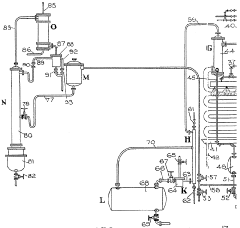
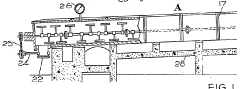
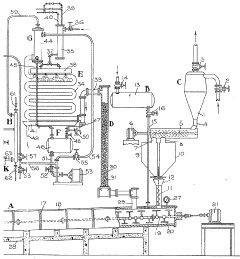
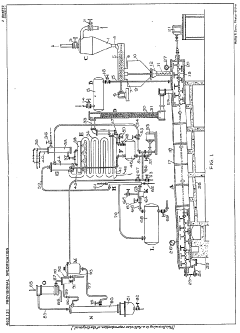
- A continuous process under superatmospheric pressure reacts a fluoride with an acid, followed by preliminary cooling and condensation to separate dilute and concentrated hydrofluoric acid, using a reactor and condensers to achieve high yields and purity.
Preparation method for hydrofluoric acid
PatentInactiveTW201242899A
Innovation
- A method involving the addition of untreated hydrogen fluoride and impurities to an aqueous solution, followed by filtration and absorption with pure water, to produce high-purity hydrofluoric acid by leveraging the solubility of hydrogen fluoride in water and the attraction of impurities, reducing the need for multiple heating and distillation steps.


Safety and Containment Protocols
The handling of hydrofluoric acid (HF) in petrochemical applications demands rigorous safety and containment protocols due to its extreme corrosivity and toxicity. Primary containment systems typically employ specialized materials such as modified stainless steel alloys, fluoropolymers like PTFE and PVDF, or carbon steel with appropriate linings. These materials must undergo regular integrity testing using ultrasonic thickness measurements and radiographic inspections to detect potential degradation before containment failures occur.
Secondary containment systems represent a critical defense layer, designed to capture and contain any HF that might escape primary containment. These systems typically include acid-resistant dikes, berms, sumps, and collection tanks strategically positioned throughout processing facilities. Modern installations increasingly incorporate automated leak detection systems utilizing infrared spectroscopy or specialized electrochemical sensors that can detect HF concentrations as low as 0.5 ppm.
Personal protective equipment (PPE) protocols for HF handling exceed standard chemical safety requirements. Workers must utilize impermeable full-body suits made of HF-resistant materials, supplied-air respirators, face shields, and multiple layers of gloves including an inner fluoroelastomer layer and outer heavy-duty neoprene layer. Calcium gluconate gel stations must be positioned throughout facilities for immediate application in case of exposure.
Emergency response protocols for HF incidents follow specialized procedures distinct from other chemical emergencies. These include dedicated HF response teams trained in specialized neutralization techniques using calcium-based compounds, vapor suppression methods, and medical intervention procedures. Water deluge systems are strategically positioned to rapidly dilute and contain spills, though water application must be carefully controlled to prevent splashing of concentrated acid.
Facility design considerations incorporate HF-specific elements such as negatively pressurized processing areas to prevent vapor migration, specialized ventilation systems with scrubbers capable of removing HF from exhaust air, and sloped floors directing any spills toward collection sumps equipped with neutralization capabilities. Processing areas are physically separated from control rooms and administrative spaces through multiple containment barriers.
Regulatory compliance for HF handling has become increasingly stringent, with facilities required to implement Process Safety Management (PSM) programs, Risk Management Plans (RMP), and detailed documentation of all safety protocols. Regular third-party audits verify compliance with standards established by organizations such as the American Petroleum Institute (API) and the Chemical Safety Board (CSB), with particular attention to incident investigation procedures and implementation of lessons learned from previous incidents across the industry.
Secondary containment systems represent a critical defense layer, designed to capture and contain any HF that might escape primary containment. These systems typically include acid-resistant dikes, berms, sumps, and collection tanks strategically positioned throughout processing facilities. Modern installations increasingly incorporate automated leak detection systems utilizing infrared spectroscopy or specialized electrochemical sensors that can detect HF concentrations as low as 0.5 ppm.
Personal protective equipment (PPE) protocols for HF handling exceed standard chemical safety requirements. Workers must utilize impermeable full-body suits made of HF-resistant materials, supplied-air respirators, face shields, and multiple layers of gloves including an inner fluoroelastomer layer and outer heavy-duty neoprene layer. Calcium gluconate gel stations must be positioned throughout facilities for immediate application in case of exposure.
Emergency response protocols for HF incidents follow specialized procedures distinct from other chemical emergencies. These include dedicated HF response teams trained in specialized neutralization techniques using calcium-based compounds, vapor suppression methods, and medical intervention procedures. Water deluge systems are strategically positioned to rapidly dilute and contain spills, though water application must be carefully controlled to prevent splashing of concentrated acid.
Facility design considerations incorporate HF-specific elements such as negatively pressurized processing areas to prevent vapor migration, specialized ventilation systems with scrubbers capable of removing HF from exhaust air, and sloped floors directing any spills toward collection sumps equipped with neutralization capabilities. Processing areas are physically separated from control rooms and administrative spaces through multiple containment barriers.
Regulatory compliance for HF handling has become increasingly stringent, with facilities required to implement Process Safety Management (PSM) programs, Risk Management Plans (RMP), and detailed documentation of all safety protocols. Regular third-party audits verify compliance with standards established by organizations such as the American Petroleum Institute (API) and the Chemical Safety Board (CSB), with particular attention to incident investigation procedures and implementation of lessons learned from previous incidents across the industry.
Environmental Impact and Regulatory Compliance
The environmental impact of hydrofluoric acid (HF) processing in petrochemical applications presents significant challenges that require comprehensive management strategies. HF is classified as an extremely hazardous substance due to its corrosive properties and potential for severe environmental contamination. When released into the environment, HF can cause acidification of water bodies, resulting in detrimental effects on aquatic ecosystems and biodiversity. Soil contamination from HF spills can persist for extended periods, affecting agricultural productivity and groundwater quality.
Air emissions from HF processing facilities represent another critical environmental concern. Fugitive emissions during handling, storage, and processing can contribute to air pollution, potentially causing respiratory issues in surrounding communities and vegetation damage. The volatility of HF compounds exacerbates these risks, necessitating sophisticated containment and scrubbing systems to minimize atmospheric release.
Regulatory frameworks governing HF processing have become increasingly stringent globally. In the United States, the Environmental Protection Agency (EPA) regulates HF under multiple statutes, including the Clean Air Act, Clean Water Act, and Resource Conservation and Recovery Act. The Occupational Safety and Health Administration (OSHA) imposes strict workplace safety standards for HF handling. Similarly, the European Union's REACH regulation classifies HF as a substance of very high concern, requiring extensive documentation and risk management measures.
Compliance requirements typically include comprehensive environmental impact assessments, regular emissions monitoring, detailed emergency response plans, and community right-to-know provisions. Many jurisdictions mandate the implementation of Best Available Techniques (BAT) for HF processing, focusing on closed-loop systems, advanced scrubbing technologies, and process optimization to minimize environmental footprint.
The petrochemical industry has responded with significant technological innovations to address these challenges. Modern HF alkylation units incorporate multiple redundant safety systems, including rapid acid detection, automated neutralization systems, and water curtains to contain potential releases. Advanced monitoring technologies utilizing infrared spectroscopy and electrochemical sensors enable real-time detection of emissions at parts-per-billion levels, facilitating immediate corrective actions.
Waste management represents another critical compliance area. HF-containing waste streams require specialized treatment processes, including neutralization with alkaline agents, precipitation of fluoride salts, and secure disposal in hazardous waste facilities. Many operations have implemented regeneration and recycling technologies to minimize waste generation, simultaneously reducing environmental impact and operational costs.
Industry leaders have increasingly adopted voluntary standards exceeding regulatory requirements, recognizing that proactive environmental management represents both an ethical imperative and a business advantage in an era of heightened sustainability expectations.
Air emissions from HF processing facilities represent another critical environmental concern. Fugitive emissions during handling, storage, and processing can contribute to air pollution, potentially causing respiratory issues in surrounding communities and vegetation damage. The volatility of HF compounds exacerbates these risks, necessitating sophisticated containment and scrubbing systems to minimize atmospheric release.
Regulatory frameworks governing HF processing have become increasingly stringent globally. In the United States, the Environmental Protection Agency (EPA) regulates HF under multiple statutes, including the Clean Air Act, Clean Water Act, and Resource Conservation and Recovery Act. The Occupational Safety and Health Administration (OSHA) imposes strict workplace safety standards for HF handling. Similarly, the European Union's REACH regulation classifies HF as a substance of very high concern, requiring extensive documentation and risk management measures.
Compliance requirements typically include comprehensive environmental impact assessments, regular emissions monitoring, detailed emergency response plans, and community right-to-know provisions. Many jurisdictions mandate the implementation of Best Available Techniques (BAT) for HF processing, focusing on closed-loop systems, advanced scrubbing technologies, and process optimization to minimize environmental footprint.
The petrochemical industry has responded with significant technological innovations to address these challenges. Modern HF alkylation units incorporate multiple redundant safety systems, including rapid acid detection, automated neutralization systems, and water curtains to contain potential releases. Advanced monitoring technologies utilizing infrared spectroscopy and electrochemical sensors enable real-time detection of emissions at parts-per-billion levels, facilitating immediate corrective actions.
Waste management represents another critical compliance area. HF-containing waste streams require specialized treatment processes, including neutralization with alkaline agents, precipitation of fluoride salts, and secure disposal in hazardous waste facilities. Many operations have implemented regeneration and recycling technologies to minimize waste generation, simultaneously reducing environmental impact and operational costs.
Industry leaders have increasingly adopted voluntary standards exceeding regulatory requirements, recognizing that proactive environmental management represents both an ethical imperative and a business advantage in an era of heightened sustainability expectations.
Unlock deeper insights with Patsnap Eureka Quick Research — get a full tech report to explore trends and direct your research. Try now!
Generate Your Research Report Instantly with AI Agent
Supercharge your innovation with Patsnap Eureka AI Agent Platform!