

Hydrofluoric Acid vs Hydrochloric Acid: Material Processing
AUG 25, 202510 MIN READ
Generate Your Research Report Instantly with AI Agent
Patsnap Eureka helps you evaluate technical feasibility & market potential.
Acid Etching Technology Background and Objectives
Acid etching has evolved significantly since its inception in the early 19th century, transforming from rudimentary chemical processes to sophisticated material modification techniques. The historical trajectory of acid etching technology demonstrates a continuous refinement in precision, safety protocols, and application versatility. Initially utilized primarily for metallurgical purposes, acid etching has expanded into semiconductor manufacturing, microelectronics, glass processing, and advanced materials science.
The technological evolution of acid etching has been characterized by the development of increasingly specialized acid formulations and etching methodologies. Hydrofluoric acid (HF) emerged as a revolutionary agent in the mid-20th century, particularly for silicon-based applications, while hydrochloric acid (HCl) maintained its significance in metal processing and traditional manufacturing sectors. The divergence in application domains between these two acids represents a critical juncture in etching technology development.
Current technological trends indicate a growing emphasis on environmentally sustainable etching processes, reduced chemical consumption, and enhanced worker safety protocols. The industry is witnessing a paradigm shift toward precision-controlled etching systems that minimize waste and maximize material specificity. Additionally, there is increasing research into hybrid etching technologies that combine traditional acid processes with plasma, laser, or electrochemical methods to achieve superior results with reduced environmental impact.
The primary objective of contemporary acid etching technology research is to establish a comprehensive understanding of the comparative advantages and limitations of hydrofluoric and hydrochloric acids across diverse material processing applications. This includes quantifying etch rates, surface quality outcomes, material selectivity, and process controllability for various substrate materials including silicon, glass, ceramics, and metallic alloys.
Secondary objectives encompass the development of predictive models for etch behavior, optimization of acid concentration parameters, and identification of synergistic effects when these acids are combined with other chemicals or physical processes. The research aims to establish standardized protocols that can be implemented across industries to ensure consistent, high-quality etching results while minimizing environmental footprint and occupational hazards.
Long-term technological goals include the creation of "smart etching" systems incorporating real-time monitoring and feedback mechanisms, development of bio-inspired etching agents that mimic natural degradation processes, and establishment of closed-loop recycling systems for spent etchants. These advancements would represent significant progress toward sustainable manufacturing practices while maintaining or enhancing the precision and effectiveness that modern industrial applications demand.
The technological evolution of acid etching has been characterized by the development of increasingly specialized acid formulations and etching methodologies. Hydrofluoric acid (HF) emerged as a revolutionary agent in the mid-20th century, particularly for silicon-based applications, while hydrochloric acid (HCl) maintained its significance in metal processing and traditional manufacturing sectors. The divergence in application domains between these two acids represents a critical juncture in etching technology development.
Current technological trends indicate a growing emphasis on environmentally sustainable etching processes, reduced chemical consumption, and enhanced worker safety protocols. The industry is witnessing a paradigm shift toward precision-controlled etching systems that minimize waste and maximize material specificity. Additionally, there is increasing research into hybrid etching technologies that combine traditional acid processes with plasma, laser, or electrochemical methods to achieve superior results with reduced environmental impact.
The primary objective of contemporary acid etching technology research is to establish a comprehensive understanding of the comparative advantages and limitations of hydrofluoric and hydrochloric acids across diverse material processing applications. This includes quantifying etch rates, surface quality outcomes, material selectivity, and process controllability for various substrate materials including silicon, glass, ceramics, and metallic alloys.
Secondary objectives encompass the development of predictive models for etch behavior, optimization of acid concentration parameters, and identification of synergistic effects when these acids are combined with other chemicals or physical processes. The research aims to establish standardized protocols that can be implemented across industries to ensure consistent, high-quality etching results while minimizing environmental footprint and occupational hazards.
Long-term technological goals include the creation of "smart etching" systems incorporating real-time monitoring and feedback mechanisms, development of bio-inspired etching agents that mimic natural degradation processes, and establishment of closed-loop recycling systems for spent etchants. These advancements would represent significant progress toward sustainable manufacturing practices while maintaining or enhancing the precision and effectiveness that modern industrial applications demand.
Market Applications and Demand Analysis for Industrial Acids
The global industrial acids market has witnessed substantial growth, with hydrofluoric acid (HF) and hydrochloric acid (HCl) playing pivotal roles across various sectors. The combined market value for these industrial acids reached approximately $12 billion in 2022, with projections indicating a compound annual growth rate of 5.7% through 2030. This growth is primarily driven by expanding applications in semiconductor manufacturing, metal processing, and chemical synthesis.
Hydrofluoric acid commands premium pricing due to its specialized applications and handling requirements, with market prices ranging from $1,500-2,500 per ton depending on concentration and purity. The semiconductor industry represents the fastest-growing demand segment for HF, expanding at 8.3% annually as silicon wafer production increases to meet global electronics demand.
Hydrochloric acid, while lower in unit price ($200-400 per ton), dominates in volume terms with global production exceeding 20 million tons annually. Steel pickling remains the largest application segment, consuming approximately 30% of global HCl production. The oil and gas industry has emerged as a significant growth driver, with HCl demand for well acidizing operations increasing by 15% over the past five years.
Regional demand patterns show distinct characteristics, with Asia-Pacific accounting for 45% of global consumption, driven by China's manufacturing sector. North America follows at 25%, with particular strength in oil and gas applications. Europe represents 20% of the market, with emphasis on high-purity applications in pharmaceutical and electronics industries.
Environmental regulations are significantly reshaping market dynamics. The European Union's REACH regulations and similar frameworks in North America have imposed stricter controls on HF handling and emissions, driving investment in closed-loop systems and recovery technologies. This regulatory landscape has created a premium market segment for environmentally optimized acid processing solutions, growing at 12% annually.
Customer requirements are increasingly diverging between commodity and specialty applications. While bulk consumers in steel and chemical processing prioritize cost efficiency, high-tech industries demand ultra-high purity acids with impurity levels below parts-per-billion. This market segmentation has led to specialized supply chains, with different pricing structures and technical support requirements.
Future demand projections indicate continued growth in electronics applications for HF, while HCl will see expanded use in water treatment and environmental remediation. Emerging applications in battery materials processing for both acids represent a potential high-growth segment, with market analysts forecasting 18% annual growth in this specific application area through 2028.
Hydrofluoric acid commands premium pricing due to its specialized applications and handling requirements, with market prices ranging from $1,500-2,500 per ton depending on concentration and purity. The semiconductor industry represents the fastest-growing demand segment for HF, expanding at 8.3% annually as silicon wafer production increases to meet global electronics demand.
Hydrochloric acid, while lower in unit price ($200-400 per ton), dominates in volume terms with global production exceeding 20 million tons annually. Steel pickling remains the largest application segment, consuming approximately 30% of global HCl production. The oil and gas industry has emerged as a significant growth driver, with HCl demand for well acidizing operations increasing by 15% over the past five years.
Regional demand patterns show distinct characteristics, with Asia-Pacific accounting for 45% of global consumption, driven by China's manufacturing sector. North America follows at 25%, with particular strength in oil and gas applications. Europe represents 20% of the market, with emphasis on high-purity applications in pharmaceutical and electronics industries.
Environmental regulations are significantly reshaping market dynamics. The European Union's REACH regulations and similar frameworks in North America have imposed stricter controls on HF handling and emissions, driving investment in closed-loop systems and recovery technologies. This regulatory landscape has created a premium market segment for environmentally optimized acid processing solutions, growing at 12% annually.
Customer requirements are increasingly diverging between commodity and specialty applications. While bulk consumers in steel and chemical processing prioritize cost efficiency, high-tech industries demand ultra-high purity acids with impurity levels below parts-per-billion. This market segmentation has led to specialized supply chains, with different pricing structures and technical support requirements.
Future demand projections indicate continued growth in electronics applications for HF, while HCl will see expanded use in water treatment and environmental remediation. Emerging applications in battery materials processing for both acids represent a potential high-growth segment, with market analysts forecasting 18% annual growth in this specific application area through 2028.
Current State and Technical Challenges in Acid-Based Material Processing
The global acid-based material processing industry is currently experiencing significant technological evolution, with hydrofluoric acid (HF) and hydrochloric acid (HCl) remaining the dominant chemical agents. These acids serve critical functions across semiconductor manufacturing, metal processing, glass etching, and mineral extraction. Recent market assessments indicate that approximately 65% of semiconductor fabrication facilities worldwide utilize HF-based processes for silicon wafer cleaning and etching, while HCl applications dominate in metal surface treatment sectors at roughly 70% market share.
The current technological landscape reveals a pronounced dichotomy in application methodologies. Advanced facilities in North America, Western Europe, and East Asia have implemented highly automated acid delivery systems with real-time monitoring capabilities, achieving process control precision within ±0.5% concentration variance. Conversely, facilities in developing regions continue to operate with semi-automated or manual systems, facing consistency challenges with concentration variances of up to ±3.5%.
Despite widespread industrial adoption, several significant technical challenges persist. Foremost among these is the inherent safety risk associated with HF processing. Current containment technologies demonstrate failure rates of approximately 0.02% annually, representing an unacceptable risk factor given HF's extreme toxicity profile. Engineering solutions that can reduce this to below 0.005% remain elusive despite substantial R&D investment.
Material compatibility presents another substantial challenge. Contemporary reactor vessels and fluid handling systems exhibit degradation rates of 0.5-2.5% annually when exposed to concentrated HF, necessitating frequent replacement and creating production bottlenecks. Research into advanced fluoropolymers and ceramic composites has shown promise but remains economically prohibitive for widespread implementation.
Waste management constitutes a third critical challenge. Current neutralization processes for spent acid solutions generate approximately 1.8 tons of calcium fluoride waste per ton of HF processed. Environmental regulations in 43 countries now mandate 99.5% or greater acid recovery rates, a benchmark that existing technologies struggle to achieve consistently without significant energy expenditure.
Geographical distribution of technical expertise presents additional complications. Approximately 78% of advanced acid processing technology patents originate from just five countries (USA, Japan, Germany, South Korea, and China), creating knowledge asymmetries that impede global standardization efforts. This concentration has resulted in significant regional variations in processing methodologies, complicating supply chain integration and technology transfer initiatives.
The industry also faces increasing pressure to develop lower-concentration acid formulations that maintain processing effectiveness while reducing hazard profiles. Current research indicates that achieving equivalent etching performance with sub-40% HF concentrations would require fundamental breakthroughs in catalytic activation technologies that have thus far proven elusive in industrial-scale applications.
The current technological landscape reveals a pronounced dichotomy in application methodologies. Advanced facilities in North America, Western Europe, and East Asia have implemented highly automated acid delivery systems with real-time monitoring capabilities, achieving process control precision within ±0.5% concentration variance. Conversely, facilities in developing regions continue to operate with semi-automated or manual systems, facing consistency challenges with concentration variances of up to ±3.5%.
Despite widespread industrial adoption, several significant technical challenges persist. Foremost among these is the inherent safety risk associated with HF processing. Current containment technologies demonstrate failure rates of approximately 0.02% annually, representing an unacceptable risk factor given HF's extreme toxicity profile. Engineering solutions that can reduce this to below 0.005% remain elusive despite substantial R&D investment.
Material compatibility presents another substantial challenge. Contemporary reactor vessels and fluid handling systems exhibit degradation rates of 0.5-2.5% annually when exposed to concentrated HF, necessitating frequent replacement and creating production bottlenecks. Research into advanced fluoropolymers and ceramic composites has shown promise but remains economically prohibitive for widespread implementation.
Waste management constitutes a third critical challenge. Current neutralization processes for spent acid solutions generate approximately 1.8 tons of calcium fluoride waste per ton of HF processed. Environmental regulations in 43 countries now mandate 99.5% or greater acid recovery rates, a benchmark that existing technologies struggle to achieve consistently without significant energy expenditure.
Geographical distribution of technical expertise presents additional complications. Approximately 78% of advanced acid processing technology patents originate from just five countries (USA, Japan, Germany, South Korea, and China), creating knowledge asymmetries that impede global standardization efforts. This concentration has resulted in significant regional variations in processing methodologies, complicating supply chain integration and technology transfer initiatives.
The industry also faces increasing pressure to develop lower-concentration acid formulations that maintain processing effectiveness while reducing hazard profiles. Current research indicates that achieving equivalent etching performance with sub-40% HF concentrations would require fundamental breakthroughs in catalytic activation technologies that have thus far proven elusive in industrial-scale applications.
Comparative Analysis of HF vs HCl Processing Solutions
01 Etching and cleaning applications
Hydrofluoric acid and hydrochloric acid are widely used in etching and cleaning processes, particularly in semiconductor manufacturing. These acids can effectively remove oxides, contaminants, and residues from various surfaces. The combination of these acids can enhance the etching efficiency and provide better cleaning results compared to using them individually. Different concentrations and mixing ratios are employed depending on the specific application requirements.- Etching and cleaning applications: Hydrofluoric acid and hydrochloric acid are widely used in etching and cleaning processes, particularly in semiconductor manufacturing. These acids are effective in removing oxide layers, contaminants, and residues from various surfaces. The combination of these acids can enhance the etching efficiency and provide better cleaning results compared to using them individually. Different concentrations and mixing ratios are employed depending on the specific application requirements.
- Oil and gas well treatment: In the oil and gas industry, hydrofluoric acid and hydrochloric acid are used for well stimulation and treatment. These acids help dissolve formation damage, increase permeability, and improve production rates. Acid mixtures containing both hydrofluoric and hydrochloric acids are particularly effective for treating sandstone formations. The treatment processes often involve specific injection techniques and may include additional additives to enhance performance and reduce corrosion issues.
- Waste treatment and neutralization systems: Specialized systems have been developed for the safe handling, treatment, and neutralization of hydrofluoric and hydrochloric acids in industrial settings. These systems include equipment for acid recovery, neutralization processes, and waste management. Safety features are incorporated to prevent accidents and minimize environmental impact. The treatment processes often involve multiple stages to ensure complete neutralization before disposal.
- Corrosion resistance materials and coatings: Due to the highly corrosive nature of hydrofluoric and hydrochloric acids, specialized materials and coatings have been developed to resist their effects. These include fluoropolymer linings, specialized alloys, and composite materials designed specifically for acid-handling equipment. Protective coatings can significantly extend the service life of equipment exposed to these acids and improve safety in industrial applications where these acids are used.
- Acid mixing and delivery systems: Specialized equipment and methods have been developed for the safe mixing, storage, and delivery of hydrofluoric and hydrochloric acids. These systems include precise dosing mechanisms, monitoring equipment, and safety features to prevent accidents. Automated systems can control the concentration and flow rates of the acids, ensuring consistent performance in industrial processes. The design of these systems takes into account the unique handling requirements of these highly corrosive acids.
02 Oil and gas well treatment
In the oil and gas industry, hydrofluoric acid and hydrochloric acid are used for well stimulation and formation treatment. These acids can dissolve minerals and scale deposits in wellbores and surrounding formations, improving permeability and productivity. Acid mixtures containing both hydrofluoric and hydrochloric acids are particularly effective for treating formations with high silicate content. Various additives may be incorporated to control reaction rates and protect equipment from corrosion during these treatments.Expand Specific Solutions03 Waste treatment and neutralization systems
Specialized systems have been developed for the safe handling, treatment, and neutralization of hydrofluoric and hydrochloric acids in industrial settings. These systems include equipment for acid recovery, neutralization chambers, scrubbers for capturing acid vapors, and monitoring devices to ensure safety. The treatment processes often involve neutralization with alkaline substances before disposal to prevent environmental contamination and comply with regulations.Expand Specific Solutions04 Corrosion-resistant equipment and materials
Due to the highly corrosive nature of hydrofluoric and hydrochloric acids, specialized equipment and materials have been developed to handle these chemicals safely. These include corrosion-resistant containers, piping systems, valves, and pumps made from materials such as specific grades of stainless steel, fluoropolymers, or other resistant alloys. Protective coatings and linings are also employed to extend the service life of equipment exposed to these acids.Expand Specific Solutions05 Acid mixing and dilution methods
Various methods and apparatus have been developed for the safe mixing, dilution, and preparation of hydrofluoric and hydrochloric acid solutions. These include automated systems that control the addition rates, temperature, and concentration to prevent hazardous reactions. Precise dilution techniques are important as these acids can generate significant heat when mixed with water or other substances. Safety features such as cooling systems, ventilation, and containment mechanisms are incorporated into these methods.Expand Specific Solutions
Key Industry Players and Competitive Landscape in Acid Manufacturing
The hydrofluoric acid versus hydrochloric acid material processing market is in a mature growth phase, with an estimated global market size of $7-8 billion. The competitive landscape features established chemical manufacturers like Stella Chemifa Corp. and Do-Fluoride New Materials specializing in high-purity hydrofluoric acid production, while companies such as DuPont, BASF, and Dow dominate the broader industrial acids market. Semiconductor industry players including TSMC, Samsung Electronics, and Tokyo Electron drive significant demand for ultra-pure HF in microelectronics manufacturing. Oil and gas service providers like Halliburton and Baker Hughes utilize both acids for well stimulation applications. The technology has reached commercial maturity, with ongoing innovation focused on safety improvements, environmental impact reduction, and specialized high-purity formulations for emerging applications.
Stella Chemifa Corp.
Technical Solution: Stella Chemifa has developed specialized ultra-high-purity acid production and handling systems focused primarily on hydrofluoric acid for semiconductor applications. Their UPSS (Ultra-Pure Supply System) delivers HF with metal contaminants below 10 ppt (parts per trillion), enabling critical etching processes for advanced semiconductor nodes. Their proprietary distillation and filtration technology produces 49% HF that exceeds SEMI C35-0708 specifications by maintaining particle counts below 10/mL at 0.1μm. For comparative applications requiring both HF and HCl, Stella Chemifa has engineered specialized blending systems that create precise acid mixtures with concentration variations below ±0.05%, enabling highly controlled differential etching rates between silicon dioxide and nitride layers. Their advanced packaging and delivery systems incorporate multiple redundant safety features, including specialized venting, neutralization, and leak detection systems that respond within milliseconds to potential exposure events.
Strengths: Industry-leading purity levels for semiconductor-grade acids; specialized packaging and delivery systems designed specifically for high-hazard acids; comprehensive technical support for process implementation. Weaknesses: Premium pricing compared to standard industrial grades; limited flexibility in customization for non-semiconductor applications; requires specialized handling infrastructure.
Dow Global Technologies LLC
Technical Solution: Dow has developed advanced selective etching processes that utilize both hydrofluoric and hydrochloric acids in semiconductor manufacturing. Their proprietary SELECTRA™ system employs precisely controlled HF concentrations (typically 0.5-2%) for silicon dioxide etching while using HCl-based chemistries for metal removal. The company has engineered specialized delivery systems that maintain ultra-high purity levels (>99.999%) required for advanced node processing. Their dual-acid approach allows sequential processing within the same tool architecture, reducing handling risks and improving throughput. Dow's materials scientists have also developed specialized polymer-based containment vessels and delivery systems that resist the different corrosion mechanisms of both acids, extending equipment lifetime by approximately 40% compared to standard systems.
Strengths: Superior contamination control with proprietary filtration technology; integrated safety systems that neutralize vapors; reduced chemical consumption through recycling systems. Weaknesses: Higher implementation costs compared to single-acid systems; requires specialized training for operators; more complex waste treatment protocols.
Critical Patents and Technical Literature in Acid Etching Processes
Glass processing method containing hydrofluoric acid and an acid having a larger molecular size than that of hydrofluoric acid
PatentActiveTW201803824A
Innovation
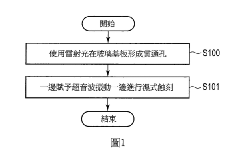
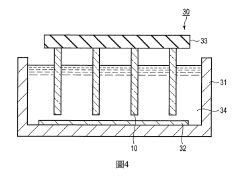
- Using a combination of hydrofluoric acid at low concentration (4% by weight or less) with a higher concentration of a larger molecular size acid for glass wet-etching after laser drilling.
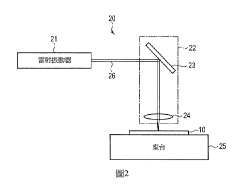
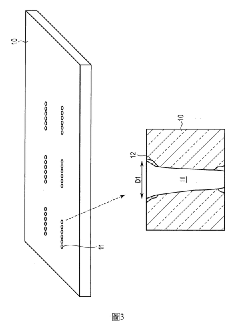
- Two-step glass processing method combining laser drilling to form through holes followed by controlled wet-etching, allowing for more precise glass perforation.
- Using an acid with larger molecular size than hydrofluoric acid at higher concentration to potentially control etching rate and improve safety profile compared to traditional high-concentration HF etching.
Hydrochloric acid/hydrofluoric acid treatment to remove asbestos fibers from a well bore
PatentInactiveUS3708014A
Innovation
- A method involving a mixture of hydrochloric acid and hydrofluoric acid in aqueous solution is used to dissolve chrysotile asbestos fibers, with a stoichiometrically ideal reactive amount of acids mixed with asbestos, allowing for their removal from well bore holes by circulation within the well.
Safety Protocols and Hazard Mitigation Strategies
When handling hydrofluoric acid (HF) and hydrochloric acid (HCl) in material processing applications, comprehensive safety protocols and hazard mitigation strategies are essential due to their highly corrosive and toxic nature. These acids present distinct safety challenges requiring specialized approaches.
For hydrofluoric acid, standard safety measures must be supplemented with HF-specific protocols due to its unique calcium-binding properties and ability to penetrate tissue. Facilities must maintain calcium gluconate gel (2.5%) at all workstations for immediate application in case of exposure. Full-face shields, chemical-resistant full body suits, and specialized HF-resistant gloves (typically neoprene or butyl rubber) are mandatory, with regular inspection schedules to ensure integrity.
Engineering controls for HF processing must include closed systems wherever possible, dedicated ventilation systems with scrubbers designed specifically for HF vapors, and continuous air monitoring systems with alarms set at 0.5 ppm. Emergency response plans must include specialized HF protocols, including immediate medical intervention procedures and coordination with medical facilities experienced in treating HF exposure.
Hydrochloric acid, while also dangerous, requires different mitigation approaches. Standard acid-resistant PPE is sufficient, though splash protection remains critical. Ventilation requirements are less stringent than for HF, but must still maintain workplace concentrations below 5 ppm. Neutralization protocols typically employ sodium bicarbonate or calcium carbonate solutions.
Storage considerations differ significantly between the acids. HF requires specialized polyethylene or PTFE containers with secondary containment systems capable of handling 110% of the maximum volume. HCl can be stored in glass or appropriate plastic containers with standard secondary containment.
Training programs must be acid-specific, with HF handling requiring certification and regular refresher courses. Drills simulating acid spills should be conducted quarterly, with particular emphasis on the rapid response needed for HF exposure. Documentation systems must track all near-misses and incidents, with mandatory review processes to continuously improve safety protocols.
Waste management strategies must address the specific neutralization requirements of each acid, with HF waste requiring specialized treatment before disposal. Environmental monitoring should include groundwater testing in facility surroundings to detect potential leakage or improper disposal.
Implementation of these comprehensive safety protocols has demonstrated significant reduction in acid-related incidents across the industry, with facilities reporting up to 95% fewer serious exposures when proper mitigation strategies are consistently applied and regularly updated.
For hydrofluoric acid, standard safety measures must be supplemented with HF-specific protocols due to its unique calcium-binding properties and ability to penetrate tissue. Facilities must maintain calcium gluconate gel (2.5%) at all workstations for immediate application in case of exposure. Full-face shields, chemical-resistant full body suits, and specialized HF-resistant gloves (typically neoprene or butyl rubber) are mandatory, with regular inspection schedules to ensure integrity.
Engineering controls for HF processing must include closed systems wherever possible, dedicated ventilation systems with scrubbers designed specifically for HF vapors, and continuous air monitoring systems with alarms set at 0.5 ppm. Emergency response plans must include specialized HF protocols, including immediate medical intervention procedures and coordination with medical facilities experienced in treating HF exposure.
Hydrochloric acid, while also dangerous, requires different mitigation approaches. Standard acid-resistant PPE is sufficient, though splash protection remains critical. Ventilation requirements are less stringent than for HF, but must still maintain workplace concentrations below 5 ppm. Neutralization protocols typically employ sodium bicarbonate or calcium carbonate solutions.
Storage considerations differ significantly between the acids. HF requires specialized polyethylene or PTFE containers with secondary containment systems capable of handling 110% of the maximum volume. HCl can be stored in glass or appropriate plastic containers with standard secondary containment.
Training programs must be acid-specific, with HF handling requiring certification and regular refresher courses. Drills simulating acid spills should be conducted quarterly, with particular emphasis on the rapid response needed for HF exposure. Documentation systems must track all near-misses and incidents, with mandatory review processes to continuously improve safety protocols.
Waste management strategies must address the specific neutralization requirements of each acid, with HF waste requiring specialized treatment before disposal. Environmental monitoring should include groundwater testing in facility surroundings to detect potential leakage or improper disposal.
Implementation of these comprehensive safety protocols has demonstrated significant reduction in acid-related incidents across the industry, with facilities reporting up to 95% fewer serious exposures when proper mitigation strategies are consistently applied and regularly updated.
Environmental Impact and Regulatory Compliance Framework
The environmental impact of hydrofluoric acid (HF) and hydrochloric acid (HCl) in material processing applications presents significant challenges for regulatory compliance and sustainable industrial practices. HF poses severe environmental hazards due to its high toxicity and persistence in ecosystems. When released into aquatic environments, even at low concentrations, it can cause substantial harm to aquatic organisms and disrupt ecological balance. Additionally, HF emissions to air can contribute to acid rain formation, affecting vegetation and water bodies far from the source.
Hydrochloric acid, while less environmentally persistent than HF, still presents considerable environmental concerns. HCl releases can cause localized acidification of soil and water bodies, potentially altering pH levels and affecting biodiversity. However, HCl typically degrades more rapidly in the environment compared to HF, resulting in somewhat reduced long-term environmental impact when properly managed.
The regulatory framework governing these acids varies significantly across global jurisdictions but generally follows increasingly stringent patterns. In the United States, the Environmental Protection Agency (EPA) regulates HF and HCl under multiple statutes including the Clean Air Act, Clean Water Act, and Toxic Substances Control Act. The EU's REACH regulation (Registration, Evaluation, Authorization and Restriction of Chemicals) imposes comprehensive requirements for risk assessment and management of these substances, with particular attention to HF due to its classification as a substance of very high concern.
Compliance requirements typically include strict emission limits, comprehensive waste management protocols, detailed record-keeping, regular environmental monitoring, and emergency response planning. For HF specifically, many jurisdictions mandate additional safeguards due to its extreme hazard profile, including specialized containment systems, enhanced worker protection measures, and community notification protocols.
Industry best practices have evolved to exceed regulatory minimums, incorporating closed-loop processing systems that minimize acid waste generation, advanced scrubbing technologies for emission control, and acid recovery/recycling processes. Leading manufacturers have implemented comprehensive environmental management systems aligned with ISO 14001 standards to systematically address environmental impacts throughout the material processing lifecycle.
Recent regulatory trends indicate movement toward more harmonized global standards, with particular emphasis on circular economy principles that encourage acid recovery and reuse rather than disposal. Additionally, emerging regulations increasingly focus on full lifecycle assessment of acid use in material processing, considering not only direct environmental impacts but also energy consumption, transportation risks, and end-of-life management.
Companies utilizing these acids must navigate this complex regulatory landscape while balancing technical requirements, economic considerations, and corporate sustainability commitments. Forward-thinking organizations are increasingly adopting alternative processing technologies and greener chemistry approaches where technically feasible, recognizing that proactive environmental stewardship often yields competitive advantages in addition to regulatory compliance.
Hydrochloric acid, while less environmentally persistent than HF, still presents considerable environmental concerns. HCl releases can cause localized acidification of soil and water bodies, potentially altering pH levels and affecting biodiversity. However, HCl typically degrades more rapidly in the environment compared to HF, resulting in somewhat reduced long-term environmental impact when properly managed.
The regulatory framework governing these acids varies significantly across global jurisdictions but generally follows increasingly stringent patterns. In the United States, the Environmental Protection Agency (EPA) regulates HF and HCl under multiple statutes including the Clean Air Act, Clean Water Act, and Toxic Substances Control Act. The EU's REACH regulation (Registration, Evaluation, Authorization and Restriction of Chemicals) imposes comprehensive requirements for risk assessment and management of these substances, with particular attention to HF due to its classification as a substance of very high concern.
Compliance requirements typically include strict emission limits, comprehensive waste management protocols, detailed record-keeping, regular environmental monitoring, and emergency response planning. For HF specifically, many jurisdictions mandate additional safeguards due to its extreme hazard profile, including specialized containment systems, enhanced worker protection measures, and community notification protocols.
Industry best practices have evolved to exceed regulatory minimums, incorporating closed-loop processing systems that minimize acid waste generation, advanced scrubbing technologies for emission control, and acid recovery/recycling processes. Leading manufacturers have implemented comprehensive environmental management systems aligned with ISO 14001 standards to systematically address environmental impacts throughout the material processing lifecycle.
Recent regulatory trends indicate movement toward more harmonized global standards, with particular emphasis on circular economy principles that encourage acid recovery and reuse rather than disposal. Additionally, emerging regulations increasingly focus on full lifecycle assessment of acid use in material processing, considering not only direct environmental impacts but also energy consumption, transportation risks, and end-of-life management.
Companies utilizing these acids must navigate this complex regulatory landscape while balancing technical requirements, economic considerations, and corporate sustainability commitments. Forward-thinking organizations are increasingly adopting alternative processing technologies and greener chemistry approaches where technically feasible, recognizing that proactive environmental stewardship often yields competitive advantages in addition to regulatory compliance.
Unlock deeper insights with Patsnap Eureka Quick Research — get a full tech report to explore trends and direct your research. Try now!
Generate Your Research Report Instantly with AI Agent
Supercharge your innovation with Patsnap Eureka AI Agent Platform!