

Improving Adhesive Bond Testing with FTIR Analysis
SEP 22, 20259 MIN READ
Generate Your Research Report Instantly with AI Agent
Patsnap Eureka helps you evaluate technical feasibility & market potential.
FTIR Adhesive Testing Background and Objectives
Fourier Transform Infrared Spectroscopy (FTIR) has evolved significantly since its inception in the mid-20th century, transforming from a specialized analytical technique to an essential tool in materials science and quality control. The technology's development trajectory has been characterized by increasing resolution, sensitivity, and accessibility, with modern FTIR systems offering unprecedented capabilities for molecular analysis at microscopic scales.
In the context of adhesive bond testing, FTIR represents a critical non-destructive evaluation method that addresses longstanding challenges in assessing bond integrity and predicting performance. Traditional mechanical testing methods, while valuable, often provide limited insight into the chemical composition and molecular interactions that ultimately determine adhesive performance. The integration of FTIR analysis into adhesive testing protocols aims to bridge this gap by providing detailed molecular information about adhesive formulations, curing processes, and interfacial interactions.
The primary technical objective of improving adhesive bond testing with FTIR analysis is to develop robust, reproducible methodologies that correlate spectroscopic data with mechanical performance metrics. This involves establishing standardized protocols for sample preparation, data acquisition, and spectral interpretation that can be implemented across different manufacturing environments and adhesive systems.
A secondary objective is to enhance the predictive capabilities of adhesive testing by identifying spectroscopic markers that indicate potential failure modes before they manifest in mechanical testing or real-world applications. This predictive approach represents a paradigm shift from reactive quality control to proactive performance optimization.
The evolution of FTIR technology itself continues to drive innovation in adhesive testing. Advances in attenuated total reflectance (ATR) accessories, imaging capabilities, and portable instrumentation have expanded the range of applications and testing environments. Simultaneously, developments in chemometric analysis and machine learning algorithms have improved the extraction of meaningful information from complex spectral datasets.
Looking forward, the integration of FTIR with complementary analytical techniques presents opportunities for comprehensive adhesive characterization. Combining spectroscopic data with thermal analysis, microscopy, and mechanical testing creates a multi-dimensional understanding of adhesive performance that transcends the limitations of any single analytical approach.
The ultimate goal of this technological advancement is to establish FTIR as an indispensable component of adhesive development and quality assurance processes, enabling manufacturers to design more reliable, durable, and environmentally sustainable adhesive systems for increasingly demanding applications across industries.
In the context of adhesive bond testing, FTIR represents a critical non-destructive evaluation method that addresses longstanding challenges in assessing bond integrity and predicting performance. Traditional mechanical testing methods, while valuable, often provide limited insight into the chemical composition and molecular interactions that ultimately determine adhesive performance. The integration of FTIR analysis into adhesive testing protocols aims to bridge this gap by providing detailed molecular information about adhesive formulations, curing processes, and interfacial interactions.
The primary technical objective of improving adhesive bond testing with FTIR analysis is to develop robust, reproducible methodologies that correlate spectroscopic data with mechanical performance metrics. This involves establishing standardized protocols for sample preparation, data acquisition, and spectral interpretation that can be implemented across different manufacturing environments and adhesive systems.
A secondary objective is to enhance the predictive capabilities of adhesive testing by identifying spectroscopic markers that indicate potential failure modes before they manifest in mechanical testing or real-world applications. This predictive approach represents a paradigm shift from reactive quality control to proactive performance optimization.
The evolution of FTIR technology itself continues to drive innovation in adhesive testing. Advances in attenuated total reflectance (ATR) accessories, imaging capabilities, and portable instrumentation have expanded the range of applications and testing environments. Simultaneously, developments in chemometric analysis and machine learning algorithms have improved the extraction of meaningful information from complex spectral datasets.
Looking forward, the integration of FTIR with complementary analytical techniques presents opportunities for comprehensive adhesive characterization. Combining spectroscopic data with thermal analysis, microscopy, and mechanical testing creates a multi-dimensional understanding of adhesive performance that transcends the limitations of any single analytical approach.
The ultimate goal of this technological advancement is to establish FTIR as an indispensable component of adhesive development and quality assurance processes, enabling manufacturers to design more reliable, durable, and environmentally sustainable adhesive systems for increasingly demanding applications across industries.
Market Demand for Advanced Adhesive Bond Testing
The global adhesive market has witnessed substantial growth in recent years, with increasing demand across various industries including automotive, aerospace, construction, electronics, and medical devices. This growth has directly translated into a rising need for advanced adhesive bond testing methods, particularly those incorporating Fourier Transform Infrared (FTIR) spectroscopy. Current market estimates value the global adhesives and sealants market at approximately $72 billion, with projections indicating continued growth at a compound annual growth rate of 5.4% through 2028.
The automotive sector represents one of the largest consumers of adhesive technologies, driven by the industry's shift toward lightweight materials and multi-material assemblies. As vehicle manufacturers increasingly replace traditional joining methods with adhesive bonding to reduce weight and improve fuel efficiency, the demand for reliable testing methods has intensified. Market research indicates that adhesive usage in automotive applications has increased by nearly 25% over the past five years, with a corresponding increase in demand for quality control testing.
Aerospace and defense industries present another significant market segment for advanced adhesive bond testing. With safety-critical applications and stringent regulatory requirements, these sectors demand highly accurate and reliable testing methodologies. The failure of adhesive bonds in aerospace applications can have catastrophic consequences, driving the need for sophisticated analytical techniques like FTIR that can detect subtle chemical changes before mechanical failure occurs.
The electronics industry's rapid evolution has created unique challenges for adhesive applications, particularly in miniaturized devices and flexible electronics. As components become smaller and more densely packed, traditional mechanical testing methods become increasingly difficult to implement. This has accelerated the adoption of spectroscopic techniques that can evaluate bond quality non-destructively and at microscopic scales.
Market research reveals that manufacturing quality control represents the largest application segment for adhesive bond testing, accounting for approximately 45% of the total market. Research and development applications follow at 30%, with failure analysis comprising about 25%. This distribution highlights the critical importance of testing methodologies across the entire product lifecycle.
Regional analysis shows North America and Europe currently leading in the adoption of advanced testing methodologies, with Asia-Pacific representing the fastest-growing market. This growth is primarily driven by rapid industrialization in countries like China and India, coupled with increasing quality standards in manufacturing processes.
Customer surveys indicate that key market demands include improved accuracy in predicting bond failures, faster testing procedures, non-destructive testing capabilities, and integration with automated production systems. FTIR analysis addresses many of these requirements, explaining its growing adoption rate of approximately 12% annually within the adhesive testing segment.
The automotive sector represents one of the largest consumers of adhesive technologies, driven by the industry's shift toward lightweight materials and multi-material assemblies. As vehicle manufacturers increasingly replace traditional joining methods with adhesive bonding to reduce weight and improve fuel efficiency, the demand for reliable testing methods has intensified. Market research indicates that adhesive usage in automotive applications has increased by nearly 25% over the past five years, with a corresponding increase in demand for quality control testing.
Aerospace and defense industries present another significant market segment for advanced adhesive bond testing. With safety-critical applications and stringent regulatory requirements, these sectors demand highly accurate and reliable testing methodologies. The failure of adhesive bonds in aerospace applications can have catastrophic consequences, driving the need for sophisticated analytical techniques like FTIR that can detect subtle chemical changes before mechanical failure occurs.
The electronics industry's rapid evolution has created unique challenges for adhesive applications, particularly in miniaturized devices and flexible electronics. As components become smaller and more densely packed, traditional mechanical testing methods become increasingly difficult to implement. This has accelerated the adoption of spectroscopic techniques that can evaluate bond quality non-destructively and at microscopic scales.
Market research reveals that manufacturing quality control represents the largest application segment for adhesive bond testing, accounting for approximately 45% of the total market. Research and development applications follow at 30%, with failure analysis comprising about 25%. This distribution highlights the critical importance of testing methodologies across the entire product lifecycle.
Regional analysis shows North America and Europe currently leading in the adoption of advanced testing methodologies, with Asia-Pacific representing the fastest-growing market. This growth is primarily driven by rapid industrialization in countries like China and India, coupled with increasing quality standards in manufacturing processes.
Customer surveys indicate that key market demands include improved accuracy in predicting bond failures, faster testing procedures, non-destructive testing capabilities, and integration with automated production systems. FTIR analysis addresses many of these requirements, explaining its growing adoption rate of approximately 12% annually within the adhesive testing segment.
Current Challenges in Adhesive Bond Analysis
Despite significant advancements in adhesive technology, the field of adhesive bond testing continues to face substantial challenges that limit reliability and efficiency. Traditional mechanical testing methods such as lap shear, peel, and tensile tests provide valuable data on bond strength but fail to deliver insights into the chemical composition and molecular interactions at the adhesive-substrate interface. This fundamental limitation creates a significant gap in understanding bond failure mechanisms at the molecular level.
Current destructive testing methodologies present another major challenge, as they render tested specimens unusable for further analysis or application. This not only increases material waste and testing costs but also prevents continuous monitoring of bond performance over time under real-world conditions. The industry urgently needs non-destructive testing approaches that can evaluate bond integrity without compromising structural integrity.
Reproducibility issues plague existing testing protocols, with results often varying significantly between laboratories due to inconsistent sample preparation, environmental conditions, and testing parameters. The lack of standardized procedures specifically designed for advanced spectroscopic analysis techniques like FTIR creates barriers to widespread adoption and result comparison across the industry.
Detection sensitivity represents another critical challenge, particularly when dealing with subtle chemical changes that precede catastrophic bond failure. Current methods frequently fail to identify early degradation markers until significant deterioration has already occurred, limiting preventative maintenance opportunities and increasing failure risks in critical applications.
Data interpretation complexity further complicates adhesive bond analysis. The spectral data generated through FTIR analysis contains multidimensional information that requires sophisticated algorithms and expertise to translate into actionable insights. Many organizations lack the specialized knowledge needed to effectively utilize these advanced analytical techniques, creating a significant barrier to implementation.
Time and resource constraints also impede comprehensive bond testing in industrial settings. Traditional testing methods often require extensive sample preparation, specialized equipment, and significant time investments, making them impractical for high-volume manufacturing environments where rapid quality control decisions are essential.
Environmental factors introduce additional variables that complicate testing procedures. Temperature fluctuations, humidity changes, and exposure to various chemicals can dramatically alter adhesive performance, yet current testing methodologies struggle to account for these real-world conditions in a controlled and reproducible manner.
Current destructive testing methodologies present another major challenge, as they render tested specimens unusable for further analysis or application. This not only increases material waste and testing costs but also prevents continuous monitoring of bond performance over time under real-world conditions. The industry urgently needs non-destructive testing approaches that can evaluate bond integrity without compromising structural integrity.
Reproducibility issues plague existing testing protocols, with results often varying significantly between laboratories due to inconsistent sample preparation, environmental conditions, and testing parameters. The lack of standardized procedures specifically designed for advanced spectroscopic analysis techniques like FTIR creates barriers to widespread adoption and result comparison across the industry.
Detection sensitivity represents another critical challenge, particularly when dealing with subtle chemical changes that precede catastrophic bond failure. Current methods frequently fail to identify early degradation markers until significant deterioration has already occurred, limiting preventative maintenance opportunities and increasing failure risks in critical applications.
Data interpretation complexity further complicates adhesive bond analysis. The spectral data generated through FTIR analysis contains multidimensional information that requires sophisticated algorithms and expertise to translate into actionable insights. Many organizations lack the specialized knowledge needed to effectively utilize these advanced analytical techniques, creating a significant barrier to implementation.
Time and resource constraints also impede comprehensive bond testing in industrial settings. Traditional testing methods often require extensive sample preparation, specialized equipment, and significant time investments, making them impractical for high-volume manufacturing environments where rapid quality control decisions are essential.
Environmental factors introduce additional variables that complicate testing procedures. Temperature fluctuations, humidity changes, and exposure to various chemicals can dramatically alter adhesive performance, yet current testing methodologies struggle to account for these real-world conditions in a controlled and reproducible manner.
Current FTIR-Based Adhesive Bond Testing Solutions
01 FTIR spectroscopy for adhesive bond quality assessment
Fourier Transform Infrared (FTIR) spectroscopy is used to evaluate the chemical composition and quality of adhesive bonds. This technique can detect changes in molecular structure, curing status, and potential contamination at the adhesive-substrate interface. By analyzing the infrared absorption patterns, manufacturers can identify improper curing, degradation, or incompatibility issues that might affect bond strength and durability.- FTIR spectroscopy for adhesive bond quality assessment: Fourier Transform Infrared (FTIR) spectroscopy is used to evaluate the quality and integrity of adhesive bonds by analyzing the chemical composition and molecular structure at the interface. This technique can detect contamination, curing issues, or degradation that might affect bond strength. FTIR analysis provides detailed information about chemical bonding and can identify potential failure mechanisms in adhesive joints.
- Non-destructive testing methods for adhesive bonds: Non-destructive testing approaches using FTIR allow for the evaluation of adhesive bond integrity without damaging the sample. These methods include attenuated total reflection (ATR) FTIR, which examines the surface properties of adhesive bonds, and transmission FTIR, which analyzes the bulk properties. These techniques enable quality control during manufacturing and in-service inspection of bonded structures.
- Correlation between FTIR data and mechanical bond strength: Research has established correlations between FTIR spectral features and the mechanical strength of adhesive bonds. By analyzing specific absorption bands related to chemical bonding, crosslinking density, and cure state, researchers can predict mechanical properties such as shear strength, peel resistance, and durability. This approach allows for quality assessment without direct mechanical testing.
- FTIR analysis for surface preparation and contamination detection: FTIR spectroscopy is effective for evaluating surface preparation quality before bonding and detecting contamination that may compromise adhesion. The technique can identify residual release agents, oils, moisture, or other contaminants that interfere with proper bonding. This application is particularly important in industries requiring high-reliability bonds, such as aerospace and automotive manufacturing.
- Automated and portable FTIR systems for adhesive testing: Advanced FTIR systems have been developed for automated, high-throughput testing of adhesive bonds in production environments. These include portable FTIR devices for field testing, integrated systems for in-line quality control, and automated analysis software that can rapidly interpret spectral data. These technologies enable real-time monitoring of adhesive bond quality during manufacturing processes.
02 Non-destructive testing methods for adhesive bonds
Non-destructive testing approaches using FTIR analysis allow for the evaluation of adhesive bond integrity without damaging the tested components. These methods include attenuated total reflection (ATR) FTIR, which examines the surface properties of adhesive bonds, and transmission FTIR, which analyzes the bulk properties. These techniques enable quality control during manufacturing and in-service inspection of bonded structures in industries such as aerospace, automotive, and electronics.Expand Specific Solutions03 FTIR analysis for adhesive failure mode determination
FTIR spectroscopy helps identify the failure modes in adhesive bonds by analyzing the chemical composition of fracture surfaces. This analysis can distinguish between adhesive failure (separation at the adhesive-substrate interface), cohesive failure (fracture within the adhesive layer), or substrate failure. Understanding the failure mechanism provides valuable insights for improving adhesive formulations, surface preparation techniques, and bonding processes to enhance overall bond performance.Expand Specific Solutions04 Automated FTIR systems for adhesive bond testing
Automated FTIR systems have been developed for high-throughput testing of adhesive bonds in manufacturing environments. These systems integrate sample handling, data acquisition, and analysis software to provide rapid assessment of bond quality. Advanced systems may incorporate machine learning algorithms to identify patterns in spectral data that correlate with bond strength and durability. This automation improves testing efficiency, reduces human error, and enables real-time quality control in production settings.Expand Specific Solutions05 Combined FTIR and mechanical testing for comprehensive bond evaluation
Integrating FTIR spectroscopy with mechanical testing methods provides a comprehensive evaluation of adhesive bond performance. While FTIR reveals the chemical characteristics and molecular structure of the adhesive bond, complementary mechanical tests such as lap shear, peel, and tensile testing measure the physical strength properties. This multi-analytical approach correlates chemical composition with mechanical performance, enabling more accurate prediction of bond durability and failure under various environmental and stress conditions.Expand Specific Solutions
Key Industry Players in Adhesive Testing Technology
The FTIR analysis for adhesive bond testing market is currently in a growth phase, with increasing adoption across aerospace, defense, and manufacturing sectors. The market is expanding due to rising demand for quality control in critical applications, estimated to reach significant value in the coming years. Technologically, the field shows varying maturity levels among key players. Industry leaders like Boeing, RTX Corp., and Battelle Memorial Institute have established advanced FTIR capabilities for adhesive testing, while academic institutions such as Shanghai Institute of Technical Physics and University of Southern California contribute valuable research innovations. Companies like Horiba Ltd. and Daylight Solutions are developing specialized instrumentation, creating a competitive landscape that balances established industrial applications with emerging research breakthroughs.
The Boeing Co.
Technical Solution: Boeing has developed proprietary FTIR-based adhesive bond testing methodologies specifically tailored for aerospace applications. Their approach combines traditional FTIR spectroscopy with advanced chemometric analysis to evaluate bond integrity in composite structures. Boeing's system utilizes specialized sampling accessories designed for non-destructive evaluation of curved and complex geometries typical in aircraft structures. Their technology incorporates a database of spectral signatures for various contamination types and degradation mechanisms, enabling rapid identification of potential bond failures. Boeing has implemented portable FTIR systems for in-situ testing during manufacturing and maintenance operations, featuring custom algorithms that can detect silicone contamination at concentrations below 0.1 mg/cm². The company has also pioneered the integration of FTIR analysis with digital twin technology, allowing for predictive maintenance based on bond degradation trends identified through spectroscopic analysis.
Strengths: Highly specialized for aerospace applications; extensive database of failure modes; integration with digital manufacturing systems; validated through extensive flight testing programs. Weaknesses: Proprietary systems not widely available outside Boeing; requires significant expertise to interpret results; primarily optimized for aerospace materials rather than general adhesive applications.
Horiba Ltd.
Technical Solution: Horiba has developed comprehensive FTIR solutions specifically designed for adhesive bond testing across multiple industries. Their FT-IR 4000 and 6000 series incorporate specialized sampling accessories optimized for analyzing adhesive interfaces with high precision. Horiba's systems feature advanced ATR (Attenuated Total Reflection) capabilities with multiple crystal options (diamond, germanium, zinc selenide) to optimize analysis based on specific adhesive chemistries. Their proprietary LabSpec 6 software includes dedicated algorithms for adhesive bond quality assessment, capable of detecting subtle chemical changes indicative of poor adhesion or contamination. Horiba has pioneered the integration of microscopic FTIR imaging with conventional spectroscopy, allowing for spatial mapping of adhesive distribution and identification of localized defects at bond interfaces. Their systems can achieve spatial resolution down to 10 μm while maintaining spectral resolution of 0.5 cm⁻¹, enabling detailed characterization of adhesive-substrate interfaces across complex geometries.
Strengths: Comprehensive range of sampling accessories for different adhesive types; high spectral and spatial resolution; robust software specifically designed for adhesive analysis; global service and support network. Weaknesses: Higher cost compared to basic FTIR systems; complex systems require significant training; some specialized applications may require custom modifications.
Critical FTIR Spectroscopy Innovations for Adhesives
Fourier transform infrared spectrophotometer
PatentInactiveUS7535004B2
Innovation
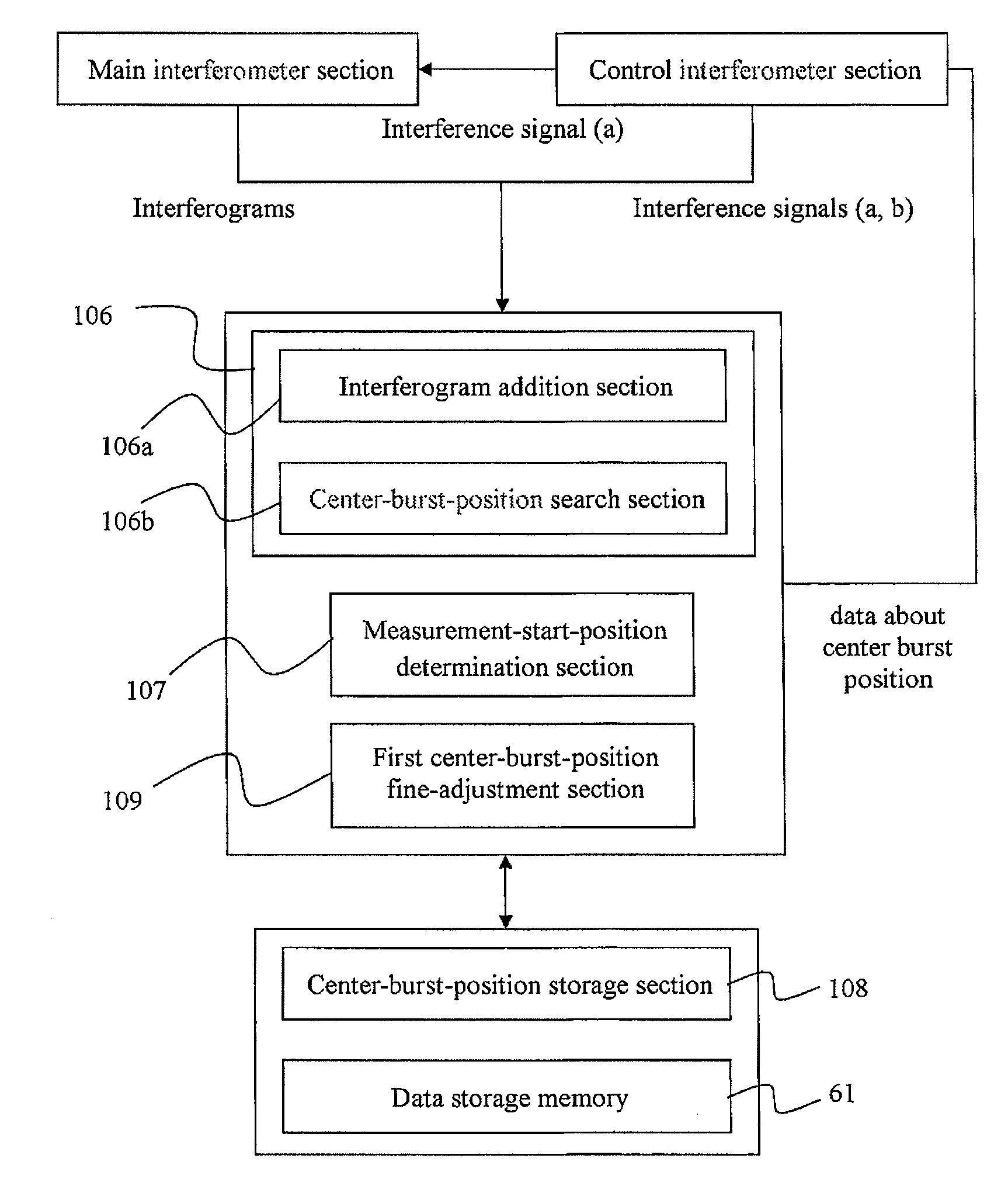
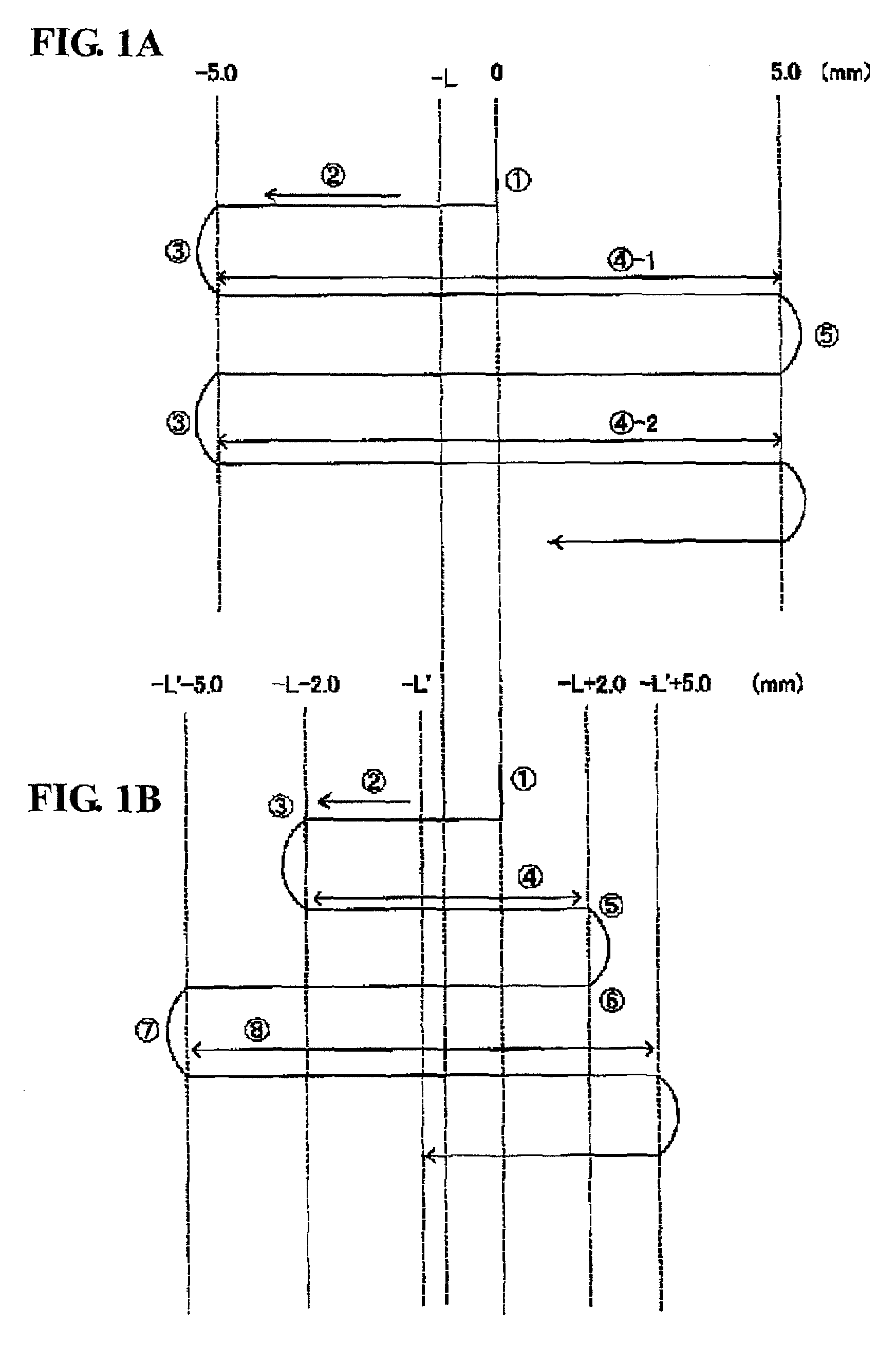
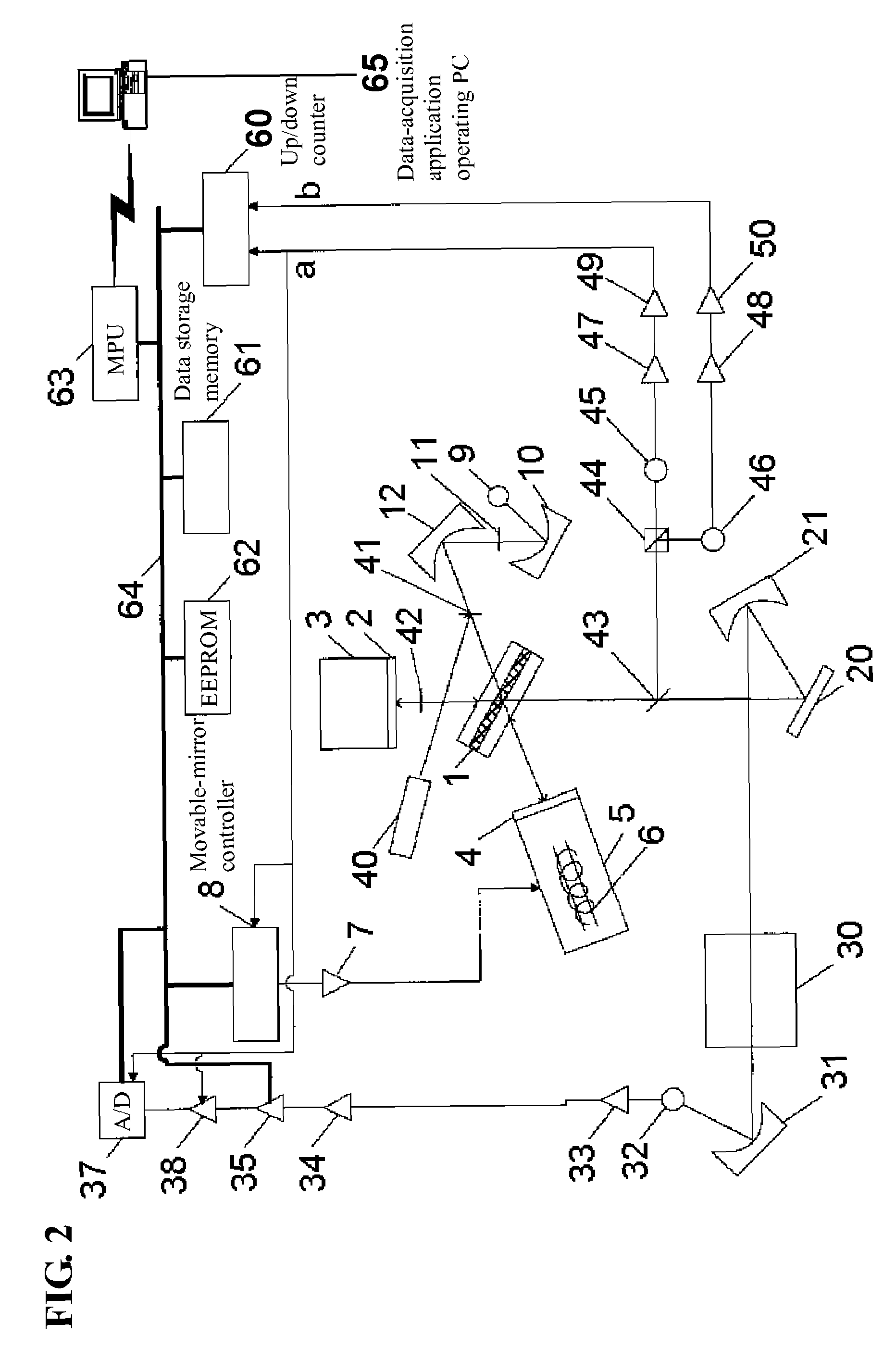
- The implementation of a center-burst-position detection section that performs addition processing on interferogram intensities to produce a cumulative interferogram, correcting positional deviations and enhancing the detection of the center burst position by increasing the intensity of true peaks while canceling out noise peaks, thereby ensuring accurate detection even under low light conditions.
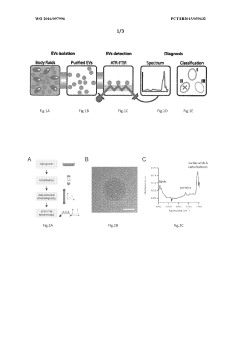
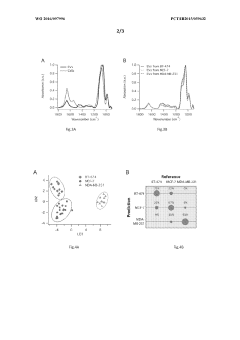
Use of fourier transform infrared spectroscopy analysis of extracellular vesicles isolated from body fluids for diagnosing, prognosing and monitoring pathophysiological states and method therfor
PatentWO2016097996A1
Innovation
- The use of Fourier Transform Infrared Spectroscopy (FTIR) to analyze extracellular vesicles (EVs) isolated from body fluids, combined with multivariate analysis, provides a non-invasive and label-free method for classifying EVs based on their molecular composition, enabling early diagnosis, prognosis, and monitoring of cancer and other proliferative diseases.
Standards and Certification Requirements
The adhesive industry operates under a complex framework of standards and certification requirements that govern the testing, performance, and safety of adhesive products. For FTIR analysis to be effectively integrated into adhesive bond testing protocols, it must align with established industry standards. The American Society for Testing and Materials (ASTM) has developed several standards specifically for adhesive testing, including ASTM D1002 for lap shear strength and ASTM D3163 for adhesive bonds in plastic laminates. These standards currently do not explicitly incorporate FTIR analysis, presenting an opportunity for standards evolution.
International Organization for Standardization (ISO) has established ISO 10365 for adhesive bond failure characterization and ISO 4587 for tensile lap-shear strength determination. Any implementation of FTIR analysis must demonstrate compatibility with these established testing methodologies to gain industry acceptance. The challenge lies in developing standardized FTIR testing protocols that produce consistent, reproducible results across different laboratory environments and equipment configurations.
Regulatory bodies such as the Federal Aviation Administration (FAA) and European Aviation Safety Agency (EASA) impose stringent requirements for adhesives used in aerospace applications. These agencies require comprehensive documentation of testing methodologies and validation data. Incorporating FTIR analysis into these certification processes would necessitate extensive validation studies demonstrating correlation between FTIR results and traditional mechanical testing outcomes.
The automotive industry follows standards set by organizations like the Society of Automotive Engineers (SAE), which has established SAE J1523 for testing adhesive bonds in automotive applications. Medical device manufacturers must comply with ISO 10993 series for biocompatibility testing of materials, including adhesives. These sector-specific requirements add layers of complexity to the standardization of FTIR-based testing methodologies.
Certification processes typically require third-party validation from accredited testing laboratories. For FTIR analysis to become part of certification requirements, testing laboratories would need to develop proficiency in this analytical technique, establish calibration protocols, and participate in interlaboratory comparison studies to ensure result consistency. This process typically takes several years of collaborative effort between industry stakeholders, standards organizations, and regulatory bodies.
The development of reference materials and calibration standards specifically for FTIR analysis of adhesive bonds represents another critical requirement. Without standardized reference materials, laboratories cannot ensure the accuracy and comparability of their measurements, limiting the acceptance of FTIR as a certified testing methodology in quality control and regulatory compliance contexts.
International Organization for Standardization (ISO) has established ISO 10365 for adhesive bond failure characterization and ISO 4587 for tensile lap-shear strength determination. Any implementation of FTIR analysis must demonstrate compatibility with these established testing methodologies to gain industry acceptance. The challenge lies in developing standardized FTIR testing protocols that produce consistent, reproducible results across different laboratory environments and equipment configurations.
Regulatory bodies such as the Federal Aviation Administration (FAA) and European Aviation Safety Agency (EASA) impose stringent requirements for adhesives used in aerospace applications. These agencies require comprehensive documentation of testing methodologies and validation data. Incorporating FTIR analysis into these certification processes would necessitate extensive validation studies demonstrating correlation between FTIR results and traditional mechanical testing outcomes.
The automotive industry follows standards set by organizations like the Society of Automotive Engineers (SAE), which has established SAE J1523 for testing adhesive bonds in automotive applications. Medical device manufacturers must comply with ISO 10993 series for biocompatibility testing of materials, including adhesives. These sector-specific requirements add layers of complexity to the standardization of FTIR-based testing methodologies.
Certification processes typically require third-party validation from accredited testing laboratories. For FTIR analysis to become part of certification requirements, testing laboratories would need to develop proficiency in this analytical technique, establish calibration protocols, and participate in interlaboratory comparison studies to ensure result consistency. This process typically takes several years of collaborative effort between industry stakeholders, standards organizations, and regulatory bodies.
The development of reference materials and calibration standards specifically for FTIR analysis of adhesive bonds represents another critical requirement. Without standardized reference materials, laboratories cannot ensure the accuracy and comparability of their measurements, limiting the acceptance of FTIR as a certified testing methodology in quality control and regulatory compliance contexts.
Environmental Impact of Adhesive Testing Methods
The environmental implications of adhesive testing methodologies have become increasingly significant as industries strive for sustainability alongside performance. Traditional adhesive bond testing methods often involve destructive techniques that generate substantial waste materials, including test specimens, failed bonds, and chemical reagents. These waste streams require proper disposal protocols, contributing to environmental burden and increased operational costs.
FTIR (Fourier Transform Infrared) spectroscopy represents a significant advancement in reducing the environmental footprint of adhesive testing. As a non-destructive or minimally invasive analytical technique, FTIR substantially reduces material waste compared to conventional mechanical testing methods. The technology requires only microscopic sample quantities for analysis, sometimes as little as nanograms of material, dramatically decreasing resource consumption and waste generation.
Chemical solvents and preparation reagents associated with conventional testing methods often contain volatile organic compounds (VOCs) and other hazardous substances that pose environmental and health risks. FTIR analysis significantly minimizes the need for these chemicals, reducing air and water pollution potential. Studies indicate that implementing FTIR-based testing protocols can reduce solvent usage by up to 80% compared to traditional extraction and preparation methods.
Energy consumption represents another critical environmental consideration. Conventional mechanical testing equipment typically requires substantial power for operation, particularly for fatigue testing or environmental conditioning chambers. FTIR spectrometers, while requiring electricity, generally consume less energy over complete testing cycles. Recent advancements in FTIR instrumentation have further improved energy efficiency, with modern systems incorporating power management features that reduce consumption during standby periods.
Lifecycle assessment studies comparing traditional destructive testing with FTIR-based methodologies demonstrate significant environmental advantages. A comprehensive analysis conducted across automotive manufacturing facilities showed that FTIR implementation reduced carbon footprint of quality control operations by approximately 35%, primarily through decreased material consumption and waste generation.
The transition to FTIR-based testing also aligns with regulatory trends toward greener chemistry and manufacturing practices. As environmental regulations become increasingly stringent worldwide, adhesive manufacturers and users face growing pressure to adopt more sustainable testing methodologies. FTIR technology provides a pathway to compliance while maintaining or improving analytical capabilities, positioning companies advantageously as environmental standards evolve.
FTIR (Fourier Transform Infrared) spectroscopy represents a significant advancement in reducing the environmental footprint of adhesive testing. As a non-destructive or minimally invasive analytical technique, FTIR substantially reduces material waste compared to conventional mechanical testing methods. The technology requires only microscopic sample quantities for analysis, sometimes as little as nanograms of material, dramatically decreasing resource consumption and waste generation.
Chemical solvents and preparation reagents associated with conventional testing methods often contain volatile organic compounds (VOCs) and other hazardous substances that pose environmental and health risks. FTIR analysis significantly minimizes the need for these chemicals, reducing air and water pollution potential. Studies indicate that implementing FTIR-based testing protocols can reduce solvent usage by up to 80% compared to traditional extraction and preparation methods.
Energy consumption represents another critical environmental consideration. Conventional mechanical testing equipment typically requires substantial power for operation, particularly for fatigue testing or environmental conditioning chambers. FTIR spectrometers, while requiring electricity, generally consume less energy over complete testing cycles. Recent advancements in FTIR instrumentation have further improved energy efficiency, with modern systems incorporating power management features that reduce consumption during standby periods.
Lifecycle assessment studies comparing traditional destructive testing with FTIR-based methodologies demonstrate significant environmental advantages. A comprehensive analysis conducted across automotive manufacturing facilities showed that FTIR implementation reduced carbon footprint of quality control operations by approximately 35%, primarily through decreased material consumption and waste generation.
The transition to FTIR-based testing also aligns with regulatory trends toward greener chemistry and manufacturing practices. As environmental regulations become increasingly stringent worldwide, adhesive manufacturers and users face growing pressure to adopt more sustainable testing methodologies. FTIR technology provides a pathway to compliance while maintaining or improving analytical capabilities, positioning companies advantageously as environmental standards evolve.
Unlock deeper insights with Patsnap Eureka Quick Research — get a full tech report to explore trends and direct your research. Try now!
Generate Your Research Report Instantly with AI Agent
Supercharge your innovation with Patsnap Eureka AI Agent Platform!