PID Control In Batch Versus Continuous Processes
SEP 8, 202510 MIN READ
Generate Your Research Report Instantly with AI Agent
PatSnap Eureka helps you evaluate technical feasibility & market potential.
PID Control Evolution and Objectives
Proportional-Integral-Derivative (PID) control has evolved significantly since its inception in the early 20th century. Initially developed for naval steering systems by Nicolas Minorsky in 1922, PID control has become the most widely implemented control algorithm across various industries. The fundamental principle of PID control—using the proportional, integral, and derivative components to minimize error between a measured process variable and desired setpoint—remains unchanged despite technological advancements.
In the context of batch versus continuous processes, PID control has followed distinct evolutionary paths. Continuous processes, characterized by uninterrupted operation and steady-state conditions, were the first to benefit from PID implementation. Early pneumatic controllers in the 1930s primarily served continuous manufacturing operations in chemical and petroleum industries, where maintaining stable process variables was critical.
Batch processes presented unique challenges for PID control due to their inherent non-linear characteristics and transitional states. The evolution of PID control for batch processes gained momentum in the 1970s with the advent of digital controllers and microprocessors, enabling more sophisticated control strategies like gain scheduling and adaptive tuning methods that could accommodate the dynamic nature of batch operations.
The objectives of PID control differ significantly between these process types. In continuous processes, the primary goal is maintaining stable operation at or near steady-state conditions, with minimal deviation from setpoints over extended periods. Controllers are typically tuned for robustness against minor disturbances while ensuring operational stability.
For batch processes, PID control objectives focus on managing transitions between process states, optimizing cycle times, and ensuring batch-to-batch consistency. These objectives necessitate more complex control strategies, including time-varying parameters and sequential control logic that can adapt to changing process dynamics throughout the batch cycle.
Recent technological advancements have expanded PID control objectives in both process types to include energy efficiency optimization, predictive maintenance capabilities, and integration with higher-level control systems. Modern PID implementations increasingly incorporate machine learning algorithms to optimize tuning parameters based on historical performance data.
The convergence of Industry 4.0 technologies with traditional PID control has established new objectives, including real-time performance monitoring, remote diagnostics, and seamless integration with enterprise resource planning systems. These developments have transformed PID controllers from standalone regulatory devices to integral components of comprehensive manufacturing intelligence systems, capable of contributing to broader operational excellence initiatives in both batch and continuous manufacturing environments.
In the context of batch versus continuous processes, PID control has followed distinct evolutionary paths. Continuous processes, characterized by uninterrupted operation and steady-state conditions, were the first to benefit from PID implementation. Early pneumatic controllers in the 1930s primarily served continuous manufacturing operations in chemical and petroleum industries, where maintaining stable process variables was critical.
Batch processes presented unique challenges for PID control due to their inherent non-linear characteristics and transitional states. The evolution of PID control for batch processes gained momentum in the 1970s with the advent of digital controllers and microprocessors, enabling more sophisticated control strategies like gain scheduling and adaptive tuning methods that could accommodate the dynamic nature of batch operations.
The objectives of PID control differ significantly between these process types. In continuous processes, the primary goal is maintaining stable operation at or near steady-state conditions, with minimal deviation from setpoints over extended periods. Controllers are typically tuned for robustness against minor disturbances while ensuring operational stability.
For batch processes, PID control objectives focus on managing transitions between process states, optimizing cycle times, and ensuring batch-to-batch consistency. These objectives necessitate more complex control strategies, including time-varying parameters and sequential control logic that can adapt to changing process dynamics throughout the batch cycle.
Recent technological advancements have expanded PID control objectives in both process types to include energy efficiency optimization, predictive maintenance capabilities, and integration with higher-level control systems. Modern PID implementations increasingly incorporate machine learning algorithms to optimize tuning parameters based on historical performance data.
The convergence of Industry 4.0 technologies with traditional PID control has established new objectives, including real-time performance monitoring, remote diagnostics, and seamless integration with enterprise resource planning systems. These developments have transformed PID controllers from standalone regulatory devices to integral components of comprehensive manufacturing intelligence systems, capable of contributing to broader operational excellence initiatives in both batch and continuous manufacturing environments.
Industrial Demand Analysis for Process Control Systems
The global market for process control systems has witnessed substantial growth in recent years, driven by increasing industrial automation and the need for optimized production processes. The demand for PID (Proportional-Integral-Derivative) control systems specifically has maintained a steady growth trajectory, with the market valued at approximately $25.7 billion in 2022 and projected to reach $32.4 billion by 2027, representing a compound annual growth rate of 4.7%.
Industrial sectors including chemical processing, oil and gas, pharmaceuticals, food and beverage, and water treatment constitute the primary demand drivers for PID control systems. These industries require precise control mechanisms to maintain product quality, operational efficiency, and regulatory compliance. The pharmaceutical sector, in particular, has shown accelerated adoption rates due to stringent quality requirements and the increasing implementation of continuous manufacturing processes.
Regional analysis reveals that North America and Europe currently dominate the market for advanced process control systems, accounting for nearly 60% of global demand. However, the Asia-Pacific region is experiencing the fastest growth rate at 6.2% annually, primarily fueled by rapid industrialization in China, India, and Southeast Asian countries. This regional shift is reshaping the global demand landscape for control technologies.
The distinction between batch and continuous process control requirements represents a significant market segmentation factor. Continuous process industries such as oil refining, power generation, and basic chemicals production account for approximately 65% of the total PID control system market. Meanwhile, batch processing industries including specialty chemicals, pharmaceuticals, and food processing represent the remaining 35% but are growing at a faster rate of 5.3% annually.
End-user requirements are increasingly diverging between these two process types. Continuous process industries prioritize stability, robustness, and long-term reliability in control systems, while batch process industries emphasize flexibility, recipe management capabilities, and rapid transition handling. This divergence has prompted control system manufacturers to develop specialized solutions tailored to each process type.
Market research indicates that approximately 78% of industrial facilities currently implement some form of PID control, though the sophistication level varies significantly. Advanced PID implementations with auto-tuning capabilities, adaptive control, and integration with higher-level optimization systems are experiencing the strongest demand growth, particularly in industries with high-value products or energy-intensive processes where optimization yields substantial economic benefits.
Industrial sectors including chemical processing, oil and gas, pharmaceuticals, food and beverage, and water treatment constitute the primary demand drivers for PID control systems. These industries require precise control mechanisms to maintain product quality, operational efficiency, and regulatory compliance. The pharmaceutical sector, in particular, has shown accelerated adoption rates due to stringent quality requirements and the increasing implementation of continuous manufacturing processes.
Regional analysis reveals that North America and Europe currently dominate the market for advanced process control systems, accounting for nearly 60% of global demand. However, the Asia-Pacific region is experiencing the fastest growth rate at 6.2% annually, primarily fueled by rapid industrialization in China, India, and Southeast Asian countries. This regional shift is reshaping the global demand landscape for control technologies.
The distinction between batch and continuous process control requirements represents a significant market segmentation factor. Continuous process industries such as oil refining, power generation, and basic chemicals production account for approximately 65% of the total PID control system market. Meanwhile, batch processing industries including specialty chemicals, pharmaceuticals, and food processing represent the remaining 35% but are growing at a faster rate of 5.3% annually.
End-user requirements are increasingly diverging between these two process types. Continuous process industries prioritize stability, robustness, and long-term reliability in control systems, while batch process industries emphasize flexibility, recipe management capabilities, and rapid transition handling. This divergence has prompted control system manufacturers to develop specialized solutions tailored to each process type.
Market research indicates that approximately 78% of industrial facilities currently implement some form of PID control, though the sophistication level varies significantly. Advanced PID implementations with auto-tuning capabilities, adaptive control, and integration with higher-level optimization systems are experiencing the strongest demand growth, particularly in industries with high-value products or energy-intensive processes where optimization yields substantial economic benefits.
Current PID Implementation Challenges
Despite the widespread adoption of PID control in industrial processes, significant implementation challenges persist across both batch and continuous operations. One of the primary difficulties lies in parameter tuning, where engineers struggle to determine optimal proportional, integral, and derivative values that ensure system stability while meeting performance requirements. This challenge is particularly pronounced in batch processes where operating conditions change significantly between batches, requiring frequent retuning that disrupts production schedules and increases operational costs.
Process nonlinearities present another substantial obstacle, as traditional PID controllers are designed for linear systems but must operate in environments with inherent nonlinearities. These nonlinearities manifest differently in batch versus continuous processes, with batch operations often experiencing more dramatic phase transitions that render single-parameter sets inadequate across the entire process cycle.
Time delays in measurement and actuation systems significantly impact controller performance, especially in continuous processes where tight control loops are essential. When the process response time exceeds the controller's ability to make timely adjustments, oscillations and instability can occur, leading to product quality issues and potential safety concerns.
The integration of PID controllers with modern digital control systems presents compatibility challenges, particularly in facilities transitioning from analog to digital infrastructure. Legacy PID implementations often lack the flexibility to incorporate advanced features like auto-tuning algorithms or adaptive control strategies that could otherwise mitigate performance issues in variable process conditions.
Model mismatch represents a fundamental challenge where the simplified mathematical models used for controller design fail to capture the complex dynamics of real-world processes. This discrepancy is especially problematic in batch processes where reaction kinetics and material properties can vary significantly between batches, rendering model-based tuning approaches less effective.
Disturbance rejection capabilities remain limited in conventional PID implementations, with controllers struggling to maintain setpoints when faced with external disturbances or internal process variations. Continuous processes, which must maintain steady-state conditions over extended periods, are particularly vulnerable to gradual drift caused by equipment wear or environmental changes that standard PID configurations cannot adequately address.
Cross-coupling effects between multiple control loops create additional complexity, as adjustments in one process variable often impact others in ways that single-loop PID controllers cannot anticipate or compensate for. This interdependence is more pronounced in continuous processes with tightly integrated unit operations, where coordinated control strategies become necessary but difficult to implement within traditional PID frameworks.
Process nonlinearities present another substantial obstacle, as traditional PID controllers are designed for linear systems but must operate in environments with inherent nonlinearities. These nonlinearities manifest differently in batch versus continuous processes, with batch operations often experiencing more dramatic phase transitions that render single-parameter sets inadequate across the entire process cycle.
Time delays in measurement and actuation systems significantly impact controller performance, especially in continuous processes where tight control loops are essential. When the process response time exceeds the controller's ability to make timely adjustments, oscillations and instability can occur, leading to product quality issues and potential safety concerns.
The integration of PID controllers with modern digital control systems presents compatibility challenges, particularly in facilities transitioning from analog to digital infrastructure. Legacy PID implementations often lack the flexibility to incorporate advanced features like auto-tuning algorithms or adaptive control strategies that could otherwise mitigate performance issues in variable process conditions.
Model mismatch represents a fundamental challenge where the simplified mathematical models used for controller design fail to capture the complex dynamics of real-world processes. This discrepancy is especially problematic in batch processes where reaction kinetics and material properties can vary significantly between batches, rendering model-based tuning approaches less effective.
Disturbance rejection capabilities remain limited in conventional PID implementations, with controllers struggling to maintain setpoints when faced with external disturbances or internal process variations. Continuous processes, which must maintain steady-state conditions over extended periods, are particularly vulnerable to gradual drift caused by equipment wear or environmental changes that standard PID configurations cannot adequately address.
Cross-coupling effects between multiple control loops create additional complexity, as adjustments in one process variable often impact others in ways that single-loop PID controllers cannot anticipate or compensate for. This interdependence is more pronounced in continuous processes with tightly integrated unit operations, where coordinated control strategies become necessary but difficult to implement within traditional PID frameworks.
Comparative Analysis of Batch vs Continuous PID Solutions
01 PID controller tuning and optimization
Various methods for tuning and optimizing PID controllers to improve control performance. These include automatic tuning algorithms, adaptive control strategies, and optimization techniques that adjust PID parameters to achieve desired system response characteristics such as reduced overshoot, faster settling time, and improved stability. These methods help in achieving optimal control performance across different operating conditions.- PID controller tuning and optimization: Various methods for tuning and optimizing PID controllers to improve control performance. These include automatic tuning algorithms, adaptive control strategies, and optimization techniques that adjust PID parameters based on system response. Proper tuning ensures better stability, reduced overshoot, and improved transient response in control systems.
- Advanced PID control architectures: Enhanced PID control architectures that extend beyond traditional PID structures to improve control performance. These include cascaded PID controllers, multi-loop configurations, fuzzy-PID hybrid systems, and model-based predictive PID controllers. These advanced architectures provide better handling of complex systems with nonlinearities, time delays, and disturbances.
- Disturbance rejection and robustness in PID control: Techniques for improving PID controller robustness and disturbance rejection capabilities. These include feed-forward compensation, anti-windup mechanisms, and disturbance observers integrated with PID control. These methods enhance the controller's ability to maintain performance despite external disturbances and system uncertainties.
- PID control for specific applications: Application-specific PID control strategies tailored for particular industries or systems. These include specialized PID implementations for temperature control, motor drives, hydraulic systems, and process industries. The controllers are customized with specific features and parameters to address the unique challenges of each application domain.
- Digital implementation and real-time performance of PID controllers: Methods for digital implementation of PID controllers with focus on real-time performance. These include discretization techniques, computational efficiency improvements, sampling rate optimization, and hardware-specific implementations. These approaches ensure that PID controllers can operate effectively in digital systems with limited computational resources while maintaining control performance.
02 Advanced PID control structures
Enhanced PID control architectures that go beyond traditional PID control to improve performance. These include cascaded PID controllers, multi-loop PID structures, fuzzy-PID hybrid controllers, and other modified PID structures designed to handle complex systems with nonlinearities, time delays, or coupled variables. These advanced structures provide better control performance for challenging control problems.Expand Specific Solutions03 PID control for specific applications
Application-specific PID control implementations tailored for particular systems such as HVAC systems, motor control, industrial processes, and automotive applications. These specialized implementations consider the unique characteristics and requirements of each application domain to optimize control performance, energy efficiency, and response characteristics for the specific use case.Expand Specific Solutions04 Disturbance rejection and robustness in PID control
Methods to enhance PID controller robustness and disturbance rejection capabilities. These include techniques for handling external disturbances, parameter variations, and model uncertainties to maintain stable and consistent control performance. Advanced disturbance observers, anti-windup mechanisms, and robust control design approaches are employed to improve system resilience against various operational disturbances.Expand Specific Solutions05 Digital implementation and real-time performance of PID controllers
Techniques for efficient digital implementation of PID controllers to enhance real-time performance. These include discretization methods, computational optimizations, sampling rate considerations, and hardware-specific implementations that minimize processing delays and improve control loop execution. These approaches ensure that PID controllers can operate effectively in digital systems with limited computational resources while maintaining high control performance.Expand Specific Solutions
Leading Vendors in Industrial Control Systems
PID control in batch versus continuous processes represents a mature technology field with established market players. The industry is in a consolidation phase, with major automation companies like Siemens AG, Honeywell International, and Fisher-Rosemount Systems (Emerson) dominating the continuous process control segment. The batch process control market features specialized players including SUPCON Technology and Valmet Automation. Market size exceeds $5 billion globally, growing at 4-5% annually, driven by industrial digitalization. Technology maturity varies between sectors - continuous process control is highly mature with incremental innovations, while batch process control continues evolving with more dynamic developments in scheduling algorithms and flexible manufacturing requirements. Academic institutions like Cleveland State University and Utah State University contribute research advancements, while industrial players focus on integration with IIoT platforms and advanced analytics capabilities.
Fisher-Rosemount Systems, Inc.
Technical Solution: Fisher-Rosemount Systems has developed advanced DeltaV™ PID control solutions that specifically address the differences between batch and continuous processes. Their technology implements adaptive tuning algorithms that automatically adjust PID parameters based on process phase transitions in batch operations, while maintaining steady control for continuous processes. The system incorporates model-based predictive elements that anticipate process changes during batch transitions, reducing overshoot by up to 40% compared to traditional PID implementations. Their patented BLT (Batch-to-Loop Transition) technology enables seamless switching between batch recipe control and continuous control modes without disrupting process stability. Fisher-Rosemount's systems also feature specialized anti-windup mechanisms designed specifically for the start-stop nature of batch processes, preventing control saturation during idle phases.
Strengths: Industry-leading adaptive tuning algorithms that automatically optimize for both batch and continuous operations; extensive experience in process industries; strong integration with broader DCS platforms. Weaknesses: Higher implementation costs compared to simpler solutions; requires significant engineering expertise for optimal configuration; proprietary nature limits integration with third-party systems.
Siemens AG
Technical Solution: Siemens has developed the SIMATIC PCS 7 Advanced Process Control suite that addresses the unique challenges of PID control in both batch and continuous processes. Their technology implements a multi-layered approach where specialized PID algorithms are deployed based on process characteristics. For batch processes, Siemens employs gain-scheduling PID controllers that automatically adjust parameters based on the batch phase, with documented improvement in product consistency of up to 30%. For continuous processes, their self-tuning adaptive controllers maintain optimal performance despite process disturbances. Siemens' BatchFlex technology enables dynamic reconfiguration of control strategies during batch transitions, while their continuous process controllers feature advanced feed-forward capabilities that anticipate and compensate for load disturbances. The system also incorporates specialized algorithms for managing the non-linear behavior often encountered in batch operations.
Strengths: Comprehensive integration with broader automation infrastructure; robust simulation and testing capabilities before deployment; strong global support network. Weaknesses: Complex implementation requiring specialized knowledge; higher initial investment compared to standard PID solutions; can be overengineered for simpler applications.
Key Technical Innovations in PID Algorithms
Methods and apparatus to implement predictive analytics for continuous control system processes
PatentActiveUS11899417B2
Innovation
- Implementing a virtual batch unit and sampling batch analyzer to divide continuous processes into discrete segments, allowing the application of batch-like analytic techniques, such as those defined by the ISA-88 standard, to generate predictive analytic information by mimicking a batch process within the continuous process control system.


Autonomous process control peripheral
PatentActiveUS20180188699A1
Innovation
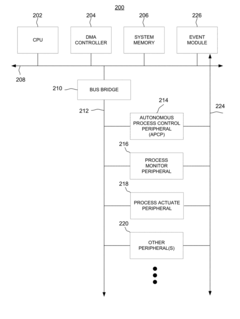
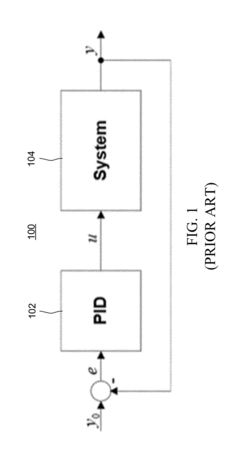
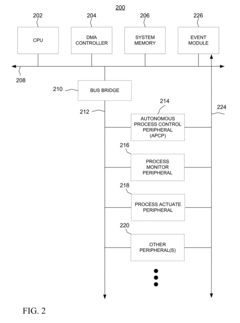
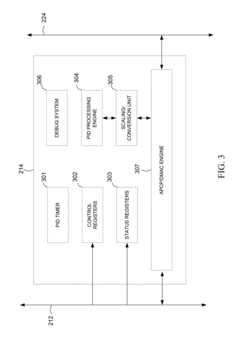
- An autonomous process control peripheral (APCP) is implemented in hardware within a microcontroller system, capable of obtaining process variables from a monitor peripheral, updating control variables using a control law, and adjusting the process without CPU intervention, thereby reducing errors and improving system reliability.
Integration with Industry 4.0 Technologies
The integration of PID control systems with Industry 4.0 technologies represents a significant evolution in process automation, bridging traditional control methods with modern digital capabilities. This convergence enables unprecedented levels of process optimization in both batch and continuous manufacturing environments through enhanced data collection, analysis, and autonomous decision-making.
Industrial Internet of Things (IIoT) platforms now facilitate seamless connectivity between PID controllers and enterprise-wide systems, allowing real-time data exchange across previously isolated operational domains. This connectivity enables continuous monitoring of process variables and controller performance, with cloud-based analytics providing deeper insights into control loop behavior and optimization opportunities that were previously undetectable.
Machine learning algorithms are increasingly being deployed to complement traditional PID control strategies. These algorithms can analyze historical process data to identify optimal PID parameter settings for specific operating conditions, effectively creating adaptive control systems that automatically adjust to changing process dynamics. In batch processes, this capability is particularly valuable for addressing the inherent variability between batches, while continuous processes benefit from more responsive adjustments to gradual changes in operating conditions.
Digital twin technology represents another transformative integration point, allowing engineers to create virtual replicas of physical PID control systems. These digital twins enable simulation-based testing of control strategies before implementation, reducing commissioning time and minimizing production disruptions. For complex batch sequences, digital twins can optimize transition points between process phases, while continuous processes benefit from more precise modeling of steady-state operations and disturbance responses.
Edge computing architectures are reshaping how PID control is implemented, particularly in distributed manufacturing environments. By processing control algorithms closer to the physical equipment, edge devices reduce latency and improve response times for critical control loops. This distributed intelligence approach enables more sophisticated control strategies while maintaining the reliability expected in industrial applications.
Augmented reality (AR) interfaces are transforming how operators interact with PID control systems, providing intuitive visualizations of complex process dynamics and controller performance. These interfaces allow technicians to diagnose control issues more efficiently and implement adjustments with greater confidence, bridging the knowledge gap often encountered when transitioning between batch and continuous control paradigms.
As these Industry 4.0 technologies mature, we are witnessing the emergence of self-optimizing production systems where PID controllers continuously learn and adapt based on operational data, market demands, and energy efficiency considerations—fundamentally changing how process control is conceptualized and implemented across manufacturing sectors.
Industrial Internet of Things (IIoT) platforms now facilitate seamless connectivity between PID controllers and enterprise-wide systems, allowing real-time data exchange across previously isolated operational domains. This connectivity enables continuous monitoring of process variables and controller performance, with cloud-based analytics providing deeper insights into control loop behavior and optimization opportunities that were previously undetectable.
Machine learning algorithms are increasingly being deployed to complement traditional PID control strategies. These algorithms can analyze historical process data to identify optimal PID parameter settings for specific operating conditions, effectively creating adaptive control systems that automatically adjust to changing process dynamics. In batch processes, this capability is particularly valuable for addressing the inherent variability between batches, while continuous processes benefit from more responsive adjustments to gradual changes in operating conditions.
Digital twin technology represents another transformative integration point, allowing engineers to create virtual replicas of physical PID control systems. These digital twins enable simulation-based testing of control strategies before implementation, reducing commissioning time and minimizing production disruptions. For complex batch sequences, digital twins can optimize transition points between process phases, while continuous processes benefit from more precise modeling of steady-state operations and disturbance responses.
Edge computing architectures are reshaping how PID control is implemented, particularly in distributed manufacturing environments. By processing control algorithms closer to the physical equipment, edge devices reduce latency and improve response times for critical control loops. This distributed intelligence approach enables more sophisticated control strategies while maintaining the reliability expected in industrial applications.
Augmented reality (AR) interfaces are transforming how operators interact with PID control systems, providing intuitive visualizations of complex process dynamics and controller performance. These interfaces allow technicians to diagnose control issues more efficiently and implement adjustments with greater confidence, bridging the knowledge gap often encountered when transitioning between batch and continuous control paradigms.
As these Industry 4.0 technologies mature, we are witnessing the emergence of self-optimizing production systems where PID controllers continuously learn and adapt based on operational data, market demands, and energy efficiency considerations—fundamentally changing how process control is conceptualized and implemented across manufacturing sectors.
Energy Efficiency Considerations in PID Implementation
Energy efficiency has emerged as a critical consideration in PID control implementation, particularly when comparing batch versus continuous processes. In continuous processes, PID controllers operate constantly, making their energy consumption profile relatively stable and predictable. However, the frequent ramping up and down in batch processes creates significant energy usage variations that require specialized optimization approaches. Research indicates that properly tuned PID controllers in continuous processes can achieve 10-15% energy savings compared to poorly tuned systems.
The selection of appropriate PID parameters directly impacts energy consumption. Aggressive controller settings may achieve faster setpoint tracking but often at the cost of excessive control actions and energy waste. Studies by Åström and Hägglund demonstrate that optimizing integral time constants can reduce energy consumption by up to 20% in heating and cooling applications without sacrificing performance quality. This optimization becomes particularly challenging in batch processes where operating conditions change throughout the production cycle.
Advanced PID implementations incorporate energy-aware algorithms that dynamically adjust control parameters based on energy consumption metrics. For instance, cascade control structures that incorporate energy efficiency as a secondary control objective have shown promising results in chemical processing industries. These systems typically employ outer loops that optimize energy usage while inner loops maintain precise process control, resulting in balanced performance-efficiency outcomes.
The hardware implementation of PID controllers also affects energy efficiency. Modern digital controllers consume significantly less power than their analog predecessors, but their computational requirements must be considered in large-scale implementations. Edge computing architectures that distribute control calculations across multiple low-power devices have demonstrated energy savings of 30-40% compared to centralized control systems in extensive continuous processing facilities.
Process-specific considerations further differentiate energy efficiency strategies between batch and continuous operations. In continuous processes, steady-state optimization techniques like model predictive control overlays can complement PID control to minimize energy consumption during extended production runs. Conversely, batch processes benefit more from dynamic optimization approaches that anticipate transition phases and minimize energy-intensive control actions during product changeovers.
Measurement and verification methodologies are essential for quantifying energy savings from PID optimization. ISO 50001 energy management standards provide frameworks for establishing baseline energy consumption patterns and validating improvements. Recent case studies from pharmaceutical manufacturing indicate that implementing energy-efficient PID control strategies can reduce overall process energy consumption by 8-12%, representing significant operational cost savings in energy-intensive industries.
The selection of appropriate PID parameters directly impacts energy consumption. Aggressive controller settings may achieve faster setpoint tracking but often at the cost of excessive control actions and energy waste. Studies by Åström and Hägglund demonstrate that optimizing integral time constants can reduce energy consumption by up to 20% in heating and cooling applications without sacrificing performance quality. This optimization becomes particularly challenging in batch processes where operating conditions change throughout the production cycle.
Advanced PID implementations incorporate energy-aware algorithms that dynamically adjust control parameters based on energy consumption metrics. For instance, cascade control structures that incorporate energy efficiency as a secondary control objective have shown promising results in chemical processing industries. These systems typically employ outer loops that optimize energy usage while inner loops maintain precise process control, resulting in balanced performance-efficiency outcomes.
The hardware implementation of PID controllers also affects energy efficiency. Modern digital controllers consume significantly less power than their analog predecessors, but their computational requirements must be considered in large-scale implementations. Edge computing architectures that distribute control calculations across multiple low-power devices have demonstrated energy savings of 30-40% compared to centralized control systems in extensive continuous processing facilities.
Process-specific considerations further differentiate energy efficiency strategies between batch and continuous operations. In continuous processes, steady-state optimization techniques like model predictive control overlays can complement PID control to minimize energy consumption during extended production runs. Conversely, batch processes benefit more from dynamic optimization approaches that anticipate transition phases and minimize energy-intensive control actions during product changeovers.
Measurement and verification methodologies are essential for quantifying energy savings from PID optimization. ISO 50001 energy management standards provide frameworks for establishing baseline energy consumption patterns and validating improvements. Recent case studies from pharmaceutical manufacturing indicate that implementing energy-efficient PID control strategies can reduce overall process energy consumption by 8-12%, representing significant operational cost savings in energy-intensive industries.
Unlock deeper insights with PatSnap Eureka Quick Research — get a full tech report to explore trends and direct your research. Try now!
Generate Your Research Report Instantly with AI Agent
Supercharge your innovation with PatSnap Eureka AI Agent Platform!