Processing Aids And Rheology Modifiers For Nanocellulose Composite Extrusion
SEP 3, 202510 MIN READ
Generate Your Research Report Instantly with AI Agent
Patsnap Eureka helps you evaluate technical feasibility & market potential.
Nanocellulose Extrusion Technology Background and Objectives
Nanocellulose has emerged as a revolutionary biomaterial with exceptional mechanical, thermal, and barrier properties, making it increasingly attractive for sustainable composite applications. The evolution of nanocellulose technology can be traced back to the early 1980s, but significant advancements in extraction methods and characterization techniques have only materialized in the last two decades. This natural polymer, derived from renewable resources such as wood pulp, agricultural residues, and bacterial synthesis, represents a paradigm shift in material science toward environmentally responsible alternatives to petroleum-based products.
The extrusion of nanocellulose composites presents a particularly promising avenue for industrial-scale production of high-performance materials. However, the inherent challenges associated with processing this hydrophilic nanomaterial through conventional thermoplastic extrusion systems have limited its widespread adoption. The primary technical hurdles include the high water content of nanocellulose, its tendency to form hydrogen bonds leading to agglomeration, and its thermal degradation at typical processing temperatures.
Recent technological trends indicate a growing focus on developing specialized processing aids and rheology modifiers specifically designed for nanocellulose composite extrusion. These additives aim to enhance the compatibility between hydrophilic nanocellulose and hydrophobic polymer matrices, improve dispersion, and optimize flow behavior during extrusion. The evolution of these processing aids has progressed from simple surfactants to sophisticated compatibilizers and surface modification techniques.
The global push toward circular economy principles and reduced carbon footprints has accelerated research in this domain, with significant contributions from academic institutions, research centers, and industrial players across North America, Europe, and Asia. Particularly noteworthy is the transition from laboratory-scale experiments to pilot-scale demonstrations, signaling the technology's maturation trajectory.
The primary technical objectives in this field include developing processing aids that can effectively reduce the water sensitivity of nanocellulose while preserving its nanoscale dimensions and unique properties. Additionally, rheology modifiers that can facilitate smooth extrusion at lower temperatures without compromising material integrity are being actively pursued. The ultimate goal is to establish a robust processing window that enables consistent, high-throughput production of nanocellulose composites with predictable properties.
Furthermore, there is growing interest in creating multifunctional additives that not only improve processability but also enhance the final composite properties, such as flame retardancy, antimicrobial activity, or electrical conductivity. This convergence of processing aids with performance enhancers represents an emerging trend that could significantly expand the application spectrum of nanocellulose composites in sectors ranging from packaging and automotive to construction and healthcare.
The extrusion of nanocellulose composites presents a particularly promising avenue for industrial-scale production of high-performance materials. However, the inherent challenges associated with processing this hydrophilic nanomaterial through conventional thermoplastic extrusion systems have limited its widespread adoption. The primary technical hurdles include the high water content of nanocellulose, its tendency to form hydrogen bonds leading to agglomeration, and its thermal degradation at typical processing temperatures.
Recent technological trends indicate a growing focus on developing specialized processing aids and rheology modifiers specifically designed for nanocellulose composite extrusion. These additives aim to enhance the compatibility between hydrophilic nanocellulose and hydrophobic polymer matrices, improve dispersion, and optimize flow behavior during extrusion. The evolution of these processing aids has progressed from simple surfactants to sophisticated compatibilizers and surface modification techniques.
The global push toward circular economy principles and reduced carbon footprints has accelerated research in this domain, with significant contributions from academic institutions, research centers, and industrial players across North America, Europe, and Asia. Particularly noteworthy is the transition from laboratory-scale experiments to pilot-scale demonstrations, signaling the technology's maturation trajectory.
The primary technical objectives in this field include developing processing aids that can effectively reduce the water sensitivity of nanocellulose while preserving its nanoscale dimensions and unique properties. Additionally, rheology modifiers that can facilitate smooth extrusion at lower temperatures without compromising material integrity are being actively pursued. The ultimate goal is to establish a robust processing window that enables consistent, high-throughput production of nanocellulose composites with predictable properties.
Furthermore, there is growing interest in creating multifunctional additives that not only improve processability but also enhance the final composite properties, such as flame retardancy, antimicrobial activity, or electrical conductivity. This convergence of processing aids with performance enhancers represents an emerging trend that could significantly expand the application spectrum of nanocellulose composites in sectors ranging from packaging and automotive to construction and healthcare.
Market Analysis for Nanocellulose Composite Applications
The global nanocellulose composite market is experiencing significant growth, driven by increasing demand for sustainable and high-performance materials across multiple industries. Current market valuations place the nanocellulose market at approximately 300 million USD, with projections indicating growth to reach 1 billion USD by 2025, representing a compound annual growth rate of 18-20%.
The automotive sector represents one of the largest application areas for nanocellulose composites, with manufacturers seeking lightweight materials to improve fuel efficiency and reduce carbon emissions. The integration of nanocellulose as a reinforcement material in automotive components can reduce weight by up to 30% while maintaining or improving mechanical properties.
Packaging represents another substantial market segment, particularly as regulations against single-use plastics intensify globally. Nanocellulose-reinforced packaging materials offer superior barrier properties against oxygen and moisture while maintaining biodegradability, addressing both performance and sustainability requirements in this sector.
The construction industry has begun adopting nanocellulose composites for applications requiring high strength-to-weight ratios and improved thermal insulation properties. Market penetration in this sector remains in early stages but shows promising growth potential as sustainable building practices gain traction.
Electronics manufacturers are exploring nanocellulose composites for flexible displays, printed electronics, and battery components. The market for these specialized applications is currently small but has high growth potential due to the unique combination of electrical, optical, and mechanical properties that nanocellulose can provide.
Regional analysis indicates North America and Europe currently lead in nanocellulose composite adoption, primarily due to stringent environmental regulations and strong research infrastructure. However, Asia-Pacific markets are expected to show the highest growth rates over the next five years, driven by rapid industrialization and increasing environmental awareness in countries like China, Japan, and South Korea.
Market challenges include high production costs associated with nanocellulose extraction and processing, which currently limit widespread commercial adoption. The development of more efficient processing aids and rheology modifiers specifically designed for nanocellulose composite extrusion represents a critical factor in reducing these costs and expanding market penetration.
Consumer trends indicate growing preference for environmentally friendly products, creating favorable conditions for nanocellulose composite market expansion. This is particularly evident in consumer packaging and automotive interior applications where end-user awareness of sustainability issues directly influences purchasing decisions.
The automotive sector represents one of the largest application areas for nanocellulose composites, with manufacturers seeking lightweight materials to improve fuel efficiency and reduce carbon emissions. The integration of nanocellulose as a reinforcement material in automotive components can reduce weight by up to 30% while maintaining or improving mechanical properties.
Packaging represents another substantial market segment, particularly as regulations against single-use plastics intensify globally. Nanocellulose-reinforced packaging materials offer superior barrier properties against oxygen and moisture while maintaining biodegradability, addressing both performance and sustainability requirements in this sector.
The construction industry has begun adopting nanocellulose composites for applications requiring high strength-to-weight ratios and improved thermal insulation properties. Market penetration in this sector remains in early stages but shows promising growth potential as sustainable building practices gain traction.
Electronics manufacturers are exploring nanocellulose composites for flexible displays, printed electronics, and battery components. The market for these specialized applications is currently small but has high growth potential due to the unique combination of electrical, optical, and mechanical properties that nanocellulose can provide.
Regional analysis indicates North America and Europe currently lead in nanocellulose composite adoption, primarily due to stringent environmental regulations and strong research infrastructure. However, Asia-Pacific markets are expected to show the highest growth rates over the next five years, driven by rapid industrialization and increasing environmental awareness in countries like China, Japan, and South Korea.
Market challenges include high production costs associated with nanocellulose extraction and processing, which currently limit widespread commercial adoption. The development of more efficient processing aids and rheology modifiers specifically designed for nanocellulose composite extrusion represents a critical factor in reducing these costs and expanding market penetration.
Consumer trends indicate growing preference for environmentally friendly products, creating favorable conditions for nanocellulose composite market expansion. This is particularly evident in consumer packaging and automotive interior applications where end-user awareness of sustainability issues directly influences purchasing decisions.
Processing Aids Technical Challenges and Limitations
Despite the promising potential of nanocellulose composites, their industrial extrusion processing presents significant technical challenges. The high aspect ratio and surface area of nanocellulose fibrils create strong hydrogen bonding networks that dramatically increase viscosity during processing. This phenomenon results in poor flowability and excessive pressure build-up in extrusion equipment, often leading to equipment damage and production inefficiencies.
Water content management represents another critical limitation. Nanocellulose typically contains high moisture levels (>90% water) in its initial form, yet most polymer matrices are hydrophobic. This incompatibility necessitates extensive drying procedures that can trigger irreversible aggregation of nanocellulose particles through hornification, significantly reducing their reinforcement capabilities and negating their nano-scale advantages.
Current processing aids face thermal stability issues at typical extrusion temperatures (180-250°C). Many conventional rheology modifiers degrade at these elevated temperatures, losing their effectiveness during processing and potentially introducing unwanted degradation products into the final composite. This thermal instability limits the processing window and compromises material properties.
Compatibility challenges between processing aids and both nanocellulose and polymer matrices further complicate formulation development. Many additives that effectively modify nanocellulose rheology may simultaneously interfere with polymer-nanocellulose interfacial interactions, weakening the final composite structure. This creates a difficult balance between processability and performance properties.
Dispersion quality remains problematic even with processing aids. Nanocellulose tends to reagglomerate during processing due to strong inter-particle attractions, creating inhomogeneous distribution within the polymer matrix. Current processing aids provide insufficient stabilization against these reagglomeration forces during high-shear extrusion conditions.
Scale-up challenges present additional barriers to commercialization. Laboratory-scale solutions often fail when transferred to industrial production environments due to different shear histories, residence times, and heat transfer dynamics. Processing aids that perform well in small batches frequently show diminished effectiveness at commercial scales.
Environmental and regulatory considerations further restrict processing aid selection. As sustainability drives nanocellulose adoption, processing aids must align with eco-friendly principles. Many effective rheological modifiers contain volatile organic compounds or other environmentally problematic components that contradict the sustainable nature of nanocellulose itself, creating a significant formulation constraint.
Water content management represents another critical limitation. Nanocellulose typically contains high moisture levels (>90% water) in its initial form, yet most polymer matrices are hydrophobic. This incompatibility necessitates extensive drying procedures that can trigger irreversible aggregation of nanocellulose particles through hornification, significantly reducing their reinforcement capabilities and negating their nano-scale advantages.
Current processing aids face thermal stability issues at typical extrusion temperatures (180-250°C). Many conventional rheology modifiers degrade at these elevated temperatures, losing their effectiveness during processing and potentially introducing unwanted degradation products into the final composite. This thermal instability limits the processing window and compromises material properties.
Compatibility challenges between processing aids and both nanocellulose and polymer matrices further complicate formulation development. Many additives that effectively modify nanocellulose rheology may simultaneously interfere with polymer-nanocellulose interfacial interactions, weakening the final composite structure. This creates a difficult balance between processability and performance properties.
Dispersion quality remains problematic even with processing aids. Nanocellulose tends to reagglomerate during processing due to strong inter-particle attractions, creating inhomogeneous distribution within the polymer matrix. Current processing aids provide insufficient stabilization against these reagglomeration forces during high-shear extrusion conditions.
Scale-up challenges present additional barriers to commercialization. Laboratory-scale solutions often fail when transferred to industrial production environments due to different shear histories, residence times, and heat transfer dynamics. Processing aids that perform well in small batches frequently show diminished effectiveness at commercial scales.
Environmental and regulatory considerations further restrict processing aid selection. As sustainability drives nanocellulose adoption, processing aids must align with eco-friendly principles. Many effective rheological modifiers contain volatile organic compounds or other environmentally problematic components that contradict the sustainable nature of nanocellulose itself, creating a significant formulation constraint.
Current Processing Aid Solutions for Nanocellulose Extrusion
01 Rheological properties of nanocellulose-polymer composites
Nanocellulose can be incorporated into polymer matrices to create composites with enhanced rheological properties. These composites exhibit shear-thinning behavior and increased viscosity at low shear rates, which is beneficial for various applications. The rheological behavior depends on the concentration of nanocellulose, the type of polymer matrix, and the processing conditions. Understanding these properties is crucial for optimizing the processing and performance of nanocellulose-polymer composites.- Rheological properties of nanocellulose-based composites: Nanocellulose-based composites exhibit unique rheological behaviors that can be tailored for specific applications. These composites typically show shear-thinning behavior, where viscosity decreases with increasing shear rate. The rheological properties are influenced by factors such as nanocellulose concentration, aspect ratio, surface chemistry, and interactions with the matrix material. Understanding these properties is crucial for processing techniques like extrusion, injection molding, and 3D printing.
- Effect of nanocellulose morphology on composite rheology: The morphology of nanocellulose, including its dimensions, crystallinity, and surface characteristics, significantly impacts the rheological behavior of nanocellulose composites. Different forms such as cellulose nanofibrils (CNF), cellulose nanocrystals (CNC), and bacterial nanocellulose (BNC) impart distinct rheological profiles to the resulting composites. The aspect ratio and flexibility of nanocellulose particles particularly influence network formation, yield stress, and viscoelastic properties of the composite systems.
- Modification techniques to control rheological behavior: Various modification techniques can be employed to control the rheological behavior of nanocellulose composites. Surface functionalization, such as TEMPO-oxidation or grafting of polymers, can alter the surface charge and hydrophilicity of nanocellulose, thereby influencing its dispersion and rheological properties. Additionally, the incorporation of additives like plasticizers, crosslinking agents, or other nanomaterials can be used to fine-tune the flow behavior and processability of nanocellulose-based formulations.
- Thixotropic behavior and gel formation in nanocellulose systems: Nanocellulose composites often exhibit thixotropic behavior, characterized by time-dependent recovery of structure after shearing. This property is particularly important for applications requiring gel-like behavior at rest but flowability under stress. The formation of three-dimensional networks through hydrogen bonding and entanglement of nanocellulose particles contributes to gel formation and yield stress development. These rheological characteristics can be manipulated by controlling factors such as pH, ionic strength, and temperature.
- Industrial applications leveraging rheological properties: The unique rheological properties of nanocellulose composites enable their use in various industrial applications. In coatings and adhesives, their shear-thinning behavior facilitates application while providing stability against sagging. In 3D printing, the viscoelastic properties allow for shape retention during printing and structural integrity after deposition. For oil and gas applications, nanocellulose-based drilling fluids with controlled rheology can improve performance under high temperature and pressure conditions. Additionally, in biomedical applications, the tunable gel-forming properties are utilized for controlled drug delivery systems and tissue engineering scaffolds.
02 Effect of nanocellulose morphology on composite rheology
The morphology of nanocellulose, including aspect ratio, surface chemistry, and crystallinity, significantly influences the rheological behavior of nanocellulose composites. Different forms of nanocellulose, such as cellulose nanofibrils (CNF), cellulose nanocrystals (CNC), and bacterial nanocellulose (BNC), impart distinct rheological properties to composites. Higher aspect ratio nanocellulose typically results in stronger network formation and more pronounced viscoelastic properties, affecting flow behavior and processing characteristics.Expand Specific Solutions03 Thixotropic behavior and yield stress in nanocellulose suspensions
Nanocellulose suspensions and composites often exhibit thixotropic behavior, characterized by time-dependent recovery of structure after shearing. This property, along with the presence of yield stress, is important for applications requiring controlled flow properties. The thixotropic nature of nanocellulose composites can be tuned by adjusting the concentration, surface modification, and addition of other components. Understanding and controlling these rheological phenomena are essential for processing and end-use applications of nanocellulose-based materials.Expand Specific Solutions04 Surface modification of nanocellulose for rheology control
Chemical and physical modifications of nanocellulose surfaces can significantly alter the rheological properties of resulting composites. Surface treatments such as TEMPO-oxidation, silylation, grafting of polymers, or addition of surfactants can reduce hydrogen bonding between nanocellulose particles, affecting their dispersion and network formation. These modifications enable tailored rheological profiles for specific applications, including improved processability, reduced viscosity at high shear rates, or enhanced stability of suspensions.Expand Specific Solutions05 Nanocellulose as rheology modifier in industrial formulations
Nanocellulose serves as an effective rheology modifier in various industrial formulations, including coatings, adhesives, drilling fluids, and personal care products. When incorporated into these systems, nanocellulose can provide shear-thinning behavior, improved stability, and enhanced suspension properties. The unique rheological effects of nanocellulose stem from its high surface area, ability to form hydrogen bonds, and network-forming capability. These properties make nanocellulose a sustainable alternative to conventional rheology modifiers derived from non-renewable resources.Expand Specific Solutions
Key Industry Players in Nanocellulose Processing
The nanocellulose composite extrusion market is in an early growth phase, characterized by increasing research activity but limited commercial-scale implementation. The global market is projected to expand significantly as sustainable materials gain traction, though current adoption remains modest. Technologically, the field shows varying maturity levels across different applications. Leading players include established materials companies like 3M Innovative Properties and Suzano SA, who possess advanced processing capabilities, alongside specialized entities such as Cellicon B.V. with proprietary G2 technology for nanocellulose production. Academic institutions including Washington State University and Beijing Institute of Technology are driving fundamental research, while companies like FACT Future Advanced Composites & Technology and Soane Materials are developing innovative rheological solutions to overcome processing challenges in nanocellulose extrusion.
3M Innovative Properties Co.
Technical Solution: 3M has developed a comprehensive processing aid system for nanocellulose composite extrusion that combines surface modification techniques with specialized rheology modifiers. Their approach involves chemical functionalization of nanocellulose fibrils with hydrophobic groups to reduce hydrogen bonding and improve compatibility with polymer matrices. The company utilizes proprietary coupling agents that create covalent bonds between nanocellulose and polymer chains, significantly enhancing interfacial adhesion. 3M's technology incorporates a multi-component additive package including lubricants, plasticizers, and dispersants specifically designed for high-shear extrusion environments. Their process enables the production of nanocellulose composites with fiber loadings up to 50% while maintaining processability. The company has also developed specialized drying protocols that prevent irreversible agglomeration of nanocellulose during processing, preserving the nanoscale dimensions and associated performance benefits.
Strengths: Extensive expertise in surface chemistry and adhesion science; comprehensive additive package approach; established manufacturing infrastructure for scale-up. Weaknesses: Potentially higher cost due to multi-component system; some solutions may be polymer-specific rather than universal across different matrices.
Suzano SA
Technical Solution: Suzano has pioneered a bio-based rheology modification system specifically for nanocellulose composite extrusion. Their approach focuses on utilizing lignin derivatives and hemicellulose fractions extracted during their pulping operations as natural processing aids. These biopolymers act as interfacial compatibilizers between hydrophilic nanocellulose and hydrophobic polymer matrices. Suzano's technology employs enzymatically modified lignin that creates a hydrophobic shell around nanocellulose particles while maintaining their nanoscale dimensions. Their process includes a pre-compounding step where nanocellulose is treated with their proprietary bio-based surfactants before introduction to the polymer matrix. This significantly reduces agglomeration and improves dispersion quality. Suzano has demonstrated successful extrusion of polyolefin composites containing up to 30% nanocellulose using their technology, achieving uniform dispersion and enhanced mechanical properties without compromising processability.
Strengths: Fully bio-based solution aligns with sustainability trends; vertical integration with pulp production provides cost advantages; expertise in cellulose chemistry. Weaknesses: Performance may not match synthetic additives in some applications; technology is relatively new compared to established synthetic processing aids.
Critical Patents in Composite Rheology Modification
Nanoparticle processing aid for extrusion and injection molding
PatentWO2012039901A1
Innovation
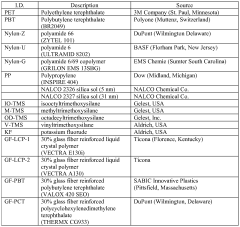
- Incorporating surface-modified nanoparticles, such as silica nanoparticles with covalently bonded trialkoxy alkylsilanes, into the thermoplastic resin to reduce processing forces during extrusion and injection molding.


Nanoparticle processing aid for extrusion and injection molding
PatentInactiveEP2619254A1
Innovation
- Incorporating surface-modified nanoparticles, such as silica nanoparticles with covalently bonded trialkoxy alkylsilanes, into the thermoplastic resin to reduce processing forces during extrusion and injection molding.
Sustainability Impact of Nanocellulose Composites
The integration of nanocellulose into composite materials represents a significant advancement in sustainable material science. Nanocellulose composites offer remarkable environmental benefits compared to conventional petroleum-based polymers, positioning them as critical materials for a circular economy. The sustainability impact of these composites extends throughout their entire lifecycle, from raw material sourcing to end-of-life management.
Nanocellulose is derived from renewable biomass sources, primarily wood pulp and agricultural residues, which significantly reduces dependence on fossil resources. The production process for nanocellulose has evolved to become increasingly efficient, with modern extraction methods requiring less energy and chemicals than earlier techniques. When these nanocellulose materials are incorporated as processing aids and rheology modifiers in composite extrusion, they enable the use of higher percentages of bio-based content in the final products.
Carbon footprint analyses reveal that nanocellulose composite materials can achieve up to 35-60% reduction in greenhouse gas emissions compared to their conventional counterparts, depending on the specific application and processing method. This reduction stems from both the renewable nature of the raw materials and the potential for lower processing temperatures during extrusion when appropriate rheology modifiers are employed.
Water usage represents another critical sustainability metric. Traditional polymer processing often requires substantial cooling water, whereas nanocellulose-based processing aids can improve thermal management during extrusion, potentially reducing water consumption by 15-25%. Additionally, the biodegradability of many nanocellulose composites addresses end-of-life concerns that plague conventional plastics.
The rheological properties imparted by nanocellulose can also contribute to sustainability by enabling more efficient processing. Properly formulated rheology modifiers minimize production waste through improved flow characteristics and reduced equipment wear, extending machinery lifespan and decreasing maintenance-related resource consumption.
Life Cycle Assessment (LCA) studies indicate that nanocellulose composites offer particular sustainability advantages in packaging, automotive components, and construction materials. These applications benefit from the material's lightweight nature, which translates to reduced transportation energy requirements and associated emissions throughout the supply chain.
Despite these benefits, challenges remain in scaling production sustainably. Current industrial processes for nanocellulose extraction and modification still require optimization to minimize chemical usage and energy consumption. Research into enzymatic and mechanical processing methods shows promise for further reducing the environmental impact of nanocellulose production.
As regulatory frameworks increasingly emphasize sustainability metrics, nanocellulose composites are positioned favorably to meet future environmental standards. Their potential to replace microplastics in various applications while maintaining or improving performance characteristics represents a significant contribution to addressing global plastic pollution concerns.
Nanocellulose is derived from renewable biomass sources, primarily wood pulp and agricultural residues, which significantly reduces dependence on fossil resources. The production process for nanocellulose has evolved to become increasingly efficient, with modern extraction methods requiring less energy and chemicals than earlier techniques. When these nanocellulose materials are incorporated as processing aids and rheology modifiers in composite extrusion, they enable the use of higher percentages of bio-based content in the final products.
Carbon footprint analyses reveal that nanocellulose composite materials can achieve up to 35-60% reduction in greenhouse gas emissions compared to their conventional counterparts, depending on the specific application and processing method. This reduction stems from both the renewable nature of the raw materials and the potential for lower processing temperatures during extrusion when appropriate rheology modifiers are employed.
Water usage represents another critical sustainability metric. Traditional polymer processing often requires substantial cooling water, whereas nanocellulose-based processing aids can improve thermal management during extrusion, potentially reducing water consumption by 15-25%. Additionally, the biodegradability of many nanocellulose composites addresses end-of-life concerns that plague conventional plastics.
The rheological properties imparted by nanocellulose can also contribute to sustainability by enabling more efficient processing. Properly formulated rheology modifiers minimize production waste through improved flow characteristics and reduced equipment wear, extending machinery lifespan and decreasing maintenance-related resource consumption.
Life Cycle Assessment (LCA) studies indicate that nanocellulose composites offer particular sustainability advantages in packaging, automotive components, and construction materials. These applications benefit from the material's lightweight nature, which translates to reduced transportation energy requirements and associated emissions throughout the supply chain.
Despite these benefits, challenges remain in scaling production sustainably. Current industrial processes for nanocellulose extraction and modification still require optimization to minimize chemical usage and energy consumption. Research into enzymatic and mechanical processing methods shows promise for further reducing the environmental impact of nanocellulose production.
As regulatory frameworks increasingly emphasize sustainability metrics, nanocellulose composites are positioned favorably to meet future environmental standards. Their potential to replace microplastics in various applications while maintaining or improving performance characteristics represents a significant contribution to addressing global plastic pollution concerns.
Scalability and Manufacturing Considerations
The scalability of nanocellulose composite extrusion processes presents significant challenges when transitioning from laboratory-scale production to industrial manufacturing. Current processing methods often encounter limitations in throughput capacity, with many systems optimized for small batch production rather than continuous high-volume operations. The rheological behavior of nanocellulose suspensions changes dramatically at different production scales, requiring careful adjustment of processing aids and modifiers to maintain consistent material properties.
Equipment design considerations are paramount for successful scale-up. Conventional extrusion equipment requires modifications to handle the unique flow characteristics of nanocellulose composites, particularly addressing issues of high viscosity and yield stress. Specialized screw designs, die geometries, and barrel configurations must be implemented to prevent agglomeration and ensure homogeneous distribution of nanocellulose within the polymer matrix.
Process parameter optimization becomes increasingly critical at industrial scales. Temperature profiles, residence times, and shear rates must be carefully controlled to prevent thermal degradation of cellulose while ensuring adequate dispersion. The relationship between processing aids concentration and manufacturing efficiency demonstrates non-linear behavior, with optimal formulations varying significantly between different scale operations.
Energy consumption represents another key consideration in scaled manufacturing. The high viscosity of nanocellulose suspensions typically demands greater energy input during processing. Rheology modifiers that can reduce processing temperatures and required shear forces offer substantial benefits for industrial implementation by lowering operational costs and carbon footprint.
Quality control systems must evolve to accommodate continuous production environments. In-line rheological monitoring techniques are being developed to provide real-time feedback on composite properties during extrusion, allowing for dynamic adjustment of processing aid concentrations. These systems are essential for maintaining consistent product quality across extended production runs.
Supply chain considerations also impact scalability, as the availability of consistent, high-quality nanocellulose feedstock remains limited. Processing aids that can accommodate variations in raw material properties while maintaining final product specifications are particularly valuable for industrial-scale operations. Strategic partnerships with nanocellulose producers are becoming increasingly important to secure reliable material supplies for large-scale manufacturing.
Cost-effectiveness ultimately determines commercial viability. While laboratory-scale processes may utilize specialty rheology modifiers, industrial production requires more economical alternatives without compromising performance. Recent developments in bio-based processing aids show promise for reducing reliance on petroleum-derived additives while maintaining compatibility with existing manufacturing infrastructure.
Equipment design considerations are paramount for successful scale-up. Conventional extrusion equipment requires modifications to handle the unique flow characteristics of nanocellulose composites, particularly addressing issues of high viscosity and yield stress. Specialized screw designs, die geometries, and barrel configurations must be implemented to prevent agglomeration and ensure homogeneous distribution of nanocellulose within the polymer matrix.
Process parameter optimization becomes increasingly critical at industrial scales. Temperature profiles, residence times, and shear rates must be carefully controlled to prevent thermal degradation of cellulose while ensuring adequate dispersion. The relationship between processing aids concentration and manufacturing efficiency demonstrates non-linear behavior, with optimal formulations varying significantly between different scale operations.
Energy consumption represents another key consideration in scaled manufacturing. The high viscosity of nanocellulose suspensions typically demands greater energy input during processing. Rheology modifiers that can reduce processing temperatures and required shear forces offer substantial benefits for industrial implementation by lowering operational costs and carbon footprint.
Quality control systems must evolve to accommodate continuous production environments. In-line rheological monitoring techniques are being developed to provide real-time feedback on composite properties during extrusion, allowing for dynamic adjustment of processing aid concentrations. These systems are essential for maintaining consistent product quality across extended production runs.
Supply chain considerations also impact scalability, as the availability of consistent, high-quality nanocellulose feedstock remains limited. Processing aids that can accommodate variations in raw material properties while maintaining final product specifications are particularly valuable for industrial-scale operations. Strategic partnerships with nanocellulose producers are becoming increasingly important to secure reliable material supplies for large-scale manufacturing.
Cost-effectiveness ultimately determines commercial viability. While laboratory-scale processes may utilize specialty rheology modifiers, industrial production requires more economical alternatives without compromising performance. Recent developments in bio-based processing aids show promise for reducing reliance on petroleum-derived additives while maintaining compatibility with existing manufacturing infrastructure.
Unlock deeper insights with Patsnap Eureka Quick Research — get a full tech report to explore trends and direct your research. Try now!
Generate Your Research Report Instantly with AI Agent
Supercharge your innovation with Patsnap Eureka AI Agent Platform!