Research on Microreactors for Photocatalytic Water Splitting Applications
SEP 24, 20259 MIN READ
Generate Your Research Report Instantly with AI Agent
Patsnap Eureka helps you evaluate technical feasibility & market potential.
Photocatalytic Microreactor Background and Objectives
Photocatalytic water splitting using microreactors represents a significant advancement in renewable energy technology, offering a promising pathway for hydrogen production through solar energy conversion. The evolution of this technology can be traced back to the 1970s when Fujishima and Honda first demonstrated photocatalytic water splitting using TiO2 electrodes. Since then, the field has witnessed remarkable progress, transitioning from conventional batch reactors to more efficient microfluidic systems.
The technological trajectory has been characterized by continuous improvements in photocatalyst materials, reactor designs, and process intensification strategies. Early systems suffered from low solar-to-hydrogen conversion efficiencies, typically below 1%, whereas recent advancements have pushed these figures to 5-10% in laboratory settings, with theoretical limits approaching 30% for certain material systems.
Microreactor technology represents a paradigm shift in this domain, offering precise control over reaction parameters, enhanced mass transfer, and improved light penetration compared to traditional batch reactors. The miniaturization of reaction channels to the microscale (typically 10-500 μm) creates unique advantages for photocatalytic processes, including high surface-to-volume ratios and reduced diffusion distances.
The primary technical objective of photocatalytic microreactors is to achieve efficient, scalable, and sustainable hydrogen production from water using solar energy. Specific goals include enhancing photon utilization efficiency, improving catalyst stability and lifetime, reducing noble metal content in catalysts, and developing reactor designs that can be economically scaled for industrial implementation.
Current research trends focus on several key areas: development of novel photocatalyst materials with expanded light absorption spectra; innovative reactor designs that optimize light distribution and mass transfer; integration of plasmonic effects to enhance photon capture; and hybrid systems that combine photocatalysis with other renewable energy technologies.
The evolution of this technology is increasingly driven by computational modeling and simulation tools that enable rational design of both catalysts and reactors. Machine learning approaches are beginning to accelerate materials discovery, while computational fluid dynamics simulations help optimize reactor geometries and operating conditions.
Looking forward, the field is moving toward integrated systems that address the complete hydrogen production cycle, including in-situ separation and storage solutions. There is also growing interest in artificial photosynthesis approaches that mimic natural systems, potentially offering more efficient and robust solutions for solar fuel production.
The ultimate technological goal remains the development of economically viable systems capable of producing hydrogen at costs competitive with conventional fossil fuel-based methods, currently targeted at less than $2/kg H2, while maintaining sustainability across the entire technology lifecycle.
The technological trajectory has been characterized by continuous improvements in photocatalyst materials, reactor designs, and process intensification strategies. Early systems suffered from low solar-to-hydrogen conversion efficiencies, typically below 1%, whereas recent advancements have pushed these figures to 5-10% in laboratory settings, with theoretical limits approaching 30% for certain material systems.
Microreactor technology represents a paradigm shift in this domain, offering precise control over reaction parameters, enhanced mass transfer, and improved light penetration compared to traditional batch reactors. The miniaturization of reaction channels to the microscale (typically 10-500 μm) creates unique advantages for photocatalytic processes, including high surface-to-volume ratios and reduced diffusion distances.
The primary technical objective of photocatalytic microreactors is to achieve efficient, scalable, and sustainable hydrogen production from water using solar energy. Specific goals include enhancing photon utilization efficiency, improving catalyst stability and lifetime, reducing noble metal content in catalysts, and developing reactor designs that can be economically scaled for industrial implementation.
Current research trends focus on several key areas: development of novel photocatalyst materials with expanded light absorption spectra; innovative reactor designs that optimize light distribution and mass transfer; integration of plasmonic effects to enhance photon capture; and hybrid systems that combine photocatalysis with other renewable energy technologies.
The evolution of this technology is increasingly driven by computational modeling and simulation tools that enable rational design of both catalysts and reactors. Machine learning approaches are beginning to accelerate materials discovery, while computational fluid dynamics simulations help optimize reactor geometries and operating conditions.
Looking forward, the field is moving toward integrated systems that address the complete hydrogen production cycle, including in-situ separation and storage solutions. There is also growing interest in artificial photosynthesis approaches that mimic natural systems, potentially offering more efficient and robust solutions for solar fuel production.
The ultimate technological goal remains the development of economically viable systems capable of producing hydrogen at costs competitive with conventional fossil fuel-based methods, currently targeted at less than $2/kg H2, while maintaining sustainability across the entire technology lifecycle.
Market Analysis for Hydrogen Production Technologies
The global hydrogen market is experiencing significant growth, with the market value projected to reach $160 billion by 2026, growing at a CAGR of 6.5% during the forecast period. This growth is primarily driven by increasing demand for clean energy solutions and the push towards decarbonization across various industries. Hydrogen, as an energy carrier, offers a promising pathway to reduce carbon emissions, particularly when produced through sustainable methods such as photocatalytic water splitting.
Traditional hydrogen production methods, dominated by steam methane reforming (SMR), account for approximately 76% of global hydrogen production but generate significant CO2 emissions. This has accelerated interest in green hydrogen technologies, including photocatalytic water splitting using microreactors, which offers a zero-emission alternative.
The market for photocatalytic water splitting technologies, though currently nascent, is expected to grow substantially as technological advancements improve efficiency and reduce costs. Current market penetration remains limited, with most applications confined to research and demonstration projects. However, investment in this sector has increased by 40% in the past three years, indicating growing commercial interest.
Key market drivers for photocatalytic microreactor technologies include stringent environmental regulations, government incentives for clean hydrogen production, and corporate sustainability commitments. The European Union's Hydrogen Strategy aims to install at least 6 GW of renewable hydrogen electrolyzers by 2024 and 40 GW by 2030, creating a favorable market environment for innovative hydrogen production technologies.
Market barriers include high initial capital costs, technological immaturity, and competition from more established hydrogen production methods. The levelized cost of hydrogen from photocatalytic systems currently exceeds that of conventional methods, though this gap is expected to narrow as technology advances and scales.
Regional analysis reveals that Europe leads in adoption and investment in green hydrogen technologies, followed by Asia-Pacific, particularly Japan and South Korea. North America shows growing interest, with significant research initiatives but slower commercial deployment compared to European counterparts.
End-use sectors with the highest potential demand for hydrogen from photocatalytic microreactors include transportation (particularly fuel cell vehicles), industrial processes requiring high-purity hydrogen, and energy storage applications. The transportation sector alone is projected to consume 22% of hydrogen production by 2030, representing a significant market opportunity for clean hydrogen technologies.
Traditional hydrogen production methods, dominated by steam methane reforming (SMR), account for approximately 76% of global hydrogen production but generate significant CO2 emissions. This has accelerated interest in green hydrogen technologies, including photocatalytic water splitting using microreactors, which offers a zero-emission alternative.
The market for photocatalytic water splitting technologies, though currently nascent, is expected to grow substantially as technological advancements improve efficiency and reduce costs. Current market penetration remains limited, with most applications confined to research and demonstration projects. However, investment in this sector has increased by 40% in the past three years, indicating growing commercial interest.
Key market drivers for photocatalytic microreactor technologies include stringent environmental regulations, government incentives for clean hydrogen production, and corporate sustainability commitments. The European Union's Hydrogen Strategy aims to install at least 6 GW of renewable hydrogen electrolyzers by 2024 and 40 GW by 2030, creating a favorable market environment for innovative hydrogen production technologies.
Market barriers include high initial capital costs, technological immaturity, and competition from more established hydrogen production methods. The levelized cost of hydrogen from photocatalytic systems currently exceeds that of conventional methods, though this gap is expected to narrow as technology advances and scales.
Regional analysis reveals that Europe leads in adoption and investment in green hydrogen technologies, followed by Asia-Pacific, particularly Japan and South Korea. North America shows growing interest, with significant research initiatives but slower commercial deployment compared to European counterparts.
End-use sectors with the highest potential demand for hydrogen from photocatalytic microreactors include transportation (particularly fuel cell vehicles), industrial processes requiring high-purity hydrogen, and energy storage applications. The transportation sector alone is projected to consume 22% of hydrogen production by 2030, representing a significant market opportunity for clean hydrogen technologies.
Current Microreactor Technology and Challenges
Microreactor technology for photocatalytic water splitting has advanced significantly in recent years, with several designs now commercially available or in advanced research stages. Current microreactor configurations include planar microreactors, microcapillary reactors, and optofluidic systems, each offering distinct advantages for photocatalytic applications. Planar designs provide excellent light penetration and distribution across catalyst surfaces, while microcapillary systems offer enhanced mass transfer characteristics and reduced pressure drops.
The state-of-the-art microreactors incorporate transparent materials such as PDMS, glass, or quartz to maximize light transmission to photocatalysts. Advanced designs feature integrated light sources, including LED arrays and fiber optics that deliver precisely controlled illumination directly to reaction zones. Some cutting-edge systems incorporate distributed light delivery systems that ensure uniform photon flux throughout the reactor volume, addressing one of the historical limitations of photocatalytic systems.
Despite these advances, significant challenges persist in microreactor technology for photocatalytic water splitting. Light distribution remains problematic, particularly in scaled-up systems where ensuring uniform illumination across larger catalyst areas presents engineering difficulties. Photon utilization efficiency is typically below 10% in most current systems, representing a major barrier to commercial viability. Additionally, catalyst deactivation and fouling occur rapidly in many microreactor configurations, necessitating frequent maintenance or replacement.
Mass transfer limitations present another substantial challenge, particularly at the gas-liquid-solid interfaces where the water splitting reactions occur. Current microreactor designs struggle to efficiently manage the evolution and collection of hydrogen and oxygen gases while maintaining optimal contact between the catalyst, water, and light. This challenge becomes more pronounced at higher conversion rates, where gas bubble formation can disrupt flow patterns and reduce effective catalyst surface area.
Material stability under prolonged photocatalytic conditions represents a persistent issue, with reactor materials often degrading due to UV exposure or reaction with reactive oxygen species generated during photocatalysis. Most commercial microreactors utilize materials that compromise between optical transparency, chemical resistance, and mechanical durability, resulting in suboptimal performance for long-term operation.
Scalability remains perhaps the most significant barrier to widespread implementation. While laboratory-scale microreactors demonstrate promising performance metrics, scaling these systems to industrially relevant production volumes has proven challenging. Current approaches include numbering-up (parallelization of multiple microreactors) and scaling-out strategies, but these introduce additional complexities in flow distribution, control systems, and maintenance requirements that have yet to be fully resolved.
The state-of-the-art microreactors incorporate transparent materials such as PDMS, glass, or quartz to maximize light transmission to photocatalysts. Advanced designs feature integrated light sources, including LED arrays and fiber optics that deliver precisely controlled illumination directly to reaction zones. Some cutting-edge systems incorporate distributed light delivery systems that ensure uniform photon flux throughout the reactor volume, addressing one of the historical limitations of photocatalytic systems.
Despite these advances, significant challenges persist in microreactor technology for photocatalytic water splitting. Light distribution remains problematic, particularly in scaled-up systems where ensuring uniform illumination across larger catalyst areas presents engineering difficulties. Photon utilization efficiency is typically below 10% in most current systems, representing a major barrier to commercial viability. Additionally, catalyst deactivation and fouling occur rapidly in many microreactor configurations, necessitating frequent maintenance or replacement.
Mass transfer limitations present another substantial challenge, particularly at the gas-liquid-solid interfaces where the water splitting reactions occur. Current microreactor designs struggle to efficiently manage the evolution and collection of hydrogen and oxygen gases while maintaining optimal contact between the catalyst, water, and light. This challenge becomes more pronounced at higher conversion rates, where gas bubble formation can disrupt flow patterns and reduce effective catalyst surface area.
Material stability under prolonged photocatalytic conditions represents a persistent issue, with reactor materials often degrading due to UV exposure or reaction with reactive oxygen species generated during photocatalysis. Most commercial microreactors utilize materials that compromise between optical transparency, chemical resistance, and mechanical durability, resulting in suboptimal performance for long-term operation.
Scalability remains perhaps the most significant barrier to widespread implementation. While laboratory-scale microreactors demonstrate promising performance metrics, scaling these systems to industrially relevant production volumes has proven challenging. Current approaches include numbering-up (parallelization of multiple microreactors) and scaling-out strategies, but these introduce additional complexities in flow distribution, control systems, and maintenance requirements that have yet to be fully resolved.
Current Microreactor Design Solutions
01 Design and fabrication of microreactors
Microreactors are miniaturized reaction systems with dimensions in the micrometer range. The design and fabrication of these devices involve various materials and techniques to create microchannels, mixing zones, and reaction chambers. Advanced manufacturing methods such as micromachining, lithography, and 3D printing are employed to produce precise microstructures. These fabrication techniques enable the creation of complex geometries that enhance mixing, heat transfer, and reaction efficiency at the microscale.- Design and fabrication of microreactors: Microreactors are miniaturized reaction systems with specific design features that enable precise control over reaction conditions. The fabrication of these devices involves various materials and techniques to create microchannels, mixing zones, and integrated components. These designs can incorporate features for enhanced heat and mass transfer, allowing for more efficient reactions compared to conventional batch reactors. Advanced manufacturing methods enable the creation of complex geometries and integration of multiple functionalities within a single microreactor device.
- Chemical synthesis applications in microreactors: Microreactors offer significant advantages for chemical synthesis processes, including improved reaction control, enhanced safety for hazardous reactions, and increased yield and selectivity. These devices enable continuous flow chemistry with precise residence time control, allowing for more efficient production of fine chemicals, pharmaceuticals, and specialty compounds. The controlled environment within microreactors facilitates reactions that would be challenging in conventional equipment, such as highly exothermic reactions or those involving unstable intermediates.
- Biological and biochemical applications of microreactors: Microreactors are increasingly used in biological and biochemical applications, including enzymatic reactions, cell culture, and diagnostic testing. These systems provide controlled microenvironments for biological processes, enabling precise manipulation of cells and biomolecules. The small volumes involved reduce reagent consumption and allow for high-throughput screening. Microfluidic devices can integrate multiple biological processing steps, such as cell lysis, DNA amplification, and detection, creating complete lab-on-a-chip systems for point-of-care diagnostics and research applications.
- Process intensification and scale-up strategies: Microreactors enable process intensification by enhancing transport phenomena and reaction efficiency. Scale-up strategies for microreactor technology often involve numbering-up (parallelization) rather than traditional scale-up, maintaining the advantageous characteristics of the microscale while increasing production capacity. This approach allows for modular and flexible manufacturing systems that can be adjusted according to production demands. Advanced control systems can coordinate multiple microreactor units to ensure consistent performance across the entire production system.
- Integration of monitoring and control systems: Modern microreactor systems incorporate advanced monitoring and control technologies to enable real-time process analysis and automation. These integrated systems may include sensors for temperature, pressure, flow rate, and spectroscopic analysis directly within the microreactor platform. The combination of microreactors with analytical techniques allows for immediate feedback and process optimization. Digital control systems can adjust reaction parameters automatically based on analytical data, enabling self-optimizing reaction systems and quality-by-design approaches to chemical and biochemical manufacturing.
02 Applications in chemical synthesis and processing
Microreactors offer significant advantages for chemical synthesis and processing operations. Their high surface-to-volume ratio enables efficient heat transfer and precise temperature control, making them ideal for exothermic reactions. The controlled environment allows for improved reaction selectivity, higher yields, and reduced formation of unwanted by-products. These devices are particularly valuable for multiphase reactions, continuous flow chemistry, and the synthesis of fine chemicals and pharmaceuticals where reaction conditions need to be tightly controlled.Expand Specific Solutions03 Integration with analytical and monitoring systems
Modern microreactor systems often incorporate integrated analytical and monitoring capabilities. These systems combine reaction platforms with real-time analysis techniques such as spectroscopy, chromatography, or electrochemical detection. The integration allows for continuous monitoring of reaction progress, immediate feedback for process control, and rapid optimization of reaction conditions. This approach enables automated screening of reaction parameters and facilitates quality control in production environments.Expand Specific Solutions04 Microfluidic control and manipulation
Effective control of fluid behavior is essential in microreactor technology. Various techniques are employed to manipulate fluids at the microscale, including pressure-driven flow, electrokinetic methods, and capillary forces. Advanced microfluidic components such as micropumps, microvalves, and micromixers enable precise control over residence time, mixing patterns, and flow regimes. These control mechanisms are crucial for achieving reproducible reaction conditions and consistent product quality in microreactor systems.Expand Specific Solutions05 Scaling and parallelization strategies
To increase production capacity while maintaining the benefits of microscale processing, various scaling strategies have been developed. These include numbering-up (parallelization of identical microreactor units), scaling-out (increasing the number of parallel channels), and smart-scaling (combining micro and meso-scale features). These approaches allow for increased throughput while preserving the advantageous heat and mass transfer characteristics of microreactors. Such scaling strategies are essential for transitioning microreactor technology from laboratory research to industrial production.Expand Specific Solutions
Leading Research Groups and Industrial Players
The microreactor photocatalytic water splitting market is in an early growth phase, characterized by intensive R&D activities across academic and industrial sectors. The global market size is projected to expand significantly as hydrogen energy gains prominence in clean energy transitions. Technologically, the field shows moderate maturity with ongoing innovations to improve efficiency and scalability. Leading academic institutions including King Abdullah University of Science & Technology, University of Tokyo, and Xi'an Jiaotong University are driving fundamental research, while industrial players like Toyota Motor Corp., SABIC Global Technologies, and FUJIFILM Corp. are focusing on commercial applications. The ecosystem demonstrates a balanced collaboration between Asian, Middle Eastern, and Western research entities, with increasing industry participation signaling the technology's growing commercial viability.
SABIC Global Technologies BV
Technical Solution: SABIC has developed proprietary microreactor technology for photocatalytic water splitting that leverages their expertise in advanced materials and chemical engineering. Their approach centers on modular microreactor designs fabricated from specialized polymers with exceptional optical transparency and chemical resistance. These microreactors incorporate hierarchical flow channel architectures that optimize light penetration while maintaining efficient mass transfer characteristics. SABIC's technology utilizes composite photocatalyst materials consisting of titanium dioxide modified with carbon-based sensitizers and noble metal co-catalysts, strategically deposited within the microchannels using proprietary coating techniques[7]. Their systems feature integrated heat management capabilities that maintain optimal reaction temperatures to prevent efficiency losses. Recent innovations include the development of microreactors with gradient catalyst compositions that create synergistic effects between different active sites, enhancing overall hydrogen production rates. SABIC has also pioneered scale-out approaches where multiple microreactor modules operate in parallel, allowing for industrial-scale hydrogen production while maintaining the efficiency advantages of microscale operations[8]. Their technology roadmap includes integration with renewable energy sources to create sustainable hydrogen production facilities.
Strengths: Exceptional materials engineering capabilities enable cost-effective microreactor fabrication; strong focus on scalability and industrial implementation provides clear commercialization pathway. Weaknesses: Current designs still show moderate solar-to-hydrogen conversion efficiencies compared to theoretical maximums; catalyst deactivation under continuous operation remains a challenge requiring periodic regeneration.
University of Tokyo
Technical Solution: The University of Tokyo has pioneered innovative microreactor designs for photocatalytic water splitting that focus on maximizing quantum efficiency through advanced optical engineering. Their research team has developed transparent microfluidic channels with integrated optical waveguides that direct and concentrate light precisely where catalytic reactions occur. These microreactors utilize nanopatterned surfaces to create plasmonic enhancement effects, significantly boosting local light intensity at catalyst active sites[3]. The university's approach incorporates novel Z-scheme photocatalytic systems with carefully engineered band alignments between semiconductor materials to enhance charge separation efficiency. Their latest microreactor prototypes feature multi-layer structures with alternating hydrophilic and hydrophobic surfaces to control bubble formation and extraction, addressing one of the major challenges in continuous hydrogen production systems[4]. Additionally, they have developed unique in-situ monitoring capabilities using integrated spectroscopic techniques that allow real-time analysis of reaction kinetics and catalyst performance within the microreactor environment.
Strengths: Cutting-edge optical engineering approaches maximize photon utilization; sophisticated analytical capabilities enable fundamental understanding of reaction mechanisms. Weaknesses: Complex fabrication processes may limit scalability; current designs prioritize scientific understanding over commercial practicality and cost-effectiveness.
Key Photocatalytic Materials and Mechanisms
Fiber-optic integrated membrane reactor
PatentActiveUS20210032130A1
Innovation
- An integrated reactor design incorporating photocatalyst-coated optical fibers and photon exchange membrane elements, allowing for efficient light harvesting and hydrogen/oxygen gas production using natural and artificial light sources, with decoupling of light harvesting from hydrogen generation.


Photocatalytic water splitting by combining semiconductor NANO-structures with fabricated metal and/or metal alloy or waste metal and/or metal alloy to generate hydrogen gas
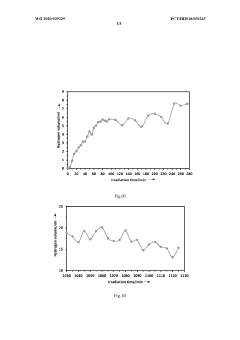
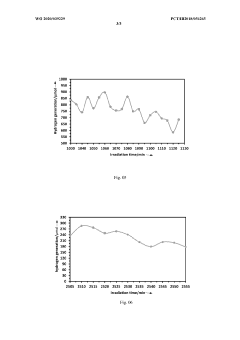
PatentWO2020039229A1
Innovation
- Combining titanium dioxide nanostructures with waste metal or metal alloy, such as from beer cans, using a simple hydrothermal method to enhance photocatalytic activity, reduce recombination, and increase hydrogen production rates, while being environmentally friendly and cost-effective.

Scalability and Economic Feasibility Assessment
The scalability of microreactors for photocatalytic water splitting represents a critical factor in their transition from laboratory research to industrial implementation. Current microreactor designs demonstrate excellent performance at small scales, with high surface-to-volume ratios and enhanced mass transfer capabilities. However, significant engineering challenges emerge when considering scale-up for commercial hydrogen production.
Parallel scaling approaches show the most promise, where multiple microreactor units operate simultaneously rather than increasing individual reactor dimensions. This strategy preserves the advantageous microscale transport phenomena while increasing overall throughput. Companies like Corning and Chart Industries have successfully implemented similar numbering-up approaches in other microreactor applications, suggesting technical feasibility for photocatalytic systems.
Economic analysis reveals that material costs constitute approximately 40-45% of total capital expenditure for microreactor systems. Photocatalyst materials represent a significant portion of these costs, particularly when using noble metal co-catalysts like platinum or palladium. Alternative catalyst formulations using earth-abundant elements could substantially reduce these expenses, though often at the cost of conversion efficiency.
Manufacturing processes for microreactor fabrication present another economic consideration. Traditional microfabrication techniques like photolithography and etching remain expensive for large-scale production. Emerging methods such as 3D printing and roll-to-roll manufacturing show potential for cost reduction, with recent advances reducing fabrication costs by approximately 30-35% compared to conventional methods.
Operational economics must account for energy inputs, maintenance requirements, and system longevity. Current photocatalytic microreactor systems demonstrate solar-to-hydrogen efficiencies ranging from 1-15% depending on design and materials. Economic viability requires efficiencies exceeding 10% combined with catalyst lifetimes of several years to compete with conventional hydrogen production methods.
Market analysis indicates that microreactor technology for water splitting becomes economically competitive at hydrogen production costs below $4/kg. Current estimates place microreactor-based production at $5-8/kg, suggesting that further technological improvements and manufacturing scale economies are necessary before widespread commercial adoption. Government incentives for clean hydrogen production could significantly improve this economic outlook, potentially accelerating market penetration by 3-5 years.
Parallel scaling approaches show the most promise, where multiple microreactor units operate simultaneously rather than increasing individual reactor dimensions. This strategy preserves the advantageous microscale transport phenomena while increasing overall throughput. Companies like Corning and Chart Industries have successfully implemented similar numbering-up approaches in other microreactor applications, suggesting technical feasibility for photocatalytic systems.
Economic analysis reveals that material costs constitute approximately 40-45% of total capital expenditure for microreactor systems. Photocatalyst materials represent a significant portion of these costs, particularly when using noble metal co-catalysts like platinum or palladium. Alternative catalyst formulations using earth-abundant elements could substantially reduce these expenses, though often at the cost of conversion efficiency.
Manufacturing processes for microreactor fabrication present another economic consideration. Traditional microfabrication techniques like photolithography and etching remain expensive for large-scale production. Emerging methods such as 3D printing and roll-to-roll manufacturing show potential for cost reduction, with recent advances reducing fabrication costs by approximately 30-35% compared to conventional methods.
Operational economics must account for energy inputs, maintenance requirements, and system longevity. Current photocatalytic microreactor systems demonstrate solar-to-hydrogen efficiencies ranging from 1-15% depending on design and materials. Economic viability requires efficiencies exceeding 10% combined with catalyst lifetimes of several years to compete with conventional hydrogen production methods.
Market analysis indicates that microreactor technology for water splitting becomes economically competitive at hydrogen production costs below $4/kg. Current estimates place microreactor-based production at $5-8/kg, suggesting that further technological improvements and manufacturing scale economies are necessary before widespread commercial adoption. Government incentives for clean hydrogen production could significantly improve this economic outlook, potentially accelerating market penetration by 3-5 years.
Environmental Impact and Sustainability Considerations
Photocatalytic water splitting microreactors represent a significant advancement in sustainable hydrogen production technologies, offering a pathway to clean energy with minimal environmental footprint. These systems harness solar energy to split water molecules into hydrogen and oxygen, providing a renewable alternative to fossil fuel-based hydrogen production methods that currently dominate the market.
The environmental benefits of microreactor technology for photocatalytic water splitting are substantial. Unlike conventional hydrogen production methods such as steam methane reforming, which generates significant carbon dioxide emissions, photocatalytic systems produce zero direct emissions during operation. This characteristic positions them as a critical technology for decarbonizing the hydrogen economy and addressing climate change concerns.
Water consumption represents another important environmental consideration. While water splitting inherently requires water as a feedstock, microreactor designs can be optimized for water efficiency through recirculation systems and the potential use of non-potable water sources. This adaptability makes them particularly valuable in water-stressed regions where resource conservation is paramount.
Material sustainability in microreactor fabrication presents both challenges and opportunities. Current designs often incorporate rare earth elements and precious metals as catalysts, raising concerns about resource depletion and supply chain vulnerabilities. Research into abundant, non-toxic alternatives such as carbon-based catalysts and earth-abundant metal oxides shows promise for improving the sustainability profile of these systems.
Life cycle assessment (LCA) studies indicate that the environmental benefits of photocatalytic microreactors are highly dependent on operational lifetime and solar-to-hydrogen efficiency. Improvements in catalyst stability and reactor durability directly translate to enhanced sustainability metrics by distributing manufacturing impacts over longer operational periods.
Waste management considerations must address spent catalysts and reactor components at end-of-life. The development of recovery and recycling protocols for valuable materials within these systems represents an emerging research priority, with potential to create closed-loop material cycles that minimize environmental impact.
Integration with renewable energy systems offers synergistic sustainability benefits. Microreactors can serve as energy storage mechanisms within broader renewable energy ecosystems, converting intermittent solar power into storable hydrogen fuel and enhancing grid stability without fossil fuel backup systems.
Regulatory frameworks and sustainability certification systems are evolving to accommodate these technologies, with increasing emphasis on full life cycle impacts rather than operational emissions alone. This holistic approach to environmental assessment will be crucial for guiding technology development toward truly sustainable implementations.
The environmental benefits of microreactor technology for photocatalytic water splitting are substantial. Unlike conventional hydrogen production methods such as steam methane reforming, which generates significant carbon dioxide emissions, photocatalytic systems produce zero direct emissions during operation. This characteristic positions them as a critical technology for decarbonizing the hydrogen economy and addressing climate change concerns.
Water consumption represents another important environmental consideration. While water splitting inherently requires water as a feedstock, microreactor designs can be optimized for water efficiency through recirculation systems and the potential use of non-potable water sources. This adaptability makes them particularly valuable in water-stressed regions where resource conservation is paramount.
Material sustainability in microreactor fabrication presents both challenges and opportunities. Current designs often incorporate rare earth elements and precious metals as catalysts, raising concerns about resource depletion and supply chain vulnerabilities. Research into abundant, non-toxic alternatives such as carbon-based catalysts and earth-abundant metal oxides shows promise for improving the sustainability profile of these systems.
Life cycle assessment (LCA) studies indicate that the environmental benefits of photocatalytic microreactors are highly dependent on operational lifetime and solar-to-hydrogen efficiency. Improvements in catalyst stability and reactor durability directly translate to enhanced sustainability metrics by distributing manufacturing impacts over longer operational periods.
Waste management considerations must address spent catalysts and reactor components at end-of-life. The development of recovery and recycling protocols for valuable materials within these systems represents an emerging research priority, with potential to create closed-loop material cycles that minimize environmental impact.
Integration with renewable energy systems offers synergistic sustainability benefits. Microreactors can serve as energy storage mechanisms within broader renewable energy ecosystems, converting intermittent solar power into storable hydrogen fuel and enhancing grid stability without fossil fuel backup systems.
Regulatory frameworks and sustainability certification systems are evolving to accommodate these technologies, with increasing emphasis on full life cycle impacts rather than operational emissions alone. This holistic approach to environmental assessment will be crucial for guiding technology development toward truly sustainable implementations.
Unlock deeper insights with Patsnap Eureka Quick Research — get a full tech report to explore trends and direct your research. Try now!
Generate Your Research Report Instantly with AI Agent
Supercharge your innovation with Patsnap Eureka AI Agent Platform!