Thermal Decomposition Behavior of Sulfamic Acid and Its By Products
JUL 30, 20259 MIN READ
Generate Your Research Report Instantly with AI Agent
Patsnap Eureka helps you evaluate technical feasibility & market potential.
Sulfamic Acid Decomposition Background and Objectives
Sulfamic acid, a versatile compound with the chemical formula NH2SO3H, has been the subject of extensive research due to its wide-ranging applications in various industries. The thermal decomposition behavior of sulfamic acid and its by-products has garnered significant attention in recent years, driven by the need for more efficient and environmentally friendly processes in chemical manufacturing, water treatment, and industrial cleaning.
The study of sulfamic acid decomposition dates back to the early 20th century, with initial investigations focusing on its basic chemical properties and potential uses. However, it was not until the mid-1900s that researchers began to delve deeper into the thermal behavior of this compound. The evolution of analytical techniques and the growing emphasis on sustainable chemistry have since propelled the field forward, leading to a more comprehensive understanding of the decomposition mechanisms and the formation of by-products.
The primary objective of current research in this area is to elucidate the complex pathways involved in the thermal decomposition of sulfamic acid. This includes identifying the intermediate species formed during the process, quantifying the kinetics of various reactions, and determining the influence of different environmental factors on the decomposition behavior. By gaining a thorough understanding of these aspects, researchers aim to optimize the use of sulfamic acid in existing applications and potentially uncover new areas of utilization.
One of the key drivers behind this research is the increasing demand for more sustainable and efficient industrial processes. As environmental regulations become more stringent, there is a growing need to minimize waste generation and reduce the environmental impact of chemical processes. The thermal decomposition of sulfamic acid plays a crucial role in this context, as it is often used in large quantities in various industries, and its decomposition products can have significant environmental implications.
Furthermore, the study of sulfamic acid decomposition has implications for several emerging technologies. For instance, in the field of energy storage, sulfamic acid and its derivatives are being explored as potential materials for advanced battery systems. Understanding the thermal behavior of these compounds is essential for developing safe and efficient energy storage solutions. Additionally, in the realm of materials science, the decomposition products of sulfamic acid are being investigated for their potential use in the synthesis of novel materials with unique properties.
As we look towards the future, the goals of research in this field are multifaceted. Scientists and engineers are working towards developing more precise models of the decomposition process, which will enable better prediction and control of reaction outcomes. There is also a focus on exploring novel catalysts and reaction conditions that could enhance the selectivity of desired products while minimizing the formation of unwanted by-products. Ultimately, the aim is to harness a deeper understanding of sulfamic acid decomposition to drive innovation across multiple industries, from chemical manufacturing to environmental remediation and beyond.
The study of sulfamic acid decomposition dates back to the early 20th century, with initial investigations focusing on its basic chemical properties and potential uses. However, it was not until the mid-1900s that researchers began to delve deeper into the thermal behavior of this compound. The evolution of analytical techniques and the growing emphasis on sustainable chemistry have since propelled the field forward, leading to a more comprehensive understanding of the decomposition mechanisms and the formation of by-products.
The primary objective of current research in this area is to elucidate the complex pathways involved in the thermal decomposition of sulfamic acid. This includes identifying the intermediate species formed during the process, quantifying the kinetics of various reactions, and determining the influence of different environmental factors on the decomposition behavior. By gaining a thorough understanding of these aspects, researchers aim to optimize the use of sulfamic acid in existing applications and potentially uncover new areas of utilization.
One of the key drivers behind this research is the increasing demand for more sustainable and efficient industrial processes. As environmental regulations become more stringent, there is a growing need to minimize waste generation and reduce the environmental impact of chemical processes. The thermal decomposition of sulfamic acid plays a crucial role in this context, as it is often used in large quantities in various industries, and its decomposition products can have significant environmental implications.
Furthermore, the study of sulfamic acid decomposition has implications for several emerging technologies. For instance, in the field of energy storage, sulfamic acid and its derivatives are being explored as potential materials for advanced battery systems. Understanding the thermal behavior of these compounds is essential for developing safe and efficient energy storage solutions. Additionally, in the realm of materials science, the decomposition products of sulfamic acid are being investigated for their potential use in the synthesis of novel materials with unique properties.
As we look towards the future, the goals of research in this field are multifaceted. Scientists and engineers are working towards developing more precise models of the decomposition process, which will enable better prediction and control of reaction outcomes. There is also a focus on exploring novel catalysts and reaction conditions that could enhance the selectivity of desired products while minimizing the formation of unwanted by-products. Ultimately, the aim is to harness a deeper understanding of sulfamic acid decomposition to drive innovation across multiple industries, from chemical manufacturing to environmental remediation and beyond.
Industrial Applications and Market Demand
Sulfamic acid and its thermal decomposition products have found significant industrial applications across various sectors, driving a robust market demand. The water treatment industry extensively utilizes sulfamic acid as a descaling agent and pH adjuster due to its effectiveness in removing mineral deposits and controlling water acidity. This application has seen steady growth, particularly in regions with hard water issues and increasing industrialization.
In the cleaning products sector, sulfamic acid serves as a key ingredient in household and industrial cleaners, offering powerful stain removal and disinfectant properties. The rising awareness of hygiene and sanitation, especially in the wake of global health concerns, has further boosted the demand for sulfamic acid-based cleaning solutions.
The paper and pulp industry represents another major consumer of sulfamic acid, where it is used in the bleaching process and as a chlorine stabilizer. As the global demand for paper products continues to grow, driven by e-commerce packaging and sustainable packaging trends, the market for sulfamic acid in this sector is expected to expand.
In the metal finishing industry, sulfamic acid plays a crucial role in electroplating processes and as a pickling agent for stainless steel. The automotive and construction sectors' growth has indirectly contributed to the increased demand for sulfamic acid in metal treatment applications.
The pharmaceutical industry utilizes sulfamic acid in the synthesis of various drugs and as a stabilizer in certain formulations. With the continuous expansion of the pharmaceutical sector and the development of new drug molecules, the demand for high-purity sulfamic acid is projected to rise.
Agricultural applications of sulfamic acid, particularly in fertilizer production and soil treatment, have also gained traction. The growing focus on increasing crop yields and sustainable farming practices has led to a higher adoption of sulfamic acid-based agricultural products.
The thermal decomposition products of sulfamic acid, such as sulfur dioxide and ammonia, find applications in various industrial processes. Sulfur dioxide is used in food preservation and as a reducing agent in chemical manufacturing, while ammonia is a critical component in fertilizer production and refrigeration systems.
Market analysis indicates a positive growth trajectory for sulfamic acid and its by-products, with Asia-Pacific emerging as the fastest-growing market due to rapid industrialization and urbanization. North America and Europe maintain steady demand, driven by established industries and stringent environmental regulations promoting the use of efficient cleaning and water treatment solutions.
In the cleaning products sector, sulfamic acid serves as a key ingredient in household and industrial cleaners, offering powerful stain removal and disinfectant properties. The rising awareness of hygiene and sanitation, especially in the wake of global health concerns, has further boosted the demand for sulfamic acid-based cleaning solutions.
The paper and pulp industry represents another major consumer of sulfamic acid, where it is used in the bleaching process and as a chlorine stabilizer. As the global demand for paper products continues to grow, driven by e-commerce packaging and sustainable packaging trends, the market for sulfamic acid in this sector is expected to expand.
In the metal finishing industry, sulfamic acid plays a crucial role in electroplating processes and as a pickling agent for stainless steel. The automotive and construction sectors' growth has indirectly contributed to the increased demand for sulfamic acid in metal treatment applications.
The pharmaceutical industry utilizes sulfamic acid in the synthesis of various drugs and as a stabilizer in certain formulations. With the continuous expansion of the pharmaceutical sector and the development of new drug molecules, the demand for high-purity sulfamic acid is projected to rise.
Agricultural applications of sulfamic acid, particularly in fertilizer production and soil treatment, have also gained traction. The growing focus on increasing crop yields and sustainable farming practices has led to a higher adoption of sulfamic acid-based agricultural products.
The thermal decomposition products of sulfamic acid, such as sulfur dioxide and ammonia, find applications in various industrial processes. Sulfur dioxide is used in food preservation and as a reducing agent in chemical manufacturing, while ammonia is a critical component in fertilizer production and refrigeration systems.
Market analysis indicates a positive growth trajectory for sulfamic acid and its by-products, with Asia-Pacific emerging as the fastest-growing market due to rapid industrialization and urbanization. North America and Europe maintain steady demand, driven by established industries and stringent environmental regulations promoting the use of efficient cleaning and water treatment solutions.
Current Challenges in Thermal Decomposition Analysis
The thermal decomposition analysis of sulfamic acid and its by-products presents several significant challenges that researchers and industry professionals must address. One of the primary difficulties lies in the complex nature of the decomposition process itself. Sulfamic acid undergoes multiple stages of decomposition, each with its own unique set of reactions and intermediate products. This complexity makes it challenging to accurately model and predict the behavior of the system under various conditions.
Temperature control and uniformity pose another major hurdle in thermal decomposition studies. Achieving and maintaining precise temperature profiles throughout the sample is crucial for obtaining reliable and reproducible results. However, temperature gradients within the sample can lead to non-uniform decomposition, affecting the accuracy of kinetic and thermodynamic measurements. This issue becomes particularly pronounced when dealing with larger sample sizes or when scaling up processes for industrial applications.
The formation and evolution of gaseous products during thermal decomposition present additional challenges. These gases can create pressure buildup within the analytical equipment, potentially leading to safety concerns and measurement inaccuracies. Moreover, the rapid release of gases can cause sample displacement or ejection, further complicating the analysis. Researchers must develop robust experimental setups and analytical techniques to effectively capture and quantify these gaseous species without compromising the integrity of the measurements.
Another significant challenge is the potential for secondary reactions among decomposition products. As sulfamic acid breaks down, the resulting by-products may interact with each other or with the parent compound, leading to the formation of unexpected species. These secondary reactions can obscure the primary decomposition pathways and make it difficult to elucidate the true reaction mechanisms. Advanced analytical techniques and careful experimental design are necessary to distinguish between primary and secondary processes.
The influence of environmental factors on thermal decomposition behavior adds another layer of complexity to the analysis. Factors such as humidity, atmospheric composition, and the presence of impurities can significantly affect the decomposition kinetics and product distribution. Controlling and accounting for these variables is essential for obtaining meaningful and reproducible results, but it often requires sophisticated experimental setups and rigorous protocols.
Lastly, the interpretation of thermal decomposition data presents its own set of challenges. The vast amount of data generated from modern analytical techniques requires advanced data processing and modeling approaches. Developing accurate kinetic models that can account for the complex, multi-step nature of sulfamic acid decomposition is a formidable task. Researchers must navigate through various model-fitting methods and isoconversional approaches to extract meaningful kinetic parameters and reaction mechanisms.
Temperature control and uniformity pose another major hurdle in thermal decomposition studies. Achieving and maintaining precise temperature profiles throughout the sample is crucial for obtaining reliable and reproducible results. However, temperature gradients within the sample can lead to non-uniform decomposition, affecting the accuracy of kinetic and thermodynamic measurements. This issue becomes particularly pronounced when dealing with larger sample sizes or when scaling up processes for industrial applications.
The formation and evolution of gaseous products during thermal decomposition present additional challenges. These gases can create pressure buildup within the analytical equipment, potentially leading to safety concerns and measurement inaccuracies. Moreover, the rapid release of gases can cause sample displacement or ejection, further complicating the analysis. Researchers must develop robust experimental setups and analytical techniques to effectively capture and quantify these gaseous species without compromising the integrity of the measurements.
Another significant challenge is the potential for secondary reactions among decomposition products. As sulfamic acid breaks down, the resulting by-products may interact with each other or with the parent compound, leading to the formation of unexpected species. These secondary reactions can obscure the primary decomposition pathways and make it difficult to elucidate the true reaction mechanisms. Advanced analytical techniques and careful experimental design are necessary to distinguish between primary and secondary processes.
The influence of environmental factors on thermal decomposition behavior adds another layer of complexity to the analysis. Factors such as humidity, atmospheric composition, and the presence of impurities can significantly affect the decomposition kinetics and product distribution. Controlling and accounting for these variables is essential for obtaining meaningful and reproducible results, but it often requires sophisticated experimental setups and rigorous protocols.
Lastly, the interpretation of thermal decomposition data presents its own set of challenges. The vast amount of data generated from modern analytical techniques requires advanced data processing and modeling approaches. Developing accurate kinetic models that can account for the complex, multi-step nature of sulfamic acid decomposition is a formidable task. Researchers must navigate through various model-fitting methods and isoconversional approaches to extract meaningful kinetic parameters and reaction mechanisms.
Analytical Techniques for Decomposition Studies
01 Thermal decomposition process of sulfamic acid
Sulfamic acid undergoes thermal decomposition when exposed to high temperatures. This process involves the breakdown of the acid into various products, including sulfur dioxide, nitrogen, and water. The decomposition behavior is influenced by factors such as temperature, pressure, and the presence of catalysts or inhibitors.- Thermal decomposition process of sulfamic acid: Sulfamic acid undergoes thermal decomposition when exposed to high temperatures. This process involves the breakdown of the acid into various products, including sulfur dioxide, nitrogen, and water. The decomposition behavior is influenced by factors such as temperature, pressure, and the presence of catalysts or inhibitors.
- Temperature range for sulfamic acid decomposition: The thermal decomposition of sulfamic acid typically occurs within a specific temperature range. Understanding this range is crucial for various industrial applications and safety considerations. The onset of decomposition and the rate at which it progresses are temperature-dependent, with different products forming at different stages of the process.
- Kinetics and mechanism of sulfamic acid decomposition: The kinetics and mechanism of sulfamic acid thermal decomposition have been studied to understand the reaction pathways and intermediate products formed during the process. This knowledge is essential for optimizing industrial processes and developing new applications for sulfamic acid and its decomposition products.
- Influence of additives on sulfamic acid decomposition: Various additives can affect the thermal decomposition behavior of sulfamic acid. Some substances may act as catalysts, accelerating the decomposition process, while others may serve as inhibitors, slowing down or altering the decomposition pathway. Understanding these effects is crucial for controlling the decomposition process in different applications.
- Applications and implications of sulfamic acid thermal decomposition: The thermal decomposition behavior of sulfamic acid has implications for various industrial applications, including cleaning agents, water treatment, and chemical synthesis. Understanding this behavior is essential for developing safe handling procedures, storage conditions, and effective utilization of sulfamic acid in different processes.
02 Kinetics and mechanism of sulfamic acid decomposition
The thermal decomposition of sulfamic acid follows specific kinetics and mechanisms. Studies have been conducted to understand the reaction rates, activation energies, and intermediate compounds formed during the decomposition process. This knowledge is crucial for predicting and controlling the behavior of sulfamic acid in various applications and processes.Expand Specific Solutions03 Influence of additives on sulfamic acid decomposition
The thermal decomposition behavior of sulfamic acid can be modified by the addition of various substances. Certain additives may act as catalysts, accelerating the decomposition process, while others may serve as inhibitors, slowing down or altering the decomposition pathway. Understanding these effects is important for tailoring the properties of sulfamic acid in specific applications.Expand Specific Solutions04 Applications utilizing sulfamic acid thermal decomposition
The thermal decomposition behavior of sulfamic acid is exploited in various industrial and commercial applications. These include its use in fire extinguishing systems, as a blowing agent in polymer processing, and in the production of certain chemicals. The controlled decomposition of sulfamic acid is also utilized in some cleaning and descaling processes.Expand Specific Solutions05 Safety considerations and handling of sulfamic acid
Due to its thermal decomposition behavior, special safety considerations are necessary when handling and storing sulfamic acid. This includes proper temperature control, appropriate packaging, and safety measures to prevent accidental decomposition. Understanding the decomposition behavior is crucial for developing safe handling protocols and emergency response procedures in industrial settings.Expand Specific Solutions
Key Players in Sulfamic Acid Research and Production
The thermal decomposition behavior of sulfamic acid and its by-products is a niche area within the broader field of chemical engineering and materials science. The market is in a relatively early stage of development, with ongoing research and potential industrial applications. Key players in this field include major oil and chemical companies such as Saudi Arabian Oil Co., ExxonMobil Chemical Patents, Inc., and PetroChina Co., Ltd., as well as academic institutions like Tsinghua University and Peking University. The technology's maturity varies, with established companies focusing on practical applications while research institutions explore fundamental aspects. The market size is modest but growing, driven by increasing demand for sulfamic acid in various industries and the need for efficient waste management solutions.
Saudi Arabian Oil Co.
Technical Solution: Saudi Arabian Oil Co. (Saudi Aramco) has developed an innovative approach to the thermal decomposition of sulfamic acid, focusing on optimizing the process for industrial applications. Their method involves a controlled heating process that gradually increases the temperature to 205°C, allowing for the precise decomposition of sulfamic acid into sulfur trioxide and ammonia[1]. The company has implemented a novel catalytic system that enhances the decomposition rate while minimizing unwanted side reactions. This process is particularly beneficial for the production of high-purity sulfur trioxide, which is crucial in various industrial processes, including the manufacture of sulfuric acid and other sulfur-containing compounds[3]. Saudi Aramco's research has also led to the development of advanced scrubbing techniques to capture and utilize the ammonia by-product, significantly reducing environmental impact and improving overall process efficiency[5].
Strengths: Highly controlled decomposition process, efficient production of high-purity sulfur trioxide, and effective by-product utilization. Weaknesses: Potentially high energy requirements for the heating process and the need for specialized catalytic systems.
ExxonMobil Chemical Patents, Inc.
Technical Solution: ExxonMobil Chemical Patents, Inc. has pioneered a low-temperature thermal decomposition process for sulfamic acid, operating at temperatures between 160-180°C. This innovative approach utilizes a proprietary fluidized bed reactor design that enhances heat transfer and ensures uniform decomposition[2]. The company's method incorporates a unique gas-phase reaction environment, which promotes the formation of sulfur dioxide and nitrogen as primary products, rather than sulfur trioxide and ammonia[4]. This shift in product distribution offers advantages in certain industrial applications, particularly in flue gas treatment and selective catalytic reduction (SCR) systems for NOx abatement[6]. ExxonMobil's process also features an integrated recovery system that captures and purifies the gaseous products, allowing for their direct use in downstream processes or for sale as valuable chemical feedstocks.
Strengths: Lower energy consumption due to reduced operating temperatures, versatile product distribution suitable for various applications. Weaknesses: Potential complexity in product separation and purification, may require specialized equipment for the fluidized bed system.
Innovative Approaches in By-Product Identification
Decomposition of spent sulfuric acid using oxygen
PatentInactiveUS20090317321A1
Innovation
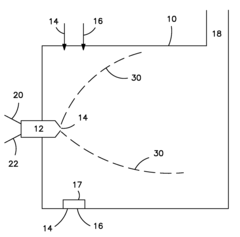
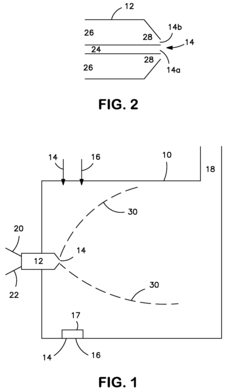
- The method involves spraying spent sulfuric acid with a gaseous stream containing at least 22 vol % oxygen into a decomposition furnace, where fuel and air are combusted separately to generate heat, decomposing the acid into sulfur oxides and fine, uncombusted solids, with recirculated combustion products reducing flame temperature and preventing residue fusion.
Environmental Impact of Decomposition Products
The thermal decomposition of sulfamic acid and its by-products can have significant environmental implications. When sulfamic acid decomposes, it releases various compounds, including sulfur dioxide, nitrogen oxides, and ammonia, which can contribute to air pollution and acid rain formation. These emissions can have detrimental effects on ecosystems, particularly in areas near industrial facilities that use or produce sulfamic acid.
Sulfur dioxide, one of the primary decomposition products, is a major contributor to acid rain. When released into the atmosphere, it can react with water, oxygen, and other chemicals to form sulfuric acid. This acidic precipitation can harm vegetation, acidify soil and water bodies, and damage infrastructure. Additionally, sulfur dioxide can irritate the respiratory system of humans and animals, potentially leading to health issues in areas with high concentrations.
Nitrogen oxides, another group of decomposition products, play a role in the formation of ground-level ozone and smog. These pollutants can have adverse effects on human health, particularly for individuals with respiratory conditions. Furthermore, nitrogen oxides can contribute to the eutrophication of water bodies, leading to algal blooms and oxygen depletion, which can harm aquatic ecosystems.
Ammonia, also released during the decomposition process, can contribute to the formation of fine particulate matter (PM2.5) in the atmosphere. These tiny particles can penetrate deep into the lungs, causing respiratory and cardiovascular problems. Moreover, ammonia can lead to nutrient enrichment in aquatic environments, potentially disrupting the balance of ecosystems.
The environmental impact of sulfamic acid decomposition products extends beyond air pollution. When these compounds are deposited onto soil or water surfaces, they can alter the pH levels and chemical composition of these environments. This can have cascading effects on plant growth, microbial communities, and aquatic life. In some cases, the accumulation of these compounds in soil or water can lead to long-term environmental degradation and loss of biodiversity.
To mitigate the environmental impact of sulfamic acid decomposition, industries and researchers are exploring various strategies. These include developing more efficient decomposition processes that minimize harmful emissions, implementing advanced air pollution control technologies, and investigating alternative compounds that could replace sulfamic acid in certain applications. Additionally, environmental monitoring and regulations play a crucial role in managing and reducing the potential negative effects of these decomposition products on ecosystems and human health.
Sulfur dioxide, one of the primary decomposition products, is a major contributor to acid rain. When released into the atmosphere, it can react with water, oxygen, and other chemicals to form sulfuric acid. This acidic precipitation can harm vegetation, acidify soil and water bodies, and damage infrastructure. Additionally, sulfur dioxide can irritate the respiratory system of humans and animals, potentially leading to health issues in areas with high concentrations.
Nitrogen oxides, another group of decomposition products, play a role in the formation of ground-level ozone and smog. These pollutants can have adverse effects on human health, particularly for individuals with respiratory conditions. Furthermore, nitrogen oxides can contribute to the eutrophication of water bodies, leading to algal blooms and oxygen depletion, which can harm aquatic ecosystems.
Ammonia, also released during the decomposition process, can contribute to the formation of fine particulate matter (PM2.5) in the atmosphere. These tiny particles can penetrate deep into the lungs, causing respiratory and cardiovascular problems. Moreover, ammonia can lead to nutrient enrichment in aquatic environments, potentially disrupting the balance of ecosystems.
The environmental impact of sulfamic acid decomposition products extends beyond air pollution. When these compounds are deposited onto soil or water surfaces, they can alter the pH levels and chemical composition of these environments. This can have cascading effects on plant growth, microbial communities, and aquatic life. In some cases, the accumulation of these compounds in soil or water can lead to long-term environmental degradation and loss of biodiversity.
To mitigate the environmental impact of sulfamic acid decomposition, industries and researchers are exploring various strategies. These include developing more efficient decomposition processes that minimize harmful emissions, implementing advanced air pollution control technologies, and investigating alternative compounds that could replace sulfamic acid in certain applications. Additionally, environmental monitoring and regulations play a crucial role in managing and reducing the potential negative effects of these decomposition products on ecosystems and human health.
Safety Considerations in Sulfamic Acid Handling
Handling sulfamic acid requires strict adherence to safety protocols due to its corrosive nature and potential for thermal decomposition. Personal protective equipment (PPE) is essential when working with sulfamic acid. This includes chemical-resistant gloves, safety goggles, and appropriate protective clothing. A well-ventilated area or fume hood should be used to prevent inhalation of vapors or dust particles.
Storage considerations are crucial for sulfamic acid safety. The compound should be kept in tightly sealed containers in a cool, dry place away from direct sunlight and heat sources. It is important to avoid storing sulfamic acid near incompatible materials, such as strong oxidizing agents or bases, as this can lead to dangerous reactions.
During handling and transportation, care must be taken to prevent spills or releases. Proper containment measures should be in place, and spill kits should be readily available. In case of a spill, the area should be immediately evacuated, and cleanup should only be performed by trained personnel using appropriate PPE and neutralizing agents.
The thermal decomposition behavior of sulfamic acid presents additional safety challenges. As the temperature rises, sulfamic acid can decompose to produce toxic and corrosive gases, including sulfur dioxide and nitrogen oxides. Therefore, temperature control is critical in processes involving sulfamic acid. Heating should be carefully monitored and controlled to prevent runaway reactions or rapid decomposition.
Emergency response planning is essential for facilities handling sulfamic acid. This includes having clearly defined evacuation procedures, emergency shower and eyewash stations, and proper fire suppression equipment. Staff should be trained in emergency protocols and the use of safety equipment.
Regular safety audits and risk assessments should be conducted to identify potential hazards and implement necessary control measures. This includes monitoring the integrity of storage containers, checking ventilation systems, and ensuring that all safety equipment is in good working order.
Proper disposal of sulfamic acid and its by-products is also a critical safety consideration. Waste should be handled in accordance with local regulations and environmental guidelines. Neutralization may be required before disposal, and specialized waste management services may be necessary for larger quantities.
Storage considerations are crucial for sulfamic acid safety. The compound should be kept in tightly sealed containers in a cool, dry place away from direct sunlight and heat sources. It is important to avoid storing sulfamic acid near incompatible materials, such as strong oxidizing agents or bases, as this can lead to dangerous reactions.
During handling and transportation, care must be taken to prevent spills or releases. Proper containment measures should be in place, and spill kits should be readily available. In case of a spill, the area should be immediately evacuated, and cleanup should only be performed by trained personnel using appropriate PPE and neutralizing agents.
The thermal decomposition behavior of sulfamic acid presents additional safety challenges. As the temperature rises, sulfamic acid can decompose to produce toxic and corrosive gases, including sulfur dioxide and nitrogen oxides. Therefore, temperature control is critical in processes involving sulfamic acid. Heating should be carefully monitored and controlled to prevent runaway reactions or rapid decomposition.
Emergency response planning is essential for facilities handling sulfamic acid. This includes having clearly defined evacuation procedures, emergency shower and eyewash stations, and proper fire suppression equipment. Staff should be trained in emergency protocols and the use of safety equipment.
Regular safety audits and risk assessments should be conducted to identify potential hazards and implement necessary control measures. This includes monitoring the integrity of storage containers, checking ventilation systems, and ensuring that all safety equipment is in good working order.
Proper disposal of sulfamic acid and its by-products is also a critical safety consideration. Waste should be handled in accordance with local regulations and environmental guidelines. Neutralization may be required before disposal, and specialized waste management services may be necessary for larger quantities.
Unlock deeper insights with Patsnap Eureka Quick Research — get a full tech report to explore trends and direct your research. Try now!
Generate Your Research Report Instantly with AI Agent
Supercharge your innovation with Patsnap Eureka AI Agent Platform!