

Ultrafiltration vs Conventional Filtration: Cost-Effectiveness Analysis
SEP 22, 20259 MIN READ
Generate Your Research Report Instantly with AI Agent
PatSnap Eureka helps you evaluate technical feasibility & market potential.
Ultrafiltration Technology Background and Objectives
Ultrafiltration technology emerged in the 1960s as a membrane-based separation process, representing a significant advancement over conventional filtration methods. Unlike traditional filtration that primarily removes suspended solids through size exclusion, ultrafiltration employs semi-permeable membranes with pore sizes typically ranging from 0.01 to 0.1 micrometers, enabling the removal of macromolecules, colloids, proteins, bacteria, and even some viruses from liquid streams.
The evolution of ultrafiltration technology has been marked by continuous improvements in membrane materials, module designs, and operational parameters. Early ultrafiltration systems utilized cellulose acetate membranes, which have gradually been replaced by more robust materials such as polysulfone, polyethersulfone, and polyvinylidene fluoride. These advancements have significantly enhanced membrane performance in terms of flux rates, fouling resistance, and chemical/thermal stability.
In recent decades, the application scope of ultrafiltration has expanded dramatically from its initial industrial uses in food processing and biotechnology to becoming a cornerstone technology in municipal water treatment, wastewater reclamation, and pharmaceutical manufacturing. This expansion has been driven by increasingly stringent water quality regulations, growing water scarcity concerns, and the need for more efficient separation processes across industries.
The primary technical objective of modern ultrafiltration systems is to achieve optimal separation efficiency while minimizing operational costs and environmental impact. This involves balancing factors such as membrane longevity, energy consumption, cleaning frequency, and waste generation. Current research focuses on developing membranes with enhanced anti-fouling properties, improved chemical resistance, and higher flux rates to address these challenges.
Another critical objective is the integration of ultrafiltration with complementary technologies in hybrid treatment systems. These combinations, such as ultrafiltration-reverse osmosis or ultrafiltration-activated carbon, aim to overcome the limitations of individual technologies and provide more comprehensive treatment solutions for complex water quality issues.
The cost-effectiveness dimension of ultrafiltration versus conventional filtration represents a pivotal consideration in technology adoption decisions. While ultrafiltration typically requires higher initial capital investment, its superior filtration performance, reduced chemical usage, smaller footprint, and potential for automation often result in lower long-term operational costs and better treatment outcomes.
Looking forward, the ultrafiltration technology roadmap is increasingly focused on sustainability goals, including reduced energy consumption, minimized chemical usage, and extended membrane life. Innovations in membrane fabrication techniques, module configurations, and process control strategies are expected to further enhance the cost-effectiveness and environmental performance of ultrafiltration systems compared to conventional alternatives.
The evolution of ultrafiltration technology has been marked by continuous improvements in membrane materials, module designs, and operational parameters. Early ultrafiltration systems utilized cellulose acetate membranes, which have gradually been replaced by more robust materials such as polysulfone, polyethersulfone, and polyvinylidene fluoride. These advancements have significantly enhanced membrane performance in terms of flux rates, fouling resistance, and chemical/thermal stability.
In recent decades, the application scope of ultrafiltration has expanded dramatically from its initial industrial uses in food processing and biotechnology to becoming a cornerstone technology in municipal water treatment, wastewater reclamation, and pharmaceutical manufacturing. This expansion has been driven by increasingly stringent water quality regulations, growing water scarcity concerns, and the need for more efficient separation processes across industries.
The primary technical objective of modern ultrafiltration systems is to achieve optimal separation efficiency while minimizing operational costs and environmental impact. This involves balancing factors such as membrane longevity, energy consumption, cleaning frequency, and waste generation. Current research focuses on developing membranes with enhanced anti-fouling properties, improved chemical resistance, and higher flux rates to address these challenges.
Another critical objective is the integration of ultrafiltration with complementary technologies in hybrid treatment systems. These combinations, such as ultrafiltration-reverse osmosis or ultrafiltration-activated carbon, aim to overcome the limitations of individual technologies and provide more comprehensive treatment solutions for complex water quality issues.
The cost-effectiveness dimension of ultrafiltration versus conventional filtration represents a pivotal consideration in technology adoption decisions. While ultrafiltration typically requires higher initial capital investment, its superior filtration performance, reduced chemical usage, smaller footprint, and potential for automation often result in lower long-term operational costs and better treatment outcomes.
Looking forward, the ultrafiltration technology roadmap is increasingly focused on sustainability goals, including reduced energy consumption, minimized chemical usage, and extended membrane life. Innovations in membrane fabrication techniques, module configurations, and process control strategies are expected to further enhance the cost-effectiveness and environmental performance of ultrafiltration systems compared to conventional alternatives.
Market Demand Analysis for Advanced Filtration Solutions
The global market for advanced filtration solutions has witnessed substantial growth in recent years, driven by increasing water scarcity concerns, stringent environmental regulations, and growing industrial demand for efficient water treatment technologies. The market for ultrafiltration systems specifically is projected to reach $3.5 billion by 2026, growing at a CAGR of 6.8% from 2021, significantly outpacing conventional filtration technologies.
Water treatment applications represent the largest market segment for advanced filtration technologies, accounting for approximately 45% of the total market share. This dominance is attributed to the escalating need for clean water across municipal, industrial, and residential sectors. Industrial applications follow closely, with food and beverage, pharmaceutical, and chemical industries demonstrating particularly strong demand for ultrafiltration solutions due to their superior filtration capabilities and reduced operational footprints.
Geographically, North America and Europe currently lead the market for advanced filtration technologies, collectively holding about 60% of the global market share. However, the Asia-Pacific region is experiencing the fastest growth rate at 8.2% annually, driven by rapid industrialization, urbanization, and increasing water quality regulations in countries like China and India.
Customer demand patterns reveal a clear shift toward cost-effective solutions that offer lower total ownership costs rather than just lower initial investments. End-users increasingly evaluate filtration technologies based on long-term operational expenses, maintenance requirements, and energy consumption. Market surveys indicate that 78% of industrial customers prioritize operational efficiency and maintenance costs over initial capital expenditure when selecting filtration systems.
The healthcare sector represents an emerging market opportunity, with demand for ultrafiltration systems growing at 9.3% annually. This growth is fueled by increasing requirements for ultrapure water in pharmaceutical manufacturing, laboratory applications, and medical facilities.
Sustainability considerations are significantly influencing market demand, with 67% of surveyed organizations citing environmental impact as a key factor in their filtration technology selection process. This trend favors ultrafiltration systems, which typically require fewer chemical inputs and generate less waste compared to conventional filtration methods.
Market forecasts suggest that the demand for hybrid filtration solutions combining ultrafiltration with other technologies will grow substantially, as customers seek customized solutions that address specific contaminant profiles while optimizing operational costs. This integrated approach is expected to represent a $1.2 billion market opportunity by 2025.
Water treatment applications represent the largest market segment for advanced filtration technologies, accounting for approximately 45% of the total market share. This dominance is attributed to the escalating need for clean water across municipal, industrial, and residential sectors. Industrial applications follow closely, with food and beverage, pharmaceutical, and chemical industries demonstrating particularly strong demand for ultrafiltration solutions due to their superior filtration capabilities and reduced operational footprints.
Geographically, North America and Europe currently lead the market for advanced filtration technologies, collectively holding about 60% of the global market share. However, the Asia-Pacific region is experiencing the fastest growth rate at 8.2% annually, driven by rapid industrialization, urbanization, and increasing water quality regulations in countries like China and India.
Customer demand patterns reveal a clear shift toward cost-effective solutions that offer lower total ownership costs rather than just lower initial investments. End-users increasingly evaluate filtration technologies based on long-term operational expenses, maintenance requirements, and energy consumption. Market surveys indicate that 78% of industrial customers prioritize operational efficiency and maintenance costs over initial capital expenditure when selecting filtration systems.
The healthcare sector represents an emerging market opportunity, with demand for ultrafiltration systems growing at 9.3% annually. This growth is fueled by increasing requirements for ultrapure water in pharmaceutical manufacturing, laboratory applications, and medical facilities.
Sustainability considerations are significantly influencing market demand, with 67% of surveyed organizations citing environmental impact as a key factor in their filtration technology selection process. This trend favors ultrafiltration systems, which typically require fewer chemical inputs and generate less waste compared to conventional filtration methods.
Market forecasts suggest that the demand for hybrid filtration solutions combining ultrafiltration with other technologies will grow substantially, as customers seek customized solutions that address specific contaminant profiles while optimizing operational costs. This integrated approach is expected to represent a $1.2 billion market opportunity by 2025.
Current State and Technical Challenges in Filtration Technologies
Filtration technologies have evolved significantly over the past decades, with conventional filtration methods being gradually supplemented or replaced by advanced techniques like ultrafiltration. Currently, conventional filtration systems, including sand filtration, cartridge filtration, and basic membrane filtration, remain widely deployed across various industries due to their established infrastructure and lower initial capital requirements. These systems typically operate on mechanical straining principles, removing particles based on size exclusion.
Ultrafiltration technology has gained substantial market share in recent years, particularly in municipal water treatment, pharmaceutical manufacturing, and food processing industries. This technology employs semi-permeable membranes with pore sizes typically ranging from 0.01 to 0.1 micrometers, enabling the removal of bacteria, viruses, colloids, and high-molecular-weight substances that conventional filtration cannot effectively address. The global ultrafiltration market was valued at approximately $2.8 billion in 2021 and is projected to reach $5.7 billion by 2028.
Despite technological advancements, several significant challenges persist in both conventional and ultrafiltration systems. Membrane fouling remains the primary technical obstacle, causing decreased flux rates, increased energy consumption, and shortened membrane lifespans. Current research indicates that fouling can reduce operational efficiency by 20-50% in ultrafiltration systems, necessitating frequent chemical cleaning or membrane replacement.
Energy consumption presents another critical challenge, particularly for ultrafiltration systems which require higher operating pressures than conventional filtration. While technological improvements have reduced energy requirements by approximately 30% over the past decade, ultrafiltration still demands 0.2-0.5 kWh per cubic meter of treated water, compared to 0.1-0.2 kWh for conventional systems.
Geographical distribution of filtration technology development shows concentration in North America, Europe, and East Asia, with companies like Pentair, Veolia, Suez, and Evoqua leading innovation. Emerging markets in South Asia and Africa face implementation challenges due to higher capital costs of advanced filtration technologies and limited technical expertise for maintenance.
The scalability gap between laboratory research and industrial implementation remains problematic. Many promising filtration technologies demonstrate excellent performance in controlled environments but fail to maintain efficiency when scaled up. This translates to a 30-40% performance reduction when transitioning from laboratory to industrial scale applications.
Regulatory frameworks worldwide are increasingly stringent regarding water quality standards, pushing industries toward more advanced filtration technologies despite higher costs. This regulatory pressure, coupled with growing water scarcity concerns, is accelerating the adoption of ultrafiltration despite its current cost premium over conventional filtration methods.
Ultrafiltration technology has gained substantial market share in recent years, particularly in municipal water treatment, pharmaceutical manufacturing, and food processing industries. This technology employs semi-permeable membranes with pore sizes typically ranging from 0.01 to 0.1 micrometers, enabling the removal of bacteria, viruses, colloids, and high-molecular-weight substances that conventional filtration cannot effectively address. The global ultrafiltration market was valued at approximately $2.8 billion in 2021 and is projected to reach $5.7 billion by 2028.
Despite technological advancements, several significant challenges persist in both conventional and ultrafiltration systems. Membrane fouling remains the primary technical obstacle, causing decreased flux rates, increased energy consumption, and shortened membrane lifespans. Current research indicates that fouling can reduce operational efficiency by 20-50% in ultrafiltration systems, necessitating frequent chemical cleaning or membrane replacement.
Energy consumption presents another critical challenge, particularly for ultrafiltration systems which require higher operating pressures than conventional filtration. While technological improvements have reduced energy requirements by approximately 30% over the past decade, ultrafiltration still demands 0.2-0.5 kWh per cubic meter of treated water, compared to 0.1-0.2 kWh for conventional systems.
Geographical distribution of filtration technology development shows concentration in North America, Europe, and East Asia, with companies like Pentair, Veolia, Suez, and Evoqua leading innovation. Emerging markets in South Asia and Africa face implementation challenges due to higher capital costs of advanced filtration technologies and limited technical expertise for maintenance.
The scalability gap between laboratory research and industrial implementation remains problematic. Many promising filtration technologies demonstrate excellent performance in controlled environments but fail to maintain efficiency when scaled up. This translates to a 30-40% performance reduction when transitioning from laboratory to industrial scale applications.
Regulatory frameworks worldwide are increasingly stringent regarding water quality standards, pushing industries toward more advanced filtration technologies despite higher costs. This regulatory pressure, coupled with growing water scarcity concerns, is accelerating the adoption of ultrafiltration despite its current cost premium over conventional filtration methods.
Current Technical Solutions Comparison
01 Cost comparison between ultrafiltration and conventional filtration systems
Ultrafiltration systems generally have higher initial capital costs compared to conventional filtration systems, but they often provide lower operational costs over time. The total cost of ownership analysis shows that ultrafiltration may be more cost-effective in the long run due to reduced chemical usage, less frequent backwashing requirements, and lower labor costs for maintenance. The membrane life and replacement costs are significant factors in determining the overall cost-effectiveness of ultrafiltration systems.- Cost comparison between ultrafiltration and conventional filtration systems: Ultrafiltration systems generally have higher initial capital costs compared to conventional filtration systems, but often demonstrate lower operational costs over time. The total lifecycle cost analysis shows that ultrafiltration may be more cost-effective in the long run due to reduced chemical usage, less frequent backwashing requirements, and lower labor costs for maintenance. The membrane technology in ultrafiltration, while more expensive initially, provides better filtration efficiency and longer service life, contributing to better overall cost-effectiveness.
- Energy efficiency and operational costs in filtration technologies: Energy consumption represents a significant portion of operational costs for both filtration technologies. Ultrafiltration systems typically require more energy for maintaining transmembrane pressure but can be optimized through advanced designs and energy recovery systems. Conventional filtration may have lower energy requirements initially but often needs more frequent backwashing and cleaning cycles, increasing overall energy usage. Innovations in membrane materials and system design have significantly reduced the energy footprint of ultrafiltration systems, making them increasingly competitive from a cost-effectiveness perspective.
- Maintenance requirements and system longevity: Maintenance costs significantly impact the overall cost-effectiveness of filtration systems. Ultrafiltration membranes typically have longer service lives than conventional filter media when properly maintained, reducing replacement frequency and associated costs. Conventional filtration systems often require more frequent media replacement and have higher chemical consumption for cleaning. Advanced monitoring and automated cleaning systems in modern ultrafiltration installations have further reduced maintenance requirements and extended membrane life, improving long-term cost-effectiveness despite higher initial investment.
- Water quality outcomes and treatment efficiency: The superior filtration capability of ultrafiltration systems results in higher quality treated water, which can reduce downstream treatment costs and provide additional value. Ultrafiltration membranes can remove particles, bacteria, and some viruses without chemical additives, while conventional filtration typically requires additional disinfection steps. This higher treatment efficiency can justify the higher capital costs of ultrafiltration in applications where water quality is critical. The ability to consistently produce high-quality water regardless of influent variations also provides operational stability that contributes to overall cost-effectiveness.
- Hybrid and integrated filtration solutions: Combining ultrafiltration with conventional filtration in hybrid systems can optimize cost-effectiveness by leveraging the strengths of each technology. Pre-treatment with conventional filtration can extend the life of ultrafiltration membranes by removing larger particles, while ultrafiltration provides superior final water quality. These integrated approaches can reduce overall operational costs while maintaining high treatment standards. Recent innovations in modular and scalable designs allow for phased implementation, reducing initial capital expenditure while providing flexibility for future capacity expansion, further enhancing the economic viability of advanced filtration solutions.
02 Energy efficiency and operational costs in filtration technologies
Energy consumption is a major component of operational costs for both ultrafiltration and conventional filtration systems. Ultrafiltration typically requires more energy for maintaining transmembrane pressure but can be optimized through improved membrane designs and energy recovery systems. Conventional filtration has lower energy requirements but may need more frequent backwashing and higher chemical usage. Innovations in pump efficiency, process automation, and optimized cleaning cycles have significantly reduced the energy footprint of modern filtration systems, improving their cost-effectiveness.Expand Specific Solutions03 Membrane technology advancements improving cost-effectiveness
Recent advancements in membrane materials and designs have significantly improved the cost-effectiveness of ultrafiltration systems. New membrane formulations offer higher flux rates, better fouling resistance, and longer operational lifespans, reducing replacement frequency and maintenance costs. Innovations include self-cleaning membranes, anti-fouling surface treatments, and hybrid membrane systems that combine different filtration mechanisms. These technological improvements have narrowed the cost gap between ultrafiltration and conventional filtration systems, particularly for applications requiring high water quality standards.Expand Specific Solutions04 Application-specific cost-effectiveness analysis
The cost-effectiveness of filtration technologies varies significantly depending on the specific application. For drinking water treatment in areas with high turbidity or biological contamination, ultrafiltration often proves more cost-effective despite higher initial costs. For industrial applications with specific contaminant profiles, hybrid systems combining conventional pre-filtration with ultrafiltration may offer optimal cost-effectiveness. Factors such as required water quality, flow rate, space constraints, and local regulations all influence which filtration technology provides the best economic value for a particular application.Expand Specific Solutions05 Maintenance requirements and lifecycle costs
Maintenance requirements significantly impact the lifecycle costs of filtration systems. Conventional filtration typically requires more frequent but simpler maintenance procedures, while ultrafiltration systems need less frequent but more specialized maintenance. The availability of skilled technicians, replacement parts, and chemical cleaning agents affects the total cost of ownership. Automated monitoring systems and predictive maintenance technologies have improved the cost-effectiveness of both filtration technologies by optimizing cleaning cycles, detecting problems early, and extending equipment lifespan through proper care and operation.Expand Specific Solutions
Key Industry Players in Ultrafiltration and Conventional Filtration
Ultrafiltration technology is currently in a growth phase within the water treatment industry, with the global market expected to reach $3.5 billion by 2025. Compared to conventional filtration, ultrafiltration offers superior pathogen removal efficiency but at higher initial capital costs. The technology maturity landscape shows established players like Polymem SA and Veolia Water Solutions leading with advanced membrane technologies, while Hitachi Ltd. and Teijin Ltd. contribute significant innovations in material science. MANN+HUMMEL and EMD Millipore have developed specialized applications for industrial processes, demonstrating the technology's versatility. Newer entrants like WOTA Corp. are disrupting the market with compact, decentralized solutions, indicating a shift toward more accessible implementations that could improve cost-effectiveness in previously underserved applications.
Polymem SA
Technical Solution: Polymem specializes in ultrafiltration membrane technology with their Gigamem® and Ultramem® product lines. Their hollow fiber membranes utilize PVDF (polyvinylidene fluoride) polymer modified with hydrophilic additives, creating a unique asymmetric structure with graduated porosity from the inner to outer surface. This design achieves filtration efficiency of >99.9999% for particles >0.02 μm while maintaining high permeability (>300 L/m²/h/bar). Polymem's patented fiber spinning process creates membranes with exceptional mechanical strength (burst pressure >10 bar) and chemical resistance, allowing aggressive cleaning protocols that extend membrane life. Their modular systems feature innovative potting techniques that eliminate bypass risks and ensure integrity throughout the module lifetime. Polymem's ultrafiltration systems incorporate intelligent backwash algorithms that analyze performance trends and automatically adjust cleaning parameters, reducing water consumption by up to 30% compared to fixed-interval backwashing. The company has also developed hybrid ceramic-polymer membranes for extreme operating conditions, combining the durability of ceramic materials with the cost-effectiveness of polymeric membranes.
Strengths: Exceptional membrane durability (typical lifespan 8-10 years); high chemical resistance allowing effective cleaning; excellent filtrate quality; and modular design enabling easy capacity expansion. Weaknesses: Higher energy consumption than some competitors (typically 0.1-0.2 kWh/m³); more complex control systems requiring specialized technical knowledge; and premium pricing positioning limiting adoption in cost-sensitive markets.
MANN+HUMMEL GmbH
Technical Solution: MANN+HUMMEL has developed a comprehensive ultrafiltration portfolio centered around their MICRODYN® membrane technology. Their systems utilize PES (polyethersulfone) hollow fiber membranes with precisely controlled pore size distribution averaging 0.04 μm, manufactured through a proprietary phase inversion process that creates an asymmetric membrane structure with exceptional fouling resistance. The company's BIO-CEL® submerged membrane modules combine ultrafiltration with biological treatment, achieving simultaneous filtration and biodegradation in a single process step. Their systems feature innovative air scouring techniques that create turbulent flow patterns across membrane surfaces, reducing cake layer formation by up to 60% compared to conventional air diffusion systems. MANN+HUMMEL's ultrafiltration technology incorporates advanced feed flow distribution ensuring uniform transmembrane pressure across the entire module, extending membrane life and improving energy efficiency. Their systems utilize intelligent control algorithms that continuously optimize operational parameters based on feed water quality fluctuations, achieving energy consumption as low as 0.05 kWh/m³ under optimal conditions.
Strengths: Excellent filtration consistency across varying feed conditions; robust mechanical design suitable for industrial environments; comprehensive pretreatment options integrated into system design; and lower chemical consumption than many competitors. Weaknesses: Higher initial investment costs (typically 25-35% premium over conventional filtration); more complex installation requirements; and specialized maintenance needs requiring trained personnel.
Core Patents and Technical Literature Analysis
Membrane integration process for desalinizing sea water
PatentInactiveCN101058470A
Innovation
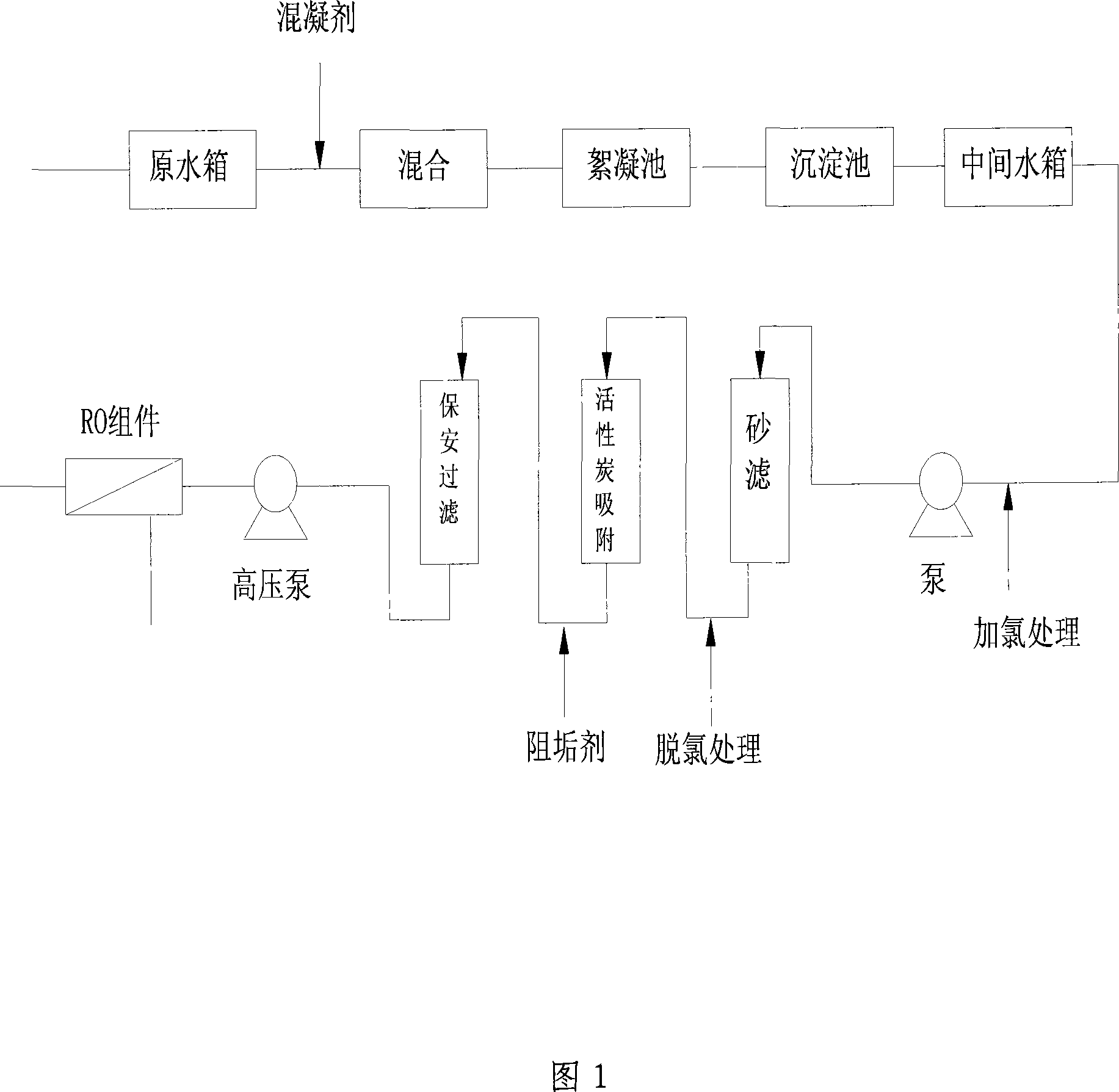
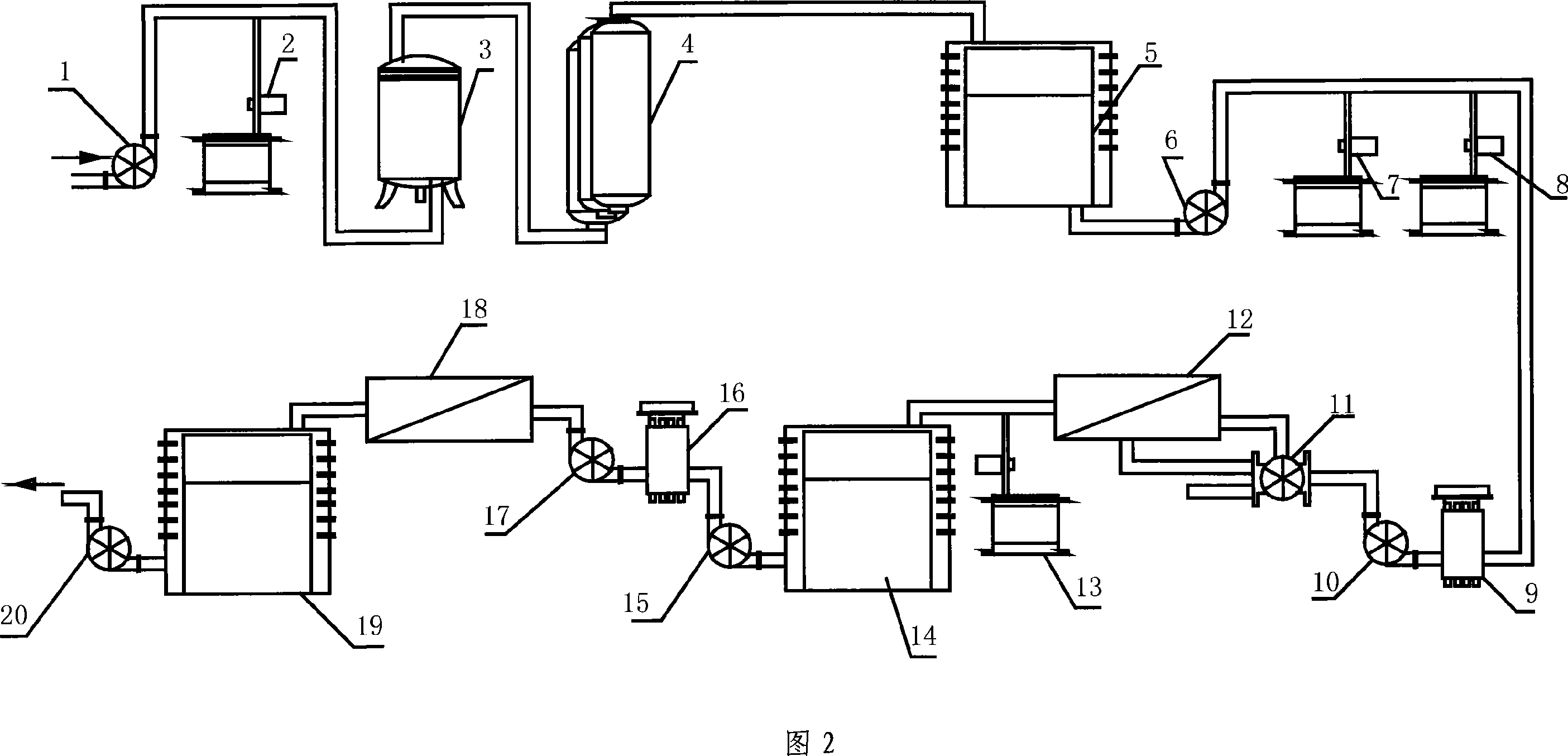
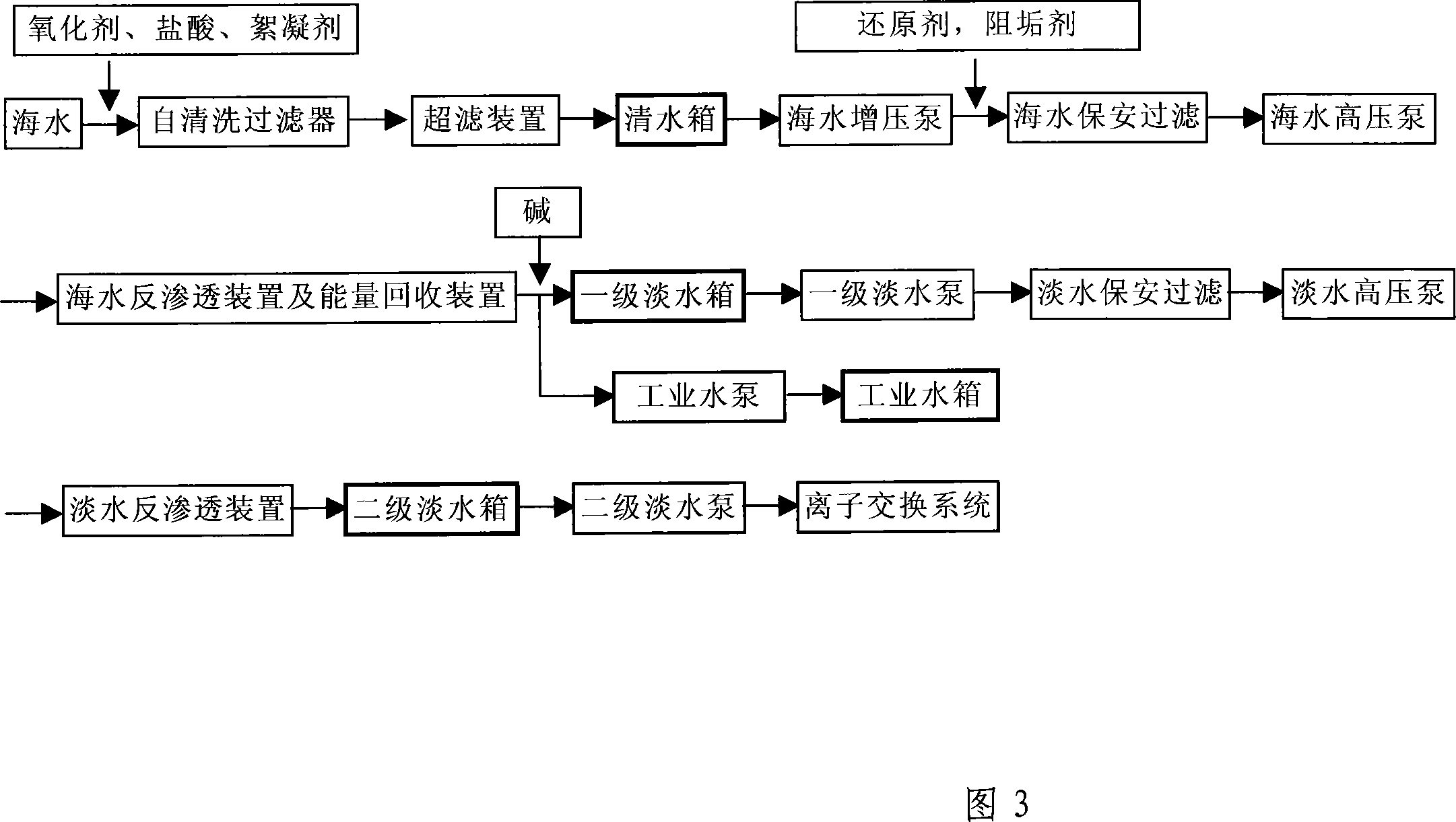
- The membrane integrated seawater desalination process is adopted, including self-cleaning filters, ultrafiltration devices, seawater and freshwater security filters, seawater and freshwater high-pressure pumps, and energy recovery devices. Through the integrated technology of ultrafiltration and reverse osmosis membranes, the pollution index is reduced and the pollution index is improved. Run flow rates to reduce chemical usage and membrane cleaning times.
Metal-doped graphene nanofiltration membrane
PatentPendingIN202321024713A
Innovation
- Metal-doped graphene nanofiltration membranes utilize the unique "net" structure of graphene to retain small atomic radius ions without requiring high pressures typically needed in conventional nanofiltration processes.
- The composite membrane leverages electrostatic interactions between delocalized electrons on the graphene surface and the positive charge of cations for efficient ion separation.
- The technology offers a potentially energy-efficient alternative to conventional nanofiltration membranes for desalination and water purification applications.
Economic Analysis and ROI Assessment
The economic analysis of ultrafiltration versus conventional filtration systems reveals significant differences in both initial investment and long-term operational costs. Ultrafiltration systems typically require higher capital expenditure, with installation costs averaging 30-50% more than conventional filtration systems. However, this initial investment disparity is often offset by operational efficiencies over time.
When examining operational expenses, ultrafiltration demonstrates advantages in several key areas. Energy consumption in ultrafiltration systems is typically 15-25% lower than conventional methods due to reduced pumping requirements and more efficient pressure management. Chemical usage for membrane cleaning in ultrafiltration, while specialized, generally results in 20-40% cost reduction compared to the continuous chemical treatment needed in conventional systems.
Maintenance costs present a more complex picture. Ultrafiltration membranes require replacement every 5-7 years, representing a significant periodic expense. However, conventional systems often incur more frequent maintenance interventions and component replacements, resulting in comparable or higher cumulative maintenance costs over a 10-year operational period.
Water recovery rates significantly impact the return on investment calculation. Ultrafiltration systems typically achieve 90-95% water recovery compared to 75-85% in conventional systems. This 10-15% improvement in water efficiency translates to substantial cost savings in scenarios where water resources are expensive or limited.
The payback period analysis indicates that ultrafiltration systems generally reach cost parity with conventional systems within 3-5 years in municipal applications and 2-4 years in industrial settings where water quality requirements are more stringent. This calculation factors in reduced downtime, lower labor requirements, and decreased waste disposal costs associated with ultrafiltration technology.
Sensitivity analysis reveals that ROI calculations are most heavily influenced by three factors: local energy costs, water pricing, and required treatment capacity. In regions with high energy costs, ultrafiltration's efficiency advantage accelerates the payback period by up to 30%. Similarly, operations requiring higher water quality standards see enhanced economic benefits from ultrafiltration due to reduced post-treatment needs and regulatory compliance costs.
The lifecycle cost assessment, spanning a typical 20-year operational period, demonstrates that ultrafiltration systems generally provide 15-25% lower total cost of ownership despite higher initial investment. This advantage becomes more pronounced in applications requiring frequent system upgrades or facing increasingly stringent regulatory requirements.
When examining operational expenses, ultrafiltration demonstrates advantages in several key areas. Energy consumption in ultrafiltration systems is typically 15-25% lower than conventional methods due to reduced pumping requirements and more efficient pressure management. Chemical usage for membrane cleaning in ultrafiltration, while specialized, generally results in 20-40% cost reduction compared to the continuous chemical treatment needed in conventional systems.
Maintenance costs present a more complex picture. Ultrafiltration membranes require replacement every 5-7 years, representing a significant periodic expense. However, conventional systems often incur more frequent maintenance interventions and component replacements, resulting in comparable or higher cumulative maintenance costs over a 10-year operational period.
Water recovery rates significantly impact the return on investment calculation. Ultrafiltration systems typically achieve 90-95% water recovery compared to 75-85% in conventional systems. This 10-15% improvement in water efficiency translates to substantial cost savings in scenarios where water resources are expensive or limited.
The payback period analysis indicates that ultrafiltration systems generally reach cost parity with conventional systems within 3-5 years in municipal applications and 2-4 years in industrial settings where water quality requirements are more stringent. This calculation factors in reduced downtime, lower labor requirements, and decreased waste disposal costs associated with ultrafiltration technology.
Sensitivity analysis reveals that ROI calculations are most heavily influenced by three factors: local energy costs, water pricing, and required treatment capacity. In regions with high energy costs, ultrafiltration's efficiency advantage accelerates the payback period by up to 30%. Similarly, operations requiring higher water quality standards see enhanced economic benefits from ultrafiltration due to reduced post-treatment needs and regulatory compliance costs.
The lifecycle cost assessment, spanning a typical 20-year operational period, demonstrates that ultrafiltration systems generally provide 15-25% lower total cost of ownership despite higher initial investment. This advantage becomes more pronounced in applications requiring frequent system upgrades or facing increasingly stringent regulatory requirements.
Environmental Impact and Sustainability Considerations
Environmental sustainability has become a critical factor in evaluating water treatment technologies, with ultrafiltration (UF) and conventional filtration systems demonstrating significant differences in their environmental footprints. UF systems generally require less chemical usage for operation compared to conventional filtration methods, which typically rely on coagulants, flocculants, and disinfectants in greater quantities. This reduction in chemical consumption not only decreases operational costs but also minimizes the environmental impact associated with chemical production, transportation, and disposal.
Energy consumption patterns between these technologies reveal important distinctions. While UF systems require energy for maintaining transmembrane pressure, advanced UF designs have incorporated energy recovery systems and optimized operational parameters that significantly reduce overall energy requirements. Conventional filtration, particularly when combined with additional treatment steps to achieve comparable water quality, often demonstrates higher cumulative energy demands across its operational lifecycle.
Waste generation represents another crucial environmental consideration. UF systems produce concentrated reject streams during backwashing and cleaning processes, but these volumes are typically smaller and more manageable than the sludge produced by conventional filtration systems. Furthermore, UF membrane cleaning processes have evolved to utilize more environmentally benign cleaning agents, reducing the ecological impact of maintenance operations.
The longevity and durability of filtration infrastructure also factor into sustainability assessments. Modern UF membranes can maintain operational efficiency for 5-10 years with proper maintenance, while conventional filtration media may require more frequent replacement or regeneration. This extended operational lifespan translates to reduced resource consumption and waste generation over the system's lifecycle.
Carbon footprint analysis comparing both technologies indicates that UF systems generally demonstrate lower greenhouse gas emissions when evaluated on a per-volume-of-treated-water basis. This advantage stems from reduced energy requirements, chemical usage, and waste management needs. Several life cycle assessment studies have quantified these differences, showing UF systems can achieve 15-30% lower carbon emissions compared to equivalent conventional filtration systems.
Water conservation capabilities further distinguish these technologies. UF systems typically achieve higher water recovery rates (95-98%) compared to conventional filtration systems (85-95%), resulting in less water wastage during the treatment process. This efficiency becomes particularly valuable in water-stressed regions where conservation is paramount.
Energy consumption patterns between these technologies reveal important distinctions. While UF systems require energy for maintaining transmembrane pressure, advanced UF designs have incorporated energy recovery systems and optimized operational parameters that significantly reduce overall energy requirements. Conventional filtration, particularly when combined with additional treatment steps to achieve comparable water quality, often demonstrates higher cumulative energy demands across its operational lifecycle.
Waste generation represents another crucial environmental consideration. UF systems produce concentrated reject streams during backwashing and cleaning processes, but these volumes are typically smaller and more manageable than the sludge produced by conventional filtration systems. Furthermore, UF membrane cleaning processes have evolved to utilize more environmentally benign cleaning agents, reducing the ecological impact of maintenance operations.
The longevity and durability of filtration infrastructure also factor into sustainability assessments. Modern UF membranes can maintain operational efficiency for 5-10 years with proper maintenance, while conventional filtration media may require more frequent replacement or regeneration. This extended operational lifespan translates to reduced resource consumption and waste generation over the system's lifecycle.
Carbon footprint analysis comparing both technologies indicates that UF systems generally demonstrate lower greenhouse gas emissions when evaluated on a per-volume-of-treated-water basis. This advantage stems from reduced energy requirements, chemical usage, and waste management needs. Several life cycle assessment studies have quantified these differences, showing UF systems can achieve 15-30% lower carbon emissions compared to equivalent conventional filtration systems.
Water conservation capabilities further distinguish these technologies. UF systems typically achieve higher water recovery rates (95-98%) compared to conventional filtration systems (85-95%), resulting in less water wastage during the treatment process. This efficiency becomes particularly valuable in water-stressed regions where conservation is paramount.
Unlock deeper insights with PatSnap Eureka Quick Research — get a full tech report to explore trends and direct your research. Try now!
Generate Your Research Report Instantly with AI Agent
Supercharge your innovation with PatSnap Eureka AI Agent Platform!