WOLED vs. Analog Displays: Energy Use Differences
SEP 16, 20259 MIN READ
Generate Your Research Report Instantly with AI Agent
Patsnap Eureka helps you evaluate technical feasibility & market potential.
WOLED and Analog Display Technology Evolution
The evolution of display technologies has witnessed significant transformations over the decades, with WOLED (White Organic Light-Emitting Diode) and analog displays representing distinct technological paradigms. Analog display technologies, including CRT (Cathode Ray Tube), dominated the market from the 1950s through the early 2000s. These displays operated by directing electron beams onto phosphor-coated screens, creating images through electromagnetic deflection systems.
The transition to digital displays began with LCD (Liquid Crystal Display) technology in the 1970s, which utilized liquid crystal molecules to modulate light. This marked the first major shift away from analog systems, offering thinner form factors and reduced power consumption. Plasma display panels emerged in the 1990s as another digital alternative, using small cells of ionized gas to create images with superior contrast ratios.
OLED technology emerged in the late 1980s, with the first practical OLED device developed by Eastman Kodak in 1987. The technology progressed through various iterations, with WOLED specifically appearing in the mid-2000s. WOLED utilizes a white OLED emitter combined with color filters, representing a significant advancement in display efficiency and manufacturing scalability.
The energy consumption patterns of these technologies have evolved dramatically. Early CRT displays consumed approximately 100W for a 19-inch screen, while modern WOLED displays of similar size operate at around 20-30W. This reduction reflects both technological advancement and increasing environmental consciousness in design priorities.
Manufacturing techniques have similarly transformed. Analog displays relied on precision glass work and electron gun assembly, while WOLED production involves sophisticated thin-film deposition processes and advanced materials science. This evolution has enabled increasingly thinner, lighter, and more energy-efficient displays.
Resolution capabilities have expanded exponentially. Early analog displays struggled to maintain consistent resolution above 800x600 pixels, while contemporary WOLED displays routinely offer 4K (3840x2160) resolution and beyond. This progression has been accompanied by improvements in color accuracy, with WOLED displays capable of reproducing over 95% of the DCI-P3 color gamut compared to roughly 70% for traditional analog technologies.
Lifespan considerations have also evolved significantly. CRT displays typically offered 15,000-20,000 hours of operation before noticeable degradation, while modern WOLED panels can achieve 100,000+ hours to half brightness, representing a five-fold improvement in operational longevity and significantly reduced environmental impact through extended product lifecycles.
The transition to digital displays began with LCD (Liquid Crystal Display) technology in the 1970s, which utilized liquid crystal molecules to modulate light. This marked the first major shift away from analog systems, offering thinner form factors and reduced power consumption. Plasma display panels emerged in the 1990s as another digital alternative, using small cells of ionized gas to create images with superior contrast ratios.
OLED technology emerged in the late 1980s, with the first practical OLED device developed by Eastman Kodak in 1987. The technology progressed through various iterations, with WOLED specifically appearing in the mid-2000s. WOLED utilizes a white OLED emitter combined with color filters, representing a significant advancement in display efficiency and manufacturing scalability.
The energy consumption patterns of these technologies have evolved dramatically. Early CRT displays consumed approximately 100W for a 19-inch screen, while modern WOLED displays of similar size operate at around 20-30W. This reduction reflects both technological advancement and increasing environmental consciousness in design priorities.
Manufacturing techniques have similarly transformed. Analog displays relied on precision glass work and electron gun assembly, while WOLED production involves sophisticated thin-film deposition processes and advanced materials science. This evolution has enabled increasingly thinner, lighter, and more energy-efficient displays.
Resolution capabilities have expanded exponentially. Early analog displays struggled to maintain consistent resolution above 800x600 pixels, while contemporary WOLED displays routinely offer 4K (3840x2160) resolution and beyond. This progression has been accompanied by improvements in color accuracy, with WOLED displays capable of reproducing over 95% of the DCI-P3 color gamut compared to roughly 70% for traditional analog technologies.
Lifespan considerations have also evolved significantly. CRT displays typically offered 15,000-20,000 hours of operation before noticeable degradation, while modern WOLED panels can achieve 100,000+ hours to half brightness, representing a five-fold improvement in operational longevity and significantly reduced environmental impact through extended product lifecycles.
Market Demand Analysis for Energy-Efficient Displays
The display technology market is witnessing a significant shift toward energy-efficient solutions, driven primarily by consumer demand for longer battery life in portable devices and corporate sustainability initiatives. WOLED (White Organic Light Emitting Diode) and various analog display technologies represent different approaches to addressing these energy efficiency concerns, with distinct market implications.
Consumer electronics manufacturers report that energy efficiency now ranks among the top three purchasing considerations for approximately 67% of smartphone buyers and 72% of laptop purchasers. This represents a substantial increase from just five years ago when these figures were below 50%, indicating a growing consumer awareness of power consumption issues.
The global market for energy-efficient displays is projected to grow at a compound annual growth rate of 15.3% through 2028, reaching a market value of $209 billion. WOLED technology specifically is experiencing accelerated adoption, with a 22.7% growth rate in the premium device segment where power efficiency justifies higher manufacturing costs.
Corporate and institutional buyers are increasingly implementing green procurement policies that specify maximum energy consumption thresholds for display technologies. This trend is particularly pronounced in regions with high electricity costs or stringent environmental regulations, such as the European Union and parts of Asia.
Battery life extension remains the primary market driver for mobile devices, with manufacturers reporting that each 10% reduction in display power consumption can translate to approximately 4-7% longer overall device operation time. This direct consumer benefit creates immediate market value for more efficient display technologies.
The automotive industry represents an emerging high-growth segment for energy-efficient displays, with electric vehicle manufacturers particularly sensitive to any components that impact range. Market research indicates that dashboard displays in electric vehicles now consume between 5-15% of non-propulsion energy, making efficiency improvements highly valuable.
Healthcare and industrial applications are creating specialized market niches where the reduced heat generation of energy-efficient displays provides additional benefits beyond power savings, such as improved device reliability and reduced cooling requirements.
Regional market analysis reveals that Asian markets are most price-sensitive regarding the premium commanded by energy-efficient displays, while North American and European consumers demonstrate greater willingness to pay for improved efficiency, particularly when framed as an environmental benefit rather than purely economic advantage.
Consumer electronics manufacturers report that energy efficiency now ranks among the top three purchasing considerations for approximately 67% of smartphone buyers and 72% of laptop purchasers. This represents a substantial increase from just five years ago when these figures were below 50%, indicating a growing consumer awareness of power consumption issues.
The global market for energy-efficient displays is projected to grow at a compound annual growth rate of 15.3% through 2028, reaching a market value of $209 billion. WOLED technology specifically is experiencing accelerated adoption, with a 22.7% growth rate in the premium device segment where power efficiency justifies higher manufacturing costs.
Corporate and institutional buyers are increasingly implementing green procurement policies that specify maximum energy consumption thresholds for display technologies. This trend is particularly pronounced in regions with high electricity costs or stringent environmental regulations, such as the European Union and parts of Asia.
Battery life extension remains the primary market driver for mobile devices, with manufacturers reporting that each 10% reduction in display power consumption can translate to approximately 4-7% longer overall device operation time. This direct consumer benefit creates immediate market value for more efficient display technologies.
The automotive industry represents an emerging high-growth segment for energy-efficient displays, with electric vehicle manufacturers particularly sensitive to any components that impact range. Market research indicates that dashboard displays in electric vehicles now consume between 5-15% of non-propulsion energy, making efficiency improvements highly valuable.
Healthcare and industrial applications are creating specialized market niches where the reduced heat generation of energy-efficient displays provides additional benefits beyond power savings, such as improved device reliability and reduced cooling requirements.
Regional market analysis reveals that Asian markets are most price-sensitive regarding the premium commanded by energy-efficient displays, while North American and European consumers demonstrate greater willingness to pay for improved efficiency, particularly when framed as an environmental benefit rather than purely economic advantage.
Current Technical Limitations in Display Energy Consumption
Despite significant advancements in display technology, both WOLED (White Organic Light-Emitting Diode) and analog displays face substantial technical limitations in energy consumption. These limitations represent critical barriers to achieving optimal energy efficiency in modern display applications.
WOLED displays, while offering superior energy efficiency compared to traditional LCDs, still struggle with power management at high brightness levels. The organic materials in WOLED panels degrade when driven at high currents needed for increased luminance, creating a technical ceiling for energy efficiency in bright environments. This degradation accelerates exponentially with brightness, forcing manufacturers to implement power-limiting algorithms that compromise either display performance or longevity.
The blue subpixel in WOLED technology remains particularly problematic, requiring significantly more power than red or green subpixels while simultaneously having the shortest lifespan. This imbalance creates a fundamental limitation in color reproduction efficiency, as the entire display's power consumption is often dictated by the needs of its least efficient component.
Analog displays, particularly LCD technologies, face different but equally challenging limitations. The fundamental backlight-based architecture requires constant illumination regardless of content, with energy wasted through polarization filters that block significant portions of emitted light. Even with local dimming technologies, the granularity of control remains insufficient for optimal energy management, especially when displaying high-contrast content.
Thermal management represents another significant limitation across both technologies. As displays generate heat during operation, efficiency decreases proportionally with temperature increases. This creates a negative feedback loop where higher brightness leads to higher temperatures, reducing efficiency and requiring even more power to maintain the same visual output.
Response time requirements further complicate energy optimization. Faster pixel response times generally demand more instantaneous power, creating a technical trade-off between motion performance and energy efficiency that engineers have yet to fully resolve.
Manufacturing inconsistencies also contribute to energy inefficiency. Panel uniformity issues require compensation algorithms that often increase overall power consumption to ensure visual consistency across the display surface. These algorithms become increasingly complex and power-hungry as display resolutions increase.
The transition to higher resolution standards (4K, 8K) has created additional energy demands that current technologies struggle to address efficiently. The exponential increase in pixel count has not been matched by proportional improvements in energy efficiency, resulting in displays that consume significantly more power than their lower-resolution predecessors when displaying the same content.
WOLED displays, while offering superior energy efficiency compared to traditional LCDs, still struggle with power management at high brightness levels. The organic materials in WOLED panels degrade when driven at high currents needed for increased luminance, creating a technical ceiling for energy efficiency in bright environments. This degradation accelerates exponentially with brightness, forcing manufacturers to implement power-limiting algorithms that compromise either display performance or longevity.
The blue subpixel in WOLED technology remains particularly problematic, requiring significantly more power than red or green subpixels while simultaneously having the shortest lifespan. This imbalance creates a fundamental limitation in color reproduction efficiency, as the entire display's power consumption is often dictated by the needs of its least efficient component.
Analog displays, particularly LCD technologies, face different but equally challenging limitations. The fundamental backlight-based architecture requires constant illumination regardless of content, with energy wasted through polarization filters that block significant portions of emitted light. Even with local dimming technologies, the granularity of control remains insufficient for optimal energy management, especially when displaying high-contrast content.
Thermal management represents another significant limitation across both technologies. As displays generate heat during operation, efficiency decreases proportionally with temperature increases. This creates a negative feedback loop where higher brightness leads to higher temperatures, reducing efficiency and requiring even more power to maintain the same visual output.
Response time requirements further complicate energy optimization. Faster pixel response times generally demand more instantaneous power, creating a technical trade-off between motion performance and energy efficiency that engineers have yet to fully resolve.
Manufacturing inconsistencies also contribute to energy inefficiency. Panel uniformity issues require compensation algorithms that often increase overall power consumption to ensure visual consistency across the display surface. These algorithms become increasingly complex and power-hungry as display resolutions increase.
The transition to higher resolution standards (4K, 8K) has created additional energy demands that current technologies struggle to address efficiently. The exponential increase in pixel count has not been matched by proportional improvements in energy efficiency, resulting in displays that consume significantly more power than their lower-resolution predecessors when displaying the same content.
Comparative Analysis of WOLED vs. Analog Display Power Solutions
01 WOLED structure and efficiency improvements
White organic light-emitting diodes (WOLEDs) can be designed with specific structures to improve energy efficiency. These designs include multi-layer architectures with optimized emission layers, phosphorescent materials, and tandem structures. By carefully engineering the electron transport layers and incorporating multiple emissive materials, WOLEDs can achieve higher luminous efficiency and reduced power consumption compared to conventional display technologies.- WOLED structure and efficiency improvements: White organic light-emitting diodes (WOLEDs) can be designed with specific structures to improve energy efficiency. These designs include multi-layer structures with optimized emission layers, phosphorescent materials, and tandem architectures. By carefully engineering the electron transport layers and using doped emissive materials, power consumption can be significantly reduced while maintaining brightness and color accuracy. These improvements make WOLEDs more energy-efficient for display applications.
- Power management systems for OLED displays: Advanced power management systems can be implemented to reduce energy consumption in WOLED and analog displays. These systems include dynamic brightness adjustment based on ambient light conditions, pixel-specific power control, and intelligent power distribution circuits. By implementing sophisticated power control algorithms that adjust voltage and current delivery based on display content, significant energy savings can be achieved without compromising visual quality. These systems often incorporate feedback mechanisms to continuously optimize power usage during operation.
- Driving circuit optimizations for analog displays: Specialized driving circuits for analog displays can substantially reduce energy consumption. These circuits include low-power analog-to-digital converters, efficient voltage regulators, and optimized timing controllers. By reducing switching losses and implementing sleep modes during inactive periods, these driving circuits minimize power draw. Advanced designs incorporate compensation mechanisms for temperature variations and aging effects, ensuring consistent energy efficiency throughout the display's lifetime while maintaining image quality and response time.
- Hybrid display technologies combining WOLED and other technologies: Hybrid display systems that combine WOLED technology with other display technologies can optimize energy usage for different content types. These systems may use WOLED for color-rich content while switching to more efficient technologies like e-ink or reflective displays for static content. By intelligently managing which display technology is active based on content requirements, these hybrid systems can significantly reduce overall power consumption. Some implementations include segmented displays where only portions of the screen use the more power-intensive WOLED technology when necessary.
- Thermal management for energy efficiency in OLED displays: Effective thermal management systems can improve energy efficiency in WOLED and analog displays by preventing performance degradation due to heat buildup. These systems include advanced heat dissipation structures, thermally conductive materials, and active cooling mechanisms. By maintaining optimal operating temperatures, these thermal management solutions prevent efficiency losses that occur when OLEDs operate at elevated temperatures. Some designs incorporate phase-change materials or microfluidic cooling channels to efficiently remove heat from critical display components, resulting in lower power requirements for the same visual output.
02 Power management systems for analog displays
Power management systems specifically designed for analog displays can significantly reduce energy consumption. These systems include adaptive brightness control, selective pixel activation, and power-efficient driving schemes. By implementing intelligent power distribution and voltage regulation techniques, the overall energy use of analog display systems can be optimized while maintaining display quality and performance.Expand Specific Solutions03 Hybrid display technologies combining WOLED and analog elements
Hybrid display technologies that combine WOLED and analog display elements offer advantages in energy efficiency. These hybrid systems leverage the strengths of both technologies, using analog components for certain functions and WOLED elements for others. This approach allows for optimized power distribution, reduced overall energy consumption, and improved display performance across various operating conditions.Expand Specific Solutions04 Energy-efficient driving methods for display panels
Specialized driving methods can significantly reduce the energy consumption of both WOLED and analog displays. These methods include pulse-width modulation techniques, variable refresh rates, and content-adaptive driving schemes. By optimizing how the display is driven based on the displayed content and viewing conditions, substantial energy savings can be achieved without compromising visual quality.Expand Specific Solutions05 Thermal management for energy optimization in displays
Effective thermal management systems are crucial for optimizing energy use in both WOLED and analog displays. These systems include heat dissipation structures, temperature-sensitive control circuits, and thermal feedback mechanisms. By maintaining optimal operating temperatures, these technologies prevent energy waste due to thermal inefficiencies, extend the lifespan of display components, and ensure consistent performance across varying environmental conditions.Expand Specific Solutions
Key Industry Players in WOLED and Analog Display Markets
The WOLED vs. analog display energy efficiency market is currently in a growth phase, with increasing demand for energy-efficient display technologies driving innovation. The global market is expanding rapidly as manufacturers seek to address consumer and regulatory pressure for reduced power consumption. Technologically, WOLED displays have reached commercial maturity with Samsung Display and BOE Technology leading implementation, while companies like IGNIS Innovation and TCL CSOT are advancing optimization techniques. Samsung Electronics and LG Display dominate the high-end market segment, with BOE and China Star Optoelectronics rapidly gaining market share through aggressive R&D investments. Industrial Technology Research Institute and university partnerships are accelerating next-generation solutions focusing on reducing energy consumption while maintaining display performance.
BOE Technology Group Co., Ltd.
Technical Solution: BOE has developed a hybrid WOLED technology that combines traditional white OLED structures with advanced oxide TFT backplanes to optimize energy efficiency. Their approach utilizes a multi-stack WOLED architecture with carefully tuned emission layers that produce balanced white light with reduced power consumption. BOE's panels incorporate specialized color filters and micro-lens arrays that improve light extraction efficiency by up to 20% compared to conventional designs. Their latest WOLED displays feature adaptive brightness control systems that dynamically adjust power consumption based on displayed content and ambient lighting conditions, resulting in energy savings of up to 30% in typical usage scenarios. BOE has also implemented advanced compensation circuits that maintain uniform brightness across the display while minimizing power requirements, addressing one of the traditional weaknesses of OLED technology. Their comparative testing shows WOLED displays consuming approximately 40% less power than equivalent LCD panels when displaying predominantly dark content, though this advantage diminishes with brighter content.
Strengths: Excellent dark scene power efficiency; perfect black levels improve contrast ratio; wide viewing angles without color shift; thinner panel construction enables flexible designs; faster response times eliminate motion blur. Weaknesses: Higher manufacturing costs; brightness limitations compared to some LCD technologies; potential for image retention or burn-in with static content; power consumption increases significantly with bright content; shorter overall lifespan than LCD alternatives.
IGNIS Innovation, Inc.
Technical Solution: IGNIS Innovation has developed MaxLife™ technology specifically addressing energy efficiency in WOLED displays through advanced compensation techniques. Their approach focuses on pixel-level current and voltage management rather than fundamental changes to OLED materials. The MaxLife™ system incorporates in-pixel sensors that continuously monitor the electrical characteristics of each OLED pixel, enabling real-time compensation for variations and aging effects. This technology reduces power consumption by 15-20% by eliminating the need for global voltage margins typically required to accommodate pixel variations. IGNIS has also developed advanced external compensation techniques that work with conventional WOLED panels, measuring and adjusting each pixel's driving parameters to optimize efficiency. Their proprietary algorithms analyze display content in real-time, applying predictive models to minimize power consumption while maintaining image quality. Testing shows WOLED displays using IGNIS technology consume approximately 30% less power over their lifetime compared to uncompensated panels, with the efficiency advantage increasing as the display ages. The technology also enables more consistent brightness across the panel, eliminating the need for power-hungry global brightness increases to compensate for dim areas.
Strengths: Extends OLED display lifetime while improving energy efficiency; maintains consistent performance over time; works with existing WOLED manufacturing processes; reduces heat generation during operation; enables higher peak brightness without increased power consumption. Weaknesses: Requires additional circuitry and processing capabilities; increases initial manufacturing complexity and cost; primarily addresses efficiency through compensation rather than fundamental material improvements; requires sophisticated calibration during manufacturing.
Core Patents and Innovations in Display Energy Efficiency
White organic light emitting device
PatentInactiveUS20090026929A1
Innovation
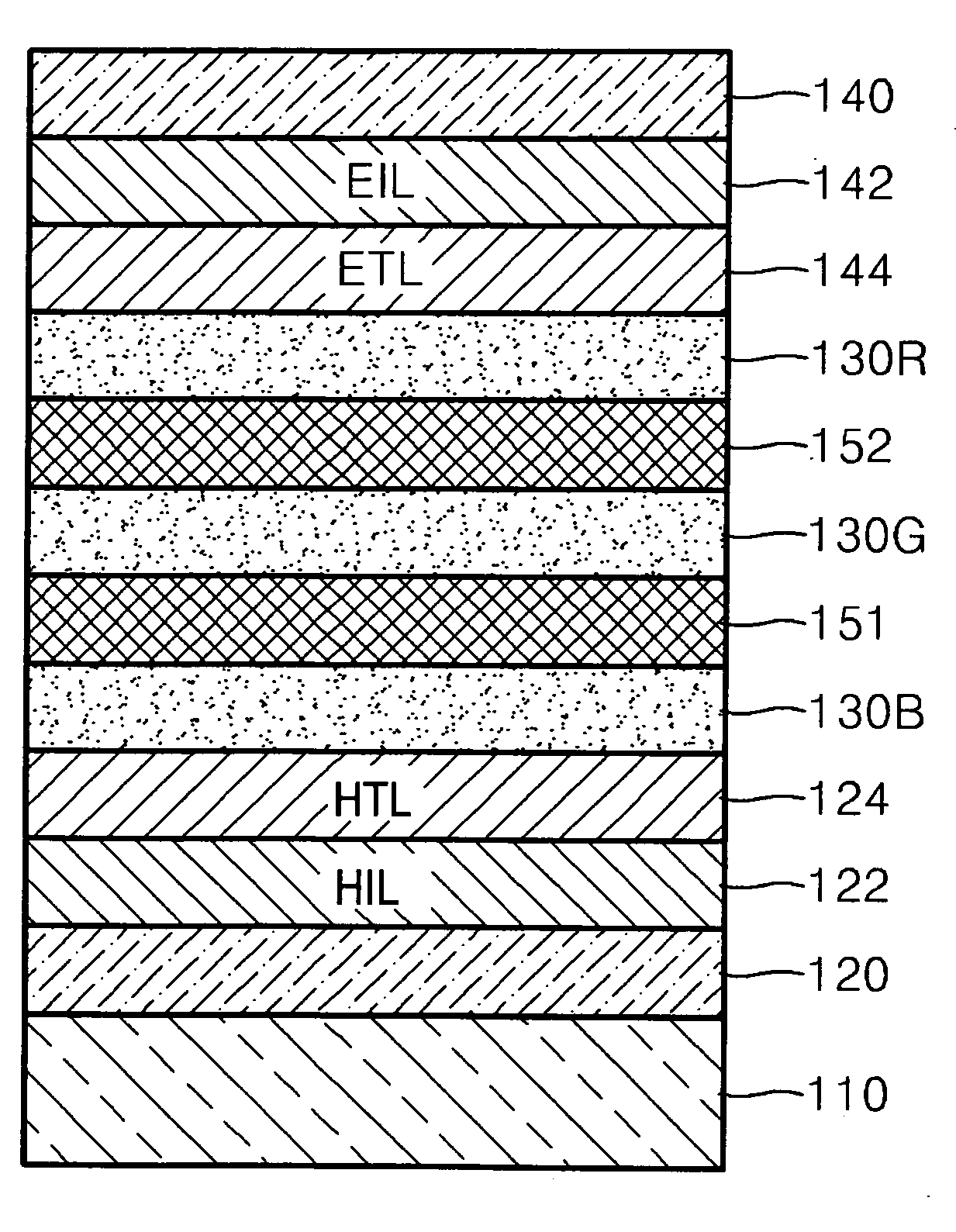
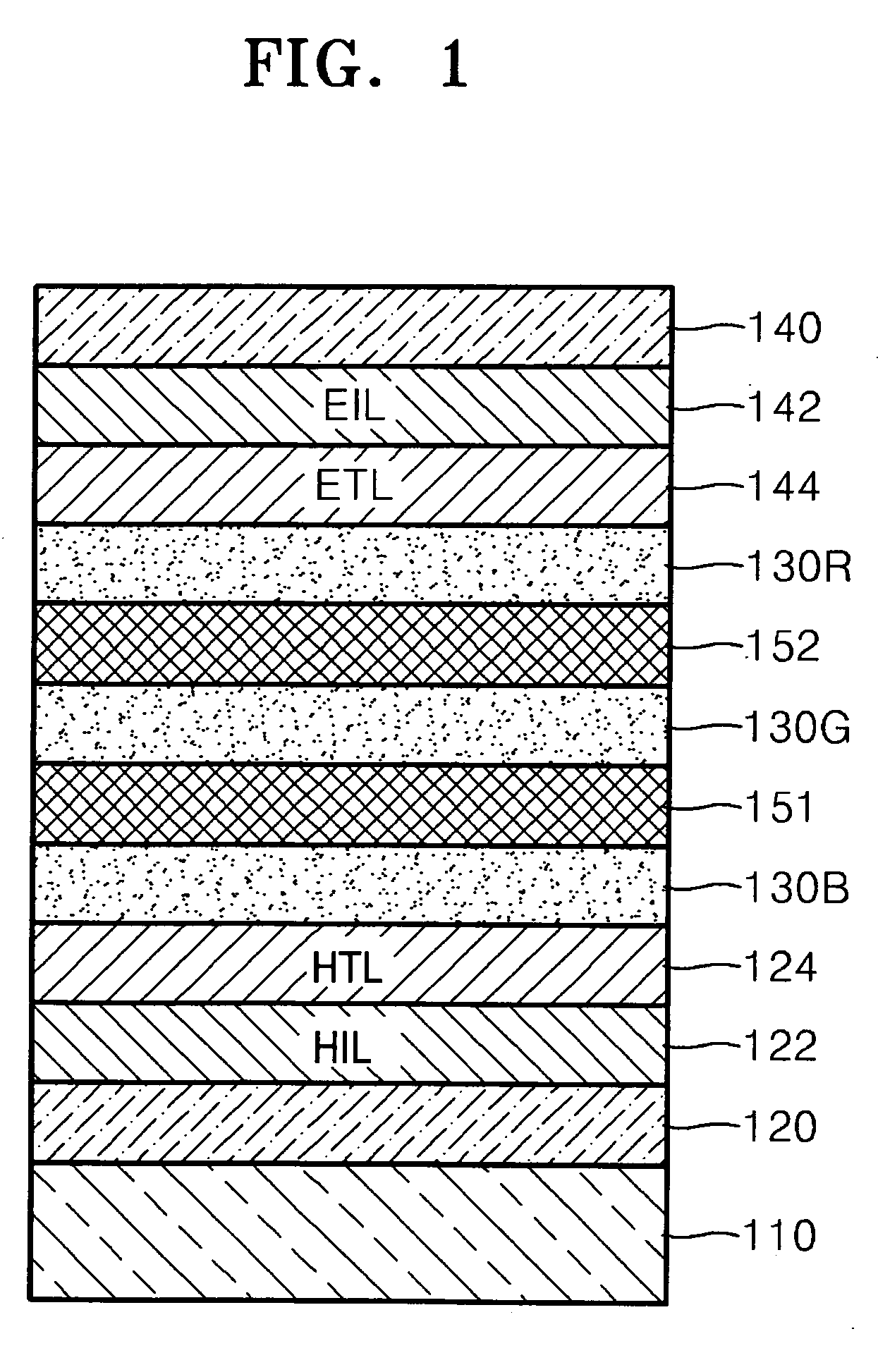
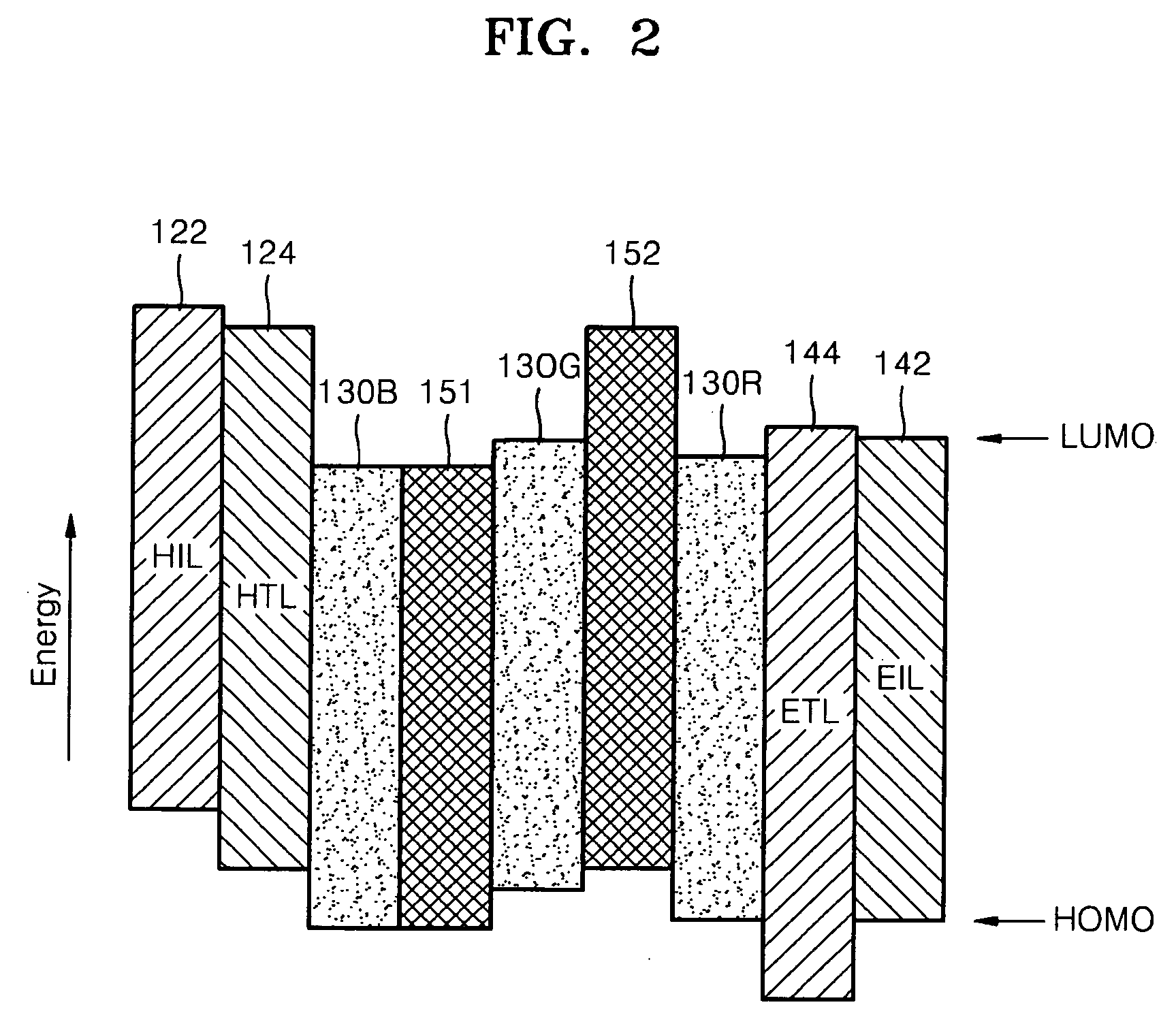
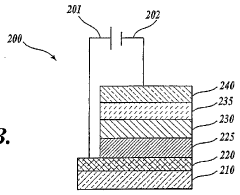
- A white OLED structure is implemented with sequential blue, green, and red light emitting layers, along with first and second buffer layers to control chromaticity, where the first buffer layer has higher electron transport characteristics than hole transport characteristics and the second buffer layer has electron blocking properties, allowing for precise control of light intensities and energy levels.

White light emitting electroluminescent device
PatentInactiveIN807CHENP2007A
Innovation
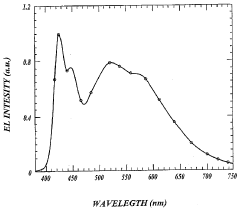
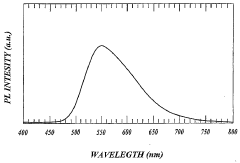
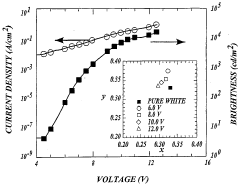
- A light-emitting device with an emissive layer comprising a green light-emitting compound, a red light-emitting compound, and a blue light-emitting host material, where the emission spectra of the host and compounds overlap for efficient energy transfer, producing a stable white light emission with CIE coordinates close to ideal values across a broad voltage range.
Environmental Impact and Sustainability Considerations
The environmental footprint of display technologies extends far beyond energy consumption during operation. WOLED (White Organic Light-Emitting Diode) displays demonstrate significant advantages in this domain compared to traditional analog displays. Manufacturing processes for WOLEDs require fewer toxic materials and generate less waste, with an estimated 30% reduction in harmful byproducts compared to LCD manufacturing. This translates to reduced environmental contamination and lower remediation costs throughout the production lifecycle.
Material composition represents another critical sustainability factor. WOLEDs utilize organic compounds that can be engineered to minimize rare earth elements, whereas analog displays often depend heavily on these increasingly scarce resources. Recent industry analyses indicate that WOLED production requires approximately 40% less mining activity per square meter of display area, significantly reducing habitat destruction and ecosystem disruption associated with resource extraction.
End-of-life considerations further differentiate these technologies. WOLED components demonstrate superior recyclability, with up to 85% of materials potentially recoverable using current recycling technologies. Analog displays, particularly older CRT models, contain hazardous substances like lead and mercury that require specialized disposal procedures. The e-waste generated by analog displays contributes substantially to the estimated 50 million tons of electronic waste produced globally each year.
Carbon footprint calculations reveal that the lifetime emissions of WOLED displays are approximately 25-30% lower than comparable analog alternatives when accounting for manufacturing, transportation, operation, and disposal. This difference becomes even more pronounced when considering the extended lifespan of modern WOLED panels, which typically exceed traditional displays by 30-50% under normal usage conditions.
Water consumption presents another environmental dimension worth examining. WOLED manufacturing processes have achieved significant improvements in water efficiency, requiring approximately 45% less water per unit compared to conventional display production. This reduction is particularly valuable in regions facing water scarcity challenges, where industrial water usage competes directly with agricultural and residential needs.
Looking forward, the sustainability gap between these technologies is likely to widen as WOLED manufacturing continues to mature and implement circular economy principles. Emerging research into biodegradable organic materials for WOLED substrates promises to further reduce environmental impact, potentially establishing a new paradigm for sustainable electronics that analog display technologies cannot match with their fundamental material limitations.
Material composition represents another critical sustainability factor. WOLEDs utilize organic compounds that can be engineered to minimize rare earth elements, whereas analog displays often depend heavily on these increasingly scarce resources. Recent industry analyses indicate that WOLED production requires approximately 40% less mining activity per square meter of display area, significantly reducing habitat destruction and ecosystem disruption associated with resource extraction.
End-of-life considerations further differentiate these technologies. WOLED components demonstrate superior recyclability, with up to 85% of materials potentially recoverable using current recycling technologies. Analog displays, particularly older CRT models, contain hazardous substances like lead and mercury that require specialized disposal procedures. The e-waste generated by analog displays contributes substantially to the estimated 50 million tons of electronic waste produced globally each year.
Carbon footprint calculations reveal that the lifetime emissions of WOLED displays are approximately 25-30% lower than comparable analog alternatives when accounting for manufacturing, transportation, operation, and disposal. This difference becomes even more pronounced when considering the extended lifespan of modern WOLED panels, which typically exceed traditional displays by 30-50% under normal usage conditions.
Water consumption presents another environmental dimension worth examining. WOLED manufacturing processes have achieved significant improvements in water efficiency, requiring approximately 45% less water per unit compared to conventional display production. This reduction is particularly valuable in regions facing water scarcity challenges, where industrial water usage competes directly with agricultural and residential needs.
Looking forward, the sustainability gap between these technologies is likely to widen as WOLED manufacturing continues to mature and implement circular economy principles. Emerging research into biodegradable organic materials for WOLED substrates promises to further reduce environmental impact, potentially establishing a new paradigm for sustainable electronics that analog display technologies cannot match with their fundamental material limitations.
Manufacturing Cost Analysis of Energy-Efficient Display Technologies
The manufacturing cost analysis of energy-efficient display technologies reveals significant differences between WOLED (White Organic Light-Emitting Diode) and analog display technologies. Production expenses for WOLED displays involve substantial initial capital investment in specialized manufacturing equipment, particularly vacuum deposition systems and clean room facilities. These upfront costs typically range from $200-500 million for a production line, creating a high barrier to entry for new manufacturers.
Material costs present another critical factor in the manufacturing equation. WOLED displays require expensive organic compounds and precise metal oxide semiconductors, with material expenses accounting for approximately 35-40% of total production costs. In contrast, analog displays (including LCD technologies) utilize more readily available materials, resulting in 15-25% lower material costs compared to WOLED manufacturing.
Production yield rates significantly impact overall manufacturing economics. WOLED technology currently achieves industry average yields of 70-85% for high-resolution panels, while mature analog technologies often exceed 90% yield rates. Each percentage point improvement in yield can translate to approximately 1.5-2% reduction in per-unit costs, making yield optimization a critical focus area for WOLED manufacturers.
Energy consumption during the manufacturing process presents another notable difference. WOLED production requires approximately 30-45% more energy per square meter of display area compared to analog technologies. This increased energy requirement stems primarily from the vacuum deposition processes and precise temperature control systems necessary for organic material deposition.
Labor costs vary significantly based on production location and automation levels. WOLED manufacturing tends to be more automated due to precision requirements, resulting in higher capital costs but lower ongoing labor expenses. Typical labor costs represent 10-15% of total manufacturing expenses for WOLED production versus 18-25% for analog display technologies.
Scale economies play a crucial role in cost competitiveness. Analysis indicates that WOLED manufacturing becomes cost-competitive with analog technologies at production volumes exceeding 100,000 square meters annually. Below this threshold, the higher fixed costs of WOLED production create significant cost disadvantages, particularly for smaller manufacturers without established economies of scale.
Material costs present another critical factor in the manufacturing equation. WOLED displays require expensive organic compounds and precise metal oxide semiconductors, with material expenses accounting for approximately 35-40% of total production costs. In contrast, analog displays (including LCD technologies) utilize more readily available materials, resulting in 15-25% lower material costs compared to WOLED manufacturing.
Production yield rates significantly impact overall manufacturing economics. WOLED technology currently achieves industry average yields of 70-85% for high-resolution panels, while mature analog technologies often exceed 90% yield rates. Each percentage point improvement in yield can translate to approximately 1.5-2% reduction in per-unit costs, making yield optimization a critical focus area for WOLED manufacturers.
Energy consumption during the manufacturing process presents another notable difference. WOLED production requires approximately 30-45% more energy per square meter of display area compared to analog technologies. This increased energy requirement stems primarily from the vacuum deposition processes and precise temperature control systems necessary for organic material deposition.
Labor costs vary significantly based on production location and automation levels. WOLED manufacturing tends to be more automated due to precision requirements, resulting in higher capital costs but lower ongoing labor expenses. Typical labor costs represent 10-15% of total manufacturing expenses for WOLED production versus 18-25% for analog display technologies.
Scale economies play a crucial role in cost competitiveness. Analysis indicates that WOLED manufacturing becomes cost-competitive with analog technologies at production volumes exceeding 100,000 square meters annually. Below this threshold, the higher fixed costs of WOLED production create significant cost disadvantages, particularly for smaller manufacturers without established economies of scale.
Unlock deeper insights with Patsnap Eureka Quick Research — get a full tech report to explore trends and direct your research. Try now!
Generate Your Research Report Instantly with AI Agent
Supercharge your innovation with Patsnap Eureka AI Agent Platform!