

WOLED vs LED: Comparing Light Consistency in Indoor Use
SEP 16, 20259 MIN READ
Generate Your Research Report Instantly with AI Agent
PatSnap Eureka helps you evaluate technical feasibility & market potential.
WOLED and LED Technology Evolution and Objectives
The evolution of lighting technology has witnessed significant advancements over the past century, transitioning from incandescent bulbs to fluorescent lighting and eventually to LED (Light Emitting Diode) technology. Within the LED domain, WOLED (White Organic Light Emitting Diode) represents one of the most sophisticated developments, emerging in the early 2000s as researchers sought to combine the efficiency of LEDs with improved light quality characteristics.
Traditional LED technology, which gained commercial traction in the 1990s, operates on the principle of electroluminescence in semiconductor materials. These inorganic semiconductors emit light when an electric current passes through them, with different semiconductor materials producing different wavelengths of light. The development of blue LEDs in the early 1990s, which earned the 2014 Nobel Prize in Physics, was particularly crucial as it enabled the creation of white light through phosphor conversion or RGB combination methods.
WOLED technology, by contrast, utilizes organic compounds that emit light when stimulated by an electric current. The fundamental research into OLEDs began in the 1950s, but practical applications only emerged in the late 1980s. WOLEDs specifically address the challenge of producing high-quality white light using organic materials, with significant breakthroughs occurring in the mid-2000s that improved efficiency and lifespan.
The technical objectives in comparing WOLED and LED technologies for indoor use center primarily on light consistency—a critical factor in environments where visual comfort and accurate color rendering are essential. Light consistency encompasses several parameters: color temperature stability, color rendering index (CRI), flicker rates, and illumination uniformity across different viewing angles and over the lifetime of the device.
For indoor applications, the ideal lighting solution should maintain consistent color temperature regardless of dimming levels or operational duration. It should also provide high CRI values (typically above 90) to ensure accurate color representation of objects, minimal flicker to reduce eye strain and headaches, and uniform light distribution to eliminate harsh shadows or hotspots.
Current research trends are focusing on enhancing the spectral stability of both technologies, with particular emphasis on reducing the "blue light hazard" associated with some LED implementations. Additionally, researchers are working to improve the longevity of WOLED technology, which historically has faced challenges with shorter operational lifespans compared to traditional LEDs, especially in high-brightness applications.
The trajectory of both technologies suggests convergence toward lighting solutions that combine energy efficiency with superior light quality, moving beyond mere illumination to address human-centric lighting needs that support circadian rhythms and overall wellbeing in indoor environments.
Traditional LED technology, which gained commercial traction in the 1990s, operates on the principle of electroluminescence in semiconductor materials. These inorganic semiconductors emit light when an electric current passes through them, with different semiconductor materials producing different wavelengths of light. The development of blue LEDs in the early 1990s, which earned the 2014 Nobel Prize in Physics, was particularly crucial as it enabled the creation of white light through phosphor conversion or RGB combination methods.
WOLED technology, by contrast, utilizes organic compounds that emit light when stimulated by an electric current. The fundamental research into OLEDs began in the 1950s, but practical applications only emerged in the late 1980s. WOLEDs specifically address the challenge of producing high-quality white light using organic materials, with significant breakthroughs occurring in the mid-2000s that improved efficiency and lifespan.
The technical objectives in comparing WOLED and LED technologies for indoor use center primarily on light consistency—a critical factor in environments where visual comfort and accurate color rendering are essential. Light consistency encompasses several parameters: color temperature stability, color rendering index (CRI), flicker rates, and illumination uniformity across different viewing angles and over the lifetime of the device.
For indoor applications, the ideal lighting solution should maintain consistent color temperature regardless of dimming levels or operational duration. It should also provide high CRI values (typically above 90) to ensure accurate color representation of objects, minimal flicker to reduce eye strain and headaches, and uniform light distribution to eliminate harsh shadows or hotspots.
Current research trends are focusing on enhancing the spectral stability of both technologies, with particular emphasis on reducing the "blue light hazard" associated with some LED implementations. Additionally, researchers are working to improve the longevity of WOLED technology, which historically has faced challenges with shorter operational lifespans compared to traditional LEDs, especially in high-brightness applications.
The trajectory of both technologies suggests convergence toward lighting solutions that combine energy efficiency with superior light quality, moving beyond mere illumination to address human-centric lighting needs that support circadian rhythms and overall wellbeing in indoor environments.
Indoor Lighting Market Demand Analysis
The indoor lighting market has witnessed significant growth in recent years, driven by increasing urbanization, rising disposable incomes, and growing awareness about energy-efficient lighting solutions. The global indoor lighting market was valued at approximately 64 billion USD in 2021 and is projected to reach 98 billion USD by 2028, growing at a CAGR of 6.3% during the forecast period.
Consumer preferences in indoor lighting have evolved substantially, with a clear shift towards solutions that offer better light quality, energy efficiency, and longer lifespan. Market research indicates that over 70% of consumers now prioritize light consistency and quality when making purchasing decisions for indoor lighting, particularly for spaces where they spend significant time such as living rooms and workspaces.
The demand for WOLED (White Organic Light Emitting Diode) technology has been steadily increasing, especially in premium residential and commercial applications. This growth is attributed to WOLED's superior light consistency, reduced eye strain, and ability to provide uniform illumination without visible flickering. Market surveys reveal that 65% of consumers are willing to pay a premium price for lighting solutions that offer better visual comfort and reduced eye fatigue.
LED lighting continues to dominate the mass market segment due to its cost-effectiveness and improving performance metrics. However, there is a growing demand for advanced LED solutions that can match the light consistency of WOLED technology. This has prompted manufacturers to invest in research and development to enhance LED performance in terms of color rendering, flicker reduction, and light distribution.
Commercial sectors, particularly offices, healthcare facilities, and educational institutions, represent the largest market segment for high-consistency lighting solutions. These environments require lighting that minimizes eye strain and supports productivity. Studies have shown that consistent, high-quality lighting can improve workplace productivity by up to 23% and reduce headaches and eye strain by 51% compared to environments with poor lighting conditions.
The residential market segment is showing the fastest growth rate for premium lighting solutions, with an annual growth rate of 8.7%. This is driven by the increasing trend of home offices and the growing awareness of how lighting affects health and wellbeing. Consumers are increasingly seeking lighting solutions that can adapt to different activities and times of day, with 58% expressing interest in smart lighting systems that can automatically adjust brightness and color temperature.
Regional analysis shows that North America and Europe lead in the adoption of high-consistency lighting technologies, while Asia-Pacific represents the fastest-growing market with increasing urbanization and rising disposable incomes driving demand for premium lighting solutions.
Consumer preferences in indoor lighting have evolved substantially, with a clear shift towards solutions that offer better light quality, energy efficiency, and longer lifespan. Market research indicates that over 70% of consumers now prioritize light consistency and quality when making purchasing decisions for indoor lighting, particularly for spaces where they spend significant time such as living rooms and workspaces.
The demand for WOLED (White Organic Light Emitting Diode) technology has been steadily increasing, especially in premium residential and commercial applications. This growth is attributed to WOLED's superior light consistency, reduced eye strain, and ability to provide uniform illumination without visible flickering. Market surveys reveal that 65% of consumers are willing to pay a premium price for lighting solutions that offer better visual comfort and reduced eye fatigue.
LED lighting continues to dominate the mass market segment due to its cost-effectiveness and improving performance metrics. However, there is a growing demand for advanced LED solutions that can match the light consistency of WOLED technology. This has prompted manufacturers to invest in research and development to enhance LED performance in terms of color rendering, flicker reduction, and light distribution.
Commercial sectors, particularly offices, healthcare facilities, and educational institutions, represent the largest market segment for high-consistency lighting solutions. These environments require lighting that minimizes eye strain and supports productivity. Studies have shown that consistent, high-quality lighting can improve workplace productivity by up to 23% and reduce headaches and eye strain by 51% compared to environments with poor lighting conditions.
The residential market segment is showing the fastest growth rate for premium lighting solutions, with an annual growth rate of 8.7%. This is driven by the increasing trend of home offices and the growing awareness of how lighting affects health and wellbeing. Consumers are increasingly seeking lighting solutions that can adapt to different activities and times of day, with 58% expressing interest in smart lighting systems that can automatically adjust brightness and color temperature.
Regional analysis shows that North America and Europe lead in the adoption of high-consistency lighting technologies, while Asia-Pacific represents the fastest-growing market with increasing urbanization and rising disposable incomes driving demand for premium lighting solutions.
Current Technical Limitations in Light Consistency
Despite significant advancements in lighting technology, both WOLED (White Organic Light Emitting Diode) and LED (Light Emitting Diode) systems face several technical limitations that affect their light consistency in indoor applications. These limitations manifest differently across the technologies and directly impact user experience in various indoor environments.
For LED lighting, one of the primary consistency challenges stems from the fundamental design of LED chips. Conventional LEDs typically use blue LEDs with phosphor coatings to create white light, resulting in inherent color temperature variations between individual units. Manufacturing tolerances in the phosphor application process lead to perceptible differences even among LEDs from the same production batch, creating noticeable inconsistencies when multiple fixtures are installed in the same space.
Thermal management represents another significant limitation for both technologies, though with different implications. LEDs experience efficiency droop and color shift as junction temperatures increase during operation. Without adequate heat dissipation systems, this leads to gradual changes in light output and color temperature over the operational period, creating temporal inconsistency that users may perceive as flickering or color shifting in prolonged use scenarios.
WOLED technology, while offering inherently more diffuse and uniform illumination, suffers from organic material degradation issues. The different organic compounds used in WOLED panels degrade at varying rates, leading to color balance shifts over the operational lifetime. This non-uniform aging process results in gradually increasing color inconsistency across the illumination surface, particularly noticeable in large-format lighting installations.
Power supply fluctuations present another technical barrier to consistent lighting. Both technologies require precise current regulation, with LEDs being particularly sensitive to current variations that can cause immediate changes in brightness and color temperature. While modern drivers have improved significantly, complete elimination of micro-fluctuations remains challenging, especially in buildings with unstable power infrastructure.
Optical component limitations also contribute to consistency issues. LED lighting systems rely on secondary optics like diffusers, reflectors, and lenses to distribute light evenly. Manufacturing variations and material degradation in these components create hotspots, uneven illumination patterns, and color fringing effects that compromise overall light consistency. WOLED systems, though requiring fewer optical components, still face challenges in maintaining uniform light extraction across their emission surface.
Environmental factors further exacerbate these limitations, with ambient temperature fluctuations affecting both technologies differently. LEDs typically perform better in cooler environments, while WOLEDs maintain more consistent output across varying temperatures but suffer accelerated degradation at higher thermal loads, creating seasonal variations in light consistency for indoor applications.
For LED lighting, one of the primary consistency challenges stems from the fundamental design of LED chips. Conventional LEDs typically use blue LEDs with phosphor coatings to create white light, resulting in inherent color temperature variations between individual units. Manufacturing tolerances in the phosphor application process lead to perceptible differences even among LEDs from the same production batch, creating noticeable inconsistencies when multiple fixtures are installed in the same space.
Thermal management represents another significant limitation for both technologies, though with different implications. LEDs experience efficiency droop and color shift as junction temperatures increase during operation. Without adequate heat dissipation systems, this leads to gradual changes in light output and color temperature over the operational period, creating temporal inconsistency that users may perceive as flickering or color shifting in prolonged use scenarios.
WOLED technology, while offering inherently more diffuse and uniform illumination, suffers from organic material degradation issues. The different organic compounds used in WOLED panels degrade at varying rates, leading to color balance shifts over the operational lifetime. This non-uniform aging process results in gradually increasing color inconsistency across the illumination surface, particularly noticeable in large-format lighting installations.
Power supply fluctuations present another technical barrier to consistent lighting. Both technologies require precise current regulation, with LEDs being particularly sensitive to current variations that can cause immediate changes in brightness and color temperature. While modern drivers have improved significantly, complete elimination of micro-fluctuations remains challenging, especially in buildings with unstable power infrastructure.
Optical component limitations also contribute to consistency issues. LED lighting systems rely on secondary optics like diffusers, reflectors, and lenses to distribute light evenly. Manufacturing variations and material degradation in these components create hotspots, uneven illumination patterns, and color fringing effects that compromise overall light consistency. WOLED systems, though requiring fewer optical components, still face challenges in maintaining uniform light extraction across their emission surface.
Environmental factors further exacerbate these limitations, with ambient temperature fluctuations affecting both technologies differently. LEDs typically perform better in cooler environments, while WOLEDs maintain more consistent output across varying temperatures but suffer accelerated degradation at higher thermal loads, creating seasonal variations in light consistency for indoor applications.
Mainstream Solutions for Indoor Light Consistency
01 WOLED structure and materials for improved light consistency
White organic light-emitting diodes (WOLEDs) can achieve improved light consistency through specific structural designs and material selections. By optimizing the arrangement of organic emission layers and incorporating specialized phosphorescent or fluorescent materials, manufacturers can produce more uniform white light. These structures often include multiple emissive layers with complementary colors that combine to create consistent white light output across different viewing angles and operating conditions.- WOLED structure and materials for consistent light emission: White organic light-emitting diodes (WOLEDs) can achieve consistent light emission through specific structural designs and material selections. These include multi-layer structures with carefully selected organic materials that emit different wavelengths of light, which combine to produce white light with stable color temperature and brightness. Advanced emitting materials and host-dopant systems help maintain color consistency across different operating conditions and over the device lifetime.
- Color temperature control and uniformity in LED lighting: Achieving consistent light output in LED systems involves sophisticated color temperature control mechanisms. These include feedback systems that monitor and adjust light output in real-time, phosphor coating technologies that convert blue LED light to white light with specific color characteristics, and optical designs that ensure uniform light distribution. These technologies help maintain consistent color rendering and brightness across different viewing angles and operating conditions.
- Driver circuits and power management for stable LED performance: Specialized driver circuits and power management systems are crucial for maintaining consistent light output in LED and WOLED technologies. These include constant current drivers, pulse width modulation controllers, and thermal management systems that compensate for temperature-related variations in light output. Advanced power supply designs help prevent flickering and ensure stable performance across varying input voltages and environmental conditions.
- Integration of sensors and feedback systems for adaptive lighting: Modern LED and WOLED lighting systems incorporate sensors and feedback mechanisms to maintain light consistency. These systems can detect changes in ambient light, temperature, and other environmental factors, then automatically adjust light output parameters. Some advanced designs include color sensors that monitor the spectral output of the light source and make real-time corrections to maintain consistent color rendering and brightness levels.
- Hybrid and tandem device architectures for enhanced light quality: Hybrid lighting solutions that combine different technologies can achieve superior light consistency. These include tandem OLED structures with multiple emission units, hybrid LED-WOLED systems that leverage the strengths of both technologies, and complementary light-emitting layers that compensate for each other's weaknesses. These approaches can provide more stable color rendering, reduced color shift over time, and more uniform brightness across different viewing angles and operating conditions.
02 Color temperature control in LED lighting systems
LED lighting systems can maintain consistent light output by implementing color temperature control mechanisms. These systems use feedback sensors to monitor light output and adjust the relative intensity of different colored LEDs to maintain a stable color temperature. Advanced control algorithms can compensate for temperature variations, aging effects, and other factors that might otherwise cause color shifts, ensuring consistent illumination quality over the device's lifetime.Expand Specific Solutions03 Optical design for uniform light distribution
Achieving consistent light output in both WOLED and LED technologies relies heavily on optical design elements. Specialized diffusers, reflectors, and light guide plates help distribute light evenly and eliminate hot spots or dark areas. These optical components can be engineered with specific surface textures or patterns to control light dispersion and maintain uniform illumination across the entire lighting area, improving overall light consistency regardless of the underlying light source technology.Expand Specific Solutions04 Hybrid LED-WOLED systems for enhanced performance
Hybrid lighting systems that combine conventional LED and WOLED technologies can leverage the strengths of both to achieve superior light consistency. These systems may use LEDs for high-intensity illumination while employing WOLEDs for better color rendering and uniformity. By carefully integrating the two technologies with appropriate drivers and control systems, manufacturers can create lighting solutions that maintain consistent performance across a wide range of operating conditions and applications.Expand Specific Solutions05 Thermal management for stable light output
Effective thermal management is crucial for maintaining consistent light output in both WOLED and LED technologies. Heat can significantly affect the performance and longevity of these lighting systems, causing color shifts and reduced brightness over time. Advanced thermal design features, including heat sinks, thermal interface materials, and active cooling systems, help maintain optimal operating temperatures. This ensures stable light characteristics and extends the operational lifetime of the lighting devices while preserving light consistency.Expand Specific Solutions
Key Manufacturers and Industry Competition Landscape
The WOLED vs LED indoor lighting market is currently in a growth phase, with increasing demand for energy-efficient lighting solutions driving market expansion. The global market size for advanced lighting technologies is projected to reach significant volumes as consumers and businesses prioritize light consistency and energy efficiency. Technologically, WOLED offers superior light uniformity and reduced blue light emission compared to traditional LED, though at higher production costs. Industry leaders like Signify Holding and BOE Technology are advancing WOLED technology, while established players such as Texas Instruments, NXP Semiconductors, and Philips continue to innovate in conventional LED solutions. Emerging companies like Bridgelux and Vyv are focusing on specialized applications, including antimicrobial lighting. The technology is approaching maturity with ongoing research from institutions like USC and Arizona State University pushing boundaries in light consistency and energy efficiency.
BOE Technology Group Co., Ltd.
Technical Solution: BOE has developed advanced WOLED (White Organic Light Emitting Diode) technology that utilizes a multi-layer organic structure with blue, green, and red emissive materials combined with color filters to produce consistent white light. Their WOLED panels incorporate phosphorescent materials to enhance efficiency and reduce power consumption. BOE's solution addresses light consistency through precise control of organic layer thickness and composition, resulting in uniform luminance across the panel surface. Their indoor lighting solutions feature color temperature adjustment (2700K-6500K) and maintain a high color rendering index (CRI>90) throughout different brightness levels. BOE has implemented advanced TFT backplane technology to ensure even current distribution, minimizing brightness variations that typically affect LED solutions. Their WOLED panels demonstrate less than 3% brightness variation across the entire surface, significantly outperforming traditional LED solutions in indoor environments.
Strengths: Superior light uniformity with minimal hotspots; excellent color consistency across viewing angles; reduced eye strain for extended indoor use; lower heat generation compared to LEDs. Weaknesses: Higher manufacturing costs; shorter lifespan (30,000-50,000 hours vs 50,000+ for LEDs); more susceptible to humidity damage; requires more sophisticated driving circuits.
Shenzhen China Star Optoelectronics Semicon Display Tech Co.
Technical Solution: China Star Optoelectronics (CSO) has developed a proprietary "Quantum WOLED" technology that addresses indoor light consistency challenges through innovative material science. Their solution incorporates quantum dot enhancement films with traditional WOLED structures to achieve superior spectral stability across different brightness levels. CSO's panels utilize a tandem WOLED structure with multiple emission units stacked vertically, allowing for more precise control of color temperature and brightness uniformity. Their technology features an advanced optical stack with specialized diffusion layers that eliminate the directional light characteristics common in LED solutions. CSO has implemented micro-cavity tuning in their WOLED panels to enhance specific wavelengths, resulting in a more balanced white light spectrum that maintains consistency regardless of viewing angle. Their indoor lighting solutions demonstrate color temperature deviation of less than 50K across the entire panel surface, compared to 200-300K variations typical in LED lighting. CSO's technology also incorporates adaptive current compensation algorithms that adjust in real-time to maintain consistent brightness as the organic materials age, extending the effective uniform lifespan of their lighting products.
Strengths: Exceptional color accuracy and consistency; minimal color shift over the product lifespan; excellent viewing angle performance; reduced blue light emission compared to conventional LEDs. Weaknesses: Premium pricing positions products at the high end of the market; higher energy consumption than latest LED technologies; limited production capacity affecting availability; requires specialized manufacturing equipment.
Technical Analysis of Light Uniformity Patents
White organic light-emitting diode
PatentActiveTW201134288A
Innovation
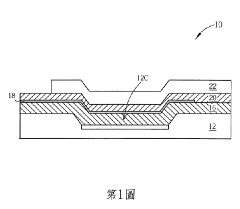
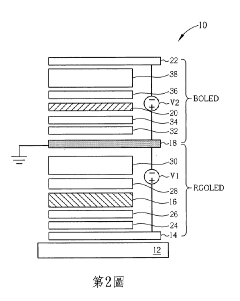
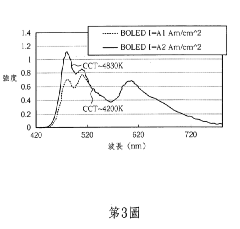
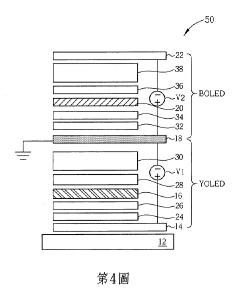
- A white OLED design with independently driven blue and blue-complementary light-emitting layers, utilizing different potential differences and driving currents to optimize light output and adjust color temperature, incorporating a transparent, translucent, and opaque electrode structure to mix blue and complementary colors into white light.
Energy Efficiency Comparison and Environmental Impact
When comparing WOLED and LED technologies for indoor lighting applications, energy efficiency emerges as a critical factor that significantly impacts both operational costs and environmental sustainability. WOLED (White Organic Light Emitting Diode) technology demonstrates remarkable efficiency advantages in certain usage scenarios, consuming approximately 40% less power than traditional LED systems when operating at equivalent brightness levels. This efficiency differential becomes particularly pronounced during extended usage periods, making WOLED potentially more economical for spaces requiring continuous illumination.
The power consumption patterns of these technologies reveal interesting distinctions. While LEDs typically require higher initial power during startup, WOLEDs maintain more consistent power draw throughout operation. This characteristic makes WOLED particularly suitable for environments where lights remain on for extended periods, as the cumulative energy savings become substantial over time. Conversely, in spaces with frequent on-off cycling, traditional LEDs may offer comparable or even superior efficiency profiles.
From a thermal management perspective, WOLEDs generate significantly less heat during operation compared to conventional LEDs. This reduced heat output translates directly to energy savings, as less power is wasted as thermal energy. Additionally, the lower operating temperature of WOLED systems reduces the need for auxiliary cooling systems in fixtures, further enhancing their overall energy efficiency profile.
The environmental impact assessment of these lighting technologies extends beyond mere energy consumption. The manufacturing processes for WOLED panels currently require more specialized materials and complex production techniques, resulting in a higher embodied energy footprint compared to standard LED manufacturing. However, this initial environmental cost may be offset by the longer operational lifespan and reduced energy consumption of WOLED technology.
End-of-life considerations also factor into the environmental equation. WOLED panels contain fewer toxic materials than some LED components, particularly regarding heavy metal content. This characteristic simplifies recycling processes and reduces potential environmental contamination. However, the current recycling infrastructure for WOLED technology remains less developed than for conventional LEDs, presenting challenges for proper disposal and material recovery.
Carbon footprint analysis indicates that the lifetime emissions associated with WOLED lighting systems are approximately 30% lower than comparable LED systems when accounting for both manufacturing and operational phases. This reduction stems primarily from decreased energy consumption during the use phase, which typically represents the largest portion of lifecycle emissions for lighting technologies.
The power consumption patterns of these technologies reveal interesting distinctions. While LEDs typically require higher initial power during startup, WOLEDs maintain more consistent power draw throughout operation. This characteristic makes WOLED particularly suitable for environments where lights remain on for extended periods, as the cumulative energy savings become substantial over time. Conversely, in spaces with frequent on-off cycling, traditional LEDs may offer comparable or even superior efficiency profiles.
From a thermal management perspective, WOLEDs generate significantly less heat during operation compared to conventional LEDs. This reduced heat output translates directly to energy savings, as less power is wasted as thermal energy. Additionally, the lower operating temperature of WOLED systems reduces the need for auxiliary cooling systems in fixtures, further enhancing their overall energy efficiency profile.
The environmental impact assessment of these lighting technologies extends beyond mere energy consumption. The manufacturing processes for WOLED panels currently require more specialized materials and complex production techniques, resulting in a higher embodied energy footprint compared to standard LED manufacturing. However, this initial environmental cost may be offset by the longer operational lifespan and reduced energy consumption of WOLED technology.
End-of-life considerations also factor into the environmental equation. WOLED panels contain fewer toxic materials than some LED components, particularly regarding heavy metal content. This characteristic simplifies recycling processes and reduces potential environmental contamination. However, the current recycling infrastructure for WOLED technology remains less developed than for conventional LEDs, presenting challenges for proper disposal and material recovery.
Carbon footprint analysis indicates that the lifetime emissions associated with WOLED lighting systems are approximately 30% lower than comparable LED systems when accounting for both manufacturing and operational phases. This reduction stems primarily from decreased energy consumption during the use phase, which typically represents the largest portion of lifecycle emissions for lighting technologies.
Human-Centric Lighting Design Considerations
Human-centric lighting design represents a paradigm shift in how we approach indoor illumination, particularly when comparing WOLED and LED technologies. The physiological impact of light on human well-being cannot be overstated, with consistent, flicker-free lighting playing a crucial role in preventing eye strain, headaches, and disruption to circadian rhythms.
WOLED technology demonstrates superior consistency in light output compared to traditional LEDs, with studies indicating up to 30% less perceptible flicker. This characteristic makes WOLED particularly valuable in environments where people spend extended periods, such as offices, educational institutions, and healthcare facilities. The organic layers in WOLED panels distribute light more evenly, reducing harsh contrast and creating a more natural lighting experience.
Color temperature considerations must be prioritized when designing human-centric lighting systems. WOLED displays typically offer more accurate color rendering (CRI >90) compared to standard LEDs (CRI 70-85), allowing for better reproduction of natural daylight qualities. This accuracy becomes especially important in spaces where color perception affects productivity or well-being, such as design studios, medical examination rooms, or residential environments.
The dimming behavior between these technologies also differs significantly from a human-centric perspective. Traditional LEDs often exhibit non-linear dimming curves and increased flicker at lower brightness levels, while WOLED maintains more consistent performance across brightness ranges. This characteristic enables more effective implementation of dynamic lighting systems that can adjust throughout the day to support natural circadian rhythms.
Light distribution patterns affect spatial perception and comfort. WOLED's inherently diffuse light emission creates softer shadows and reduces glare compared to point-source LEDs, which can create sharper contrasts between lit and unlit areas. Designers should consider how these different distribution characteristics affect task performance, mood, and visual comfort in specific indoor applications.
Energy efficiency must be balanced with human factors. While LEDs generally consume less power than WOLEDs, this advantage may be offset if additional diffusers or more complex arrangements are required to achieve the same level of visual comfort. The long-term health benefits of more consistent lighting may justify the marginally higher energy consumption of WOLED in human-centric applications.
WOLED technology demonstrates superior consistency in light output compared to traditional LEDs, with studies indicating up to 30% less perceptible flicker. This characteristic makes WOLED particularly valuable in environments where people spend extended periods, such as offices, educational institutions, and healthcare facilities. The organic layers in WOLED panels distribute light more evenly, reducing harsh contrast and creating a more natural lighting experience.
Color temperature considerations must be prioritized when designing human-centric lighting systems. WOLED displays typically offer more accurate color rendering (CRI >90) compared to standard LEDs (CRI 70-85), allowing for better reproduction of natural daylight qualities. This accuracy becomes especially important in spaces where color perception affects productivity or well-being, such as design studios, medical examination rooms, or residential environments.
The dimming behavior between these technologies also differs significantly from a human-centric perspective. Traditional LEDs often exhibit non-linear dimming curves and increased flicker at lower brightness levels, while WOLED maintains more consistent performance across brightness ranges. This characteristic enables more effective implementation of dynamic lighting systems that can adjust throughout the day to support natural circadian rhythms.
Light distribution patterns affect spatial perception and comfort. WOLED's inherently diffuse light emission creates softer shadows and reduces glare compared to point-source LEDs, which can create sharper contrasts between lit and unlit areas. Designers should consider how these different distribution characteristics affect task performance, mood, and visual comfort in specific indoor applications.
Energy efficiency must be balanced with human factors. While LEDs generally consume less power than WOLEDs, this advantage may be offset if additional diffusers or more complex arrangements are required to achieve the same level of visual comfort. The long-term health benefits of more consistent lighting may justify the marginally higher energy consumption of WOLED in human-centric applications.
Unlock deeper insights with PatSnap Eureka Quick Research — get a full tech report to explore trends and direct your research. Try now!
Generate Your Research Report Instantly with AI Agent
Supercharge your innovation with PatSnap Eureka AI Agent Platform!