

Interactive method for address resolution protocol
A technology of address resolution protocol and interaction method, which is applied in the field of address resolution protocol interaction, can solve the problems of being stolen, client PCARP spoofing attack, shared key is easy to lose, etc., and achieves the effect of preventing ARP attack
Patent Information
- Authority / Receiving Office
- CN · China
- Patent Type
- Patents(China)
- Current Assignee / Owner
- Publication Date
- 2012-07-25
Smart Images
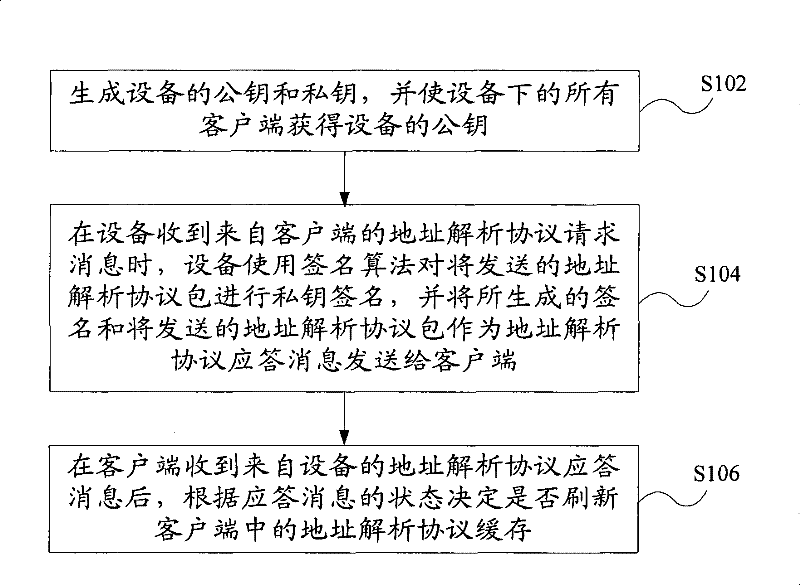
Figure 1 
Figure 2 
Figure 3
Abstract
Description
technical field
[0001] The present invention relates to network security, and more specifically, relates to an address resolution protocol interaction method. Background technique
[0002] Ethernet is a broadcasting environment, Address Resolution Protocol (ARP, Address Resolution Protocol) is a protocol on Ethernet that utilizes the IP address of a host to determine its physical address. There is no security mechanism for ARP addresses. Attackers can use counterfeit ARP packets to answer ARP requests, or even actively send counterfeit gratuitous ARP packets, so that the host caches wrong ARP information. Such hosts will send IP packets to illegal MAC addresses, and attackers can achieve the purpose of man-in-the-middle attacks or denial-of-service attacks.
[0003] IP and MAC binding tables can be used on network devices to prevent ARP tampering. Static binding is also required on the PC. If you need to change the IP of the host or gateway, you must change the bindings ...
Examples
Embodiment Construction
[0026] The preferred embodiments of the present invention will be described below in conjunction with the accompanying drawings. It should be understood that the preferred embodiments described here are only used to illustrate and explain the present invention, and are not intended to limit the present invention.
[0027] figure 1 is a flowchart of the method according to the invention.
[0028] Such as figure 1 As shown, the method includes the following steps:
[0029] S102, generating a public key and a private key of the device, and enabling all clients under the device to obtain the public key of the device;
[0030] S104. When the device receives the address resolution protocol request message from the client, the device uses a signature algorithm to perform a private key signature on the address resolution protocol packet to be sent, and uses the generated signature and the address resolution protocol packet to be sent as an address resolution A protocol reply messag...