
Method for quantitating liquid-state <31>P nuclear magnetic resonance (phosphorus-31 NMR) by use of methylenediphosphonic acid (MDP) external standard method
A technology of methylene diphosphonic acid and nuclear magnetic resonance, which is applied to the analysis by nuclear magnetic resonance and the preparation of test samples, etc. It can solve the problems of long relaxation time, great influence on test results, and large chemical shift deviation. , to achieve the effect of reducing peak width, avoiding the interference of coexisting ions, and improving accuracy
Patent Information
- Authority / Receiving Office
- CN · China
- Current Assignee / Owner
- Publication Date
- 2015-05-20
Smart Images
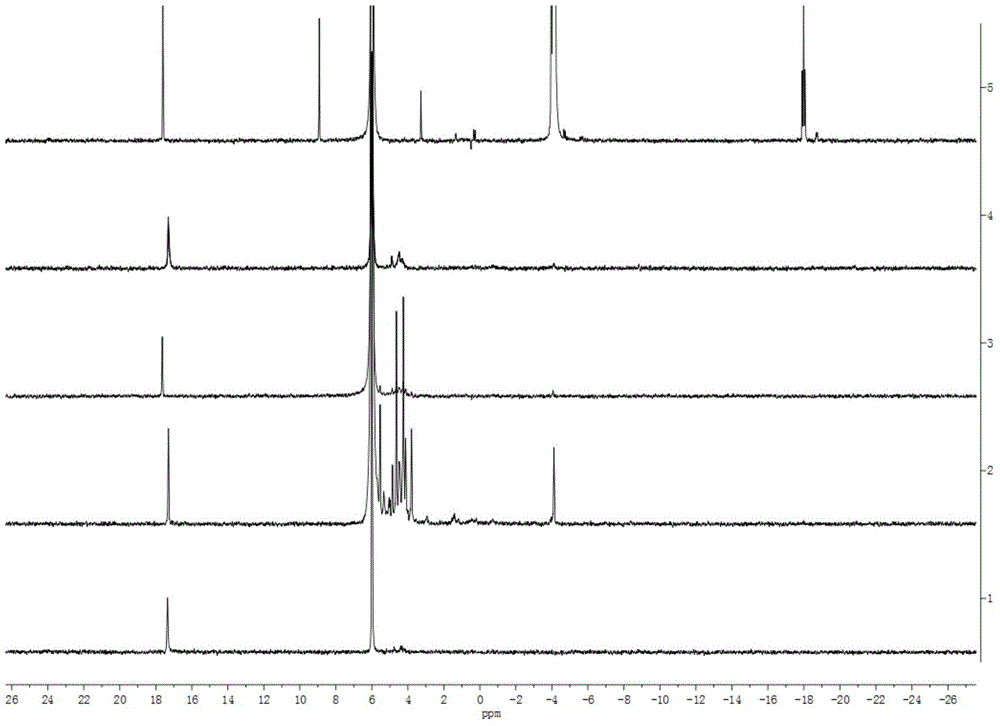
Figure 1 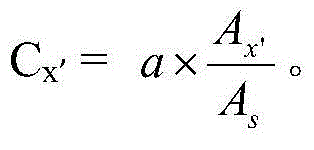
Figure 2 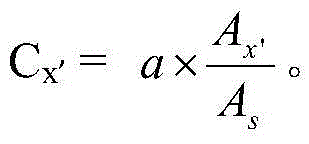
Figure 3
Abstract
Description
technical field
[0001] The present invention relates to 31 Determination of the content of phosphorus components in environmental samples by P nuclear magnetic resonance, especially involving a method for quantifying liquids using methylene diphosphonic acid external standard method 31 Methods of P NMR. Background technique
[0002] Phosphorus (P) is one of the macroelements in the soil, a nutrient element necessary for the growth and development of organisms, and a limiting element that may cause eutrophication of water bodies (lakes, reservoirs, rivers, etc.). The average content of phosphorus in the earth's crust is 1.2g kg -1 , 95% of which exist in apatite minerals. An in-depth understanding of the content of phosphorus components in various environmental samples is of great significance for clarifying the biogeochemical cycle of phosphorus. According to the different extraction capabilities of the extractants for phosphorus, traditional chemical classification meth...
Examples
preparation example Construction
[0020] (1) Preparation of casing system: Weigh a certain mass of methylene diphosphonic acid crystals, dissolve them in deionized water to prepare a concentration of 10-20mmol L -1 methylene diphosphonic acid aqueous solution; take a flat and uniform glass spotting capillary tube with a length of 100 mm and an inner diameter of 0.5 mm, sinter one end of it with a flame, and inject the methylene diphosphonic acid aqueous solution into the capillary with a syringe, add When the liquid surface is about 1cm away from the upper end of the capillary, it is permanently sealed by flame sintering. Accurately weigh 0.034g of potassium dihydrogen phosphate crystals and dissolve in 25mL of heavy water to prepare 10mmol L -1 The heavy aqueous solution of potassium dihydrogen phosphate; transfer the glass spotting capillary containing methylene diphosphonic acid and the heavy aqueous solution of potassium dihydrogen phosphate to the NMR tube to form a sleeve system.
[0021] Preparation of...
Embodiment
[0027] Weigh a certain mass of methylene diphosphonic acid crystals and dissolve them in deionized water to prepare a concentration of 10-20mmol L -1 Aqueous solution of methylene diphosphonic acid. Accurately weigh 0.034g of potassium dihydrogen phosphate crystals and dissolve in 25mL of heavy water to prepare 10mmol L -1 heavy aqueous solution of potassium dihydrogen phosphate; take a uniform and flat glass sampling capillary with a length of 100mm and a diameter of 1mm, sinter one end of it with a flame, and then add 10mmol L -1 The aqueous solution of methylene diphosphonic acid was injected into the capillary with a syringe, added to the liquid level about 1 cm from the upper end of the capillary, and permanently sealed by flame sintering as an external standard. Weigh 5.000g NaOH and 9.306g NaOH 2 EDTA, dissolved in 400ml deionized water, and finally dilute to 500mL. Weigh 10.000g NaOH solid and 0.4653g NaOH 2 EDTA powder was dissolved in 25mL deionized water to obta...