
Mycelium active substance of cicadae and its composition for protecting nerve cells
A technology of active substances and nerve cells, applied in the direction of fungi, medical raw materials derived from arthropods, etc., can solve problems such as no obvious characteristics, improve neurodegenerative symptoms, treat or prevent high neurodegeneration and its complications, improve neurotoxic effects
- Summary
- Abstract
- Description
- Claims
- Application Information
AI Technical Summary
Problems solved by technology
Method used
Image

Examples
Embodiment 1
[0034] (1) The source of the organism
[0035] The big cicada flower (Cordyceps cicadae) mycelium used in the present embodiment can be purchased from the big cicada flower (Cordyceps cicadae) mycelium BCRC MU30106 (deposit date: 2013) of the Food Industry Development Research Institute deposited in Taiwan, China On November 25th); the little cicada flower (Cordyceps sobolifera) mycelium system used can be purchased from the little cicada flower (Cordyceps sobolifera) mycelium BCRC37801 (deposit date: March 12, 2010), but the active substance of the cicadae mycelium described in the present invention is not limited to be obtained by this strain.
[0036] (2) Fermentation of organisms
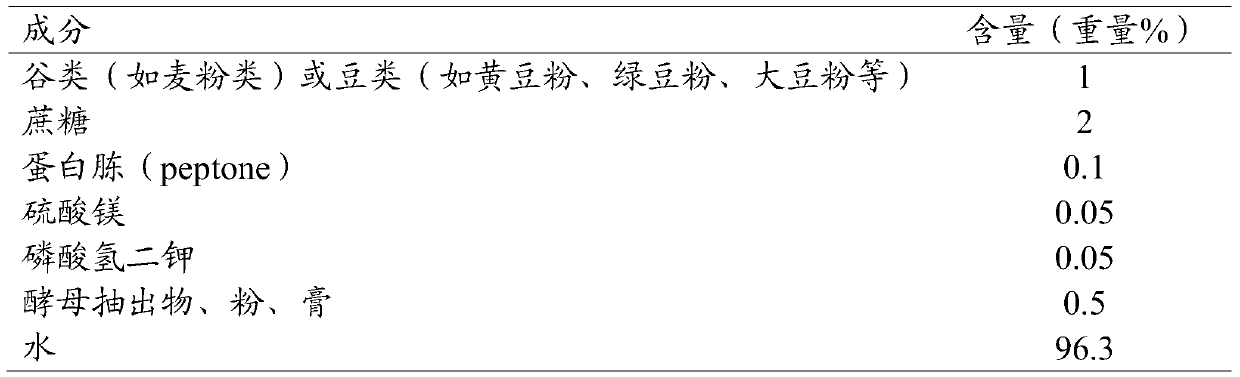
[0037] The liquid culture of cicadae mycelium active substance comprises that cicadae mycelium is inoculated on the plate, uses potato dextrin medium (Potato Dextroso Agar, PDA) at suitable temperature such as 15-35 ℃ (preferably about 25 After culturing for 5 days to two weeks at ℃), the myce...
Embodiment 2
[0044] Analysis of the neurotoxic injury and protection of nerve cells by the active substance of the cicadae mycelium described in Example 1.
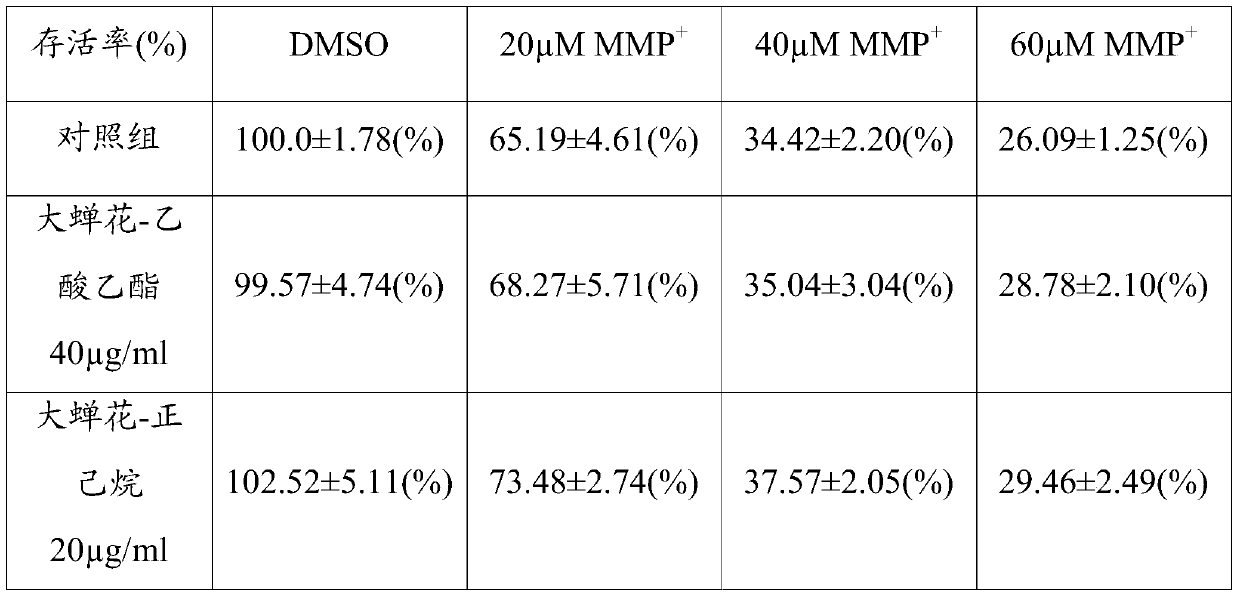
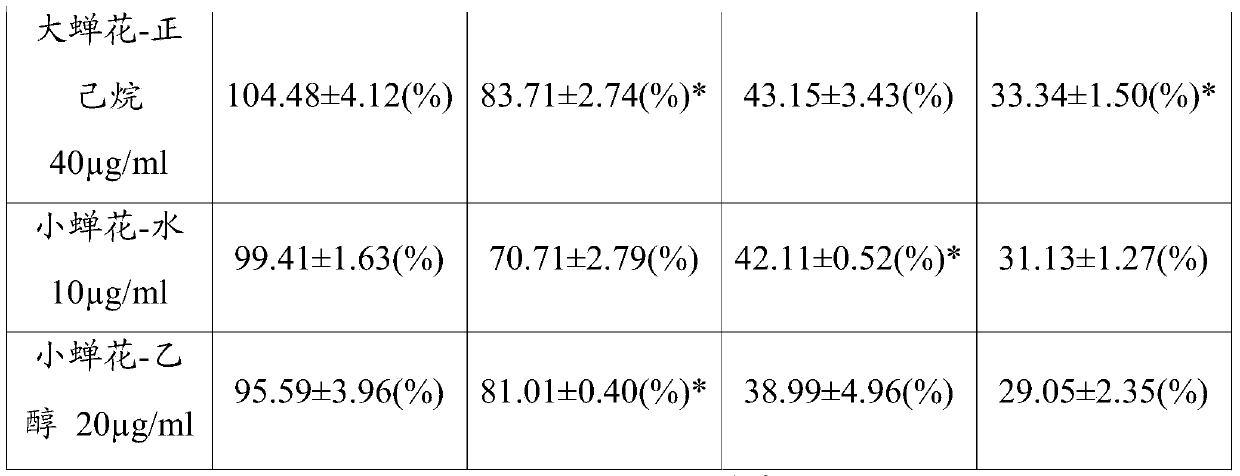
[0045] 1. Antagonize MPP + NG108-15 cell line toxicity
[0046] Cell lines of NG108-15 were laid at a density of 2×10 4 cells / ml-well 96-well flat-bottomed tissue culture dish; after 24 hours, each cell was properly pasted on it; finally, these cells were tested with a test sample (active substance of cicadae mycelium). The detection samples used dimethyl sulfoxide (DMSO) as a solvent, and were dissolved in DMSO at concentrations of 10, 20 and 40 mM, respectively. The concentration of DMSO in the medium (medium) was maintained at no more than 1 μl / ml to ensure that it would not affect the growth of NG108-15 cells; after the cells were treated with the test samples for 2 days, the concentrations of 20, 40, and 60 μM MPP were respectively + (1-methyl-4-phenylpyridine) treated NG108-15 cells; four days later, remove the medium and add...
PUM
 Login to View More
 Abstract
Description
Claims
Application Information
 Login to View More