
Lung adenocarcinoma-related gene signatures and application thereof
A lung adenocarcinoma and gene technology, applied in the field of lung adenocarcinoma-related gene labeling, to achieve the effect of reducing medical costs and avoiding overdose
Patent Information
- Authority / Receiving Office
- CN · China
- Patent Type
- Applications(China)
- Current Assignee / Owner
- Publication Date
- 2018-04-06
Smart Images
Figure 1 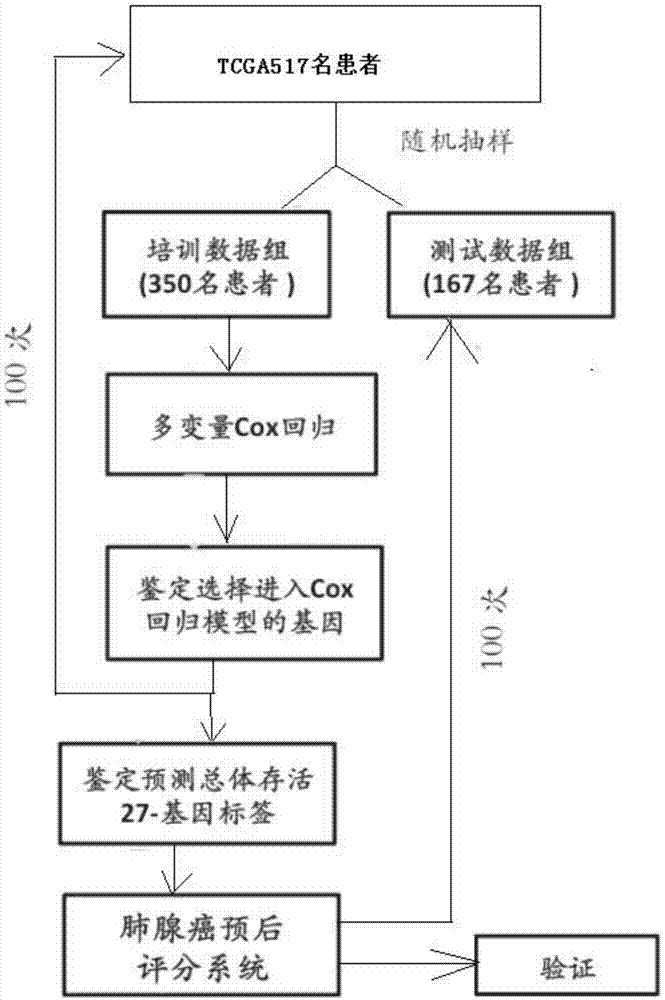
Figure 2 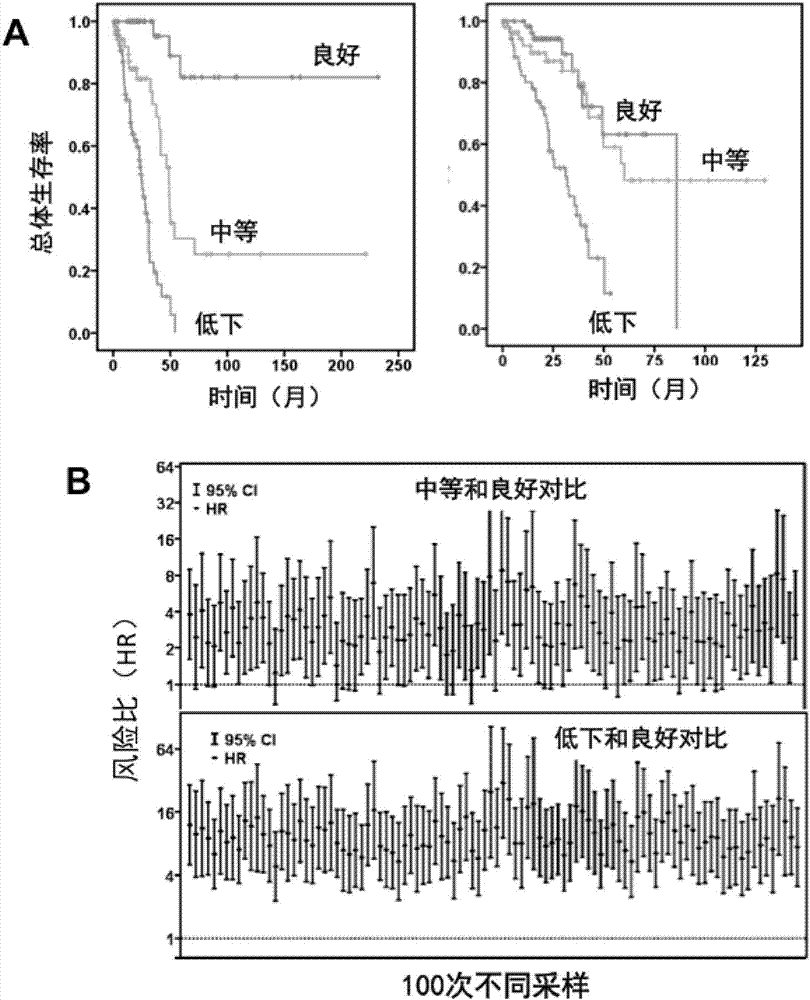
Figure 3
Abstract
Description
technical field
[0001] The invention belongs to the technical field of tumor gene detection, and in particular relates to a group of lung adenocarcinoma-related gene tags and applications thereof. Background technique
[0002] Lung cancer is the main cause of cancer-related death in the world. China, which accounts for about 20% of the world's total population, currently accounts for one-third of the world's lung cancer deaths. Many factors have contributed to the dramatic increase in lung cancer in China, especially air pollution and the presence of a large smoking population. Non-small cell lung cancer (NSCLC) is the most common cancer affecting the lung, with adenocarcinoma being the most common subtype. Combination chemotherapy prolongs life in patients with advanced lung cancer. Survival can be further prolonged by targeted agents, anti-angiogenic and epidermal growth factor receptor inhibitors. Lung cancer treatment is rapidly moving towards an era of personalized m...
Examples
Embodiment 1
[0030] System validation using TCGA public database of lung adenocarcinoma patients:
[0031] The prognostic scoring system was applied to 517 TCGA lung adenocarcinoma patients with survival data ( image 3 ). Prognostic scores were used to predict the probability of survival for each individual patient. We divided the patients into three groups according to the 27-gene signature prognostic score, namely, good prognosis, intermediate prognosis and poor prognosis. Such as image 3 As shown in B, in the two exemplary test groups, the overall survival rate of patients carrying the "good" prognostic gene signature was significantly longer than that of the "low" group (HR confidence interval higher than "1") (Fig. 3B, bottom panel) . In the former, more than 60% of patients are still alive after 75 months, while in the latter, all patients die within 50 months or only 10% of patients survive.
Embodiment 2
[0033] Survival analysis of patients with lung adenocarcinoma using the GSE public database:
[0034] Using the same method, we verified the application value of the prognostic scoring system in four public databases of lung adenocarcinoma, GSE42127, GSE31210, GSE37745 and GSE30219 ( Figure 4 and Table 3). Different from the cancer gene database TCGA established by RNA sequencing, the tissue gene expression values of these databases are determined by Affymetrix chip technology. Figure 4 The Kaplan-Meier overall survival curve of A shows that the scoring system of the present invention can successfully predict the prognosis of lung adenocarcinoma patients in the above-mentioned database. Finally, we used Cox regression to understand whether the prognostic score of the present invention is independent of other clinical information including patient age, gender and tumor stage (Table 3), and concluded that our prognostic score was independently significantly correlated with ...
Embodiment 3
[0036] Comparing the performance of other lung adenocarcinoma prognostic gene signatures with the 27-gene signature of the present invention:
[0037] The literature has shown the correlation between multiple gene groups and the prognosis of lung adenocarcinoma by using the method of gene expression difference. A key question is whether our 27-gene scoring system outperforms these genomic signatures. Using the same specimen or method, we used three previously reported lung adenocarcinoma gene signatures to calculate prediction scores, including a 15-genome (ZhuCQ et al., Prognostic and predictive gene signature for adjuvant chemotherapy inresected non-small-cell lung cancer.Journal of Clinical Oncology.2010; 28:4417-24), 14-gene signature (Kratz JR et al., A practical molecular assay to predict survival in resected non-squamous, non-small cell lung cancer: development and international validation studies.Lancet 2012; 379:823-32) and 31-gene signature (WistubaII et al., Valida...