
Intrajugular balloon catheter
a balloon catheter and intrajugular technology, applied in balloon catheters, medical science, surgery, etc., can solve the problems of reducing the supply of blood to the brain, affecting the blood supply of the brain, air entering the bloodstream and the lungs, etc., and achieve the effect of successfully and efficiently avoiding problems
- Summary
- Abstract
- Description
- Claims
- Application Information
AI Technical Summary
Benefits of technology
Problems solved by technology
Method used
Image

Examples
Embodiment Construction
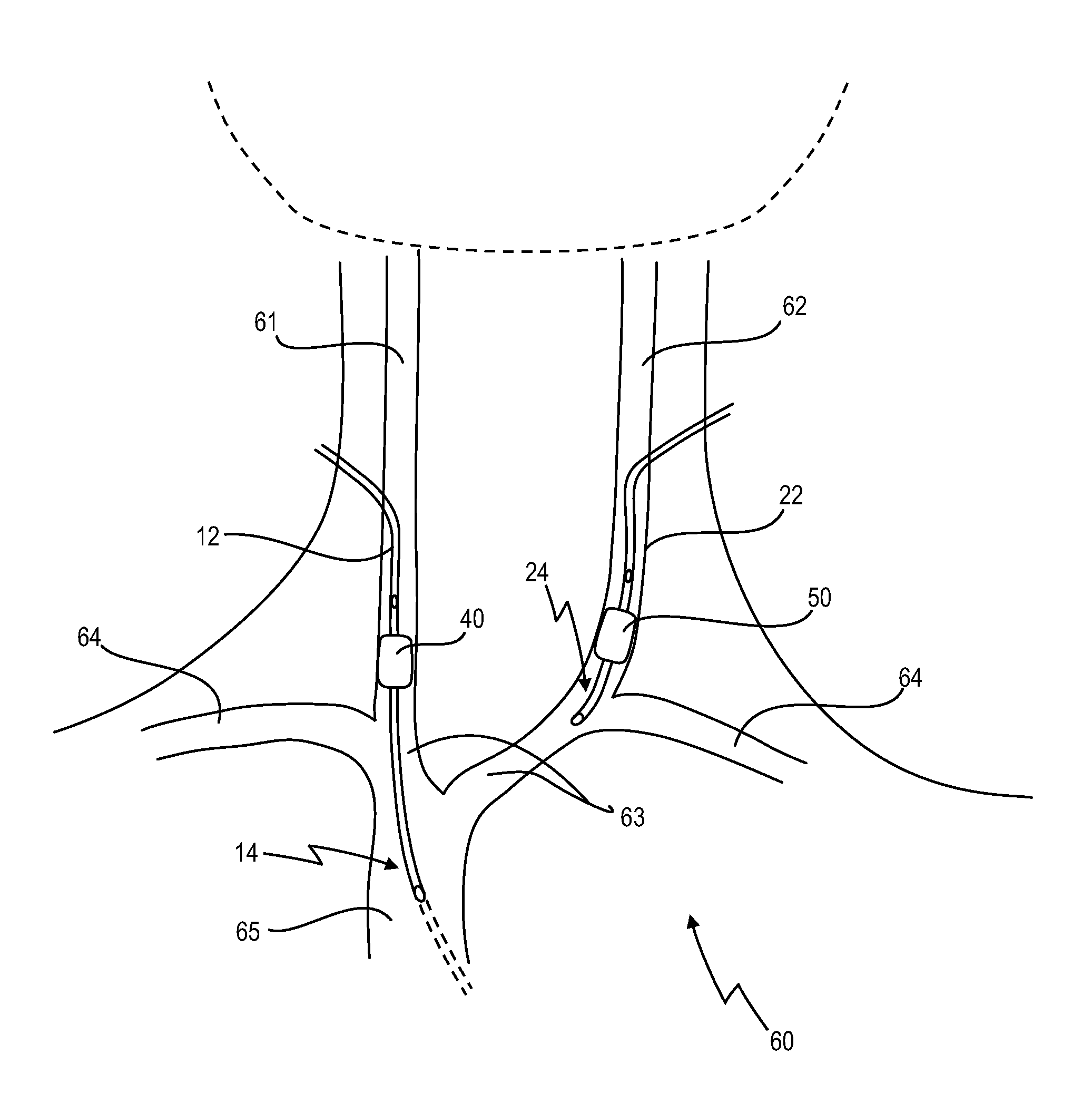
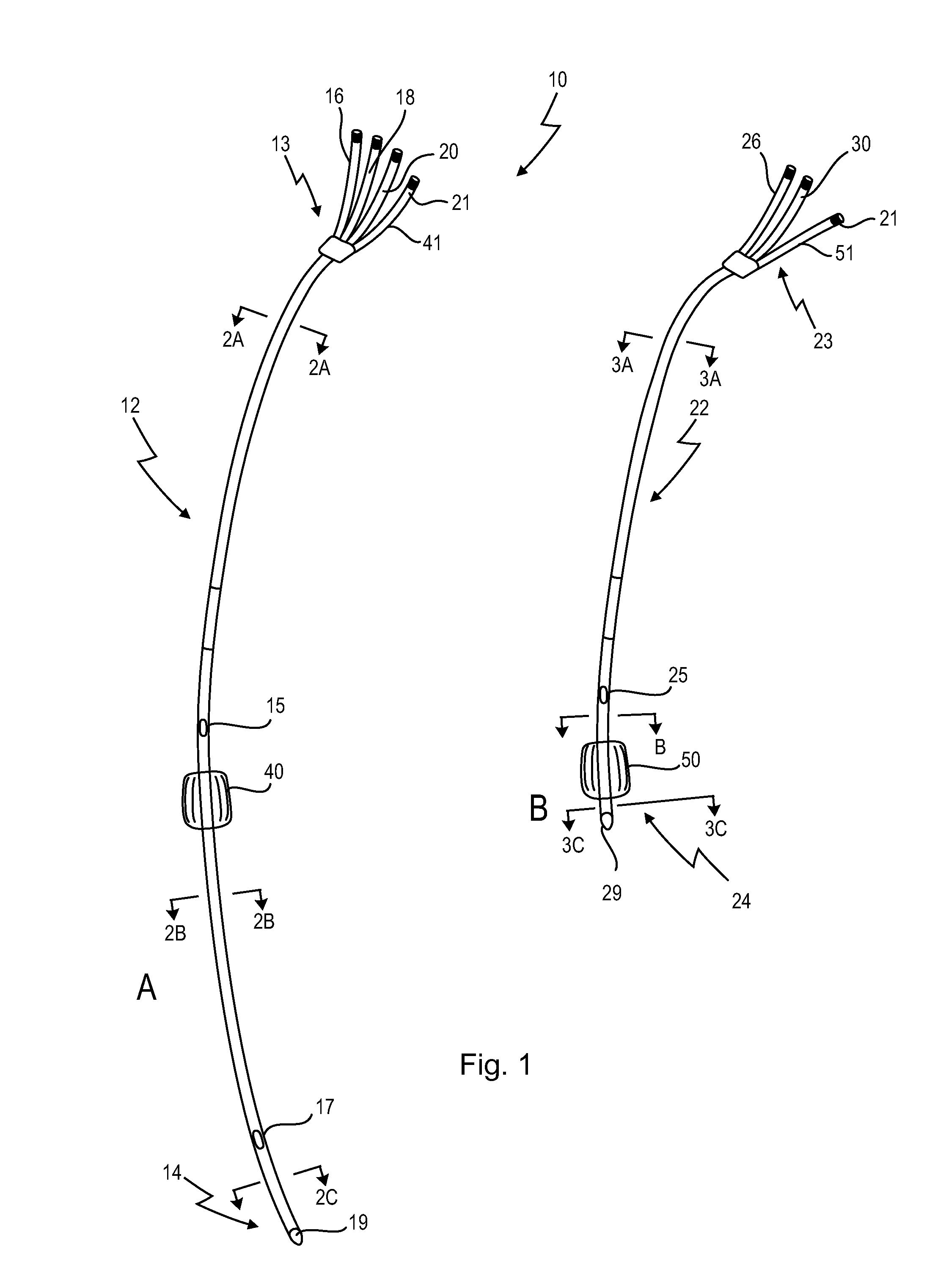
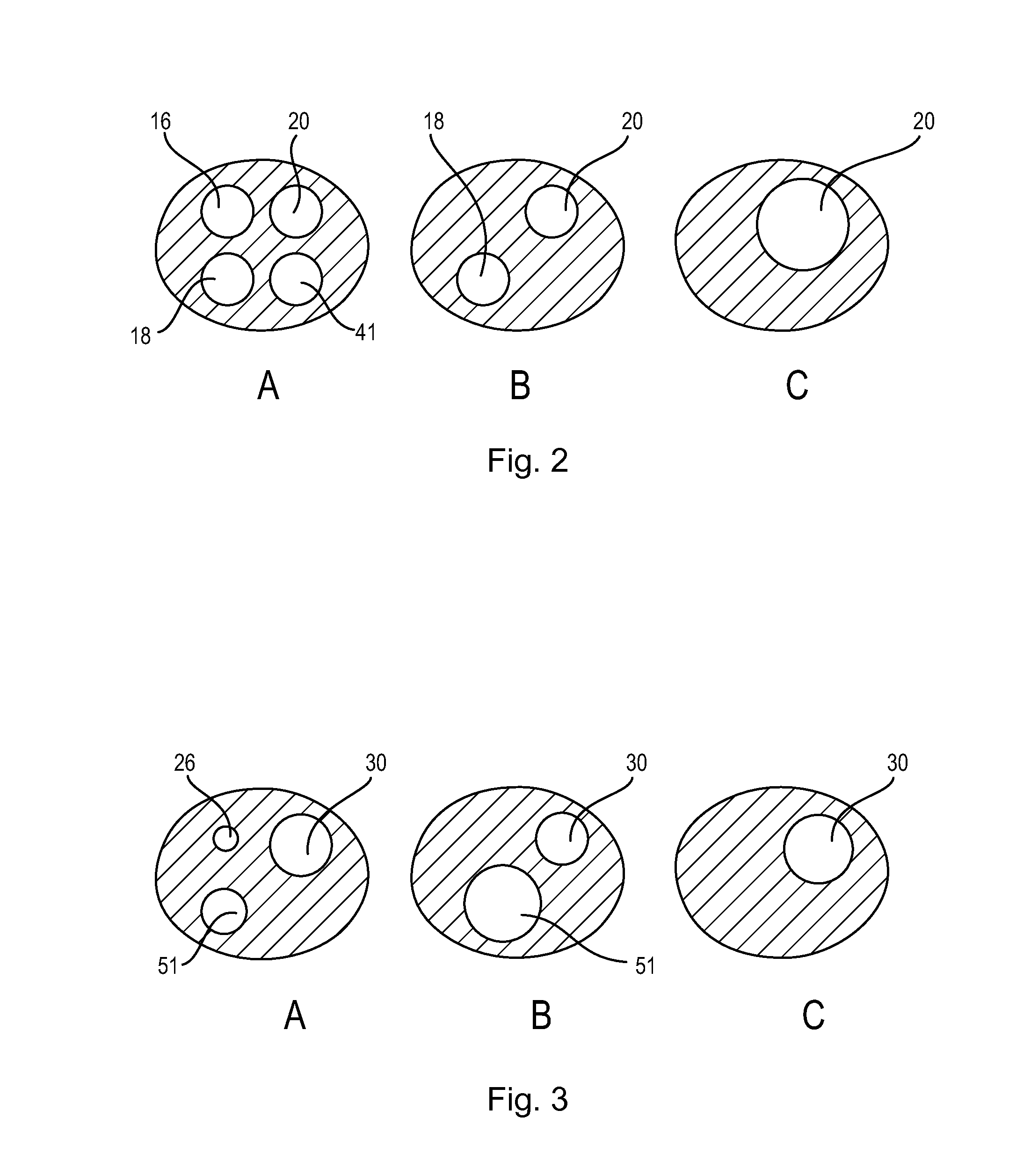
[0039]In FIGS. 1 to 4, identical features are designated by identical reference signs. In FIG. 1, reference sign 10 designates as a whole an illustrative embodiment of the catheter system according to the invention. FIG. 1A shows a first catheter main body 12, and FIG. 1B shows a second catheter main body 22. Both catheter main bodies 12 and 22 have a longitudinal axis, a proximal end 13, 23, respectively, and a distal end 14, 24, respectively. At the proximal end 13, 23, respectively, reference sign 21 schematically designates, for example in each case on one of the lumens, a connector 21 via which the lumens 16, 18, 20, 26, 30, 41 and 51, described below, of the catheter main bodies 12 and 22 can be connected in different ways. The lumens 16, 18 and 20 and 26 and 30 can be used, for example, for intravascular pressure measurement, drug delivery, liquid delivery and blood sampling.
[0040]FIG. 1A shows a proximal opening 15 of the first catheter main body 12, which proximal opening 1...
PUM
 Login to View More
 Abstract
Description
Claims
Application Information
 Login to View More