Tourniquet cuff with a tightness indicator

a technology of tightness indicator and cuff, which is applied in the field of cuffs, can solve the problems of poor exsanguination, partial or total loss of occlusion of arteries and veins, and venous occlusion

US20150080944A1Active Publication Date: 2015-03-19ZIMMER SURGICAL
4 Cites 0 Cited by

Patent Information

Authority / Receiving Office
US · United States
Patent Type
Applications(United States)
Current Assignee / Owner
Publication Date
2015-03-19

Smart Images

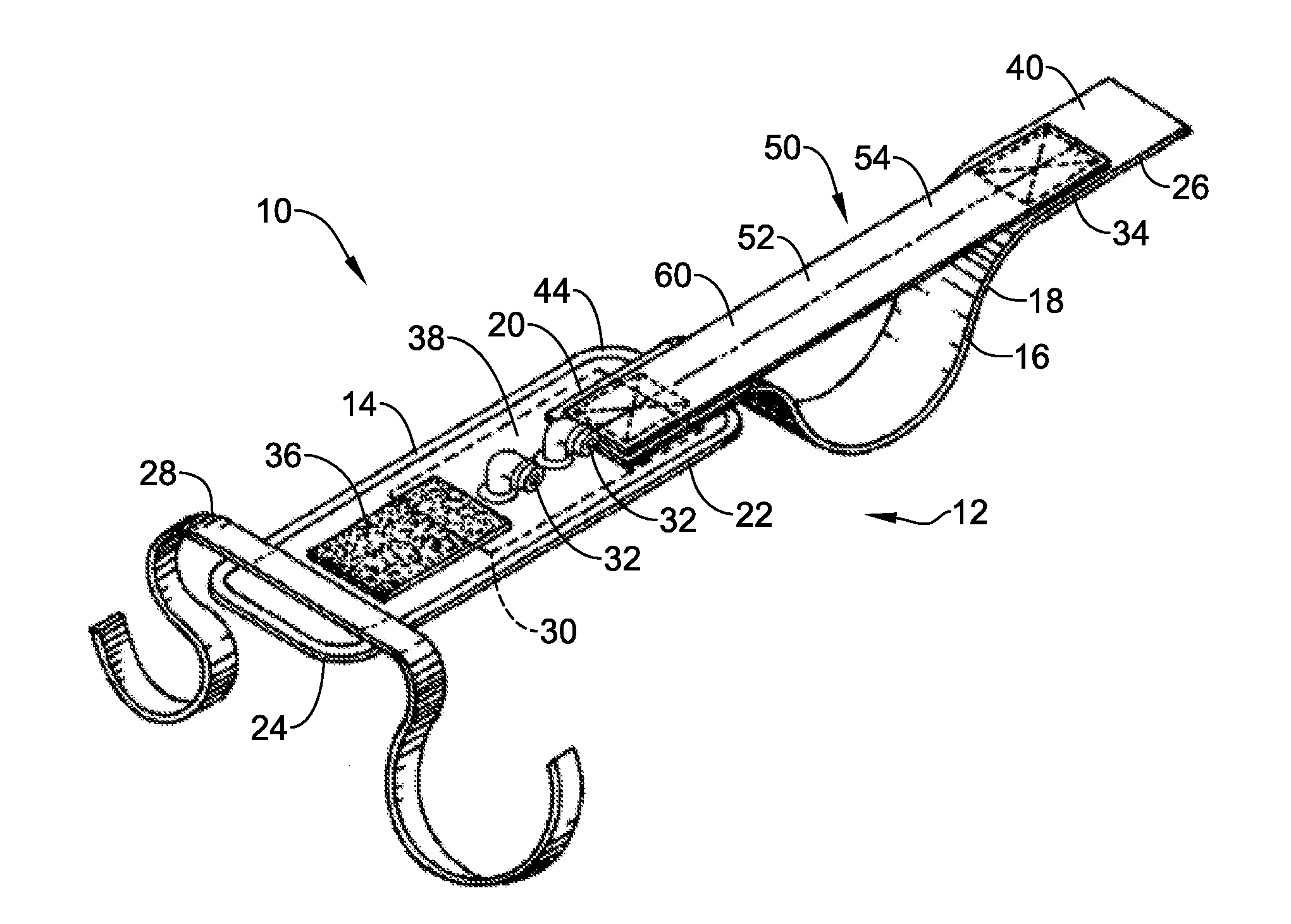
  • Figure 1
    Figure 1
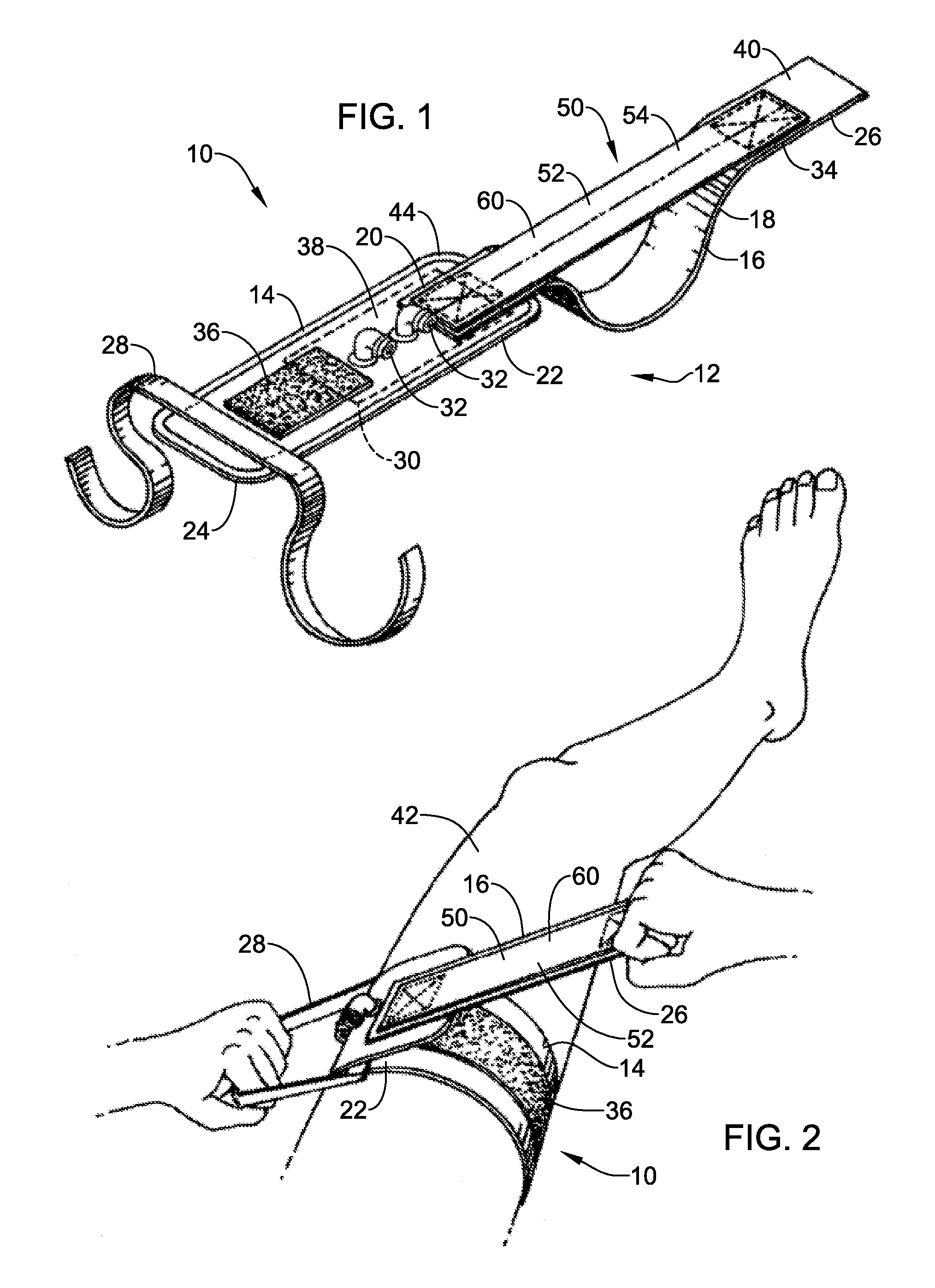
  • Figure 2
    Figure 2
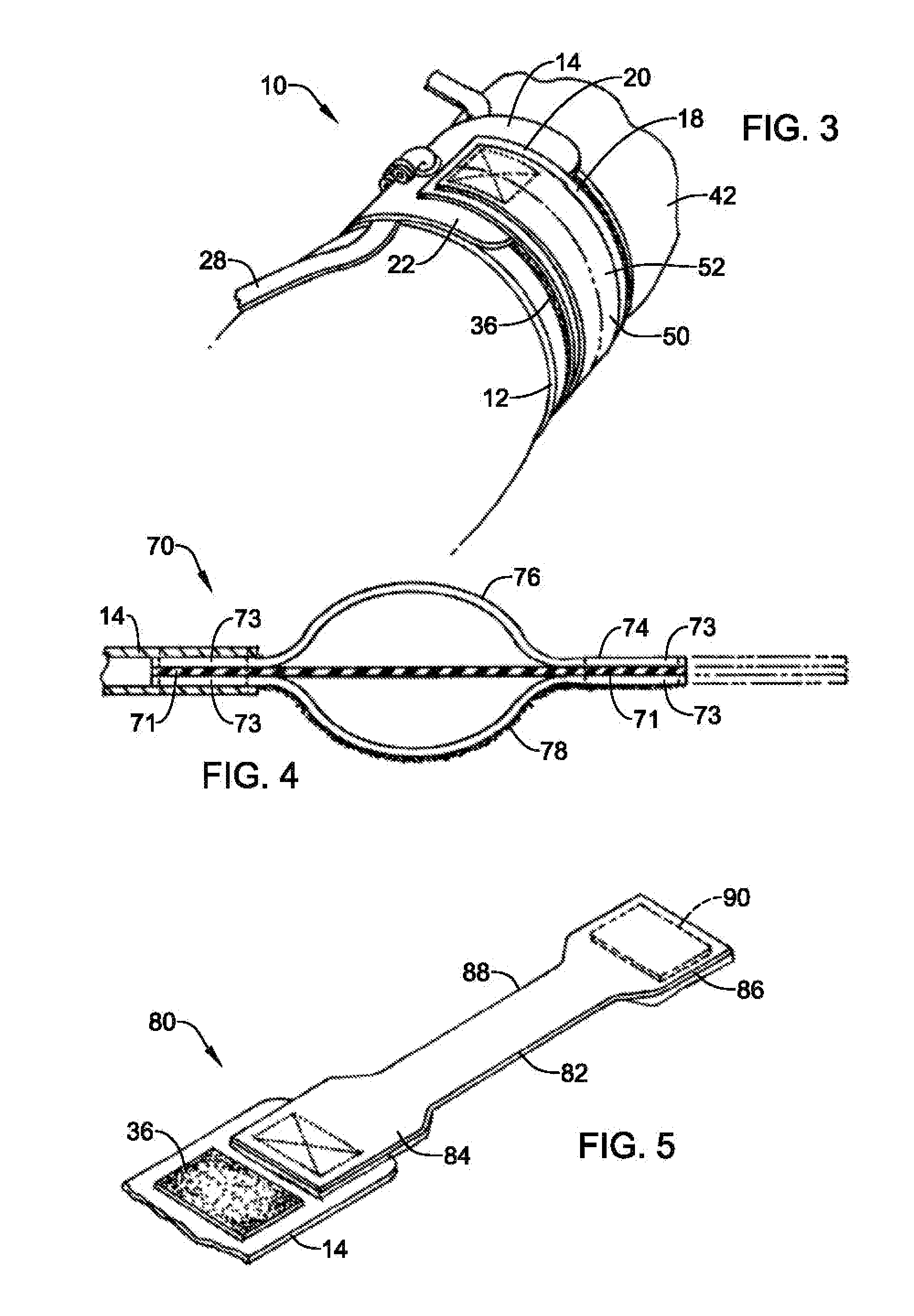
  • Figure 3
    Figure 3
Patent Text Reader

Abstract

A tourniquet cuff has a body configured for being wrapped around a limb. The body has an unpressurized state and a pressurized state. A securing portion on the body is releasably engageable to the body. The cuff also has an indicator that operates in response to movement of the securing portion for locating where the securing portion engages the body in order to apply a predetermined amount of force sufficient to secure the body to a limb without causing significant venous occlusion at the limb when the body is in the unpressurized state.
Need to check novelty before this filing date? Find Prior Art

Description

CROSS-REFERENCE TO RELATED APPLICATIONS

[0001] This application is a continuation of U.S. application Ser. No. 12 / 185,270 filed Aug. 4, 2008, which claims the benefit of U.S. Provisional Application No. 60 / 968,652, filed Aug. 29, 2007, the entire contents of which are hereby incorporated by reference.FIELD OF THE INVENTION

[0002] The present invention is directed to tourniquet cuffs that provide arterial and venous occlusion in the limb of a living being and, more particularly, to tourniquet cuffs with structure to indicate the proper application of the tourniquet cuff on the limb.BACKGROUND OF THE INVENTION

[0003] Tourniquet cuffs are wrapped around the limb of a living being in order to keep blood out of the limb and / or to keep local anesthesia from escaping the limb. The cuffs are used for many different medical procedures performed on the limb such as orthopaedic surgeries to name one example. The conventional inflatable tourniquet cuffs are snuggly wrapped around the limb and secured...

Examples

Embodiment Construction

[0015]Referring to FIGS. 1-3, an inflatable tourniquet cuff 10 has a body 12 with a main member 14 and a securing portion 16 that includes a securing strap 18. The strap 18 has an attachment end portion 20 connected to an end portion 22 of the main member 14 at an intermediate portion 44 of the body 12. The body 12 has a proximal end portion 24 formed by the main member 14 and that is placed against a limb 42 for a medical procedure on the limb. A distal end portion 26 of the body 12 is formed by the securing strap 18 while a grasping ribbon 28 extends transversely along the proximal end portion 22 of the main member 14. The main member 14 also has one or more fluid-tight bladders, bags, or containers 30 (shown in dashed line) with one or more ports 32 for connection to a tourniquet machine that controls the air supply and pressure from and to the bladder 30 in order to pressurize and unpressurize the tourniquet cuff 10.

[0016]In one form, the main member 14 includes outer layers of ...