
Protective Headgear
a headgear and protective technology, applied in the field of head protection, can solve the problems of significant risk of concussion-type injuries in the jaw of the chin, and achieve the effects of minimal distraction or discomfort, and energy-absorbing and dissipation properties
- Summary
- Abstract
- Description
- Claims
- Application Information
AI Technical Summary
Benefits of technology
Problems solved by technology
Method used
Image

Examples
Embodiment Construction
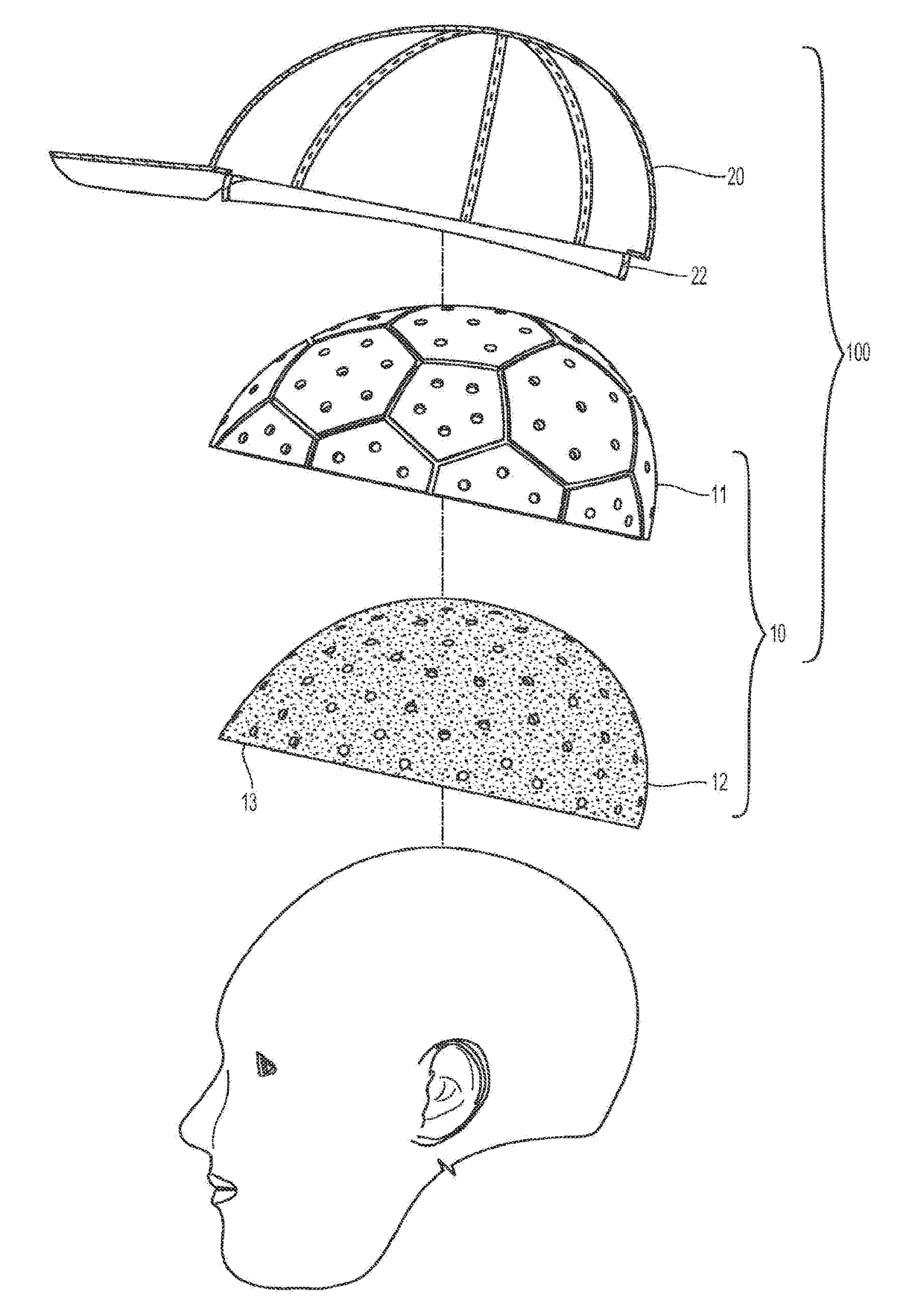
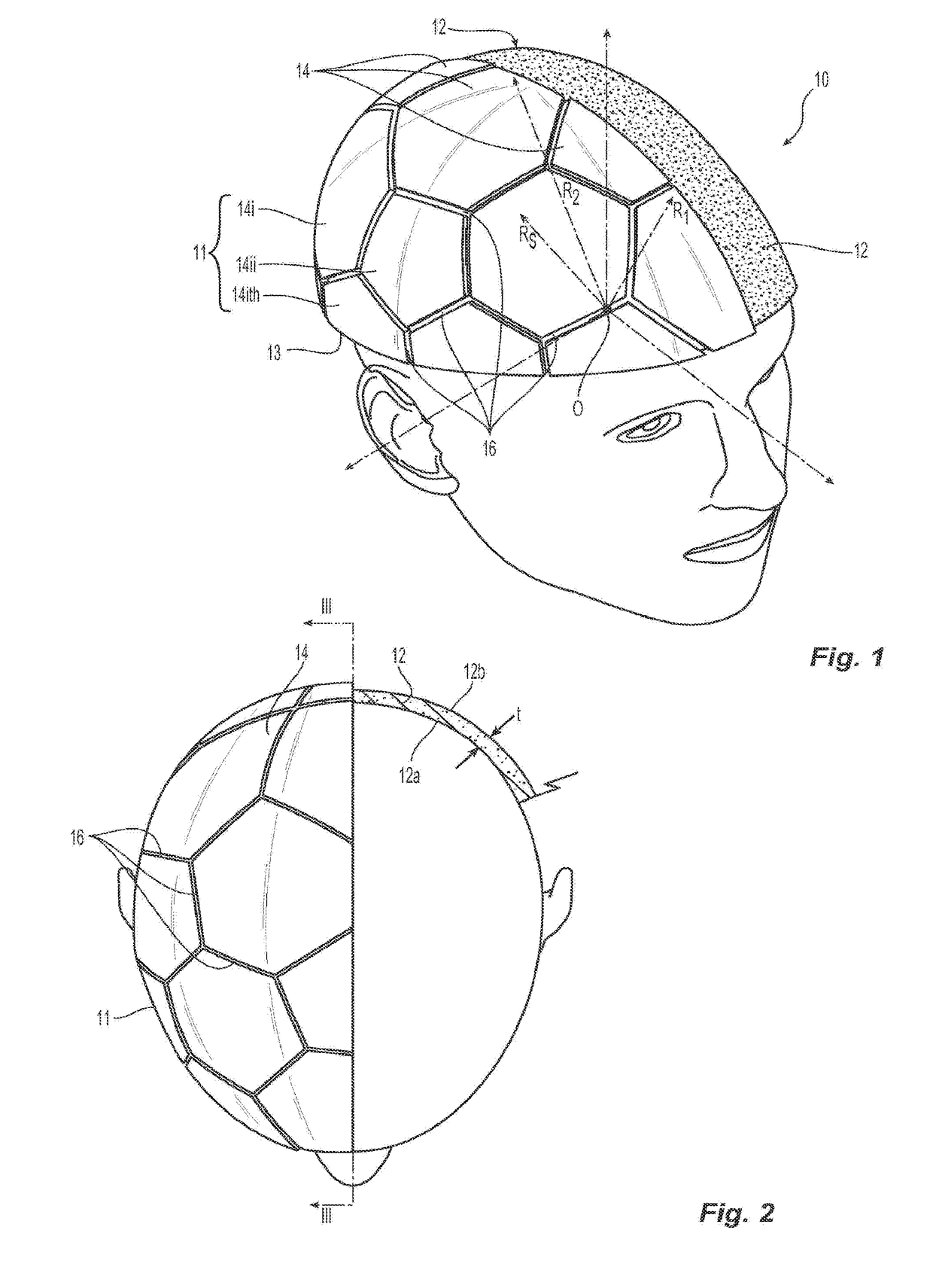
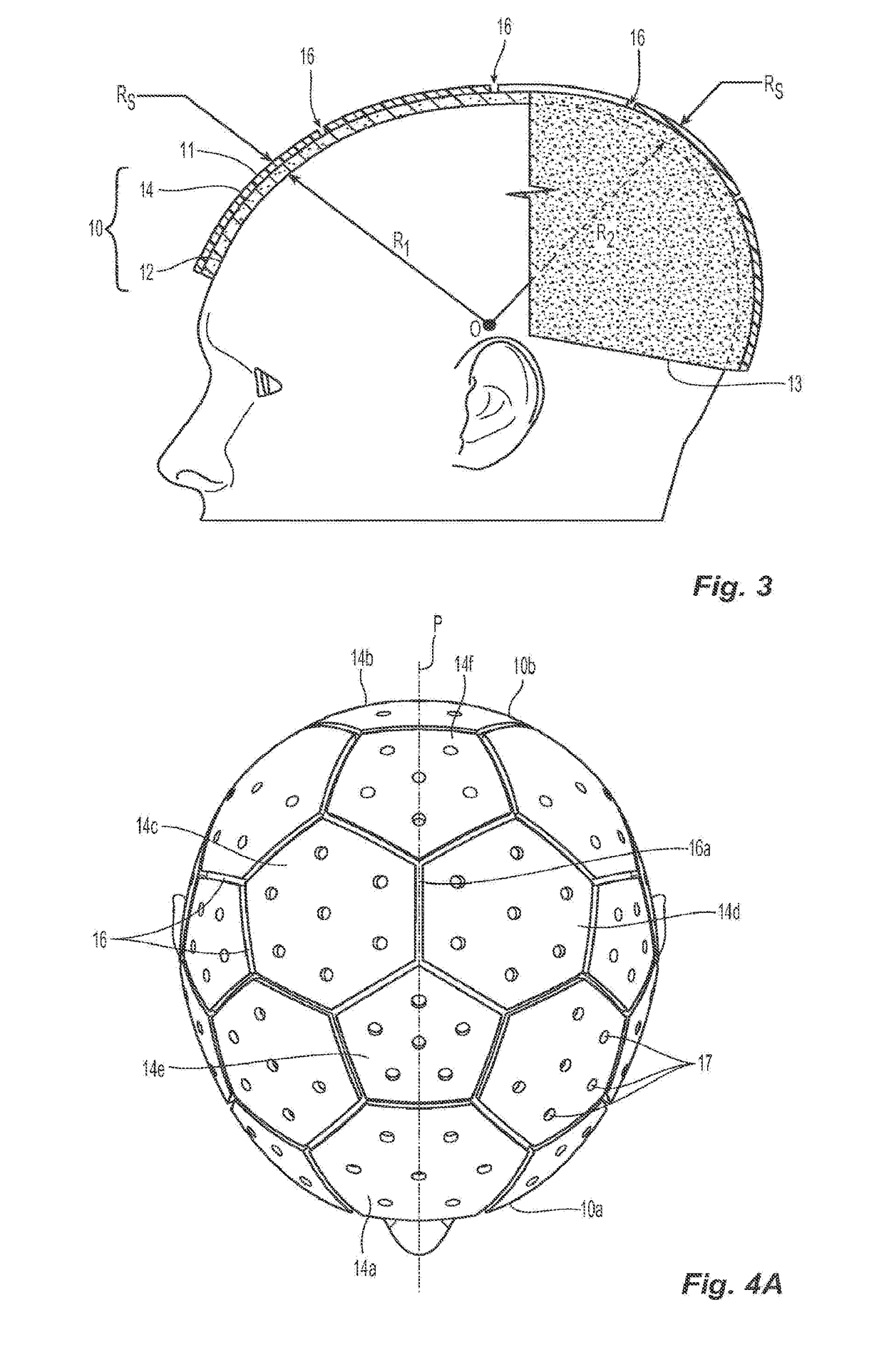
[0019]Shown in FIGS. 1-3 are views of one preferred embodiment of a protective device 10 for a head of an individual person. The device 10 preferably defines a surface area of protection which covers the frontal temporal regions of the head or skull of the individual and more preferably protects the frontal, temporal, occipital and parietal regions of the skull. Accordingly, the device is preferably configured as a cap 10 to protect the front, top, sides and back of the head from impact injuries and rebound effects of high speed objects as seen for example, in sports such as baseball as previously described. The cap 10 can be configured as a skull cap, for example, as shown; or alternatively can be configured as a baseball-style cap with a visor; or further in the alternative, the cap can be configured with any other type of brim to provide a desired hat configuration. Preferred embodiments of the device 10 provide head protection against a high-speed moving object, such as for exam...
PUM
 Login to View More
 Abstract
Description
Claims
Application Information
 Login to View More