
Snore reducing mouthpiece
a mouthpiece and snoring technology, applied in the field of mouthpieces, can solve problems such as unconsciously splitting of the lips, and achieve the effect of reducing or eliminating snoring
- Summary
- Abstract
- Description
- Claims
- Application Information
AI Technical Summary
Benefits of technology
Problems solved by technology
Method used
Image

Examples
Embodiment Construction
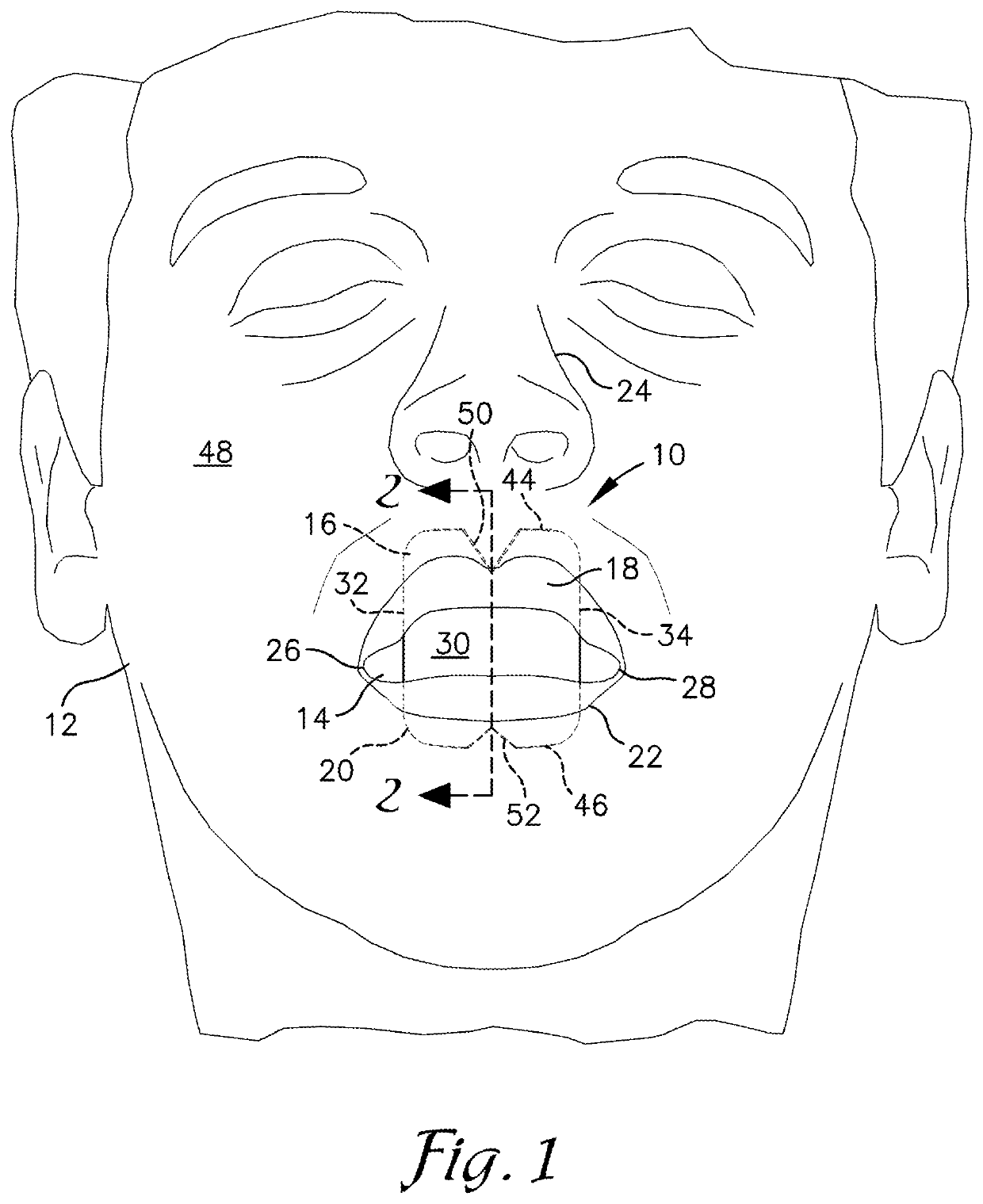
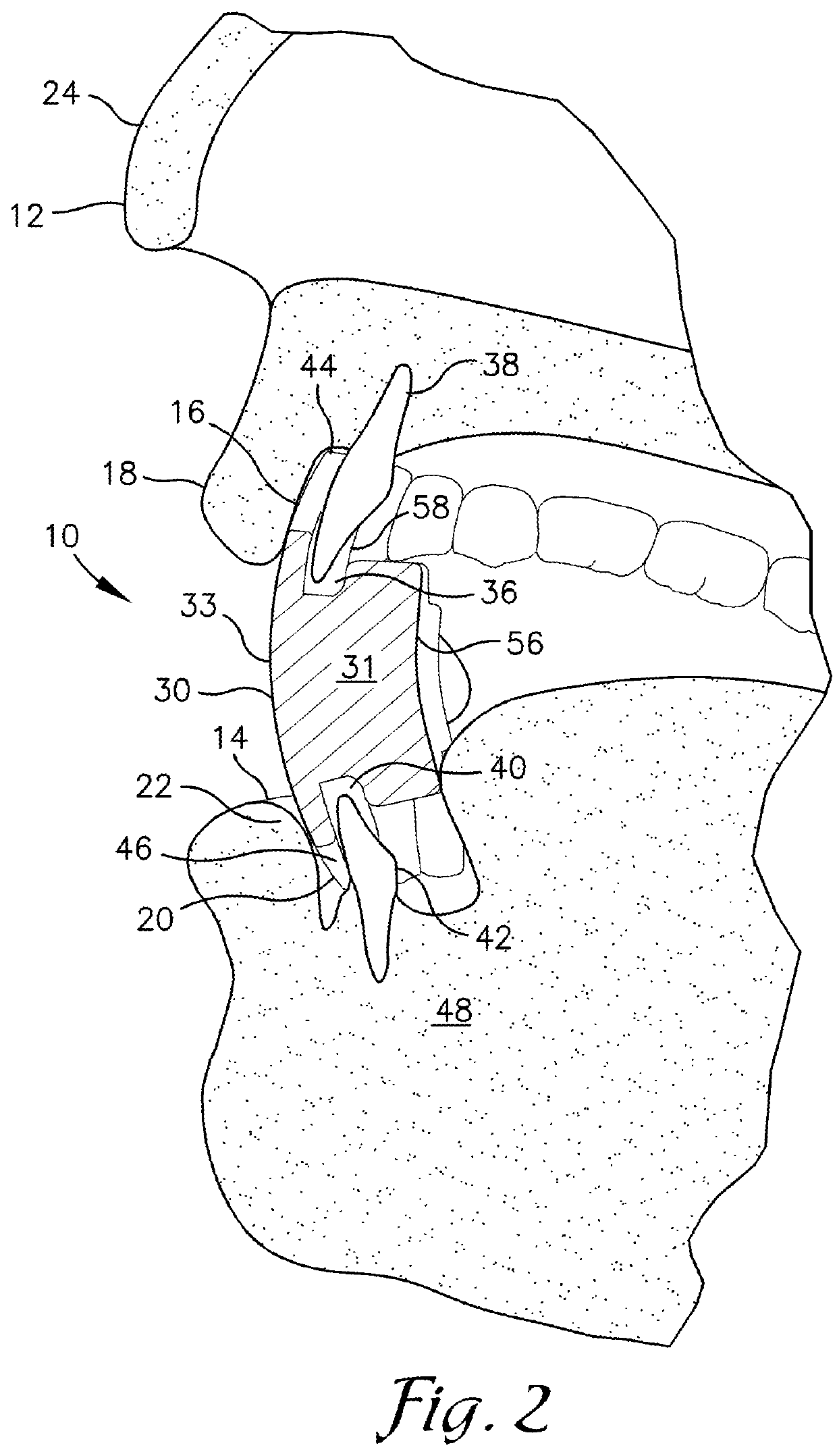
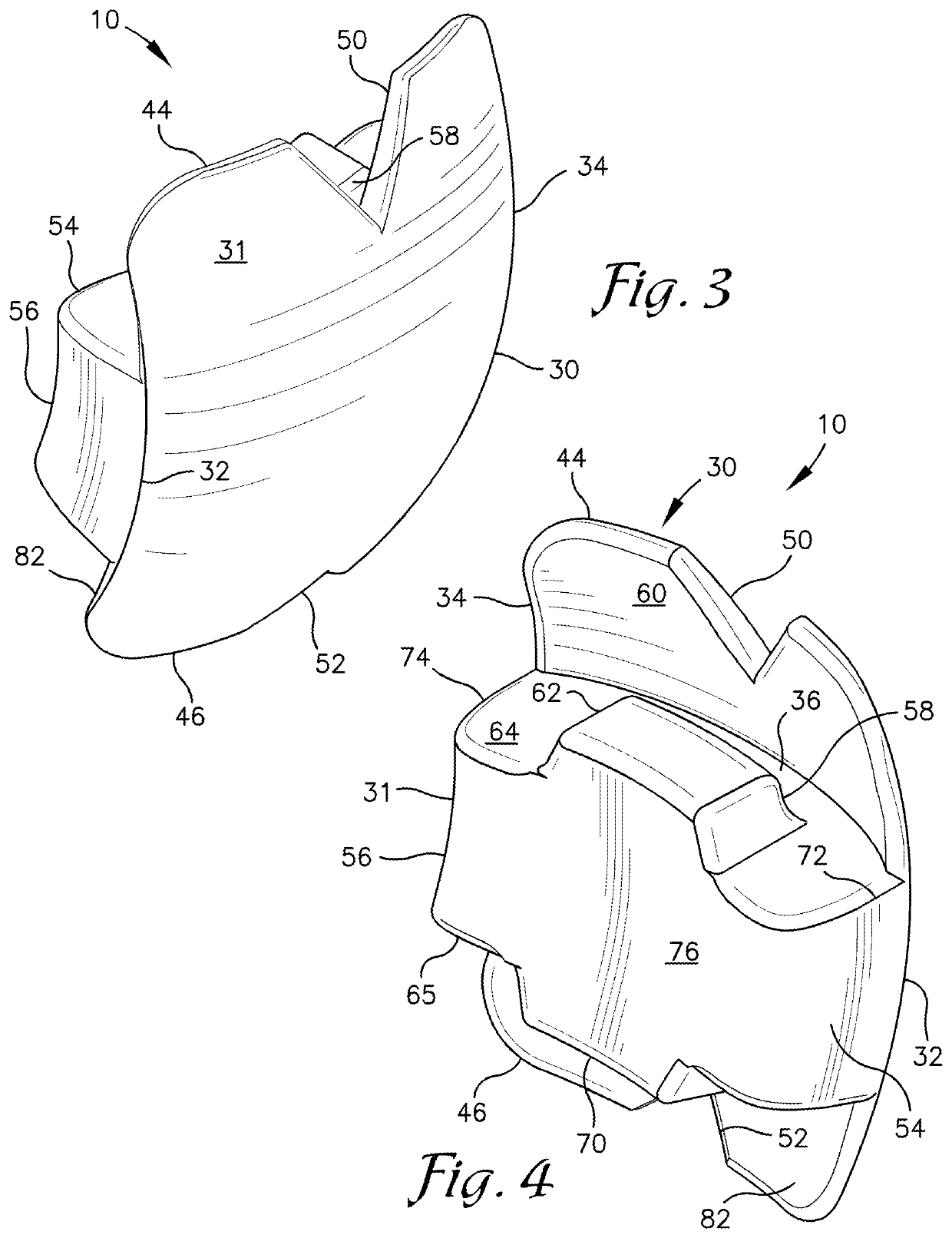
[0027]Referring to FIG. 1, a snore reducing mouth piece 10, mouthpiece 10, according to the present invention, is shown being used by a user 12 who places the mouthpiece inside the user's 12 mouth 14 with an upper portion 16 of the mouthpiece 10 lying behind the user's 12 upper lip 18 and a lower portion 20 of the mouthpiece 10 lying behind the user's 12 lower lip 22. The mouthpiece 10 prevents the user 12 from breathing through his mouth when the user's 12 lips 18, 22 are relaxed, requiring the user 12 to breathe though his nose 24, which prevents snoring. When, however the user's 12 nose 24 cannot be used for breathing due to internal swelling or the like, the outer edges of the user's 12 lips 18, 22 open and allow the user 12 to breathe through his mouth 14. In greater detail the right-most ends 26 of the user's 12 upper and lower lips 18, 22 and the left-most ends 28 of the user's 12 upper and lower lips 18, 22 involuntarily open when the user 12 cannot breathe through his mouth...
PUM
 Login to View More
 Abstract
Description
Claims
Application Information
 Login to View More