Amortization for financial processing in a relational database management system

a technology of financial processing and database management system, applied in the field of financial processing systems, can solve problems such as disagreement on profitability calculation rules

US7308427B1Active Publication Date: 2007-12-11TERADATA US
31 Cites 29 Cited by

Patent Information

Authority / Receiving Office
US · United States
Patent Type
Patents(United States)
Current Assignee / Owner
Publication Date
2007-12-11

Smart Images

  • Figure 1
    Figure 1
  • Figure 2
    Figure 2
  • Figure 3
    Figure 3
Patent Text Reader

Abstract

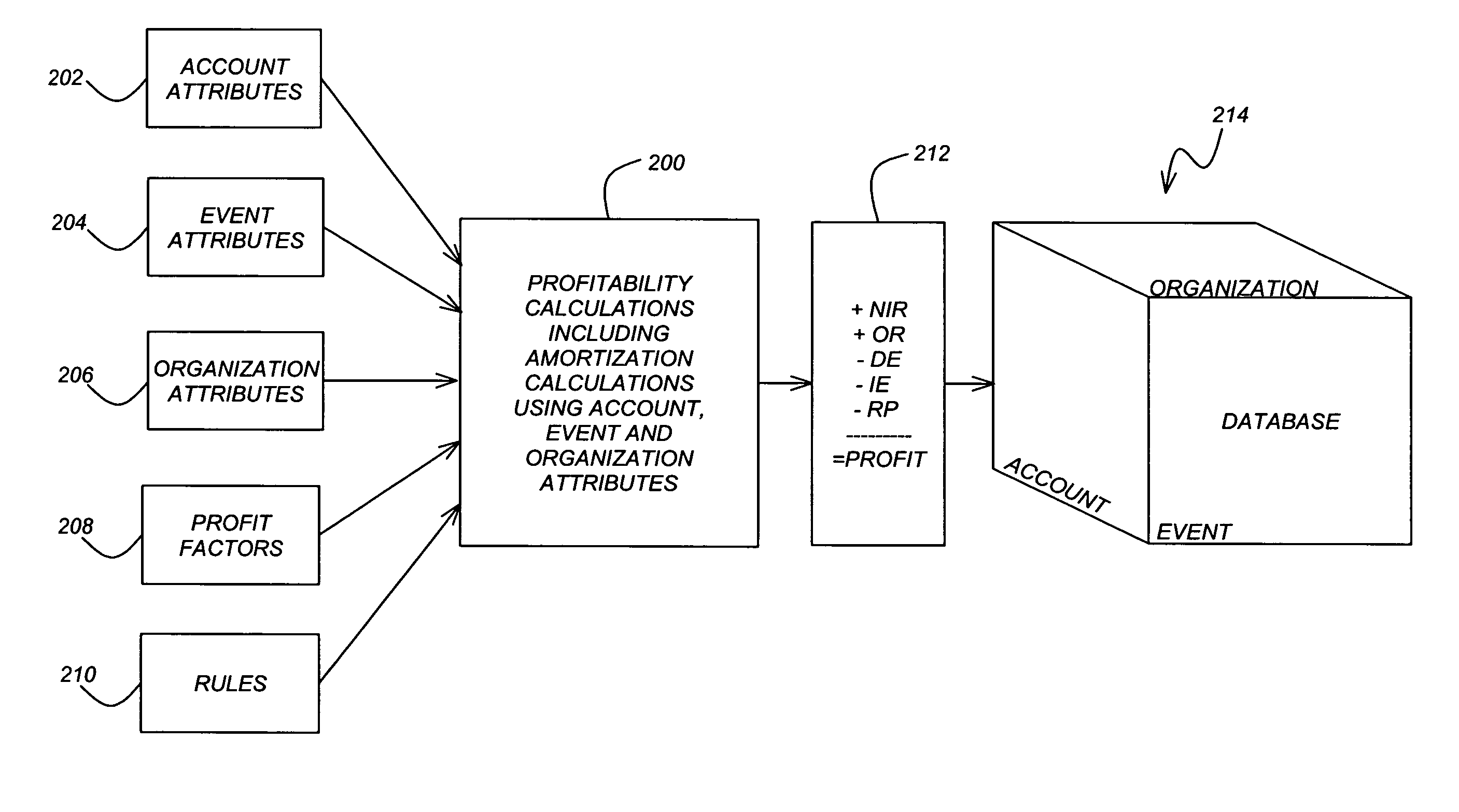
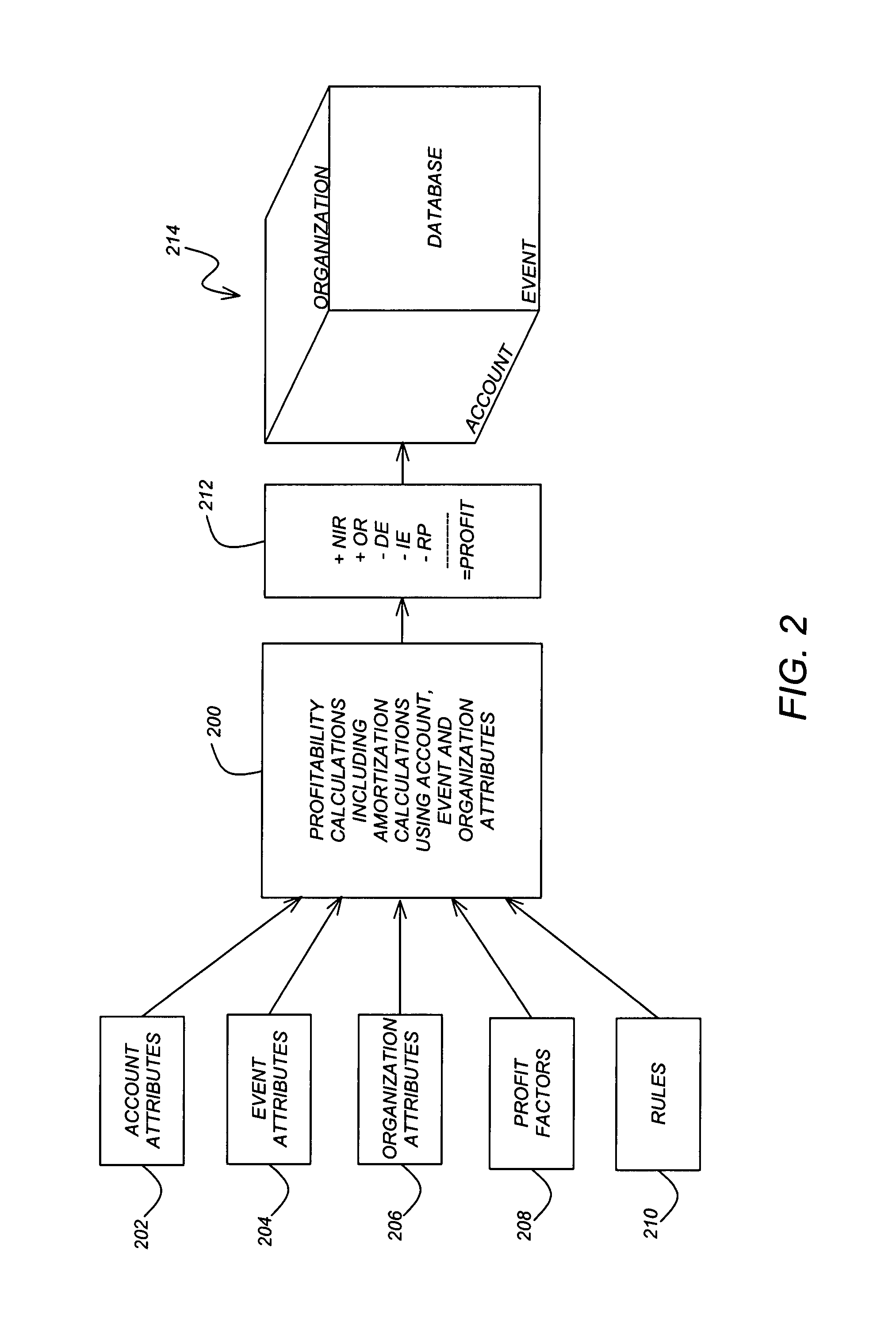
A financial processing system that accesses account, event and organization attributes from a relational database management database, wherein: (1) the account attributes comprise data about accounts being measured, (2) the event attributes comprise data about account-related transactions, and (3) the organization attributes comprise data about the organization's financial status. Profitability calculations are performed in the computer using the account, event and organization attributes accessed from the relational database management system, as well as one or more profit factors and one or more rules. The profitability calculations comprise the following:Profit (ai)=Net Interest Revenue (NIR) (ai)+Other Revenue (OR) (ai)−Direct Expense (DE) (ai)−Indirect Expense (IE) (ai)−Risk Provision (RP) (ai)for an account ai. The profitability calculations include one or more amortization calculations in the computer using the account, event and organization attributes accessed from the database, and the amortization calculations amortize the Other Revenue, Direct Expense, Indirect Expense, or Risk Provision over a plurality of periods within a term for the account ai. In alternative embodiments, the amortization calculations are selected from a group comprising cash basis, straight-line, declining balance and interest methods.
Need to check novelty before this filing date? Find Prior Art

Description

CROSS REFERENCE TO RELATED APPLICATIONS

[0001] This application is related to the following co-pending and commonly assigned patent applications:

[0002] Utility application Ser. No. 09 / 845,461, entitled “TAX ADJUSTMENT FOR FINANCIAL PROCESSING IN A RELATIONAL DATABASE MANAGEMENT SYSTEM,” filed on Apr. 30, 2001, by George Robert Hood; and

[0003] Utility application Ser. No. 09 / 845,851, entitled “SHAREHOLDER VALUE ADD FOR FINANCIAL PROCESSING IN A RELATIONAL DATABASE MANAGEMENT SYSTEM,” filed on Apr. 30, 2001, by George Robert Hood;

[0004] both of which applications are incorporated by reference herein.

[0005] This application is a continuation-in-part of the following co-pending and commonly assigned patent applications:

[0006] Utility application Ser. No. 09 / 608,355, entitled “ADVANCED AND BREAKTHROUGH NET INTEREST REVENUE IMPLEMENTATION FOR FINANCIAL PROCESSING IN A RELATIONAL DATABASE MANAGEMENT SYSTEM,” filed on Jun. 29, 2000, by George Robert Hood and Paul H. Phibbs, Jr.;

[0007] Utility appli...

Examples

Embodiment Construction

[0024]In the following description of the preferred embodiment, reference is made to the accompanying drawings which form a part hereof, and in which is shown by way of illustration a specific embodiment in which the invention may be practiced. It is to be understood that other embodiments may be utilized and structural changes may be made without departing from the scope of the present invention.

Overview

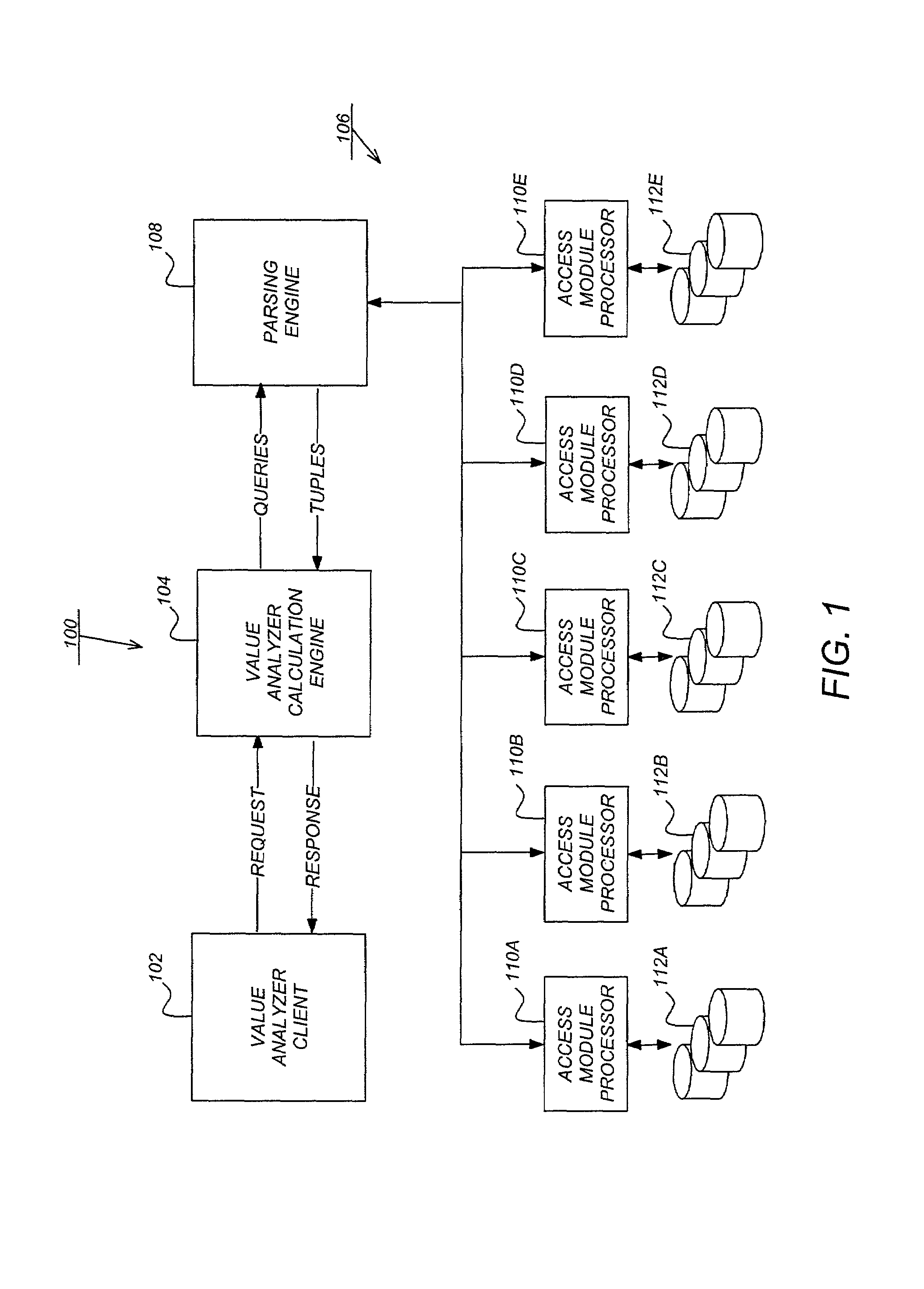
[0025]The Value Analyzer is a data-driven computer-facilitated financial model that provides accurate and consistent profitability calculations using account, event and organization data stored in a relational database management system (RDBMS), wherein: (1) the account attributes comprise data about accounts being measured, (2) the event attributes comprise data about account-related transactions, and (3) the organization attributes comprise data about the organization's financial status. The profitability calculations performed by the Value Analyzer rely on a Five Factor Atomic Pr...