
Method and device for improving dequeuing efficiency in queue management
A queue management and queuing technology, applied in the field of improving the efficiency of queue management in the field of queue management, can solve problems such as restricting the processing speed of the chip and affecting the efficiency of data scheduling, so as to improve the processing performance of the chip, improve the work efficiency, and reduce the effect of internal arbitration.
Patent Information
- Authority / Receiving Office
- CN · China
- Patent Type
- Patents(China)
- Current Assignee / Owner
- Publication Date
- 2013-03-20
Smart Images
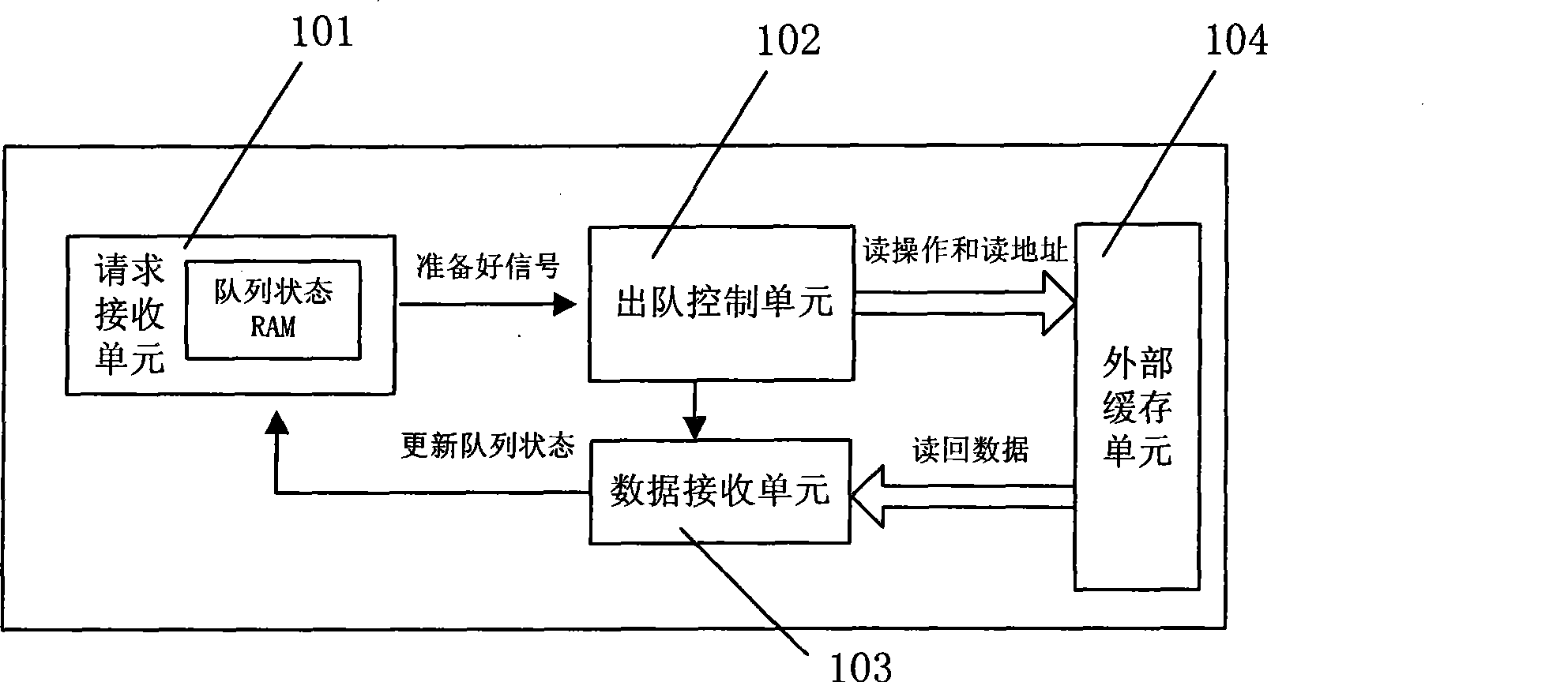
Figure 1 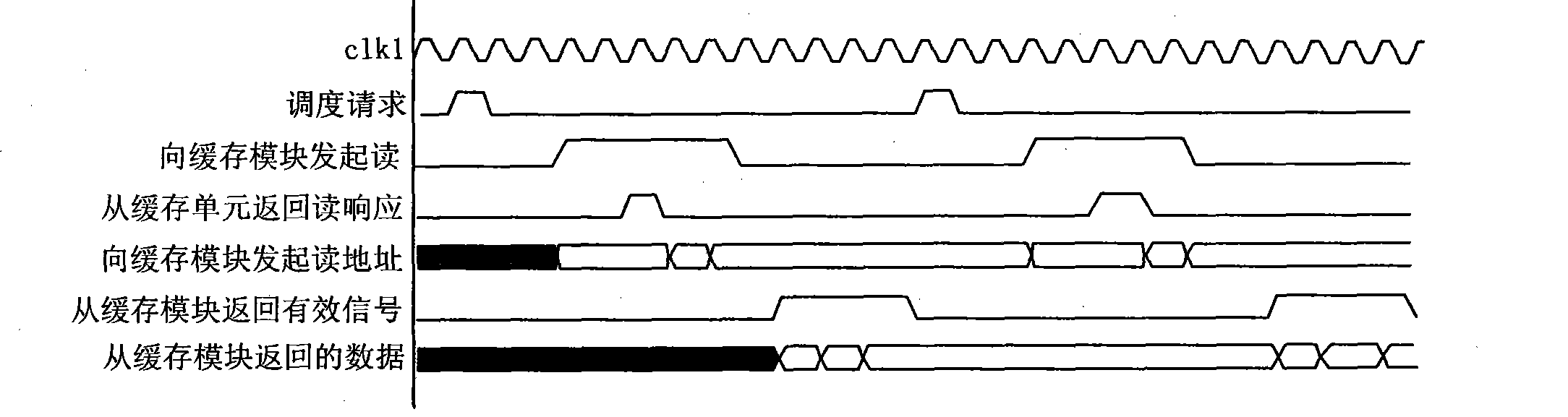
Figure 2 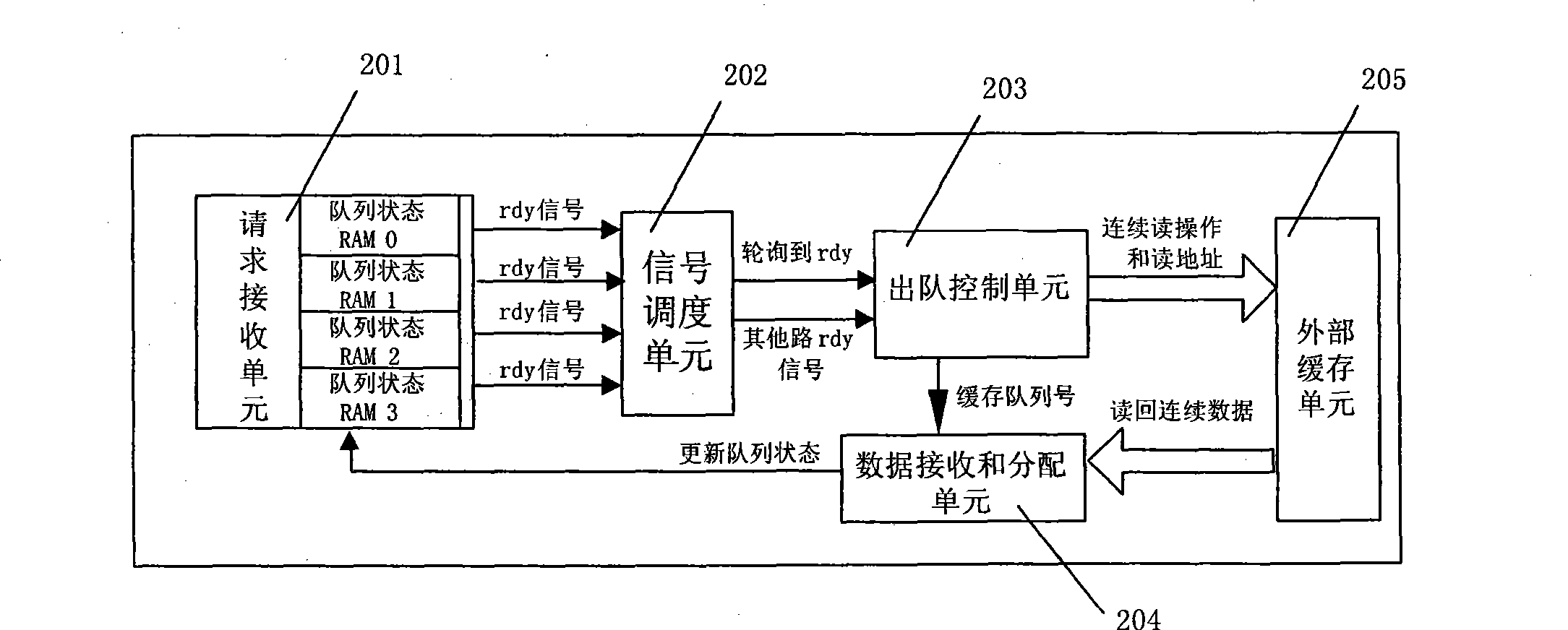
Figure 3
Abstract
Description
technical field
[0001] The invention relates to the field of data communication, in particular to a method and a device for improving the efficiency of dequeueing in queue management in the queue management of data storage and forwarding. Background technique
[0002] After entering the 1990s, with the development of computer and network technology, many data processing systems adopt the client / server network model of open system structure. That is, the client puts forward a task request, and the server handles it accordingly, executes the requested task, and then returns the result to the client. Since the requests of various applications are very frequent, if the data host is not controlled by the corresponding mechanism when processing various requests, the data will be confused, and the message queue is a powerful tool to solve this problem.
[0003] The method of queue management in the prior art is usually to receive the queue packet descriptor, write in the external ...
Examples
Embodiment approach
[0042] Step 1, request receiving unit 201 receive the queue number (queue number 0 and queue number 1) from the request signal (request 0 and request 1) of two queues and request scheduling; Request the status information of the queue, and then give their respective ready (ready) signals (rdy0 and rdy1);
[0043] Step 2. The ready (ready) rdy signals of the two requests enter the signal scheduling unit 202, assuming that this operation dispatches the rdy0 of the request 0.
[0044] Step 3a, write the signal of request 1 and its queue number into the first-in-first-out buffer fifo of the queue buffer module;
[0045] Step 3, the continuous read control module 203 detects the dispatched rdy0, initiates the read operation and the read address to the external cache unit 205, and then waits for the response of the cache QDR module; here it is assumed that one packet descriptor of the queue occupies three external cache addresses, then After the read response, the read operation co...