
Safety transmission method in telecommunication network
A telecommunications network and security technology, applied in security devices, transmission systems, digital transmission systems, etc., to achieve the effect of reducing the number of handshakes, making attacks difficult, and improving security
Patent Information
- Authority / Receiving Office
- CN · China
- Patent Type
- Patents(China)
- Current Assignee / Owner
- Publication Date
- 2003-06-04
- Estimated Expiration
- Not applicable · inactive patent
Smart Images
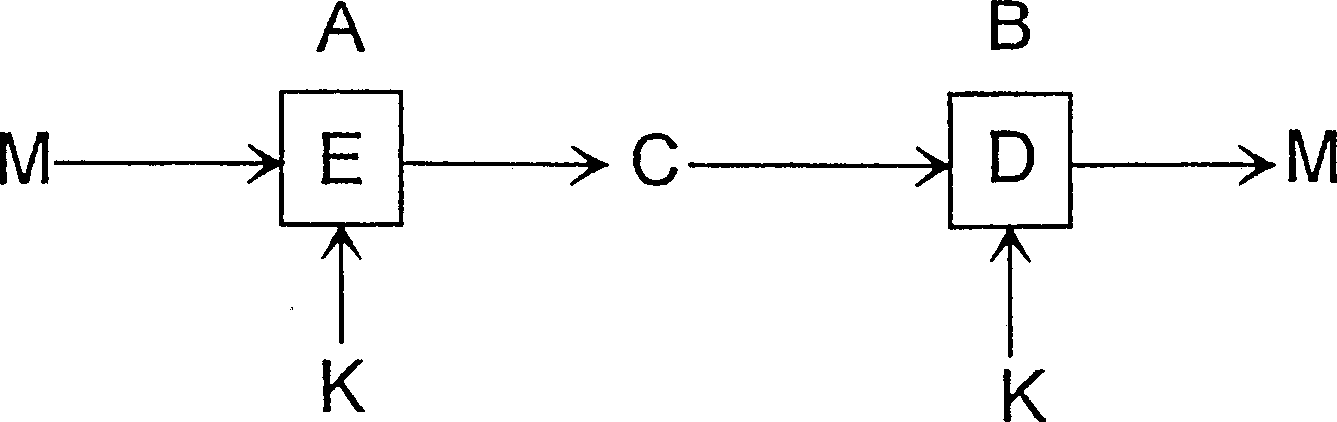
Figure 1 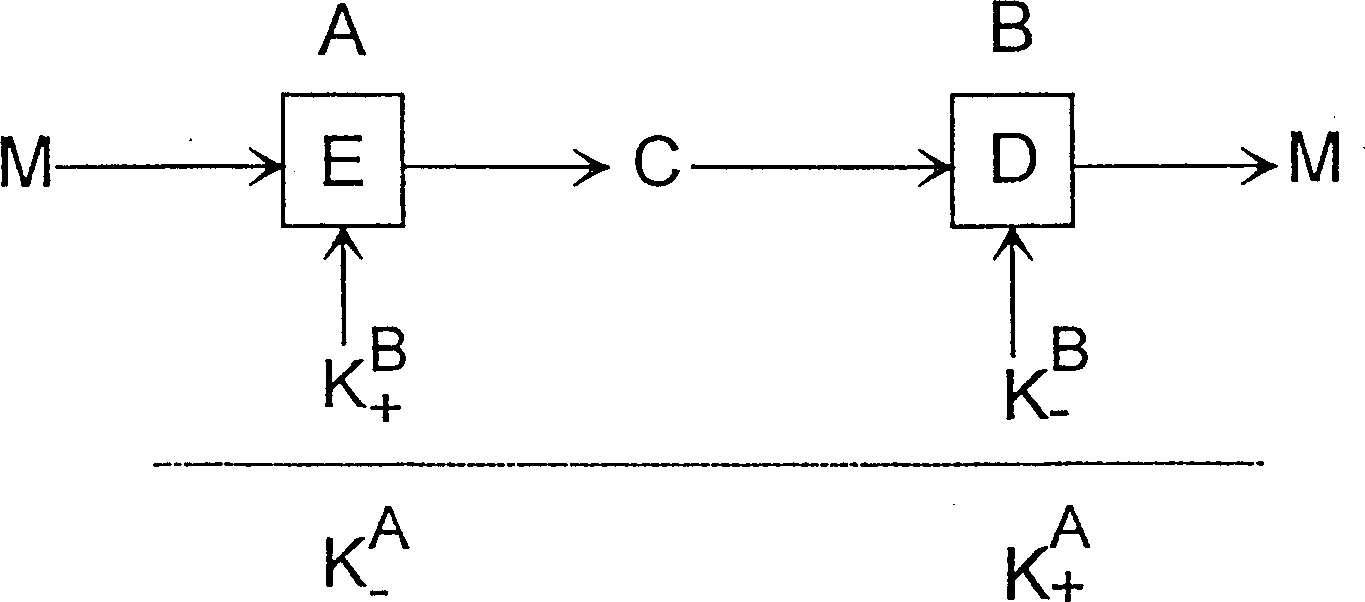
Figure 2 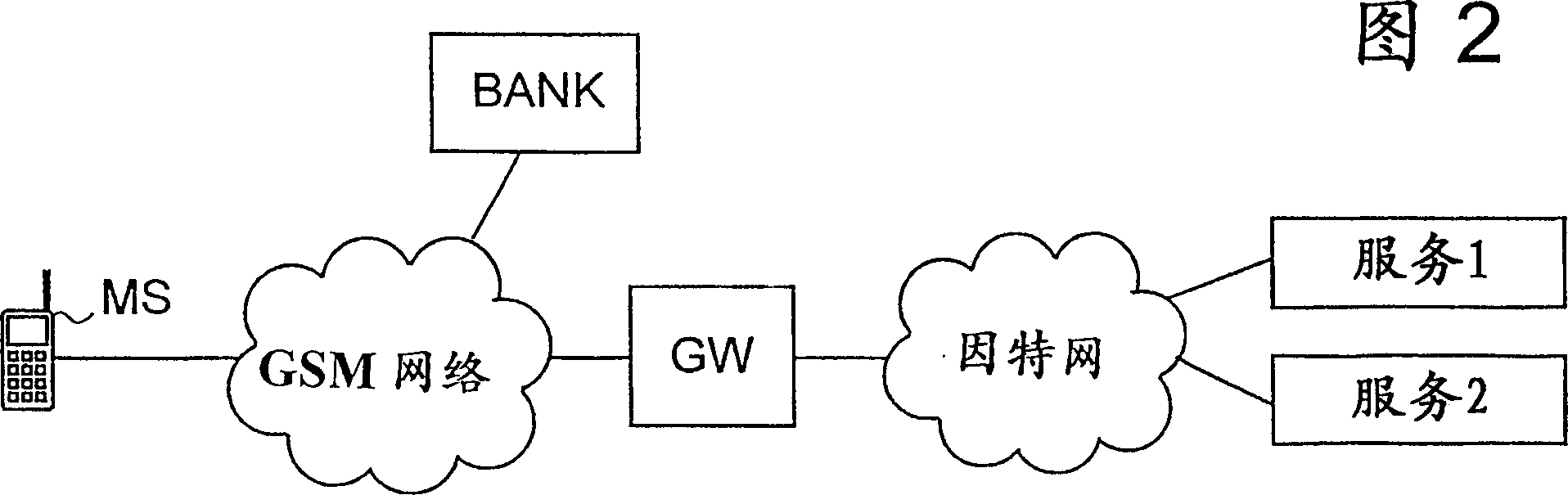
Figure 3
Abstract
Description
Technical field:
[0001] The invention relates to a method of providing connection security for transmissions between communicating parties of a telecommunication network. Background technique
[0002] At the beginning of communication, a handshake is usually performed between telecommunication network applications, during which the parties involved generally authenticate each other and exchange key information, such as negotiating encryption algorithms and encryption keys used in communication. Only after the handshake can the actual data be transferred. The security of the transmission is generally ensured, for example, by encryption. Attached Figure 1a and 1b A block diagram is shown of two known encryption algorithms that can be used to secure transmissions: symmetric algorithms and public-key algorithms.
[0003] Figure 1a A symmetric algorithm based on keys shared between participants is shown. On side A on one side, Figure 1a In block E of , the message M to be ...
Examples
Embodiment Construction
[0029] The invention can be applied to any telecommunication network. In the following, the present invention will be described in detail by taking a mobile station operating in a digital GSM mobile communication system and communicating with applications located inside or outside the GSM network as an example.
[0030] The main embodiment of the present invention will be described in detail below with reference to FIGS. 2 , 3 and 4 .
[0031] Figure 2 shows some examples of the aforementioned connections. The mobile station MS contacting the bank server first performs a handshake according to the prior art, during which the MS and the bank can authenticate each other and exchange required session key information. According to the invention, the mobile station and the bank server negotiate and agree on appropriate intervals for recalculating security parameters for providing confidentiality, data integrity and authentication during communication, eg during a handshake. For e...