
A kind of triazine compound and its application in controlling chicken coccidiosis
A triazine compound and the technology of the compound are applied in the triazine compound and its application field in the control of chicken coccidiosis, which can solve the problems of increasing the difficulty and inconvenience of preparation preparation, high concentration of use, and easy drug resistance, etc., and achieve Good preventive and curative effect
Patent Information
- Authority / Receiving Office
- CN · China
- Current Assignee / Owner
- Publication Date
- 2011-12-21
Smart Images
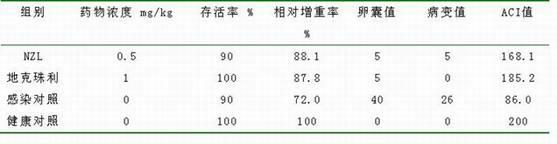
Figure 1 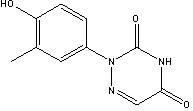
Figure 2 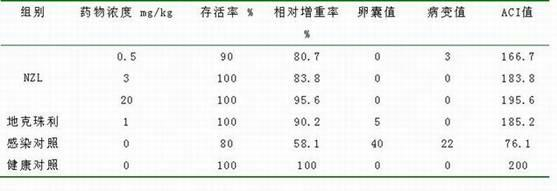
Figure 3
Abstract
Description
technical field
[0001] The present invention relates to compound and the application of compound, especially a kind of new triazine compound and its application in controlling chicken coccidiosis, and the synthesis method of the compound. Background technique
[0002] Chicken coccidiosis is an intracellular parasitic disease mainly caused by intestinal lesions caused by one or several Eimeria chickens. It is a highly contagious parasitic disease that can cause chicken growth rate and The reduction of feed conversion rate and the decline of meat and egg quality. In severe cases, it can cause death of chickens. According to statistics, the incidence of coccidiosis in chickens is 50-70%, and the outbreak mortality rate reaches 20-30%. The economic loss caused by chicken coccidiosis in the world reaches 5 billion US dollars every year. my country is a big chicken raising country, accounting for 10% of the world's total chicken raising, and the direct and indirect economic loss...
Examples
Embodiment 1
[0033] 2-{3-methyl-4-(4'-nitrophenoxy)phenyl}-1,2,4-triazine-3,5(2H,4H)-dione (compound of formula (I) ) preparation
[0034] Add compound Ⅱ (15 grams, 0.068mol), anhydrous sodium carbonate (7.9 grams, 0.075mol), p-chloronitrobenzene (11.8 grams, 0.075mol) and DMF (150ml) into a four-necked flask and heat to 120°C After reacting for 10 hours, after cooling down to room temperature, the reaction solution was poured into 1000ml of water, adjusted to pH=3 with 10% dilute hydrochloric acid, and a pale yellow solid was precipitated, filtered, washed with water, and dried to obtain the compound of formula (I) (16.2 g, 69.5%)
[0035] mp: 169 – 171.5°C. ESI-MS (m / z): 339.2(M-H) - , 1HNMR (CDCl 3): 2.25 (s, 3H), 7.00 (d, 2H), 7.09 (d, 1H), 7.44(d,1H), 7.50(s,1H), 7.60(s,1H), 8.22(d,2H) , 9.69 (s, 1H).
Embodiment 2
[0037] 2-{3-methyl-4-(4'-nitrophenoxy)phenyl}-1,2,4-triazine-3,5(2H,4H)-dione (compound of formula (I) ) preparation
[0038] Compound II (15 g, 0.068 mol), anhydrous potassium carbonate (10.4 g, 0.075 mol), p-chloronitrobenzene (11.8 g, 0.075 mol) and DMSO (100 ml), were added to a four-necked flask and heated to 130°C After reacting for 8 hours, after cooling down to room temperature, the reaction solution was poured into 1000ml of water, adjusted to pH=3 with 10% dilute sulfuric acid, and a pale yellow solid was precipitated, filtered, washed with water, and dried to obtain the compound of formula (I) (15 g, 64.3%).
Embodiment 3
[0040] Preparation of 2-(3-methyl-4-hydroxyphenyl)-1,2,4-triazine-3,5(2H,4H)-diketonol sodium salt
[0041] Compound Ⅱ (150 g, 0.68 mol), 500 g toluene, heated to dissolve, 30% sodium methoxide solution was added dropwise, a yellow powder was precipitated, filtered, washed with methanol, and dried to obtain 2-(3-methyl-4-hydroxybenzene base)-1,2,4-triazine-3,5(2H,4H)-diketone sodium salt (147.5 g, 90%).
[0042] ESI-MS (m / z): 218.1(M-Na) - .