
Sulfated modification method for improving ophiopogon japonicus polysaccharide anti-virus activity
A technology of antiviral activity and Ophiopogon japonicus polysaccharide, applied in the field of sulfation modification, can solve the problem of low biological activity, and achieve the effect of improving antiviral activity
Patent Information
- Authority / Receiving Office
- CN · China
- Current Assignee / Owner
- Publication Date
- 2012-10-10
Smart Images
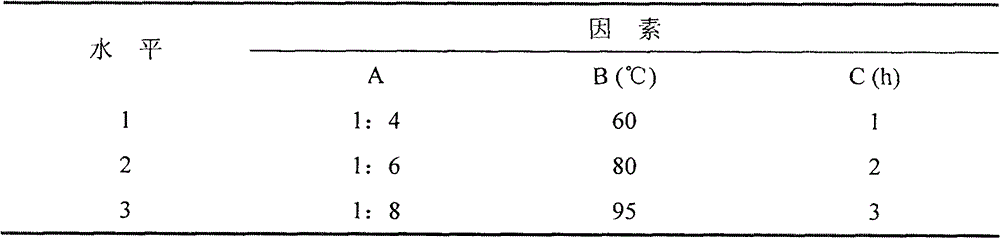
Figure 1 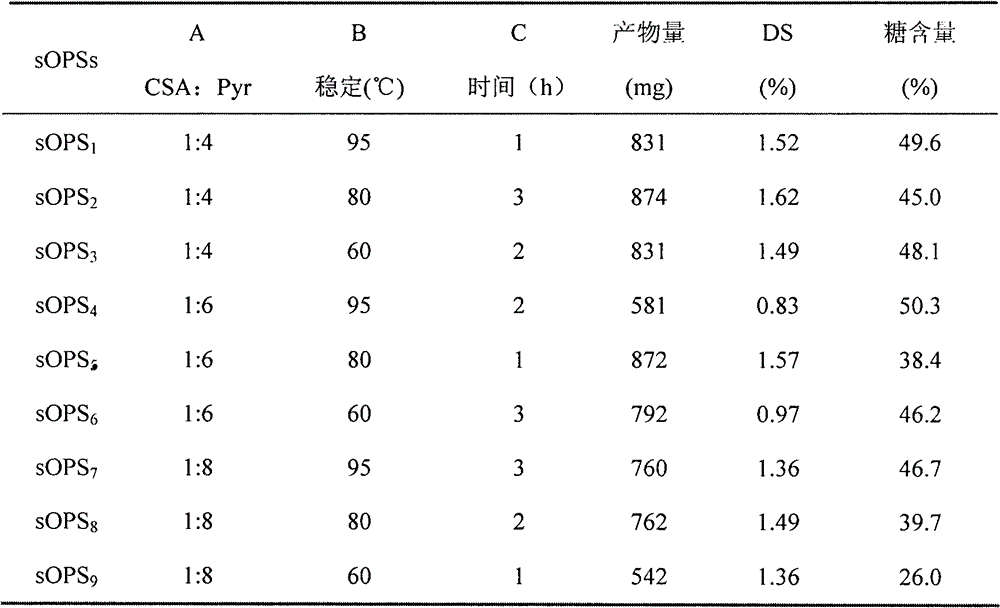
Figure 2 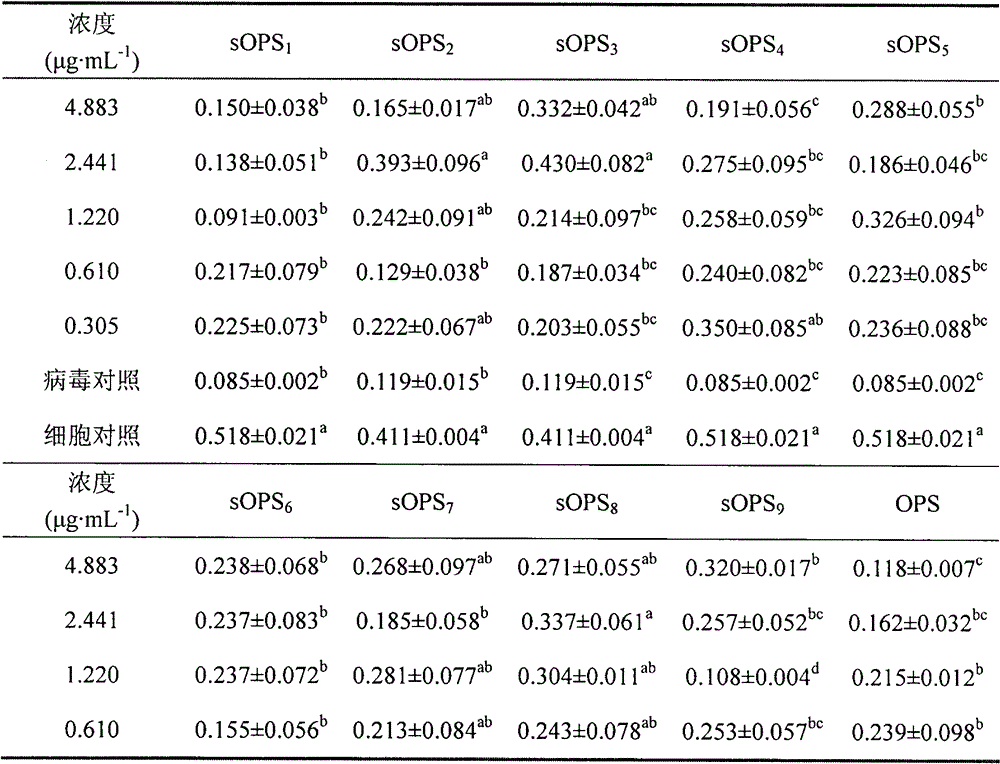
Figure 3
Abstract
Description
1. Technical field
[0001] The invention discloses a sulfation modification method for improving the antiviral activity of Ophiopogon japonicus polysaccharides, which belongs to the technical field of structure modification of traditional Chinese medicine polysaccharides. 2. Background technology
[0002] Polysaccharides are widely found in animals, plants and microbial tissues. They are natural polymer compounds formed by the polymerization of monosaccharides. They are another important biological macromolecule in addition to proteins and nucleic acids in organisms. They have anti-virus, anti-tumor, anti- Oxidation, immune regulation and other biological activities. The biological activity of polysaccharides is closely related to its structure, especially when some chemical groups are introduced, the flexibility and spatial structure of sugar chains will change, thereby causing changes in the biological activities of polysaccharides or new activities of polysaccharides. The...
Examples
Embodiment Construction
[0015] 1. Extraction of Ophiopogon japonicus polysaccharide
[0016] Take 1000g of Ophiopogon japonicus decoction pieces, crush them into 0.3-1cm 3 Small pieces, add 2000mL of 95% ethanol to soak for 12h, reflux twice in 80°C water bath, 1.5h each time, add 9 times the amount of water to decoct 3 times after drying the dregs for 12h, the time is 90, 60, 60min in turn, combine the filtrate, Concentrate to 1000mL, centrifuge at 2500rpm for 20min, add 95% ethanol to the supernatant to make the alcohol content reach 80%, let stand at 4°C for 24h, recover ethanol, centrifuge, precipitate and freeze-dry to obtain crude Ophiopogon japonicus polysaccharide.
[0017] 2. Purification of Ophiopogon japonicus polysaccharide
[0018] The crude Ophiopogon japonicus polysaccharide was deproteinized by trichloroacetic acid method, and dissolved in distilled water to 50 mg·mL -1 , on DEAE-cellulose-52 (2.5cm×30cm) chromatography column, eluted with distilled water, flow rate 1mL·min -1 , th...