
Supported non-metallocene catalyst, preparation method and application
A non-metallocene, supported technology, applied in the field of non-metallocene catalysts, can solve the problems of complex preparation process, low catalyst polymerization activity, and low catalytic ethylene polymerization activity, and achieve the effect of simple preparation method
Patent Information
- Authority / Receiving Office
- CN · China
- Current Assignee / Owner
- Publication Date
- 2013-03-13
- Estimated Expiration
- Not applicable · inactive patent
Smart Images
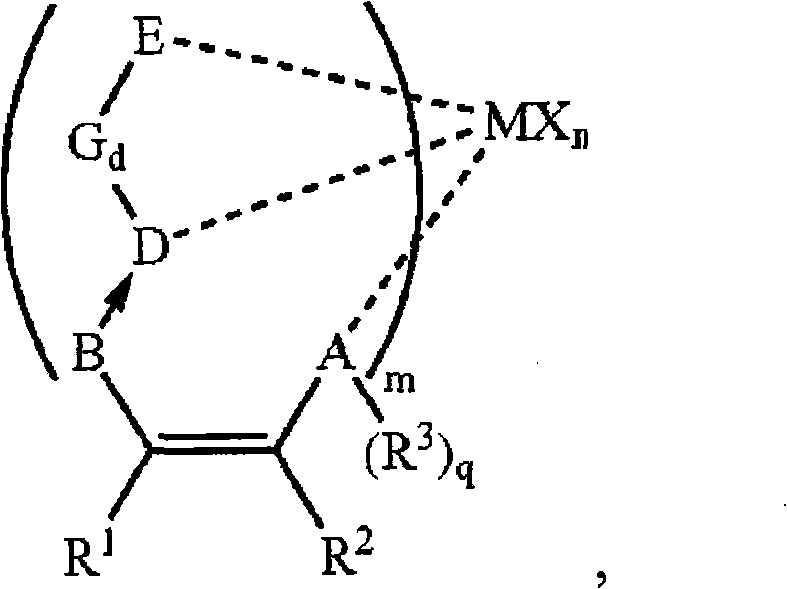
Figure 1 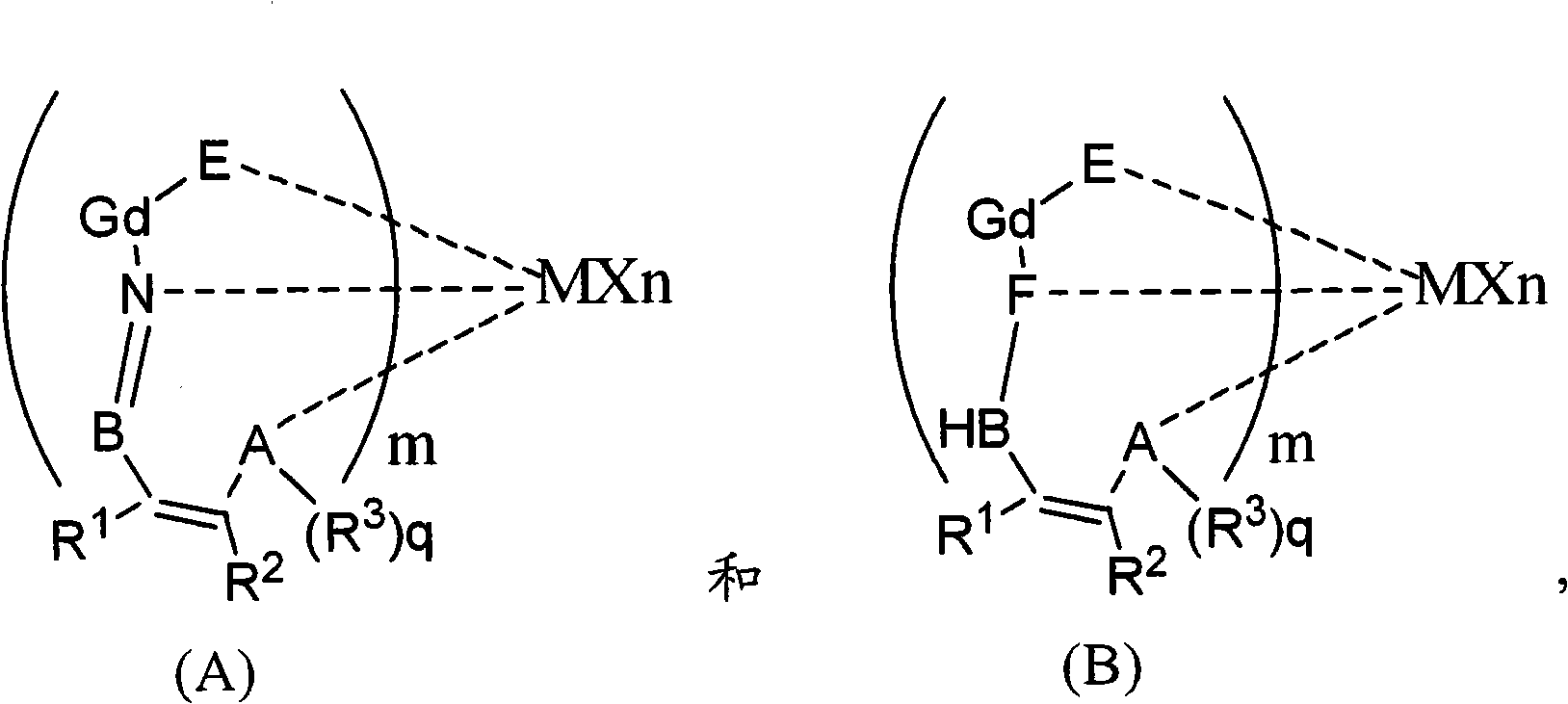
Figure 2 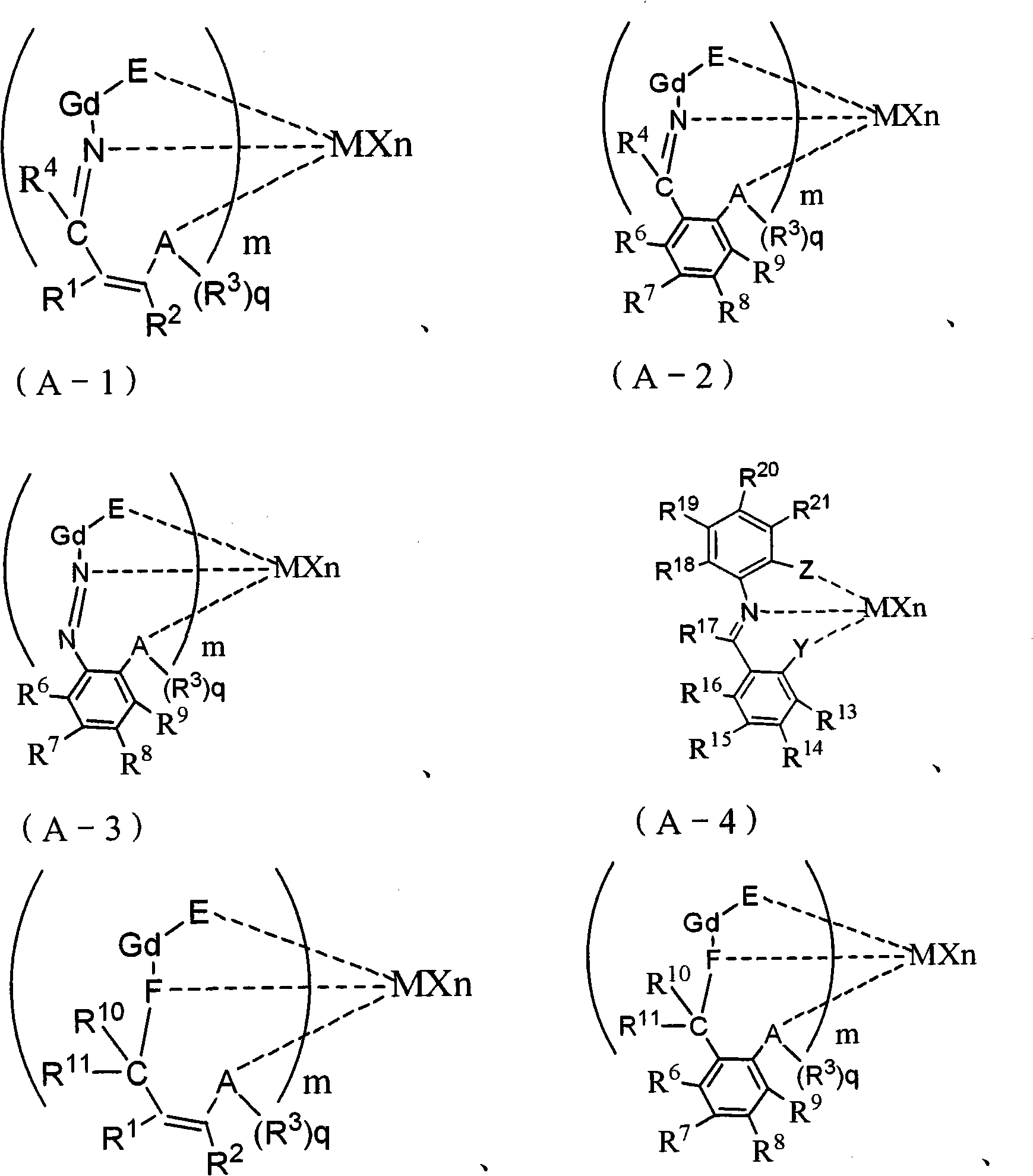
Figure 3
Abstract
Description
[0001] This application is based on the ongoing research project of "National Eleventh Five-Year Support Program Topics". The project has been highly valued and strongly supported by the Ministry of Science and Technology of the People's Republic of China. Its goal is to form a new generation of polyolefin catalyst technology with independent intellectual property rights, improve the homogeneity of domestic related products, improve the grade of polyolefin varieties in my country, and promote its development. Development in the direction of diversification, serialization, specialization and high performance. technical field
[0002] The present invention relates to a non-metallocene catalyst. Specifically, the present invention relates to a supported non-metallocene catalyst, its preparation method and its application in olefin homopolymerization / copolymerization. Background technique
[0003] The non-metallocene catalysts that appeared in the mid-to-late 1990s are also call...
Examples
preparation example Construction
[0104] The invention relates to a preparation method of a supported non-metallocene catalyst, comprising the following steps: dissolving a magnesium compound in a first solvent to obtain a magnesium compound solution; making a porous carrier optionally subjected to thermal activation treatment and the magnesium contacting the compound solution to obtain a first mixed slurry; adding a precipitant to the first mixed slurry to obtain a composite carrier, contacting the non-metallocene complex with the composite carrier in the presence of a second solvent, A step of obtaining a second mixed slurry; directly drying the second mixed slurry to obtain a modified composite carrier; and reacting a chemical treatment agent selected from Group IVB metal compounds with the modified composite carrier to obtain the loaded non- Metallocene catalyst steps.
[0105] The magnesium compound will be specifically described below.
[0106] According to the present invention, the term "magnesium com...
Embodiment 1
[0343] The magnesium compound is anhydrous magnesium chloride, the first solvent is tetrahydrofuran, and the porous carrier is silicon dioxide, that is, silica gel, the model is ES757 of Ineos Company, and the silica gel is thermally activated by continuously roasting at 600°C for 4 hours under nitrogen atmosphere before use. The precipitating agent adopts hexane, and the non-metallocene complex adopts the structure compound, dichloromethane is used as the second solvent, titanium tetrachloride is used as the chemical treatment agent for Group IVB metal compounds, and hexane is used as the solvent for the chemical treatment agent.
[0344] Weigh 5g of anhydrous magnesium chloride, add the first solvent and dissolve it completely at room temperature to obtain a magnesium compound solution, then add heat-activated silica gel, and stir at room temperature for 2 hours to form the first mixed slurry. Add the precipitant to the first mixed slurry, stir and react at 60°C for 4 hours...
Embodiment 1-1
[0350] Basically the same as Example 1, but with the following changes:
[0351] The porous carrier was changed to Grace's 955, and it was continuously calcined at 400° C. for 8 hours under a nitrogen atmosphere to be thermally activated.
[0352] The first solvent is changed to toluene, the precipitant is changed to cyclohexane, and the non-metallocene complex adopts The second solvent is changed to toluene, and the chemical treatment agent of Group IVB metal compound is changed to zirconium tetrachloride (ZrCl 4 ), the chemical treatment agent was changed to cyclohexane with a solvent.
[0353] Wherein the ratio is as follows: the ratio of the magnesium compound to the first solvent is 1mol:150ml; the molar ratio of the magnesium compound to the non-metallocene complex is 1:0.15; the mass ratio of the magnesium compound to the porous carrier is 1:4; the precipitating agent and the second - The volume ratio of the solvent is 1:2; the molar ratio of the magnesium compound t...