
Cross-linking agent modified XAD-4 resin and method for preparing same
A technology of XAD-4 and cross-linking agent, which is applied in the direction of chemical instruments and methods, and other chemical processes, can solve the problems of increased operational complexity and small adsorption capacity, and achieves improved adsorption capacity, narrow pore size distribution, and small pore size Effect
Patent Information
- Authority / Receiving Office
- CN · China
- Current Assignee / Owner
- Publication Date
- 2013-03-20
- Estimated Expiration
- Not applicable · inactive patent
Smart Images
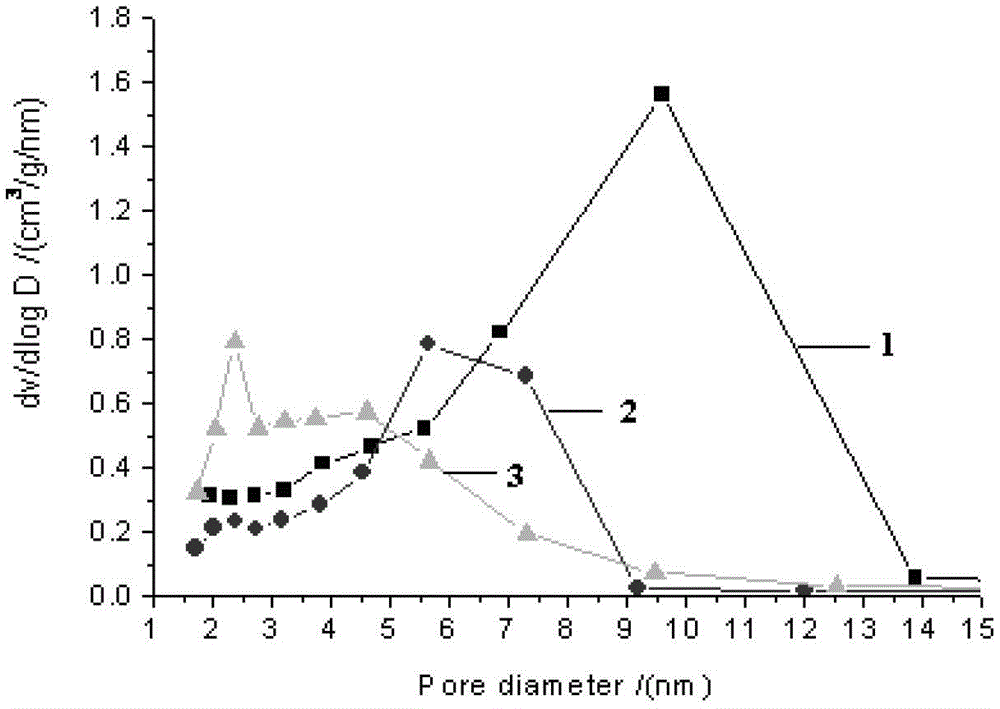
Figure 1 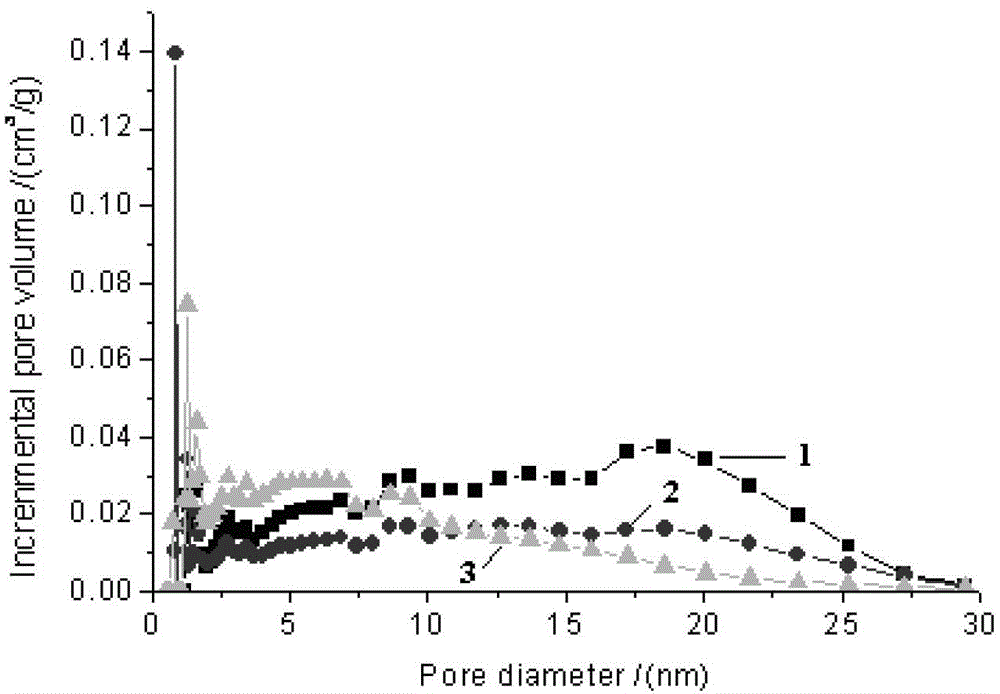
Figure 2 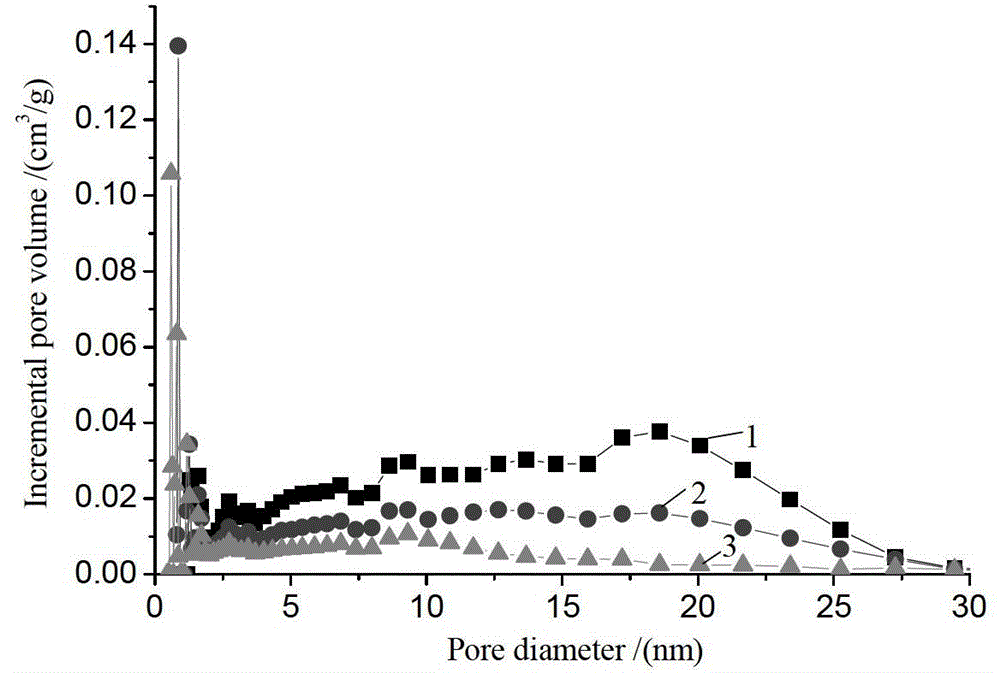
Figure 3
Abstract
Description
technical field
[0001] The invention relates to a crosslinking agent modified XAD-4 resin and a preparation method thereof, belonging to the field of polymer adsorption materials. Background technique
[0002] XAD-4 resin is considered to be a typical representative of the second-generation adsorption resin, developed and produced by Rohm and Haas. It has structural features such as high specific surface area, large pore volume, and good mechanical strength. These excellent structural features endow it with good adsorption capacity for non-polar and weakly polar substances (benzene, phenol, etc.), Therefore, XAD-4 resin has important application value in the treatment and recycling of non-polar and weakly polar aromatic compounds, surfactants, drugs, phenols and pesticides.
[0003] However, on the one hand, because the skeleton of XAD-4 resin is polystyrene with strong hydrophobicity, its strong hydrophobicity makes it need to be pretreated with polar reagents (such as: me...
Examples
Embodiment 1
[0031] Add 9.5g of XAD-4 resin to a 250mL three-necked flask equipped with a mechanical stirrer, a reflux condenser and a thermometer, dissolve 7.9g of DCX with 50mL of anhydrous 1,2-dichloroethane and add it to the three-necked flask, and mix the solution Swell in an ice-water bath at 0-5°C for 12 hours. Under medium-speed stirring, 11 mL of anhydrous tin tetrachloride was added to the three-necked flask and kept for 2 hours; the temperature was raised to 60°C for 8 hours, and then the temperature was raised to 80°C for 4 hours. Terminate the reaction with absolute ethanol, pour out the solution, alternately wash 3 times with 1% hydrochloric acid aqueous solution and absolute ethanol, transfer the resin to a Soxhlet extractor, extract the resin with absolute ethanol for 8 hours, and vacuum dry spare. The specific surface area of the resin is 841.7m 2 / g, pore volume 0.7686cm 3 / g, pore size distribution 1~8.8nm, average pore size 3.65nm.
Embodiment 2
[0033] Dissolve 18.10g of BCMBP in 120mL of 1,2-dichloroethane, add it into a 250mL three-neck flask, then add 15.0g of XAD-4 resin into the three-necked flask, and swell at 0~5°C for 24 hours. Start the mechanical stirring, quickly add 18mL of anhydrous tin tetrachloride to the three-necked flask, and keep it for 3 hours; then raise the temperature of the mixed solution to 60°C for 10 hours, then raise the temperature to 85°C for 4 hours. The reaction was terminated with acetone, the solution was poured out, and washed three times alternately with 1% aqueous hydrochloric acid and absolute ethanol until the solution was clear. Transfer the resin to a Soxhlet extractor, extract the resin with absolute ethanol for 12 hours, and dry it in vacuum for later use. The specific surface area of the resin is 1228m 2 / g, pore volume 1.068cm 3 / g, pore size distribution 1~8.6nm, average pore size 3.43nm.
Embodiment 3
[0035]Add 10.0g of XAD-4 resin to a 250mL three-necked flask equipped with a mechanical stirrer, reflux condenser and thermometer, dissolve 13.20g of DPB with 60mL of 1,2-dichloroethane and add it to the three-necked flask, and the mixed solution is at 0~ Swell in an ice-water bath at 5°C for 12 hours. Under medium-speed stirring, add 10.8 mL of anhydrous tin tetrachloride to the three-necked flask in an ice-water bath and keep it for 2 hours; raise the temperature to 65°C and keep it for 8 hours, then raise the temperature to 80°C and keep it for 4 hours. Terminate the reaction with absolute ethanol, pour out the solution, alternately wash 3 times with 1% hydrochloric acid aqueous solution and absolute ethanol, transfer the resin to a Soxhlet extractor, extract the resin with absolute ethanol for 8 hours, and vacuum-dry spare. The specific surface area of the resin is 721.1m 2 / g, pore volume 0.6274cm 3 / g, pore size distribution 1~9.0nm, average pore size 3.88nm.